PLAN THE CELEBRATION. THEN PLAN THE TRIP.
Ultimate Spain Festivals Guide
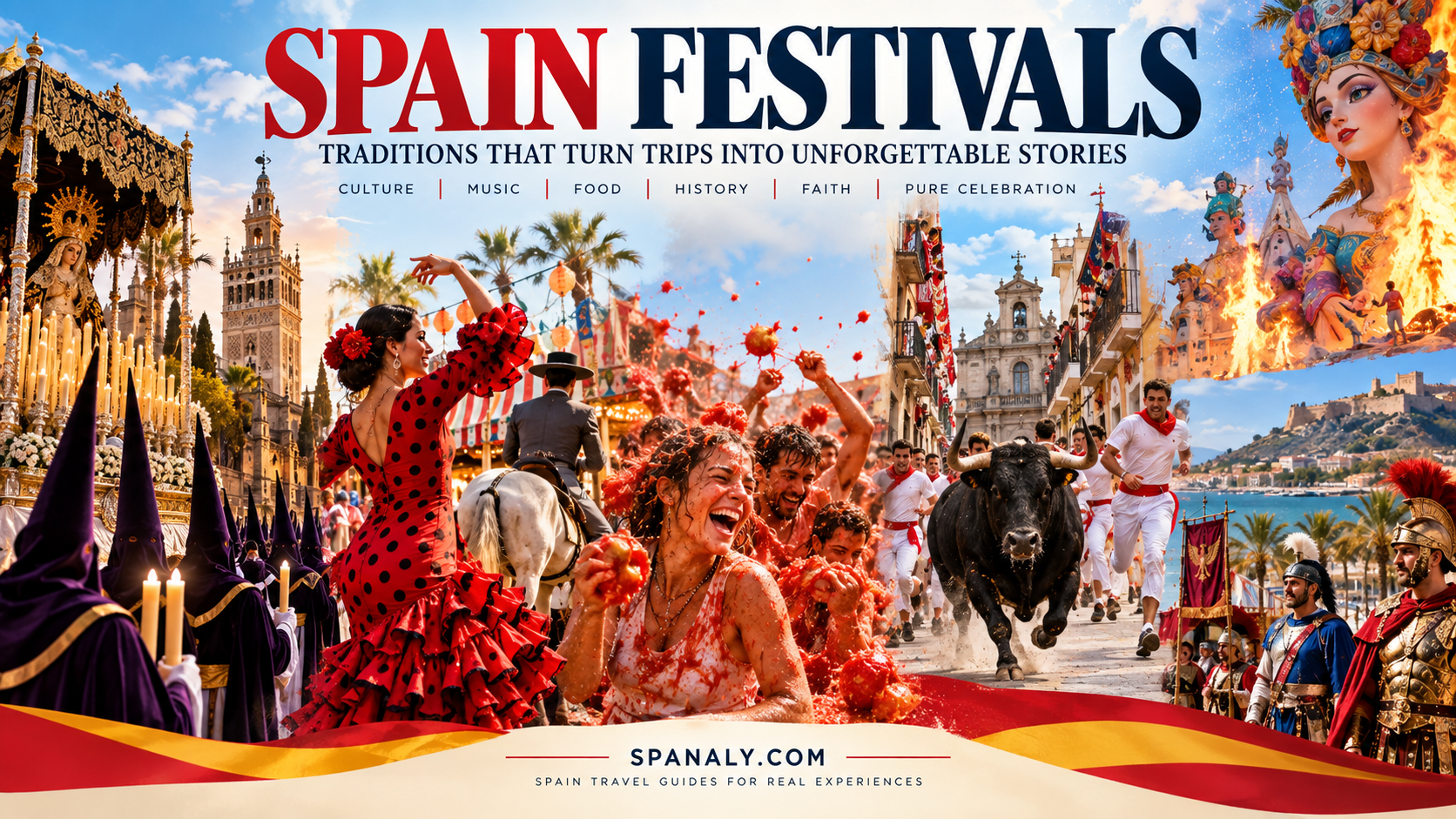
Spain’s festivals are not simply things to discover after you arrive. The biggest celebrations can decide where you stay, how many nights you need and when you should travel. Start with the experience you want, then build the trip around the celebration.
WHAT TO PLAN NEXT
Spain’s next festival decisions
Use this section as the planning layer of the guide. The festival pages below contain the detailed dates, programmes and practical advice for each edition.
Carthaginians and Romans Festival
18–27 September 2026
Cartagena becomes a city-wide historical celebration for ten days. Plan at least two nights, choose one major parade or ceremony, and keep an evening free for the Festival Camp.
Plan CartagenaFeria del Caballo de Jerez
24 April–1 May 2027
Jerez is one of the easiest major fairs for visitors because the casetas are generally open to the public. Book accommodation early and plan at least two nights.
Plan JerezCorpus Christi in Toledo
27 May 2027
Toledo works best as more than a rushed procession day. Stay long enough to see the decorated city and experience the ceremony without turning the trip into a transport race.
Plan ToledoPlanning note: dates and programmes can change. Always check the dedicated festival guide and the official edition information before making non-refundable bookings.
THE BIGGEST REASONS TO TRAVEL
Start with Spain’s six biggest festival trips
These are the celebrations most international travellers search for first. Each one creates a different kind of trip, so the useful question is not simply which festival is famous — but what you need to plan around it.
Las Fallas
Valencia changes completely for several days. Book accommodation first, then decide which fireworks, street events and final nights matter most to you.
Best trip length: at least 2 nightsSemana Santa
Do not plan “Semana Santa in Spain” without choosing a city. Seville is not Málaga, and neither is Granada. The destination determines the atmosphere and how the week works.
Best trip length: 3+ nights in one citySan Fermín
This is a full city festival with extreme demand, late nights and major crowds — not simply a chance to see the bulls. The event is also ethically controversial for some travellers.
Best trip length: 3+ nightsSeville April Fair
Seville’s casetas are largely private. If you want a fair that is easier to enter as a visitor, Jerez offers a different experience with generally public casetas.
Best trip length: 2+ nightsLa Tomatina
The tomato fight is intense but short. Treat it as an event inside a wider Valencia trip rather than building an entire Spain holiday around a few hours in Buñol.
Best trip length: 1 night or day trip from ValenciaTenerife Carnival
Plan the island first, then the celebration. Flights, accommodation and transport matter as much as choosing which carnival event you want to attend.
Best trip length: several nightsCHOOSE THE EXPERIENCE FIRST
What kind of festival trip do you want?
A religious procession, a historical reenactment and a music festival can happen during the same month. Start with the experience you want, then choose the destination.
Tradition and local culture
Celebrations that belong to one city and reveal its local identity.
History comes alive
Parades, costumes and ceremonies built around historical stories.
Music and performing arts
Trips shaped around concerts, dance, jazz, flamenco and performance.
Food and wine traditions
Regional celebrations where local flavour is part of the reason to travel.
Fire and spectacle
For travellers who want fireworks, night energy and large public spectacle.
Religious celebrations
Plan around ceremony, processions, crowds and the rhythm of the destination.
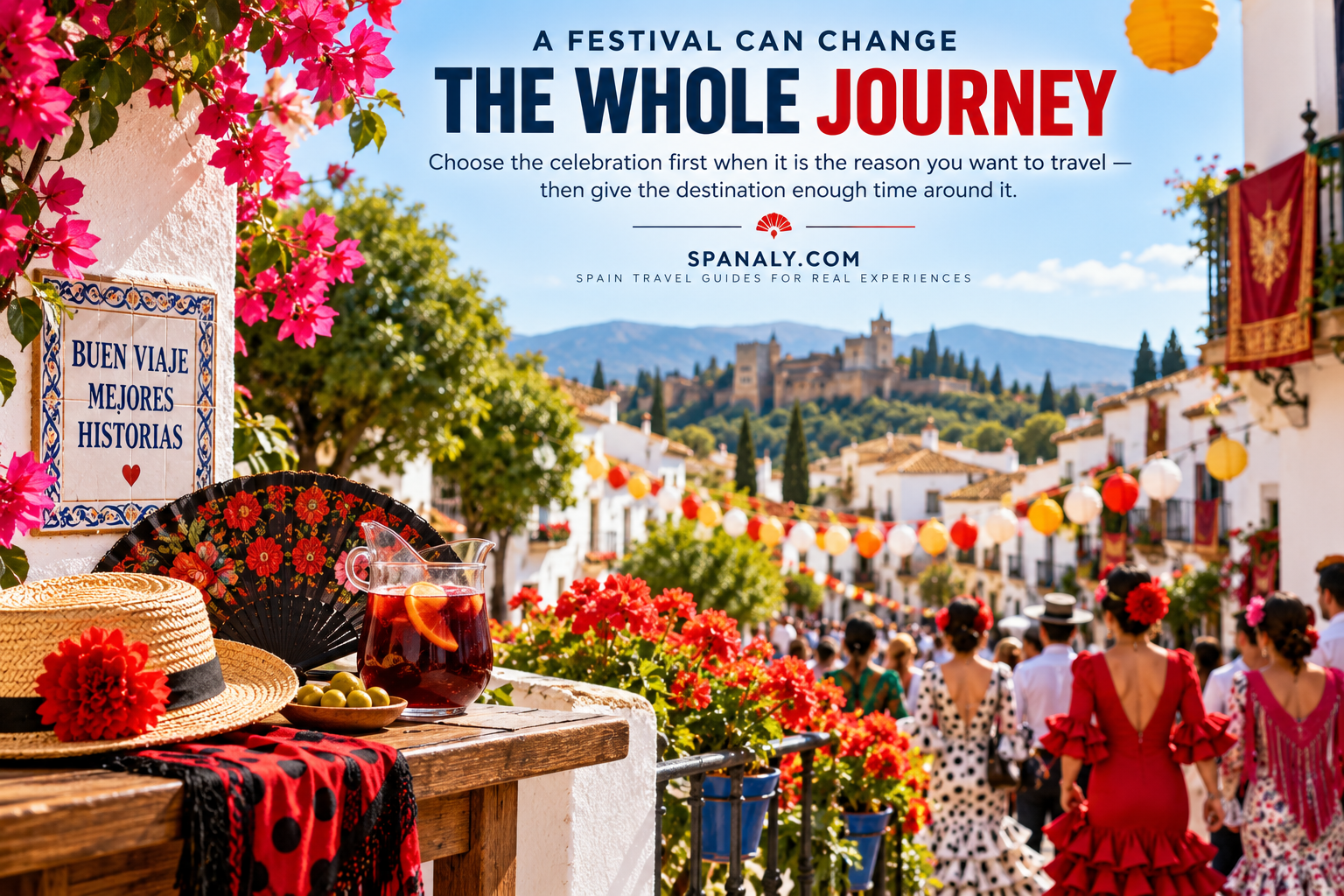
A FESTIVAL CAN CHANGE THE WHOLE JOURNEY
Choose the celebration first when it is the reason you want to travel — then give the destination enough time around it.THE YEAR AT A GLANCE
Choose a festival trip by month
Festival dates can move from year to year. Use the calendar to understand the rhythm of Spain’s festival year, then open the dedicated guide before booking.
Start with local tradition
Tamborrada brings drums and city-wide energy to San Sebastián.
Carnival season
Tenerife Carnival is one of Spain’s biggest winter celebrations.
Valencia changes completely
Las Fallas is a major reason to book Valencia early.
Spring fairs and processions
Seville April Fair and the wider spring festival season reshape travel demand.
Madrid and regional traditions
San Isidro is a useful reason to experience Madrid at a different rhythm.
Summer begins outside
Fiestas de San Juan bring fire and long outdoor nights.
One of Spain’s most intense weeks
San Fermín means full-city crowds and serious accommodation pressure.
Summer spectacle
La Tomatina works best as part of a wider Valencia trip.
City festivals return after summer
Cartagena and other major city celebrations make September a strong planning month.
Big regional celebrations
Fiestas del Pilar gives Zaragoza a major reason to travel.
Smaller, local festival travel
November is better for destination-led trips, local traditions and cultural events than chasing one nationwide mega-festival.
Christmas traditions and winter cities
Build the trip around a city or region, then use its seasonal celebrations as part of the experience.
HOW MUCH TIME DO YOU NEED?
Match the festival to the length of your trip
Not every celebration deserves the same amount of time. This simple layer prevents a common planning mistake: treating a two-hour event and a city-wide festival as the same kind of trip.
A few hours or one day
Best for short, concentrated events such as La Tomatina, especially when Valencia or another destination is the real base of the trip.
Two nights
A strong starting point for city festivals such as Cartagena, Jerez and Las Fallas.
A longer festival trip
Major weeks such as San Fermín or Semana Santa in Seville deserve several nights if the festival is the main reason you are travelling.
DON’T CHOOSE THE HOLIDAY. CHOOSE THE CITY.
Semana Santa is not one Spain trip.
Spain’s Holy Week changes dramatically from one destination to another. The atmosphere, scale, routes and crowds depend on where you stay.
Seville is often the first choice for scale and intensity. Málaga offers a different urban atmosphere, while Granada adds its own historic setting. Choose the city first, then use its dedicated guide to plan the week.
Explore Semana SantaFOLLOW THE DESTINATION
Explore festivals by region
Many celebrations make more sense as part of a regional journey than as isolated events.
Andalusia
Fairs, horses, flamenco and some of Spain’s strongest religious traditions.
Catalonia
Large city celebrations, neighbourhood traditions and international music festivals.
Valencia and Murcia
Fire, street spectacle and historical reenactments.
Northern Spain
Major city weeks, Atlantic culture, music and deeply local traditions.
THE DETAILS THAT CHANGE THE TRIP
How to plan a festival trip in Spain
Check the exact edition before booking
Dates, routes, ticket systems and programmes can change. Use the pillar to choose the event, then open the dedicated guide before making non-refundable plans.
Book accommodation before building the rest
Major festivals can change hotel prices and availability more than any attraction on your itinerary.
Choose one key moment
You rarely need to chase every parade or ceremony. Pick the event that best represents the festival and build the day around it.
Understand what is free and what is not
Streets and public celebrations are often free, while concerts, reserved seating, special shows and selected events may require tickets.
THE FULL FESTIVAL CLUSTER
Explore Spain’s festival guides
Start here to choose the right celebration, then move into the destination guide that tells you how the actual trip works.
Live festival planning
Carthaginians and Romans Feria del Caballo de Jerez Corpus Christi in Toledo Aste NagusiaHistory and regional events
Moros y Cristianos Las Bodas de Isabel Haro Wine Battle Descenso del SellaFESTIVAL TRAVEL QUESTIONS
Frequently asked questions about festivals in Spain
What are the biggest festivals in Spain?
Some of the best-known celebrations for international travellers include Las Fallas, Semana Santa, San Fermín, the Seville April Fair, La Tomatina and Tenerife Carnival.
When is the best time to visit Spain for festivals?
Spain has important celebrations throughout the year, although spring and summer have the highest concentration of major festival trips.
Do festival dates change every year?
Yes. Religious celebrations can move with the calendar, while local programmes and festival dates may also change from one edition to another.
Do you need tickets for festivals in Spain?
Many public streets and celebrations are free, but selected shows, concerts, reserved seating and special events may require tickets.
How many nights should I stay for a Spanish festival?
It depends on the event. La Tomatina can work as a short excursion, while city-wide festivals such as Las Fallas, Jerez or Cartagena usually benefit from at least two nights. Major weeks such as San Fermín or Semana Santa deserve longer stays.