Seville
Tapas + espinacas con garbanzos + pescaíto. Make the meal about bar-to-bar rhythm rather than one giant order.
Spain’s Culture & Lifestyle
SPANALY FOOD GUIDE
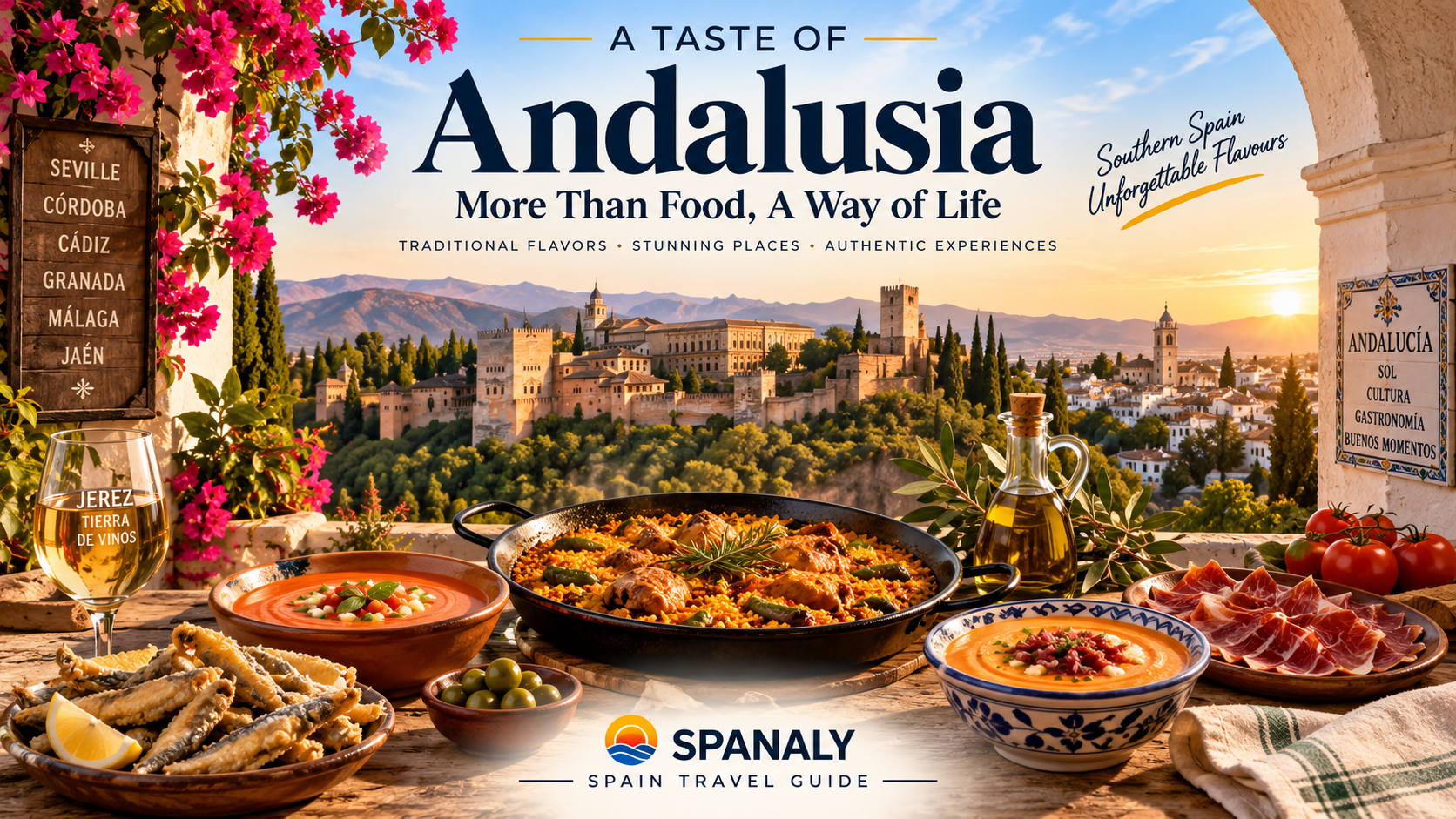
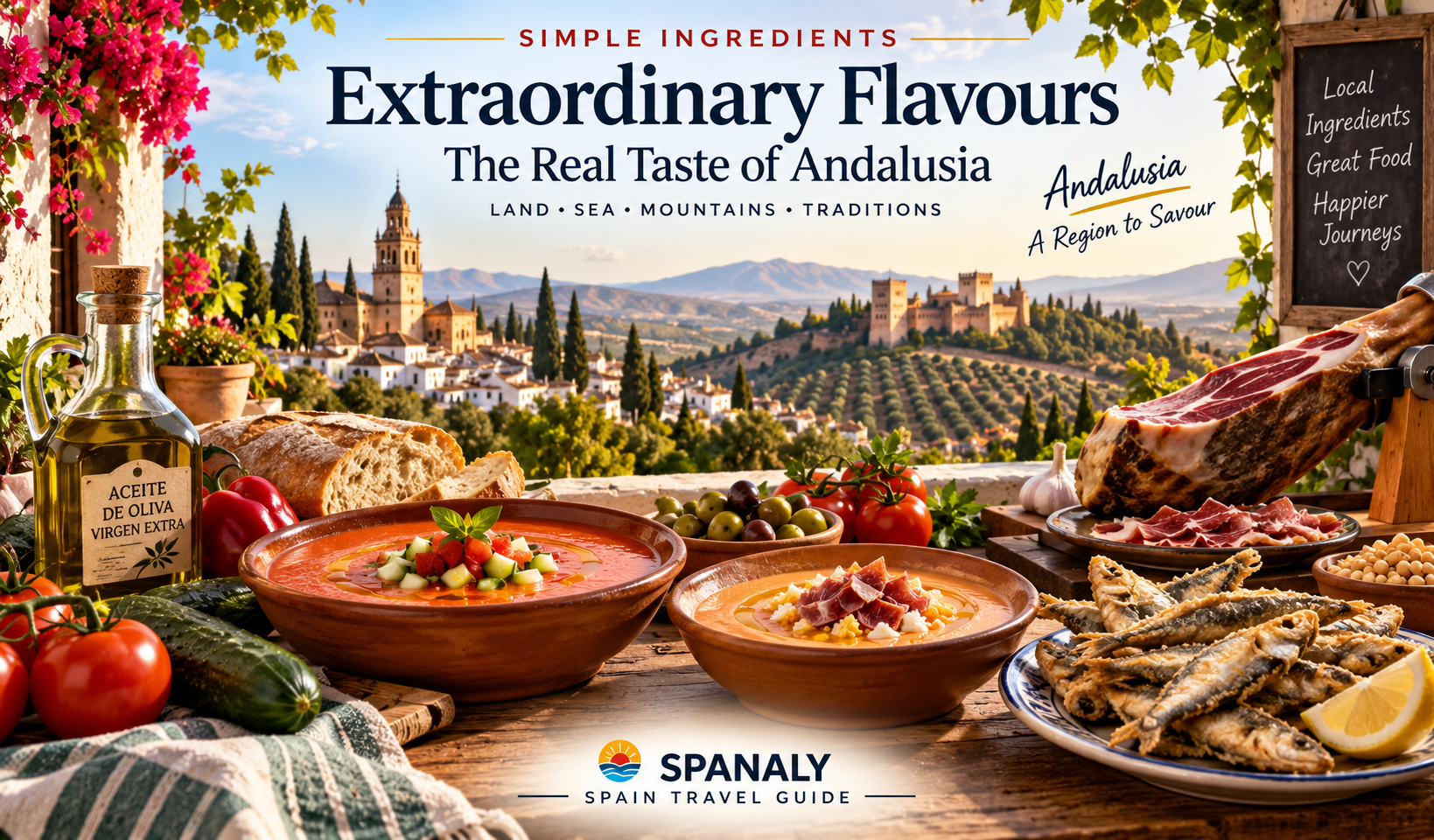
Andalusian food makes more sense when you follow the landscape: olive country inland, Atlantic and Mediterranean seafood on the coast, cold soups in the heat, and tapas as a way of moving through a city.
START HERE
Andalusia is too large to reduce to one checklist. The most useful first decision is where you are eating, then the season, then the format of the meal.
Tapas + espinacas con garbanzos + pescaíto. Make the meal about bar-to-bar rhythm rather than one giant order.
Salmorejo + flamenquín. Add rabo de toro when you want a slower, heavier meal.
Pescaíto frito + tortillitas de camarones. On the coast, let the day’s seafood shape the order.
Go bar to bar. Explore the local tapas rhythm without assuming that every drink comes with a free tapa.
Mediterranean fish + espetos. Seafood is a stronger starting point here than forcing an inland dish onto the coast.
Make olive oil part of the experience. Think tastings, olive-growing landscapes and dishes where the oil is not an afterthought.
THE REGIONAL MAP
Andalusia has both Atlantic and Mediterranean coasts, fertile agricultural areas, mountains and one of Europe’s defining olive-oil landscapes. That is why the food changes as you move through the region.
Official Spanish tourism sources describe seafood, olive oil, vegetables, Iberian ham, cold soups, stews and tapas as major parts of Andalusian cooking. The regional tourism authority likewise places olive oil at the center of the cuisine. Spain.info’s Andalusia cuisine guide and Andalucía’s official olive-oil guide are useful references for the broader picture.
THREE WAYS TO EAT
Small portions are ideal when you want variety. Order conservatively, see what arrives, then add another plate.
A useful middle ground for sharing. It can make more sense than ordering a full ración when you are already planning several dishes.
A larger portion for sharing or for a substantial dish. It is not a sensible default when you are still exploring the menu.
SEASON MATTERS
Gazpacho and salmorejo become especially natural choices. If August heat is intense, a sequence of lighter tapas can be more comfortable than beginning with several fried or heavy dishes.
Pucheros, berzas, migas and slow-cooked meat dishes become more attractive. Rabo de toro fits this side of Andalusian cooking particularly well.
Seafood still makes sense, but heat changes the pace. Start light and let the coast’s fish, shellfish or grilled sardines carry the meal.
CORE DISHES
A cold, fluid vegetable soup built around tomato, olive oil, vinegar and vegetables such as cucumber and pepper. It is one of Andalusia’s clearest warm-weather foods.
Read the full Spanaly Gazpacho guide →Thicker than gazpacho, with bread giving it a creamy body. Córdoba is its strongest geographic reference. Traditionally it is not simply “another gazpacho”; its texture is part of the identity.
Read the full Spanaly Salmorejo guide →Small fish and seafood lightly coated and fried in olive oil. It is strongly associated with Andalusia’s coast, especially Cádiz and Huelva.
Read Spanaly’s Pescaíto Frito guide →Thin, crisp shrimp fritters strongly associated with Cádiz and the coastal Andalusian table. They are a classic example of why coastal context matters.
Traditionally Serrano ham wrapped with pork loin, breaded and fried, with some versions adding cheese. It is a substantial Córdoba choice, not a delicate starter.
A slow-cooked tail dish associated strongly with Andalusian cooking. Look for tender meat and a deep sauce; this is the kind of dish that rewards time rather than speed.
Spinach and chickpeas with garlic, spices and olive oil. In Seville, it is one of the most useful dishes for understanding the city’s traditional tapas beyond fried food.
Read the full Spanaly guide →A rustic bread-based dish with many regional versions. Garlic, peppers, cured meats and other ingredients may appear, so the local preparation matters more than a single national definition.
Ask about origin and curing rather than treating all Iberian ham as the same. Jabugo is an important Huelva reference, but Jabugo does not mean “all Andalusian ham”.
Read the Spanaly Jamón guide →Andalusia also has a serious slow-cooking tradition: chickpeas, vegetables, meats and cured ingredients appearing in family-style stews. These dishes become particularly relevant when the weather cools.
DO NOT MIX THESE UP
Spain’s official tourism guidance treats both as classic Andalusian cold soups, while Córdoba-style salmorejo is specifically distinguished by its thicker, bread-based texture. See the official regional overview.
CITY BY CITY
These are starting points, not rankings. Once you know the local direction, use the detailed Spanaly articles to go deeper.
SEVILLE
Start with tapas and look for espinacas con garbanzos, seasonal dishes and pescaíto. Seville is a place where the sequence of stops is part of the food experience.
CÓRDOBA
The cleanest first pairing is salmorejo followed by something more substantial such as flamenquín. Rabo de toro belongs to the slower, heavier side of the meal.
CÁDIZ
Start with pescaíto frito or tortillitas de camarones. Cádiz is also a natural place to explore the relationship between coastal food and Sherry.
GRANADA
Use Granada’s tapas culture as an exploration format. Do not assume that every establishment follows the same free-tapa practice; menus, portions and customs vary.
MÁLAGA
Look for espetos de sardinas, fried fish and other coastal seafood. The local seaside setting is part of the decision, not just the name of the dish.
JAÉN
Jaén is not about one mandatory plate. It is about the ingredient and landscape: olive groves, mills, tastings and food where excellent extra virgin olive oil is central.
TAPAS AS A RHYTHM
Tapas work best when you treat them as a way of moving through a city, not as a single giant meal. Spain’s official tourism guidance describes going from bar to bar and trying each establishment’s specialties as part of the tradition.
That also explains why a universal “best tapas” list is less useful than a city-specific approach. The same dish can make sense in Seville, Cádiz or Granada for completely different reasons.
DRINK WITH THE FOOD
Beer is common, but it should not be the automatic Andalusian pairing. For coastal tapas and fried fish, regional wine can be a particularly useful match. Spain.info specifically highlights white Jerez wines, Manzanilla and Finos with dishes such as garlic prawns, sardines, tortillitas de camarones and pescaíto frito.
Dry styles that fit naturally into seafood and tapas-focused meals.
Another important Andalusian wine region, particularly relevant around Córdoba.
Explore the wine alongside the food rather than treating Sherry as a separate tourist activity.
Official pairing reference: Spain.info — Regional wines and tapas .
PRACTICAL NOTES
In very hot weather, start with something light. Several fried or heavy dishes in one sitting can be a poor match for an August afternoon.
Fried foods may involve wheat flour; seafood may involve shellfish; desserts may contain nuts. Ask before ordering if you have a serious allergy.
There are strong vegetable and legume dishes, but traditional recipes may use ham, meat or fish products. Confirm the preparation.
Portion names are useful but not standardized enough to justify ordering a table full of raciones on the first round.
A REALISTIC FOOD DAY
Toast with olive oil and tomato, plus coffee.
One drink and one small plate rather than a full lunch.
Choose the city’s strongest local direction.
Keep it small if lunch was substantial.
Share two or three dishes and stop before ordering becomes automatic.
FAQ
Gazpacho, salmorejo, pescaíto frito, tapas, Iberian ham, olive-oil-based cooking and regional stews are among the strongest references.
Gazpacho is generally more fluid and refreshing, commonly including cucumber and green pepper. Salmorejo is thicker, with bread giving it its characteristic body and Córdoba providing its strongest identity.
It is found across Andalusia’s coast, with Cádiz and Huelva particularly strong references. Use the local coastal context rather than treating it as one identical dish everywhere.
Not automatically. Start with tapas or a media ración, especially when you want to sample several dishes. Add a larger ración once you know what you actually want.
Beer is common, but it is not the only natural pairing. Fino, Manzanilla and other Andalusian wines can work especially well with seafood and tapas.
Start with the tapas format and look for espinacas con garbanzos, pescaíto frito and house specialties. Then use the detailed Spanaly Seville food guides to go deeper.
THE SPANALY RULE
Seville has its tapas rhythm. Córdoba has its cold soup and hearty classics. Cádiz lets the Atlantic lead. Granada rewards bar-to-bar exploration. Málaga points toward the Mediterranean. Jaén turns olive oil into part of the destination itself.