SPANALY · SEVILLE CITY GUIDE
Seville Shopping Guide: Markets, Ceramics & Local Finds
Shop beyond the souvenir shelves. Find traditional markets, Triana ceramics, independent crafts, and useful tips for choosing what to bring home.
A practical guide to shopping with more context and less guesswork.
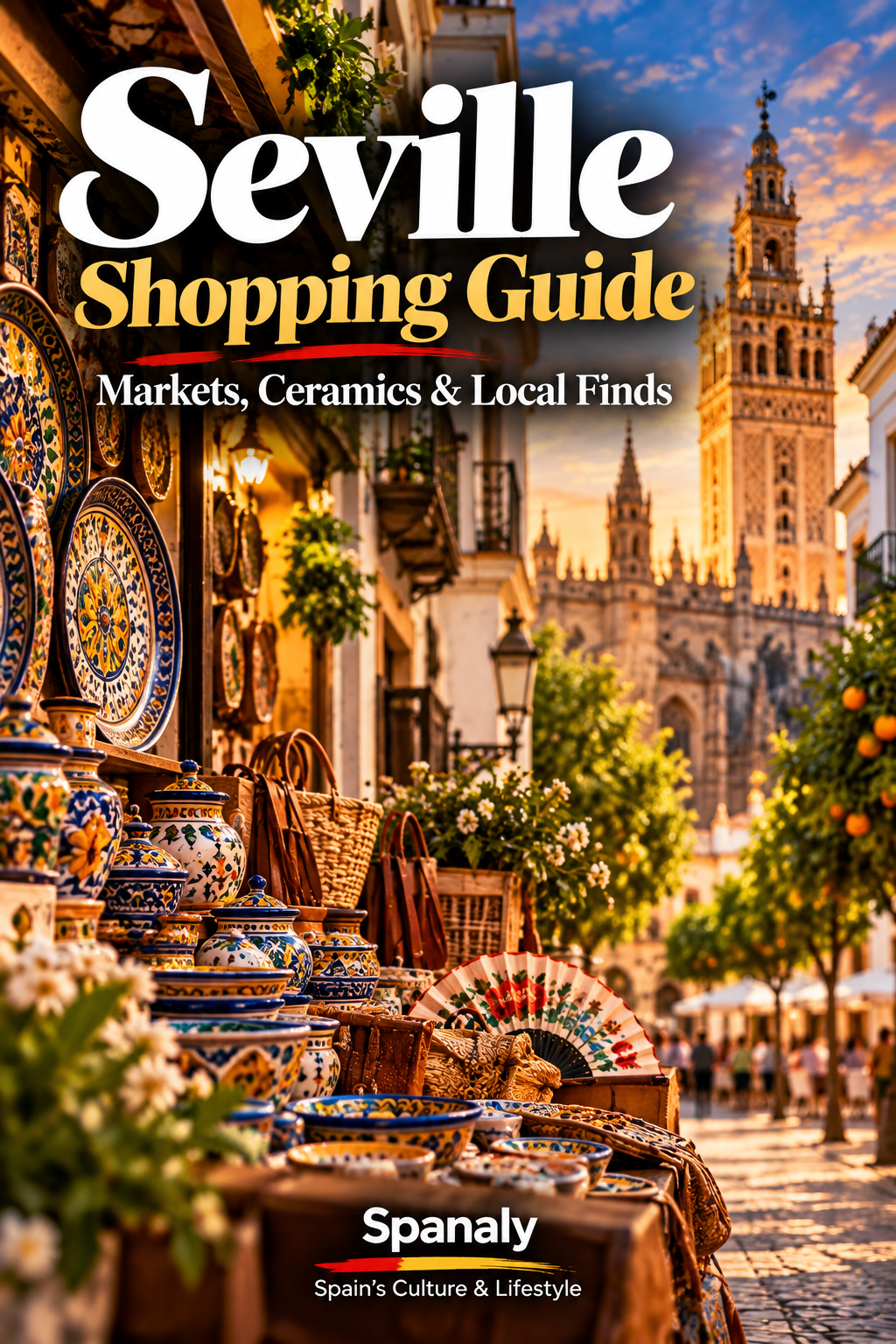
Shopping in Seville can be part of discovering the city, not just a break between sightseeing stops.
Look beyond familiar souvenirs and you will find food markets, ceramic workshops, craft stalls, and independent shops. Each offers a different way to take a piece of Seville home.
The key is knowing what you are looking for. A food market, a ceramics workshop, and a central shopping street serve different purposes. This guide helps you choose where to go and what to look for.
START WITH YOUR SHOPPING STYLE
Where should you begin?
Traditional markets
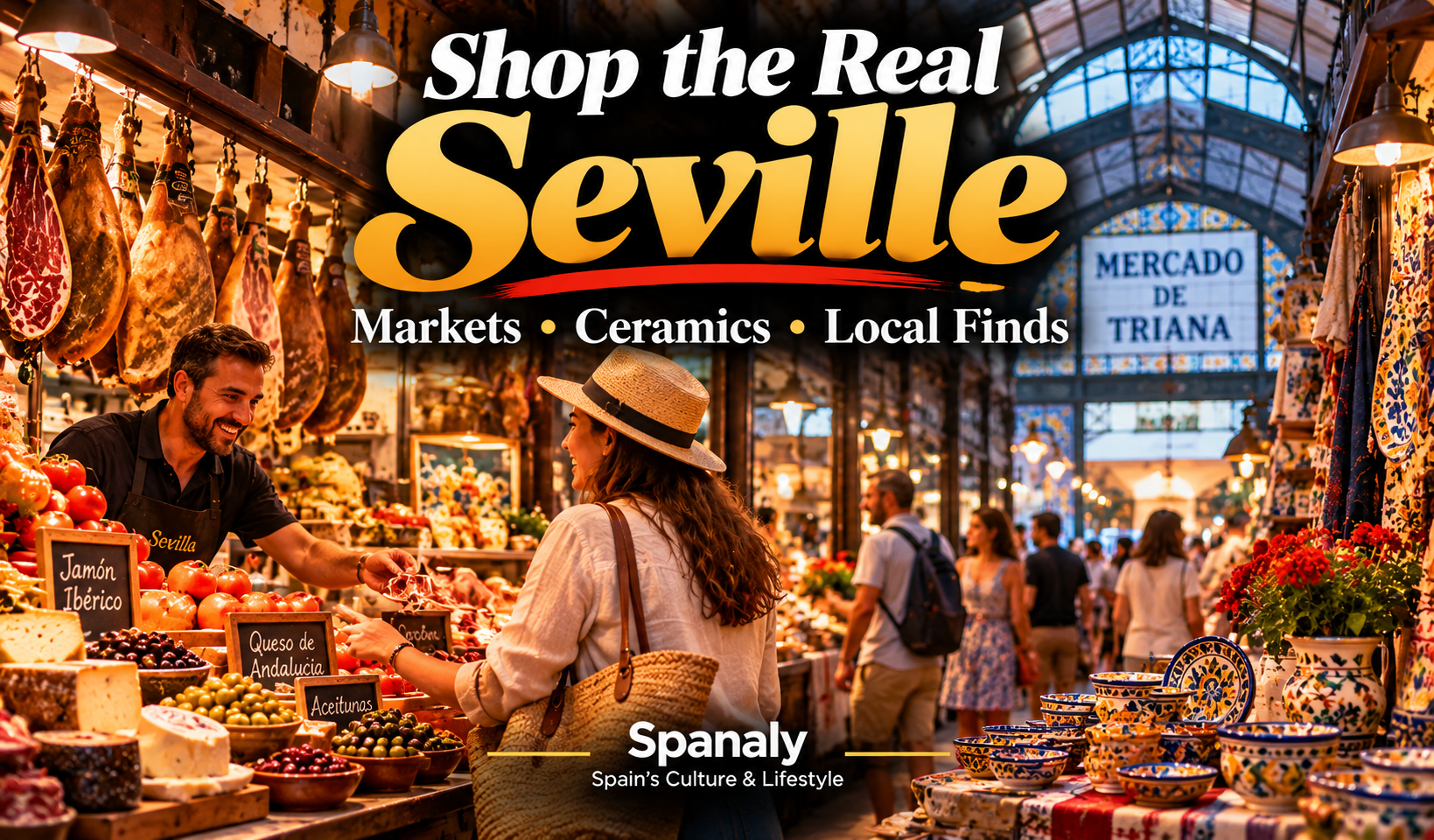
Visit a food market for produce, groceries, and a glimpse of everyday life. Triana is also home to food counters and places to eat.
Triana ceramics
Explore the ceramics centre and nearby workshops for tiles, plates, bowls, and decorative pieces.
El Postigo craft market
Browse artisan-made jewellery, leather, textiles, and decorative objects near the Cathedral.
Sierpes and Tetuán
Shop fashion, accessories, and familiar retailers in Seville’s central commercial area.
Triana: Mercado de Triana in the morning, then Centro Cerámica Triana and nearby pottery workshops.
Historic centre: Sierpes and Tetuán for shops, with El Postigo on Calle Arfe nearby. Allow separate time to cross between the two areas; they are not a one-hour combined stop.
MARKETS
Seville’s traditional markets
Markets are useful for seeing everyday food culture. They are not all designed for the same visit. Some focus on shopping for ingredients; others combine food stalls with places to eat.
Mercado de Triana
Mercado de Triana stands at Plaza del Altozano, beside the Triana Bridge. It is a traditional food market, not a late-night souvenir bazaar. Its stalls focus on food, while some businesses also serve meals and drinks.
Market-shop hours: generally Monday to Saturday, around 09:00–14:30. Restaurants and other hospitality businesses follow separate, often longer schedules. On Sundays and public holidays, shop stalls are generally closed, while some food venues may open on different hours.
The remains of Castillo de San Jorge beneath the market provide historical context for the site; they are not part of the shopping offer. Check the market’s own schedule and the hours of any specific stall or restaurant before visiting.
Official Mercado de Triana opening hours
Other markets to know
Depending on where you are staying, other traditional markets may be more convenient. Seville’s tourism office lists Mercado de la Encarnación, Mercado del Arenal, Mercado de la calle Feria, and the gourmet market at Lonja del Barranco.
Choose a market based on location and purpose. If you want groceries or a glimpse of local routines, a traditional food market is the natural fit. For a sit-down food stop, check which venues are operating and when.
THE SIGNATURE CRAFT
What to look for in Triana ceramics
Ceramics are among Seville’s best-known crafts. Triana has a long pottery tradition, visible in tiled façades, courtyards, and workshops throughout the neighbourhood.
For a practical souvenir, look for a small plate, bowl, vase, or tile. Larger decorative pieces can be beautiful, but consider how you will pack and transport them.
Hand-painted work can vary in pattern and finish. Ask the seller about the maker, materials, and whether the piece is handmade. If you are buying a tile, ask whether it is intended for decoration or suitable for installation.
Visit the Triana Ceramics Centre
The Centro Cerámica Triana is housed in the former Cerámica Santa Ana factory. Its displays explain the work behind the craft, including historic kilns, tools, and ceramic pieces.
It is a useful stop before browsing nearby shops. You can learn how ceramics were produced and see why the craft became so closely associated with Triana.
- Address: C/ Callao, 16, on the corner of C/ Antillano Campos.
- Regular hours: Tuesday–Sunday, 10:00–20:00; last admission 19:00.
- Closed: Mondays. Holiday schedules and additional closure dates may apply.
- Admission: €2.10 general; €1.60 reduced. Free entry applies to specified groups and to holders of a general Alcázar ticket, subject to the centre’s conditions.
Check the official visitor page before setting out, especially around holidays.
Official Centro Cerámica Triana hours, tickets, and visitor information
HANDMADE FINDS
Where to find local crafts and gifts
Not every meaningful souvenir needs to be ceramic. Seville’s craft shops offer work in leather, textiles, jewellery, paper, wood, and other materials.
El Postigo Municipal Craft Market
El Postigo Municipal Craft Market is on Calle Arfe, close to the Cathedral and the Arco del Postigo del Aceite. Its artisan stalls offer a different experience from the food market in Triana, with items such as jewellery, leather and textile accessories, ceramics, and decorative pieces.
It fits naturally into a historic-centre shopping walk. Opening days and hours can vary, so check the current listing before making a special trip. Ask makers about the origin of an item if local production matters to you.
Official Calle Arfe craft-market listing and current schedule
Independent shops in the historic centre
The streets around Sierpes, Tetuán, and the wider central shopping area bring together fashion, accessories, and specialist retailers. Calle Rosario is another area noted for independent boutiques and local designers.
For a more traditional feel, explore the smaller streets around Alfalfa and the Encarnación area. You may find flamenco accessories, textiles, and shops selling items linked to local celebrations.
WHAT TO BRING HOME
Souvenirs worth considering
A small ceramic piece
A plate, bowl, or tile is easier to pack than a large decorative object. Ask for protective wrapping.
Handmade accessories
Consider a fan, leather item, jewellery, or textile accessory. Check the materials and how it was made.
Local food products
Olive oil, sweets, and other packaged foods can make useful gifts. Check customs rules and airline baggage restrictions before buying.
Something from an independent maker
A small artwork or crafted object can carry a story. Ask about the artist or workshop behind it.
PRACTICAL SHOPPING TIPS
Plan your shopping without rushing
- Group nearby stops. Explore Triana’s market and ceramics shops together. Save central craft shops for a day in the historic centre.
- Check opening hours. Market food stalls, restaurants, craft markets, and independent shops do not share one schedule. Many shops close on Sundays; smaller shops may also take a midday break.
- Ask before taking photos. Some workshops and small shops may prefer that visitors ask first.
- Think about transport. Fragile ceramics need careful wrapping, especially if you are travelling by train or plane.
- Compare before buying. Look at the finish, size, materials, and maker details rather than choosing only by appearance.
- Keep receipts. If you live outside the EU, you may be eligible for a VAT refund on qualifying purchases; check the official process and keep the required paperwork.
- Pack food carefully. Before buying olive oil or sweets, check airline baggage rules and the customs rules for your destination.
QUICK ANSWERS
Frequently asked questions
What is Seville known for shopping?
Seville is especially associated with ceramics from Triana, alongside handmade accessories, flamenco-related items, fashion, and local food products.
Where can I buy traditional ceramics in Seville?
Triana is the neighbourhood most closely associated with the city’s pottery tradition. You can browse local shops and visit the Triana Ceramics Centre to learn about the craft.
Is Triana known for ceramics?
Yes. Triana has a long pottery tradition. The ceramics centre and nearby workshops are useful places to learn about the craft and browse locally made pieces.
Is Mercado de Triana a food market?
Yes. It is primarily a traditional food market, with some hospitality businesses. Shop stalls generally operate in the morning and early afternoon; restaurants may stay open longer.
Do shops in Seville close for a siesta?
Some smaller independent shops take a midday break, but schedules vary. Check individual opening hours rather than assuming every shop closes.
What is a practical souvenir to take home?
Small ceramics, handmade accessories, and well-packaged local food products can be convenient options. Consider your luggage space and any travel restrictions.
Make room for local discoveries
Shopping in Seville is most rewarding when you match the place to what you want to find. Visit a market for food, explore Triana for ceramics, and browse craft shops when you have time to look closely. A little planning leaves more room for the unexpected.
Continue exploring Seville with Spanaly