🏨 Accommodation in Spain
Imagine waking up in a 14th-century castle or a hidden boutique suite in the heart of Madrid. In 2026, finding the perfect accommodation in Spain is the secret to a seamless trip. Whether you seek luxury landmarks or budget-friendly hostals, Spain offers a stay for every traveler’s soul.
🏠 Quick Guide: What is the Best Stay for You?
For Romance & History: Choose Paradores (Castles & Monasteries).
For Local Charm: Try Casas Rurales in the Spanish countryside.
For City Explorers: Book Boutique Hotels near major plazas.
For Budget Travelers: Look for Hostals (Family-run guesthouses).
For Families: Opt for Vacation Rentals with full kitchens.
Spanaly Insight: Your choice of stay dictates your daily flow. Before booking, check our Money in Spain Guide to understand how to pay for your deposit safely and avoid hidden ATM fees near hotel zones.
📸 Spain Accommodation Snapshot: Essential Travel Facts
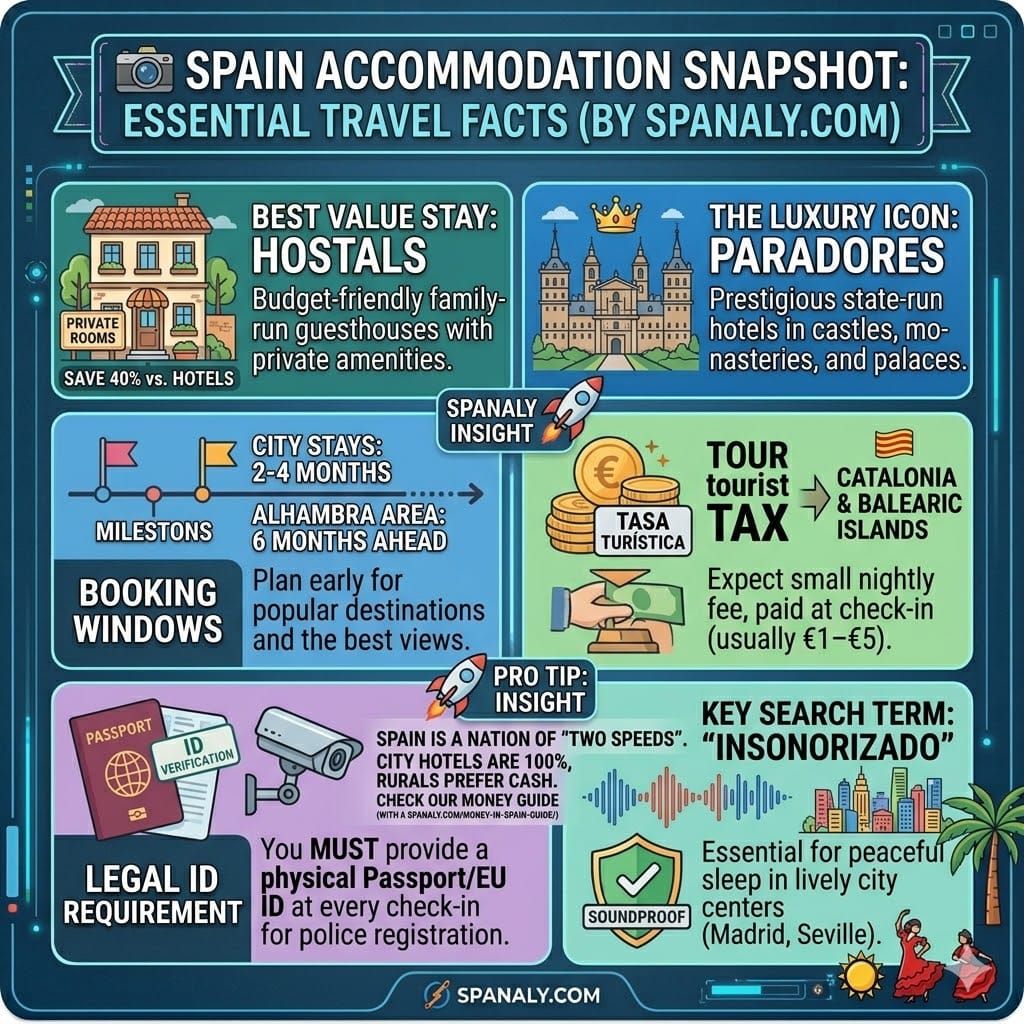
Before you dive into the details, here is the high-level reality of finding your home away from home in the Iberian Peninsula.
Best Value Stay: Hostals (Family-run guesthouses) offer private rooms at nearly half the cost of major hotels.
The Luxury Icon: Paradores are prestigious state-run hotels located in historic castles and monasteries.
Booking Window: Secure city stays months ahead; Alhambra area stays require early reservation for the best views.
Tourist Tax: Expect a small nightly fee in Catalonia and the Balearic Islands, usually paid at check-in.
Legal Requirement: By law, you must provide a physical Passport or EU ID for police registration at every stay.
Key Search Term: Always look for “Insonorizado” (Soundproof) when booking in vibrant historic city centers.
Spanaly Insight: Spain operates at “Two Speeds.” While city hotels are fully digital, many Casas Rurales in the countryside still prefer a cash buffer for local expenses. Check our Money in Spain Guide to balance your travel wallet perfectly.
📊 Quick Selection: Your Spain Accommodation Guide
Choosing where to stay in Spain for the first time can be overwhelming given the incredible diversity of the Iberian Peninsula. To help you navigate the best areas to stay in Spain, we have created this quick reference table to match your travel style with the perfect lodging category.
| Accommodation Type | Best For | Price Range | Experience Style |
|---|---|---|---|
| Paradores | Romance & History | $$$ | Stay in a Historic Castle |
| Boutique Hotels | Style & Design | $$ | Urban Chic & Character |
| Coastal Resorts | Families & Sun | $$$ | All-Inclusive Relaxation |
| Hostals & Hostels | Budget Travelers | $ | Social & Central Location |
| Monasteries | Peace & Silence | $ | Authentic Spiritual Retreat |
| Vacation Rentals | Groups & Privacy | $$ | Live Like a Local Resident |
🏰 Paradores: Living the Royal Spanish Dream
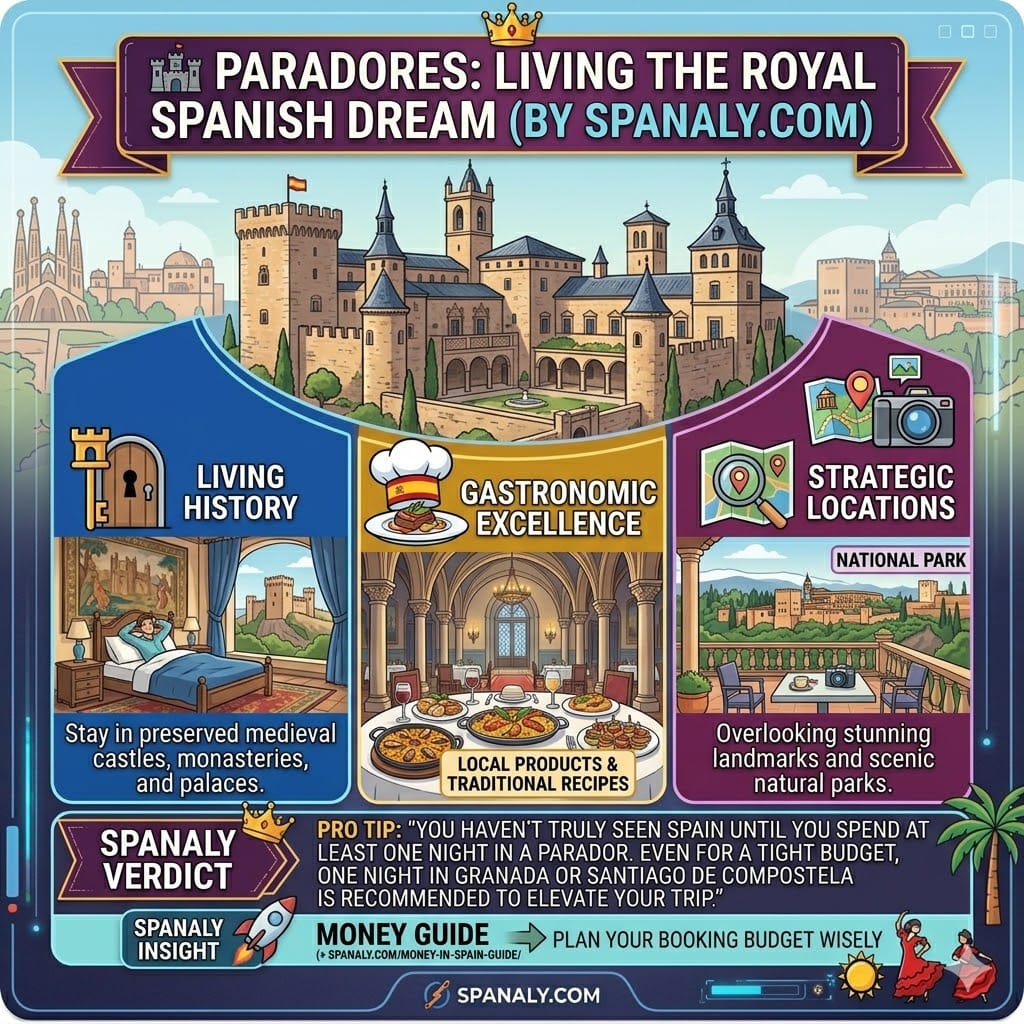
If you want to sleep like royalty, Spain’s Paradores are the ultimate answer. This prestigious state-run network transforms historic castles, monasteries, and palaces into high-end accommodations. Specifically, it is a concept unique to the Iberian Peninsula, blending medieval soul with modern luxury.
Living History: Wake up in a 14th-century fortress or a Gothic convent.
Gastronomic Excellence: Their restaurants strictly serve traditional regional recipes using local products.
Strategic Locations: Often situated overlooking major Spanish Attractions or hidden national parks.
The Spanaly Verdict: > In my professional opinion, you haven’t truly seen Spain until you spend at least one night in a Parador. While they are more expensive than standard hotels, the value lies in the experience. If your budget is tight, I recommend booking just one night in a historic location like Granada or Santiago de Compostela to elevate your entire trip.
Spanaly Insight: Paradores are not just hotels; they are preserved monuments. Many are located within walking distance of the country’s most famous landmarks. Booking months in advance is essential, especially for iconic sites like the Parador de la Alhambra.
🏠 Hostals vs. Hostels: The Great Spanish Confusion
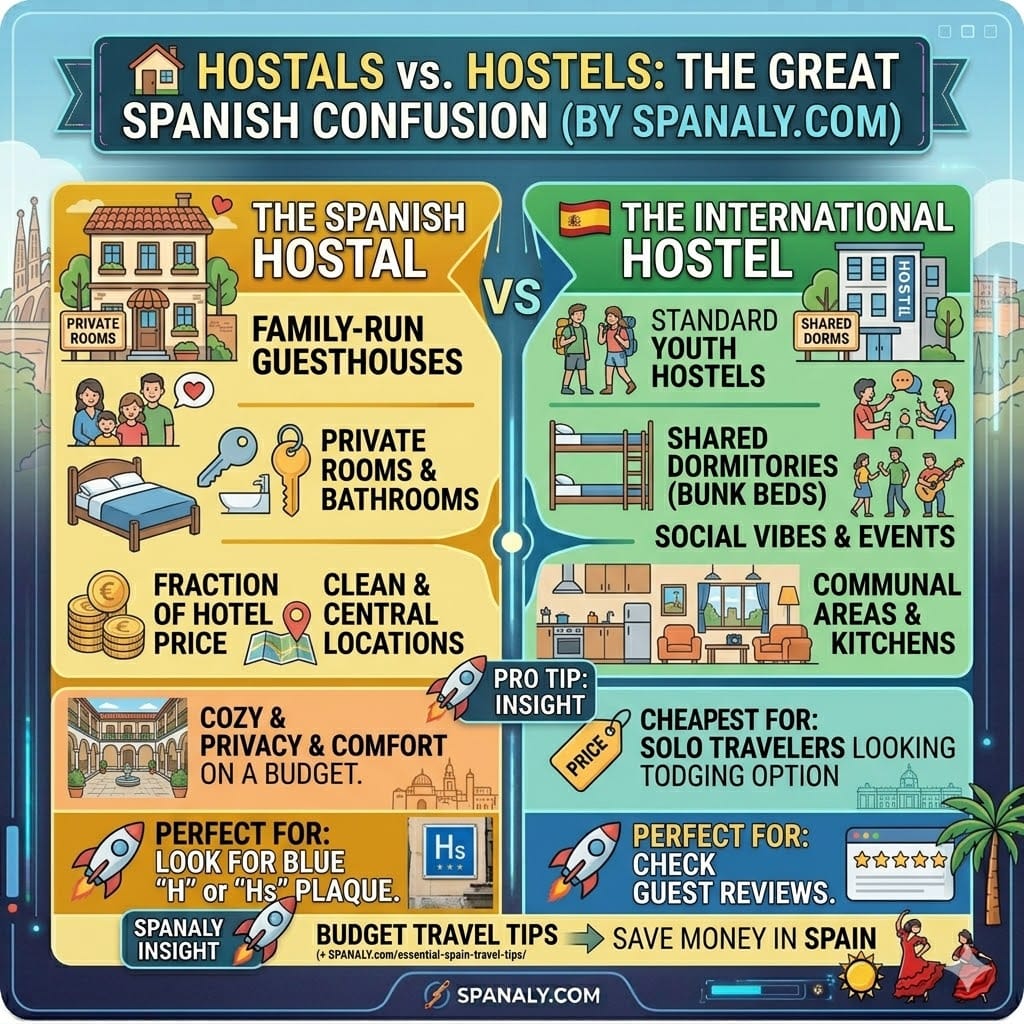
One of the most common mistakes travelers make in Spain is confusing a Hostal (with an ‘a’) and a Hostel (with an ‘e’). While they sound almost identical, they offer completely different experiences. Specifically, understanding this linguistic quirk is the secret to finding high-quality, budget-friendly lodging.
The Spanish Hostal: These are typically family-run guesthouses. They offer private rooms and private bathrooms at a fraction of a hotel’s price.
The International Hostel: These are the standard youth hostels. They focus on social vibes and shared dormitories with bunk beds.
The Quality Gap: Many Spanish Hostals are cleaner and more central than mid-range hotels, often located in beautiful historic buildings.
The Spanaly Verdict: If you value privacy but want to save money, book a Hostal. In my professional experience, they provide the best “price-to-comfort” ratio in Spain. However, if you are a solo traveler looking to meet people, a traditional Hostel remains your best bet.
Spanaly Insight: Most Hostals are located on the upper floors of grand city buildings. Always check our Essential Spain Travel Tips to learn how to identify official licensed signs (usually a blue ‘H’ or ‘Hs’ plaque) before you finalize your booking.
🏨 Hotels in Spain: From Luxury to Budget
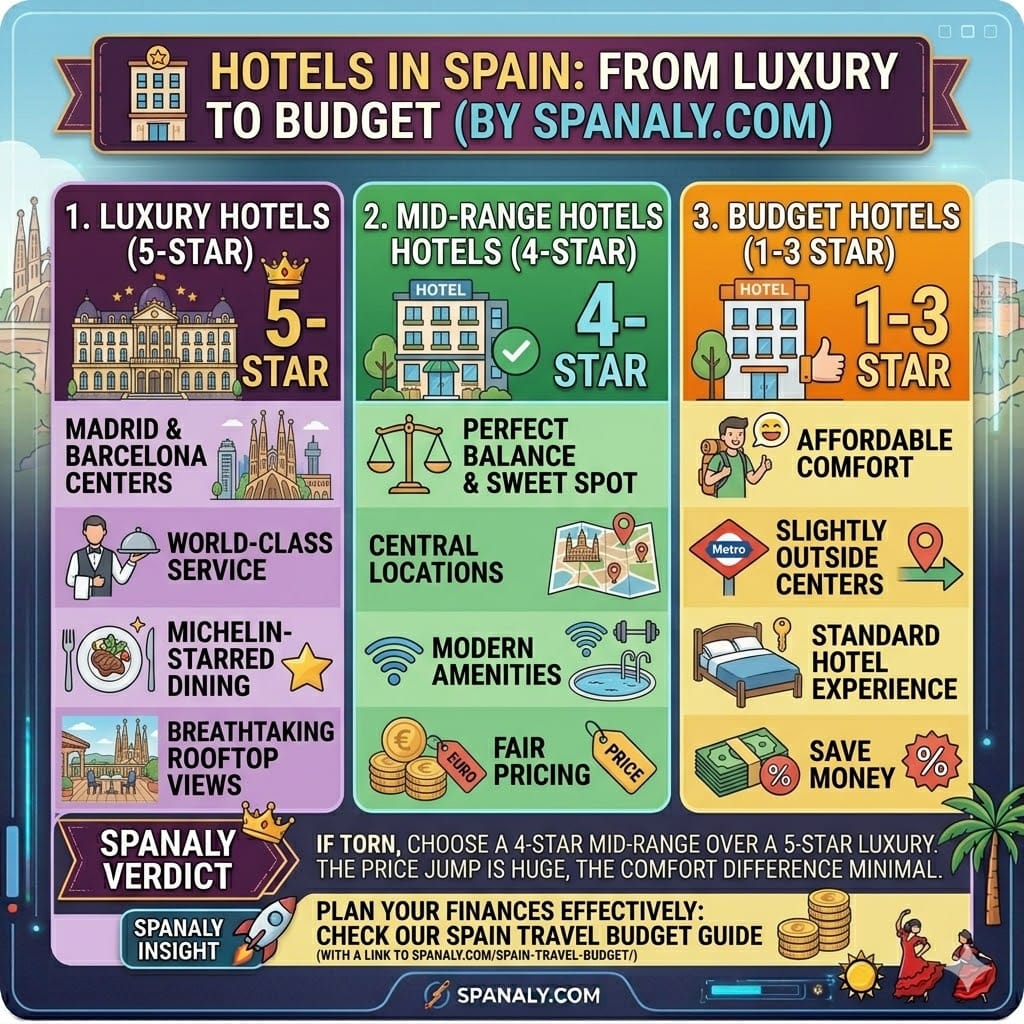
Hotels in Spain offer an incredible range of styles to suit every traveler’s itinerary. Choosing the right category is essential for a seamless trip, as the star-rating system in the Iberian Peninsula often focuses on facilities rather than just “luxury” feel.
Luxury Hotels: Mostly located in the heart of Madrid and Barcelona. Expect Michelin-starred dining and breathtaking rooftop views.
Mid-range Hotels: The “sweet spot” for most tourists. These offer a perfect balance of central locations, modern amenities, and fair pricing.
Budget Hotels: Ideal for those who want a standard hotel experience without the high price tag, often found slightly outside the main tourist plazas.
Specifically, many traditional hotels are housed in beautiful 19th-century buildings, blending historic facades with completely renovated modern interiors. This mix provides a unique atmosphere that modern chain hotels often lack.
The Spanaly Verdict: If you are torn between categories, I recommend choosing a 4-star Mid-range hotel over a 5-star luxury one. In Spain, the jump in price for that fifth star is often huge, while the difference in comfort is minimal. This small choice can save you hundreds of Euros.
Spanaly Insight: Hotel prices fluctuate wildly depending on the season. To plan your finances effectively, check our Spain Travel Budget guide to see how hotel costs fit into your overall daily spending plan.
✨ Boutique Hotels: The Personalized Experience
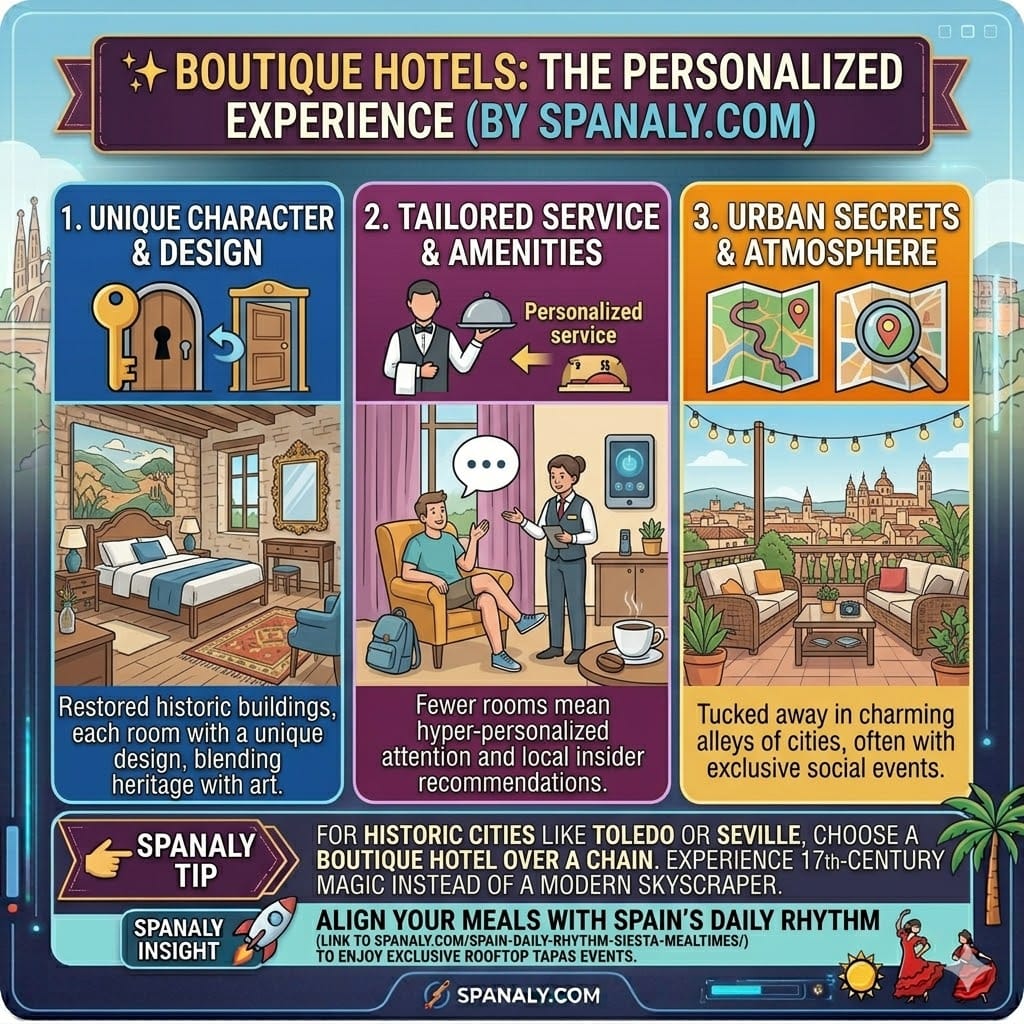
For travelers who value personality over size, Boutique Hotels have become the preferred choice. Often located in restored historic buildings or avant-garde urban spaces, these hotels offer a curated experience that larger chains cannot match. Specifically, they focus on storytelling through their architecture and service.
Unique Character: Each room usually has its own design, blending Spanish heritage with modern art and high-end technology.
Tailored Service: With fewer rooms, the staff can provide hyper-personalized recommendations for your stay.
Urban Secrets: You will often find these gems tucked away in charming alleys of cities like Valencia, Palma de Mallorca, or San Sebastián.
👉 If you are visiting a historic city like Toledo or Seville, choose a Boutique Hotel over a standard chain. The atmosphere of staying in a renovated 17th-century palace adds a layer of magic to your trip that a modern skyscraper simply cannot provide.
Spanaly Insight: Many boutique hotels are designed around the concept of “slow travel.” To fully enjoy the local vibe they offer, try to align your meals with Spain’s Daily Rhythm so you don’t miss out on the hotel’s exclusive rooftop tapas events or social hours.
🌿 Casas Rurales: Escaping to "Empty Spain"
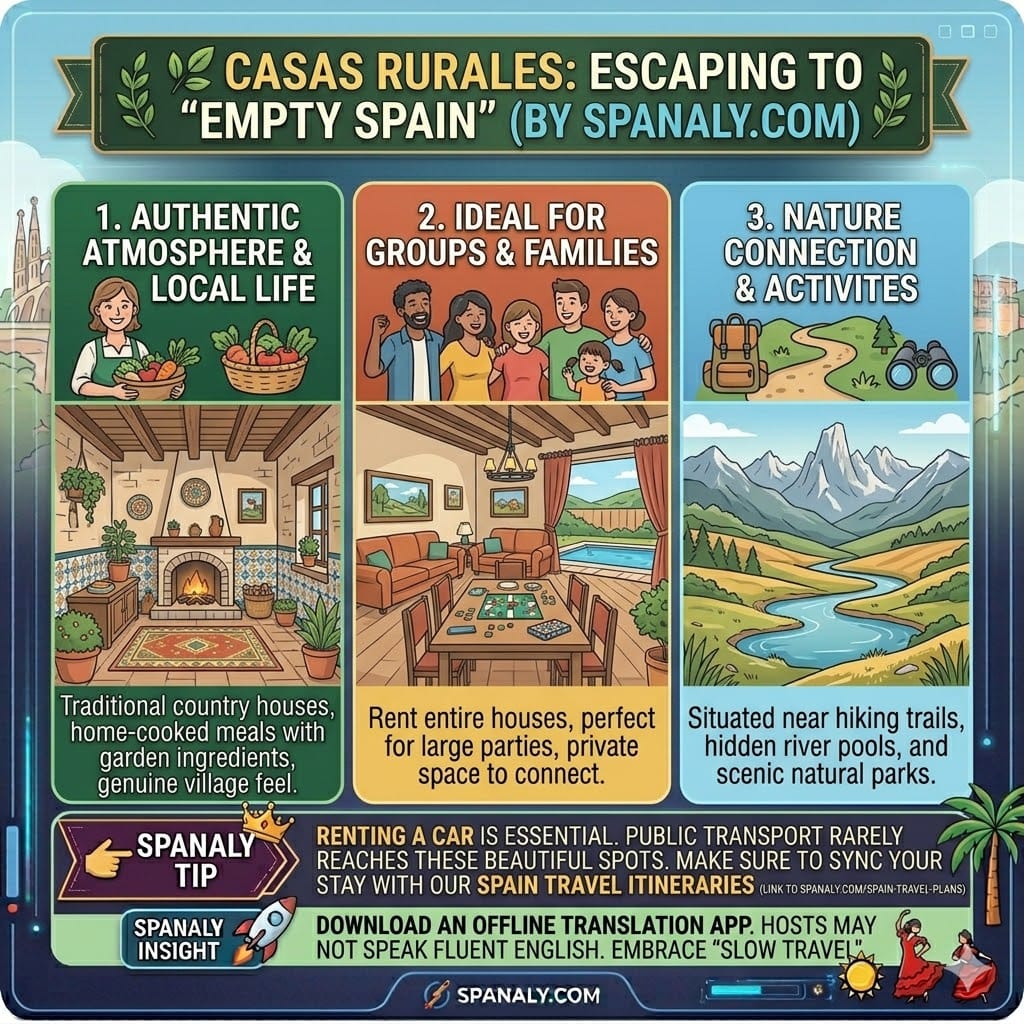
To experience the authentic soul of the Iberian Peninsula, you must head toward the Casas Rurales. These are traditional country houses, stone villas, or refurbished farmsteads located in small villages and natural parks. Specifically, they offer a total escape from the noise of the big tourist hubs.
Authentic Atmosphere: Experience local life, often with home-cooked breakfasts using ingredients from the villa’s own garden.
Ideal for Groups: Many of these properties are rented as entire houses, making them perfect for large families or groups of friends.
Nature Connection: Most are situated near hiking trails, hidden river pools, or the breathtaking Picos de Europa.
👉 Renting a car is essential for this type of accommodation. Public transport rarely reaches the most beautiful rural spots. If you plan to explore the countryside, make sure to sync your stay with our Spain Travel Itineraries to ensure your driving routes are efficient and scenic.
Spanaly Insight: Don’t be surprised if your host doesn’t speak fluent English in deep rural areas. It’s part of the charm! Download an offline translation app and embrace the “Slow Travel” lifestyle that these houses promote.
⛪ Monasteries & Convents: The Silent Retreat

For a truly unique and budget-friendly experience, staying in a working Monastery (Monasterio) or Convent (Convento) is Spain’s best-kept secret. These religious guest houses, known as Hospederías, offer travelers a chance to sleep within ancient stone walls where history and silence meet.
Ultimate Tranquility: Perfect for those seeking deep peace away from the tourist crowds and digital noise.
Historical Gem: Many are situated in breathtaking buildings with centuries-old cloisters and hidden gardens.
Unbeatable Price: Often significantly cheaper than hotels, offering simple but immaculately clean rooms.
👉 Remember that these are active religious sites. To ensure a respectful stay, familiarizing yourself with local Cultural Etiquette in Spain is essential, especially regarding noise levels and dress codes in common areas.
Spanaly Insight: You don’t need to be religious to stay here; everyone is welcome. However, be mindful of “Curfew” times (Toque de queda), as many monasteries close their main gates early in the evening to maintain their daily spiritual rhythm.
🏘️ Airbnb & Vacation Rentals: Family Secrets

For families and long-term travelers, Vacation Rentals (like Airbnb or Booking.com apartments) offer the comfort of a home. Having a kitchen and extra space is a game-changer. Specifically, the Spanish market has tightened its regulations to ensure guest safety and neighborhood harmony.
Local Vibes: Stay in residential neighborhoods like Gràcia in Barcelona or Malasaña in Madrid for an authentic daily experience.
Cost-Effective for Groups: Splitting the cost of a large apartment is often cheaper than booking multiple hotel rooms.
Strict Regulations: Every legal rental must display a registration number (VUT) to prove it meets official safety standards.
👉 By law, your host must register your ID or passport details with the local police. This is a standard security procedure. To ensure all your travel documents are in order before arrival, check the latest Spain Visa & Entry Requirements to avoid any last-minute stress at check-in.
Spanaly Insight: Always communicate through the official platform’s messaging system. If a host asks you to pay outside the app to “save on fees,” it is a major red flag. Protect your booking by keeping all transactions and conversations within the secure portal.
🏖️ Coastal Resorts: Sun, Sea & Seasonal Tips

Spain’s coastlines, from the rugged Costa Brava to the sunny Costa del Sol, offer world-class resorts. However, the experience varies wildly depending on when you go and where you stay. Specifically, these hubs transform from tranquil escapes to high-density zones within weeks.
All-Inclusive Comfort: Ideal for families seeking a “hassle-free” vacation with private beaches and kids’ clubs.
The Chiringuito Culture: Look for resorts near local beach bars to experience the authentic Spanish summer vibe.
Northern Gems: For a cooler, greener coastal experience, explore the resorts in Cantabria or Asturias.
👉 Avoid the “August Trap.” During this month, most Spaniards take their holidays, leading to peak prices and overcrowded beaches. To find the perfect balance between warm weather and manageable crowds, check our guide on the Best Time to Visit Spain before booking your seaside stay.
Spanaly Insight: Coastal resorts often charge a premium for a “Sea View” (Vista al mar). In my professional experience, booking a “Side Sea View” can save you up to 20% while still offering a beautiful glimpse of the Mediterranean from your balcony.
💰 Budgeting: Spain Accommodation Pricing Guide
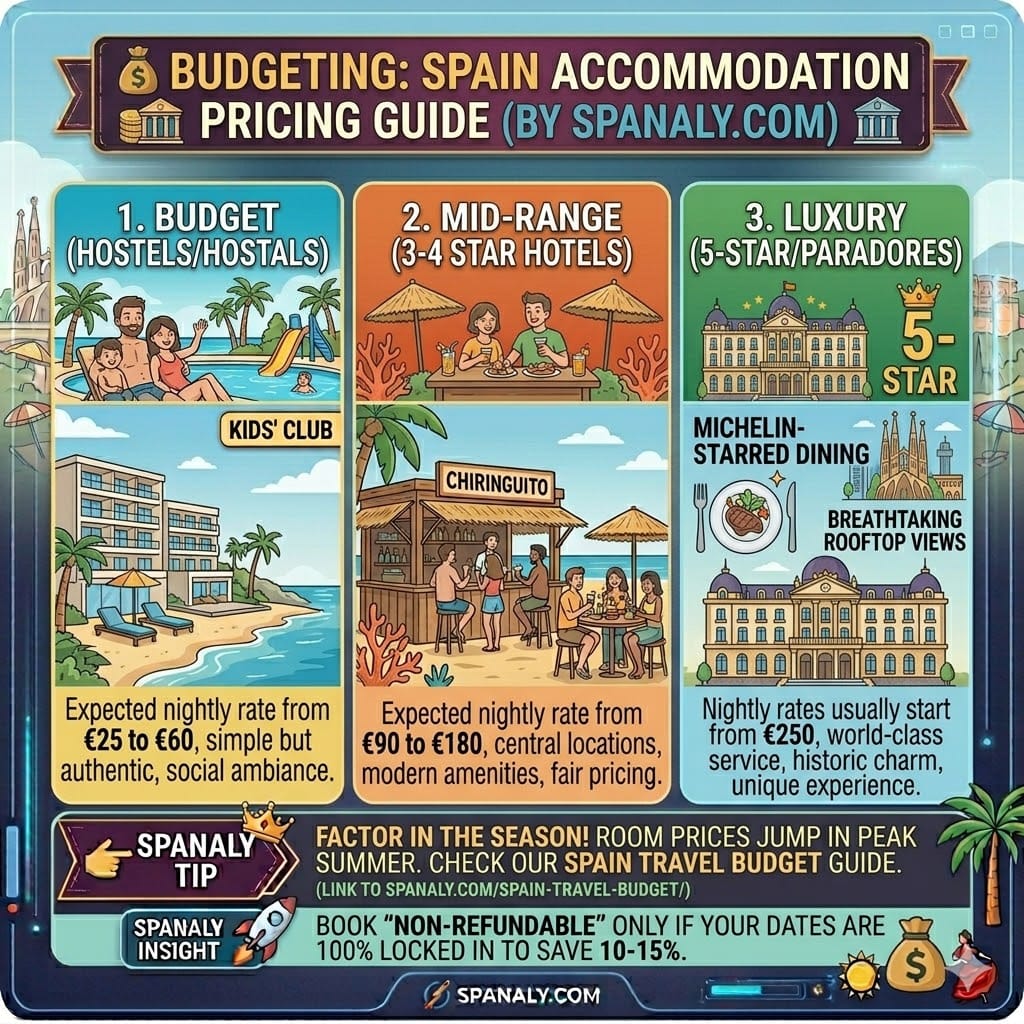
Planning your finances is the cornerstone of a stress-free trip. Accommodation prices in the Iberian Peninsula vary significantly between major hubs and rural areas. Specifically, understanding these price brackets helps you allocate your funds wisely across different cities.
Budget (Hostels/Hostals): Expect to pay between €25 and €60 per night.
Mid-Range (3-4 Star Hotels): Prices typically range from €90 to €180 per night in central locations.
Luxury (5-Star/Paradores): Prices usually start from €250 and can go much higher in Madrid or Barcelona.
👉 Always factor in the season. A room that costs €100 in November might jump to €220 in July. To see how these lodging costs fit into your total daily expenses, including food and transport, check our comprehensive Spain Travel Budget guide.
Spanaly Insight: Many Spanish hotels offer a “Non-refundable” rate which is usually 10-15% cheaper. In my professional experience, only book this if your travel insurance is solid and your dates are 100% locked in to avoid losing your investment.
🎯 The Selection Matrix: How to Choose Your Stay
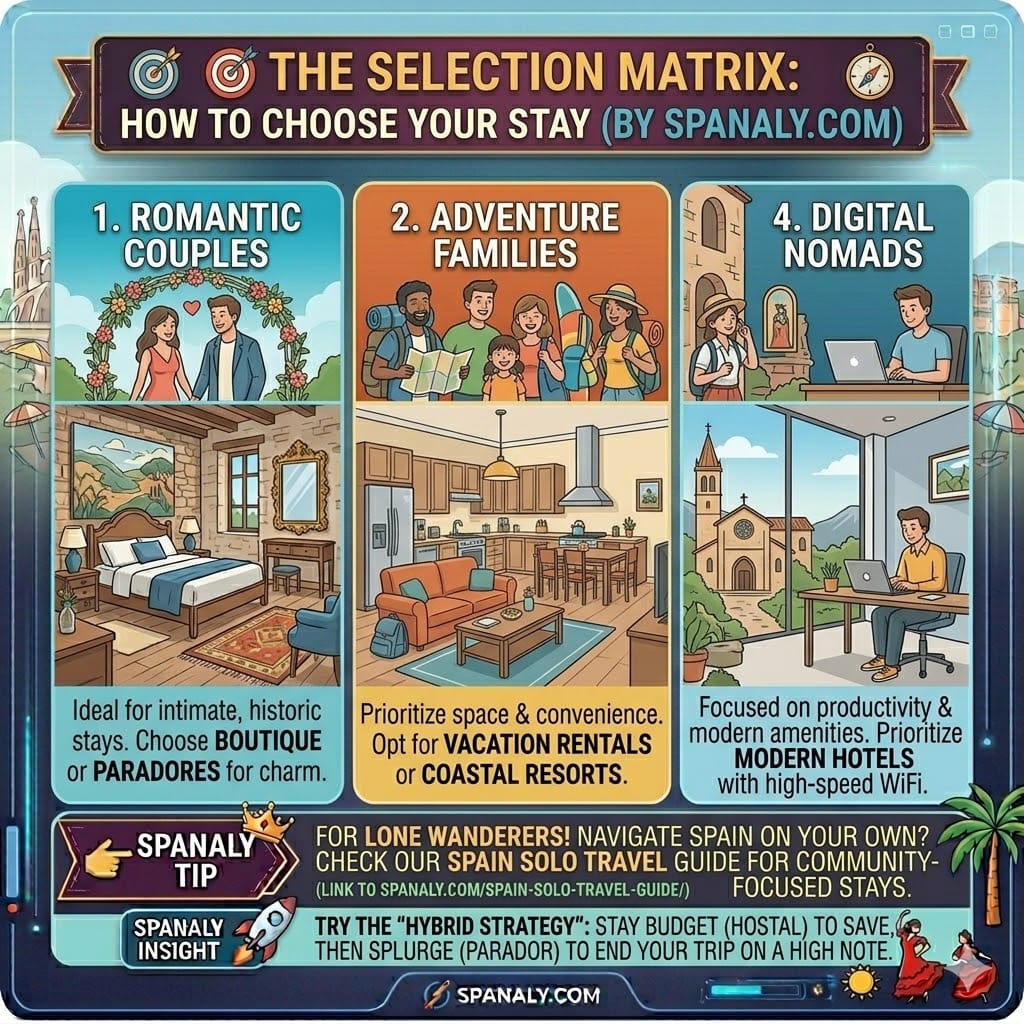
Choosing the right base can make or break your Spanish adventure. To simplify your decision, we have created a “Selection Matrix” based on traveler personas. Specifically, matching your travel style with the right lodging category ensures maximum comfort and value.
The Romantic Couple: Choose Boutique Hotels or Paradores for historic charm and intimate settings.
The Adventure Family: Opt for Vacation Rentals (Airbnb) or Coastal Resorts for space and convenience.
The Culture Seeker: Stay in Monasteries or Hostals in old city centers to be steps away from history.
The Digital Nomad: Prioritize Modern Hotels with dedicated workspaces and high-speed connectivity.
👉 If you are navigating the country on your own, your priorities might shift toward safety and social interaction. For expert advice on picking the best spots as a lone wanderer, explore our Spain Solo Travel guide to find community-focused stays.
Spanaly Insight: Don’t feel restricted to one type! Many travelers find the “Hybrid Strategy” works best: stay in a budget-friendly Hostal for three nights to save, then splurge on a luxury Parador for your final night to end the trip on a high note.
🛡️ Practical Logistics: Tourist Taxes & Legal ID
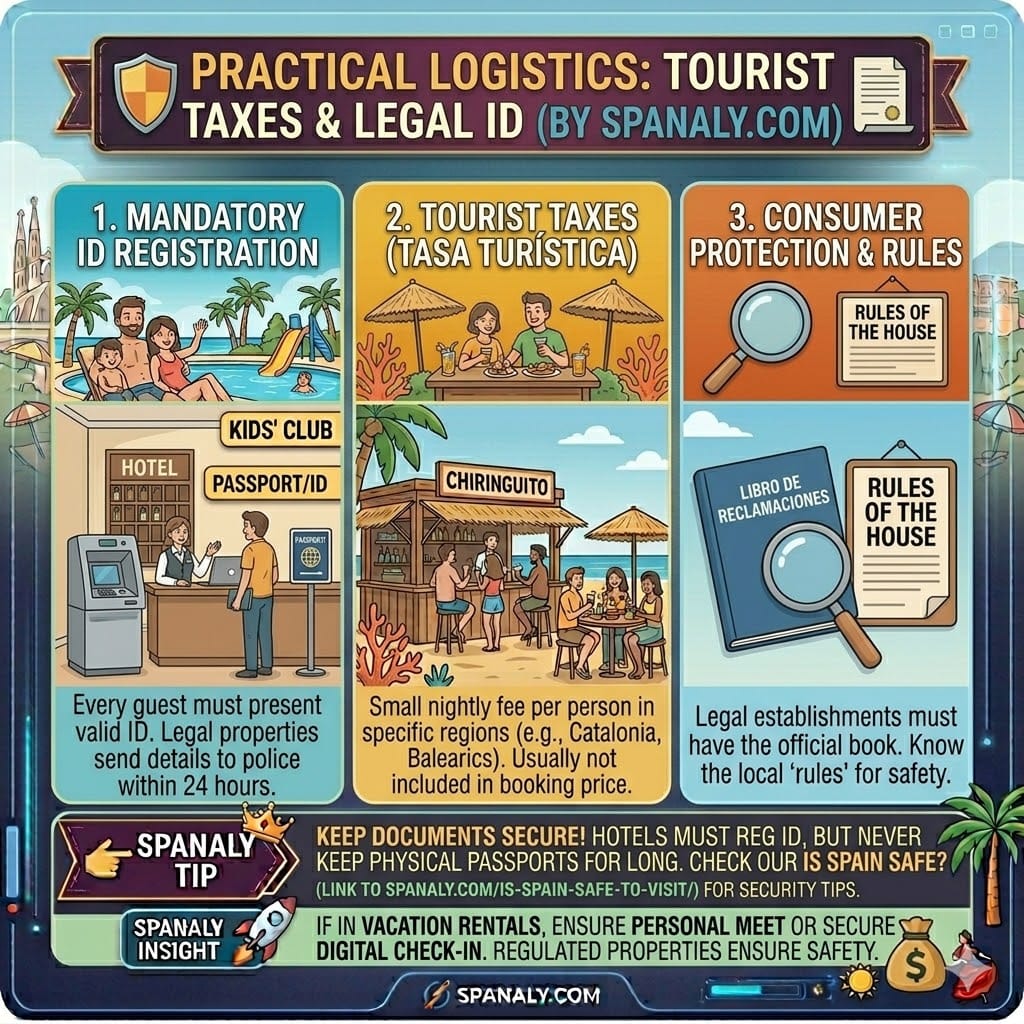
Navigating the administrative side of your stay is essential to avoid surprises at the check-in desk. Spain has specific legal requirements that all lodging providers must follow. Specifically, these rules are designed to ensure both guest security and local infrastructure support.
Mandatory ID Registration: By law, every guest must present a valid passport or National ID. The hotel is required to send these details to the police within 24 hours.
Tourist Taxes (Tasa Turística): In regions like Catalonia (Barcelona) and the Balearic Islands, you will pay a small nightly fee per person. This is usually not included in your online booking price.
The “Libro de Reclamaciones”: Every legal establishment must have an official complaint book. It is a powerful consumer protection tool for travelers.
👉 Keeping your original documents secure is vital. While hotels need your ID for registration, they should never keep your physical passport behind the desk for more than a few minutes. For more peace of mind regarding your belongings and local laws, check our guide: Is Spain Safe to Visit? for essential security tips.
Spanaly Insight: If you are staying in a vacation rental, ensure the host meets you in person or provides a secure digital check-in. Legal properties are highly regulated, and knowing the local “rules of the house” is your best defense against any logistical hiccups.
🤫 The "Insonorizado" Rule: Essential Booking Tips
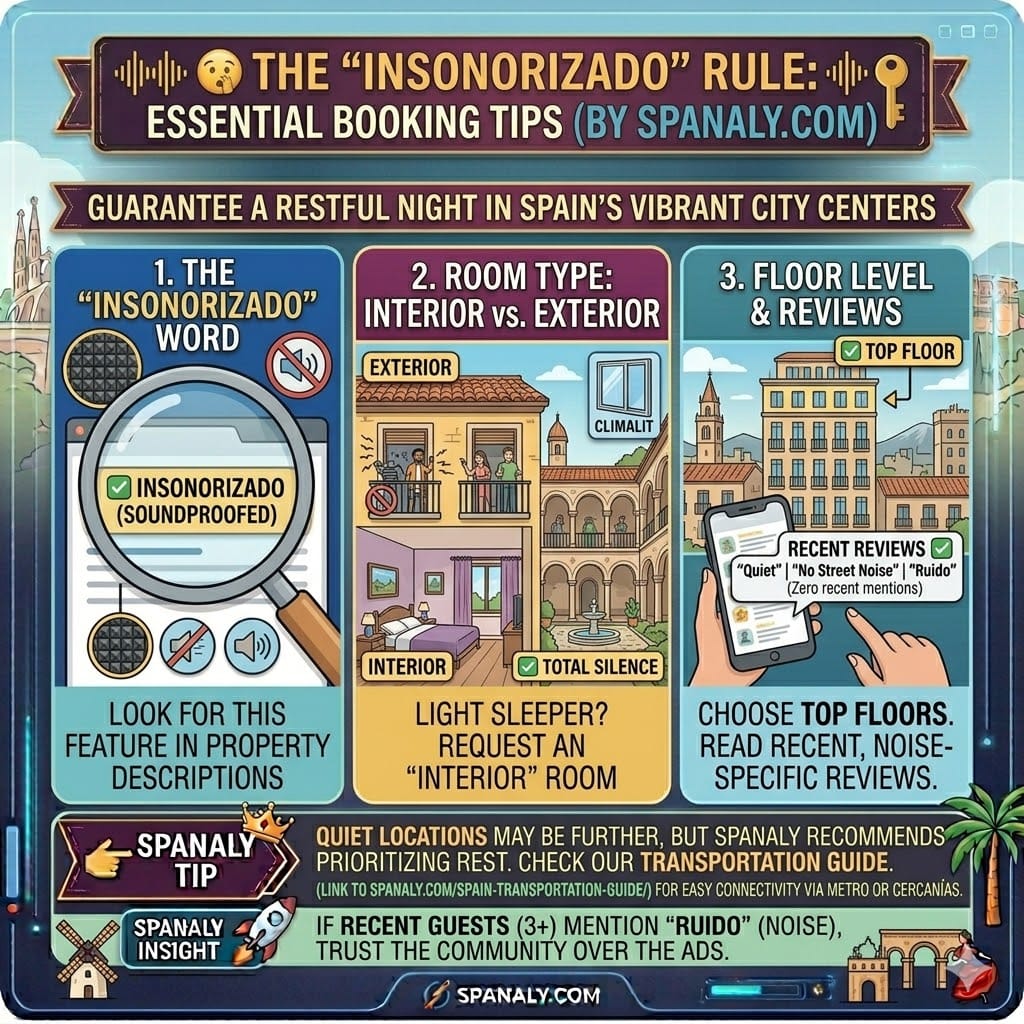
Spain is famous for its vibrant nightlife, but this can be a double-edged sword when you are trying to sleep. To guarantee a restful night in the heart of Madrid or Barcelona, you must look for one specific word in the property description: Insonorizado (Soundproofed). Specifically, this feature is the difference between a dream vacation and a sleepless night.
Double Glazing: Ensure the hotel mentions “Climalit” or double-glazed windows, especially if the balcony faces a main plaza.
Interior vs. Exterior: If you are a light sleeper, request an “Interior Room” (Habitación interior). While you lose the street view, you gain total silence as these rooms face a quiet central courtyard (Patio).
Top Floor Advantage: Booking the highest floor possible reduces noise from street-level bars and early morning trash collection.
👉 A quiet hotel might be slightly further from the main square, but as long as it has good connectivity, your experience will be better. Check our Spain Transportation Guide to see how easy it is to stay in a peaceful neighborhood and still reach the city center in minutes via Metro or Cercanías.
Spanaly Insight: Always read the most recent reviews and search for keywords like “noise” or “ruido.” In my professional experience, if more than three recent guests mention street noise, the “soundproofing” might not be as effective as advertised. Trust the community over the marketing photos.
🏨 Visitor FAQs – Spain Accommodation Guide
🔌 Do I need a power adapter for Spanish hotels?
Yes, Spain uses Type F plugs (two round pins) with a standard voltage of 230V. While modern Boutique Hotels often provide USB ports, older Hostals and Rural Houses may not. We recommend carrying a universal adapter to keep your devices charged in historic buildings.
🕒 What are the typical Check-in and Check-out times?
Standard Check-in is usually at 14:00 or 15:00, and Check-out is by 11:00 or 12:00. If you arrive early, most hotels and Paradores offer free luggage storage. However, for vacation rentals, always coordinate in advance as they rarely have a 24-hour reception desk.
🍳 Is breakfast usually included in the room price?
It depends on the property. In Paradores and Casas Rurales, high-quality local breakfast is often part of the experience. In urban hotels, it might be an extra charge (around €10-€20). A pro Spanaly tip is to check if there is a local "Cafetería" nearby for a much cheaper, authentic Spanish breakfast.
🐕 Are hotels in Spain pet-friendly?
Spain is becoming increasingly dog-friendly. Many chain hotels and rural villas now allow pets for a small daily supplement. However, always look for the "Mascotas bienvenidas" tag before booking, as some historic monasteries and boutique hotels maintain a strict no-pet policy.
💳 Can I pay for my stay with a credit card everywhere?
Major credit cards (Visa and Mastercard) are accepted in 99% of Spanish accommodations. However, if you are staying in a very remote Casa Rural or a small Monastery, it is wise to carry some cash for extras or the nightly tourist tax, as remote card terminals can sometimes be unreliable.
Lodging Guide by Spanaly.com
Finding the perfect place to stay is the first step toward an unforgettable Spanish adventure. Whether you choose a historic Parador, a cozy Monastery, or a vibrant Beach Resort, your choice will define your journey.
Choose with Confidence: Use our selection matrix to match your travel style.
Book with Wisdom: Look for the “Insonorizado” tag for a peaceful night.
Stay with Peace of Mind: Remember the legal ID and tax requirements.
👉 Now that your room is sorted, make sure your wallet is ready too! From tipping etiquette to finding the best ATMs near your hotel, check our essential Money in Spain Guide to handle your Euros like a local.
Spanaly Insight: Spain is not just a destination; it is a feeling. Don’t spend all your time inside your room—no matter how beautiful it is. The real magic happens in the plazas, the narrow streets, and the late-night conversations over tapas. ¡Buen viaje!