Aragon Food Guide: Traditional Dishes & Local Specialties

SPANALY / REGIONAL FOOD NOTEBOOK

ARAGÓN · ZARAGOZA · HUESCA · TERUEL

Aragon
on the plate.

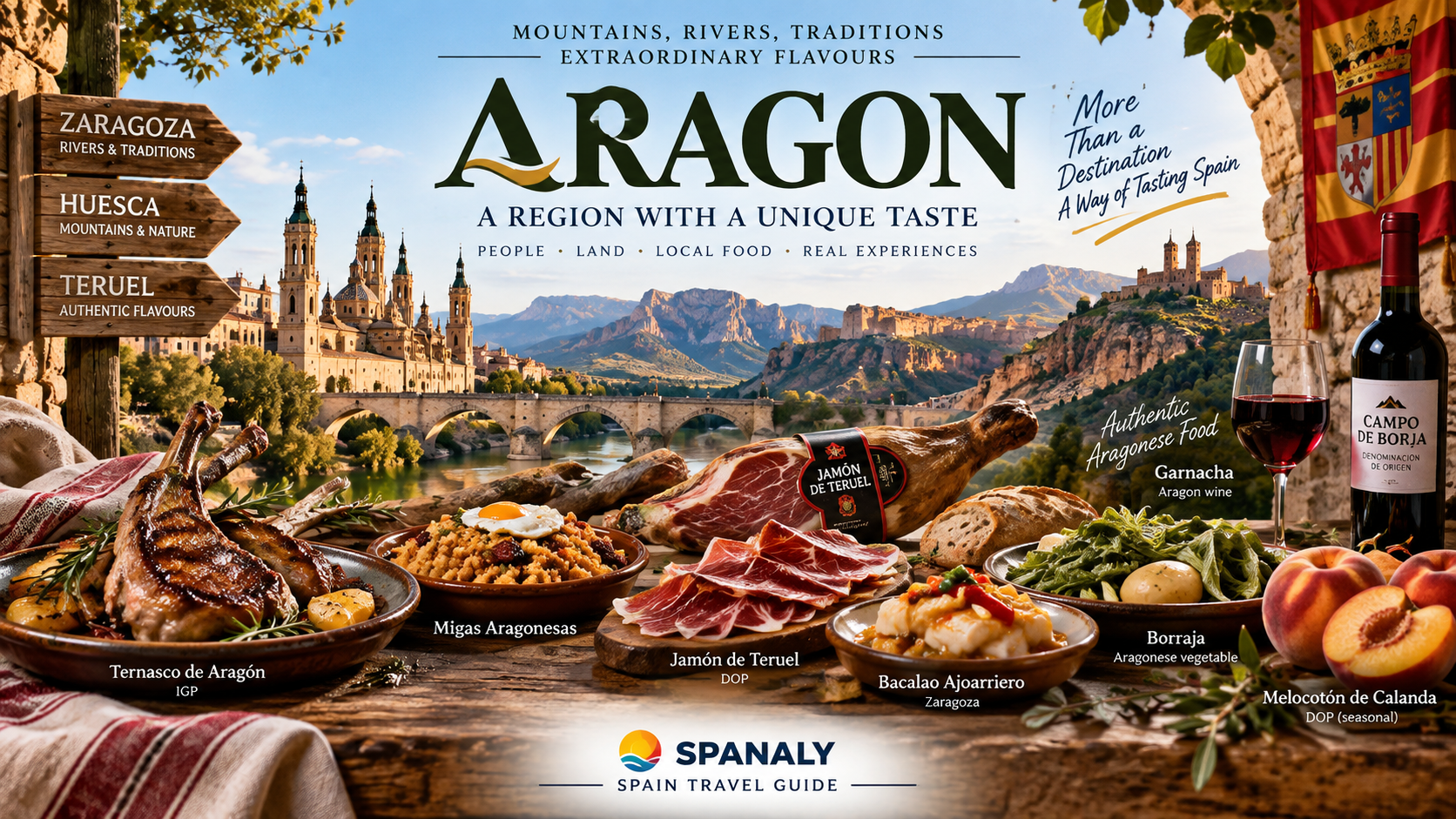
A practical guide to the foods that actually explain the region — protected lamb and ham, mountain cooking, Ebro Valley vegetables, seasonal fruit and Garnacha country.

READ THE PRODUCT READ THE PLACE THEN ORDER
Traditional Aragonese food and regional ingredients
Aragon is not one recipe. It is a meeting point of mountains, farmland and dry interior landscapes.
01

BEFORE THE MENU

Aragonese food makes more sense when you know where you are.

Aragon stretches from the Pyrenean north through the Ebro Valley and into the dry interior landscapes around Teruel. That geography helps explain the table: lamb and cured meats in the mountain tradition, vegetables and fruit from productive agricultural areas, bread-based dishes born from practical rural cooking, and wines from several established wine areas.

Official regional tourism material highlights products including Ternasco de Aragón, Jamón de Teruel, Melocotón de Calanda, Cebolla Fuentes de Ebro, borraja, saffron, truffles and Aragonese olive oils.

The useful rule: do not try to “eat Aragon” in one sitting. Pick the product that belongs to your destination and build the meal around it.

THE CITY COMPASS

Three stops, three ways into the cuisine.

01

ZARAGOZA

Start with the broad picture.

Try Ternasco de Aragón, migas or borraja. Add bacalao ajoarriero to the list: Zaragoza tourism includes it among local dishes and it gives the traveler a useful cod-based counterpoint to the region’s meat-heavy reputation.

Zaragoza Tourism →
02

TERUEL

Read the ham label.

Jamón de Teruel is the obvious local reference. Look for the protected name rather than ordering “jamón” generically. Then explore migas and Ternasco if you have room for a larger meal.

Spain.info: Teruel →
03

HUESCA

Look toward the mountains.

Around Huesca and northern Aragon, mountain products, seasonal ingredients, meats and mushrooms become useful clues. Here the landscape matters as much as memorizing a single signature dish.

Turismo de Aragón →

THE FIRST THREE ORDERS

If the menu is unfamiliar, start here.

These are not three winners. They are three different ways to understand Aragonese food.

01 SUBSTANTIAL LUNCH

Ternasco de Aragón IGP

Ternasco de Aragón is a protected regional product, not simply any lamb dish. It can appear roasted, grilled or in other traditional preparations. When the menu identifies the protected product, you know you are ordering a regional specialty rather than a generic substitute.

How to order Think lunch. If you are two people, share a starter first and avoid adding a full portion of migas on top unless you specifically want a very heavy meal.
02 TERUEL ESSENTIAL

Jamón de Teruel DOP

Teruel’s protected ham has its own geographical identity. It should not be casually grouped together with every other Spanish cured ham. On a menu, look for the local name and protected designation.

How to order A small or shared plate works well before a larger meal, or as a simple food stop while exploring Teruel’s historic center.
03 COOL-WEATHER COMFORT

Migas Aragonesas

Bread, garlic, oil and local additions turn yesterday’s bread into a substantial rural dish. Aragon has several versions, including local Teruel preparations. It is much closer to a filling meal than to a light tapa.

How to order Best treated as the main event. Share it if you also want to taste other dishes.

MENU LITERACY

Read the protected name before the adjective.

“Local”, “traditional” and “homemade” can describe a dish. A protected geographical designation tells you something more specific about the product and its origin.

Ternasco de Aragón IGP

Look for the protected regional lamb identity.

Jamón de Teruel DOP

Ask for the local protected ham by name.

Melocotón de Calanda DOP

A seasonal protected peach from Teruel province.

THE ARAGONESE PANTRY

Seven foods that give the region its vocabulary.

01

Borraja

A vegetable strongly associated with Aragon, especially Zaragoza. A traditional preparation may pair it with potato and olive oil. If meat appears in the preparation, ask before ordering if you need a vegetarian dish.

02

Bacalao Ajoarriero

Salt cod prepared with a seasoned mixture of vegetables and oil. Zaragoza tourism lists bacalao ajoarriero among local dishes, making it a useful order when you want a regional cod option rather than another meat plate.

03

Pollo al Chilindrón

Chicken cooked with ingredients such as tomato, peppers and onion. It belongs to the comforting home-style side of Aragonese cooking and gives travelers a practical alternative to lamb.

04

Melocotón de Calanda

The Calanda peach is a protected product and a seasonal one. It makes most sense when it is actually in season; do not treat it as a permanent dessert on an Aragon menu.

05

Fuentes de Ebro Onion

The protected onion from the Ebro Valley belongs in the agricultural story of Aragon. It works best here as a product to notice in markets, menus and seasonal preparations rather than as another compulsory “must-eat” dish.

06

Fardeles & Charcuterie

Regional cured and pork products broaden the Teruel and inland food picture. A mixed local plate can be a smart way to sample several specialties without ordering multiple large mains.

07

Black Truffle

Truffle is part of Aragon’s premium seasonal produce. It is a product to follow by season and menu rather than a dish that belongs on every traveler’s checklist.

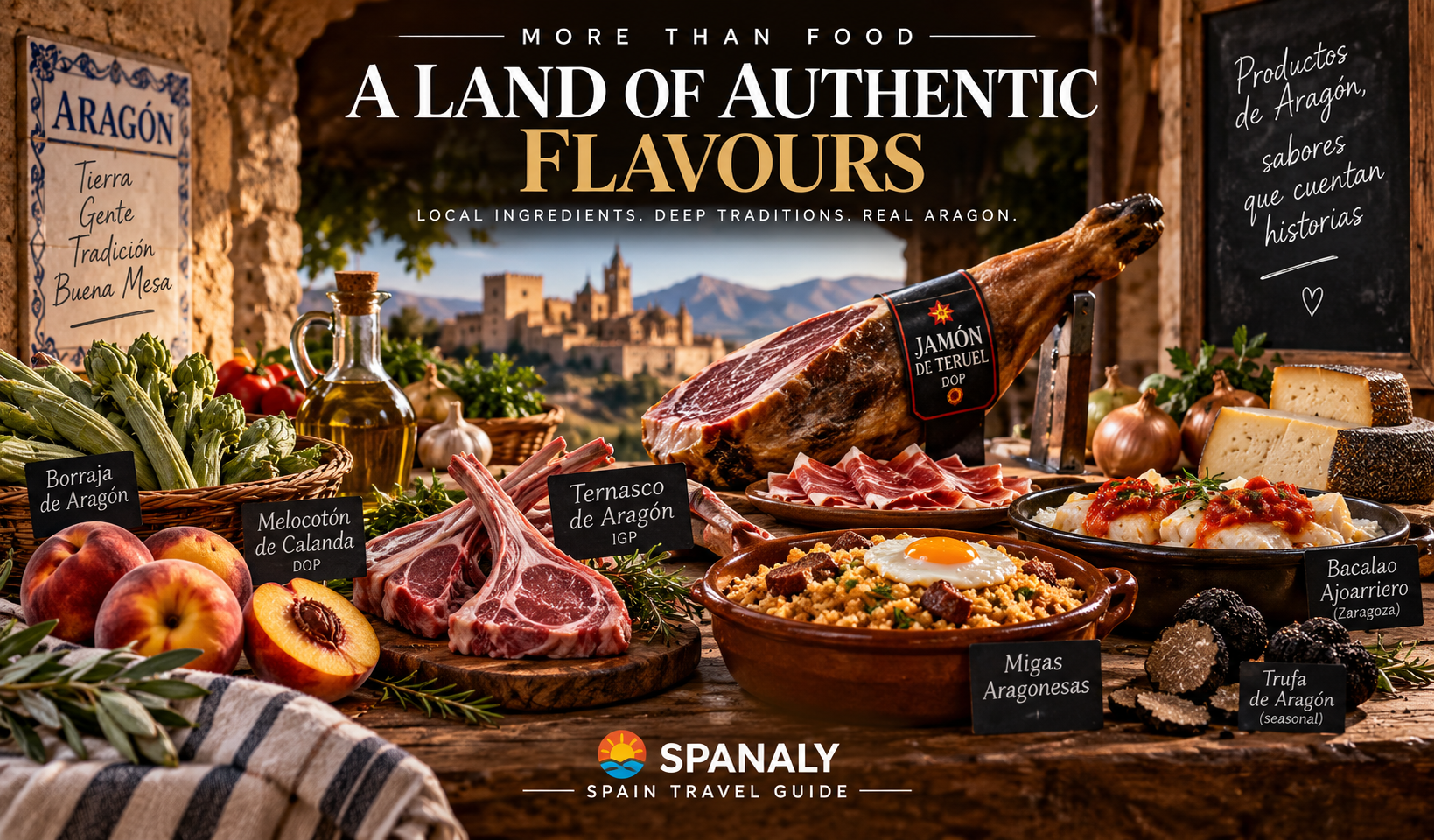
Aragonese market ingredients and local produce
From protected products to market vegetables, the regional pantry is wider than its famous meat dishes.

THE PORTION PROBLEM

A good Aragon meal is about sequence, not quantity.

The easiest mistake is ordering three substantial dishes because each one sounds regional. Instead, decide what role each order has.

ROLE GOOD CHOICE WATCH OUT FOR
Starter Jamón de Teruel / shared local charcuterie Large boards before a heavy main
Main Ternasco / chilindrón Adding another full meat dish
Shared dish Migas / seasonal vegetable Ordering a full portion for everyone
Finish Calanda peach in season Assuming it is available year-round

FOLLOW THE WEATHER

The same menu does not make equal sense all year.

WINTER

Migas & slow cooking

Hearty bread dishes, roasted meats and stews fit the cold interior better than a hot-weather lunch.

SPRING

Vegetables & markets

Use the season to look beyond meat: vegetables and fresh regional produce become more useful guides.

SUMMER

Keep the plate sensible

In inland heat, a lighter first course and a smaller shared tasting can make more sense than stacking heavy dishes.

PEACH SEASON

Calanda when it is real

When protected Calanda peaches are in season, let the fruit be the seasonal event rather than ordering a generic dessert automatically.

THE GLASS BESIDE THE PLATE

Garnacha country, without turning lunch into a tasting.

Aragon has several established wine areas, including Calatayud, Campo de Borja and Cariñena. Garnacha is especially important to the region’s wine identity.

For a normal meal, one local wine is enough. The point is geographical connection, not a formal tasting flight.

Read Spanaly’s Spanish Wine Regions guide →
ARAGÓN GARNACHA CALATAYUD · CAMPO DE BORJA · CARIÑENA
RULE 01

Do not chase the “best Ternasco”.

The useful question is whether the menu clearly identifies the regional product and whether the preparation suits the meal you want.

RULE 02

Do not treat migas as a light tapa.

It is a substantial rural dish. Share it when you want to explore several foods at one meal.

RULE 03

Ask what is seasonal.

This matters especially for Calanda peaches, truffle and market vegetables.

CONTINUE THE SPANALY FOOD MAP

Go deeper without repeating this guide.

QUICK QUESTIONS

Aragonese food, clarified.

What is Aragon’s most famous food?

Ternasco de Aragón is one of the region’s defining foods. Jamón de Teruel, migas, borraja, local fruit and regional wines are also important parts of the Aragonese food identity.

What should I order first in Zaragoza?

A practical first introduction is Ternasco de Aragón, migas or borraja. Bacalao ajoarriero is another regional option identified by Zaragoza tourism.

What is Teruel known for?

Jamón de Teruel is the clearest food reference, followed by foods such as migas and Ternasco in a broader mountain-style meal.

Is Aragonese food vegetarian-friendly?

Traditional cooking uses substantial amounts of lamb and pork, and migas may include meat products. Borraja, vegetables and seasonal produce can provide vegetarian choices, but always ask how a dish is prepared.

Is Calanda peach available all year?

No. Melocotón de Calanda is a seasonal protected product. Treat it as a seasonal opportunity rather than a permanent dessert.

Which Aragon wine areas should I know?

Calatayud, Campo de Borja and Cariñena are useful names to recognize. Garnacha is an important part of the region’s wine identity.

OFFICIAL REFERENCES USED FOR THE GUIDE