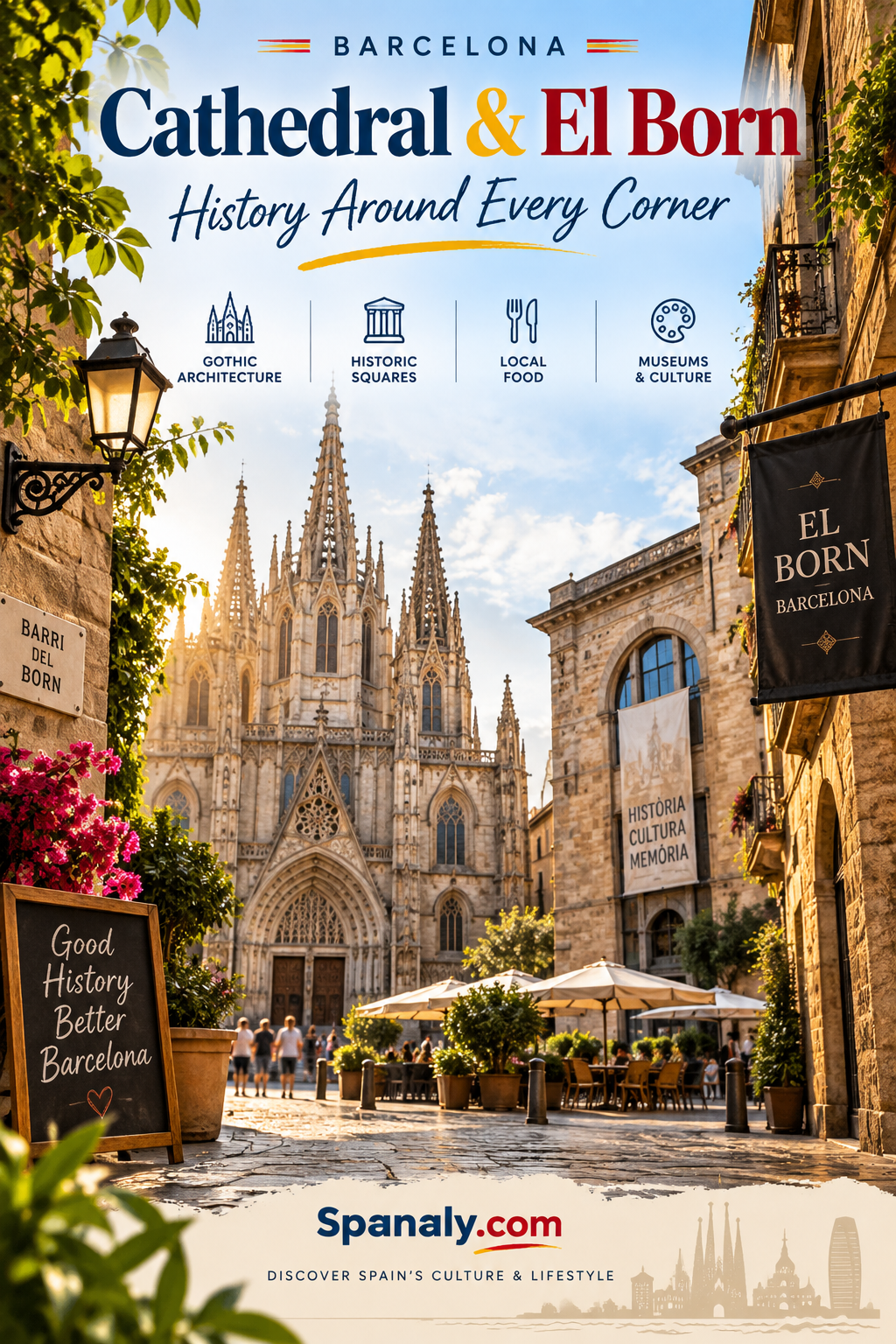
Barcelona Cathedral & El Born Guide: What to See and Do
Follow one connected walk from Barcelona Cathedral through the medieval streets of the old city into El Born, with Gothic churches, historic squares, museums, food and the archaeological remains of Barcelona around 1700.
Barcelona Cathedral and El Born make more sense as one historic walk than as two separate attractions. Start around Pla de la Seu, explore the Cathedral and its cloister, then follow the old streets toward Santa Maria del Mar, Passeig del Born and the former Born market.
The experience changes naturally as you walk. The Cathedral gives you monumental Gothic architecture and centuries of religious history; El Born adds medieval streets, a major Catalan Gothic basilica, museums, cafés and the archaeological remains of a neighbourhood that was largely destroyed after the siege of 1714.
Three decisions that make this walk much better
Tourist visit ≠ worship
The Cathedral has paid cultural and tourist visiting hours, while religious use follows a different schedule. If a Mass or religious celebration is taking place, follow the Cathedral’s instructions and do not enter during worship simply to take photographs.
The façade is not the whole story
The Gothic Cathedral was begun in 1298 and was virtually complete by the mid-15th century, but the façade and side towers were completed much later, with work continuing into 1913. Go inside: the nave, cloister, chapels, crypt and roof tell the deeper story.
Choose one major museum
On a half-day route, choose either the Picasso Museum or El Born Centre rather than trying to fit several museums around two major churches. The route is better when there is room to walk, eat and look around.
Barcelona Cathedral → El Born: one connected route
The exact order can change with opening hours, but the geography is simple: begin at the Cathedral, move southeast through the old centre, spend time around Santa Maria del Mar and Passeig del Born, then decide whether your afternoon needs one museum or a slower finish toward Parc de la Ciutadella.
Barcelona Cathedral: look beyond the famous façade
Barcelona Cathedral, officially the Cathedral Basilica of the Holy Cross and Saint Eulalia, stands at the centre of the old city. The Gothic building seen today was constructed on the foundations of earlier Christian and Romanesque churches. Construction of the present Gothic Cathedral began on 1 May 1298 and was virtually completed by the mid-15th century.
There is an important detail for first-time visitors: the façade you see today is not simply a 14th-century façade. The Cathedral’s own history records that work on the façade and two side towers was undertaken from the end of the 19th century, with the project completed in 1913. The Gothic structure is medieval; the exterior appearance includes much later work.
The nave and chapels
Look at the scale of the three-nave interior, the side chapels, stone vaulting and stained glass. The Cathedral’s stained glass includes works from several periods, from the 14th century to the late 19th and 20th centuries.
Saint Eulalia’s crypt
The crypt is associated with Saint Eulalia, Barcelona’s patron saint, and forms part of the Cathedral’s historic core. It is one of the spaces that gives the building meaning beyond its exterior.
The Gothic cloister
The cloister was completed in 1448. Its galleries, chapels, garden and fountain create a quieter contrast to the main church. This is also where the Cathedral’s traditional group of 13 white geese lives.
The rooftop
The tourist visit can include access to the rooftops. From above, you can see the Cathedral’s towers, pinnacles, cloister and a broad view across Barcelona.
The Cathedral maintains the tradition that the 13 white geese in the cloister represent Saint Eulalia’s age at her martyrdom. Enjoy them from a respectful distance and do not disturb or feed the animals.
Barcelona Cathedral: current visitor information
The Cathedral separates its cultural/tourist visit from its religious use. The official visitor page currently lists an individual tourist-visit price of €16. Because schedules and access can change around religious celebrations, treat the official page as the final check before your visit.
Access closes 17:45
Access closes 16:30
Access closes 16:30
Official price checked September 2026
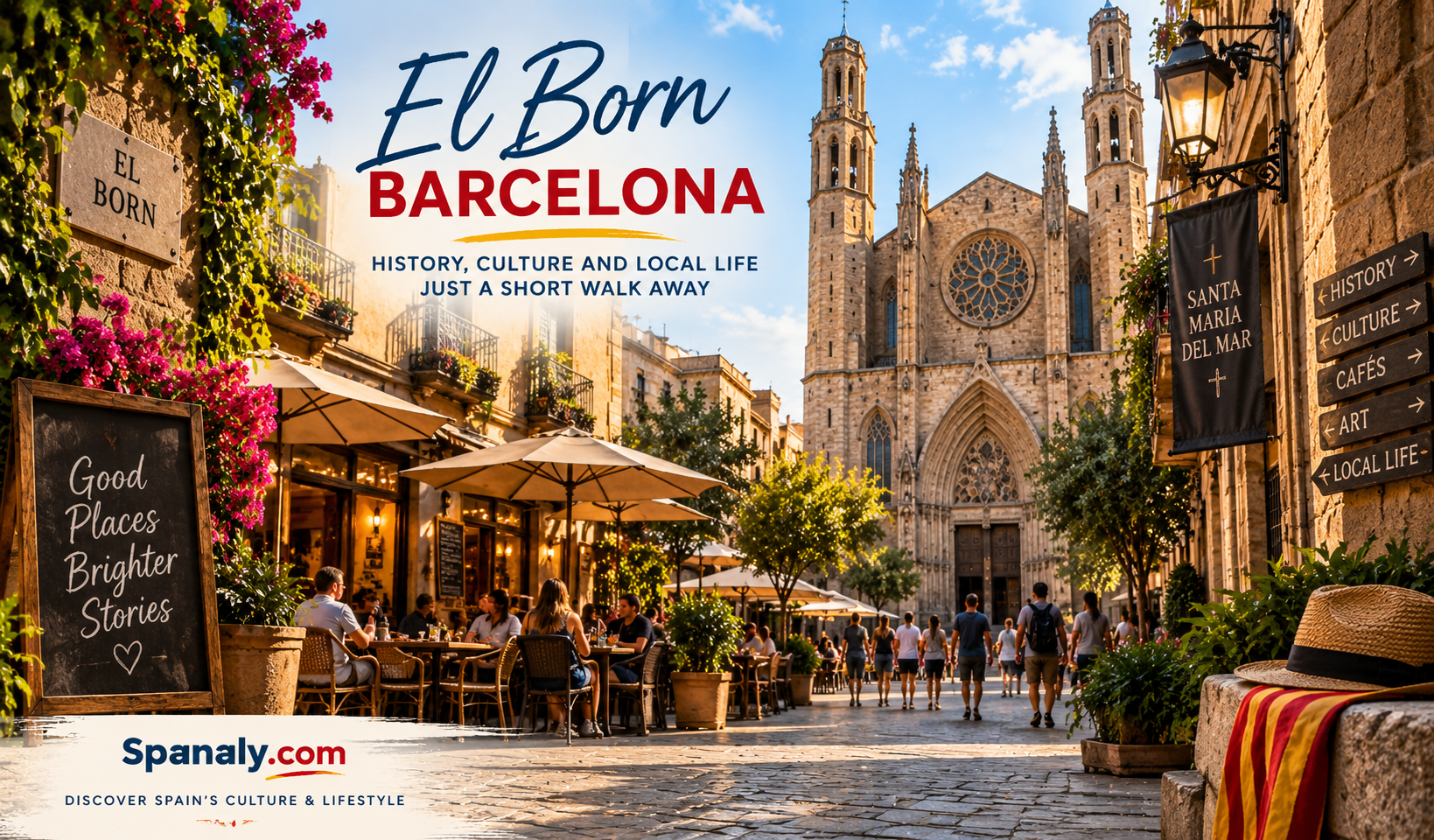
El Born: let the streets become part of the attraction
El Born should not be treated as a single monument. It is a historic urban area where the experience comes from moving between streets, churches, former market buildings, museums, small squares and places to eat.
From the Cathedral, the walk gradually shifts from the monumental spaces around Pla de la Seu toward the tighter streets of the old city. Continue toward Santa Maria del Mar, then use Passeig del Born as the centre of your exploration. From here, the former Born market and its archaeological site provide a powerful historical finish.
Walk
Take the streets between landmarks slowly instead of moving directly from ticket to ticket.
Look up
Medieval façades, balconies, stone details and later architecture make the route visually rich.
Pause
El Born is a good place for coffee or lunch because the meal can stay inside the same walking area.
Choose
Add one substantial museum or cultural stop, not a second full museum circuit.
Santa Maria del Mar: the essential El Born stop
Santa Maria del Mar is the major landmark that connects the historic story of El Born with its maritime past. Construction began in 1329, when Barcelona was expanding as a Mediterranean power. The basilica rose in the Ribera district, close to the city’s maritime activity and communities of sailors, merchants and guilds.
The church is a particularly clear example of Catalan Gothic architecture. Its proportions, relatively clean lines and openness to light create a noticeably different experience from the Cathedral. Seeing both in the same walk is more useful than choosing one in isolation: the comparison helps you understand the range of Gothic architecture in medieval Barcelona.
10:00–18:00
The official basilica states that outside cultural-visit hours, admission to the Basilica is free, subject to liturgical activity and the site’s visitor rules. This is different from the paid cultural visit, which includes the interior, galleries/museum area, crypt, towers and roof levels.
Official Santa Maria del Mar hours & admission →El Born Centre: enter for the archaeology, not only the building
The former Born market is one of the most distinctive buildings on this route, but the strongest reason to enter is underneath it. The archaeological site preserves the urban fabric of Barcelona around 1700, including streets, houses and traces of everyday life. It is also directly connected with the city’s history during the siege of 1714.
The preserved remains were uncovered during excavation work at the former market. Today, the restored iron-and-glass market structure protects and frames the archaeological site, turning the building into both an architectural landmark and a historical window into the old neighbourhood.
Carrer de Montcada, Picasso and Fossar de les Moreres
Around the core route, Carrer de Montcada adds another historical layer. The street is known for its medieval and later palatial buildings and is also associated with several museums. If you want to enter only one museum during this half-day route, the Picasso Museum is a natural choice for travellers interested in art.
Nearby, Fossar de les Moreres provides a much quieter historical pause beside Santa Maria del Mar. You do not need a long stop here; its value is contextual, helping you understand how closely the architecture, streets and memories of the old Ribera district are connected.
Spanaly guide: Picasso Museum Barcelona →One museum is enough for a half-day
Choose Picasso Museum
Best when art is the main reason you want to enter a museum. It also fits naturally with Carrer de Montcada.
Choose El Born Centre
Best when you want urban history, archaeology and the story of Barcelona around 1700 and 1714.
You can visit both on a longer cultural day, but combining two museums with two churches is unnecessary if the goal is a relaxed half-day walk.
A comfortable 3–5 hour Barcelona Cathedral & El Born walk
Barcelona Cathedral
Start with the interior, cloister and the parts of the tourist visit you want to see.
Carrer del Bisbe & old-city streets
Walk toward El Born without rushing through the streets between the landmarks.
Santa Maria del Mar
Visit the basilica and decide whether the full cultural visit fits your remaining time.
Fossar de les Moreres & Passeig del Born
Slow down. This is the part of the route where the neighbourhood itself becomes the experience.
Lunch in El Born
Eat locally rather than crossing Barcelona for a separate restaurant reservation.
One cultural addition
Choose El Born Centre, Picasso Museum or continue toward Parc de la Ciutadella.
What to know before walking this part of Barcelona
- Wear comfortable shoes. Historic streets and busy pavements make comfortable walking shoes more useful than stylish but uncomfortable footwear.
- Keep valuables secure. The old centre can become crowded. Keep phones, wallets and bags close, especially around busy streets and tourist viewpoints.
- Respect religious spaces. A church can be a tourist attraction and an active place of worship at the same time. Do not enter during Mass simply to photograph the interior.
- Do not over-plan the route. El Born rewards slow walking. Leave room for a café, small square or street that was not on your original list.
- Check official schedules. Prices, tourist hours, religious services and special events can change.
Do not confuse Barcelona Cathedral with the Sagrada Família. They are completely different buildings and experiences. The Cathedral is the historic cathedral of Barcelona’s old city, with a medieval Gothic core; the Sagrada Família is Gaudí’s famous modernist basilica.
Is Barcelona Cathedral & El Born good for families?
Yes, if you keep the route compact. Children can respond well to the Cathedral’s 13 geese, the scale of the Gothic spaces, the old streets and the archaeological remains at El Born Centre. The key is not to turn every stop into a long indoor visit.
Useful Spanaly guides for this route
Where does this fit in a 1–2 day Barcelona trip?
This route works particularly well as a second-day historic-centre block or as a substantial afternoon, rather than being squeezed directly after a long Sagrada Família morning with no break.
1 day in Barcelona
Choose the Cathedral and El Born only if the historic centre is your priority. Avoid adding too many interiors; the walk itself is part of the experience.
2 days in Barcelona
Give this route its own relaxed block on Day 2, then continue toward Ciutadella or Barceloneta depending on energy and the rest of your plan.
Barcelona Cathedral & El Born questions
Can I visit Barcelona Cathedral and El Born in one morning?
Yes. A focused visit can take around three hours. Allow closer to four or five hours if you want a relaxed meal and one cultural stop.
Is Barcelona Cathedral Gothic?
Yes. The present Cathedral is a Gothic building whose construction began in 1298 and was virtually completed by the mid-15th century. Its façade and side towers include much later work, completed in the late 19th and early 20th centuries.
Is Santa Maria del Mar worth visiting after the Cathedral?
Yes. It creates a useful architectural comparison within the same walk and is one of Barcelona’s defining examples of Catalan Gothic architecture.
Can I enter Barcelona Cathedral for free?
The Cathedral’s official tourist visit is a paid cultural visit. Religious use follows separate arrangements and schedules. Check the official Cathedral information before relying on free access for your visit.
What is the best museum to combine with El Born?
It depends on your interest. The Picasso Museum suits travellers prioritising art, while El Born Centre suits travellers interested in archaeology and the history of Barcelona around 1700 and 1714.
Should I combine this with the Gothic Quarter?
Yes, but avoid repeating the same streets and attractions. Use the Cathedral and El Born route as one block, then use the separate Gothic Quarter guide for the parts of the area not already covered here.
Useful official pages before you go
Walk the old city instead of collecting landmarks
Barcelona Cathedral and El Born are strongest when treated as one continuous experience. Start with the Cathedral’s medieval Gothic core, look beyond its later façade, spend time in the cloister, then follow the old streets toward Santa Maria del Mar and the Born Centre.
The route gives you more than two churches. It shows how Barcelona’s religious centre, maritime neighbourhoods, medieval streets, markets, archaeology and modern city life fit together in a surprisingly compact part of Ciutat Vella.