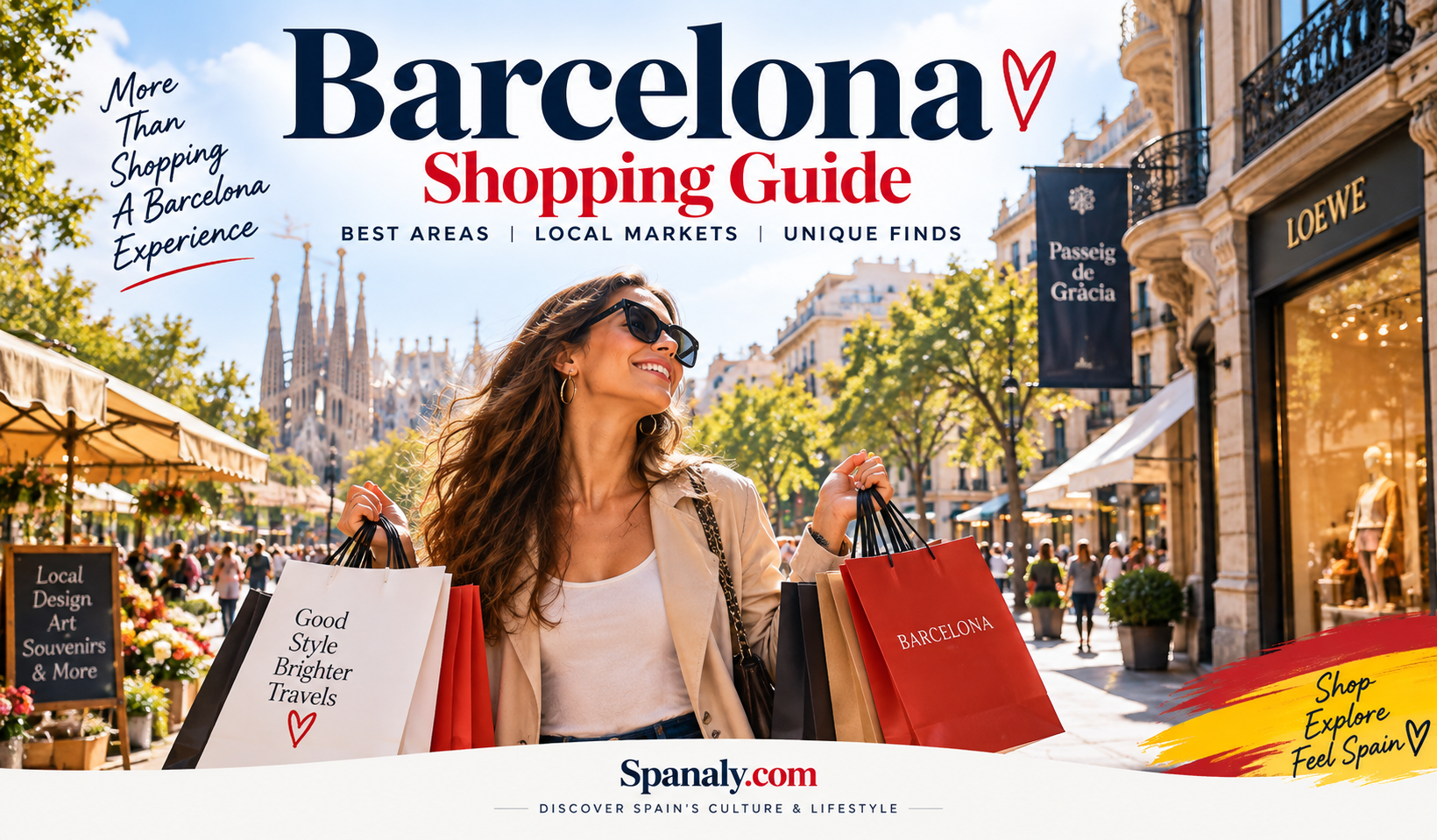
In Barcelona, the neighbourhood sets the shopping mood.
Barcelona is not one giant shopping district. The experience changes noticeably from one area to another, so the smartest way to shop is to choose your neighbourhood first and your stores second.
Passeig de Gràcia is polished and fashion-led. Portal de l’Àngel and Pelai give you a busier central retail layer. El Born is better suited to independent design, while Gràcia feels more neighbourhood-focused. Encants is a completely different proposition: a market for browsing, vintage pieces and unexpected finds.
Barcelona Turisme describes the city as a mix of international brands, local commerce, independent shops, shopping streets and markets. See the official Barcelona shopping guide →
Choose one main shopping area.
Do not plan Passeig de Gràcia, Encants and El Born as three stops in the same afternoon. Barcelona is walkable in parts, but crossing the city between unrelated shopping zones quickly turns browsing into transport time.
Find your shopping style.
Six shopping zones, six different Barcelona experiences.
The elegant shopping route.
If you want shopping to become part of the architecture, start here. Passeig de Gràcia links Plaça de Catalunya with the Eixample and places major fashion names alongside some of Barcelona’s most recognisable Modernista buildings.
The central, high-footfall retail layer.
For shoppers who want accessible high-street brands rather than a luxury-focused avenue, the streets around Portal de l’Àngel and Pelai are a useful central choice. They also fit naturally into a Gothic Quarter day.
For independent style and small discoveries.
El Born changes the rhythm completely. Instead of one grand avenue, you get narrow streets, independent businesses, design-led shops, galleries and places where shopping naturally mixes with food and historic streets.
Where shopping feels more neighbourhood than destination.
Gràcia is a strong option when you want independent shops without the scale of the central shopping streets. Barcelona Turisme highlights the area for chic boutiques and local design.
A treasure hunt, not a conventional shopping centre.
Encants is the most different shopping experience in this guide. Its market brings together vintage and second-hand goods, antiques, collectibles, books, records, clothing, furniture and unexpected objects.
Use the famous markets differently.
Barcelona’s markets belong in a shopping guide, but not all of them serve the same purpose. La Boqueria is an iconic food market and a natural sightseeing stop; it should not be treated like a general souvenir mall.
For practical food purchases, consider Santa Caterina or Sant Antoni rather than making La Boqueria carry the whole shopping plan.
Official Barcelona markets guide →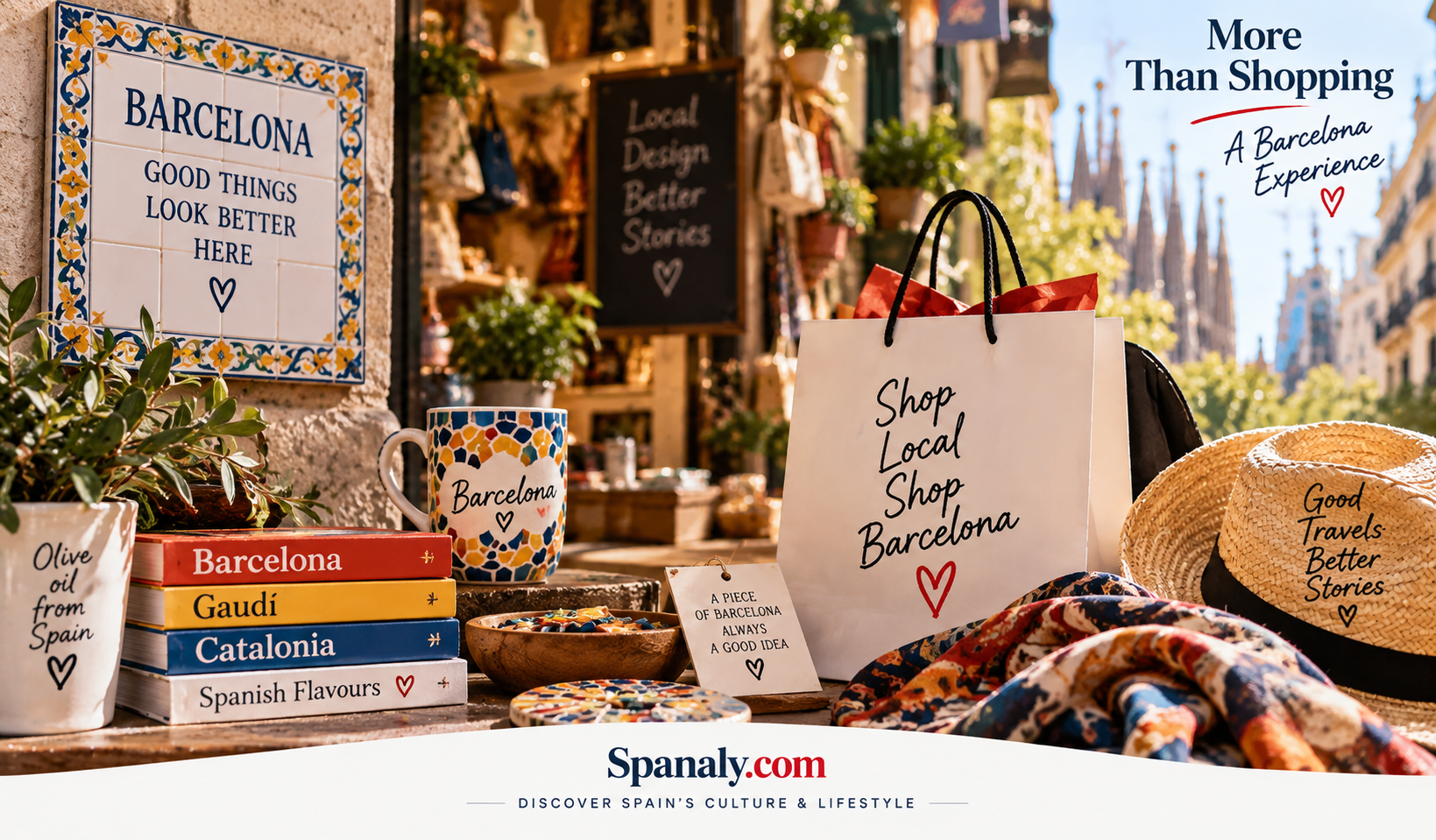
Buy something that still feels like Barcelona after the trip.
Local design
Look for independent designers, ceramics, small accessories and objects with a connection to the city rather than generic tourist merchandise.
Catalan food
Markets can be excellent for edible gifts. Choose packaged products when possible and check airline, security and destination-country rules before flying.
Vintage finds
Encants is where the fun is often in the object you did not expect to find: records, books, furniture, accessories and collectibles.
Spanish brands
For contemporary fashion, combine the main retail streets with independent neighbourhood stores instead of staying on one avenue.
Opening hours can change the whole shopping day.
Do not assume that every Barcelona shop follows the same timetable. The official tourism guidance says most shops open Monday to Saturday, while shopping centres and department stores generally have longer hours. Small shops can also close during the afternoon.
Official opening-hours guidance →Most shops operate Monday to Saturday, although exact hours vary. Central shopping areas often keep more continuous daytime hours.
Many shops are closed on Sundays. Some tourist areas and specific dates have authorized opening, so check the exact shop before building your itinerary around it.
Encants currently lists Monday, Wednesday, Friday and Saturday, 9:00–20:00. Tuesday, Thursday and Sunday are not market days.
If you live outside the EU, do the paperwork at the shop.
Eligible non-EU residents can request a VAT refund on qualifying goods bought for personal use or as gifts. Spain has no minimum purchase amount for VAT reimbursement.
At checkout, ask the shop for the electronic refund document (DER/DIVA) and be ready to show your passport or proof of non-EU residence. Keep the invoice, the tax-free document and the goods until you leave the EU.
Spanish Tax Agency: DIVA VAT refund →Ask for the tax-free document when you pay.
The goods must leave the EU and remain available for customs validation.
Validate the DIVA/DER before leaving the EU, then complete the refund with the shop or authorized operator.
One neighbourhood. One rhythm.
The goal is not to collect shopping districts. Give one area enough time to browse, eat, walk and discover something you did not plan to buy.
Have breakfast close to the first shops instead of crossing the city first.
Browse the main street or cluster without trying to tick every store.
Stay in the same neighbourhood and give the afternoon some breathing room.
Choose nearby boutiques, a market or one specific shopping street.
Put the bags away and switch back to Barcelona: architecture, food, a walk or an evening plan.
Five things that make a shopping day harder than it needs to be.
Pick one main retail zone and let geography do the planning.
Use it for food, atmosphere and a central market experience; choose another market for more practical food shopping.
Its current market days are Monday, Wednesday, Friday and Saturday.
Verify the exact shop and the authorized opening dates before you go.
If you are flying, think about airport security, checked baggage and the import rules of your destination before buying bottles or other liquids.
Busy streets need busy-street habits.
Keep your phone, wallet and passport secure around crowded shopping streets, metro entrances and transport hubs. Avoid leaving bags unattended and be especially alert when browsing in dense crowds.
Read our Barcelona Travel Safety Guide →Shopping is only one layer of the city.
Barcelona shopping questions.
Where should I shop in Barcelona for designer brands?
Start around Passeig de Gràcia and the Eixample for prestigious brands, fashion and a strong architectural setting.
Where should I go for more accessible high-street shopping?
Portal de l’Àngel and the Pelai area are central choices with a broad high-street retail feel.
When is Encants open?
Encants currently lists Monday, Wednesday, Friday and Saturday from 9:00 to 20:00. It is not a Tuesday, Thursday or Sunday market day. Check the official market site before your visit.
Is La Boqueria good for shopping?
It is excellent for experiencing Barcelona’s famous food-market atmosphere. For practical food shopping, Santa Caterina or Sant Antoni may fit the purpose better.
Can non-EU visitors claim a VAT refund in Spain?
Eligible non-EU residents can request a VAT refund for qualifying goods. Ask for the DIVA/DER document at purchase and validate it correctly when leaving the EU. Spain has no minimum purchase amount for VAT reimbursement.
Should I shop in Barcelona on Sunday?
Do not assume normal Sunday opening. Many shops are closed, while certain tourist areas and authorized dates can have Sunday opening. Check the individual shop before planning the day.
How much time should I allow for shopping?
Two to three focused hours is a useful starting point for one main district. Add more time if independent boutiques, markets or vintage browsing are the main reason for the visit.
Shop a little.
Discover a lot.
The best Barcelona shopping day is not the one with the most bags. It is the one where the neighbourhood, architecture, food and unexpected finds become part of the same experience.
Plan your Barcelona days →