Cochinillo Asado: Spain’s Famous Roast Suckling Pig
Segovia’s signature roast is all about one unforgettable contrast: paper-crisp skin outside, exceptionally tender meat inside. This practical guide explains what Cochinillo Asado is, how the Segovian tradition works, what to look for on the menu, how much to expect to pay, and how to order it without turning a special meal into a tourist gamble.
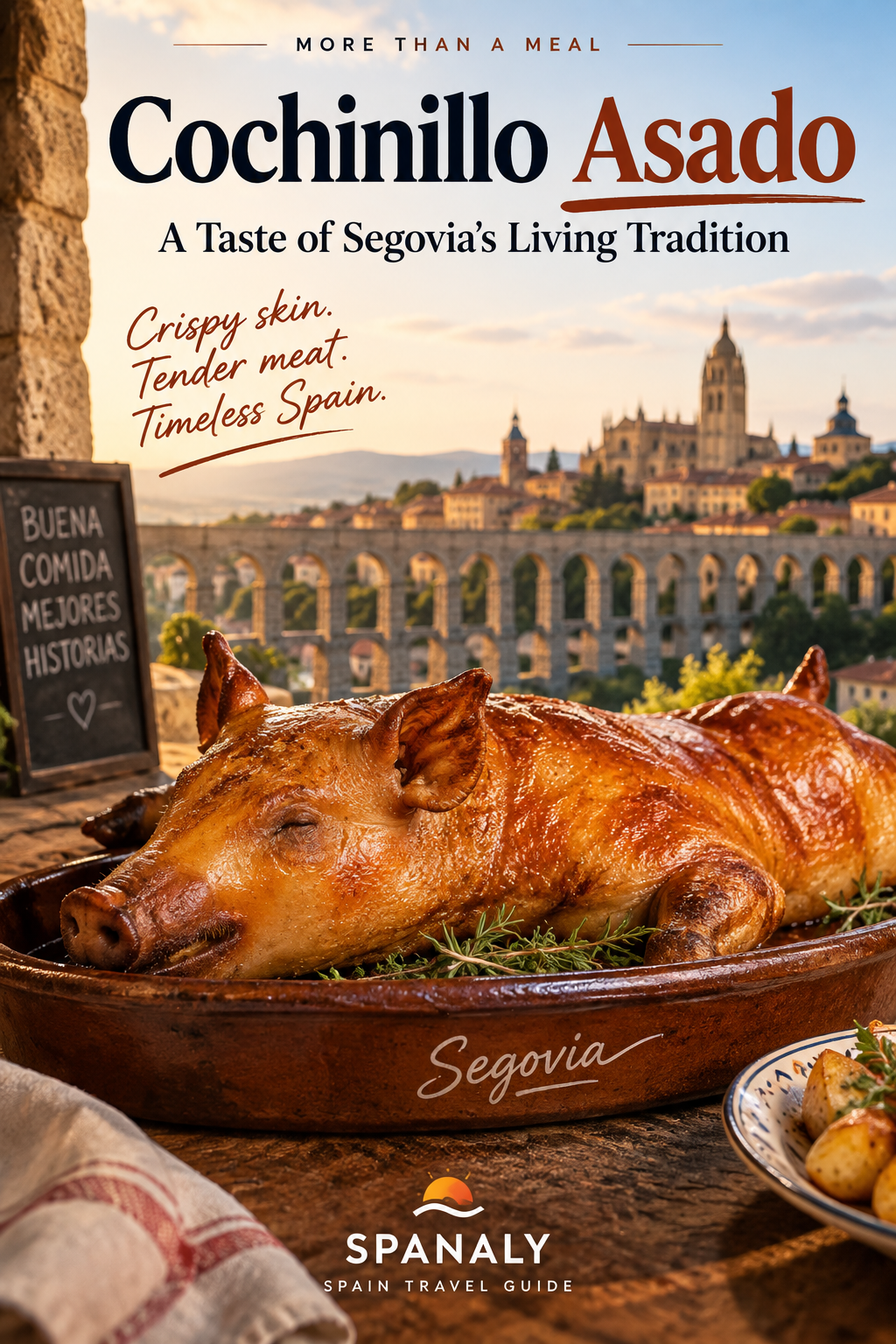
Should you plan a meal around it?
It is one of the city’s defining dishes and a natural part of a Segovia day.
Current menus show roughly €25–€31 for a ración, with larger portions for two costing more.
A traditional asador is better treated as a planned lunch than a last-minute snack.
What Is Cochinillo Asado?
Cochinillo Asado is Spanish roast suckling pig. In the classic Castilian style, a young piglet is roasted slowly until the skin becomes deeply golden and crisp while the meat underneath remains exceptionally tender.
The preparation is deliberately simple. The appeal comes from the quality of the young meat, controlled roasting and the contrast between the crisp skin and soft interior rather than from a heavy sauce or a long list of spices.
Why Is Cochinillo So Closely Linked to Segovia?
Segovia is the Spanish city most strongly associated with cochinillo. The dish sits naturally alongside the city’s Roman aqueduct, old town and Alcázar, making it one of the easiest places in Spain to connect a famous regional food with the destination that made it famous.
Spain’s official tourism information describes cochinillo as one of Segovia’s essential dishes, and the city’s traditional asadores have helped preserve the roast as a defining part of local food culture.
If Segovia is already on your itinerary, do not treat cochinillo as a reason to cross Spain by itself. Treat it as the perfect long lunch after exploring the aqueduct and historic centre.
Castilla y León
Traditional roast cuisine
UNESCO historic setting
What Does “IGP Cochinillo de Segovia” Actually Mean?
This is where a useful travel guide needs to go beyond “famous Spanish dish”. Cochinillo de Segovia has been registered as a European Protected Geographical Indication (IGP) since July 2024.
The protected product comes from the province of Segovia and La Moraña in Ávila.
The protected piglets are fed exclusively on their mother’s milk.
The specification requires slaughter at a maximum age of 35 days.
The protected carcass weighs between 4.0 and 5.8 kg, without offal.
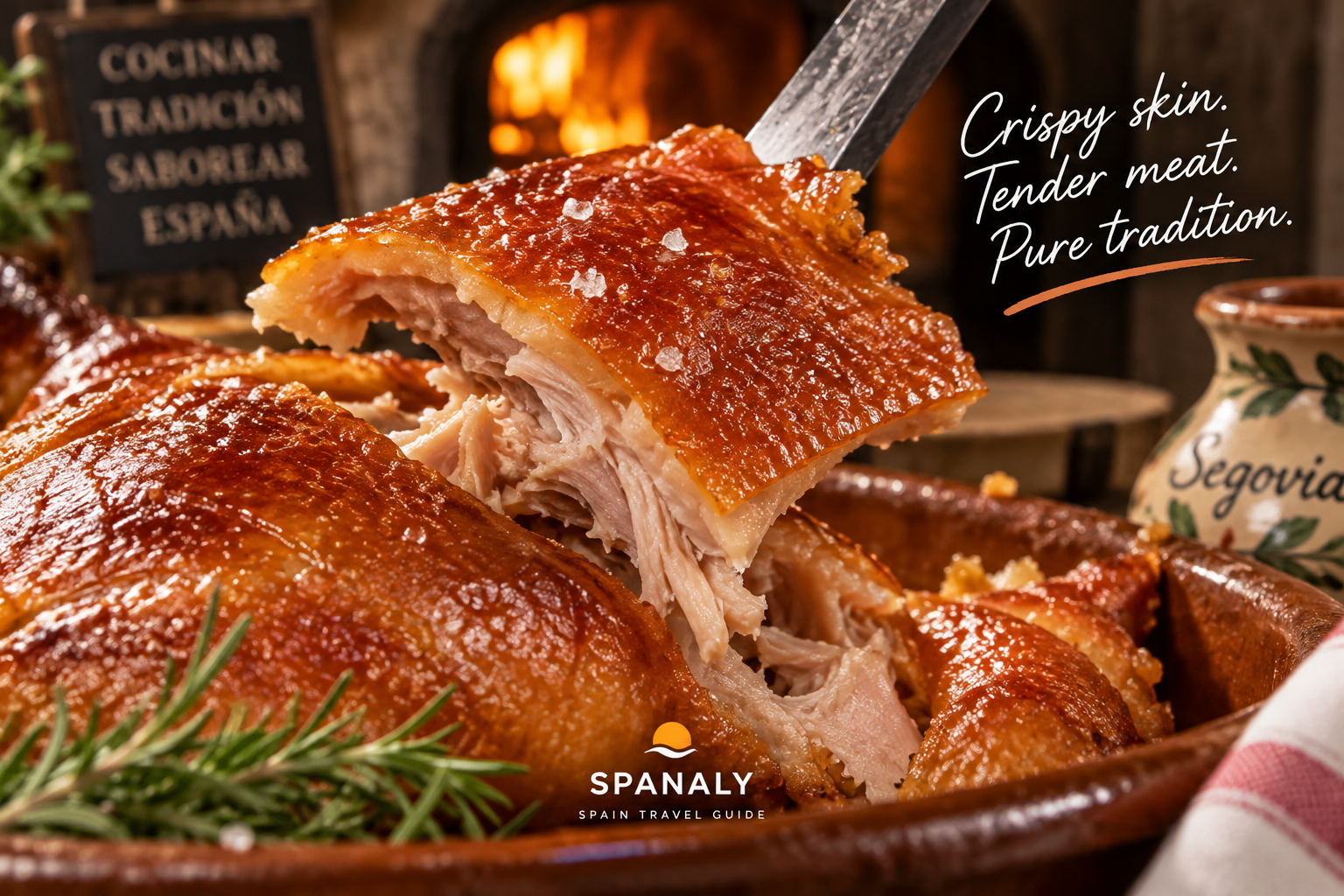
The defining test is texture: crisp skin on top and tender meat underneath.
How Is Traditional Cochinillo Asado Cooked?
The traditional approach keeps seasoning restrained, allowing the meat to remain the focus.
Wood-fired ovens are strongly associated with the classic Segovian style.
The skin is finished facing upward until it becomes evenly golden and properly crisp.
The contrast between crisp skin and tender meat is best experienced while the roast is hot.
Why Do Some Restaurants Cut It With a Plate?
The plate-cutting demonstration is one of Segovia’s most recognisable food rituals. The story is strongly associated with Mesón Cándido, where Cándido became famous for demonstrating the roast’s tenderness by cutting it with the edge of a ceramic plate.
How to Order Cochinillo in Segovia
Ask about the portion
A ración is not the same as ordering a quarter of a cochinillo. Portion sizes vary, so ask what is intended for one person or two.
Check the IGP
If protected origin matters to you, look for “Cochinillo de Segovia” IGP or the corresponding certification and ask if it is the product served.
Book the lunch
Traditional asadores can be busy. A reservation is the safer choice, especially for a weekend or a planned sightseeing day.
Eat it as the main course
This is a rich roast. Leave room for it instead of filling the table with several heavy starters first.
How Much Should You Expect to Pay?
Current 2026 menus in Segovia show a useful real-world range rather than one fixed “tourist price”.
Menu prices change, and accompaniments can affect the final bill. Treat these figures as a planning range and check the current menu when booking.
What Should You Eat With Cochinillo?
Judiones de La Granja
Large white beans from the Segovia area are a natural regional pairing. If you order them first, keep the portion sensible because cochinillo is already rich.
Choose the wine around the meal
A Ribera del Duero red can suit the roast, while a crisp white can bring contrast. The best choice depends on the rest of the table and the restaurant’s list.
Leave room for Ponche Segoviano
If you still have space, Ponche Segoviano is the classic local dessert to finish a traditional meal.
A Short Traditional-Style Cochinillo Recipe
This is a simplified home version based on the traditional Segovian approach. It is a large roast rather than an everyday small recipe.
Ingredients
- 1 suckling pig, about 4–4.5 kg
- Salt
- 2–3 tbsp lard
- About 250 ml water, as needed for the roasting dish
Method
- Season the cochinillo and place it skin-side down in a suitable roasting dish. Add a shallow layer of water.
- Roast in a preheated oven at 180°C for about 1 hour.
- Carefully turn the cochinillo skin-side up. Prick the skin lightly where needed and brush with lard.
- Return to the oven for roughly 45 minutes, until the skin is evenly golden and crisp.
- Adjust the seasoning of the roasting juices if necessary and serve hot.
Traditional-style timing and ingredients follow the Cochinillo Asado recipe published by Turismo de Segovia.
How Not to Waste a Cochinillo Meal
Ask what the listed ración or quarter actually serves.
Look for the protected designation if origin is important to you.
The demonstration is part of the theatre; texture is the real test.
Build it into a proper Segovia lunch after sightseeing.
Cochinillo Asado FAQ
Where is Cochinillo Asado most famous?
Segovia in Castilla y León is the city most closely associated with the dish and one of the best places to experience it as part of a traditional meal.
What does IGP Cochinillo de Segovia mean?
It is a protected European geographical designation with specifications covering origin, feeding, age and product characteristics. It does not mean every roast labelled simply “cochinillo” automatically carries the IGP.
How much does cochinillo cost in Segovia?
Current 2026 menus show roughly €25–€31 for a ración in examples checked for this guide, while quarter portions for two can be around €53–€58. Always check the current menu.
Should I reserve a table?
Yes, especially for a weekend or if the cochinillo meal is an important part of your day in Segovia.
Is Cochinillo Asado spicy?
No. The traditional dish is not defined by spicy seasoning. Its character comes from the roast, crisp skin and tender meat.
Does every restaurant cut cochinillo with a plate?
No. The ritual is strongly associated with the Segovian tradition and especially with Mesón Cándido, but it is not a requirement for serving good cochinillo.
Plan the meal, check the portion, then judge the roast.
Cochinillo Asado is at its best when you understand what you are ordering. In Segovia, reserve a proper lunch, ask about the portion and whether the cochinillo carries the IGP designation if that matters to you. Then focus on the thing that really counts: crisp skin, tender meat and a roast that tastes like the place you came to visit.