VALENCIAN COAST • GANDIA • MEDITERRANEAN FOOD
Fideuà: Valencia’s Iconic Seafood Noodle Dish
Fideuà is one of Spain’s most distinctive coastal dishes: short noodles cooked in a deeply flavoured seafood stock, finished with seafood and often served with alioli. Its strongest local identity is in Gandia, on the Valencian coast.
THE QUICK DECISION
What should you know before ordering Fideuà?
THE DISH
What Is Fideuà?
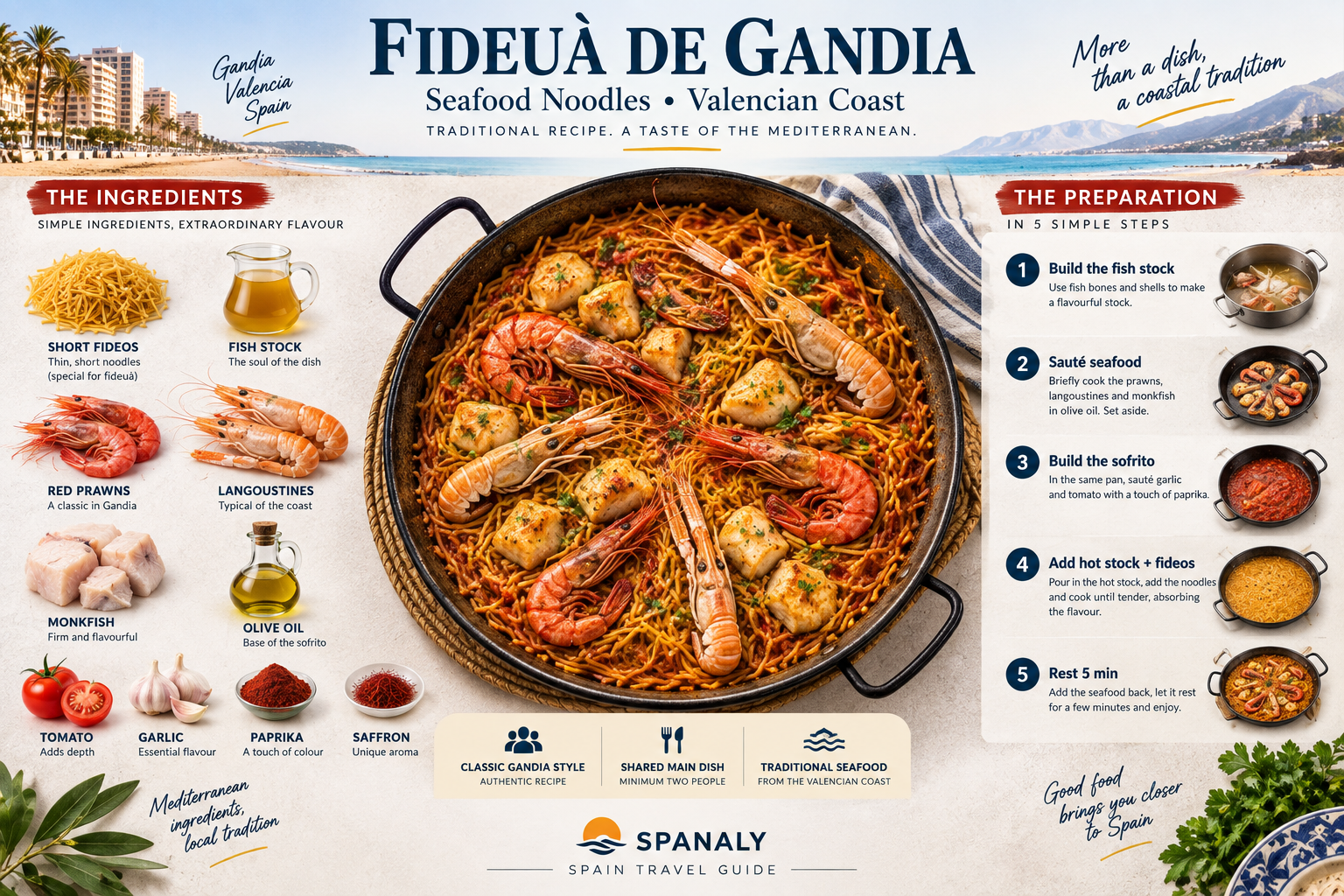
Fideuà is a traditional Valencian pan-cooked seafood dish prepared much like a paella, but with short noodles known as fideos instead of rice. Spain’s official tourism site identifies fideuà as Gandia’s typical speciality and describes it as a paella-style preparation using noodles in place of rice.
The important point is that it is not simply pasta topped with seafood. The noodles cook in a concentrated fish or seafood stock, absorbing the flavour as the pan cooks. Seafood, tomato, onion, garlic, olive oil and seasonings build the surrounding flavour.
WHERE IT BELONGS
Why Gandia Matters
Fideuà can be found beyond Gandia, but Gandia gives the dish its clearest geographic identity. The Valencian tourism authority calls Gandia fideuà one of the town’s emblems and describes it as a seafood dish that captures the Mediterranean.
Gandia sits on the Costa de Valencia between the Mediterranean and inland mountains. Its beaches, historic centre and Valencian food culture make the dish easy to place in a real travel itinerary rather than treating it as an anonymous “Spanish food” item.
THE STORY
How Fideuà Became a Coastal Classic
The best-known origin story says that fishermen preparing a seafood rice dish on a boat found themselves without enough rice and used noodles instead. The Valencian tourism authority presents this as a legend, not as a fully documented single-origin event.
The culinary logic is more important for a traveller: strong seafood stock, a shallow pan and a staple cooked directly in that stock. That is the coastal idea that remains visible in the dish today.
Gandia also hosts the International Fideuà Competition and Gastronomy Contest, a long-running event that has helped turn the city’s signature dish into an international culinary symbol.
WHAT GOES INTO IT
The Ingredients That Define Fideuà
Fideos
Short noodles are the defining ingredient. Their size varies by recipe, but they should be suited to absorbing the cooking stock.
Fish Stock
The backbone of the dish. A serious stock gives the noodles their marine depth.
Seafood
Traditional Gandia recipes can include red prawns, langoustines and monkfish. Restaurant versions vary.
Sofrito & Seasoning
Tomato, onion, garlic, olive oil, paprika and saffron appear in traditional Gandia preparations.
THE TECHNIQUE
What Makes Good Fideuà Different?
Build the seafood base
Seafood and aromatics are cooked first so their flavour becomes part of the pan.
Add hot stock
The fish stock becomes the cooking liquid and carries the central flavour of the dish.
Cook the fideos
The noodles absorb the stock. They should be cooked through while retaining structure.
Rest before serving
A short rest lets the pan settle before it reaches the table.
ORDERING GUIDE
How to Order Fideuà in Spain
Think of fideuà as a shared lunch , not a tapa. Many restaurants prepare the pan for a minimum of two people and cook it to order, so it is better suited to a relaxed midday meal than a late, rushed dinner.
A two-person minimum is common on current restaurant menus. Check the menu before ordering if you are travelling alone.
Give the pan time to cook and eat it as the centre of the meal, especially after a morning around the old town or beach.
Classic Gandia versions commonly feature fish, prawns, langoustines and monkfish, but restaurant combinations vary.
A fresh pan made for the table is a more useful signal than a long list of seafood piled on top.
Current 2026 menu examples show fideuà around €18–€24 per person at some restaurants, often with a two-person minimum, while more elaborate menus can cost considerably more. Treat this as a practical range, not a fixed national price.
Diet note: traditional fideuà uses wheat noodles and seafood or fish stock, so it is not gluten-free and the classic version is not vegetarian. Ask the restaurant about cross-contact if you have coeliac disease.
FIDEUÀ VS PAELLA
Is Fideuà Just Paella with Noodles?
Fideuà
- Short noodles instead of rice
- Strong seafood-stock character
- Often seafood-focused
- Closely associated with Gandia and the Valencian coast
Paella
- Rice is the defining staple
- Many regional preparations
- Can be seafood, meat or vegetable depending on style
- A defining part of Valencian cuisine
The comparison helps, but the two dishes should be treated as related Valencian traditions rather than one dish with a different carbohydrate.
VARIATIONS
What About Fideuà Negra?
Fideuà negra , made dark with squid or cuttlefish ink, is a real variation and appears on restaurant menus around Valencia. It can be excellent, but it is not the clearest first introduction to the Gandia classic.
TEXTURE & FLAVOUR
What Should Good Fideuà Taste Like?
The first impression should be savoury and marine. The stock should be noticeable without becoming aggressively salty, while tomato, onion, garlic, paprika and saffron provide depth rather than turning the dish into generic pasta.
The noodles should be cooked through but retain structure. Mushy noodles, excess liquid or completely dry, hard pasta are all warning signs. In a good pan, the seafood and noodles taste like one dish.
ALIOLI
Why Is Alioli Often Served with Fideuà?
Alioli adds a creamy garlic contrast to the concentrated seafood flavour. A small amount can change the character of each bite, especially when the noodles have a strong stock base.
Use it as a complement, not a blanket. If heavy garlic sauce is all you taste, you are covering the seafood stock that gives fideuà its identity.
TRAVEL CONTEXT
Where Should You Try Fideuà?
Gandia is the clearest destination if you want the dish in its strongest local context. Official Valencian tourism material specifically recommends Gandia for experiencing its fideuà.
Valencia city is another practical place to encounter the region’s cuisine. Look for a restaurant that treats fideuà as Valencian cooking, not simply as generic “Spanish seafood pasta.”
TRADITIONAL RECIPE
A Classic Gandia-Style Fideuà at Home
The following is a concise summary of the traditional Gandia recipe published by the Comunitat Valenciana tourism authority: six servings and about one hour.
- Make a rich fish stock.
- Sauté the seafood and reserve it.
- Build the tomato, onion, garlic and paprika base.
- Add hot stock, saffron and fideos.
- Cook until the noodles are tender but structured.
- Return the seafood, rest briefly and serve.
Key ingredients
- Fish for stock
- Tomato, onion, leek and carrot
- Ñora and parsley
- Red prawns and langoustines
- Monkfish
- Short fideos
- Olive oil, garlic, paprika and saffron
Basic method
- Prepare a rich fish stock.
- Sauté prawns and langoustines, then reserve.
- Build the onion, garlic, tomato and paprika base.
- Add monkfish, saffron and hot stock.
- Add fideos and cook until properly set.
- Arrange the seafood on top.
- Rest for about five minutes.
The official regional recipe specifies about 600 g of No. 3 fideos, 150 ml virgin olive oil, monkfish, red prawns, langoustines and approximately 2 litres of hot fish stock for six servings.
Recipe basis: Comunitat Valenciana — Fideuà de Gandia . Details and restaurant prices can change, so check the current menu when travelling.
TOURIST CHECKLIST
Five Fideuà Mistakes to Avoid
FAQ
Fideuà Questions Travelers Ask
What is Fideuà?
A Valencian pan-cooked seafood dish made with short noodles instead of rice, particularly associated with Gandia.
Is Fideuà the same as paella?
No. They share a pan-cooking tradition, but fideuà uses noodles while paella uses rice.
Where did Fideuà originate?
It is strongly associated with Gandia. The famous fishing-boat origin story is generally presented as a legend.
What seafood is normally used?
Traditional Gandia recipes can include red prawns, langoustines and monkfish, although restaurant versions vary.
Is Fideuà served with alioli?
Alioli is a common accompaniment and provides a creamy garlic contrast.
Is Fideuà gluten-free?
Traditional fideuà uses wheat noodles and is therefore not gluten-free unless a suitable alternative is specifically prepared.
Is Fideuà vegetarian?
The classic seafood version is not vegetarian because it uses fish stock and seafood.
THE SPANALY RULE
Judge the pan by the stock and noodles, not just the seafood.
A memorable fideuà starts with serious stock, properly cooked fideos, balanced seasoning and seafood that belongs to the pan. Gandia gives you the strongest local context, but the real test is simple: the sea should still be present when you take a bite of the noodles — and the fideos should be tender, structured and never mushy.