SPANISH FOOD GUIDE
Spanish Croquetas: How to Order and Enjoy Them in Spain
Spanish croquetas are more than a crispy tapa. This practical guide helps you read the menu, choose the right portion, recognise a good house-made version and fit croquetas into a real tapas meal.
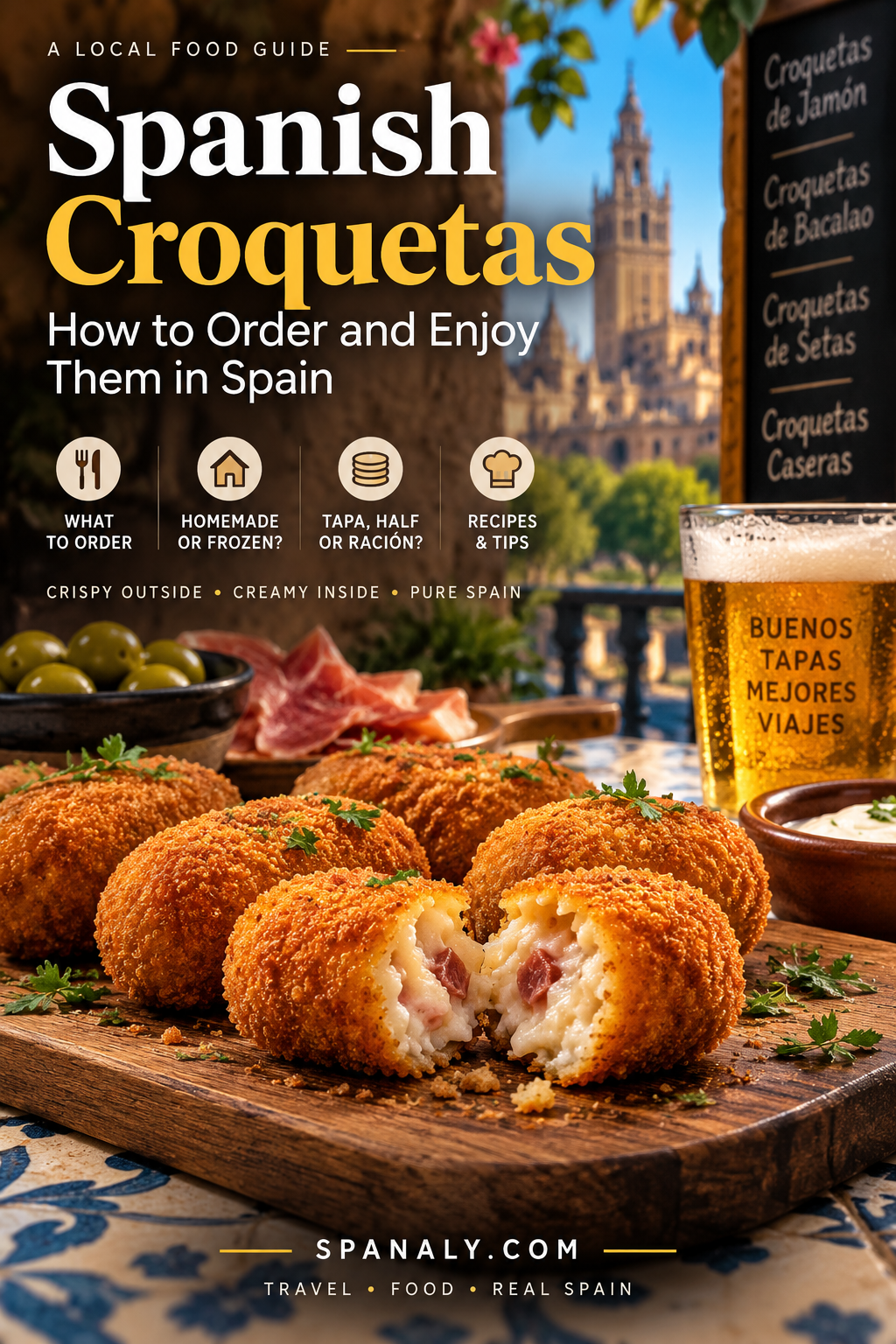
If you see croquetas on a Spanish menu, you are looking at one of the country’s most familiar bar foods. A traditional Spanish croqueta is typically built around a thick, creamy béchamel-style mixture with a filling such as cured ham, chicken, cod, mushrooms or another ingredient. It is shaped, coated and fried until the outside is crisp.
THE SHORT ANSWER
What are Spanish croquetas?
Spanish croquetas are small fried bites with a crisp breadcrumb coating and a soft, creamy interior. They are different from potato-based croquettes found elsewhere: the traditional Spanish version is commonly centred on a thick béchamel mixture.
The practical question for travellers is not simply what a croqueta is. It is how to order one well. On a menu, the same dish may appear as a tapa, a half portion or a full ración, and the number of pieces can change the cost and the rest of your meal.
READ THE MENU BEFORE YOU ORDER
Tapa, half portion or ración?
Croquetas are often rich and filling. The size of the order matters more than many visitors expect.
Tapa
A smaller serving, although the meaning and number of pieces vary between bars. It can be useful when you want croquetas as one part of a wider tapas order.
Media ración
A half portion. This is often the practical choice for two people who are ordering several dishes and do not want one rich plate to dominate the meal.
Ración
A full portion intended for sharing or for a larger order. Do not automatically add a full ración on top of several other heavy tapas.
THE QUESTION MANY TRAVELLERS WANT TO ASK
How can you tell a good house-made croqueta?
There is no single visual test that proves a croqueta was made in the kitchen that serves it. Some excellent restaurants buy products, while some imperfect-looking croquetas may still be homemade. But texture and presentation can give useful clues.
A good freshly made croqueta often has a delicate shell and a warm, creamy centre with a clear flavour from its filling. If eating house-made food matters to you, the simplest approach is to ask: ¿Son caseras? — “Are they homemade?”
WHAT SHOULD YOU TRY FIRST?
The most common Spanish croqueta fillings
Croquetas de jamón
Cured ham is one of the most recognisable fillings and an excellent first order for travellers trying Spanish croquetas for the first time.
Choose this if: you want the classic introduction.
Croquetas de pollo
Chicken croquetas are closely associated with home cooking and recipes that use leftover cooked chicken.
Choose this if: you prefer a familiar flavour.
Croquetas de bacalao
Salt cod is a traditional ingredient in many Spanish cuisines and gives the croqueta a more distinctive seafood character.
Choose this if: you enjoy fish and regional flavours.
Mushroom croquetas
Mushroom versions can be deeply savoury and are common in modern tapas kitchens and vegetarian menus.
Important: vegetable fillings are not automatically vegetarian if the base uses meat stock.
Cheese croquetas
Cheese versions can be rich and intense, particularly when a local cheese is used as the main flavour.
Choose this if: you want something indulgent and regional.
House specials
Modern restaurants may use seafood, seasonal ingredients or creative combinations that are specific to the kitchen.
Best strategy: order the house speciality instead of chasing a national ranking.
BUILD A BETTER TAPAS ORDER
Where do croquetas fit in the meal?
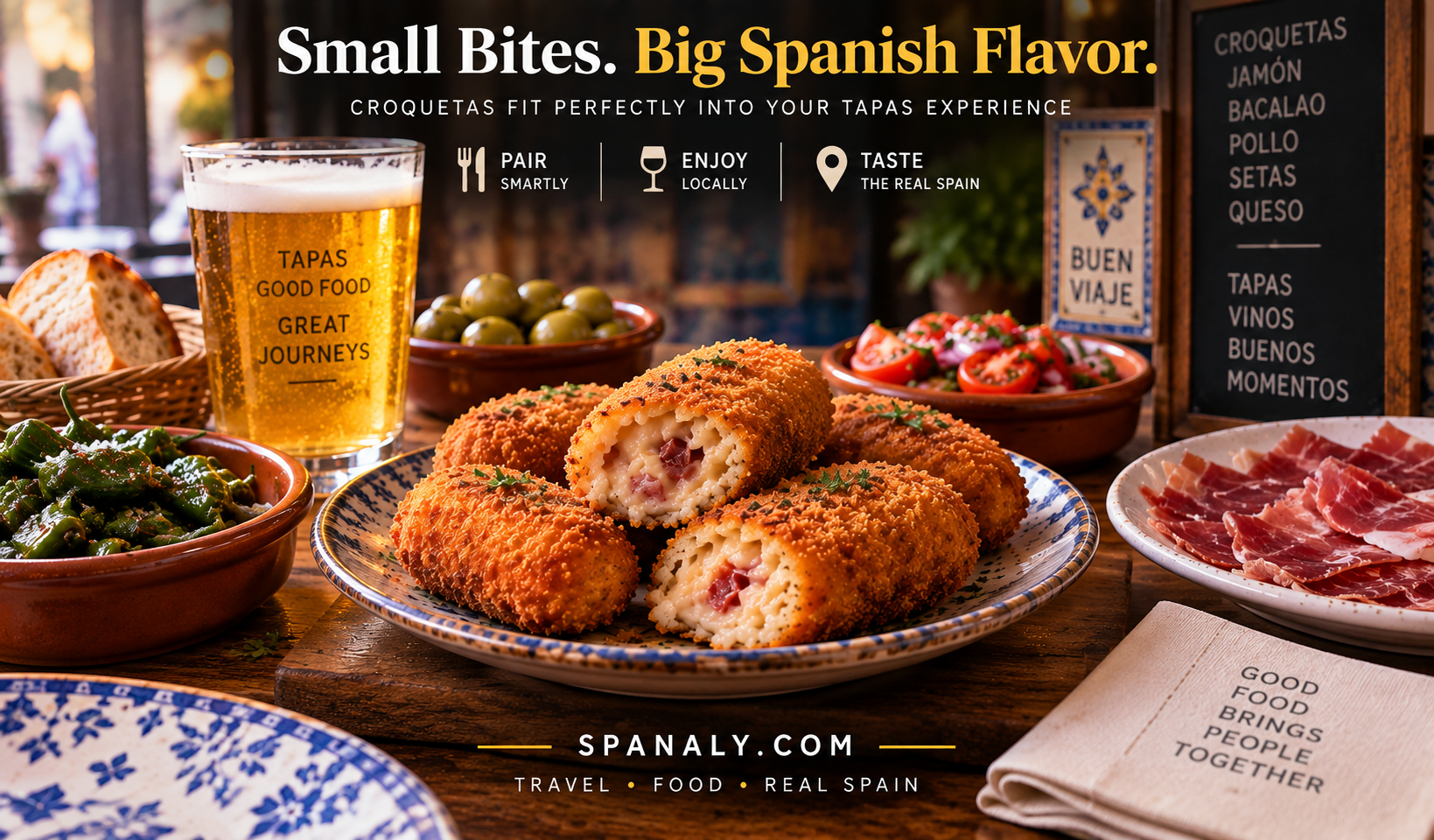
Croquetas are rich because many versions contain butter, milk and a creamy filling. They work better when balanced with dishes that bring freshness or a different texture.
✓ Pair with something fresh
Add a salad, tomatoes or another lighter dish rather than ordering three heavy fried plates together.
✓ Add seafood or acidity
Fish, shellfish, pickled ingredients or a bright acidic dish can balance the richness of the croquetas.
✓ Keep the drink dry
Beer, a dry white wine or another dry aperitif usually works more naturally with the dish than a very sweet drink.
IN THE NORTH, THE FORMAT CAN CHANGE
What about croquetas in a pintxos bar?
In northern Spain, especially in pintxos culture, you may encounter croquetas as an individual item rather than a shared plate. That changes the strategy: one croqueta can be part of a sequence of small bites while you move through a bar or choose several items from a counter.
In this setting, croquetas do not have to be the centre of the meal. Treat them as one stop in a broader tasting experience and avoid filling up on several rich fried items before trying the rest of the bar.
DO NOT CHASE ONE MYTHICAL “BEST” CROQUETA
Where should you try croquetas in Spain?
Madrid, San Sebastián, Seville and many other Spanish cities have strong bar cultures where croquetas make sense. The better travel decision is to choose a good food experience in the city you are already visiting.
Madrid
Ideal for building a classic tapas meal around traditional bars and neighbourhood food culture.
San Sebastián
A useful place to understand how croquetas can sit alongside a wider pintxos experience and individual bar hopping.
Seville
Croquetas fit naturally into an evening of shared tapas and local bar culture.
The better travel strategy
Do not cross Spain to chase an internet list of “the best croqueta”. Order a respected house version in the city you are exploring and use the rest of the meal to discover that destination’s food culture.
MAKE THEM AT HOME
Traditional-style Spanish croquetas recipe
The recipe below is a practical traditional-style version using ham. Exact techniques and proportions vary between Spanish households and kitchens, but the important idea is a thick filling that can chill, hold its shape, be coated and then fried.
Ingredients
- 50 g butter
- 50 g plain flour
- 500 ml milk, warmed
- 100 g finely chopped cured ham
- Salt, used carefully because the ham is salty
- Black pepper or nutmeg, optional
- Plain flour for coating
- 2 eggs, beaten
- Breadcrumbs
- Oil suitable for frying
Method
- Melt the butter and cook the flour gently to form a smooth base.
- Add the warm milk gradually, stirring constantly until very thick and smooth.
- Stir in the ham and season carefully.
- Spread the mixture into a shallow container and chill until firm.
- Shape into small portions.
- Coat each piece in flour, then egg, then breadcrumbs.
- Fry until golden and crisp.
- Rest briefly before serving because the centre will be hot.
ALLERGY INFORMATION
What allergens should you expect?
Traditional croquetas commonly contain gluten from flour and breadcrumbs, milk from the béchamel base and egg in the coating. Fish versions such as bacalao croquetas contain fish.
Recipes vary, so travellers with allergies or dietary restrictions should ask the restaurant directly about ingredients and cross-contact. A vegetable filling does not automatically mean the croqueta is vegetarian or suitable for every dietary requirement.
AVOID THESE EASY MISTAKES
How not to waste a good croquetas order
❌ Ordering a full ración automatically
Check the number of pieces and the rest of your order first.
❌ Assuming every filling is vegetarian
The filling and the béchamel base can contain ingredients you do not expect.
❌ Eating the first one immediately
The creamy centre can be much hotter than the crisp outside.
❌ Ordering only fried tapas
Balance croquetas with fresh, acidic, vegetable or seafood dishes.
FAQ
Frequently asked questions about Spanish croquetas
Are Spanish croquetas made with potatoes?
Traditional Spanish croquetas are commonly based on a thick béchamel-style mixture rather than a potato filling.
What is the most popular Spanish croqueta?
Croquetas de jamón are among the most recognisable and popular choices and are a good first order for visitors.
Are Spanish croquetas always vegetarian?
No. Many contain ham, chicken, fish or meat-based ingredients, and even vegetable versions may use a non-vegetarian stock or other ingredients.
What is the difference between a tapa and a ración?
A tapa is generally a smaller serving, while a ración is a larger portion. Exact sizes and numbers of pieces vary by establishment.
How do I ask if croquetas are homemade?
You can ask: ¿Son caseras?, meaning “Are they homemade?” The answer can help if house-made preparation matters to you.
THE SIMPLE TRAVEL RULE
Order croquetas like part of Spain, not like a checklist
Start with croquetas de jamón if you want the classic version, ask about the portion size, consider whether they are caseras and balance them with lighter dishes. The goal is not to find one mythical “best croqueta in Spain”. It is to understand how the dish fits naturally into the bar, city and meal you are enjoying.