What’s New in Córdoba: Culture, Heritage & City Changes
A visitor-first guide to what is happening now, what is scheduled for autumn, and which heritage projects are still not ready to plan around.
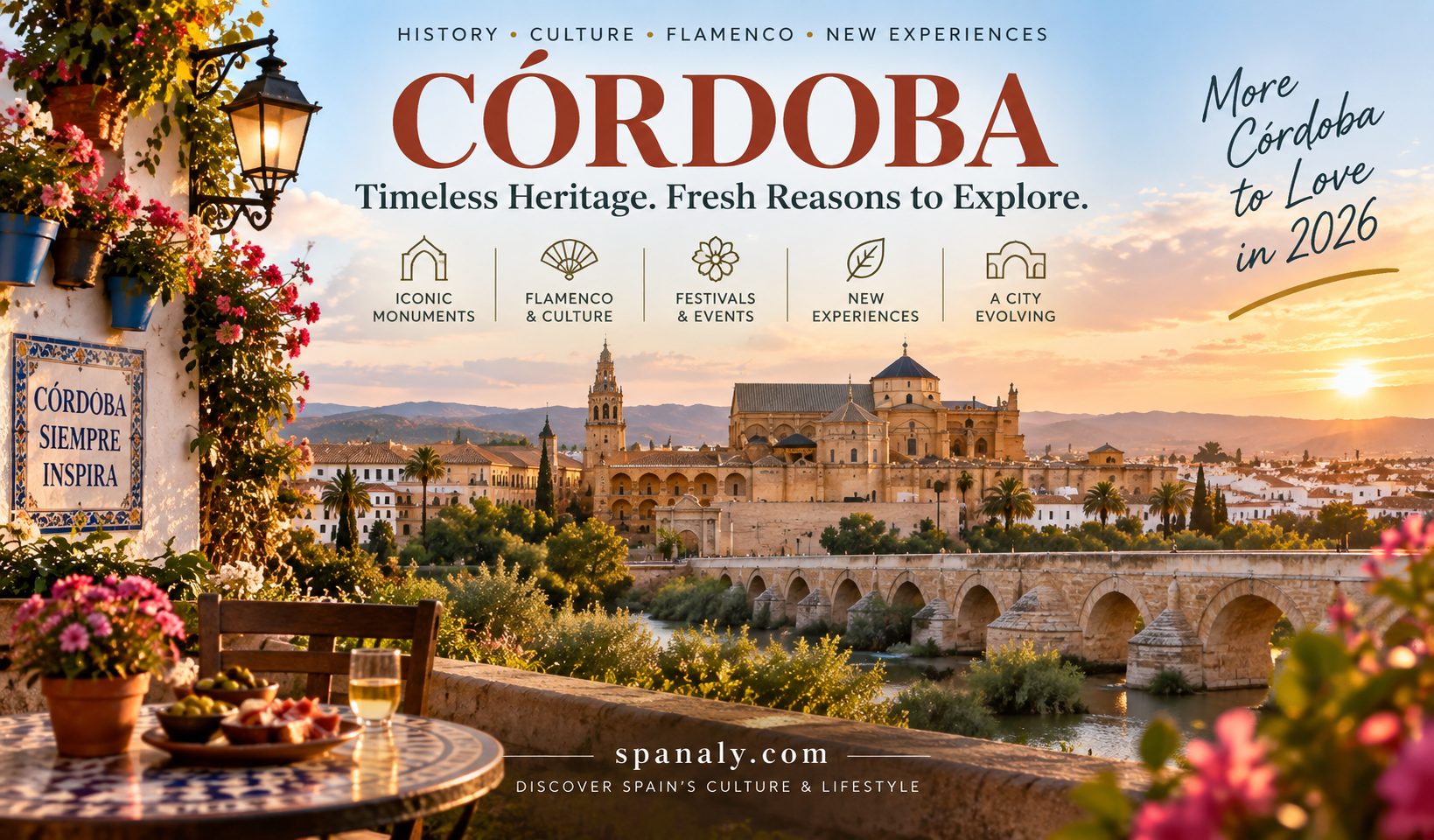
Córdoba is not replacing its classics. It is adding new layers around them.
The Mezquita-Catedral, Judería, Roman Bridge, Alcázar and Medina Azahara remain the backbone of a Córdoba visit. The newer layer is mostly cultural: flamenco, poetry, evening experiences and heritage work that changes how some familiar places are experienced.
For visitors in September 2026, the useful question is not “what new monument should I add?” but what is worth fitting around the classics?
The guide below separates scheduled experiences from construction and practical changes, so you can decide what actually belongs in your day.
Autumn evenings have more to choose from
Café Cantante
The flamenco cycle returns to Posada del Potro with four Saturday nights — not a daily programme running from September 5 to October 3.
The 2026 performances are scheduled for September 5, 19 and 26, and October 3. Admission is free until capacity is reached, with tickets available at the venue 90 minutes before each performance.
Latidos Flamencos
A flamenco-focused evening programme at Cine Fuenseca, with free admission until capacity.
The 2026 programme includes September 18 and September 25. On the review date, September 25 is the remaining scheduled night. Check the official Córdoba agenda for the current programme before planning around it.
Cosmopoética
Córdoba’s international poetry festival returns with readings, conversations, workshops and other cultural activities.
It is a city-wide cultural layer rather than a single attraction. If your dates overlap, choose one event that fits naturally into your route and keep the rest of the evening open.
Check the official Córdoba agenda →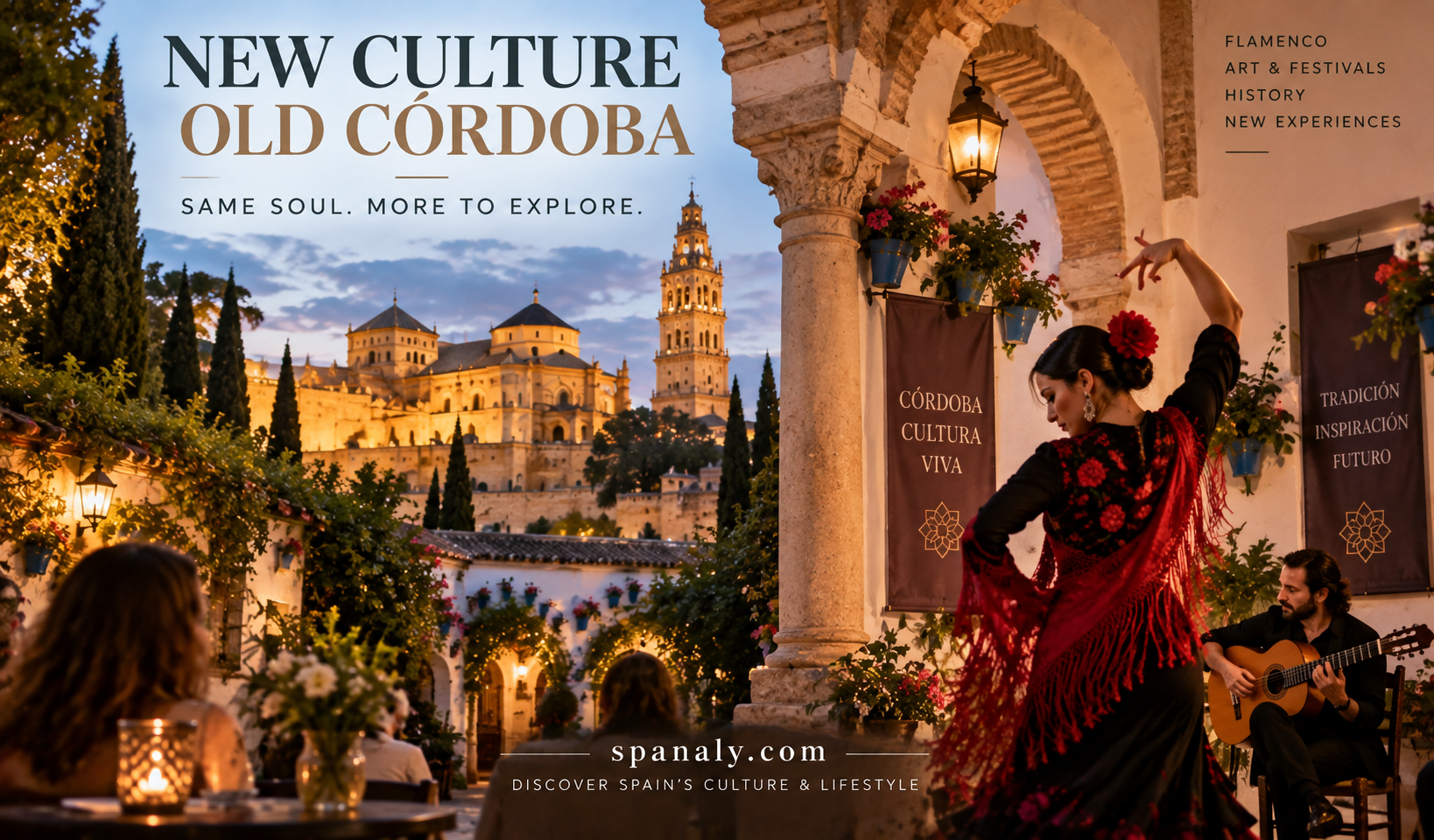
Keep one evening open for a different Córdoba
Naturaleza Encendida: “Navegantes”
A ticketed light, music and projection experience in the gardens of the Alcázar de los Reyes Cristianos.
The 2026 edition runs from May 1, 2026 to January 10, 2027, with a route of around 45 minutes and evening passes from 22:00. This is a separate night experience — it does not replace or extend a normal daytime visit to the Alcázar.
Official dates and tickets →The Roman Bridge is being repaired — not replaced
Works began in September 2026 after flooding caused damage around the historic bridge and the river environment.
The intervention is about repair, functionality and hydraulic safety. It is not a new attraction and should not change the role of the Roman Bridge in a Córdoba itinerary.
The Synagogue is gaining a better visitor setting
Adjacent archaeological and visitor space
Work began in April 2026 on the 224-square-metre plot beside Córdoba’s Synagogue. The project is designed to conserve archaeological remains, improve visitor circulation and create an information and reception setting that adds context to the existing monument.
The Synagogue itself remains a visitable landmark. The new adjacent space should not be promised as an open attraction until official visitor information confirms its opening.
Official project information →October brings FLORA into the visitor calendar
FLORA International Flower Festival
October 12–22, 2026.
International floral artists transform historic Córdoba courtyards and heritage buildings with temporary contemporary installations. The official tourism programme lists the installations as free to visit.
For repeat visitors, FLORA can be a strong reason to return because it changes the way familiar heritage spaces are experienced without competing with the city’s core monuments.
Official FLORA information →Some major changes are not new attractions
Conservation and sustainability
2026 investment is strengthening conservation, sustainability, research and dissemination at the archaeological site. These actions improve the long-term visitor experience but do not create a new attraction to book around.
Technology supports preservation
Digital tools and interpretation are part of Córdoba’s wider heritage development. They belong to the city’s long-term evolution, not to a list of new places to add to a one-day itinerary.
Practical changes come and go
Public-space and street works can affect how you move through the historic centre. Treat them as practical travel information rather than reasons to redesign the whole visit.
Build the newer Córdoba around the classics
First visit
Keep the Mezquita-Catedral, Judería, Roman Bridge, Alcázar and historic centre at the heart of the trip. The newer layer should add atmosphere, not replace the essentials.
Returning visitor
This is where FLORA, Cosmopoética, a flamenco night or Navegantes can add something genuinely different to a familiar Córdoba.
Short day trip
Do not add a night performance after a day built around the Mezquita-Catedral, Alcázar and Medina Azahara. Those three already make a demanding day.
Salmorejo and the old town still belong to the story.
Córdoba’s newer experiences do not require a restaurant checklist. Let food become the pause between heritage visits: a relaxed meal in the centre, followed by one cultural evening rather than another attraction.
Continue exploring Córdoba on Spanaly →The guides that still matter most
The new layer works because Córdoba’s historic framework remains so strong. Use these guides to plan the core visit, then add one experience that fits your dates.
Four quick checks
- Roman Bridge: check current access while repair works continue around the bridge and river.
- Evening events: verify the exact date before building your night around a performance or festival.
- Synagogue: the monument is visitable; the adjacent improvement space is not an open new attraction yet.
- Seasonal status: after October 3, Café Cantante leaves the schedule; from October 12, FLORA becomes a current experience.