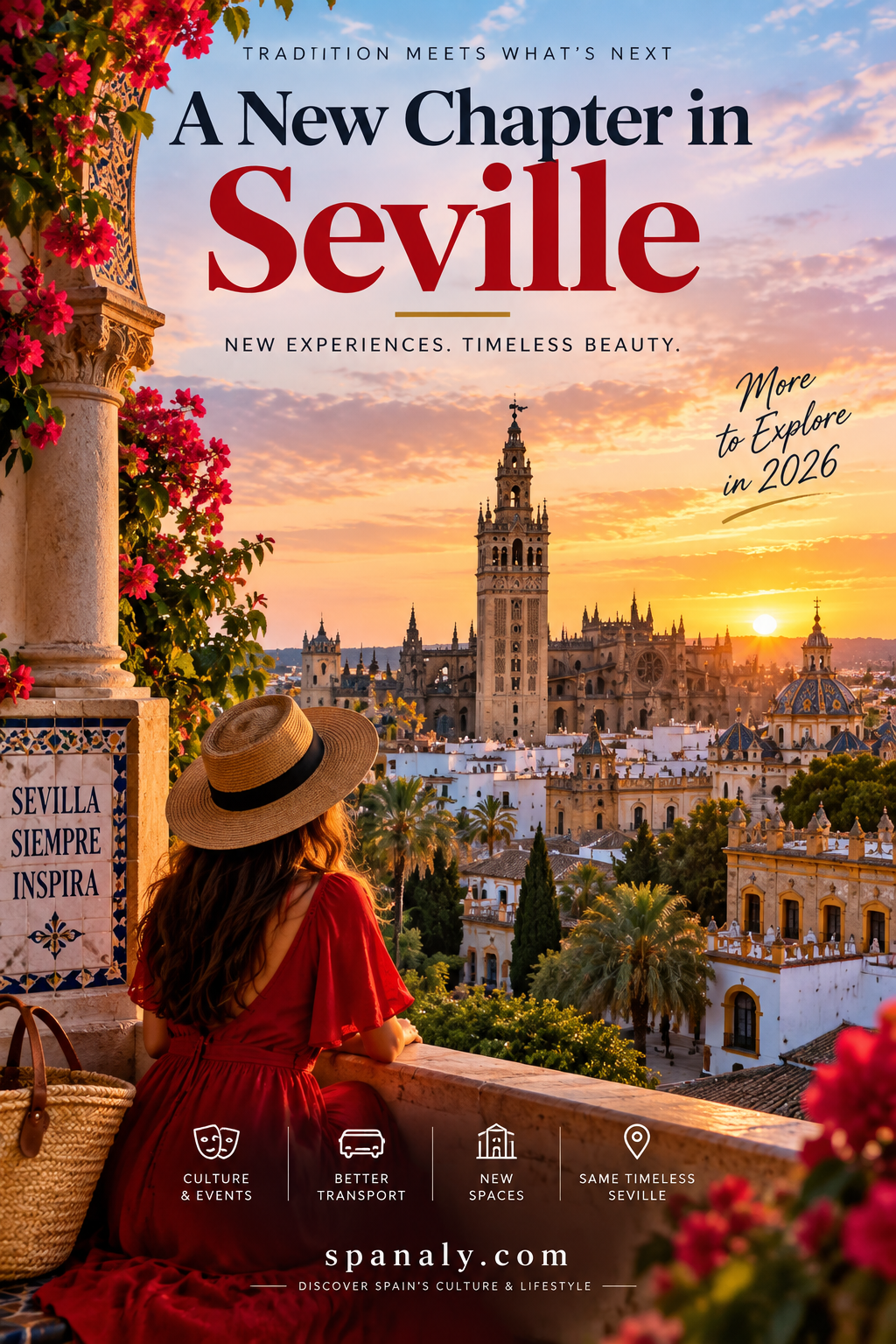
What’s New in Seville:
Culture, Experiences & City Changes
What has actually changed for visitors in September 2026 — and what is worth adding to a classic Seville trip.
What changed for a visitor on these dates?
Seville’s classics have not been replaced. The Cathedral, Real Alcázar, Plaza de España, Triana and the historic centre still form the framework of a first visit.
The useful changes in 2026 sit around that framework: the restored Teatro Lope de Vega is returning to the cultural calendar, the XXIV Bienal is filling the city with new productions and venues, Real Fábrica de Artillería is active as a cultural space, and a new TB1 connection is about to improve the link between Santa Justa, eastern Seville and the centre.
Worth considering on a September trip
- XXIV Bienal de Flamenco — September 9–October 3, 2026.
- Teatro Lope de Vega — returning to use during the Bienal; regular autumn season begins October 11.
- Real Fábrica de Artillería — active cultural venue with current exhibitions and programmes.
Useful if your dates run later
- TB1 full route — scheduled for September 28, connecting Santa Justa and Plaza del Duque.
- Casa de las Letras — announced opening December 16, 2026; not yet open on this review date.
Keep future projects out of today’s route
- Future pedestrian bridge — a later project, not a current visitor stop.
- Museo de la Hispanidad — future development, not an open attraction.
Status reviewed September 22, 2026. Dates and programmes can change; the official venue or city listing should be checked before booking.
The Lope de Vega is back — and that changes the evening, not the whole city.
The Teatro Lope de Vega is returning to use in September as part of the XXIV Bienal de Flamenco after its integral rehabilitation. Seville’s official announcement says the restoration involved an investment of €10 million and that the theatre’s regular autumn programme begins on October 11.
The important distinction is simple: the theatre itself is restored and returning; wider work around the theatre and Casino de la Exposición is a separate development. Do not treat the surrounding project as proof that the theatre is unfinished.
For a visitor, this is primarily an evening experience. If you enjoy theatre, music, dance or flamenco, the Lope can give a classic sightseeing day a cultural finish without forcing another major monument into the afternoon.

The Bienal is established. What is new is the 2026 programme.
The XXIV Bienal de Flamenco is not a new festival. It was founded in 1980 and the 2026 edition runs from September 9 to October 3. The official programme spreads performances across theatres, heritage spaces and other locations around Seville.
For this article, the useful change is the concentration of new productions, premieres and different venues. The official programme includes new work and one-off performances, so the experience depends heavily on your dates.
Do not squeeze it between the Cathedral, Alcázar and three other timed tickets. Leave room for food, transport and the slower pace of the city.
A historic industrial complex is becoming part of Seville’s contemporary cultural life.
Real Fábrica de Artillería is not simply a monument to look at. Its current role is as a flexible cultural space for exhibitions, performance and creative projects, with the official ICAS agenda showing current exhibitions in 2026.
That also means the visitor experience is programme-led. A special exhibition or event may be the reason to go on one date and unavailable on another. The right approach is to check what is actually scheduled rather than treating one temporary show as a permanent attraction.
TB1 is the change that can actually alter how you move through Seville.
From September 28, the full TB1 route is scheduled to connect Santa Justa with Plaza del Duque, completing the link from Torreblanca and Sevilla Este into central Seville. The city gives an approximate 33-minute journey between Sevilla Este and Plaza del Duque.
The visitor relevance is straightforward: it matters most if you arrive through Santa Justa or stay in eastern Seville. It is a transport improvement, not a new sightseeing attraction.
The distinction with other fleet changes also matters: TB1 uses articulated electric vehicles. The separate CNG bus programme is a different development. They should not be presented as the same project.
Casa de las Letras will add a new literary stop in December.
The restored Casa Natal de Luis Cernuda on Calle Acetres is being prepared as the Casa de las Letras de Sevilla, a new museum space dedicated to the poet and his work. The city announced an inauguration date of December 16, 2026.
New is a layer. The classic Seville remains the framework.
For a first visit, do not remove the Cathedral, Real Alcázar, Plaza de España, Triana or the historic centre because something new appeared. The new experiences work best when they complement the city you came to see.
How should you actually use the new layer?
Keep the icons first.
Build your main sightseeing day around Seville’s classics. Add one new cultural experience if it genuinely matches your interests.
Go deeper.
The Lope, Artillería or a Bienal performance can give a familiar Seville trip a different cultural rhythm.
Do less, better.
Do not sacrifice a major monument just because an experience is new. New does not automatically mean essential.
Use TB1 when it solves your route.
If Santa Justa or eastern Seville is part of your trip, the new connection can be genuinely useful. Otherwise, it may change very little for a central stay.
Some of Seville’s future projects belong on a watchlist, not an itinerary.
The planned pedestrian bridge linking Los Remedios with the historic centre and the proposed Museo de la Hispanidad are future developments. They are relevant to how Seville may change, but they are not attractions to schedule into a 2026 visit.
Check the detail that can change your day.
Seville is not becoming a different city. It is adding another way to experience the one you came for.
In 2026, the most useful changes are cultural and practical: a restored theatre returning to the calendar, an established Bienal with new productions and venues, a flexible cultural programme at Artillería, a new TB1 connection, and a literary space still waiting to open. Choose the layer that fits your trip — then leave room for Seville itself.