✨ Jamón Ibérico
In Spain, food transcends simple nourishment—it represents memory, identity, and pure emotion. Among all Spanish culinary icons, Jamón Ibérico reigns supreme as the undisputed king of the table.
🥩 More than Meat: Crafted from the legendary black Iberian pig, this delicacy evolves through nature and human mastery.
🇪🇸 A Cultural Symbol: It stands as a pillar of Spanish heritage, requiring immense patience and respect for ancestral traditions.
🌳 From Forest to Fork: Every thin, translucent slice tells a story centuries in the making, from dehesa oak forests to elite tapas bars.
To fully appreciate its prestige, you must view this delicacy within the wider context of Spanish Cuisine. In fact, it belongs to a world where quality ingredients and regional identity define every single dish.
🌟 Spanaly Insight: Many visitors mistake any cured ham for Ibérico. However, the real “Pata Negra” comes only from pigs that roam free. Always look for the oily sheen on the meat; if it glistens at room temperature, you are likely holding the authentic, acorn-fed treasure!
⚔️ The Global Duel: Jamón Ibérico vs. The World
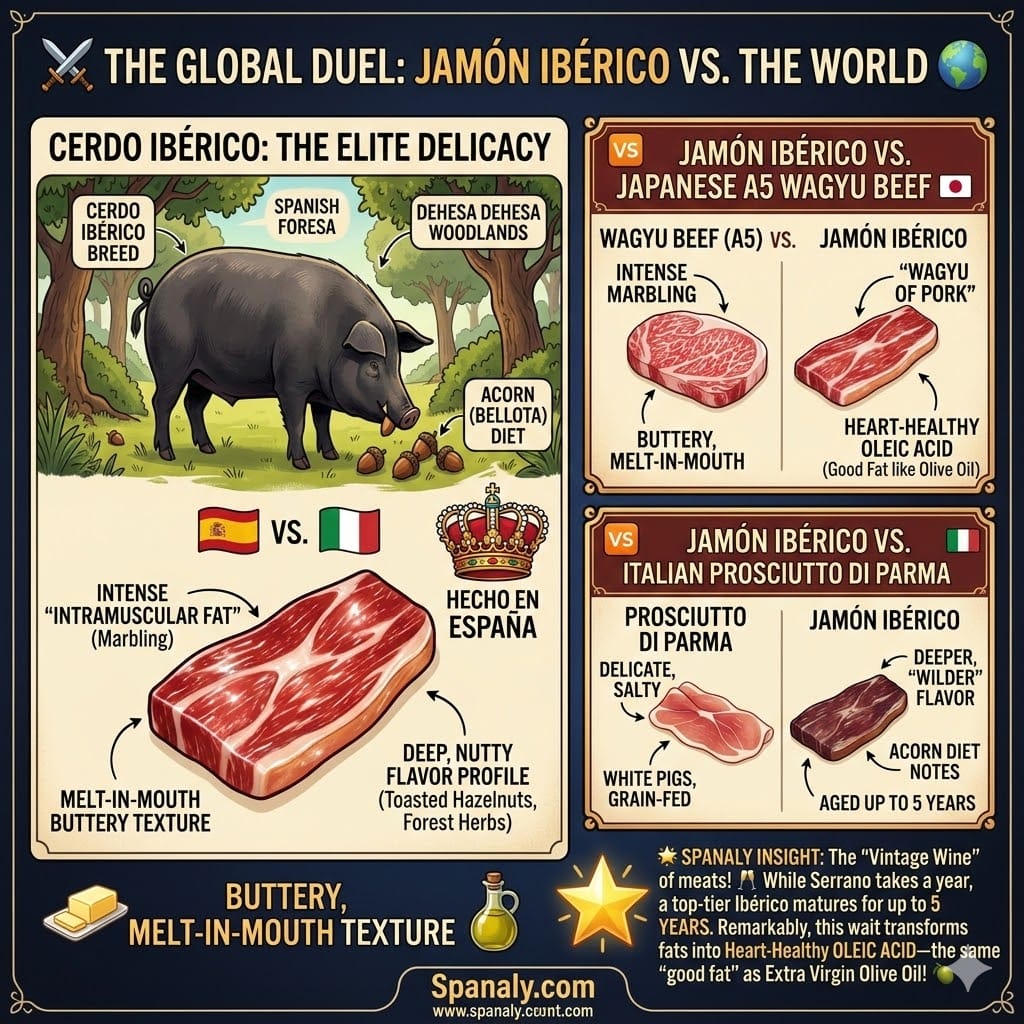
To understand why Jamón Ibérico costs more than gold per gram, we must compare it to the world’s most elite meats. While many cultures cure pork, only a few reach this level of biological and artisanal perfection.
🥩 The Wagyu of Pork: Much like Japanese A5 Wagyu Beef, Jamón Ibérico features intense “intramuscular fat.” This marbling allows the meat to melt at room temperature, releasing a buttery texture that standard ham simply cannot match.
🇮🇹 Ibérico vs. Prosciutto di Parma: Italy’s famous Prosciutto is delicate and salty. However, Jamón Ibérico offers a deeper, “wilder” flavor profile. Because of the acorn diet, it carries distinct notes of toasted hazelnuts and forest herbs.
🥖 The Local Experience: While you can find this delicacy across the country, knowing How to Order Food Like a Local in Spain is key. It ensures you get the best hand-cut slices rather than machine-cut substitutes.
🌟 Spanaly Insight: Think of Jamón Ibérico as the “Vintage Wine” of meats. Indeed, while a standard Serrano ham is ready in a year, a top-tier Ibérico matures for up to five years. Remarkably, this long wait transforms the fats into heart-healthy oleic acid—the same “good fat” found in extra virgin olive oil!
🏺 The Origins: A 2,000-Year Legacy from Romans to Royals

The roots of Jamón Ibérico stretch back over two millennia to ancient Iberian tribes. In fact, these early inhabitants mastered the art of preserving pork using only sea salt and dry mountain air. When the Romans arrived, they refined these techniques, transforming cured ham into a luxury fit for emperors.
🏛️ Roman Influence: Roman legions carried cured ham as a vital source of sustained energy. Historical records from the Roman Theatre in Merida suggest that ham already stood as a highly prized commodity in the region of Lusitania.
👑 Medieval Heritage: By the Middle Ages, Jamón became a staple in Spanish fortresses. Much like the knights who guarded the Castle of Loarre in Aragon, master curers protected their secret recipes with military precision.
🧬 A Genetic Treasure: At the heart of this tradition sits the Cerdo Ibérico (Iberian pig). This unique breed survived centuries of history, maintaining its extraordinary ability to store fat within its muscle fibers.
Consequently, this ancient craft survived the rise and fall of empires. Ultimately, tasting Jamón today connects you directly to the culinary evolution of Roman Hispania.
🌟 Spanaly Insight: Historical archives reveal that during the Roman era, a single cured ham could cost as much as a small plot of land! Today, while more accessible, the “Black Label” versions still command a price reflecting this imperial heritage. You aren’t just eating meat; you are tasting 2,000 years of survival.
🌳 The Soul of the Dehesa: The Ecosystem of the Acorn (Bellota)
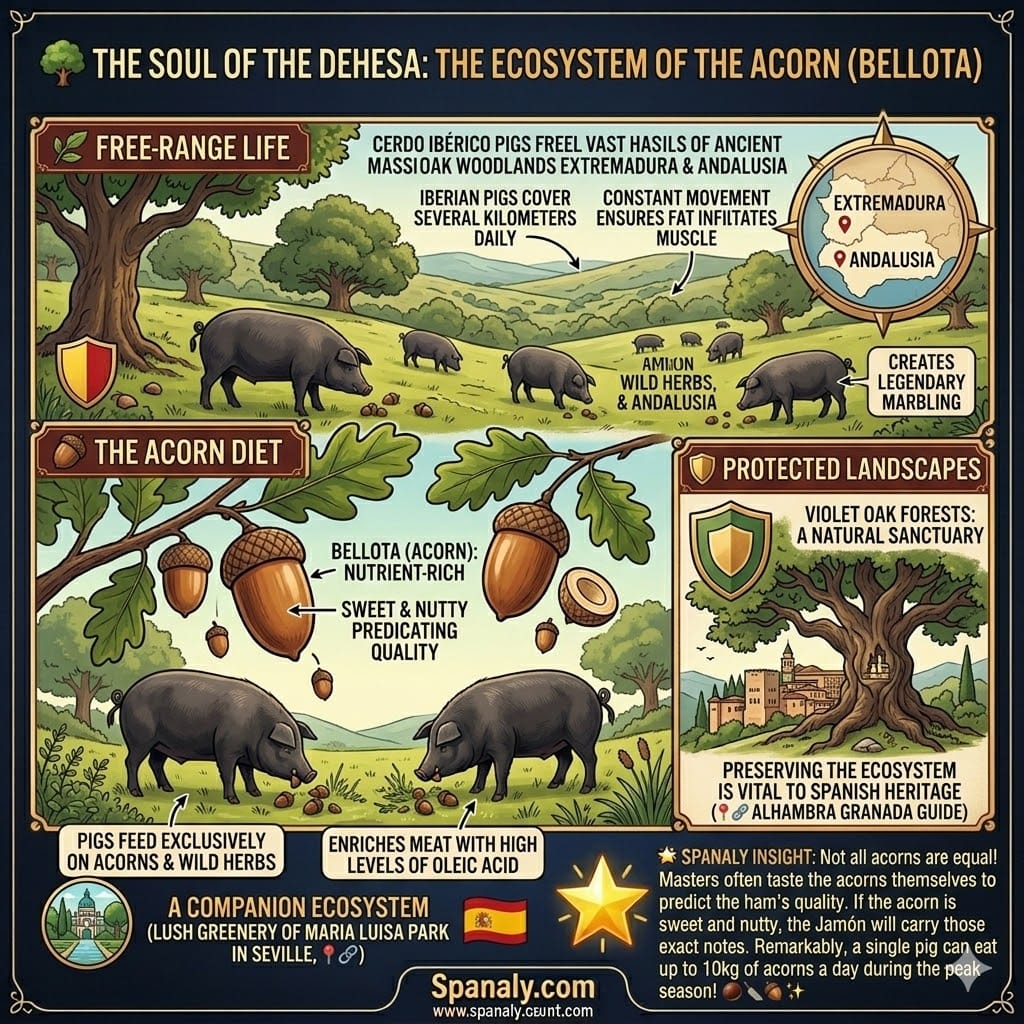
The true magic of Jamón Ibérico begins in the Dehesa—vast, ancient oak woodlands spanning Extremadura and Andalusia. These landscapes represent one of Europe’s most sustainable agricultural systems. Here, nature and tradition achieve a perfect, rhythmic balance.
🌿 Free-Range Life: Iberian pigs roam these hills freely, covering several kilometers daily. This constant movement ensures the fat infiltrates deeply into the muscle, creating the legendary marbling.
🌰 The Acorn Diet: During the Montanera (fattening season), pigs feed exclusively on Bellotas (acorns) and wild herbs. Much like the lush greenery of Maria Luisa Park in Seville, the Dehesa provides a nutrient-rich environment that defines the meat’s final character.
🛡️ Protected Landscapes: These oak forests serve as a natural sanctuary. Preserving this ecosystem remains as vital to Spanish heritage as maintaining the historic Alhambra Granada Guide landmarks.
Consequently, the acorns enrich the meat with high levels of oleic acid. Ultimately, this specific diet transforms a simple ham into a heart-healthy, buttery masterpiece that tastes like the forest itself.
🌟 Spanaly Insight: Not all acorns are equal! Masters often taste the acorns themselves to predict the ham’s quality. If the acorn is sweet and nutty, the Jamón will carry those exact notes. Remarkably, a single pig can eat up to 10kg of acorns a day during the peak season!
⏳ The Art of Curing: Why Time is the Secret Ingredient
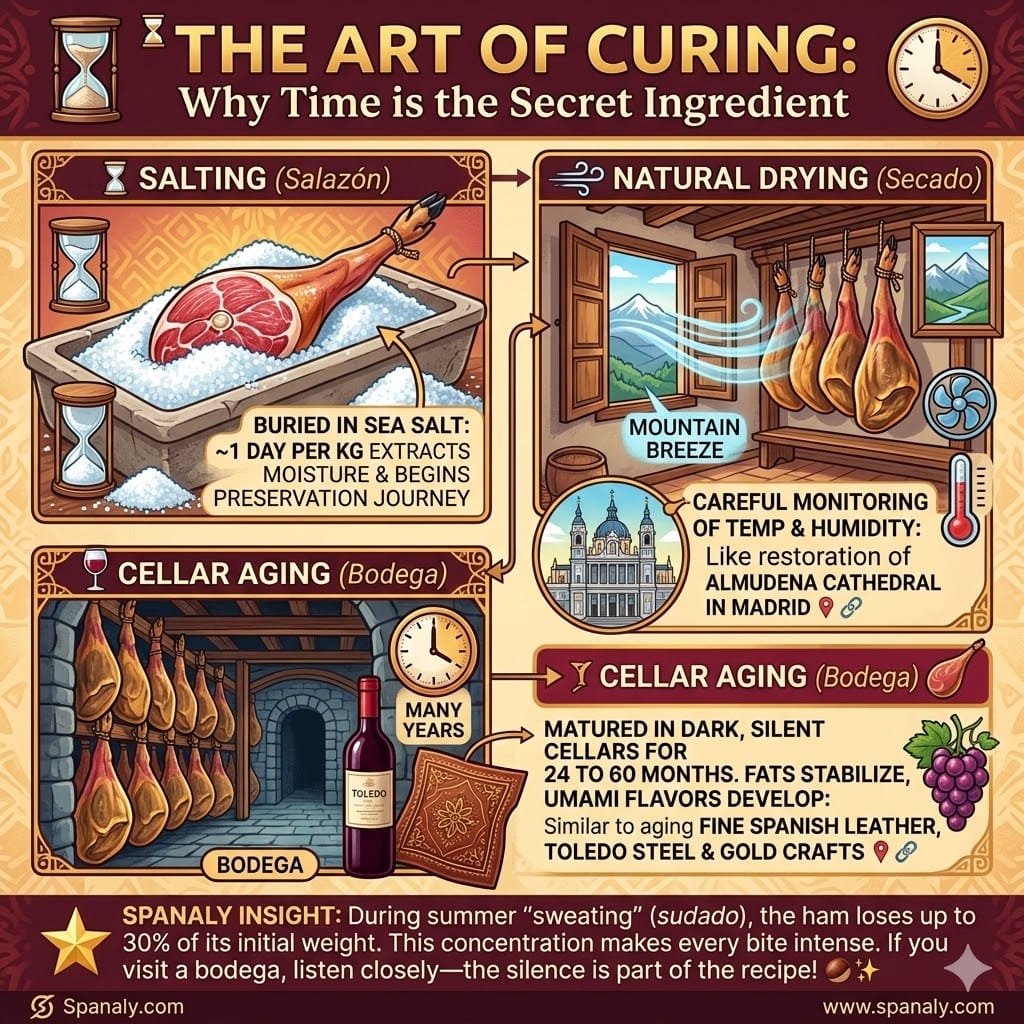
Producing Jamón Ibérico is a slow, sacred ritual that requires precision, intuition, and years of patience. Unlike industrial meats, this process relies entirely on natural elements. In fact, masters of the craft often say they don’t “make” the ham—they “accompany” it through its transformation.
🧂 Salting (Salazón): Fresh hams sit buried in sea salt for approximately one day per kilogram. This step extracts moisture and begins the preservation journey.
🌬️ Natural Drying (Secado): Hams hang in traditional chambers where windows open and close to capture the mountain breeze. Much like the careful restoration of the Almudena Cathedral in Madrid, this stage requires constant monitoring of temperature and humidity.
🍷 Cellar Aging (Bodega): The final evolution occurs in dark, silent cellars for 24 to 60 months. During this long wait, the fats stableize and the complex “umami” flavors develop, similar to the aging of fine Spanish leather found in Toledo Steel & Gold Crafts.
Consequently, no artificial additives or shortcuts enter the cellar. Ultimately, the fusion of mountain air and time creates a texture so tender it literally dissolves on the tongue.
🌟 Spanaly Insight: During the summer “sweating” (sudado) phase, the ham actually loses up to 30% of its initial weight. This concentration of flavor is what makes every bite so intense. If you visit a bodega, listen closely—the silence is part of the recipe!
🏷️ Decoding the Labels: Understanding the Color-Coded Law
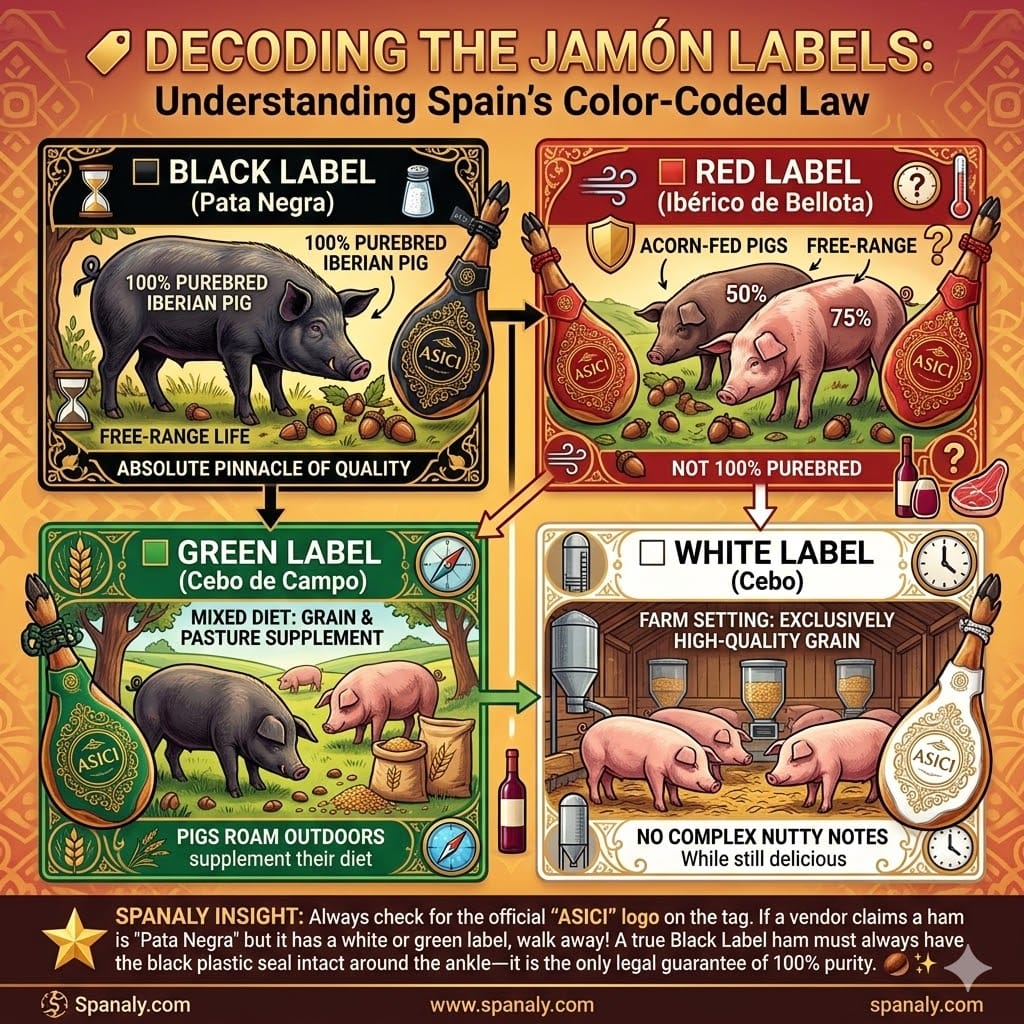
Since 2014, Spain has enforced a strict labeling system to protect consumers from fraud. In fact, these colored plastic tags (precintos) wrapped around the hoof act as the ham’s “identity card.” Knowing these colors is essential before you explore the gourmet stalls of Mercado de Triana in Seville.
⬛ Black Label (Pata Negra): The absolute pinnacle of quality. It guarantees a 100% purebred Iberian pig, acorn-fed, and raised free-range.
🟥 Red Label (Ibérico de Bellota): These pigs are acorn-fed and free-range. However, they are not 100% purebred (usually 50% or 75% Iberian breed).
🟩 Green Label (Cebo de Campo): This indicates a mixed diet. The pigs roam outdoors but supplement their diet with grain and pasture.
⬜ White Label (Cebo): These pigs live in farm settings and feed exclusively on high-quality grain. While still delicious, they lack the complex nutty notes of the acorn diet.
Consequently, the price follows this hierarchy. Ultimately, choosing a label depends on your budget and the intensity of flavor you seek, much like selecting a masterpiece at the Prado Museum in Madrid.
🌟 Spanaly Insight: Always check for the official “ASICI” logo on the tag. If a vendor claims a ham is “Pata Negra” but it has a white or green label, walk away! A true Black Label ham must always have the black plastic seal intact around the ankle—it is the only legal guarantee of 100% purity.
🔪 The Master Carver (Cortador): Why Slicing is an Art Form
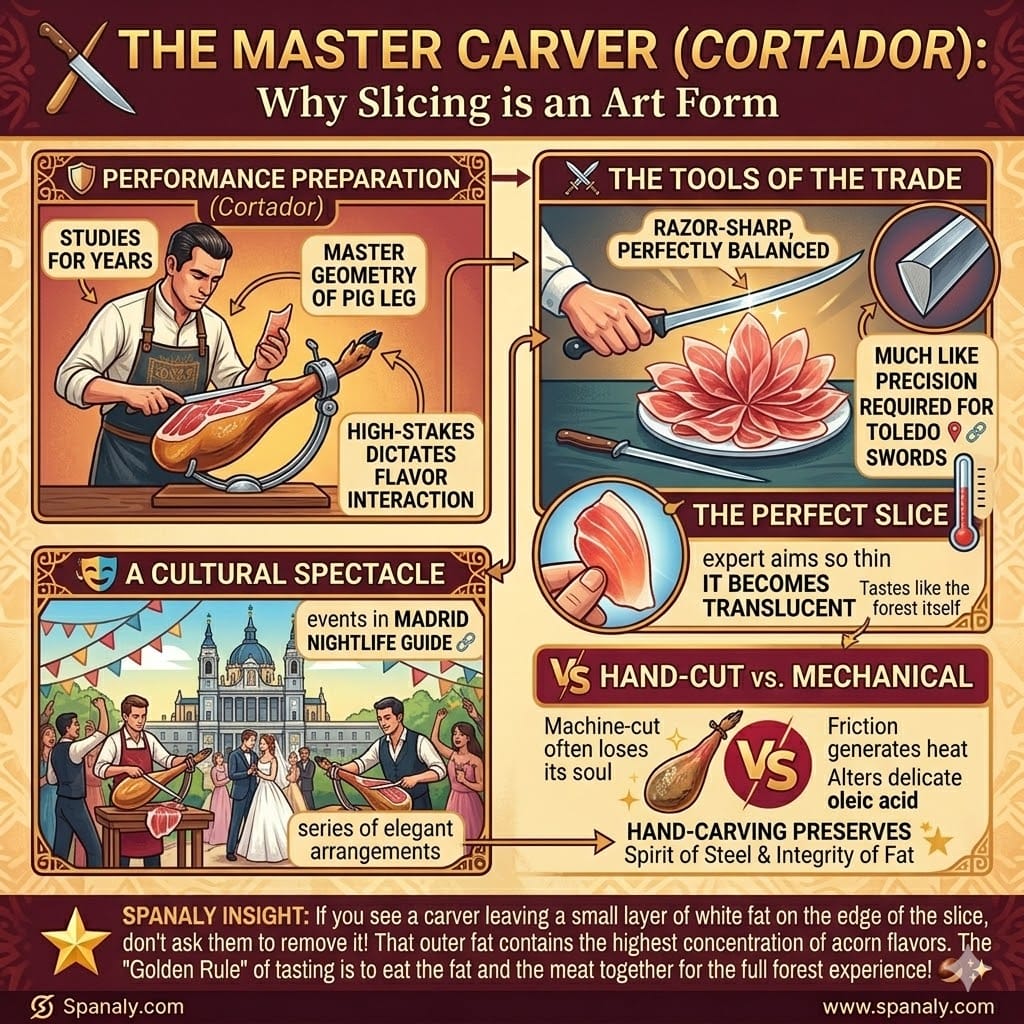
In Spain, cutting Jamón is never a mere chore; it is a high-stakes performance. A professional Cortador de Jamón studies for years to master the geometry of the pig’s leg. In fact, the way you slice the meat directly dictates how the flavors interact with your palate.
⚔️ The Tools of the Trade: Masters use a Cuchillo Jamonero—a long, flexible, and razor-sharp blade. Much like the precision required to forge Toledo Steel Swords, the carver’s knife must be perfectly balanced to glide through the cured muscle.
📏 The Perfect Slice: A true expert aims for a slice so thin it becomes translucent. This specific thickness allows the intramuscular fat to melt instantly upon touching your tongue.
🎭 A Cultural Spectacle: You will often see these master carvers at weddings or high-end events in the Madrid Nightlife Guide scene. They transform a leg of ham into a series of elegant, petal-like arrangements.
Consequently, machine-cut Jamón often loses its soul. Ultimately, the friction of a mechanical blade generates heat, which can slightly alter the delicate oleic acid. Hand-carving preserves the “Spirit of the Steel” and the integrity of the fat.
🌟 Spanaly Insight: If you see a carver leaving a small layer of white fat on the edge of the slice, don’t ask them to remove it! That outer fat contains the highest concentration of acorn flavors. The “Golden Rule” of tasting is to eat the fat and the meat together for the full forest experience.
🍷 How to Eat Like a Spaniard: Perfect Pairings & Tasting Tips
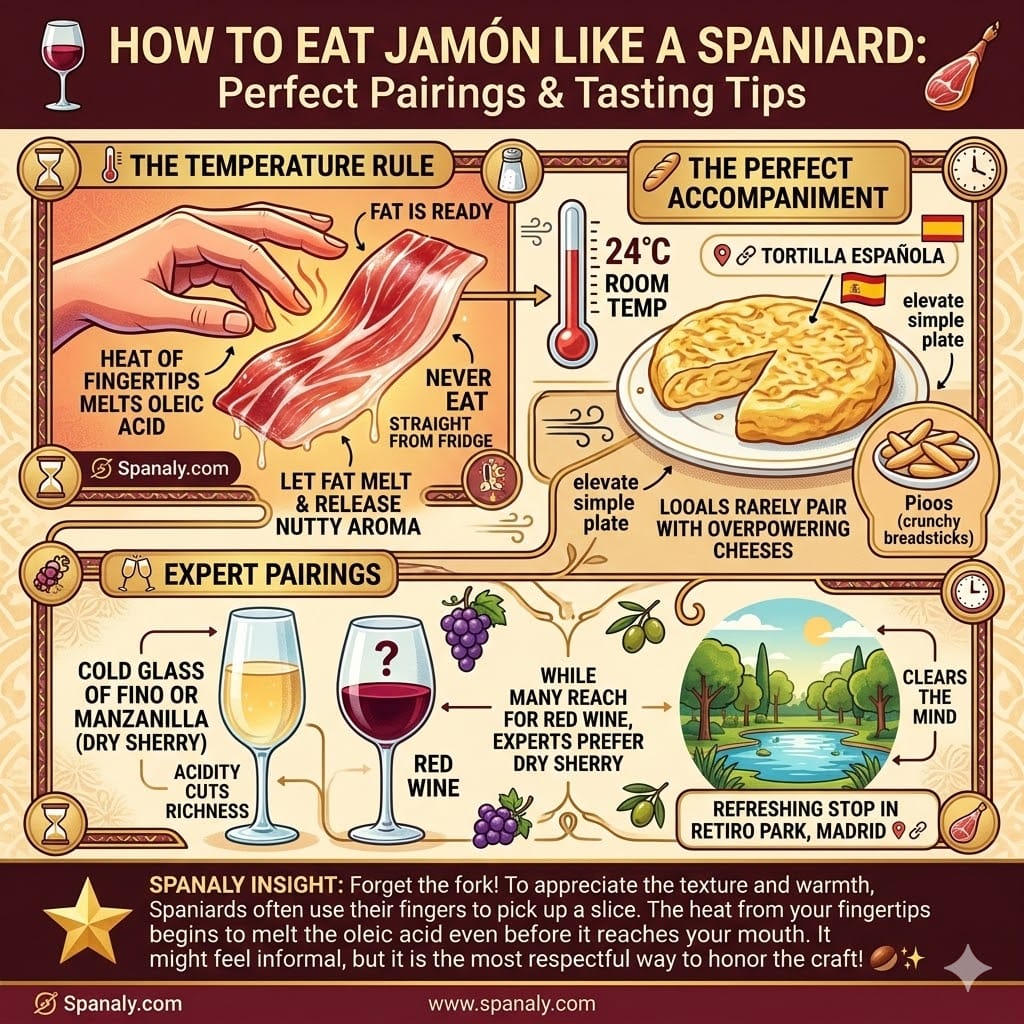
To truly experience Jamón Ibérico, you must move beyond the sandwich. In Spain, this delicacy demands a slow, mindful approach. In fact, the way you serve and pair it can elevate a simple plate into a Michelin-star experience.
🌡️ The Temperature Rule: Never eat Jamón straight from the fridge. For the fat to melt and release its nutty aroma, the meat must reach room temperature (around 24°C). If the fat looks transparent and shiny, it is ready.
🥖 The Perfect Accompaniment: Locals rarely pair top-tier Ibérico with complex cheeses that overpower its flavor. Instead, try it with Picos (crunchy breadsticks) or a light Spanish Omelette (Tortilla Española).
🥂 Expert Pairings: While many reach for red wine, experts prefer a cold glass of Fino or Manzanilla (dry sherry). The acidity of the sherry cuts through the richness of the fat, much like a refreshing stop in the Retiro Park in Madrid clears the mind.
Consequently, every bite should be a balance of textures. Ultimately, eating Jamón is a social ritual—best shared with friends over a long afternoon.
🌟 Spanaly Insight: Forget the fork! To appreciate the texture and warmth, Spaniards often use their fingers to pick up a slice. The heat from your fingertips begins to melt the oleic acid even before it reaches your mouth. It might feel informal, but it is the most respectful way to honor the craft!
📦 Collector's Guide: Buying, Shipping, and Storing Your Jamón

Owning a whole leg of Jamón Ibérico represents the ultimate dream for every gourmet traveler. However, bringing this culinary treasure home requires more than just a credit card. In fact, understanding the logistics of transport and storage ensures your investment remains as perfect as the day it left the bodega.
✈️ Traveling with Jamón: Always check your destination’s customs laws before flying. While EU travelers move meat freely across borders, visitors from the US or Asia should opt for professional vacuum-sealed slices. These compact packs fit easily into your suitcase and stay fresh for months, offering the same peace of mind as securing Internet and SIM Cards in Spain for your trip.
🏠 The Home Sanctuary: Never store a whole leg in the fridge once you arrive home. Instead, keep it on a Jamonero (stand) in a cool, dry place. Covering the exposed meat with its own white fat shavings and a clean cloth preserves its moisture, much like the timeless, protective atmosphere found within the Cathedral of Santiago de Compostela.
🏬 Where to Buy: Avoid airport souvenir shops to ensure the most authentic experience. Seek out specialized Charcuterías in local markets or reputable gourmet stores that offer dedicated international shipping services.
Consequently, proper care prevents the meat from drying out or losing its intense aroma. Ultimately, following these steps transforms you from a casual buyer into a true collector of Spanish heritage.
🌟 Spanaly Insight: If you purchase a whole leg for slow consumption, start carving from the Babilla (the thinner side). This area dries out faster than the thicker Maza. By the time you flip the leg, the juicier side remains in perfect condition. It is all about the strategy of the slice!
🔍 The Truth About White Dots: Busting Common Jamón Myths
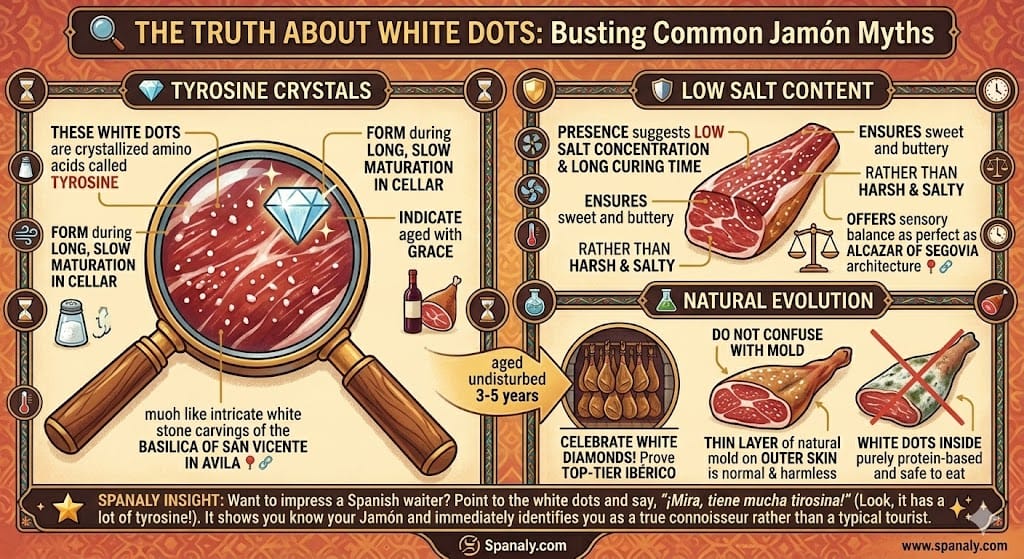
Many first-time buyers feel a sudden pang of worry when they notice tiny white specks scattered across the deep red muscle of their Jamón. However, far from being a sign of spoilage, these dots serve as a certificate of excellence. In fact, these crystals represent the pinnacle of the natural curing process.
💎 Tyrosine Crystals: These white dots are actually crystallized amino acids called Tyrosine. They form during the long, slow maturation in the cellar. Much like the intricate white stone carvings of the Basilica of San Vicente in Avila, these dots indicate that the meat has “aged with grace.”
🛡️ Low Salt Content: The presence of these crystals suggests a low salt concentration and a long curing time. This ensures the meat remains sweet and buttery rather than harsh and salty, offering a sensory balance as perfect as the architecture of the Alcazar of Segovia.
🧫 Natural Evolution: Do not confuse these dots with mold. While a thin layer of natural mold on the outer skin is normal and harmless, the white dots inside the meat are purely protein-based and safe to eat.
Consequently, if you see these “white diamonds” in your Jamón, celebrate! Ultimately, they prove that you are holding a top-tier Ibérico that has rested undisturbed for three to five years.
🌟 Spanaly Insight: If you want to impress a Spanish waiter, point to the white dots and say, “¡Mira, tiene mucha tirosina!” (Look, it has a lot of tyrosine!). It shows you know your Jamón and immediately identifies you as a true connoisseur rather than a typical tourist.
📍 Where to Taste: The Route of Jamón across Spain
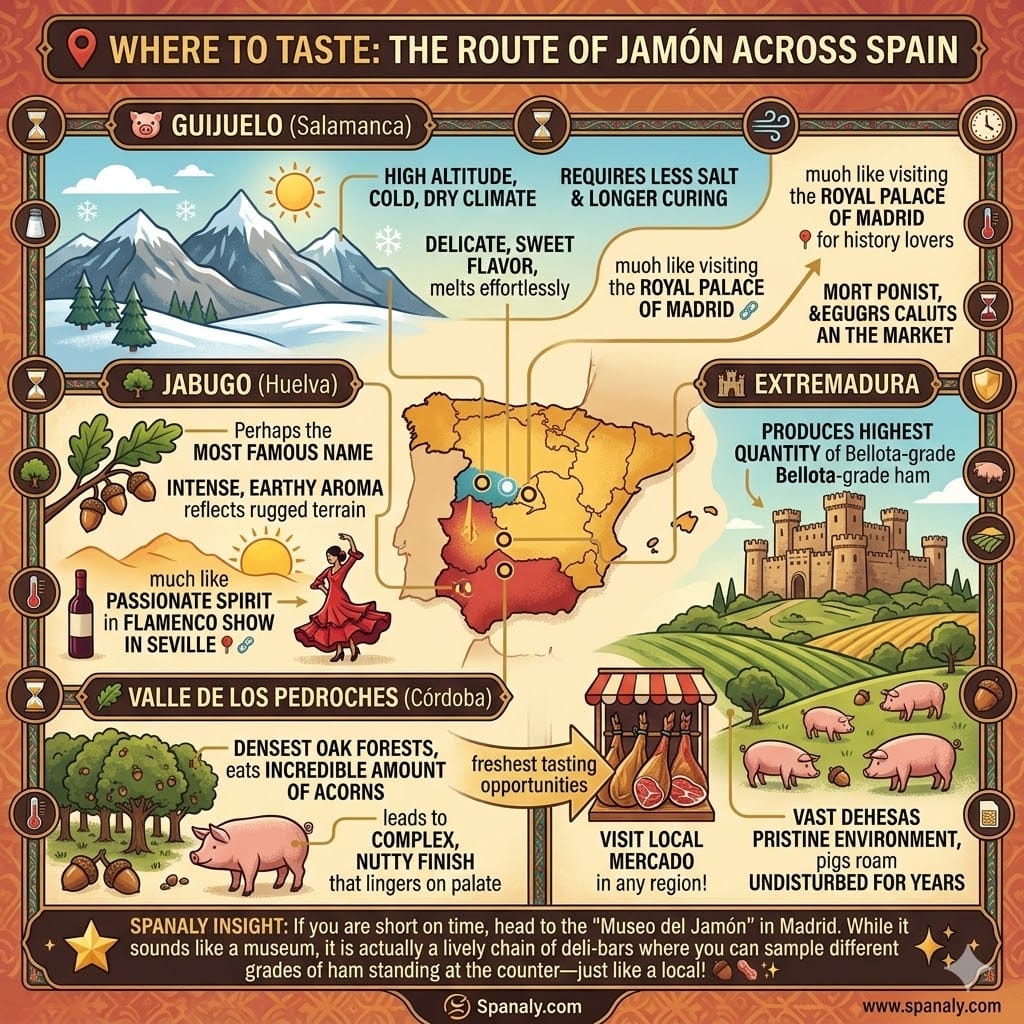
To experience the true diversity of Jamón Ibérico, you must travel to its source. Each region offers a slightly different flavor profile based on its microclimate and oak variety. In fact, following the “Route of Jamón” is as essential for foodies as visiting the Royal Palace of Madrid is for history lovers.
🐷 Guijuelo (Salamanca): Located at a high altitude with a cold, dry climate, hams here require less salt and longer curing. The result is a delicate, sweet flavor that melts effortlessly.
🌳 Jabugo (Huelva): Perhaps the most famous name in the world of Jamón. The intense, earthy aroma of Jabugo hams reflects the rugged terrain of Andalusia, much like the passionate spirit found in a Flamenco Show in Seville.
🌿 Valle de los Pedroches (Córdoba): Known for having the densest oak forests, the pigs here eat an incredible amount of acorns. This leads to a complex, nutty finish that lingers on the palate.
🏰 Extremadura: This region produces the highest quantity of Bellota-grade ham. Its vast Dehesas provide a pristine environment for the pigs to roam undisturbed for years.
Consequently, visiting a local Mercado in any of these regions offers the freshest tasting opportunities. Ultimately, whether you taste it in a high-end Madrid bodega or a rustic Andalusian village, you are participating in a living Spanish tradition.
🌟 Spanaly Insight: If you are short on time, head to the “Museo del Jamón” in Madrid. While it sounds like a museum, it is actually a lively chain of deli-bars where you can sample different grades of ham standing at the counter—just like a local!
💡 Pro Insider Tips: Mastering the Jamón Experience
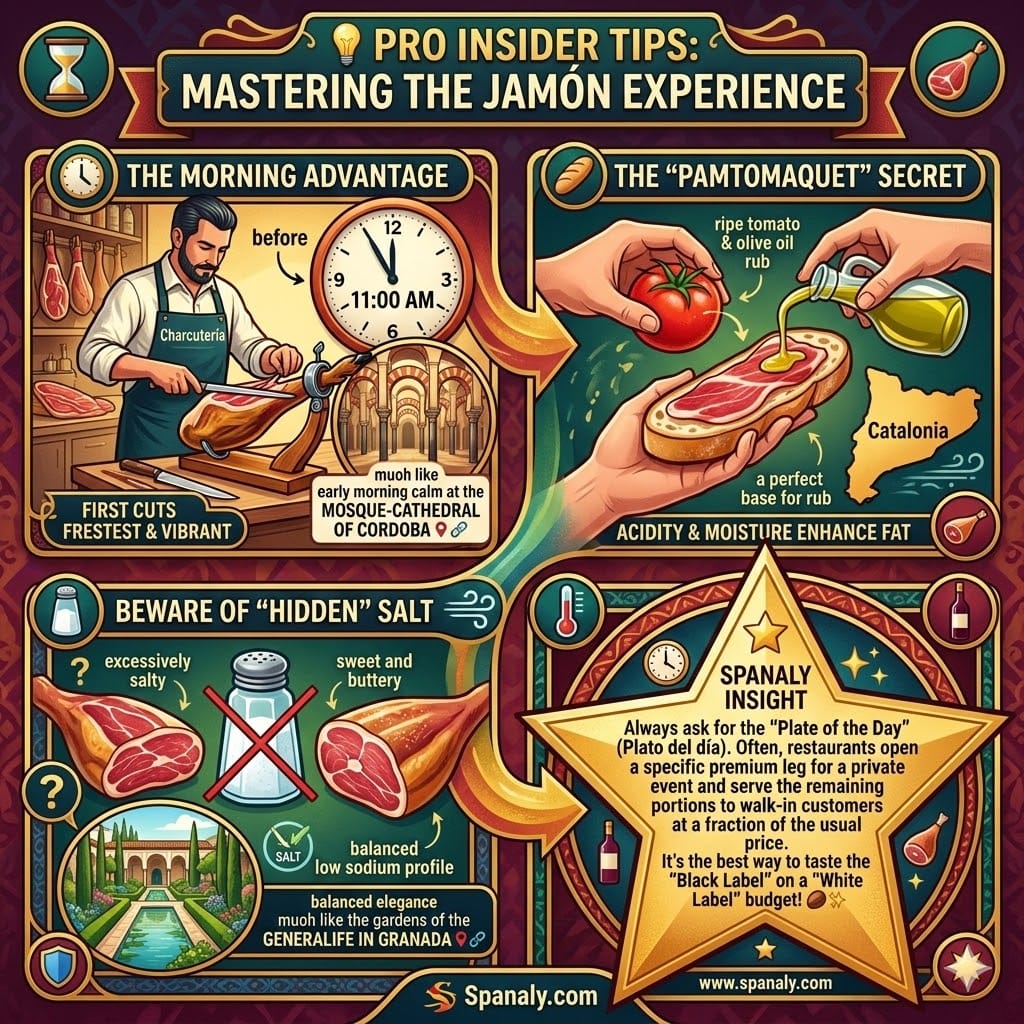
Beyond the basics, several “hidden rules” define the true Jamón culture in Spain. Mastering these nuances will help you navigate Spanish gastronomy like a seasoned gourmet, ensuring you get the best value during your visit.
🕙 The Morning Advantage: Visit local Charcuterías before 11:00 AM. This is when master carvers are most focused, and the first cuts of the day offer the most vibrant texture. For more timing secrets to perfect your journey, check our guide on Essential Spain Travel Tips.
🥖 The “Pamtomaquet” Ritual: In regions like Catalonia, locals rarely serve Jamón on dry bread. Instead, they rub the bread with ripe tomato and extra virgin olive oil first. This subtle acidity creates a moist base that enhances the ham’s fat without overpowering the nutty notes.
🧂 The Thirst Test: Top-quality Ibérico should never leave you feeling excessively thirsty. High-quality Bellota has a naturally low sodium profile due to the long curing time. If a ham feels harsh or overly salty, it likely skipped the patient aging process found in premium bodegas.
Consequently, these subtle details distinguish an authentic encounter from a common tourist experience. Ultimately, paying attention to the “how” and “when” allows you to honor the 2,000-year craft properly.
🌟 Spanaly Insight: Always ask for the “Plate of the Day” (Plato del día). Often, high-end restaurants open a premium “Black Label” leg for a private event and serve the remaining portions to walk-in customers at a significantly lower price. It is the smartest way to taste imperial quality on a standard budget!
🍖 Visitor FAQs – Expert Jamón Insights
🤔 I see mold on the outside of the whole leg. Is it spoiled?
Actually, no! A thin layer of white or grayish mold on the skin is a natural sign of breathability in the cellar. Simply wipe it off with a clean cloth dipped in sunflower oil or the ham's own fat. The meat inside remains perfectly protected and safe.
✈️ Can I legally fly back to the USA or Asia with Jamón?
For the USA and many Asian countries, bringing whole legs is usually strictly prohibited. However, you can legally bring factory-sealed, 100% vacuum-packed slices. Always ensure the package has the official Spanish export seal to avoid issues at customs.
💦 Why does my Jamón look like it is "sweating" oil?
This "sweating" (sudado) is the hallmark of real Bellota quality. Because the pigs eat acorns, their fat has a low melting point (like olive oil). When you see it glistening at room temperature, it means the heart-healthy oleic acid is ready to dissolve on your tongue.
🔪 Is machine-cut Jamón significantly worse than hand-cut?
Yes, for premium grades. Mechanical blades create friction and heat that slightly melt the fat prematurely, altering the aroma. Hand-carving by a Cortador follows the muscle fibers, preserving the "umami" and the delicate texture that machines often destroy.
🤰 Is it safe to eat Jamón Ibérico during pregnancy?
Traditional medical advice suggests avoiding cured meats due to toxoplasmosis risks. However, many modern studies in Spain show that long-curing (over 24 months) significantly reduces this risk. Regardless, we recommend consulting your doctor or opting for cooked Spanish tapas just to be safe.
Created by Spanaly.com
✨ Your Spanish Culinary Journey Continues
We hope this guide transforms your next bite of Jamón into a moment of true Spanish “Alegria” (joy). Remember, behind every translucent slice lies centuries of tradition, silent oak forests, and the patience of master artisans.
🌟 Savor the Moment: Take it slow, use your fingers, and let the acorn-fed fat melt away.
🍷 Share the Experience: Jamón is best enjoyed with good company and a chilled glass of Sherry.
🥣 The Perfect Next Step: After mastering the rich flavors of Ibérico, refresh your palate with a bowl of Creamy Salmorejo (Spanish Cold Soup)—it is the ultimate soulmate for crispy Jamón shavings!
Ultimately, Spain is a country that expresses its love through food. Consequently, every market visit and every tapas bar you discover becomes a new chapter in your travel story.
¡Buen provecho, travelers! 🇪🇸✨