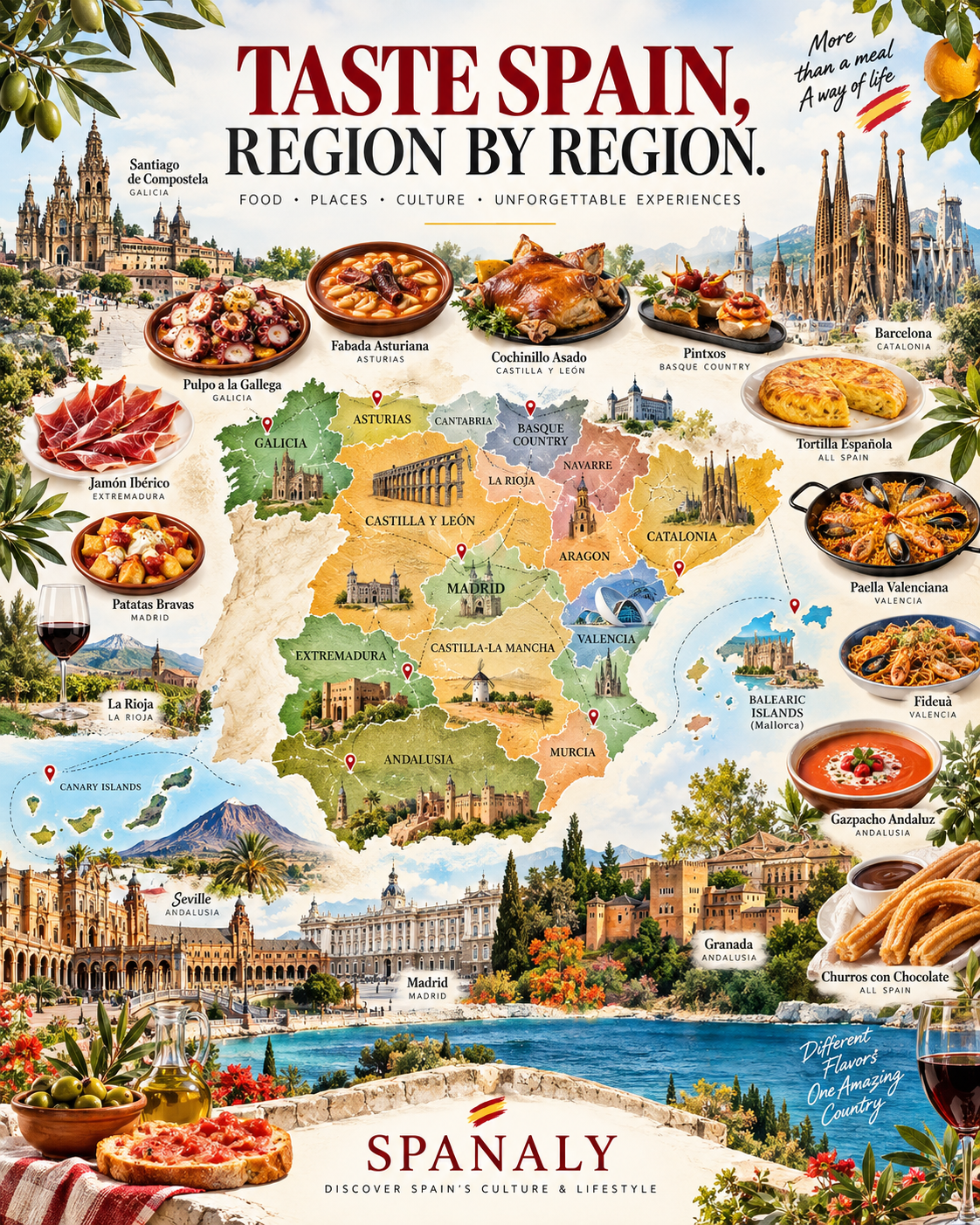
Spanish Food Guide: Explore Spain Through Its Food
Spain is not one food culture. Instead, it is a map of regional kitchens. Start with where you are going, then discover what belongs on the table.
Find your food route ↓THE SPANISH FOOD MAP
Don’t begin with a list of dishes. Begin with the place.
Spanish food becomes easier to understand once you stop treating the country as a single kitchen. Mediterranean coasts bring rice, seafood and vegetables. By contrast, northern regions lean into beans, stews, cheeses and preserved foods. Meanwhile, inland Spain has deep traditions of roasts, cured meats, pulses and slow cooking.
How to use this page
From there, this page becomes the door to Spanaly’s food library : region → dish → city . Choose the part of Spain that fits your trip, then go deeper into the food that belongs there.
In short, this is the regional entry point. Our Traditional Spanish Food guide serves a different purpose: a broad introduction to well-known Spanish foods, while this page organizes the library geographically.
Four ways into Spanish food
You do not need to browse the whole library. Instead, pick the route that matches the trip you are planning.
First trip to Spain
Begin with Valencia, Andalusia or Madrid for three very different introductions to Spanish food.
Valencia · Andalusia · Madrid →North & Atlantic coast
Follow the northern food belt through the Basque Country, Galicia, Asturias and Cantabria .
Explore Northern Spain →Islands
Choose the Canary Islands for island cooking, or follow the Mallorca thread through its famous ensaimada.
Canary Islands food guide →Interior & traditional cooking
Start with Castilla y León for roasts, cured meats, pulses, cheese and province-led food traditions.
Castilla y León →Looking for a specific kind of food?
Four missing doors are now visible — and the library stays honest.
At the top of the regional map, these four cards make the library’s coverage clear. Where Spanaly has a live regional guide, follow it. Where the regional guide is not published yet, we mark it as coming soon instead of inventing a destination page.
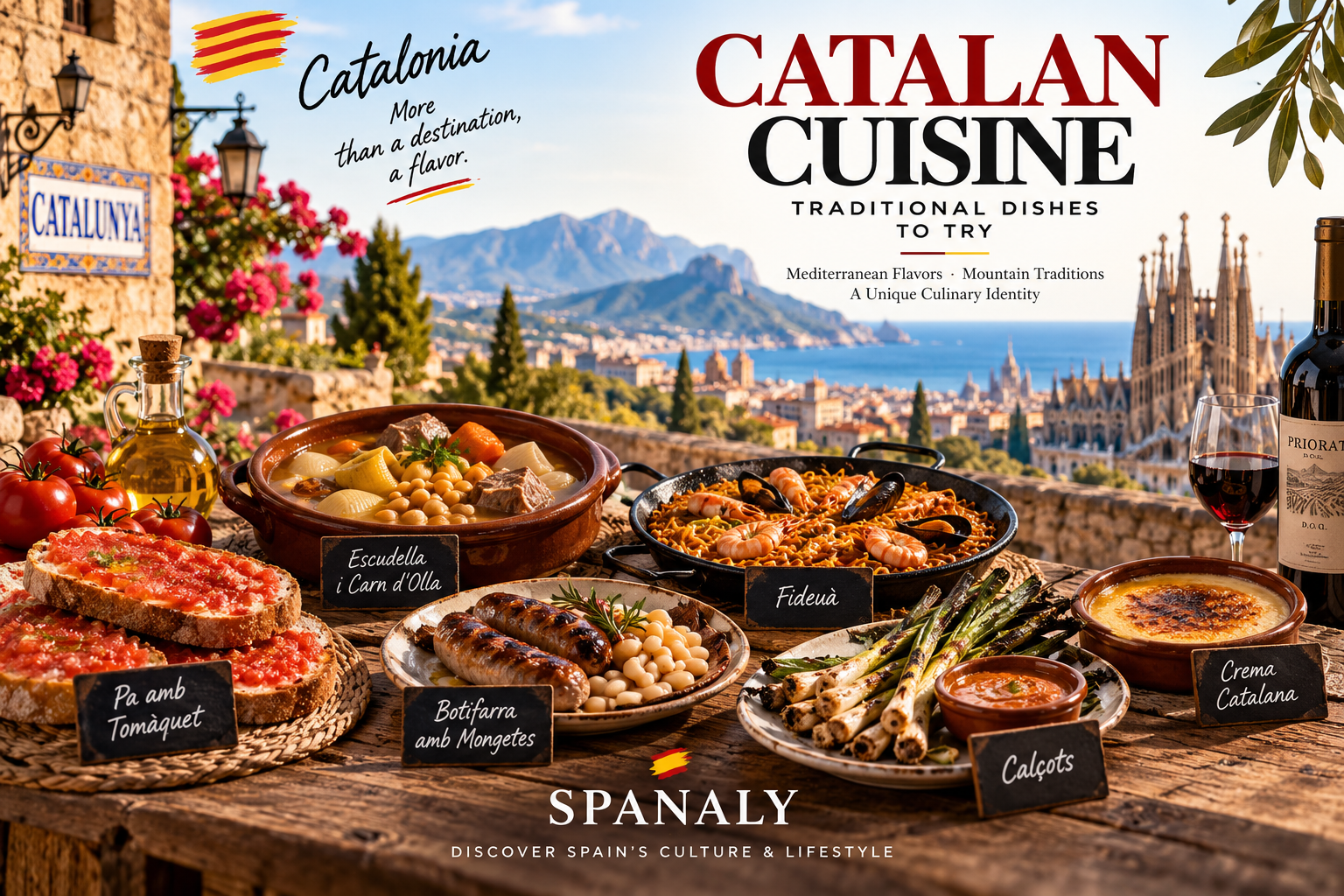 CATALONIA
Catalonia
From pan con tomate to escudella, explore a cuisine already represented in the Spanaly food library.
Explore Catalan cuisine →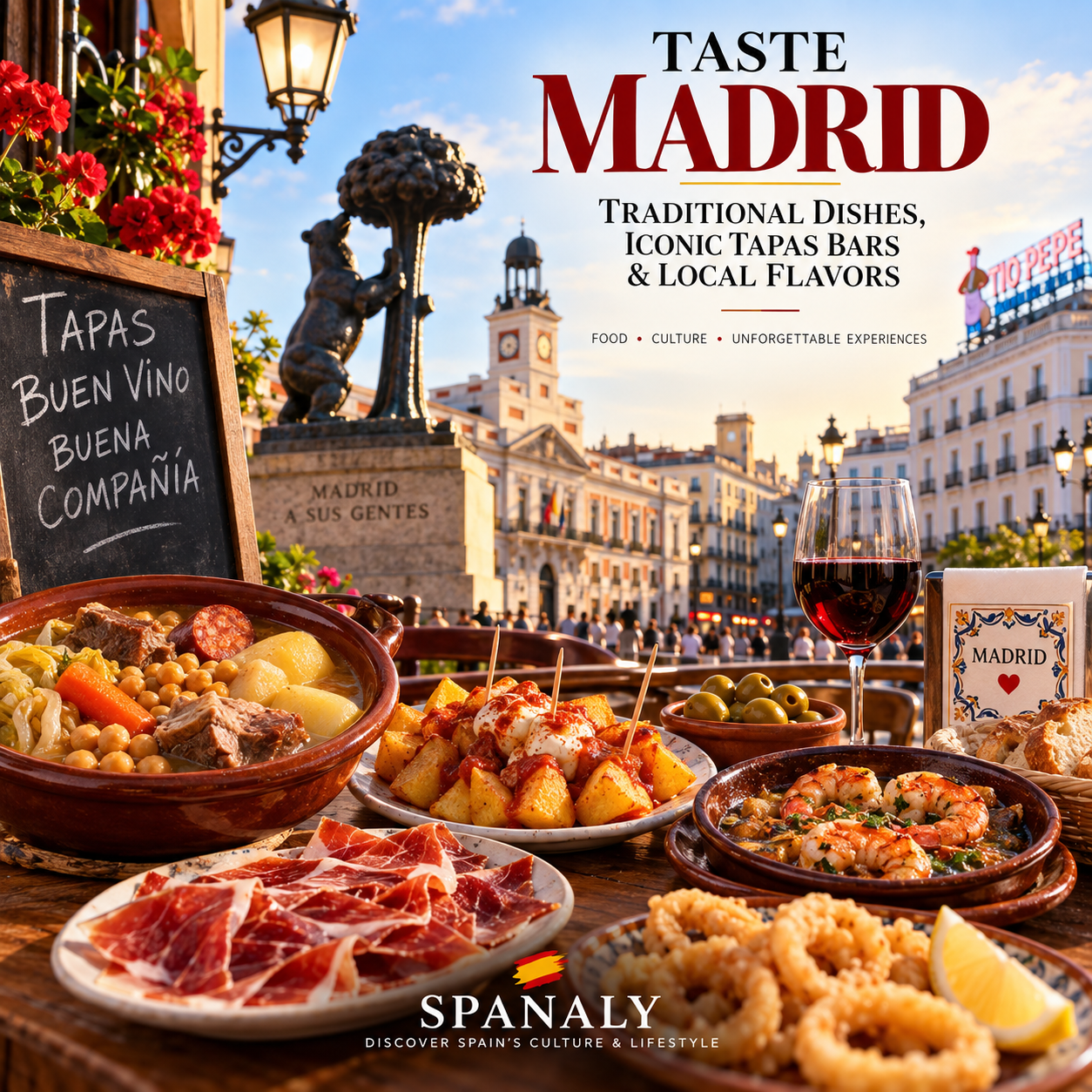 MADRID
Madrid
A central-Spain food stop with historic tapas culture and the Madrid tradition of cocido.
Explore Madrid food → LA RIOJA
La Rioja
The regional food guide is not published in this library yet. The card stays visible without creating a false link.
Regional guide coming soon BALEARIC ISLANDS
Balearic Islands
The island food layer is not yet a standalone regional guide. Existing Mallorca food content remains available below.
Regional guide coming soonMore live regional guides
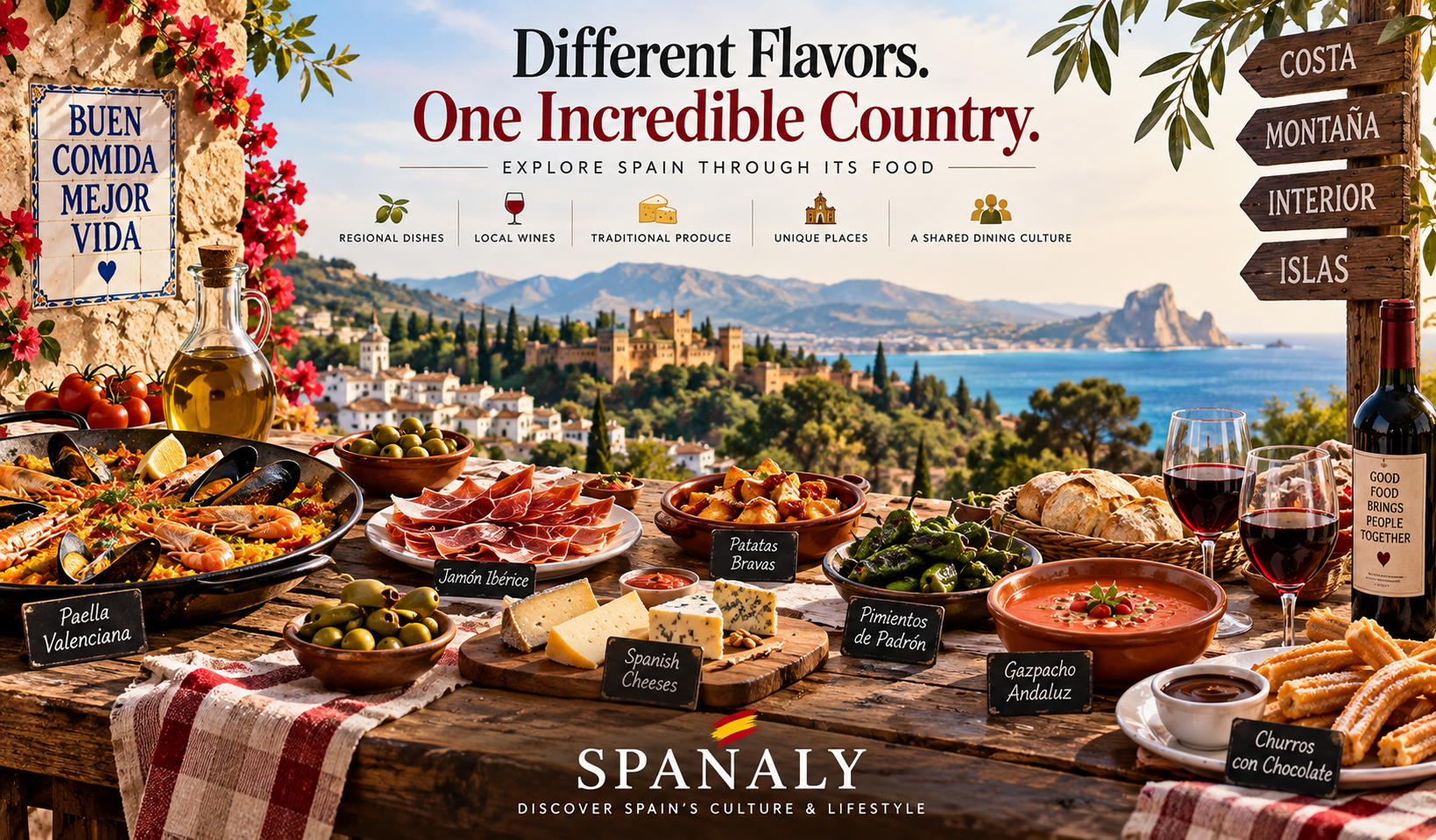
Let the geography choose your meal.
If you are travelling through several regions, avoid repeating the same style of meal everywhere. Let Valencia be your rice stop, Galicia your seafood stop, Castilla y León your roast-and-cured-food stop, and Andalusia your tapas-and-cold-soup stop.
As a result, that simple approach turns a food checklist into a journey with contrast — and makes the individual dish guides more useful when you reach them.
Once you know the region, zoom in on the dish.
Next, these are the deeper food articles in the library. They are intentionally kept as clean editorial links rather than a wall of image cards, so the page remains easy to scan.
Core dishes to explore
Regional specialties & classics
Pimientos de Padrón Galicia Escudella i Carn d’Olla Catalonia Tarta de Santiago Galicia Ensaimada Mallorca Authentic Spanish Sangria Drinks Gazpacho Andaluz Andalusia Spanish Tortilla Everyday Spain Spanish Jamón Cured foods Spanish Churros Sweet side Pulpo a la Gallega Galicia Cocido Madrileño Madrid Paella Valenciana ValenciaFood is also what you pour, slice, dip and share.
Start with drinks, cheese and pantry staples
Then make the guide local.
Regional knowledge tells you what belongs to the place. Meanwhile, city guides show how that food fits into an actual trip.
Food guides for specific cities
56 live food pages, organized as a journey.
Finally, use this page as the map. Follow a regional guide when one exists, move into the relevant dish article, then finish with the city guide that helps you eat there in context.