Valencia Food Guide: What to Eat in Valencia
Valencia is one of Spain’s great food cities, but its cuisine makes more sense when you understand the landscape behind it: rice fields, the huerta, the Mediterranean coast and a strong local eating rhythm. This practical guide covers what to eat, when to eat it, how to order rice dishes, and where the city’s food culture makes the most sense.
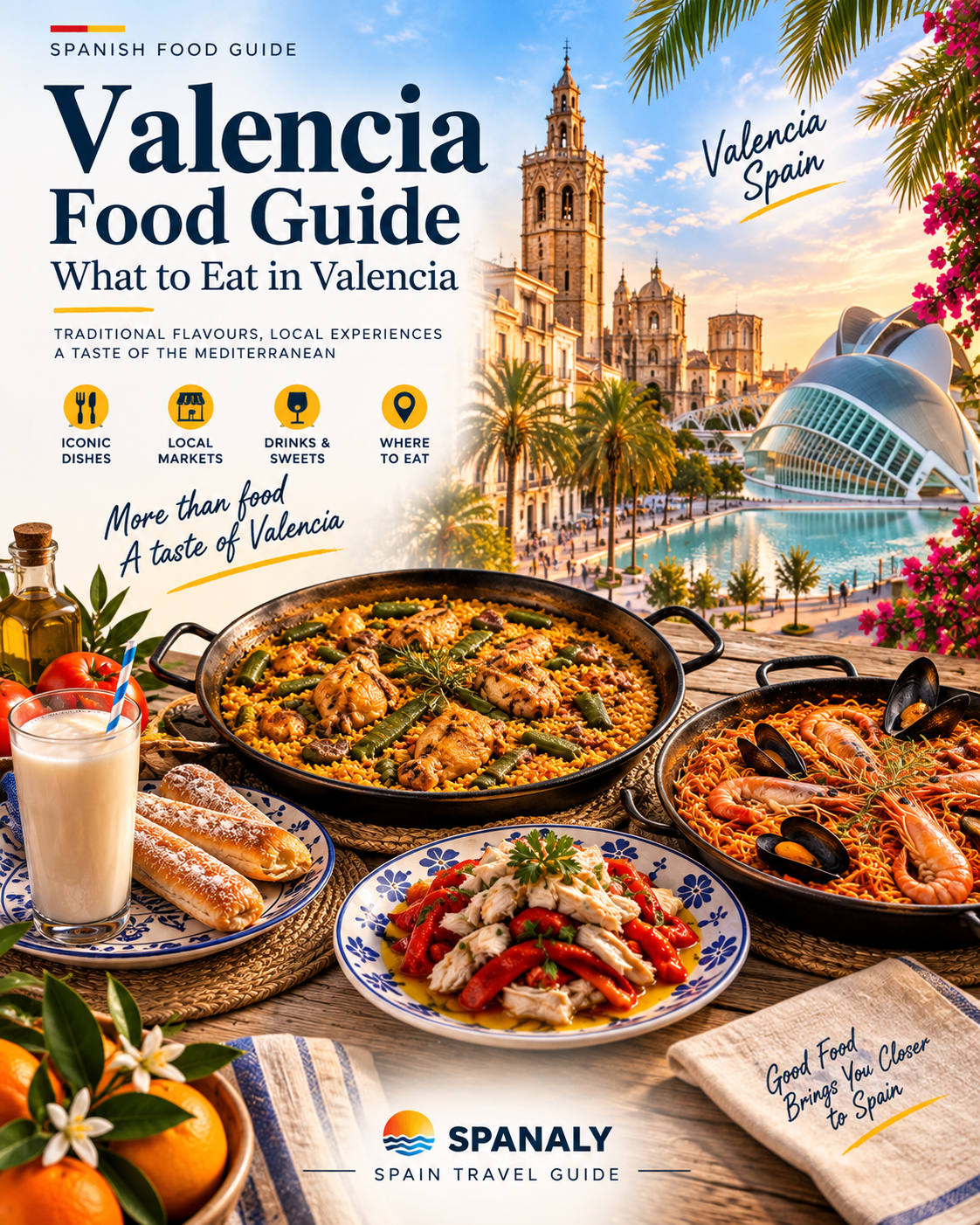
If You Only Have One Food Day in Valencia
Make the main meal a proper lunch. Choose one rice dish, add a small local starter if you still have room, and save horchata and a fartón for a separate afternoon stop. If you want the full Valencian experience, do not try to squeeze an enormous esmorzaret, a full rice lunch and several tapas stops into the same few hours.
What Is Valencia’s Food Culture Like?
Valencia’s food identity is Mediterranean, but it is also deeply connected to the landscape around the city. The huerta supplies vegetables, the coast brings seafood, and the rice-growing areas around l’Albufera give the region one of Spain’s most recognizable culinary traditions.
That combination explains why Valencia’s food is broader than paella alone. Rice dishes sit alongside seafood, vegetables, tapas, substantial mid-morning sandwiches, traditional sweets and the unmistakable horchata de chufa. Visit València itself describes the region as a Mediterranean pantry built around local produce, Mediterranean fish and rice from l’Albufera.
Before You Order Rice in Valencia
Paella Valenciana is not seafood paella
This is the distinction to understand first. Traditional paella Valenciana is associated with rice, local huerta ingredients and meat such as chicken and rabbit, with beans such as ferradura and garrofó. Seafood belongs to other Valencian rice preparations, not the classic Valencian recipe.
Read the full Paella Valenciana guide →Rice is usually a planned meal
Many restaurants price paella and other rice dishes per person and require a minimum of two diners. Current 2026 menus in Valencia show examples from roughly €16–€25 per person for traditional paella, with more elaborate rice dishes going higher. Treat that as a planning range, not a fixed city price.
Always check the current menu, minimum diners and whether the same rice must be ordered for the whole table.
Ask what rice you are actually ordering
A paella pan does not automatically mean paella Valenciana. Valencia has arroz a banda, arroz del senyoret, arroz negro, seafood paella and other rice traditions. Read the dish name rather than ordering from a photograph.
What to Eat in Valencia
1. Paella Valenciana
If this is your first visit, this is the dish that deserves the most attention. The classic Valencian version is built around rice and products associated with the local countryside: traditionally chicken, rabbit, ferradura beans and garrofó, with tomato and seasonings forming part of the preparation.
Seafood can certainly appear in Valencian rice culture, but it should not be confused with the classic paella Valenciana. Visit València explicitly distinguishes the traditional meat-and-vegetable version from seafood and other rice dishes cooked in the same type of pan.
Look for a restaurant that cooks the rice as a proper dish rather than something prepared in advance. Expect a shared pan, time at the table and, when the cooking is done well, the prized socarrat at the base.
Read the full Paella Valenciana guide →2. Fideuà
Fideuà replaces rice with short noodles and is strongly associated with the Valencian coast. Gandia has the strongest culinary identity with the dish, while Valencia city is a practical place to try it if your trip already includes the capital.
The important point is technique: the fideos are cooked in a concentrated seafood stock. You are looking for noodles with structure and a deep marine flavour, not pasta simply covered with seafood.
Read the full Fideuà guide →3. Esgarraet
Esgarraet combines roasted red pepper, salted cod, garlic and olive oil. The name comes from the Valencian idea of tearing or shredding the principal ingredients. It is a useful choice when you want a local dish in a smaller format rather than another large rice meal.
It works naturally as part of a tapas-style meal, particularly in neighbourhood bars where the menu is built around several small plates.
4. All i Pebre
All i pebre is closely connected with l’Albufera and its traditional fishing culture. The classic preparation is a rustic stew based on eel, garlic, paprika and potatoes.
It is not a dish everyone will want to try, but for travellers interested in the food culture of the Albufera it is important. If eel is not for you, simply choose another local rice or seafood preparation.
5. Esmorzaret
Esmorzaret is not just a small breakfast. It is a serious mid-morning meal: usually a substantial bocadillo with toppings and accompaniments, often olives or peanuts and a drink. In local food culture it is a proper pause between breakfast and lunch.
This makes it one of the best ways to experience everyday Valencia rather than only the dishes visitors already know.
Horchata, Fartons and Agua de Valencia
Horchata de Chufa
Horchata de chufa is one of Valencia’s defining traditional drinks. It is made from tiger nuts, served cold and commonly paired with fartons.
Treat it as its own food stop rather than simply another drink with lunch. A horchata break in the afternoon gives you a different side of Valencia’s food culture.
Fartons
These soft, elongated pastries are the classic companion to horchata. Dip them into the cold drink and you have one of the simplest traditional Valencian food experiences.
Agua de Valencia
Agua de Valencia is a separate experience: a citrus cocktail traditionally associated with orange juice, sparkling wine or cava, spirits and sugar. Save it for an afternoon or evening rather than confusing it with Valencia’s traditional non-alcoholic drink culture.
Explore the Spanish Drinks Guide →Buñuelos de Calabaza
Pumpkin fritters become especially visible during Fallas and are often enjoyed with hot chocolate. They are a seasonal way to experience the sweeter side of Valencia.
Start at the Market, But Don’t Turn Lunch Into a Marathon
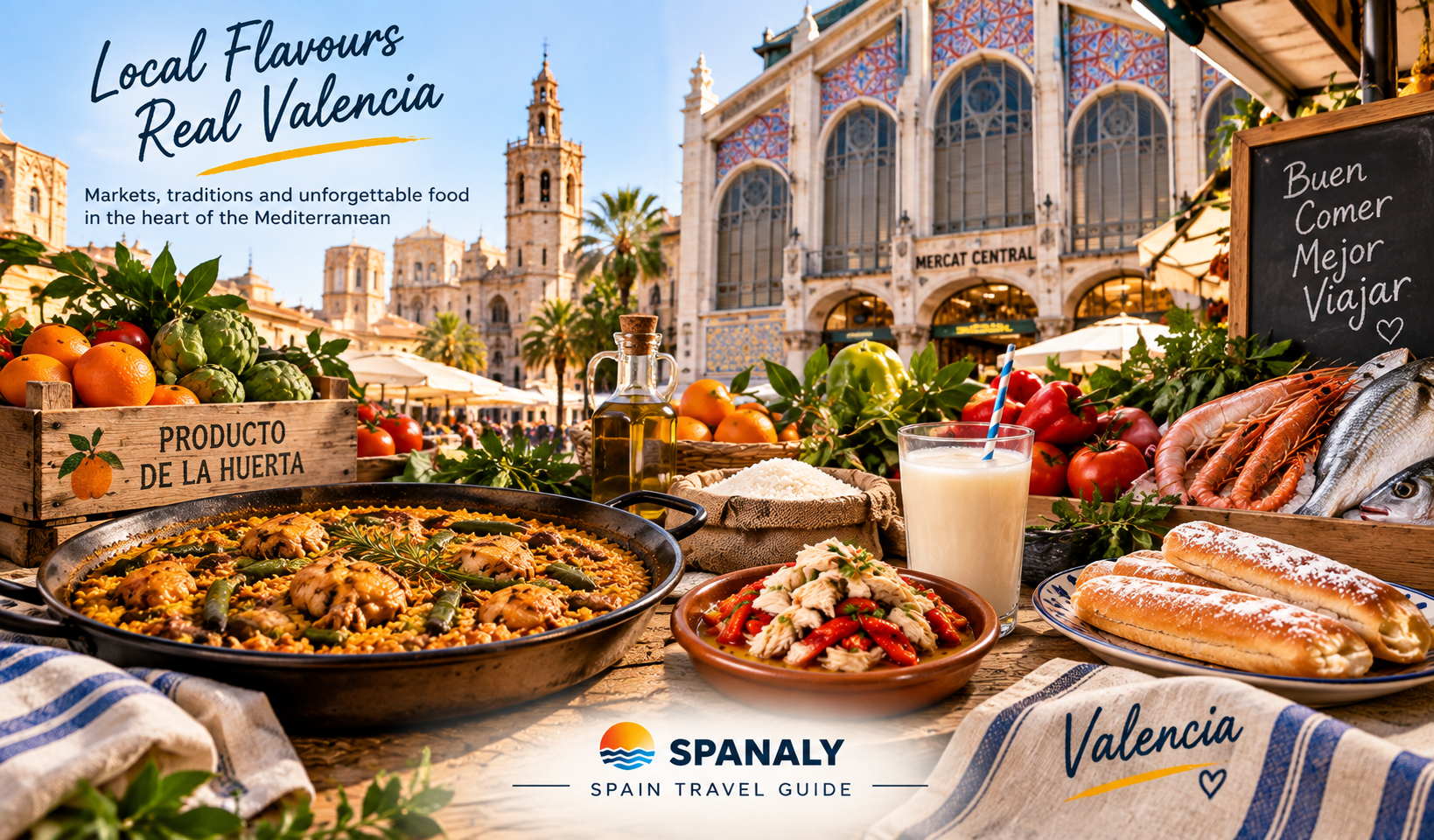
Valencia’s markets help you see the ingredients behind the cuisine. The Mercat Central is a natural morning stop for produce, seafood, cured products and the visual language of Valencian cooking.
But there is an important travel-planning trap: a large esmorzaret, a long market visit and a full rice lunch can become too much. If the main goal of the day is paella or fideuà, keep the market tasting light.
Two good choices
Light breakfast → market → rice lunch → horchata.
Esmorzaret → sightseeing → lighter lunch → tapas later.
Choose the Area According to the Food You Want
Ciutat Vella
The practical choice if you are already exploring the historic centre. It gives you easy access to cafés, tapas and restaurants without claiming that the centre automatically means the best paella.
El Cabanyal
A former fishing district with a stronger maritime identity. This is a useful area when you want seafood, tapas and the connection between the city and the Mediterranean.
Ruzafa
A lively contemporary food area. Choose it when you want modern restaurants, cafés and a broader dining scene alongside Valencian influences.
L’Albufera & El Palmar
Choose this when the meal itself is part of the destination. The landscape, rice fields and traditional food context make the trip different from simply eating a rice dish in the city centre.
If you are building a broader sightseeing day, you can pair food with the City of Arts and Sciences or use the main Valencia travel guide to connect food with the rest of the city.
How to Eat Well in Valencia Without Making Tourist Mistakes
Make lunch the main rice meal
Paella and fideuà are substantial dishes. Give them time instead of treating them as a fast stop between attractions.
Check the minimum diners
Many current menus list rice dishes per person with a minimum of two people. Some also require the same rice to be ordered for the whole table.
Ask what you are ordering
“Paella” is not enough information. Ask whether it is paella Valenciana, seafood paella, arroz del senyoret, arroz a banda or another preparation.
Look for cooking to order
A rice dish should not feel like something taken from a hot holding tray. Ask about preparation time when the menu or service makes it unclear.
Do not chase a Google “best paella” list
A useful restaurant clue is how clearly it explains the rice, minimum diners and preparation. The name of the neighbourhood alone tells you very little.
Check allergies before ordering
Traditional preparations can involve fish, shellfish, gluten, nuts or dairy. Fideuà uses wheat noodles, while sweets may contain nuts. Explain your allergy before ordering.
One Day of Eating in Valencia — Without Overeating
Light breakfast: Coffee and something small if you know lunch will be a full rice meal.
Central Market: Explore the market and surrounding historic centre. Taste lightly rather than filling up.
Main lunch: Paella Valenciana, fideuà or another rice dish. Allow proper cooking time.
Horchata stop: Horchata de chufa with a fartón. Keep this separate from the heavy lunch.
Light dinner: Tapas, seafood, esgarraet or another smaller local dish.
Optional drink: Agua de Valencia if you want to finish with the city’s famous citrus cocktail.
Which Valencian Dish Should You Try?
Valencia Food Is More Than One Famous Dish
Paella is the obvious starting point, but it becomes much more interesting when you stop treating Valencia as the place where you simply “eat paella.” The region has a whole family of rice dishes, a strong vegetable tradition, seafood from the Mediterranean, local snacks and distinctive drinks.
The food also changes with the setting. A market morning tells you about ingredients. El Cabanyal connects food with the coast. Ruzafa shows the city’s contemporary side. L’Albufera connects rice, landscape and traditional cooking.
“The goal is not to eat everything Valencia is famous for. The goal is to understand why those foods belong here.”
Useful Valencia Food Tips
- Plan rice meals: many restaurants require two or more diners, and some require advance notice.
- Use lunch intelligently: current menus and local food guidance make lunch the natural anchor for a traditional rice experience, even though some restaurants also serve rice at dinner.
- Budget realistically: current 2026 sample menus reviewed for this guide put many traditional rice dishes around €16–€25 per person, with premium preparations higher.
- Don’t confuse the pan with the dish: seafood rice, arroz a banda and arroz del senyoret are not automatically paella Valenciana.
- Ask about the whole-table rule: some restaurants require everyone at the table to choose the same rice.
- Be careful with dietary restrictions: traditional fideuà contains wheat noodles; seafood, fish, nuts and dairy can appear elsewhere on menus.
- Don’t overeat before the rice: an enormous esmorzaret can make a long paella lunch uncomfortable.
- Connect food to place: if rice is the reason for your trip, consider l’Albufera rather than spending the entire food day in the historic centre.
Valencia Food Guide: Frequently Asked Questions
What food is Valencia most famous for?
Valencia is most famous for paella, particularly paella Valenciana. But the city’s food culture also includes fideuà, other rice dishes, esgarraet, all i pebre, esmorzaret and horchata de chufa.
Is paella Valenciana a seafood dish?
No. Traditional paella Valenciana is associated with rice, local vegetables and meat such as chicken and rabbit. Seafood paella and other seafood rice dishes are part of Valencian cuisine, but they are different preparations.
How many people usually need to order paella?
Many current Valencia restaurant menus list rice dishes with a minimum of two people, often priced per person. Always check the restaurant’s current menu before booking.
What should I eat in Valencia besides paella?
Try fideuà, esgarraet, all i pebre or esmorzaret, then leave a separate afternoon for horchata de chufa with a fartón.
Where is the best area for Valencian food?
It depends on the experience you want. Ciutat Vella is convenient, El Cabanyal is useful for seafood and tapas, Ruzafa has a contemporary scene, and l’Albufera/El Palmar offers the strongest connection between rice, landscape and traditional food.
Is Fideuà from Valencia?
Fideuà is strongly associated with the Valencian coast, with Gandia having a particularly strong identity with the dish. Valencia city is a practical place to try it when it fits your itinerary.
What is Valencia’s traditional drink?
Horchata de chufa is one of Valencia’s most distinctive traditional drinks. It is made from tiger nuts and is commonly served cold with fartons.
Should I eat paella for lunch or dinner?
Lunch is the safest choice if your goal is a traditional Valencian rice experience. Some restaurants do serve rice dishes at dinner, so check the actual restaurant schedule rather than assuming every place follows the same hours.
Eat Valencia Slowly
The best Valencia food experience is not a race through famous dishes. Start with the distinction between paella Valenciana and seafood rice, give the main rice meal enough time, choose the neighbourhood according to the experience you want, and leave room for a separate horchata stop.
If you leave Valencia understanding why rice, the huerta, the Mediterranean, l’Albufera and the city’s daily eating rhythm belong together, you have eaten the city rather than simply visited its restaurants.