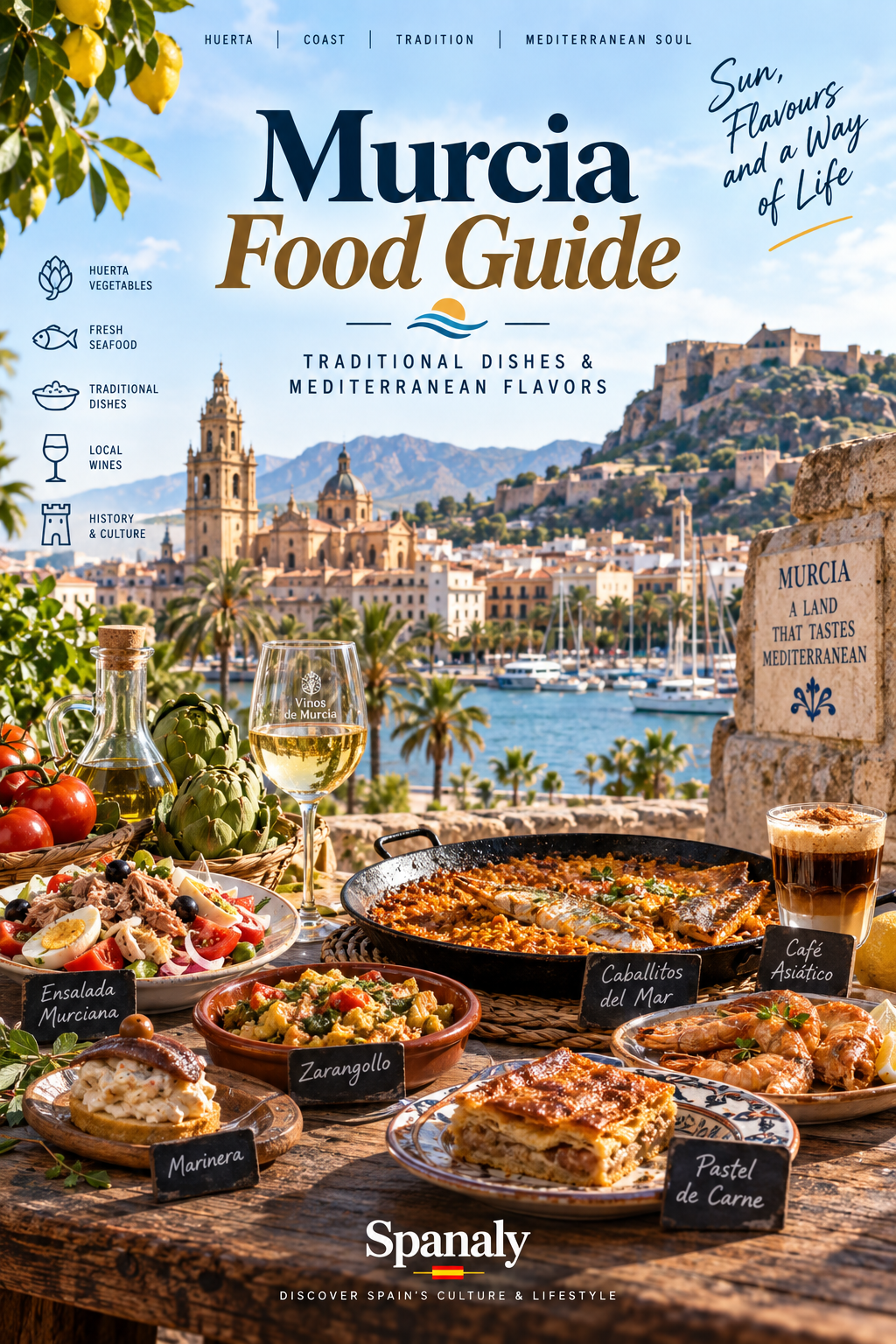
Murcia Food Guide: Traditional Dishes & Mediterranean Flavors
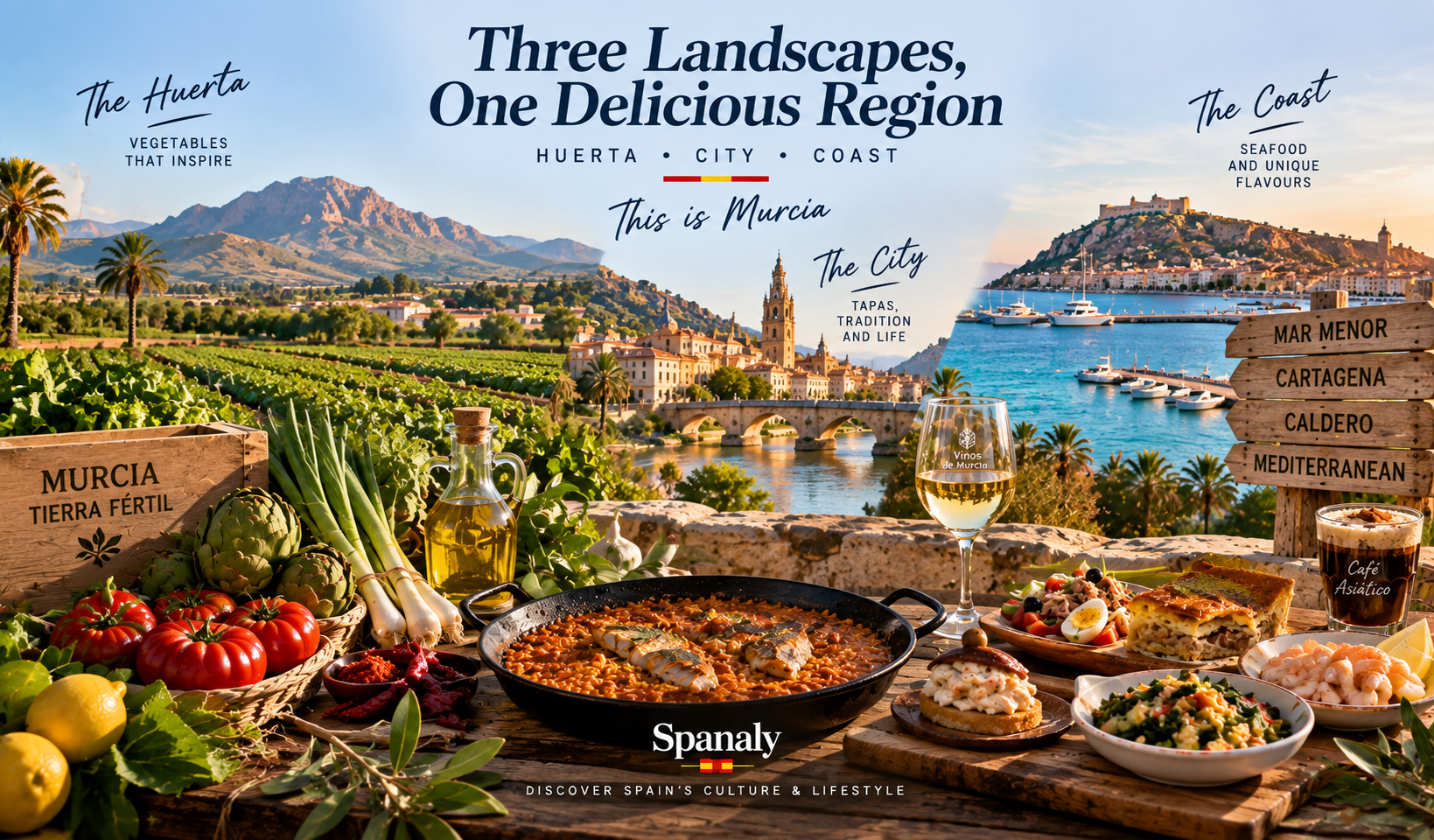
Murcia is easier to understand through three food landscapes: the fertile huerta, the Mediterranean coast and the everyday bars of Murcia city.
Follow the landscape, then follow the dish.
Murcia Is Not Just “Mediterranean Food”
The Region of Murcia’s official food programme presents its cuisine through three distinct kitchens: sea, huerta and mountain. That is a more useful starting point for a traveller than treating Murcia as another generic Mediterranean destination.
The huerta explains the importance of vegetables, zarangollo and fresh seasonal produce. The coast and Mar Menor explain caldero, fish and salted seafood. Inland cooking brings in rice, legumes and more substantial dishes.
Then there is the city table: tapas, pastries and drinks that turn those regional ingredients into an easy way to taste Murcia in small portions.
If You Only Have One Food Day
Do not try to eat the whole region at once. Choose the food landscape that matches where you are travelling.
Start with the Huerta & Tapas
Order first: Marinera + Zarangollo + Pastel de Carne
- Marinera: ensaladilla on a crisp doughnut with an anchovy.
- Zarangollo: courgette, onion and egg — a direct taste of the huerta.
- Pastel de Carne: the city’s traditional savoury meat pie.
Follow the Sea to Caldero
Order first: Salazones + Arroz Caldero + Café Asiático
- Caldero: rice cooked from a fish-based broth with ñora.
- Salazones: salted fish such as mojama or hueva can open the meal.
- Café Asiático: Cartagena’s distinctive coffee to finish.
Go Hearty
Order first: Michirones or rice with rabbit & snails
- Michirones: dried broad beans, pork products, paprika and a spicy note.
- Rice: inland versions can combine rice with rabbit and snails.
- Seasonal logic: this is the side of Murcia built for a more substantial meal.
Arroz Caldero: Read the Name Before You Order
Caldero is one of the dishes most closely associated with Cartagena and the Mar Menor. It deserves its own ordering rules because it is not simply another Spanish rice dish.
MENOR
Traditional caldero is a fisherman’s-style preparation in which the rice takes on the flavour of a concentrated fish broth. Dried ñora is part of the characteristic flavour profile.
Depending on the restaurant, the rice and fish may be served separately. That is not a mistake: it is part of how the dish is commonly presented.
Traditional Murcia Dishes to Know
The useful question is not “Which dish is the most famous?” but “Which dish tells me something about where I am?”
Arroz Caldero
Cartagena · Mar MenorCoastal rice built around fish broth and ñora. A key dish for the maritime side of Murcia.
Zarangollo
Huerta · MurciaCourgette, onion and egg cooked simply. One of the clearest expressions of Murcia’s garden cooking.
Ensalada Murciana
Murcia · Warm-weather tableCommon versions combine tomato, onion, tuna or mojama, olives and egg with olive oil. It is also known as mojete or mojete murciano in local usage.
Michirones
Inland · Traditional tavernsA substantial stew of dried broad beans with pork products, paprika and a spicy touch. Not a light starter.
Caldo con Pelotas
Home-style cookingA comforting broth with meatballs, representing the more domestic side of regional cooking.
Rice with Rabbit & Snails
Inland MurciaA traditional inland combination that shows how Murcia’s rice culture extends beyond the coast.
Migas
Traditional seasonal cookingMurcian versions can be based on flour or stale bread. It is a filling dish with a strong rural character, particularly associated with cooler or rainy days.
Olla Gitana
Vegetable & legume cookingA traditional vegetable-and-legume stew that adds another dimension to the idea of Murcia as a vegetable region.
How to Order Tapas in Murcia
Murcia city is where the region becomes easy to taste in small steps. Instead of ordering one large plate immediately, use tapas to move from huerta flavours to seafood and pastry.
Marinera
Ensaladilla on a crisp doughnut topped with an anchovy.
CONTAINS FISHBicicleta
The same basic tapa without the anchovy.
ASK IF UNSURECaballitos
A familiar Murcian tapa of battered fried prawns.
SHELLFISHPastel de Carne
A traditional savoury meat pie strongly associated with Murcia city.
PASTRYMurcia Food by Destination
Murcia City
Look for: marinera, zarangollo, ensalada murciana, pastel de carne and paparajotes.
Food logic: this is the easiest place to combine huerta dishes with everyday tapas culture.
Cartagena & Mar Menor
Look for: arroz caldero, fish, salazones, seafood and café asiático.
Food logic: follow the coast. This is where the maritime identity is strongest.
Inland Murcia
Look for: michirones, inland rice dishes, migas and traditional stews.
Food logic: expect heavier, more rural cooking and a stronger connection with inland agriculture.
Murcia’s Pantry: Small Words That Explain Big Flavours
Ñora
A dried pepper used as a flavouring ingredient. It is important in the character of caldero and other regional cooking.
Calasparra Rice DOP
Look for the DOP Calasparra designation when a menu or product label specifically identifies the protected rice.
Huerta Produce
Courgettes, onions, tomatoes and other seasonal vegetables are not decorative extras: they are part of the region’s culinary structure.
Salazones
Salted fish products such as mojama and hueva connect the Murcian table directly with the Mediterranean coast.
Monastrell
A defining grape in Murcia’s wine landscape, especially across the Bullas, Jumilla and Yecla wine areas.
Olive Oil
The everyday Mediterranean foundation behind vegetables, salads, cooked dishes and simple plates.
Calasparra DOP
If you are ordering a rice dish and the menu specifies DOP Calasparra, that is a protected designation of origin — not simply a poetic name for rice from Murcia.
Three Practical Rules That Improve the Meal
Respect the heat
In a hot August meal, michirones + caldero can be a lot. Start with a lighter huerta dish, then choose the main course.
Ask about the rice
For caldero, ask whether the rice and fish are served separately and how long the preparation takes. Do not expect it to behave like a quick paella order.
Check the ingredients
Marinera contains anchovy; caballitos contain prawns; michirones traditionally contain pork; pastries and some migas contain gluten. If you have an allergy or dietary restriction, ask before ordering.
When Does Murcia Food Work Best?
Good for leaning into the huerta and lighter vegetable dishes while outdoor dining becomes easier.
Follow the coast and Mar Menor. Choose salads, vegetables and seafood before heavier dishes.
A natural moment to explore inland food and Murcia’s wine-producing areas.
Hearty dishes such as michirones and migas make more sense when temperatures fall.
Paparajotes, Café Asiático & Regional Wine
Paparajotes
Fried batter wrapped around aromatic lemon-tree leaves, traditionally finished with sugar and cinnamon.
Café Asiático
Cartagena’s distinctive coffee combines condensed milk and brandy with Licor 43, lemon peel, cinnamon and coffee beans.
Pan de Calatrava
A traditional regional dessert with a custard-like texture and caramelised sweetness.
Murcia’s Wine Map
Look toward Bullas, Jumilla and Yecla for the region’s three wine appellation areas and the strong presence of Monastrell.
In Cartagena, History and Food Can Share the Same Trip
If you are visiting Cartagena during the Carthaginians and Romans Festival, keep the food day separate from the main festival rush where possible: explore the city and its coastal food traditions earlier, then use the evening for the festival atmosphere.
Official Murcia Food Resources
Use these official resources for current regional food information, protected-product details and the official 1.001 Sabores programme.