Table of Contents
Toggle🥘 Basque Food Guide
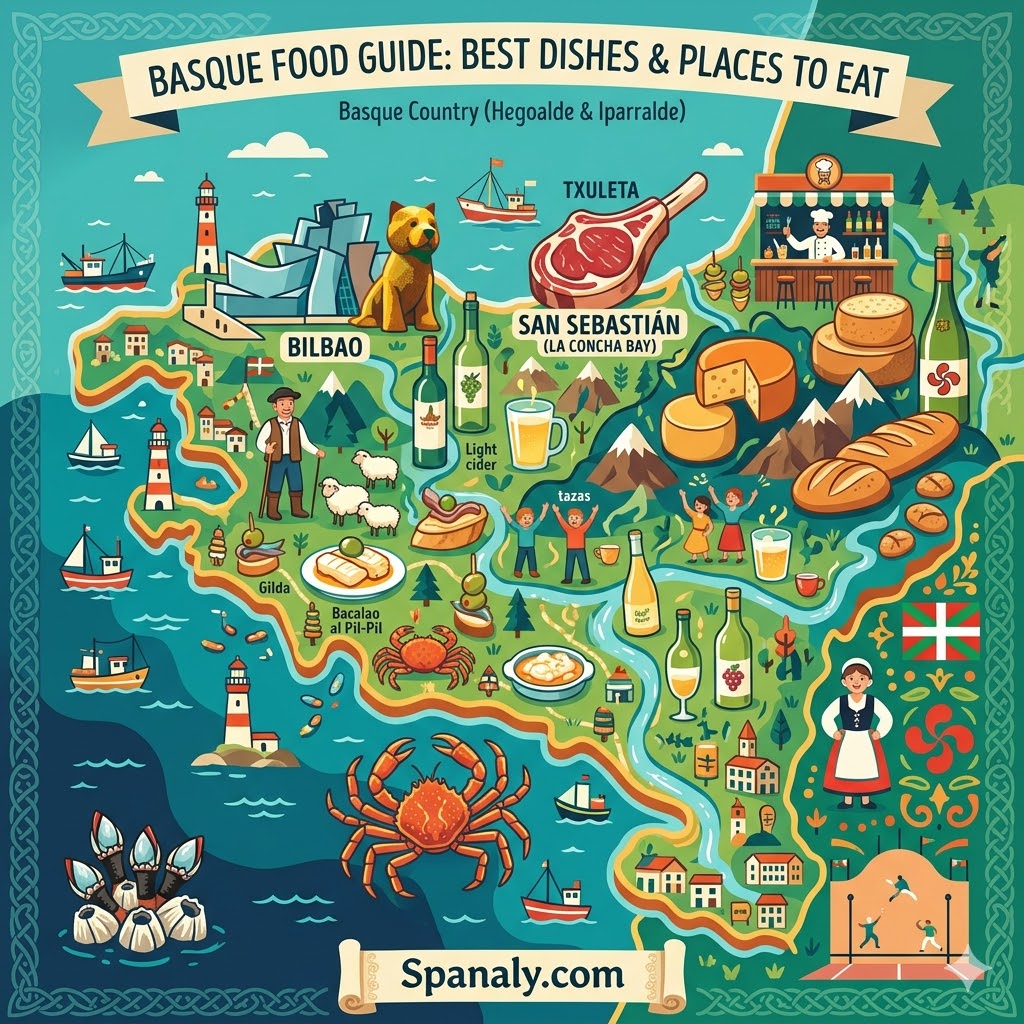
Smoke rises from glowing charcoal grills while bartenders slide tiny Pintxos across crowded counters in San Sebastián. In the Basque Country, food is not just cuisine; it is identity, ritual, and social life wrapped into one unforgettable Bay of Biscay experience.
Pintxo Culture: Master the art of the bar-crawl, where small bites lead to big flavors.
The Grill Tradition: Discover why Basque chefs are world-renowned for their mastery of fire and iron.
Cider House Rituals: Experience the unique “Txotx” tradition in the rustic apple orchards of Astigarraga.
Ocean to Plate: Savor the daily catch from the northern coast, prepared with century-old maritime techniques.
Strategic Planning: To see how these flavors fit into your broader itinerary, explore our Northern Spain travel guide.
Spanaly Insight: In these taverns, the quality of the ingredients speaks louder than the decor; don’t be fooled by humble wooden stools; they often hide Michelin-level flavors.
📍 Snapshot: Essential Basque Cuisine Facts
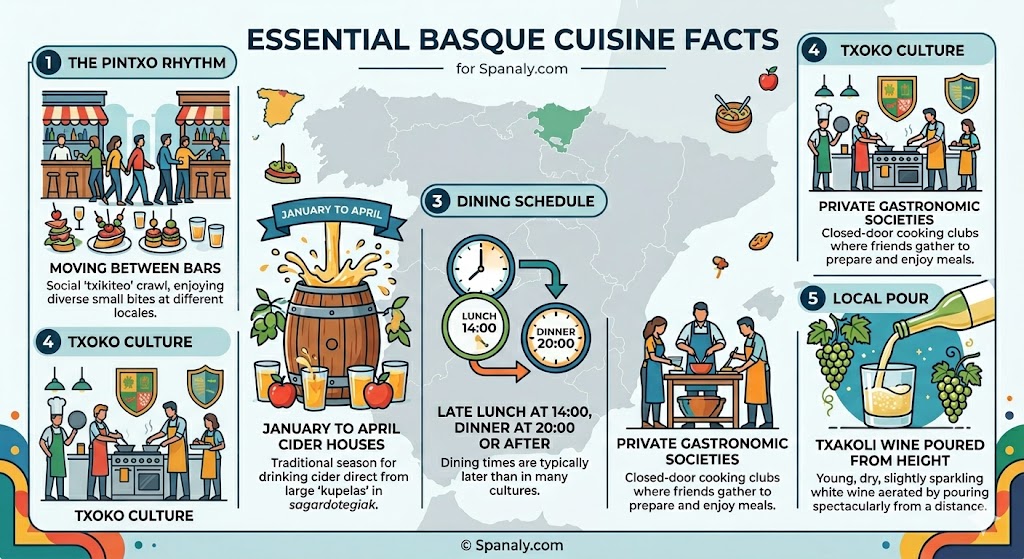
Dining in the Basque Country follows specific social and biological rhythms that differ from the rest of Spain. Here is the technical breakdown for your culinary tour:
The Pintxo Rhythm: Most locals eat two or three pintxos at one bar before moving to the next.
The “Txotx” Season: Visit between January and April to experience the authentic cider house season in Astigarraga.
Dining Schedule: Lunch is the main event at 14:00, while dinner pintxos start around 20:00.
The Txoko Culture: Many top kitchens are “Gastronomic Societies,” private clubs where locals cook for friends.
Local Pour: Always try Txakoli, a slightly sparkling white wine poured from a height to aerate it.
Cantabrian Diversity: To see how these mountain flavors compare to the seafood of the west, explore our Galician cuisine guide.
🍢 Basque vs. Catalan Cuisine
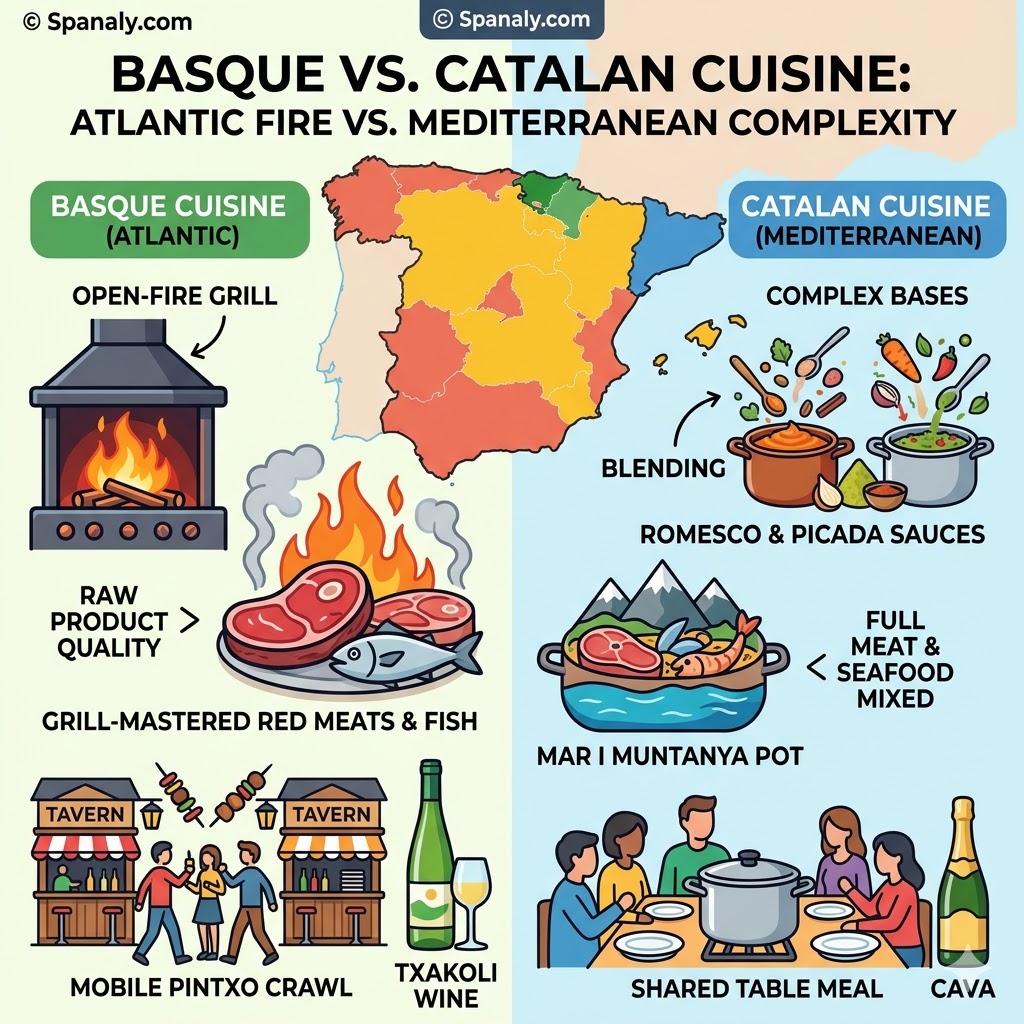
While both regions dominate Spanish gastronomy, they offer different maritime experiences. The Basque kitchen relies on northern coast fire, while Catalonia embraces Mediterranean complexity.
Cooking Style: Basque chefs master the open-fire grill to highlight raw product quality.
The Sauce Factor: Catalan recipes use complex bases like Romesco or Picada to blend flavors.
Sea & Mountain: Catalonia is famous for Mar i Muntanya, mixing meat and seafood in one pot.
Dining Rhythms: Basque culture revolves around the mobile “Pintxo crawl” between different bars.
Local Pairings: Swap the northern Txakoli wine for a glass of Mediterranean Cava.
Further Exploration: To understand these eastern flavors, see our Catalan cuisine and traditional dishes guide.
Spanaly Insight: Don’t look for the “Pintxo” wooden skewers in Barcelona. In Catalonia, the focus shifts to sit-down meals like Escudella or communal rice dishes shared at a single table.
🍢 Pintxos Culture: How to Eat Like a Local
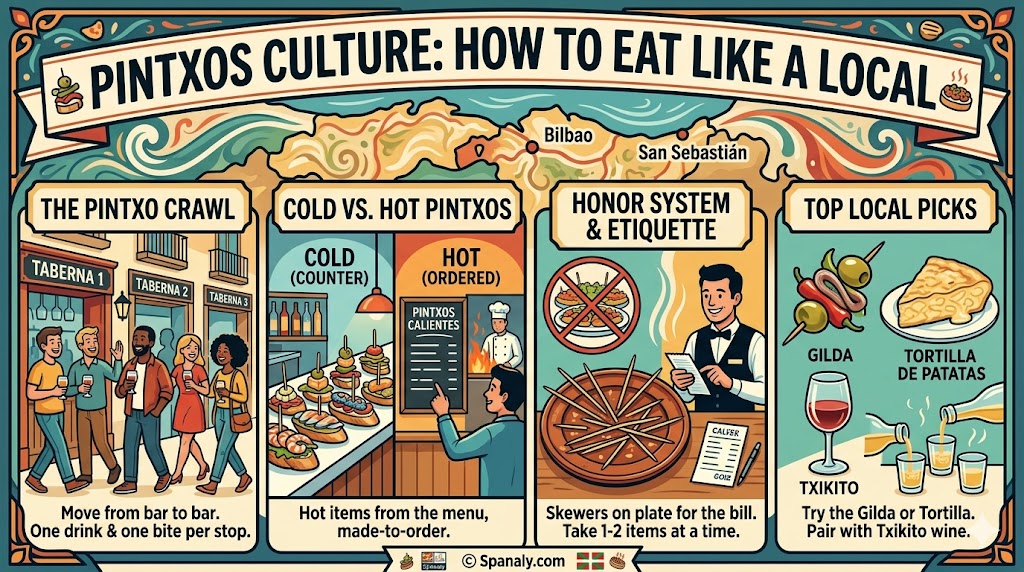
Pintxos are the soul of Basque social life, especially in the historic quarters of San Sebastián and Bilbao. These small bites are usually pierced with a wooden skewer to hold the ingredients onto a bread base.
The Pintxo Crawl: Locals rarely stay in one spot; they move from bar to bar, having one drink and one bite.
Cold vs. Hot: Cold pintxos sit on the bar counter for immediate self-service. Always order “Hot Pintxos” (Pintxos Calientes) from the chalkboard menu for a made-to-order experience.
The Honor System: In many traditional taverns, you keep your wooden skewers on your plate to help the waiter calculate your bill.
Top Picks: Look for the “Gilda” (anchovy, olive, and pepper) or the “Tortilla de Patatas,” which is often served runny in the center.
Planning Your Route: To see how to fit a food tour into your schedule, check our Bilbao and San Sebastian 3-day itinerary.
🐟 Signature Basque Seafood: Atlantic Traditions
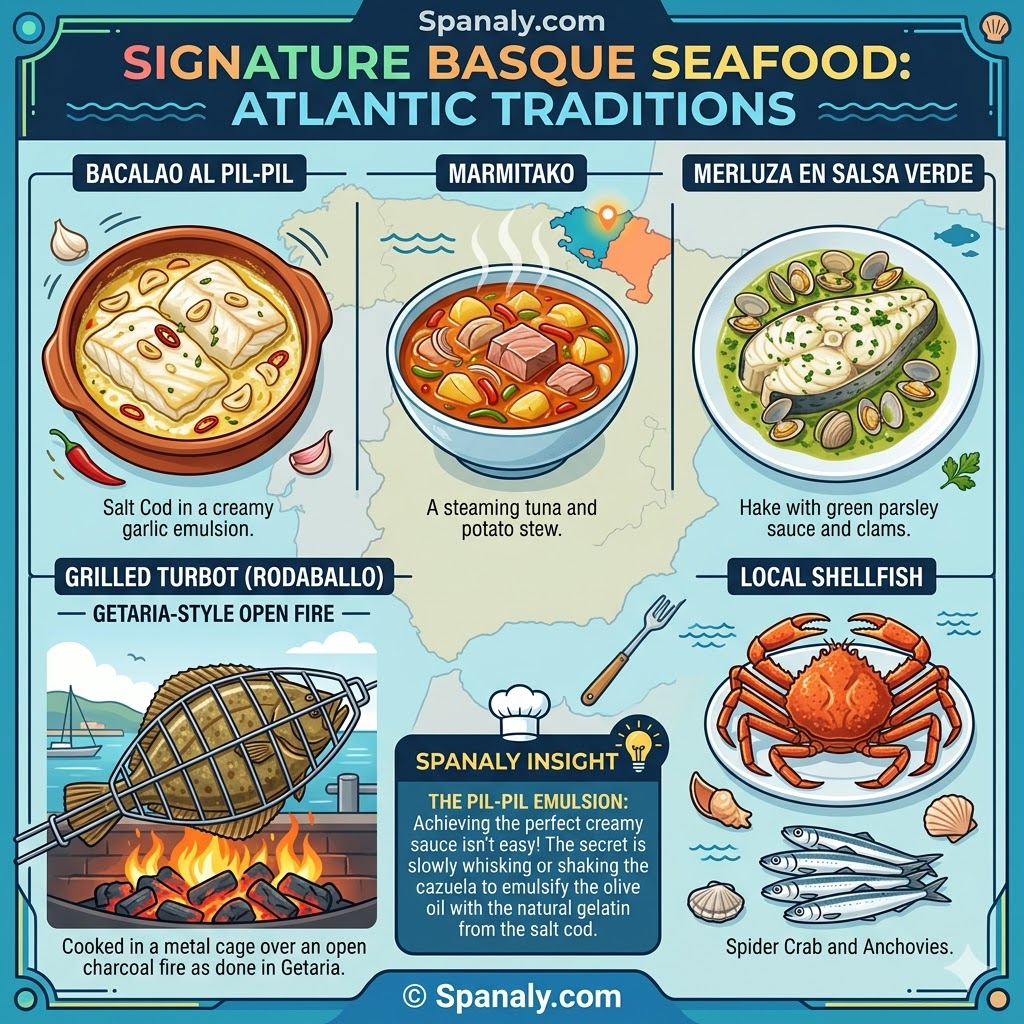
The Basque coastline provides a diverse range of coastal products that define the region’s maritime gastronomy. From deep-sea fishing to traditional canning, these dishes represent the soul of the North.
Bacalao (Salt Cod): This is the undisputed star of Basque kitchens, often prepared al Pil-Pil with a natural emulsion of garlic and olive oil.
Marmitako: A hearty tuna and potato stew originally cooked by fishermen on their boats using the daily catch.
Hake (Merluza): Usually served in “Green Sauce” (en Salsa Verde) made from parsley, garlic, and clams for a fresh ocean flavor.
Grilled Turbot (Rodaballo): In coastal towns like Getaria, whole fish are grilled over open charcoal fires using specialized metal cages.
Local Shellfish: Taste the richness of the Cantabrian Sea through spider crabs (Txangurro) and small, flavorful anchovies from Getaria.
Culinary Comparisons: To understand how these northern flavors differ from the octopus-heavy dishes of the west, see our Galician cuisine guide.
Spanaly Insight: When ordering cod, the Pil-Pil sauce is a technical masterpiece. It is not made with cream; the gelatin from the fish creates the creamy texture through constant, rhythmic movement of the pan.
🥩 Basque Steak (Txuleta): The Charcoal Grill Tradition
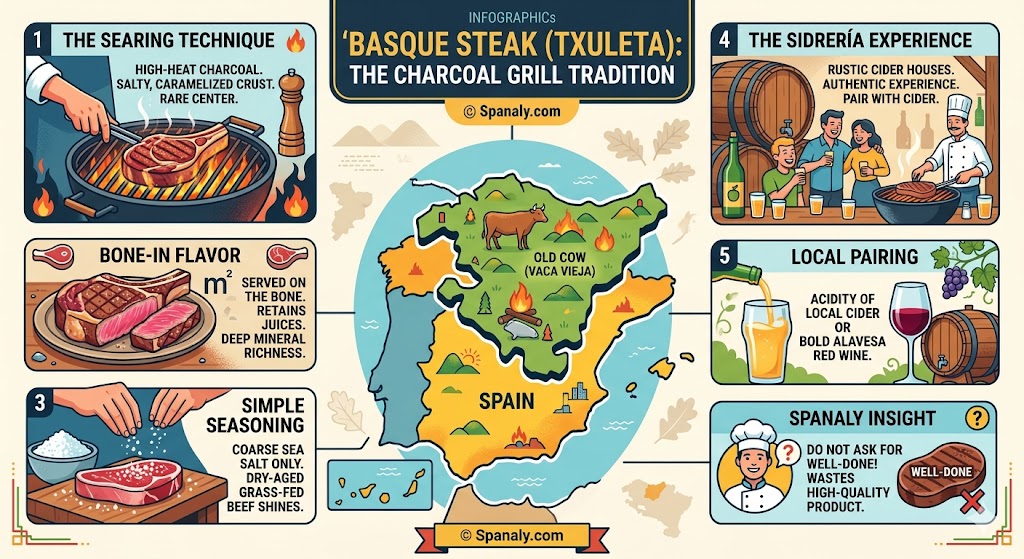
The Basque Txuleta is world-renowned for its intense flavor and marbling. Unlike most regions that prefer young beef, Basque culture celebrates the “Old Cow” (Vaca Vieja), typically aged over eight years.
The Searing Technique: Chefs use high-heat charcoal grills to create a salty, caramelized crust while keeping the center rare.
The Rare Standard: To respect the meat’s quality, never order it “well-done,” as local tradition views anything beyond medium-rare as a waste.
Bone-In Flavor: The steak is always served on the bone, which helps retain juices and adds a deep, mineral richness.
Simple Seasoning: Only coarse sea salt is used, allowing the natural flavor of the dry-aged grass-fed beef to shine.
The Sidrería Experience: While found in fine dining, the most authentic way to eat Txuleta is in a rustic cider house.
Local Pairing: This heavy meat requires the acidity of a local cider or a bold red wine from the nearby Alavesa region.
Travel Planning: To see how to include a visit to a traditional grill, check our Bilbao and San Sebastian 3-day itinerary.
🧀 Beyond the Coast: Idiazabal Cheese & Rural Flavors
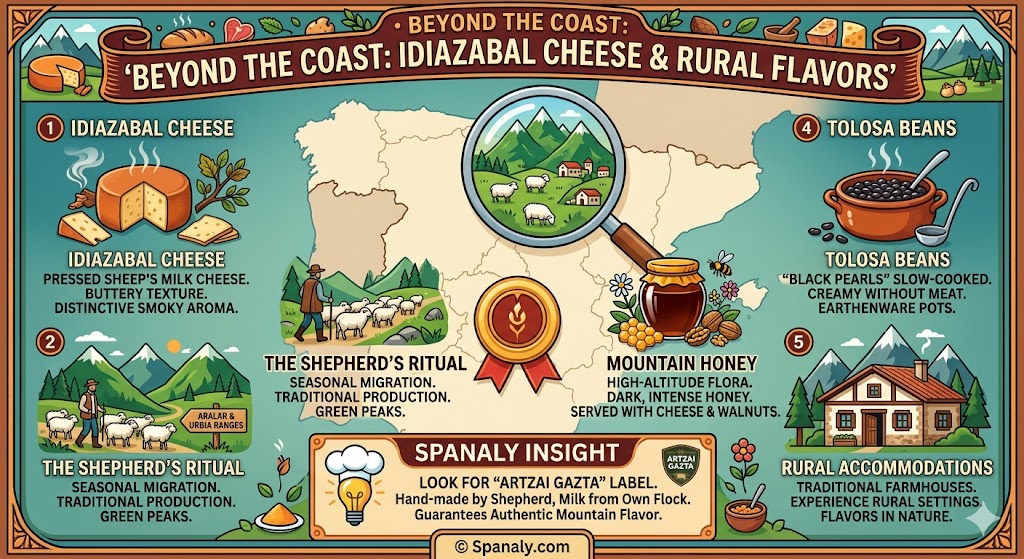
The Basque mountains offer a stark contrast to the coastline, focusing on earthy, robust products that have sustained rural communities for centuries.
Idiazabal Cheese: A pressed sheep’s milk cheese known for its buttery texture and distinctive smoky aroma from beechwood fires.
The Shepherd’s Ritual: Traditional production still follows the seasonal migration of flocks through the green peaks of the Aralar and Urbia ranges.
Mountain Honey: High-altitude flora creates a dark, intense honey often served with cheese and walnuts for dessert.
Tolosa Beans: These “Black Pearls” are slow-cooked in earthenware pots until they reach a naturally creamy consistency without adding meat.
Rural Accommodations: To experience these flavors in their natural setting, consider staying in traditional farmhouses; check our accommodation in Spain guide for options.
Spanaly Insight: When buying Idiazabal, look for the “Artzai Gazta” label. This ensures the cheese was handmade by the shepherd using only milk from their own flock, guaranteeing an authentic mountain flavor.
🍷 Wine Pairing: Txakoli & Basque Cider (Sagardoa)
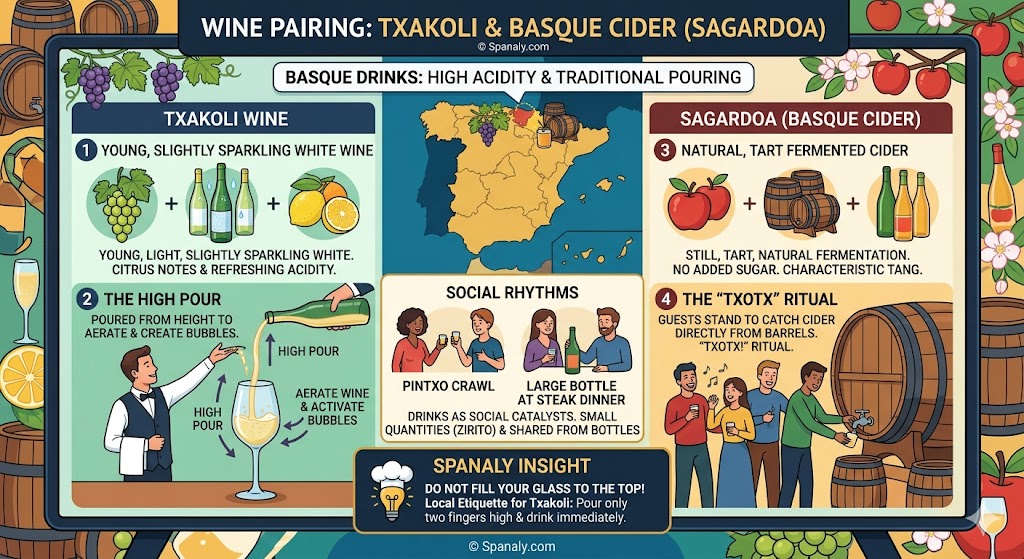
Basque drinks are characterized by their high acidity and traditional pouring techniques, designed to complement the rich local gastronomy.
Txakoli Wine: A young, slightly sparkling white wine made from local grapes, known for its citrus notes and refreshing acidity.
The High Pour: Waiters pour Txakoli from a significant height into flat-bottomed glasses to aerate the wine and activate its natural bubbles.
Sagardoa (Basque Cider): Unlike sweet commercial ciders, the Basque version is still, tart, and fermented naturally without added sugar.
The “Txotx” Ritual: In traditional cider houses, guests stand up at the sound of “Txotx!” to catch cider directly from the giant wooden barrels (Kupelas).
Social Rhythms: These drinks are social catalysts, enjoyed in small quantities (Zirito) during a pintxo crawl or shared from large bottles during a steak dinner.
Drink Culture Guide: To master the art of ordering and understand the wider variety of Spanish beverages, explore our Spanish drinks guide.
Spanaly Insight: Do not fill your glass to the top. The local etiquette for Txakoli is to pour only a small amount (two fingers high) and drink it immediately while the aeration and bubbles are at their peak.
🍰 Traditional Desserts: Basque Cheesecake & Sweet Heritage
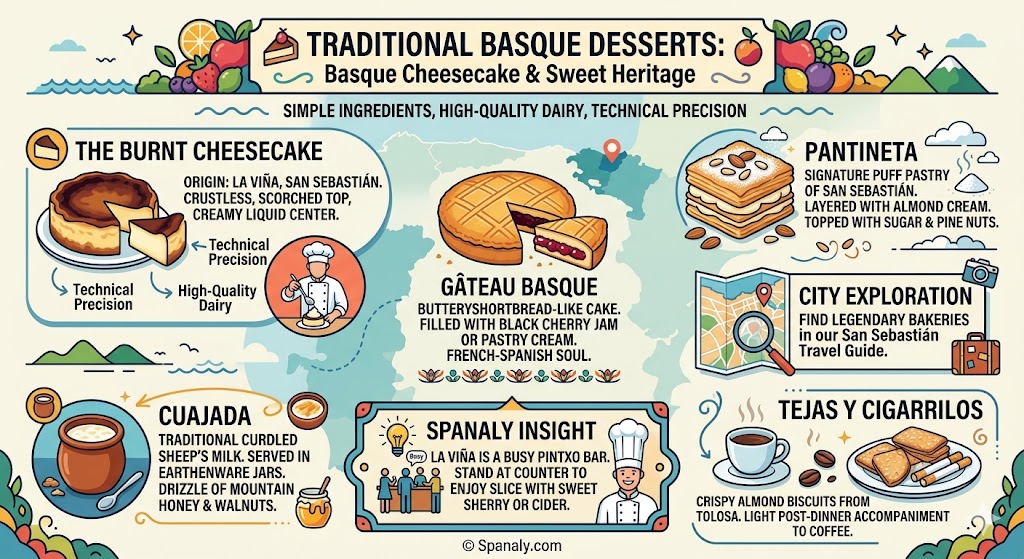
Basque desserts reflect a transition from rustic farmhouse staples to global culinary phenomena. While simple in ingredients, they rely on technical precision and high-quality dairy.
The Burnt Cheesecake: Originally from La Viña in San Sebastián, this crustless cake is famous for its scorched top and creamy, almost liquid center.
Gâteau Basque: A buttery, shortbread-like cake filled with either black cherry jam or thick pastry cream, representing the soul of the French-Spanish border.
Pantineta: A signature puff pastry dessert from San Sebastián, layered with almond cream and topped with powdered sugar and toasted pine nuts.
Cuajada: A traditional curdled sheep’s milk dessert, often served in small earthenware jars with a drizzle of mountain honey and walnuts.
Tejas y Cigarrillos: Crispy, almond-flavored biscuits from Tolosa, perfect as a light accompaniment to a post-dinner coffee.
City Exploration: To find the legendary bakeries where these treats originated, see our San Sebastián travel guide.
Spanaly Insight: When visiting La Viña for the famous cheesecake, do not expect a quiet cafe setting. It is a busy pintxo bar; the locals often stand at the counter to enjoy their slice with a glass of sweet Sherry or cider.
🍴 Top Places to Eat: Best Restaurants in Basque Country
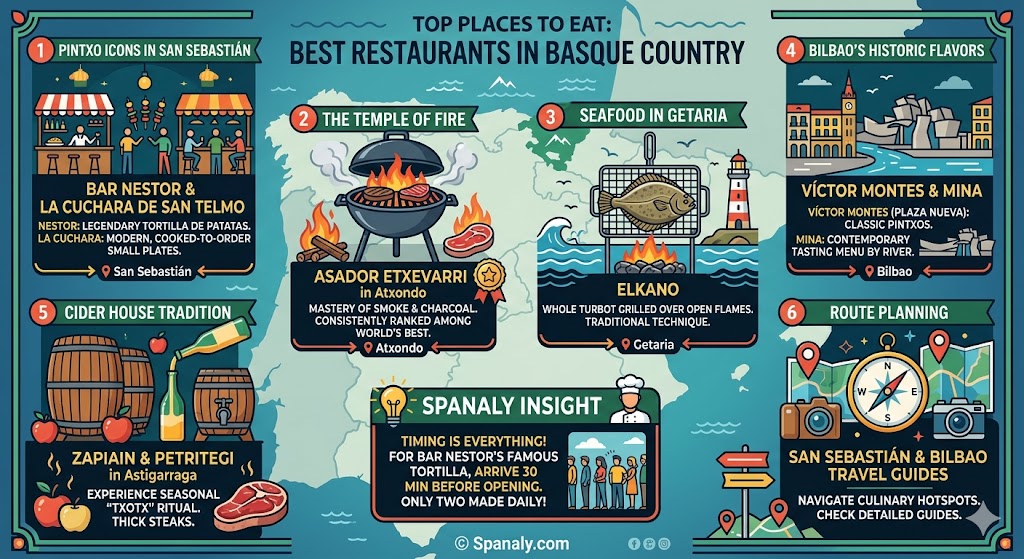
In the Basque Country, choosing where to eat is almost a cultural discipline. The region offers a spectrum of dining, from the world’s most awarded kitchens to humble taverns where quality is a religion.
Pintxo Icons in San Sebastián: Watch the steam rise from fresh plates at Bar Nestor; arrive 30 minutes early to secure a slice of their legendary tortilla.
The Temple of Fire: The smell of burning oak hits you at Asador Etxebarri before the first plate of charcoal-mastered steak even arrives.
Seafood in Getaria: Listen to the sizzle of whole turbot at Elkano, where fish are grilled over open flames using century-old family techniques.
Bilbao’s Historic Flavors: Step onto the tiled floors of Víctor Montes for classic pintxos or enjoy Mina’s tasting menu with a view of the river.
Cider House Tradition: Join the rhythmic “Txotx” shout at Zapiain or Petritegi, where cider flows directly from giant wooden barrels to your glass.
Route Planning: To navigate these culinary hotspots effectively, check our detailed San Sebastián travel guide or our Bilbao travel guide.
🗓️ The Basque Food Calendar: Seasonal Delicacies
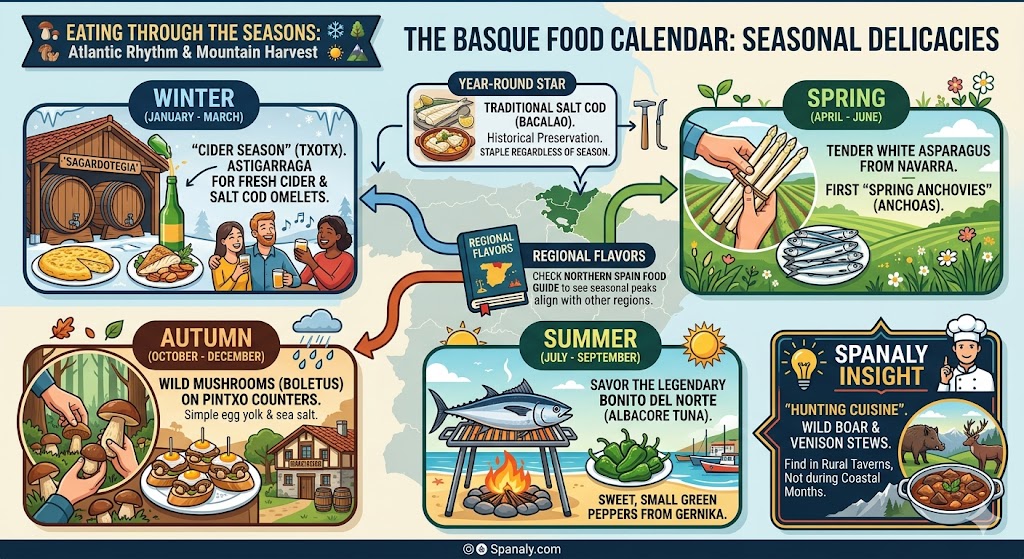
Eating in the Basque Country is a journey through the seasons, where the menu changes based on the ocean’s seasonal rhythm and the mountain harvest.
Winter (January – March): This is “Cider Season” (Txotx), where locals flock to Astigarraga for fresh cider and salt cod omelets.
Spring (April – June): Look for tender white asparagus from Navarra and the first “Spring Anchovies” (Anchoas) caught in the Bay of Biscay.
Summer (July – September): Savor the legendary Bonito del Norte (albacore tuna) and the sweet, small green peppers from Gernika.
Autumn (October – December): Wild mushrooms (Boletus) take over the pintxo counters, often served with a simple egg yolk and sea salt.
The Year-Round Star: Traditional salt cod (Bacalao) remains a staple regardless of the season due to historical preservation methods.
Regional Flavors: To see how these seasonal peaks align with other northern regions, check our Northern Spain food guide.
Spanaly Insight: Autumn is the best time for “Hunting Cuisine.” Many rural taverns serve wild boar and venison stews that you won’t find during the warmer coastal months.
🚶 24-Hour San Sebastián Food Itinerary
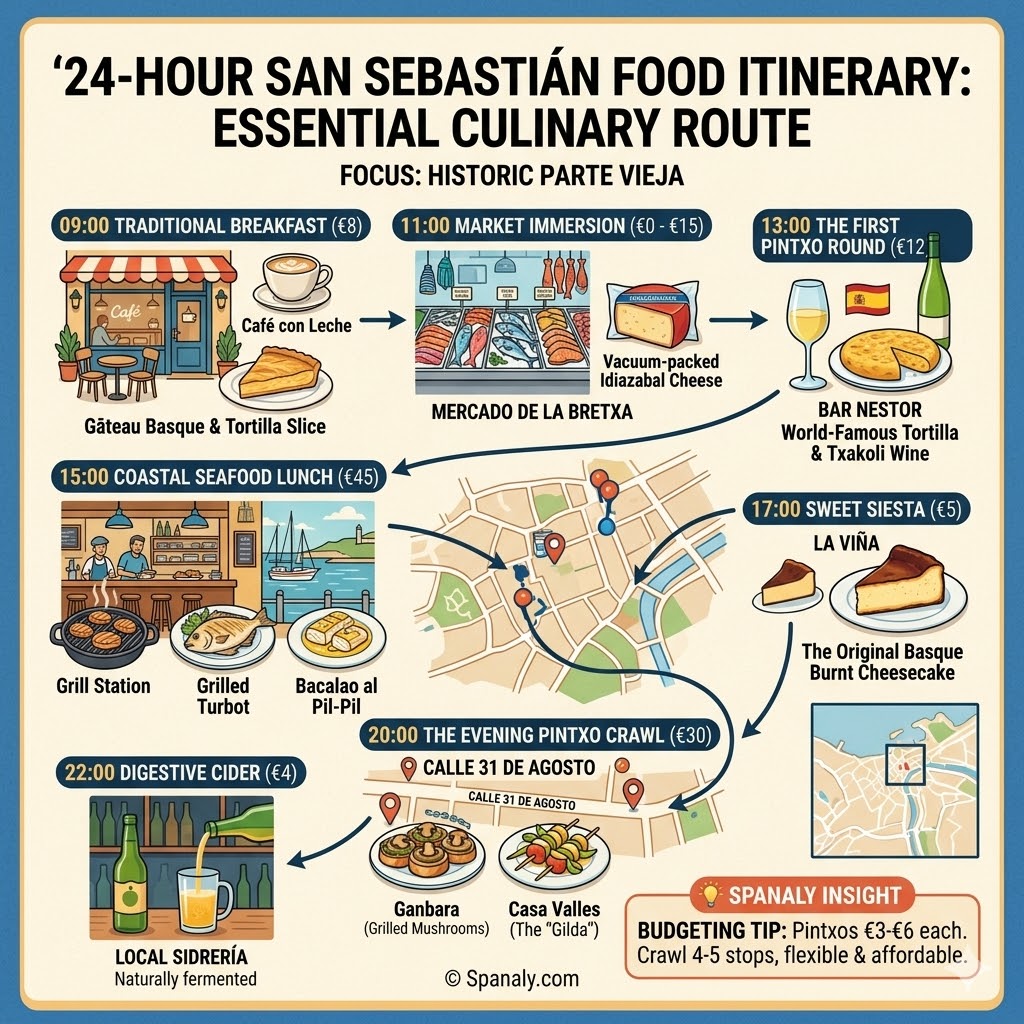
This high-efficiency route covers the absolute essentials of Basque gastronomy in a single day, focusing on the historic Parte Vieja.
09:00 – Traditional Breakfast (€8): Start at a local cafe with Cafe con Leche and a buttery Gâteau Basque or a slice of local tortilla.
11:00 – Market Immersion (€0 – €15): Explore Mercado de la Bretxa to see daily northern coast catches; grab some vacuum-packed Idiazabal cheese to take home.
13:00 – The First Pintxo Round (€12): Visit Bar Nestor for their world-famous tortilla and a glass of Txakoli wine before the lunch rush.
15:00 – Coastal Seafood Lunch (€45): Enjoy a sit-down meal featuring grilled turbot or Bacalao al Pil-Pil at a traditional tavern overlooking the harbor.
17:00 – Sweet Siesta (€5): Head to La Viña for a slice of the original Basque burnt cheesecake—expect a short wait at the counter.
20:00 – The Evening Pintxo Crawl (€30): Move through Calle 31 de Agosto, trying the grilled mushrooms at Ganbara and the “Gilda” at Casa Valles.
22:00 – Digestive Cider (€4): End your night with a naturally fermented Basque cider poured from a height at a local sidrería.
Route Map: To see how this food tour fits into a larger trip, view our Bilbao and San Sebastian 3-day itinerary.
Spanaly Insight: Budgeting tip: Most pintxos cost between €3 and €6 each. A “crawl” typically involves 4 to 5 stops, making it a flexible and affordable way to dine.
🚫 Common Tourist Mistakes When Eating in Basque Country
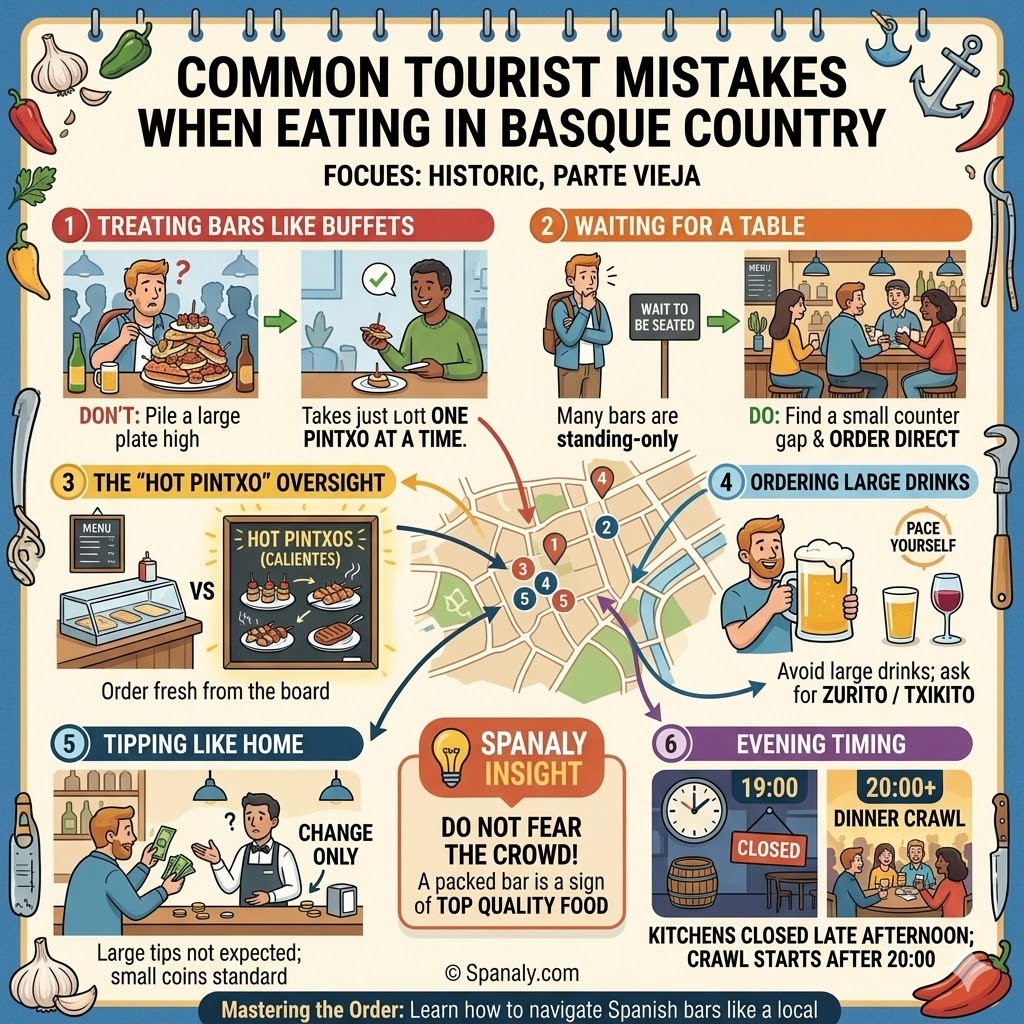
Avoiding these cultural traps will help you dine with the confidence of a San Sebastián local.
Treating Bars Like Buffets: Do not grab a plate and pile it high with cold pintxos; take only one or two at a time.
Waiting for a Table: Most pintxo bars are standing-only; find a small gap at the counter and order directly from the bartender.
The “Hot Pintxo” Oversight: Many visitors ignore the chalkboard menu; always order the “Hot Pintxos” (Calientes) as they are cooked fresh.
Ordering Large Drinks: Avoid ordering a full pint of beer; ask for a Zurito (small beer) or a Txikito (small wine) to keep the pace.
Tipping Like Home: Large tips are not expected in Basque taverns; leaving a few small coins as “change” is the standard local practice.
Evening Timing: Do not try to start your dinner crawl before 20:00; most authentic kitchens are closed in the late afternoon.
Mastering the Order: To learn more about navigating Spanish bars without stress, see our guide on how to order food like a local in Spain.
💎 Spanaly Elite Tips: The Insider’s Playbook
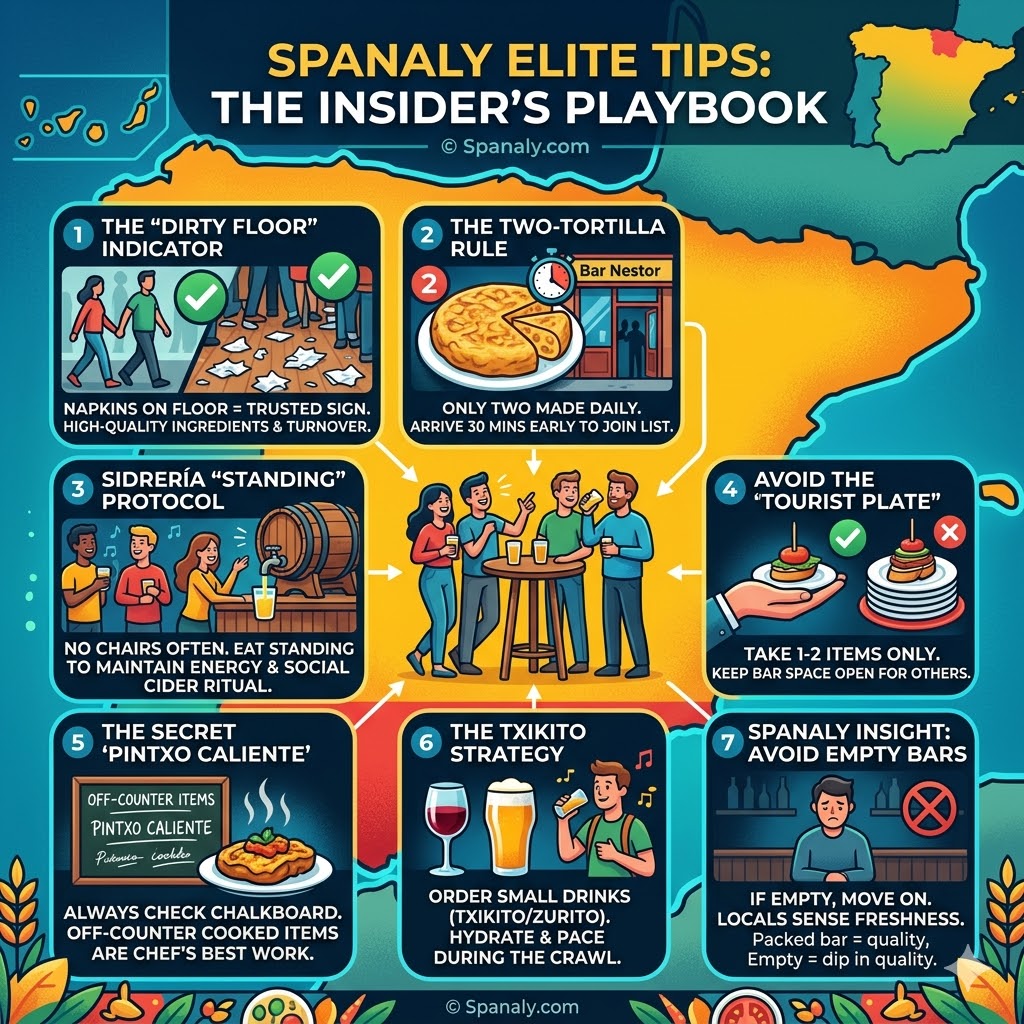
These “underground” tactics will separate you from the average tourist and ensure a flawless culinary experience.
The “Dirty Floor” Indicator: Look for bars with the most napkins on the floor; in the Basque Country, this is a trusted sign of high-quality ingredients and high turnover.
The Two-Tortilla Rule: At iconic spots like Bar Nestor, only two tortillas are made daily; you must arrive 30 minutes early just to get your name on the list.
Sidrería “Standing” Protocol: Traditional cider houses often have no chairs; be prepared to eat standing up at high tables to maintain the social energy.
Avoid the “Tourist Plate”: Never ask for a large plate to stack pintxos; local etiquette dictates taking one or two items to keep the bar space open for others.
The Secret “Pintxo Caliente”: Always check the chalkboard for “off-counter” items; these are cooked to order and represent the chef’s best technical work.
The Txikito Strategy: Order a Txikito (small wine) or Zurito (small beer) at each stop to stay hydrated and paced during a long evening crawl.
Spanaly Insight: If you find a bar that is completely empty while others are packed, move on. In Basque culture, locals have an uncanny “nose” for freshness, and an empty bar usually signals a dip in quality.
🍴 Visitor FAQs – Ultimate Basque Culinary Guide
🍢 Can I find gluten-free or vegan options in traditional pintxo bars?
Yes, but you must be proactive. While traditional pintxos lean heavily on bread and seafood, many modern bars in San Sebastián now offer specific allergen menus. Always ask for "sin gluten" or "vegano"; the kitchens are usually happy to prepare a fresh vegetable skewer or a potato-based dish on the spot.
💰 Is it true that I should keep my wooden skewers to pay the bill?
In some old-school taverns, yes. The "Honor System" is still alive where the waiter counts the skewers on your plate to calculate the total. However, in busy modern spots, it is more common for staff to log your order digitally. To be safe, never throw away your sticks until you have settled the payment.
🕙 Do I need to book a table for a pintxo crawl?
Generally, no reservations are needed for the bar area. The essence of a pintxo crawl is spontaneity. You stand at the counter, eat one or two bites, and move on. However, if you plan to have a full sit-down meal in the dining room of famous restaurants like Ganbara, booking a week in advance is highly recommended.
👶 Is the Basque cider house (Sidrería) environment family-friendly?
Absolutely. While they are lively and loud, Sidrerías are multi-generational venues. Children are welcome and often enjoy the rustic atmosphere. Just be aware that most people stand around high tables, and the floors can be slightly damp from the cider pouring rituals.
🧺 Can I take Basque cheese or canned seafood back in my luggage?
Hard cheeses like Idiazabal and high-quality canned anchovies are travel-friendly. Most gourmet shops in Bilbao and San Sebastián offer vacuum-sealing services (envasado al vacío). Ensure you check your home country's customs regulations regarding dairy and seafood products before flying.
Basque Cuisine Guide by Spanaly.com
In the Basque Country, meals are never rushed. A single evening can turn into five bars, ten conversations, and memories carried by the smell of charcoal and the sound of Txakoli hitting the glass. Come hungry—and leave understanding why this corner of Spain changed modern gastronomy forever.
Purity of Product: Focus on the seasonal ingredients that define the Basque soul.
Social Dining: Master the “Pintxo crawl” to eat like a true San Sebastián local.
Beyond the Bar: Explore the mountain heritages, from Idiazabal cheese to rustic cider houses.
Technique is Key: Look for the signature open-fire grills and traditional Pil-Pil emulsions.
The Next Journey: To connect these flavors with the stunning landscapes of the North, check our Northern Spain road trip guide.
Spanaly Insight: Your first bite of a Txuleta or a fresh Gilda is a rite of passage. In this region, every meal tells a story of the sea, the fire, and the people who guard these ancient recipes.