Table of Contents
Toggle🏰 Lugo
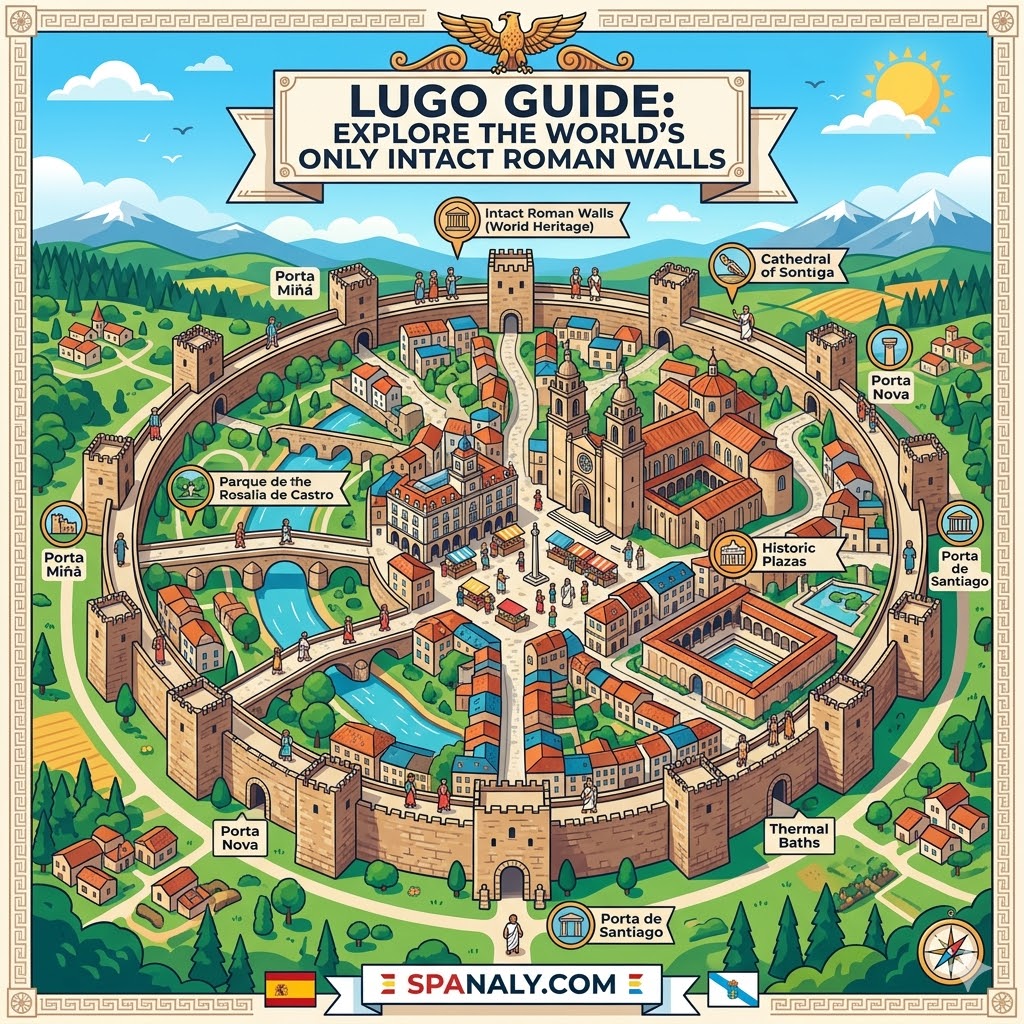
Imagine standing atop a stone fortress that has defied time for 1,700 years. The Atlantic wind whistles through the granite gaps as you overlook the misty Galician skyline. In Lugo, the Roman Empire never truly left; it simply became part of the daily commute.
UNESCO Masterpiece: Explore the world’s only city completely enclosed by intact Roman walls.
Living History: Walk the 2-kilometer elevated path where centurions once stood guard.
Cultural Hub: Discover a city where ancient ruins meet the vibrant spirit of modern Galicia.
Northern Gateway: Start your journey through the rugged landscapes of the Ultimate Northern Spain Travel Guide.
Grab your walking shoes and prepare for a journey back to Lucus Augusti. The walls are waiting, and the history is real.
📍 Lugo: Essential Visitor Snapshot
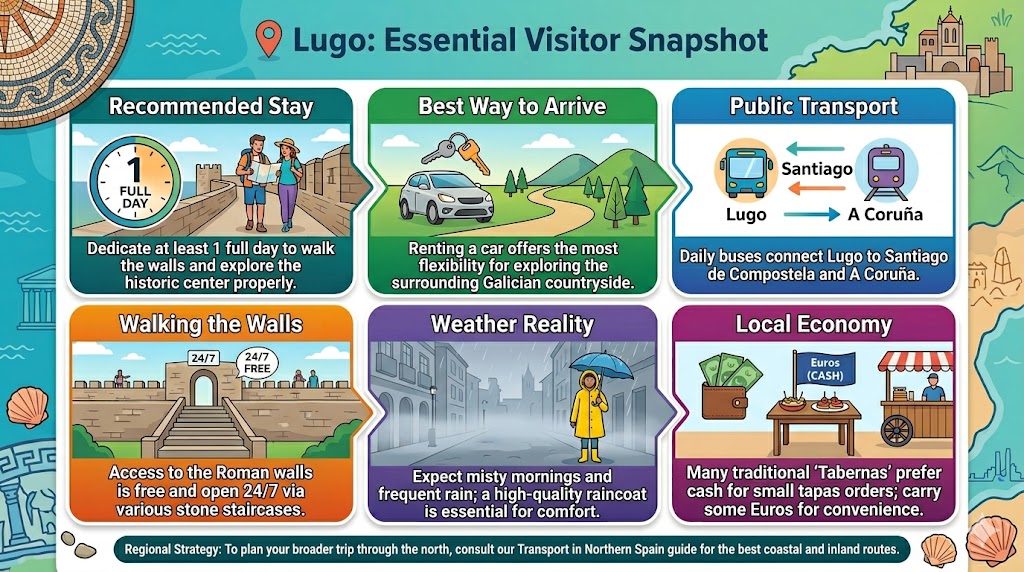
Lugo is a city where Roman history isn’t behind glass; it is under your feet. Understanding the local rhythm and logistics is the key to mastering this ancient Galician stronghold.
Recommended Stay: Dedicate at least 1 full day to walk the walls and explore the historic center properly.
Best Way to Arrive: Renting a car offers the most flexibility for exploring the surrounding Galician countryside.
Public Transport: Daily buses connect Lugo to Santiago de Compostela and A Coruña.
Walking the Walls: Access to the Roman walls is free and open 24/7 via various stone staircases.
Weather Reality: Expect misty mornings and frequent rain; a high-quality raincoat is essential for comfort.
Local Economy: Many traditional “Tabernas” prefer cash for small tapas orders; carry some Euros for convenience.
Regional Strategy: To plan your broader trip through the north, consult our Transport in Northern Spain guide for the best coastal and inland routes.
🏛️ Lugo vs. Astorga: Choosing Your Roman Stronghold
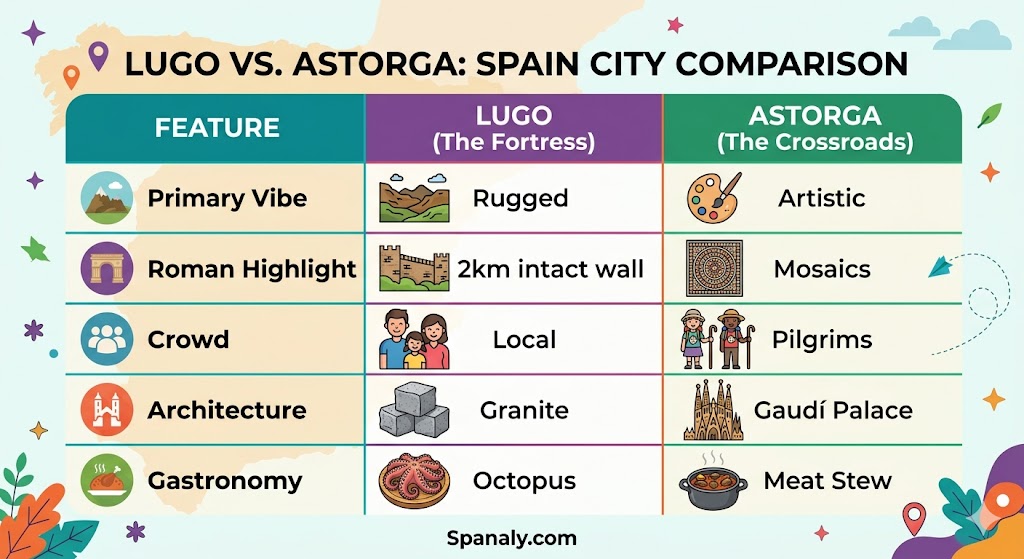
While both cities are pillars of Roman heritage in northern Spain, their energy and visual identity differ. One is a massive granite fortress; the other is a colorful crossroads of pilgrims and art.
| Feature | Lugo (The Fortress) | Astorga (The Crossroads) |
| Primary Vibe | Rugged, ancient, and deeply Galician. | Artistic, bustling, and historically diverse. |
| Roman Highlight | The world’s only intact 2km city wall. | Roman mosaics and an underground museum. |
| The Crowd | Local and authentic; fewer tourist groups. | High; a major hub for Camino de Santiago pilgrims. |
| Architecture | Severe granite and Romanesque styles. | Gothic, Roman, and Gaudí’s Modernist Palace. |
| Topography | Elevated plateau overlooking the Miño river. | Strategic hill connecting León to the Atlantic. |
The Wall Factor: Lugo is for those who want to walk atop history. The scale of the walls is unmatched in Europe.
The Artistic Factor: Astorga is for lovers of eclectic architecture. It features one of only three buildings by Antoni Gaudí outside Catalonia.
Pilgrim Spirit: If you want to feel the energy of the Camino, choose Astorga. If you want a quiet, authentic city, choose Lugo.
Gastronomic Shift: Lugo focuses on Atlantic seafood and octopus. Astorga is famous for “Cocido Maragato,” a hearty meat-heavy stew.
Spanaly Insight: Don’t just visit Lugo for the walls. Stay for the tapas. Most bars in the old town still serve a free, generous tapa with every drink. It is one of the last places in Galicia where this tradition remains truly authentic.
🏛️ The Roman Walls of Lugo: A UNESCO World Heritage Masterpiece
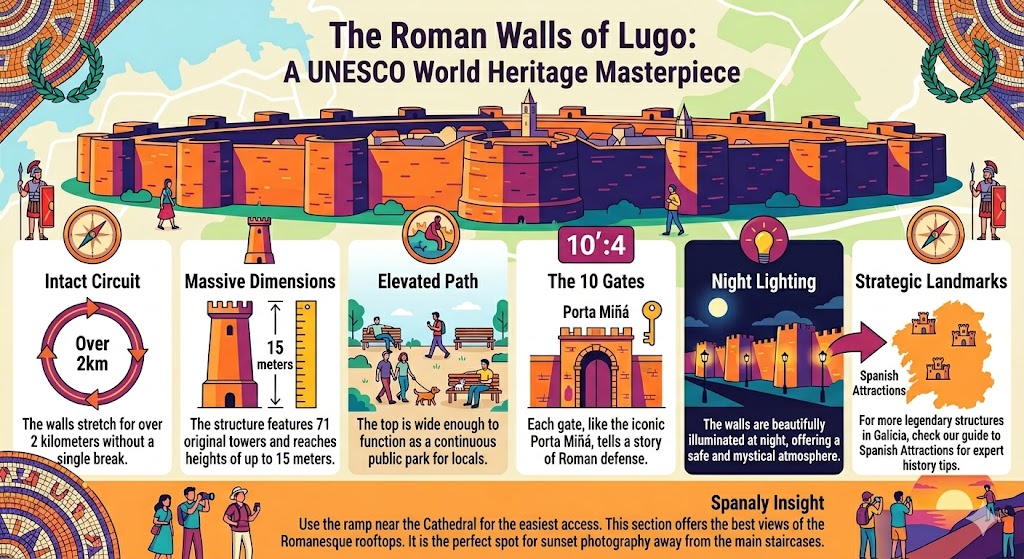
The Roman walls of Lugo are a marvel of ancient military engineering. They are the only fortifications in the world that remain entirely intact today. Walking along the top provides a unique perspective on both ancient and modern city life.
Intact Circuit: The walls stretch for over 2 kilometers without a single break.
Massive Dimensions: The structure features 71 original towers and reaches heights of up to 15 meters.
Elevated Path: The top is wide enough to function as a continuous public park for locals.
The 10 Gates: Each gate, like the iconic Porta Miñá, tells a story of Roman defense.
Night Lighting: The walls are beautifully illuminated at night, offering a safe and mystical atmosphere.
Strategic Landmarks: For more legendary structures in Galicia, check our guide to Spanish Attractions for expert history tips.
Spanaly Insight: Use the ramp near the Cathedral for the easiest access. This section offers the best views of the Romanesque rooftops. It is the perfect spot for sunset photography away from the main staircases.
⛪ Lugo Cathedral: Architecture and the Perpetual Miracle
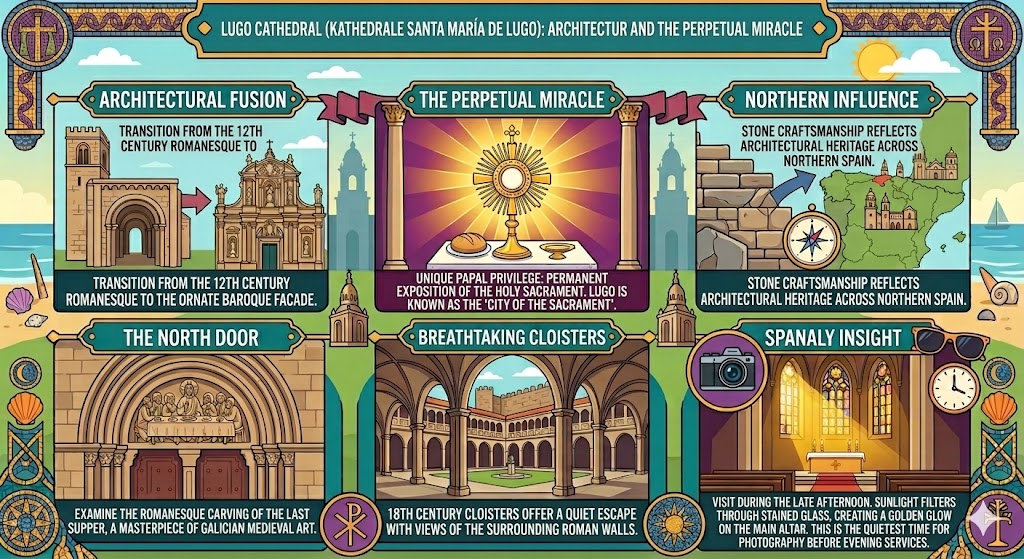
The Cathedral of Santa María is a fascinating mix of Romanesque, Gothic, and Baroque styles. It holds a unique privilege granted by the Pope: the permanent exposition of the Holy Sacrament.
Architectural Fusion: Admire the transition from the 12th-century Romanesque nave to the ornate Baroque facade.
The Perpetual Miracle: Lugo is known as the “City of the Sacrament” due to this unique religious tradition.
Northern Influence: The cathedral’s stone craftsmanship reflects the architectural heritage found in the best places to visit in Northern Spain.
The North Door: Examine the Romanesque carving of the Last Supper, a masterpiece of Galician medieval art.
Breathtaking Cloisters: The 18th-century cloisters offer a quiet escape with views of the surrounding Roman walls.
Spanaly Insight: Visit during the late afternoon. The sunlight filters through the stained glass, creating a golden glow on the main altar. This is the quietest time for photography before the evening services begin.
🏺 Roman Heritage: Domus del Mitreo and Museums
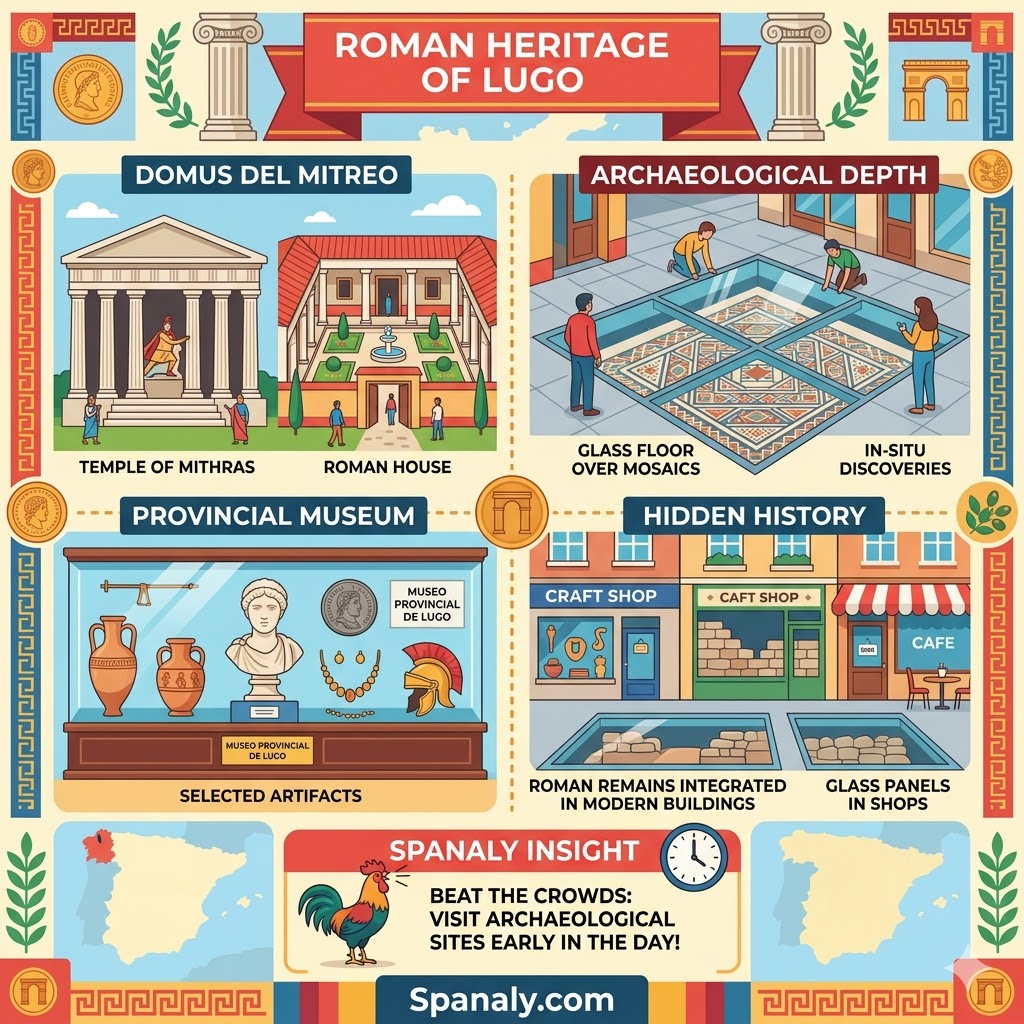
Lugo is a living archaeological site where modern streets hide ancient Roman villas. Exploring these underground treasures reveals the sophisticated lifestyle of the elite in Lucus Augusti.
Domus del Mitreo: Explore an excavated Roman house featuring a rare temple dedicated to the god Mithras.
Archaeological Depth: Walk over glass floors to see preserved mosaics and heating systems from the 3rd century.
Provincial Museum: Discover one of the finest collections of Roman inscriptions and daily life artifacts in Galicia.
Hidden History: Many local shops in the center have glass panels showing Roman foundations beneath their floors.
Strategic Planning: To fit these archaeological stops into your trip, follow our Santiago de Compostela Itinerary for regional connection ideas.
Spanaly Insight: Visit the Domus del Mitreo early. The site is intimate and limits the number of visitors at once. It offers a much closer look at Roman domestic life than the larger city walls.
🏘️ Plaza Mayor and the Old Town: The Heart of Lugo
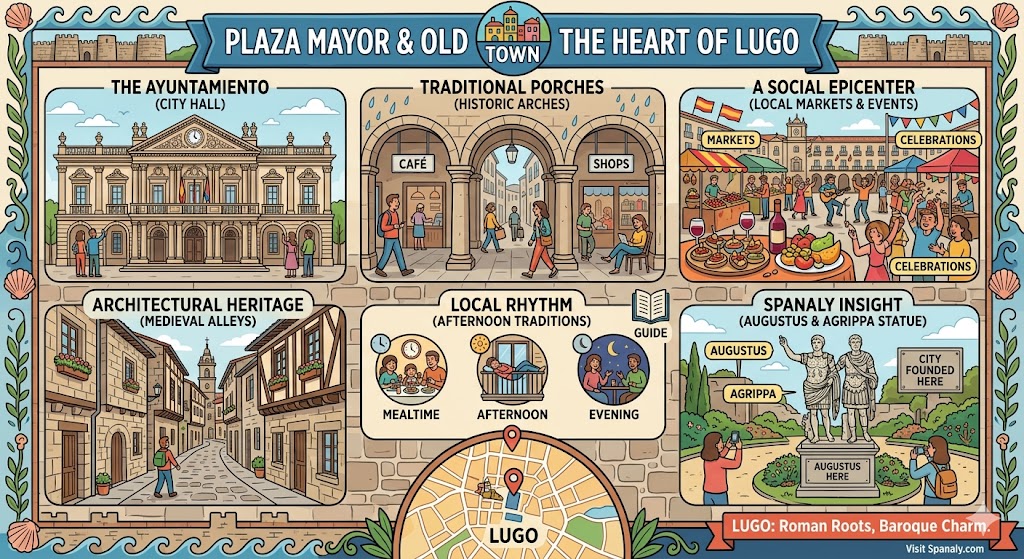
The Plaza Mayor serves as the grand “living room” of Lugo, where centuries of history meet modern Galician life. It is an elegant, wide space perfect for observing the city’s unique blend of Roman roots and Baroque charm.
The Ayuntamiento: Admire the 18th-century City Hall, widely considered one of the finest examples of Galician Baroque architecture in the region.
Traditional Porches: Walk beneath the historic stone arches where locals have gathered for centuries to escape the rain and visit traditional shops.
A Social Epicenter: This square remains the primary venue for local markets and cultural celebrations, keeping the community spirit alive and vibrant.
Architectural Heritage: Wander into the nearby narrow alleys to find medieval stone houses that have stood firm since the Middle Ages.
Local Rhythm: To master the art of the Spanish afternoon and mealtime traditions, check our guide to the Spain daily rhythm.
Spanaly Insight: Don’t miss the statue of Augustus and Agrippa near the gardens. It is more than a photo spot; it marks the very spot where the Roman city was officially founded.
🛁 Roman Baths of Lugo: Ancient Wellness by the Miño River
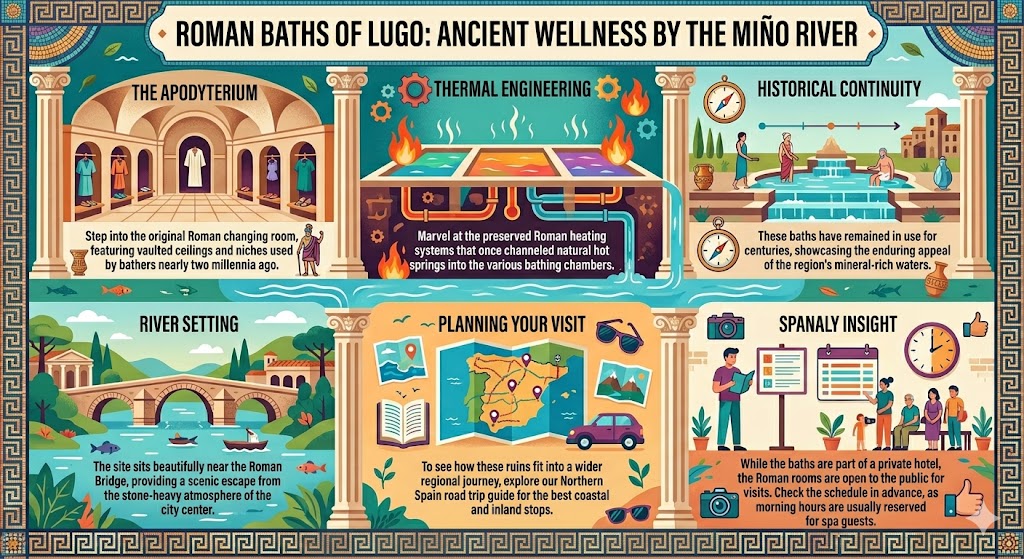
Located inside the Hotel Balneario de Lugo, these ancient thermal baths offer a rare look at Roman leisure culture. They prove that the residents of Lucus Augusti valued wellness and social connection as much as military defense.
The Apodyterium: Step into the original Roman changing room, featuring vaulted ceilings and niches used by bathers nearly two millennia ago.
Thermal Engineering: Marvel at the preserved Roman heating systems that once channeled natural hot springs into the various bathing chambers.
Historical Continuity: These baths have remained in use for centuries, showcasing the enduring appeal of the region’s mineral-rich waters.
River Setting: The site sits beautifully near the Roman Bridge, providing a scenic escape from the stone-heavy atmosphere of the city center.
Planning Your Visit: To see how these ruins fit into a wider regional journey, explore our Northern Spain road trip guide for the best coastal and inland stops.
Spanaly Insight: While the baths are part of a private hotel, the Roman rooms are open to the public for visits. Check the schedule in advance, as morning hours are usually reserved for spa guests.
🍽️ Gastronomy: The Ultimate Tapas Culture in Lugo
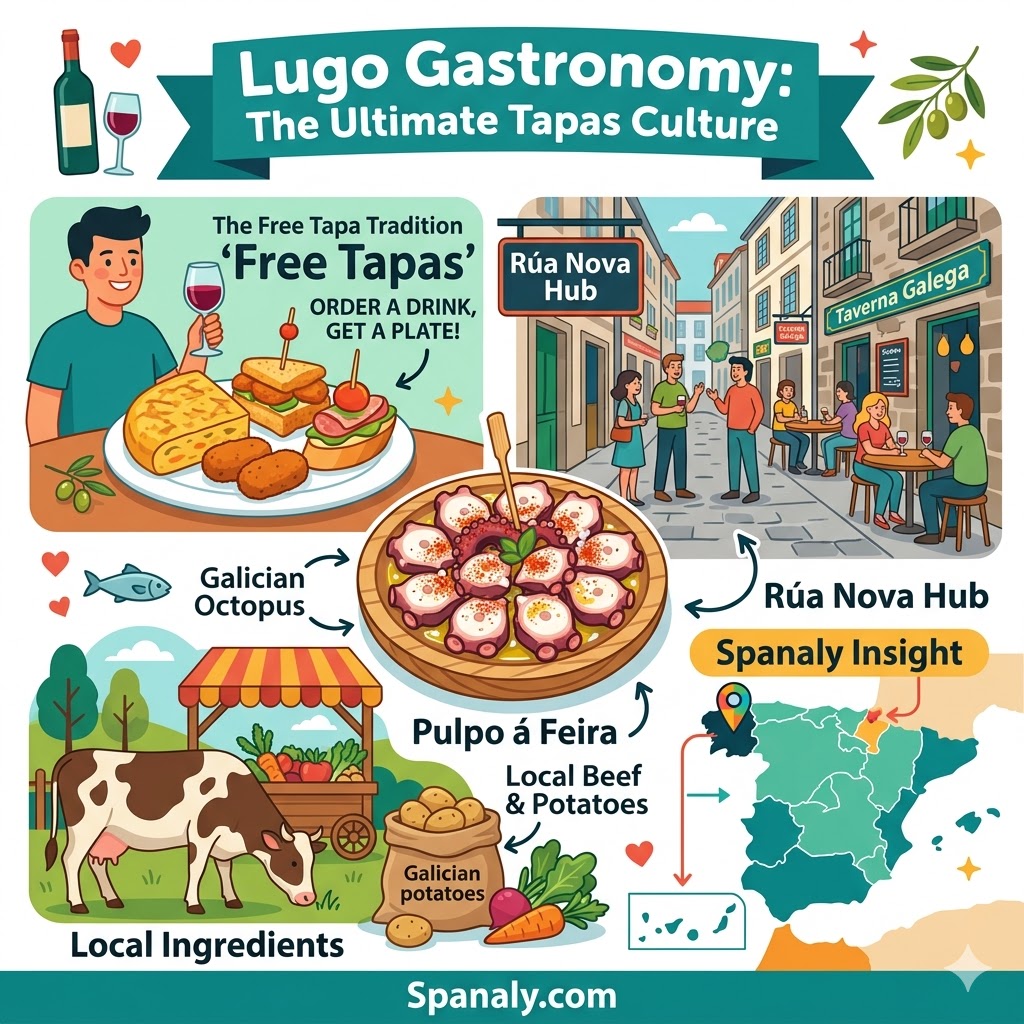
Eating in Lugo is a ritual that defines the city’s social fabric and generous hospitality. It remains one of the few places in Spain where the tradition of the free, high-quality “tapa” is strictly preserved and celebrated.
The Free Tapa Tradition: Order any drink in the old town to receive a complimentary, generous plate of local delicacies ranging from Spanish omelet to slow-cooked stews.
The Rúa Nova Hub: Wander through this legendary street to find a high concentration of traditional taverns like Mesón de Alberto, known for its classic Galician flavors.
Pulpo à Feira: You cannot leave without visiting A Lareira to try the iconic Galician octopus, typically served on wooden plates with olive oil and spicy pimentón.
Local Ingredients: Establishments like Restaurante España showcase the quality of fertile Galician soil, offering exceptional beef and locally sourced potatoes with extraordinary depth.
Ordering Like a Pro: To navigate the busy bars and understand the local dining etiquette, read our guide on how to order food like a local in Spain.
Spanaly Insight: Focus your culinary crawl on the “Zona de Vinos” near the Cathedral. This area offers the most authentic atmosphere where local residents gather before dinner for their daily social rounds.
🎭 Arde Lucus Festival: Reliving the Roman Past
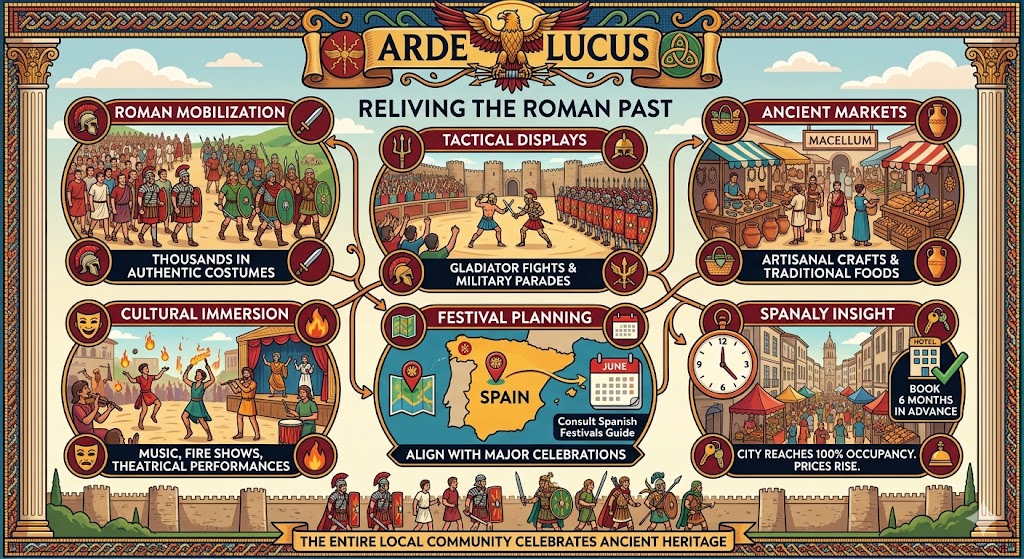
The Arde Lucus festival is a spectacular transformation that turns Lugo into a living Roman camp every June. It is a massive historical reenactment where the entire local community celebrates its ancient heritage with passion and detail.
Roman Mobilization: Watch as thousands of residents dress in authentic Roman and Celtic costumes to reenact ancient battles and daily life in the streets.
Tactical Displays: Experience the thrill of gladiator fights and military parades held under the shadow of the original Roman fortifications.
Ancient Markets: Wander through the Macellum to find artisanal crafts and traditional foods prepared using techniques that honor the city’s 2,000-year-old history.
Cultural Immersion: The atmosphere is electric, with music, fire shows, and theatrical performances filling the plazas from dawn until long after sunset.
Festival Planning: To see how this event aligns with other major celebrations across the country, consult our guide to Spanish Festivals.
Spanaly Insight: If you plan to visit during Arde Lucus, book your accommodation at least six months in advance. The city reaches 100% occupancy during the festival weekend, and prices rise significantly as the date approaches.
📍 Day Trips from Lugo: Ribeira Sacra and Beyond
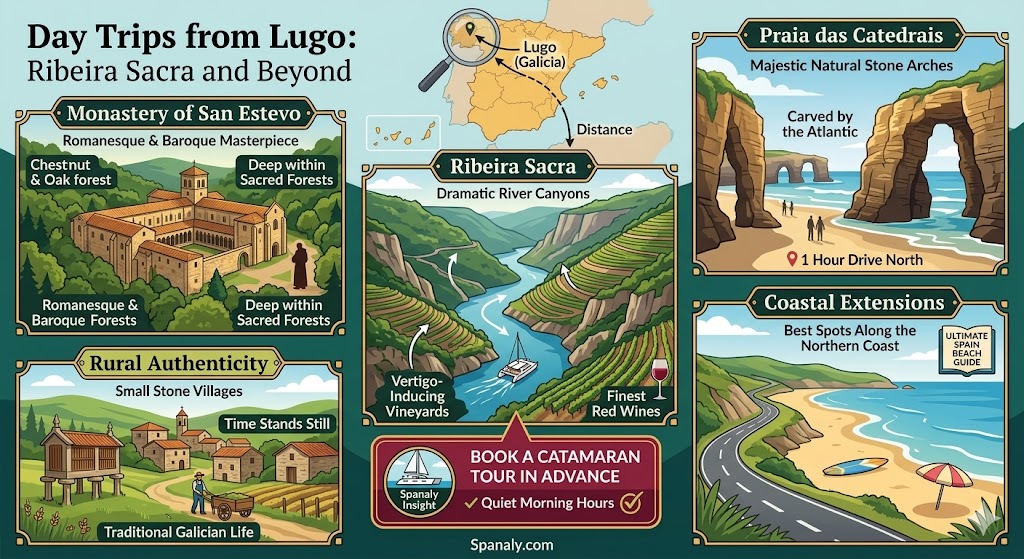
Lugo is strategically positioned to serve as your gateway to the hidden gems of inland Galicia. Exploring the surrounding landscape reveals a world of dramatic river canyons, ancient monasteries, and lush vineyards.
Ribeira Sacra: Experience the breathtaking scenery of the Sil River canyons, where vertigo-inducing vineyards produce some of the region’s finest red wines.
Monastery of San Estevo: Discover a stunning Romanesque and Baroque masterpiece hidden deep within the chestnut forests of the sacred riverbanks.
Praia das Catedrais: Visit this world-famous beach to witness the majestic natural stone arches carved by the Atlantic, located just an hour’s drive north.
Rural Authenticity: Drive through small stone villages where time seems to stand still, offering a glimpse into the traditional Galician way of life.
Coastal Extensions: If you plan to head toward the ocean after your stay, explore our Ultimate Spain Beach Guide for the best spots along the northern coast.
Spanaly Insight: For the Ribeira Sacra trip, book a catamaran tour in advance. Seeing the canyons from the water level provides a completely different perspective than the viewpoints above, especially during the quiet morning hours.
🛣️ Getting to Lugo: Transport Links and Access
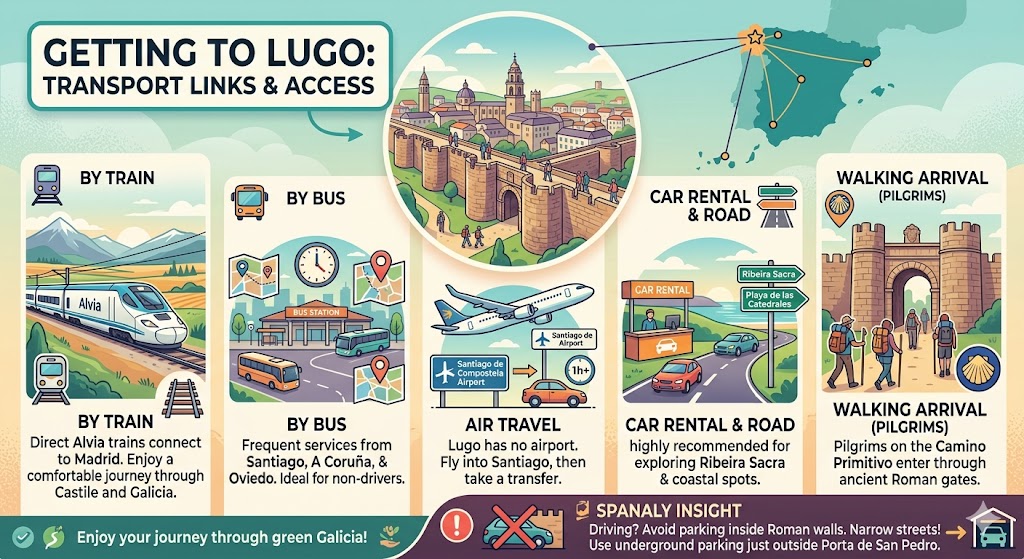
Lugo is well-connected to the rest of Galicia and major Spanish cities, making it an accessible stop for any northern itinerary. Whether arriving by road or rail, the journey through the green Galician landscape is part of the experience.
By Train: Regular Alvia trains connect Lugo directly to Madrid, offering a comfortable journey through the scenic plains of Castile and the mountains of Galicia.
By Bus: The central bus station provides frequent services to Santiago de Compostela, A Coruña, and Oviedo, which is ideal for those traveling without a car.
Car Rentals: Renting a vehicle is highly recommended for those wishing to explore the Ribeira Sacra or the nearby Playa de las Catedrales.
Air Travel: While Lugo has no commercial airport, travelers typically fly into Santiago de Compostela Airport, which is located just over an hour away by road.
Walking Arrival: Many pilgrims on the Primitive Way (Camino Primitivo) enter the city through the historic Roman gates, continuing a tradition that has lasted for over a thousand years.
Spanaly Insight: If you are driving, avoid trying to find parking inside the Roman walls. The streets are narrow and mostly pedestrian. Use the large underground parking lots just outside the “Porta de San Pedro” for a stress-free arrival.
🏨 Where to Stay: Best Hotels with Roman Views
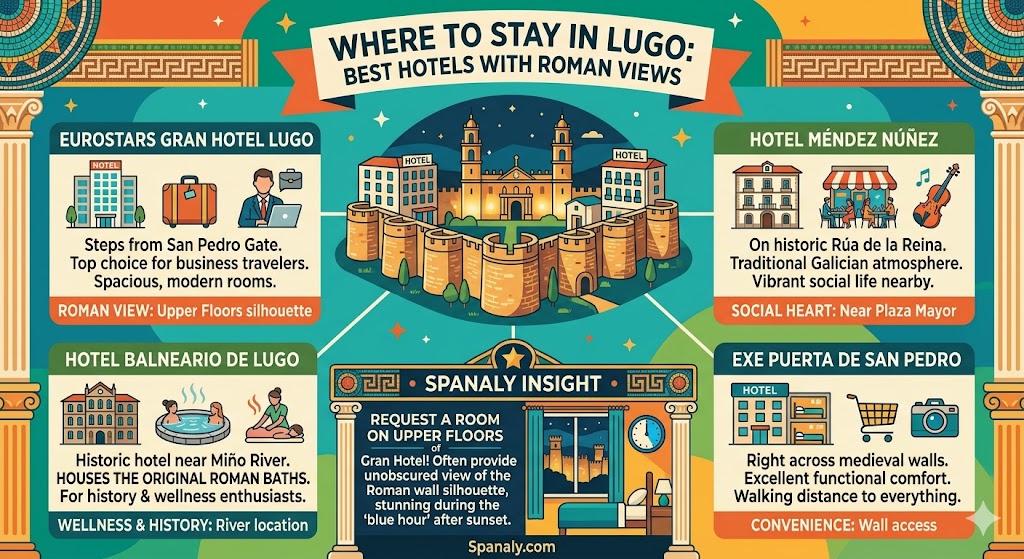
Choosing the right accommodation in Lugo means deciding between the historic charm of the old town and modern convenience just outside the walls. Staying near the fortifications allows you to witness the magical night lighting of the UNESCO site directly from your window.
Eurostars Gran Hotel Lugo: Located just steps from the San Pedro gate, this hotel offers spacious, modern rooms and is the top choice for business travelers.
Hotel Méndez Núñez: This classic establishment sits on the iconic Rúa de la Reina, providing a traditional Galician atmosphere surrounded by the city’s most vibrant social life.
Hotel Balneario de Lugo: Situated near the Miño River, this historic hotel houses the original Roman baths, making it the ultimate destination for history and wellness enthusiasts.
Exe Puerta de San Pedro: Positioned right across from the medieval walls, this hotel provides excellent functional comfort for those who want to be within walking distance of everything.
Strategic Planning: To compare these stays with other top destinations in the region, check our guide on accommodation in Spain for booking tips and local standards.
Spanaly Insight: Request a room on the upper floors of the Gran Hotel. These rooms often provide an unobstructed view of the Roman wall’s silhouette, which is particularly stunning during the “blue hour” just after sunset.
🌤️ Best Time to Visit Lugo: Seasons and Festivals
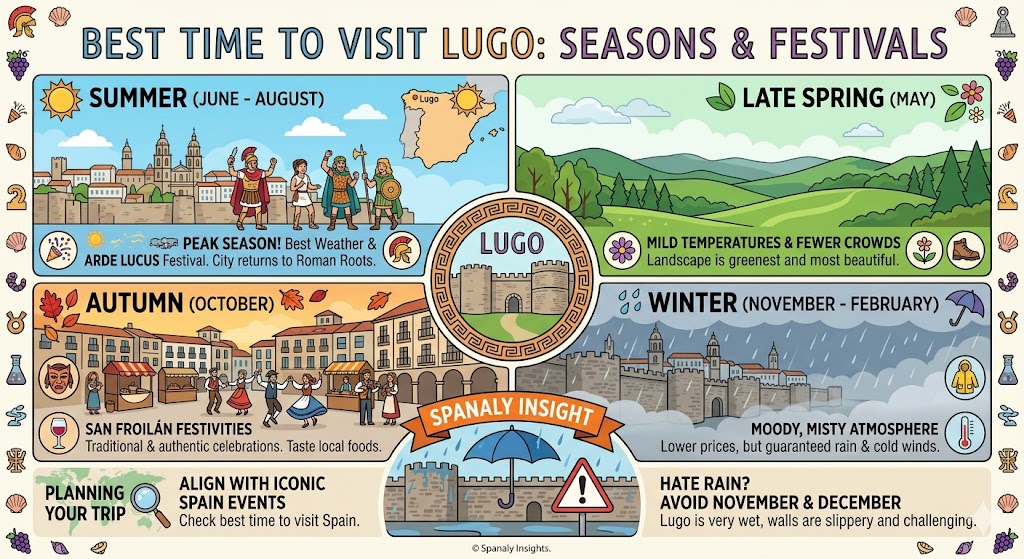
Lugo is a city that changes its soul with the weather, offering a different experience from the misty winter mornings to the vibrant summer nights. Choosing the right month depends on whether you prefer cultural festivals or quiet walks on the ancient walls.
Summer (June to August): This is the peak season, offering the best weather and the famous Arde Lucus festival, where the city returns to its Roman roots.
Late Spring (May): A perfect time for those who enjoy mild temperatures and fewer crowds, as the Galician landscape is at its greenest and most beautiful.
Autumn (October): Visit during early October to experience the San Froilán festivities, which are among the most traditional and authentic celebrations in Galicia.
Winter (November to February): Ideal for travelers seeking a moody, misty atmosphere and lower accommodation prices, though frequent rain and cold winds are guaranteed.
Planning Your Trip: To align your visit with the most iconic events across the country, check our guide to the best time to visit northern Spain.
Spanaly Insight: If you hate rain, avoid November and December at all costs. Lugo is one of the wettest cities in Spain during these months, making the walk on top of the Roman walls slippery and quite challenging.
⏳ Lugo in 24 Hours: The Integrated Itinerary
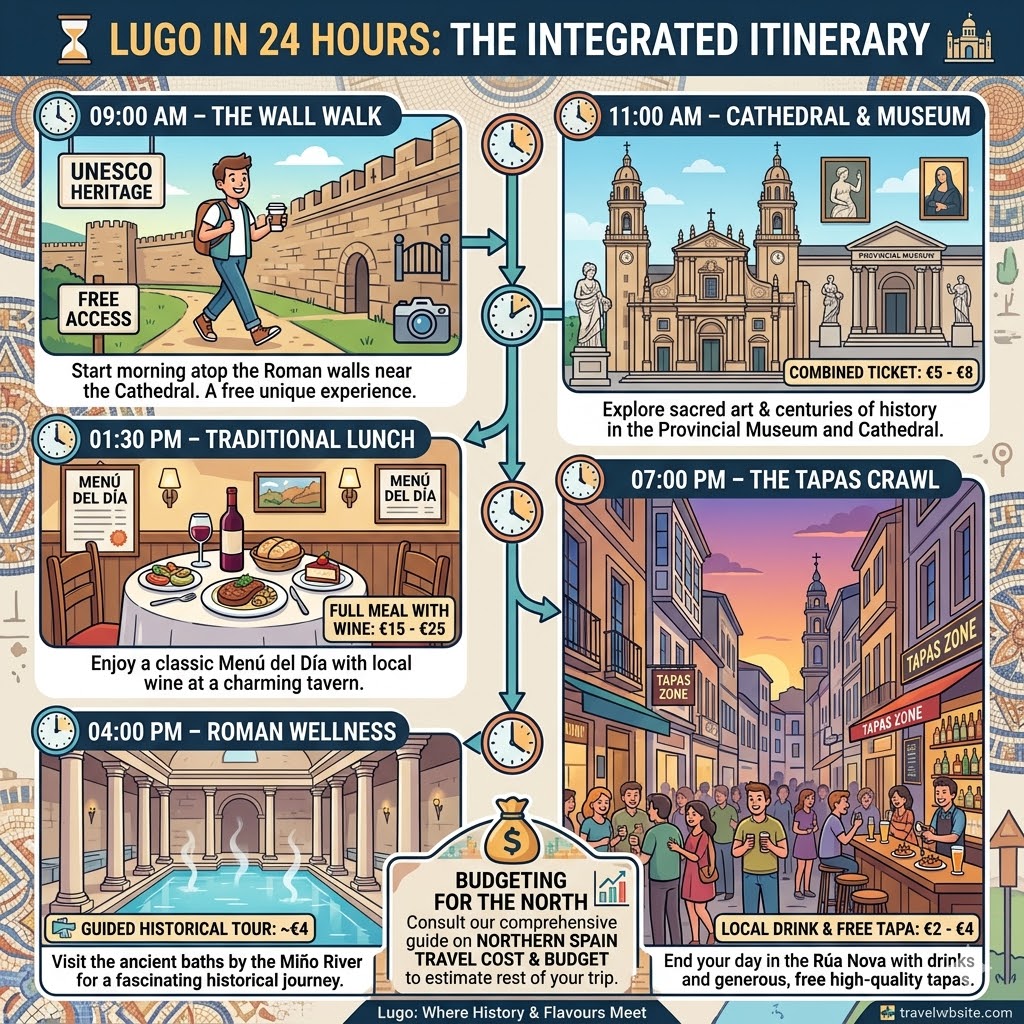
This plan balances historical exploration with Galician culinary delights, ensuring you see the best of Lugo without feeling rushed.
09:00 AM – The Wall Walk: Start your morning with a refreshing walk atop the Roman walls near the Cathedral, a unique UNESCO experience that remains completely free of charge for all visitors.
11:00 AM – Cathedral & Museum: Descend to explore the Santa María Cathedral and the Provincial Museum, where a modest combined entrance fee of €5 to €8 grants you access to centuries of sacred art.
01:30 PM – Traditional Lunch: Head to Restaurante España or Mesón de Alberto for a classic “Menú del Día,” which typically costs between €15 and €25 for a full three-course meal including local wine.
04:00 PM – Roman Wellness: Walk down to the Miño River to visit the ancient Roman Baths inside the Balneario, where a guided historical tour is available for approximately €4 per person.
07:00 PM – The Tapas Crawl: End your day in the Zona de Vinos (Rúa Nova), where you can enjoy local drinks for €2 to €4 each, always accompanied by a generous, high-quality free tapa.
Budgeting for the North: To accurately estimate your expenses for the rest of your trip, consult our comprehensive guide on Northern Spain travel cost and budget.
💡 Spanaly Insider Tips: Master Lugo Like a Local

These exclusive insights are gathered from local community discussions and frequent travelers who know the hidden rhythms of the city beyond the Roman walls.
The Sunset “Wall Hack”: Don’t just walk the wall at noon; the best lighting for photography is from the A Mosquera section during the “Blue Hour” when the Roman arches glow against the modern city lights.
The “Double Tapa” Strategy: In bars near Plaza del Campo, if you order a “corto” (small beer), you still get the full-sized free tapa, allowing you to sample twice as many places for the same price.
The Cathedral’s Hidden View: Ask the sacristan or check the side entrance of the Cathedral for access to the triforium; it offers a rare, elevated interior view that most tourists completely overlook.
Avoiding the “Octopus Trap”: While many places serve octopus, locals head to the shacks (casetas) during the San Froilán festivities or specific traditional “Pulperías” outside the main square for the most authentic texture.
Vertical Navigation: If you are tired, use the public elevator located near the San Roque gate to reach the top of the wall without climbing the steep Roman stone stairs.
Niche Souvenirs: Forget cheap magnets; look for Sargadelos ceramics, a high-end Galician artistic tradition with a dedicated boutique in Lugo that represents the soul of northern design.
Spanaly Insight: Always carry a small physical map or download an offline version. The thick Roman walls and narrow stone alleys of the old town often create “GPS dead zones,” making digital navigation surprisingly tricky.
🛡️ Visitor FAQs – Lugo Travel Essentials & Logistics
🏰 Is there an entrance fee to walk the Roman Walls?
No, access to the UNESCO Roman Walls is completely free. You can climb up at any of the public staircases or the accessible ramp near the Cathedral. The circuit is open 24/7, offering a unique opportunity for a midnight stroll above the city lights.
👗 What is the dress code for the Arde Lucus festival?
While costumes are not mandatory, wearing Roman or Celtic attire is highly encouraged to fully immerse yourself in the atmosphere. Many local shops sell affordable tunics. If you visit in June, prioritize comfortable footwear, as you will be walking between various historical reenactment camps.
🍖 Is Lugo suitable for vegetarians given its meat-heavy cuisine?
Yes, despite its reputation for beef and octopus, Lugo has a growing vegetarian scene. Most tapas bars now offer Pimientos de Padrón, local cheeses, and Spanish tortilla. For a dedicated meal, look for modern bistros near the Plaza de la Soledad that specialize in Galician garden produce.
🔌 Are there luggage storage facilities for day-trippers?
Yes, the Lugo Bus Station provides secure lockers for travelers. This is particularly useful for pilgrims on the Camino Primitivo who wish to explore the Roman ruins without their heavy backpacks. Additionally, some private shops near the Roman walls offer "Stasher" style luggage services.
♿ How accessible are the Roman ruins for wheelchairs?
The city has made significant efforts toward accessibility. There is a modern elevator specifically designed to take wheelchairs to the top of the Roman walls. However, some ancient sites like the Roman Baths have limited access due to their underground nature and preserved stone structures.
Lugo Guide by Spanaly.com
Lugo is not just a destination; it is a profound journey through time where the Roman Empire’s echoes still resonate in every stone. It offers a rare blend of ancient strength and warm Galician hospitality that leaves a lasting impression on every traveler.
A Living Monument: Walking the Roman walls provides a perspective on history that few other cities in the world can match.
Cultural Soul: From the vibrant energy of the Arde Lucus festival to the quiet majesty of the Cathedral, the city’s spirit is undeniable.
Culinary Excellence: The tradition of free tapas and world-class seafood ensures your taste buds remember Lugo as much as your eyes do.
The Journey Continues: For those drawn to the mystical edges of Galicia after exploring the Roman interior, we recommend following the path to the “End of the World” in our Finisterre and Muxia guide.
Authentic Spain: If you seek a destination where history is lived rather than just displayed, Lugo is your essential northern stop.
Spanaly Insight: Don’t rush your departure. Spend your final hour sitting in the Plaza Mayor with a coffee, watching the light change on the stone facades. It is in these quiet moments that the true magic of Lugo finally reveals itself.