Table of Contents
Toggle📍 Camino de Santiago
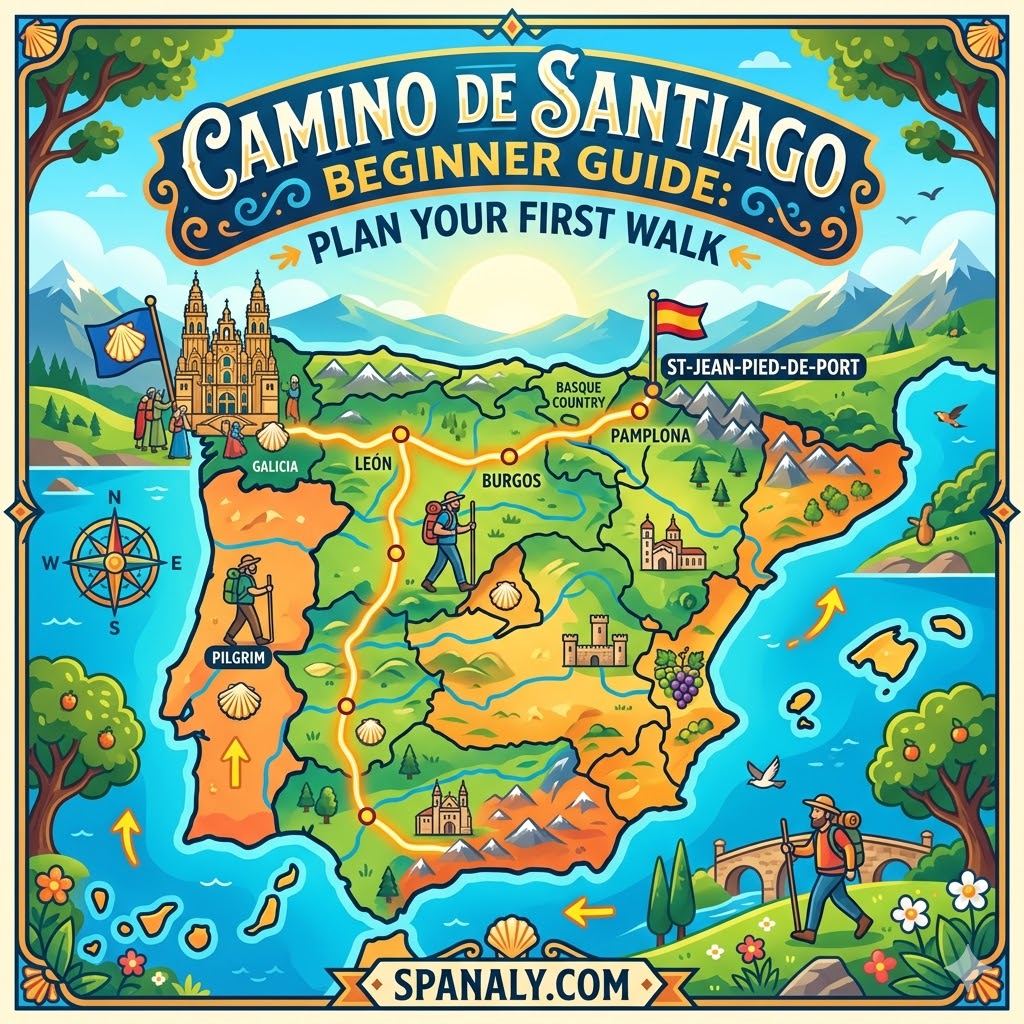
Few experiences in Spain compare to the magic of walking the ancient trails toward Santiago de Compostela. Whether you seek spiritual growth or a scenic adventure, this Camino de Santiago Beginner Guide provides the essential roadmap for your first pilgrimage.
🛤️ Choose Your Route: Select the best path based on your fitness level and available time.
🎒 Pack Like a Pro: Learn how to carry only what you truly need for a comfortable walk.
🐚 Cultural Immersion: Discover the local traditions and historic landmarks that define the Galician soul.
🗺️ Regional Planning: To see how this pilgrimage fits into the wider coast, consult our Ultimate Northern Spain Travel Guide for expert regional insights.
Stepping onto the trail means leaving the modern world behind to find a rhythm dictated by the sun and your own footsteps. Grab your boots and let the yellow arrows lead you to an unforgettable Atlantic escape.
📌 Camino Snapshot: Essential Logistics
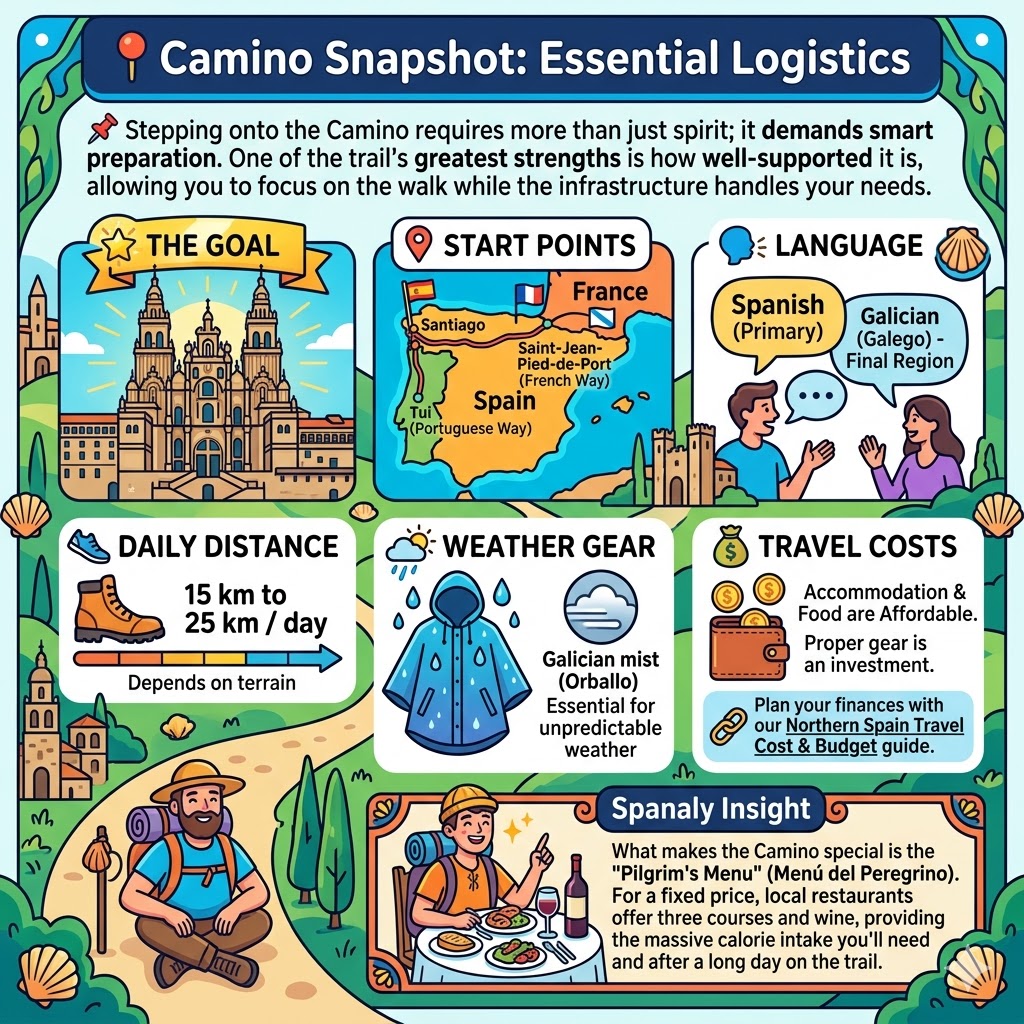
Stepping onto the Camino requires more than just spirit; it demands smart preparation. The infrastructure here is surprisingly robust, allowing you to focus on the walk while your needs are handled.
📍 Start Points: Common gates include Saint-Jean-Pied-de-Port (French Way) or Tui (Portuguese Way).
🗣️ Language: Spanish is primary, but Galician (Galego) welcomes you as you enter the final region.
🌟 The Goal: The Cathedral of Santiago de Compostela, where every path converges.
👟 Daily Distance: Most beginners cover between 15 to 25 kilometers per day depending on terrain.
🌦️ Weather Gear: A high-quality rain poncho is essential for the unpredictable Galician mist (Orballo).
💰 Travel Costs: Accommodation and food are affordable, but proper gear is an investment. Plan your finances with our Northern Spain Travel Cost & Budget guide.
Spanaly Insight: What makes the Camino special is the “Pilgrim’s Menu” (Menú del Peregrino). For a fixed price, local restaurants offer three courses and wine, providing the massive calorie intake you’ll need after a long day on the trail.
🛤️ Choosing Your Spanish Route: Classic vs. Coastal Paths
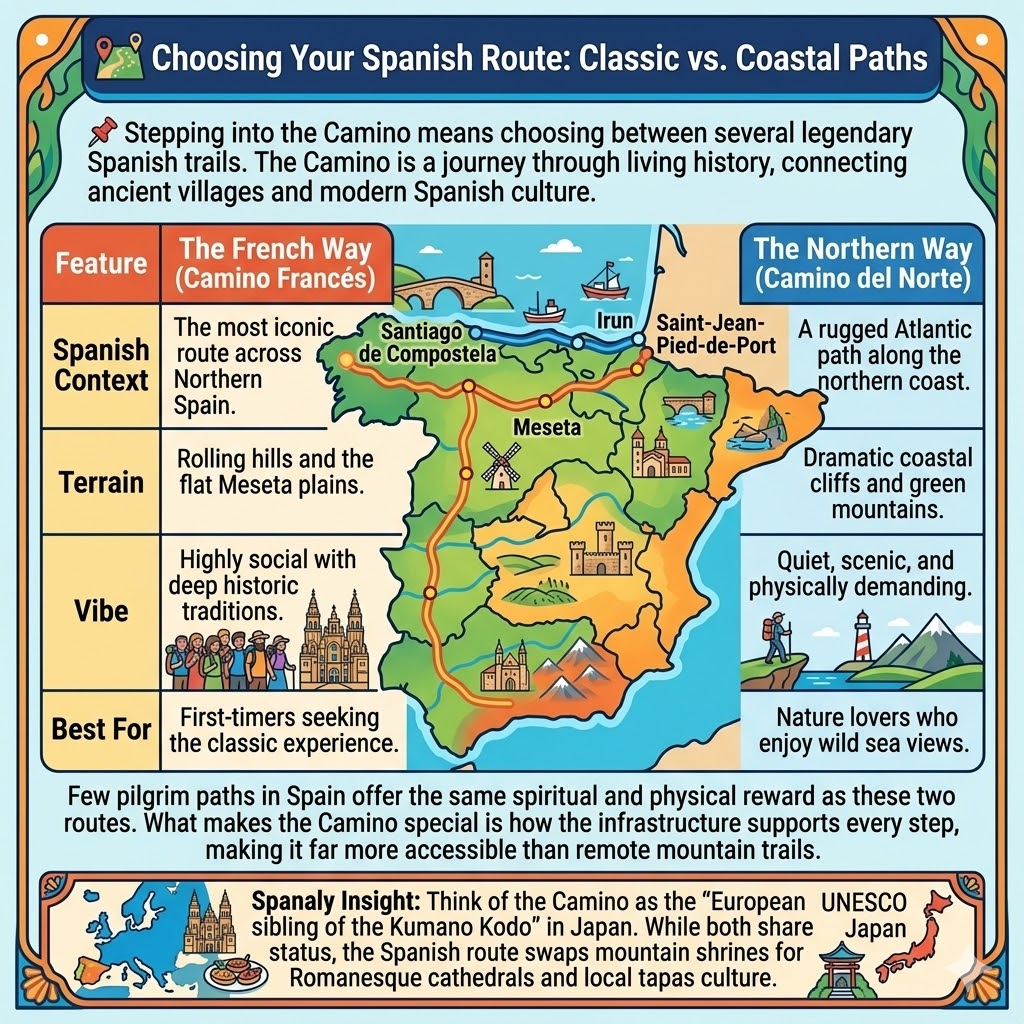
Stepping into the Camino means choosing between several legendary Spanish trails. Unlike most long-distance treks like the Appalachian Trail (USA), the Camino is a journey through living history, connecting ancient villages and modern Spanish culture.
| Feature | The French Way (Camino Francés) | The Northern Way (Camino del Norte) |
| Spanish Context | The most iconic route across Northern Spain. | A rugged Atlantic path along the northern coast. |
| Terrain | Rolling hills and the flat Meseta plains. | Dramatic coastal cliffs and green mountains. |
| Vibe | Highly social with deep historic traditions. | Quiet, scenic, and physically demanding. |
| Best For | First-timers seeking the classic experience. | Nature lovers who enjoy wild sea views. |
Few pilgrim paths in Spain offer the same spiritual and physical reward as these two routes. What makes the Camino special is how the infrastructure supports every step, making it far more accessible than remote mountain trails.
Spanaly Insight: Think of the Camino as the “European sibling of the Kumano Kodo” in Japan. While both share UNESCO status, the Spanish route swaps mountain shrines for Romanesque cathedrals and local tapas culture.
📅 Best Time to Walk the Camino de Santiago
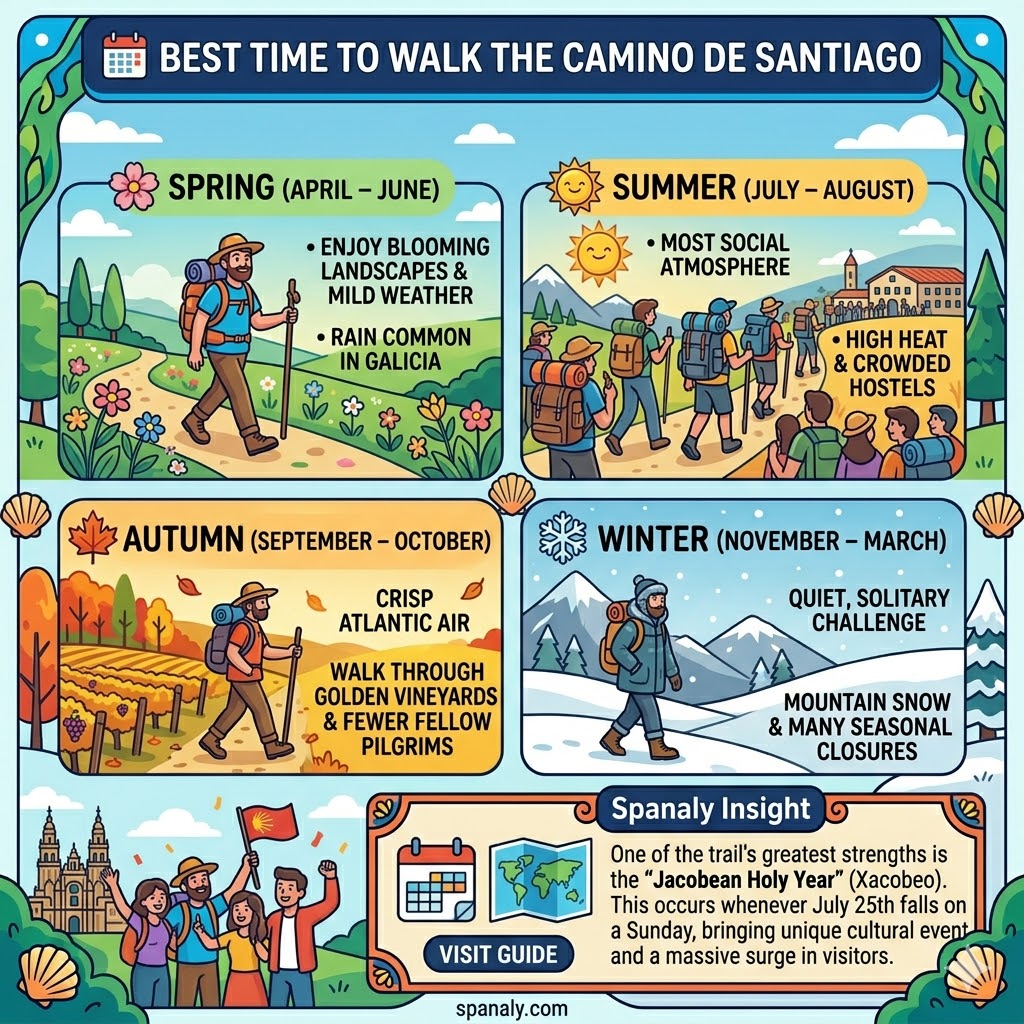
Walking through the Galician mist (Orballo) means feeling the cold dampness on your skin and hearing the rhythmic squelch of boots in the mud. Timing your pilgrimage is the most critical decision for a comfortable journey. The real charm lies in choosing a season that balances pleasant walking temperatures with manageable crowds.
🌸 Spring (April – June): Enjoy blooming landscapes and mild weather, though rain is common in Galicia.
☀️ Summer (July – August): Experience the most social atmosphere, but be prepared for high heat and crowded hostels.
🍂 Autumn (September – October): Walk through golden vineyards with crisp Atlantic air and fewer fellow pilgrims.
❄️ Winter (November – March): Face a quiet, solitary challenge with snow in the mountains and many seasonal closures.
🌦️ Weather Strategy: Check our Best Time to Visit Northern Spain for a detailed monthly climate breakdown.
Spanaly Insight: A fascinating aspect of the trail is the “Jacobean Holy Year” (Xacobeo). This occurs whenever July 25th falls on a Sunday, bringing unique cultural events and a massive surge in visitors.
🎒 Camino de Santiago Packing List for Beginners
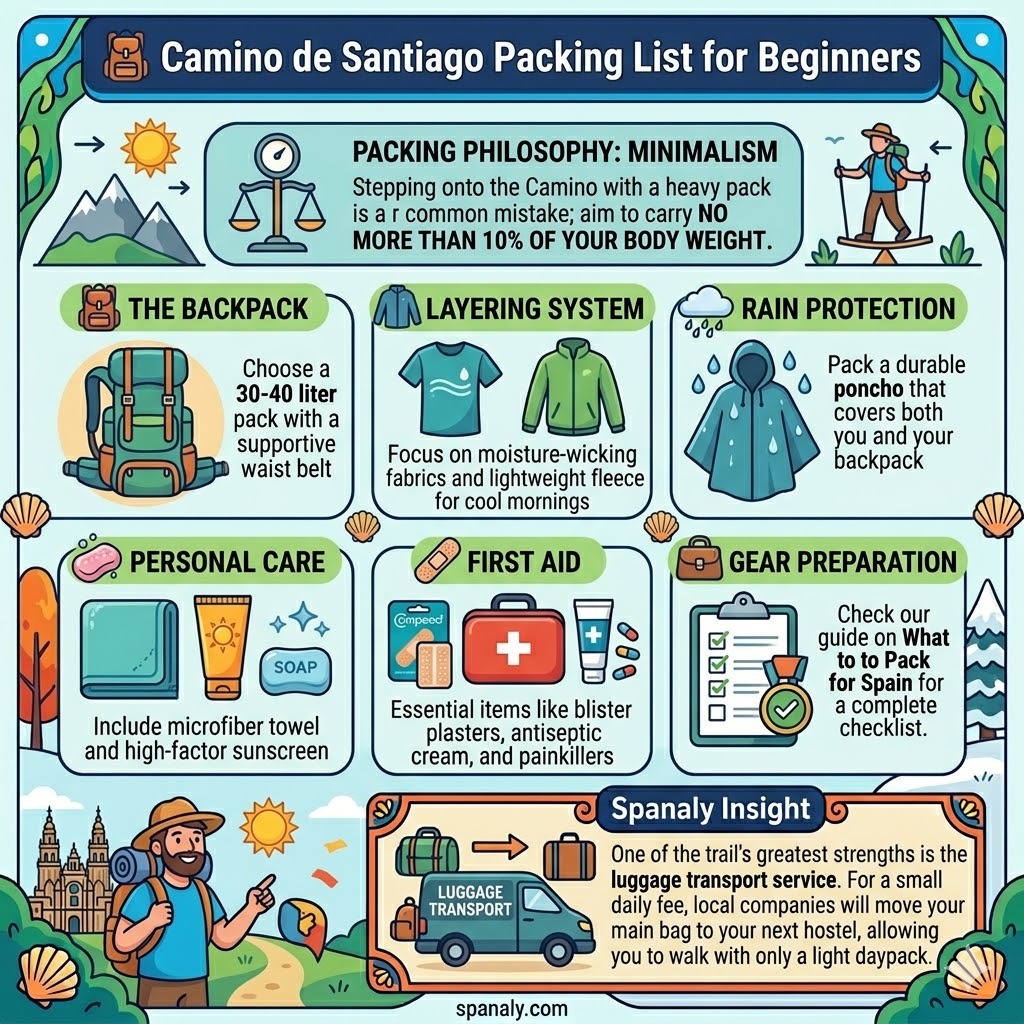
Packing for the trail is an exercise in minimalism where every gram counts. Stepping onto the Camino with a heavy pack is a common mistake; aim to carry no more than 10% of your body weight.
🎒 The Backpack: Choose a 30-40 liter pack with a supportive waist belt to distribute weight.
🧥 Layering System: Focus on moisture-wicking fabrics and a lightweight fleece for cool Galician mornings.
🌧️ Rain Protection: Pack a durable poncho that covers both you and your backpack during sudden showers.
🧼 Personal Care: Include a fast-drying microfiber towel and high-factor sunscreen for the open plains.
🩹 First Aid: Essential items include blister plasters (Compeed), antiseptic cream, and basic painkillers.
👜 Gear Preparation: Check our guide on What to Pack for Spain for a complete checklist of travel essentials.
Spanaly Insight: A major advantage of the route is the luggage transport service. For a small daily fee, local companies will move your main bag to your next hostel, allowing you to walk with only a light daypack.
👟 Best Footwear and Gear for Long-Distance Walking
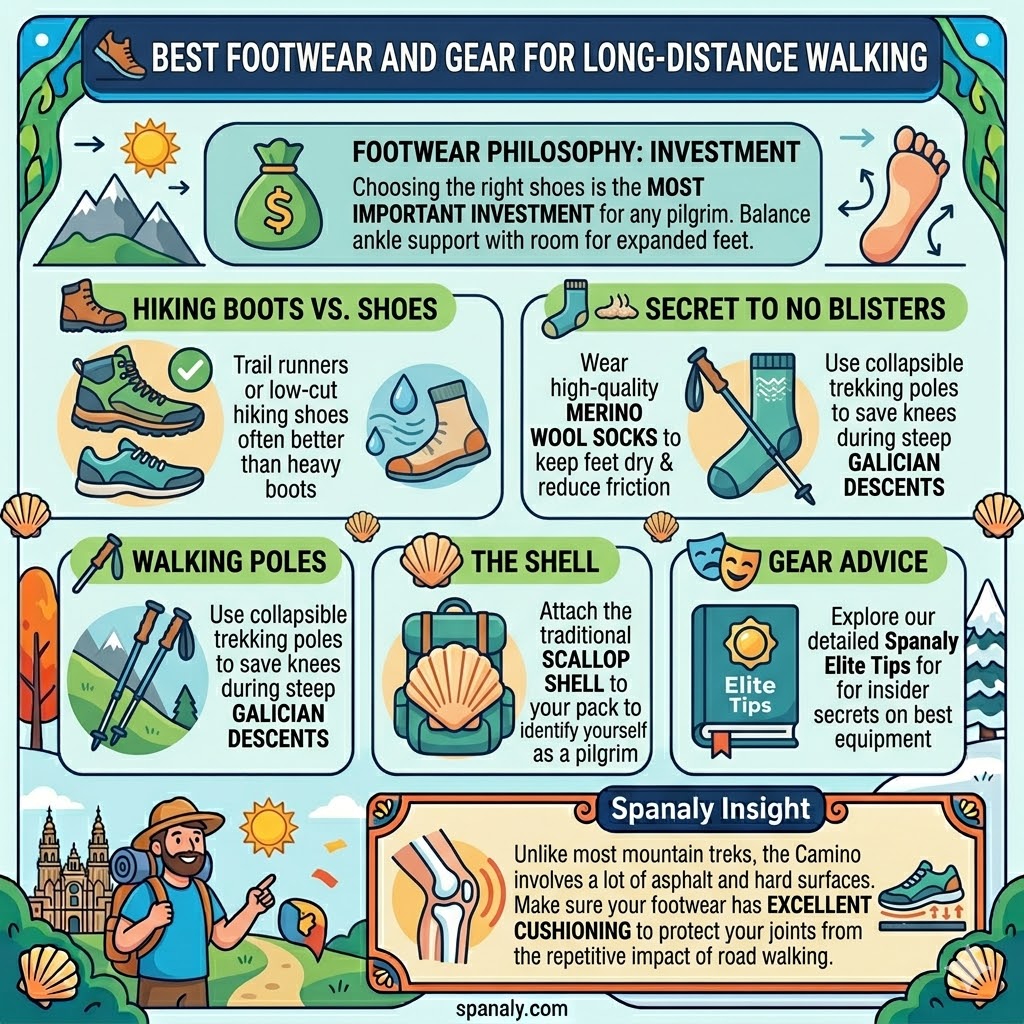
Choosing the right shoes is the most important investment for any pilgrim. The real charm lies in finding footwear that balances ankle support with enough room for your feet to expand.
🥾 Hiking Boots vs. Shoes: Trail runners or low-cut hiking shoes are often better than heavy boots for the Camino.
🧦 Secret to No Blisters: Wear high-quality merino wool socks to keep your feet dry and reduce friction.
🦯 Walking Poles: Use collapsible trekking poles to save your knees during steep Galician descents.
🐚 The Shell: Attach the traditional scallop shell to your pack to identify yourself as a pilgrim.
🎭 Gear Advice: Explore our detailed Spanaly Elite Tips for insider secrets on choosing the best walking equipment.
Spanaly Insight: Unlike most mountain treks, the Camino involves a lot of asphalt and hard surfaces. Make sure your footwear has excellent cushioning to protect your joints from the repetitive impact of road walking.
🏨 Accommodation Guide: Albergues and Hotels
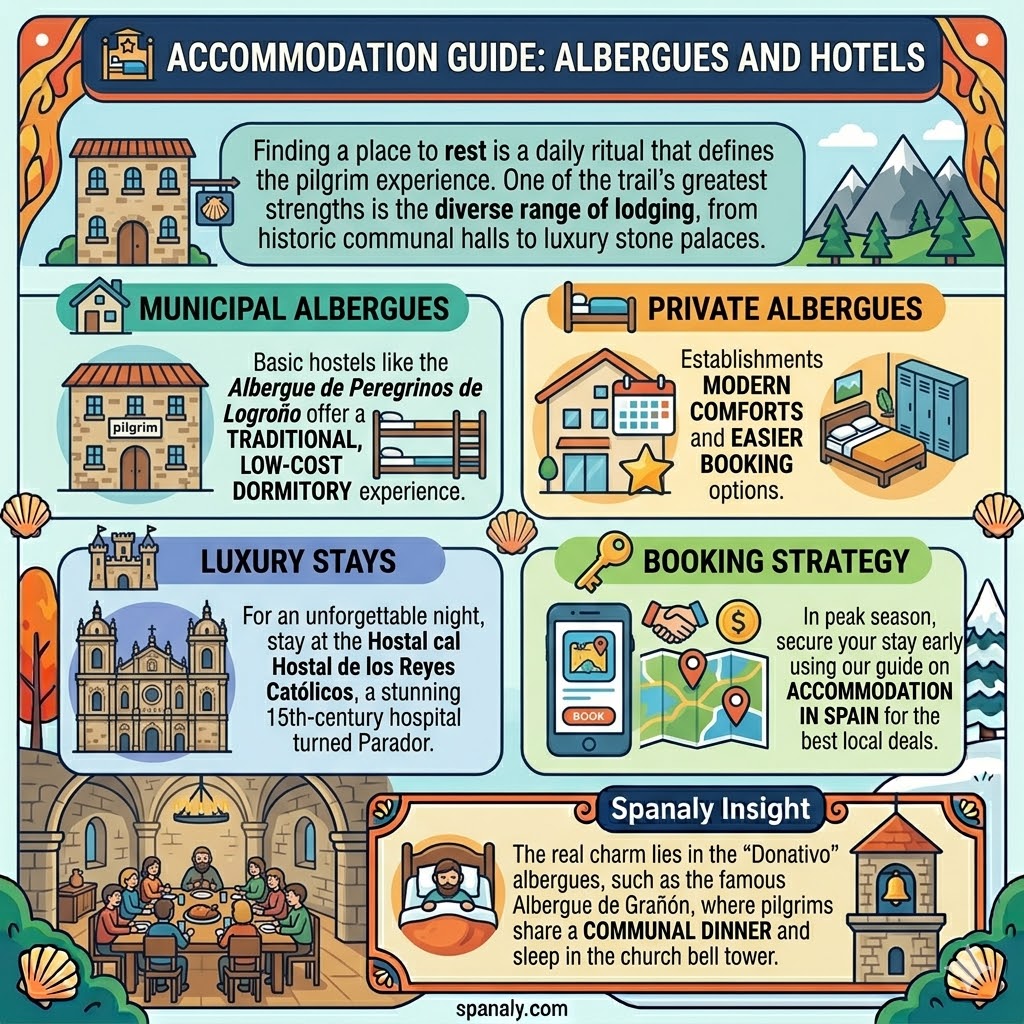
Finding a place to rest is a daily ritual that defines the pilgrim experience. What makes the Camino unique is the diverse range of lodging, from historic communal halls to luxury stone palaces. The reality of the trail often involves shared bathrooms, crowded dorms, and the early morning sound of rustling sleeping bags.
🏘️ Municipal Albergues: Basic hostels like the Albergue de Peregrinos de Logroño offer a traditional, low-cost dormitory experience.
🛌 Private Albergues: Establishments such as Albergue Sixtos no Caminho in Santiago provide modern comforts and easier booking options.
🏰 Luxury Stays: For an unforgettable night, stay at the Hostal de los Reyes Católicos, a stunning 15th-century hospital turned Parador.
🗝️ Booking Strategy: In peak season, secure your stay early using our Accommodation in Spain guide for the best local deals.
Spanaly Insight: The real charm lies in the “Donativo” albergues, such as the famous Albergue de Grañón. Here, pilgrims share a communal dinner, endure the chorus of snoring, and sleep peacefully in the church bell tower.
📜 The Pilgrim’s Credential and Compostela Certificate
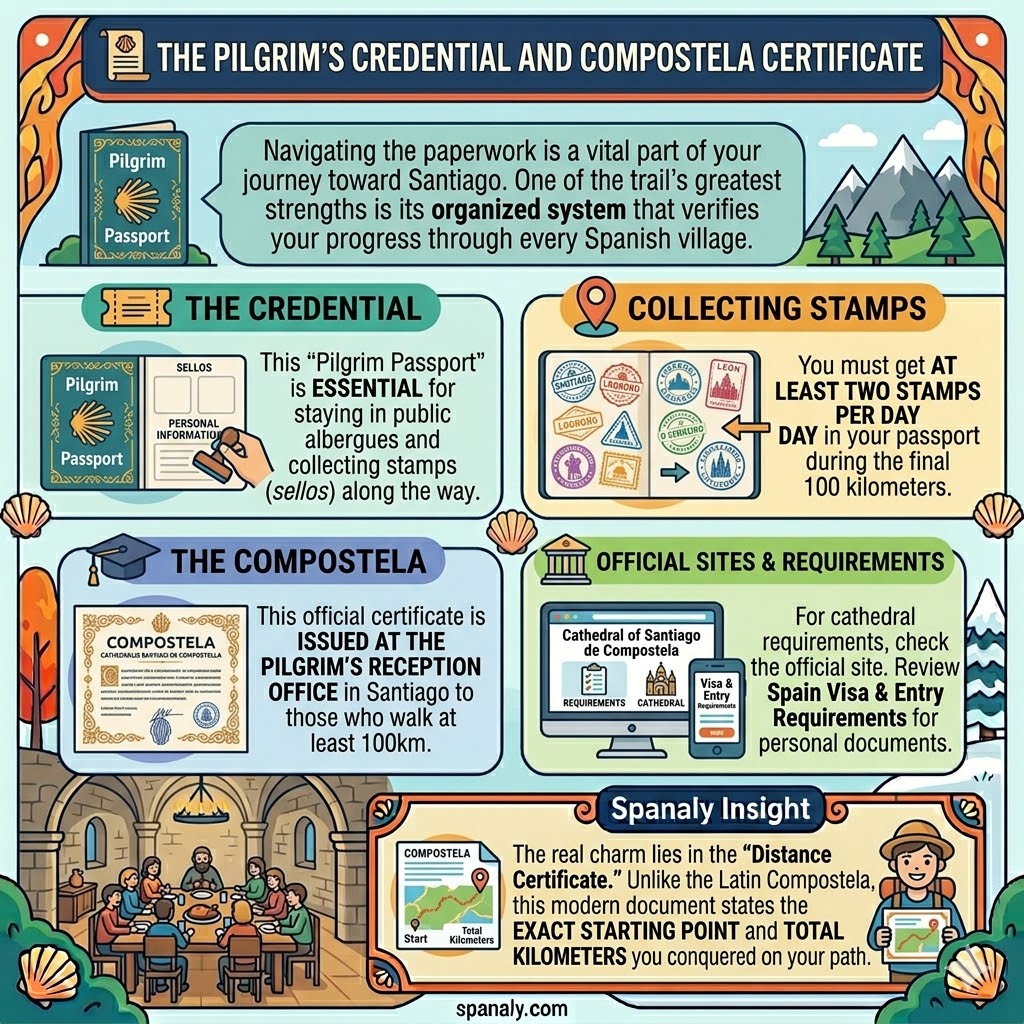
Navigating the paperwork is a vital part of your journey toward Santiago. The beauty of the pilgrimage lies in its organized system that verifies your progress through every Spanish village.
🎫 The Credential: This “Pilgrim Passport” is essential for staying in public albergues and collecting stamps (sellos) along the way.
📍 Collecting Stamps: You must get at least two stamps per day in your passport during the final 100 kilometers.
🎓 The Compostela: This official certificate is issued at the Pilgrim’s Reception Office in Santiago to those who walk at least 100km.
🏛️ Official Sites: For more details on the cathedral’s requirements, check the official site of the Cathedral of Santiago de Compostela.
🛂 Travel Readiness: Ensure your personal documents are in order by reviewing our Spain Visa & Entry Requirements.
Spanaly Insight: The real charm lies in the “Distance Certificate.” Unlike the Latin Compostela, this modern document states the exact starting point and total kilometers you conquered on your path.
💰 Camino de Santiago Budget: Daily Costs and Planning
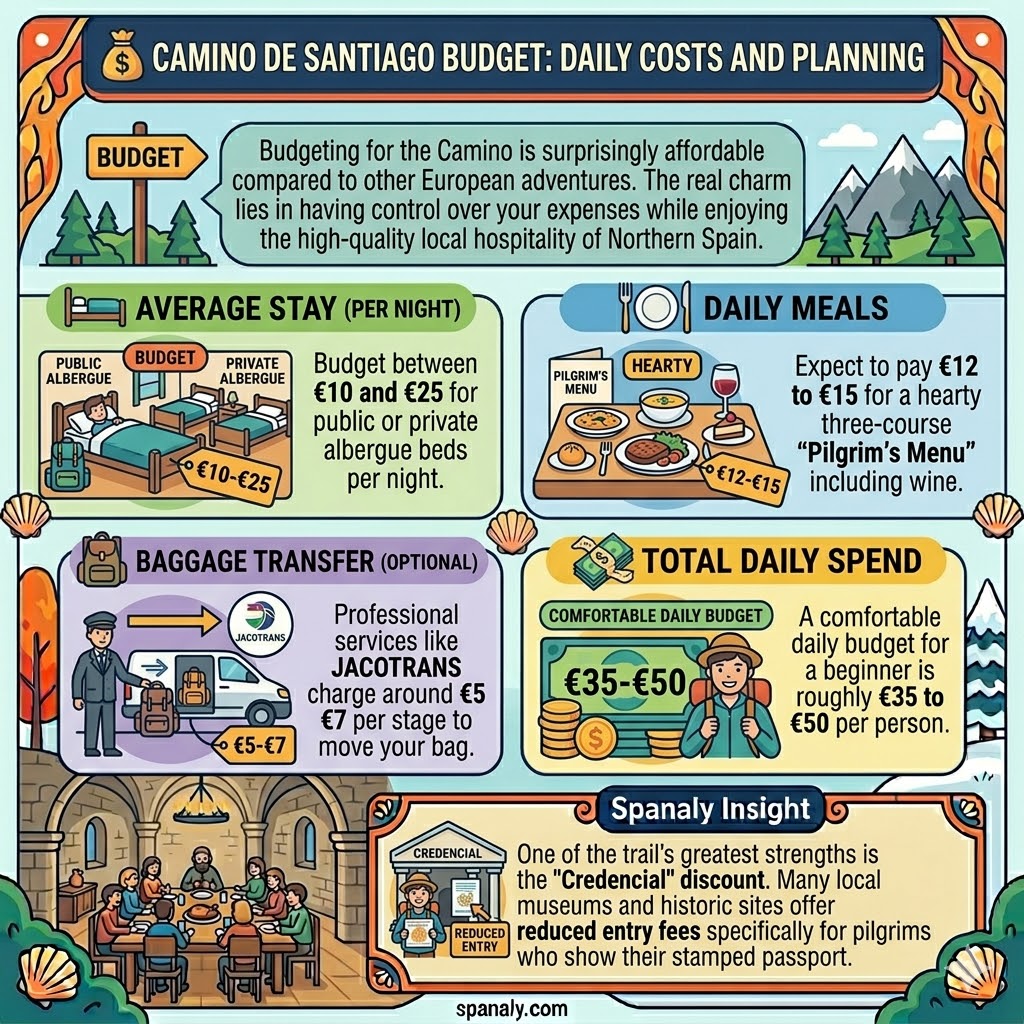
Budgeting for the Camino is surprisingly affordable compared to other European adventures. The real charm lies in having control over your expenses while enjoying the high-quality local hospitality of Northern Spain.
🛏️ Average Stay: Budget between €10 and €25 for public or private albergue beds per night.
🍽️ Daily Meals: Expect to pay €12 to €15 for a hearty three-course “Pilgrim’s Menu” including wine.
🎒 Baggage Transfer: Professional services like Jacotrans charge around €5 to €7 per stage to move your bag.
💸 Total Daily Spend: A comfortable daily budget for a beginner is roughly €35 to €50 per person.
📊 Financial Planning: For a deeper look at regional prices, see our Northern Spain Travel Cost & Budget guide.
Spanaly Insight: One of the trail’s greatest strengths is the “Credencial” discount. Many local museums and historic sites offer reduced entry fees specifically for pilgrims who show their stamped passport.
🚶 Training for the Camino: Physical Preparation Tips
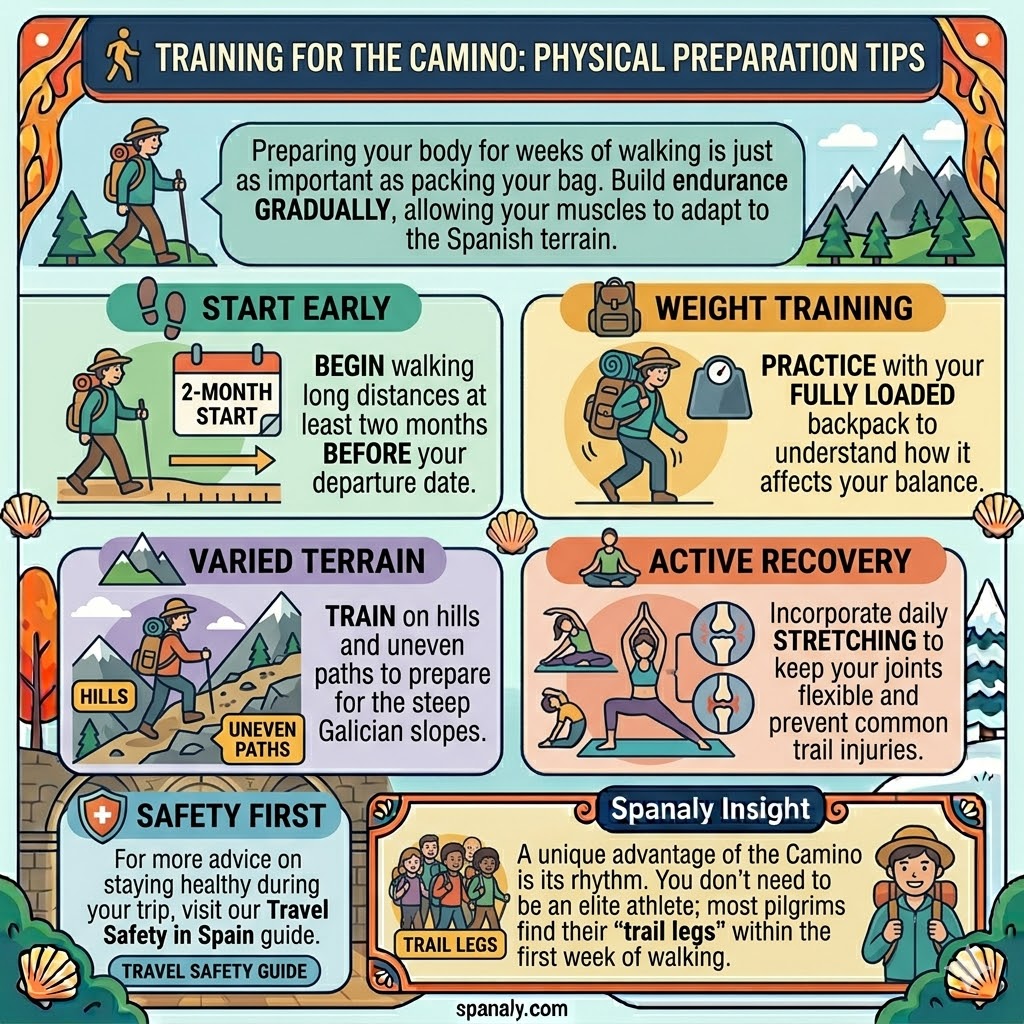
Some mornings begin with sore legs, foggy fields, and the sound of trekking poles echoing through sleeping villages. Preparing your body for weeks of walking is just as important as packing your bag. The real magic happens when you build endurance gradually, allowing your muscles to adapt to the Spanish terrain.
👣 Start Early: Begin walking long distances at least two months before your departure date.
🎒 Weight Training: Practice with your fully loaded backpack to understand how it affects your balance.
⛰️ Varied Terrain: Train on hills and uneven paths to prepare for the steep Galician slopes.
🧘 Active Recovery: Incorporate daily stretching to keep your joints flexible and prevent common trail injuries.
🛡️ Safety First: For more advice on staying healthy during your trip, visit our Travel Safety in Spain guide.
Spanaly Insight: A unique advantage of the Camino is its rhythm. You don’t need to be an elite athlete; most pilgrims find their “trail legs” within the first week of walking.
🍽️ Food on the Trail: Pilgrims' Menus and Local Cuisine
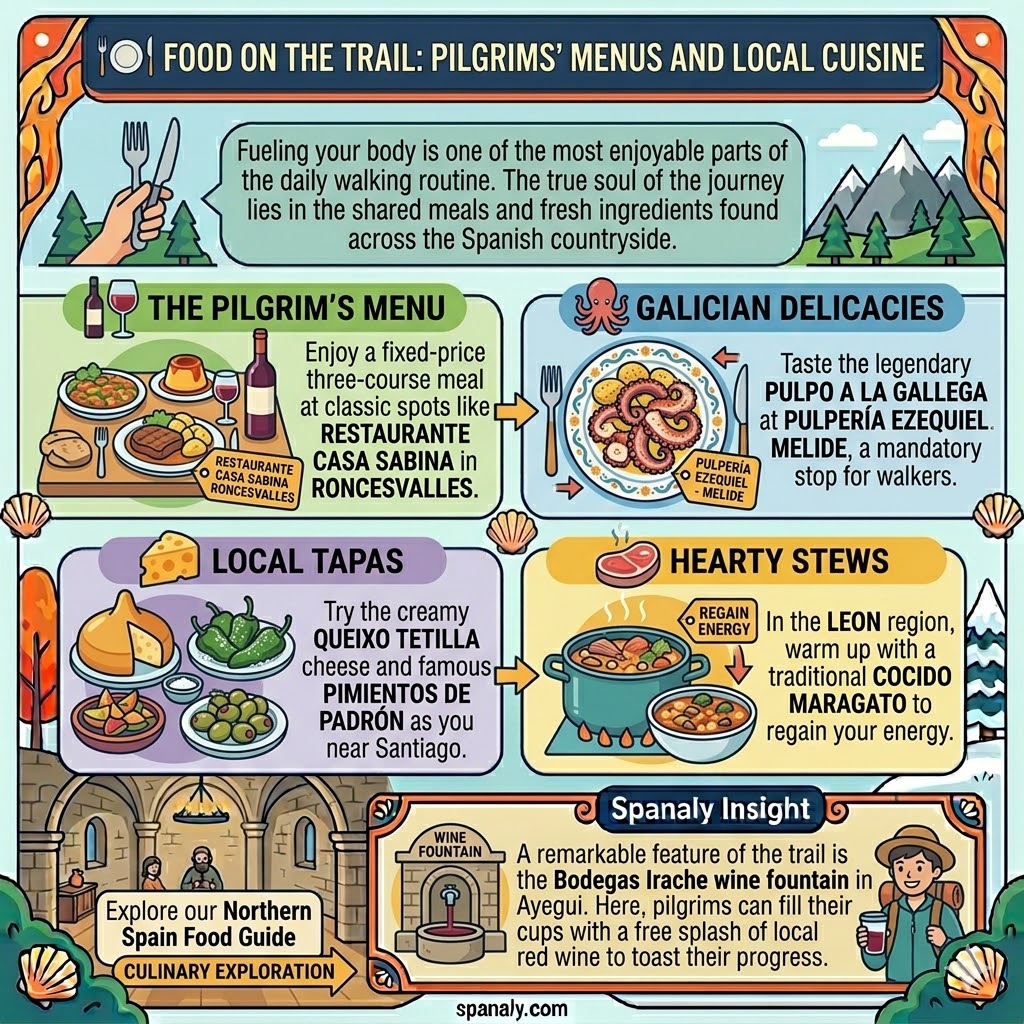
The true soul of the journey often smells like toasted bread and strong coffee in a crowded village bar. Fueling your body is one of the most enjoyable parts of the daily walking routine, offering a moment of rest.
🍷 The Pilgrim’s Menu: Enjoy a fixed-price three-course meal at classic spots like Restaurante Casa Sabina in Roncesvalles.
🐙 Galician Delicacies: Taste the legendary Pulpo a la Gallega at Pulpería Ezequiel in Melide, a mandatory stop for walkers.
🧀 Local Tapas: Try the creamy Queixo Tetilla cheese and famous Pimientos de Padrón as you near Santiago.
🥩 Hearty Stews: In the Leon region, warm up with a traditional Cocido Maragato to regain your energy.
🥗 Culinary Exploration: For a deeper dive into the flavors of the region, explore our Northern Spain Food Guide.
Spanaly Insight: A remarkable feature of the trail is the Bodegas Irache wine fountain in Ayegui. Here, pilgrims can fill their cups with a free splash of local red wine to toast their progress.
📸 Best Photo Spots Along the Way
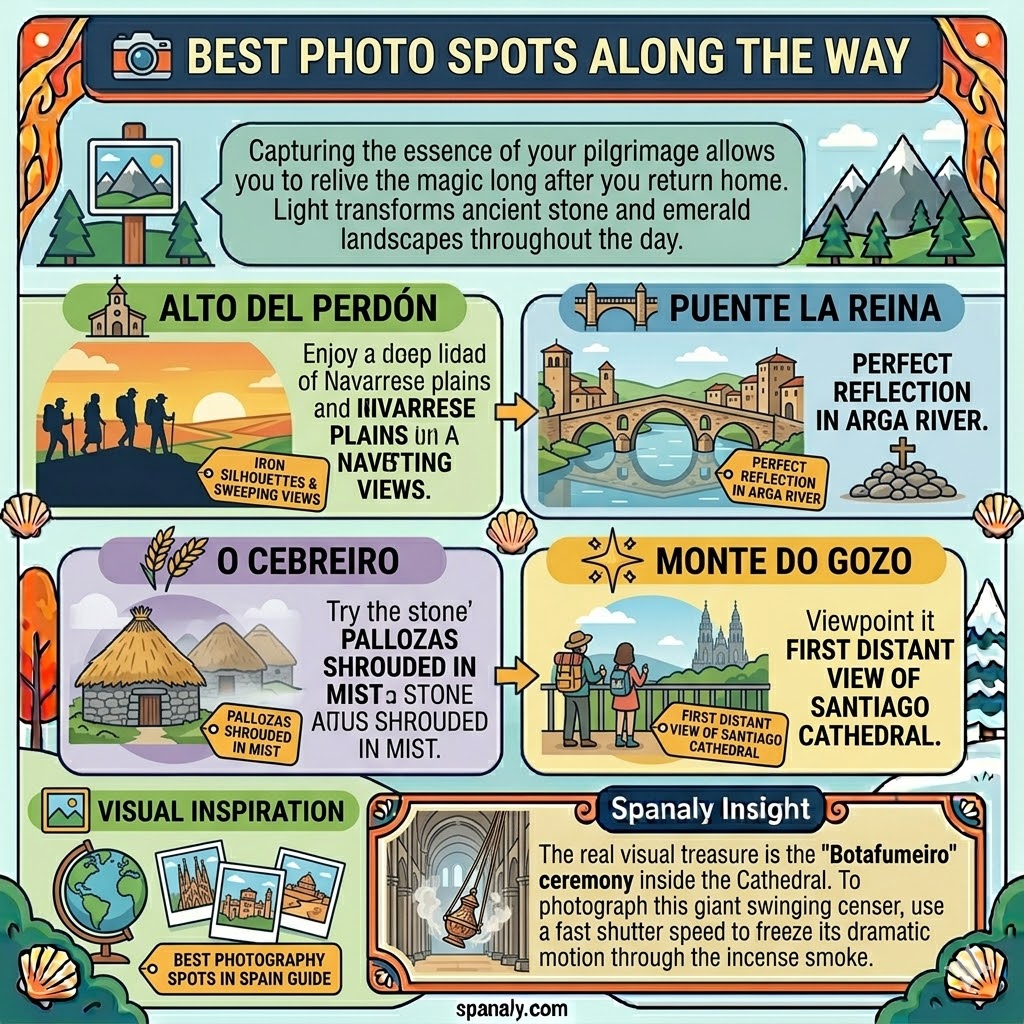
Capturing the essence of your pilgrimage allows you to relive the magic long after you return home. A fascinating aspect of the trail is how the light transforms the ancient stone architecture and emerald landscapes throughout the day.
⛪ Alto del Perdón: Photograph the iconic iron pilgrim silhouettes against the sweeping backdrop of the Navarrese plains.
🌉 Puente la Reina: Capture the perfect reflection of the Romanesque bridge in the still waters of the Arga River.
⛰️ Cruz de Ferro: Take a powerful shot of the mountain of stones left by pilgrims at the highest point of the French Way.
🌾 O Cebreiro: Document the mystical pre-Romanesque stone huts (Pallozas) often shrouded in the morning Galician mist.
✨ Monte do Gozo: Frame your first distant view of the Santiago Cathedral spires from this historic “Hill of Joy”.
🖼️ Visual Inspiration: For more stunning locations across the country, check our guide to the Best Photography Spots in Spain.
Spanaly Insight: The real visual treasure is the “Botafumeiro” ceremony inside the Cathedral. To photograph this giant swinging censer, use a fast shutter speed to freeze its dramatic motion through the incense smoke.
🗺️ 7-Day Camino Itinerary for Beginners
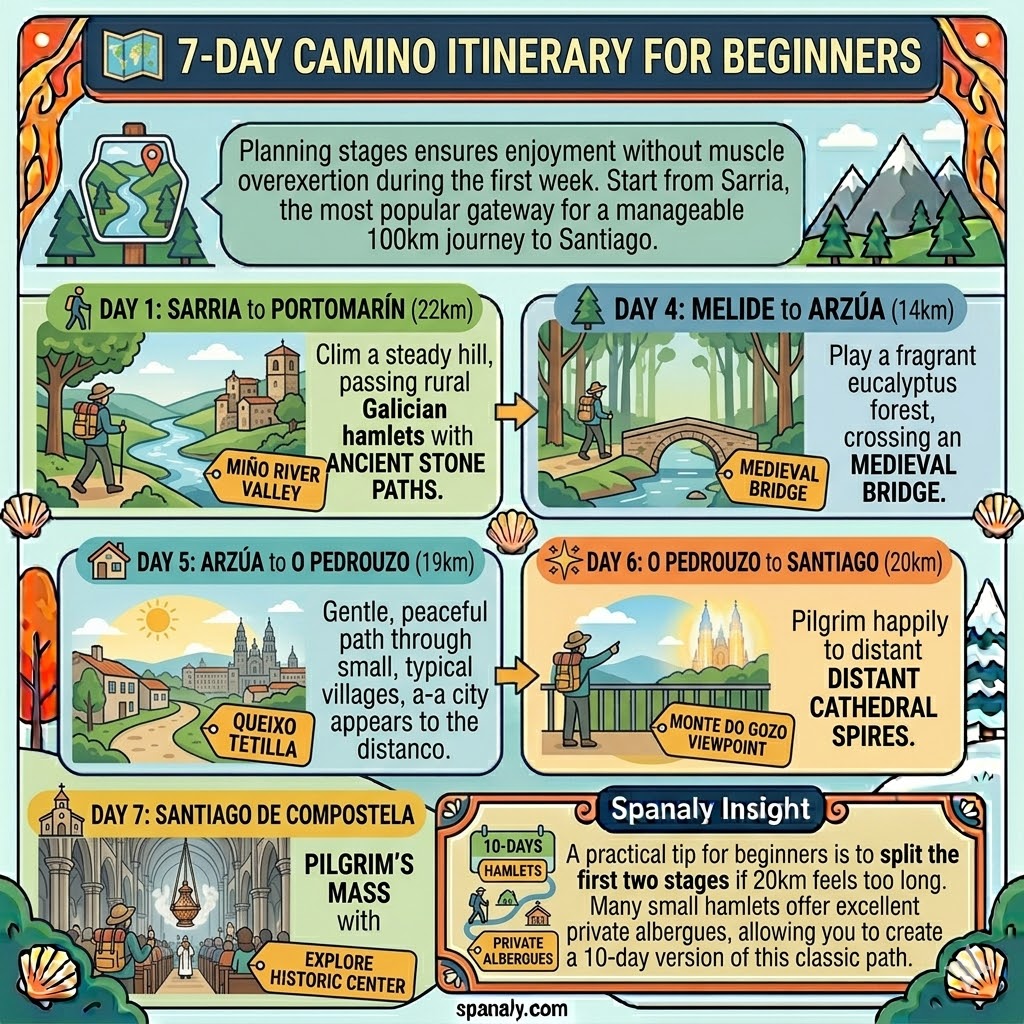
Planning your stages carefully ensures you enjoy the scenery without overexerting your muscles during the first week. The beauty of this route lies in starting from Sarria, the most popular gateway for a manageable 100km journey to Santiago.
🚶 Day 1: Sarria to Portomarín (22km): Walk through beautiful oak woodlands and descend into the Miño river valley.
🌳 Day 2: Portomarín to Palas de Rei (24km): A steady climb through rural Galician hamlets and ancient stone paths.
🧀 Day 3: Palas de Rei to Melide (15km): A shorter stage, perfect for stopping to enjoy famous local octopus.
🌲 Day 4: Melide to Arzúa (14km): Walk through fragrant eucalyptus forests and cross historic medieval bridges.
🏘️ Day 5: Arzúa to O Pedrouzo (19km): Gentle terrain through peaceful villages as you near the holy city.
✨ Day 6: O Pedrouzo to Santiago (20km): Reach Monte do Gozo for your first view of the Cathedral spires.
⛪ Day 7: Santiago de Compostela: Explore the historic center and attend the Pilgrim’s Mass at noon.
📅 Full Schedule: For more planning ideas, see our Santiago de Compostela Itinerary for your post-walk stay.
Spanaly Insight: A practical tip for beginners is to split the first two stages if 20km feels too long. Many small hamlets offer excellent private albergues, allowing you to create a 10-day version of this classic path.
💡 Expert Secrets: The "Reddit" Pilgrims’ Advice
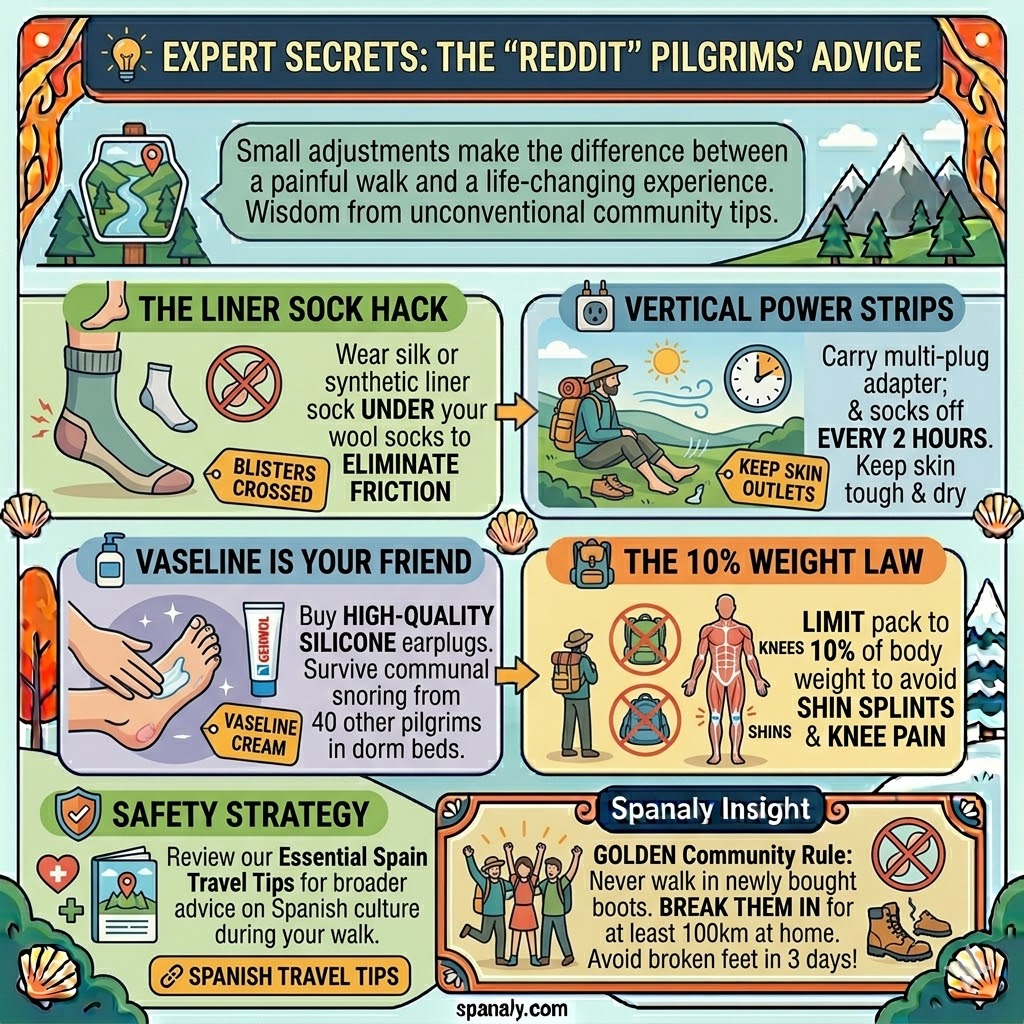
Going beyond the basics reveals the small adjustments that separate a painful walk from a life-changing experience. The real wisdom of the trail is often found in the unconventional tips shared by those who have walked the path multiple times.
🦶 The Liner Sock Hack: Wear a thin silk or synthetic liner sock under your wool socks to eliminate friction entirely.
🔌 Vertical Power Strips: Carry a small, multi-plug adapter; Spanish albergues often have only one outlet per ten pilgrims.
🌬️ Air Your Feet: Take your shoes and socks off every 2 hours of walking to keep skin tough and dry.
🧴 Vaseline is Your Friend: Generously coat your toes and heels in Vaseline or “Gehwol” cream before putting on your socks.
👂 Earplug Investment: Don’t settle for foam; buy high-quality silicone earplugs to survive the communal snoring of 40 people.
🎒 The 10% Weight Law: Strictly limit your pack to 10% of your body weight to avoid “Shin Splints” and knee pain.
🛡️ Safety Strategy: Review our Essential Spain Travel Tips for broader advice on navigating Spanish culture during your walk.
Spanaly Insight: A golden rule from the community is to “never walk in a newly bought pair of boots.” Break them in for at least 100km at home, or the Spanish terrain will break your feet within the first three days.
🛡️ Visitor FAQs – Camino de Santiago Beginner Guide
🛡️ Is the Camino de Santiago safe for solo female pilgrims?
Yes, the Camino is exceptionally safe for solo travelers. The paths are well-marked and highly social, meaning you are rarely truly alone. Local Spanish communities are very protective of pilgrims, and the Guardia Civil maintains a dedicated presence along the most popular routes to ensure a peaceful journey.
🐚 Do I need to book every Albergue in advance?
It depends on the season. During peak months like July and August, pre-booking private hostels is highly recommended to avoid stress. However, traditional municipal albergues operate on a "first-come, first-served" basis. For a balanced experience, book your first two nights and your final stay in Santiago to ensure a smooth start and finish.
📶 Is there reliable mobile signal and Wi-Fi on the trail?
Generally, yes. Most of the French and Portuguese routes have strong 4G/5G coverage. Almost all private albergues and cafes offer free Wi-Fi. However, expect some "dead zones" in the dense forests of Galicia or the high mountain passes of the Pyrenees, which many pilgrims actually welcome as a chance to disconnect.
🚑 How do I handle laundry while walking every day?
Most albergues provide manual laundry basins and clotheslines for free. Many private hostels also have coin-operated washers and dryers. A common pilgrim hack is to wash your clothes as soon as you arrive at your lodging to ensure they dry overnight in the sun or under the albergue's heating systems.
⛪ Can I attend the Pilgrim’s Mass if I am not religious?
Absolutely. The Pilgrim’s Mass in Santiago Cathedral is a cultural and spiritual highlight open to everyone, regardless of faith. It is a moment of shared achievement and reflection. Arrive at least 45 minutes early to secure a seat, especially if you hope to witness the spectacular Botafumeiro ceremony.
Camino de Santiago Guide by Spanaly.com
Reaching Santiago isn’t just about the cathedral; it’s about the heavy sigh of relief as you drop your pack and the sudden silence after weeks of walking. Walking the Camino de Santiago is more than a physical challenge; it is a life-changing milestone. The true soul of the journey reveals itself in the quiet mornings and the connections made with fellow travelers from around the world.
✨ Embrace the Pace: Listen to your body and find a rhythm that allows you to absorb the Spanish culture.
🤝 Global Community: Open your heart to the shared stories and hospitality that define this ancient pilgrimage.
🏰 The Ultimate Goal: Every step brings you closer to the majestic spires and spiritual history of the finish line.
🗺️ Arrival Planning: Once you reach the holy city, explore our Santiago de Compostela Guide to discover the best things to do after your walk.
Stepping onto the trail is the hardest part of the adventure. Whether you walk for spiritual reasons or a love of nature, the yellow arrows are waiting to lead you home.