Table of Contents
Toggle👣 Finisterre & Muxía
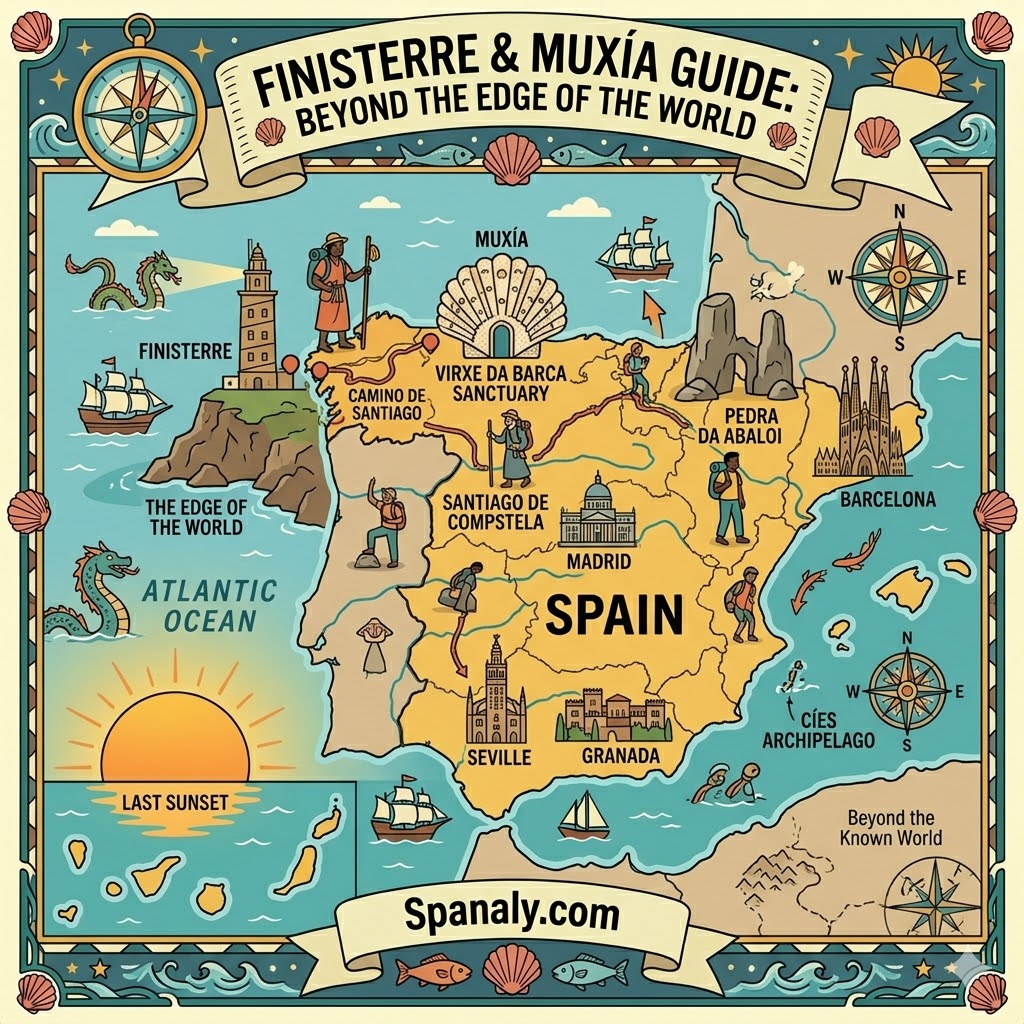
Standing at Cape Finisterre, you watch the sun vanish into the Atlantic. For centuries, Romans and pilgrims believed this was the absolute end of the living world. The wind here carries the salt of ancient maritime myths and the grit of the Camino de Santiago.
📍 Beyond the Horizon: Discover the mystical Costa da Morte, where rugged cliffs meet the “End of the World”.
🐚 A Pilgrim’s Final Step: Learn why thousands continue their journey past Santiago to reach these coastal sanctuaries.
🦐 Atlantic Flavors: Navigate the elite seafood trails that define Galician gastronomy.
🌲 Northern Strategy: To see how these mystical capes fit into your broader journey, consult our Ultimate Northern Spain Travel Guide for expert regional insights.
Grab your windbreaker and leave the city crowds behind. The Atlantic is calling, and its most legendary secrets are waiting at the cliffs of Finisterre and Muxía.
📍 Finisterre & Muxía: Essential Visitor Snapshot
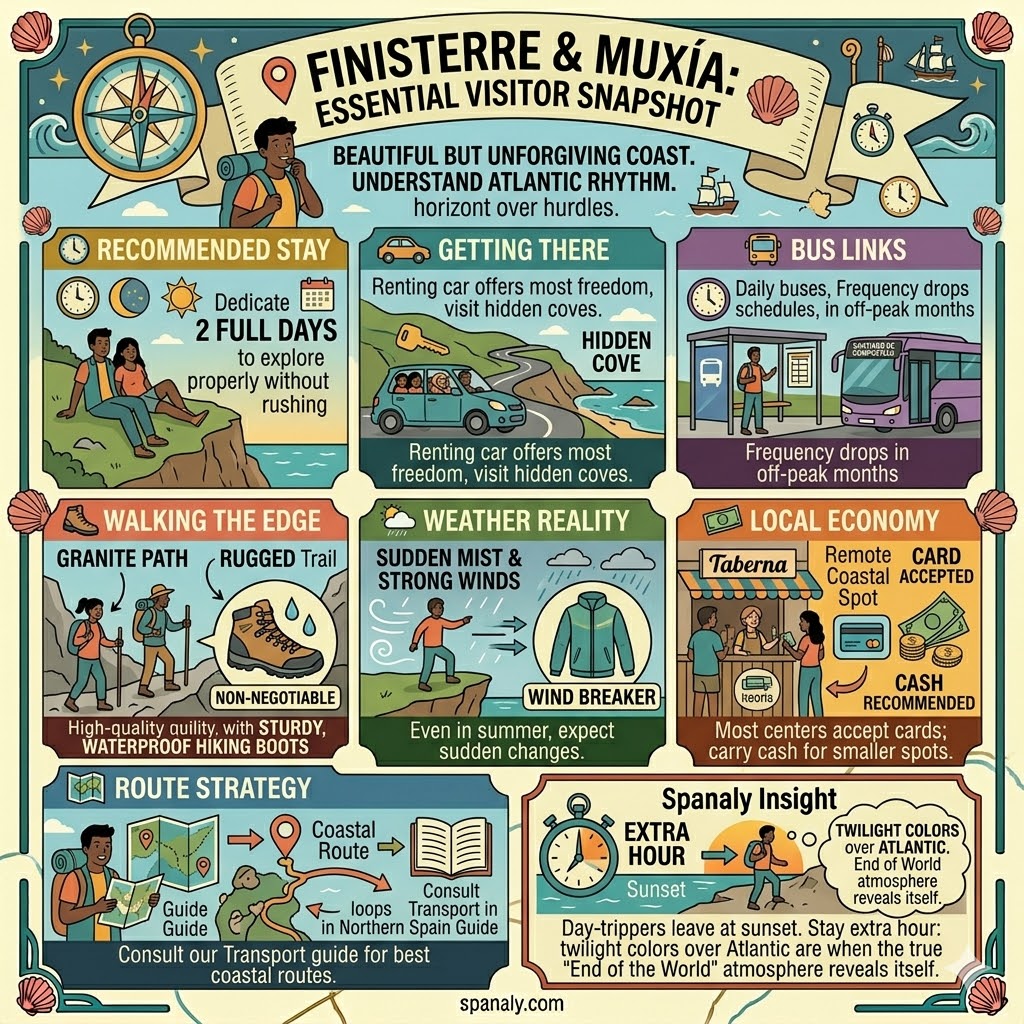
The coast of “Death” is beautiful but unforgiving. Understanding the Atlantic rhythm is the key to a successful pilgrimage. Whether arriving on foot or by car, these logistics ensure you focus on the horizon, not the hurdles.
⏱️ Recommended Stay: Dedicate at least 2 full days to explore both capes properly without rushing.
🚗 Getting There: Renting a car offers the most freedom to visit hidden coves between the two towns.
🚌 Bus Links: Daily buses run from Santiago de Compostela; however, check schedules early as frequency drops during off-peak months.
🥾 Walking the Edge: The trail between Finisterre and Muxía is rugged; sturdy, waterproof hiking boots are non-negotiable for these granite paths.
🌦️ Weather Reality: Expect sudden mist and strong winds even in summer; a high-quality windbreaker is your most important gear.
💶 Local Economy: While most shops in the centers accept cards, carry some cash for smaller “tabernas” in remote coastal spots.
🗺️ Route Strategy: To master the local transport and logistics of the region, consult our Transport in Northern Spain guide for the best coastal routes.
Spanaly Insight: Don’t rush the sunset. Most day-trippers leave Finisterre right after the sun dips. Stay an extra hour: the twilight colors over the Atlantic are when the true “End of the World” atmosphere reveals itself.
🌊 Finisterre vs. Muxía: Choosing Your Atlantic Finalé
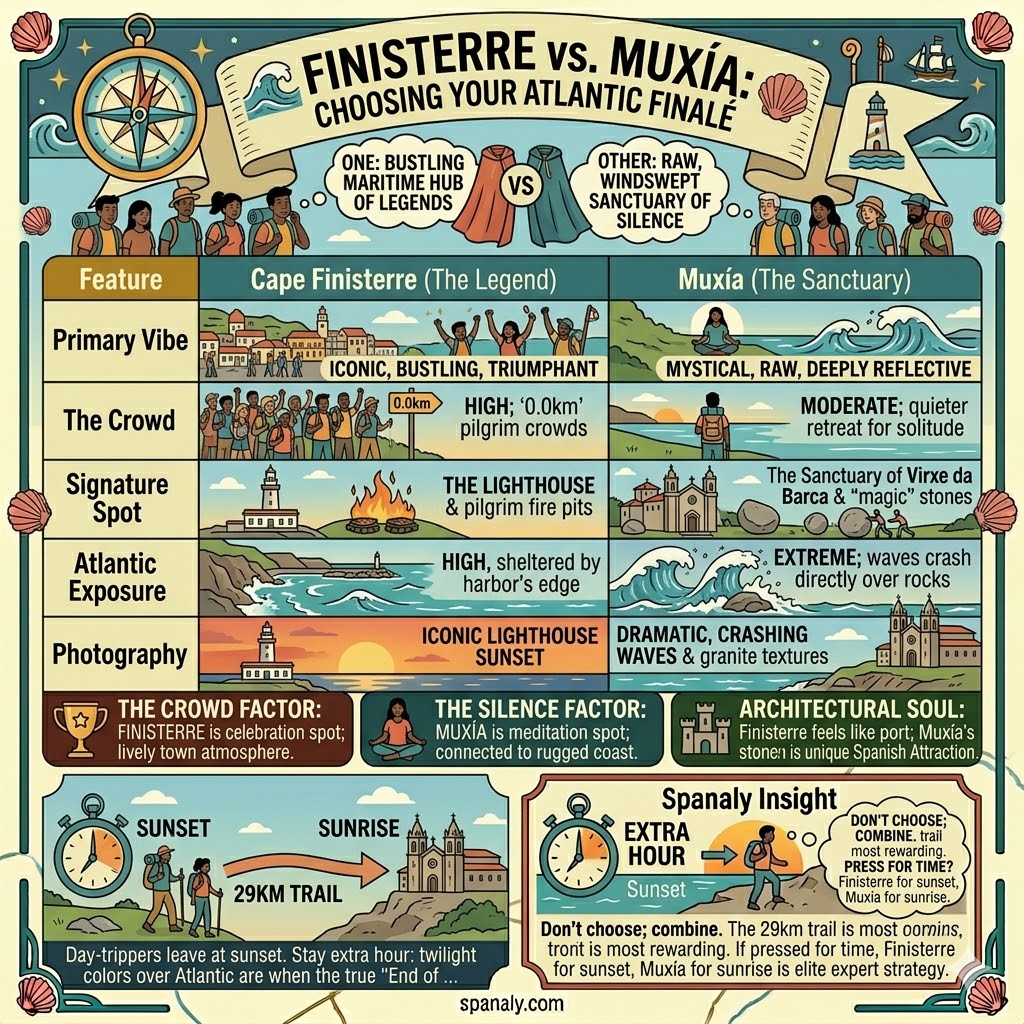
While both towns mark the spiritual end of the road, their energy is fundamentally different. One is a bustling maritime hub of legends; the other is a raw, windswept sanctuary of silence. Understanding these contrasts ensures you find the atmosphere that matches your journey’s end.
| Feature | Cape Finisterre (The Legend) | Muxía (The Sanctuary) |
| Primary Vibe | Iconic, bustling, and triumphant. | Mystical, raw, and deeply reflective. |
| The Crowd | High; home to the “0.0km” pilgrim crowds. | Moderate; a quieter retreat for those seeking solitude. |
| Signature Spot | The Lighthouse and the pilgrim fire pits. | The Sanctuary of Virxe da Barca and the “magic” stones. |
| Atlantic Exposure | High, but sheltered by the harbor’s edge. | Extreme; waves often crash directly over the rocks. |
| Photography | Best for iconic lighthouse sunsets. | Best for dramatic, crashing waves and granite textures. |
🏆 The Crowd Factor: Finisterre is the “celebration” spot; expect groups and a lively town atmosphere.
🧘 The Silence Factor: Muxía is the “meditation” spot; it feels more connected to the ancient, rugged coast.
🏰 Architectural Soul: While Finisterre feels like a working port, Muxía’s stone church offers a unique Spanish Attraction experience at the ocean’s mercy.
Spanaly Insight: Don’t choose; combine. The 29km trail between them is the most rewarding part of the experience. If pressed for time, Finisterre for the sunset and Muxía for the sunrise is the elite expert strategy.
🌊 Cape Finisterre: Standing at the Edge of the Ancient World
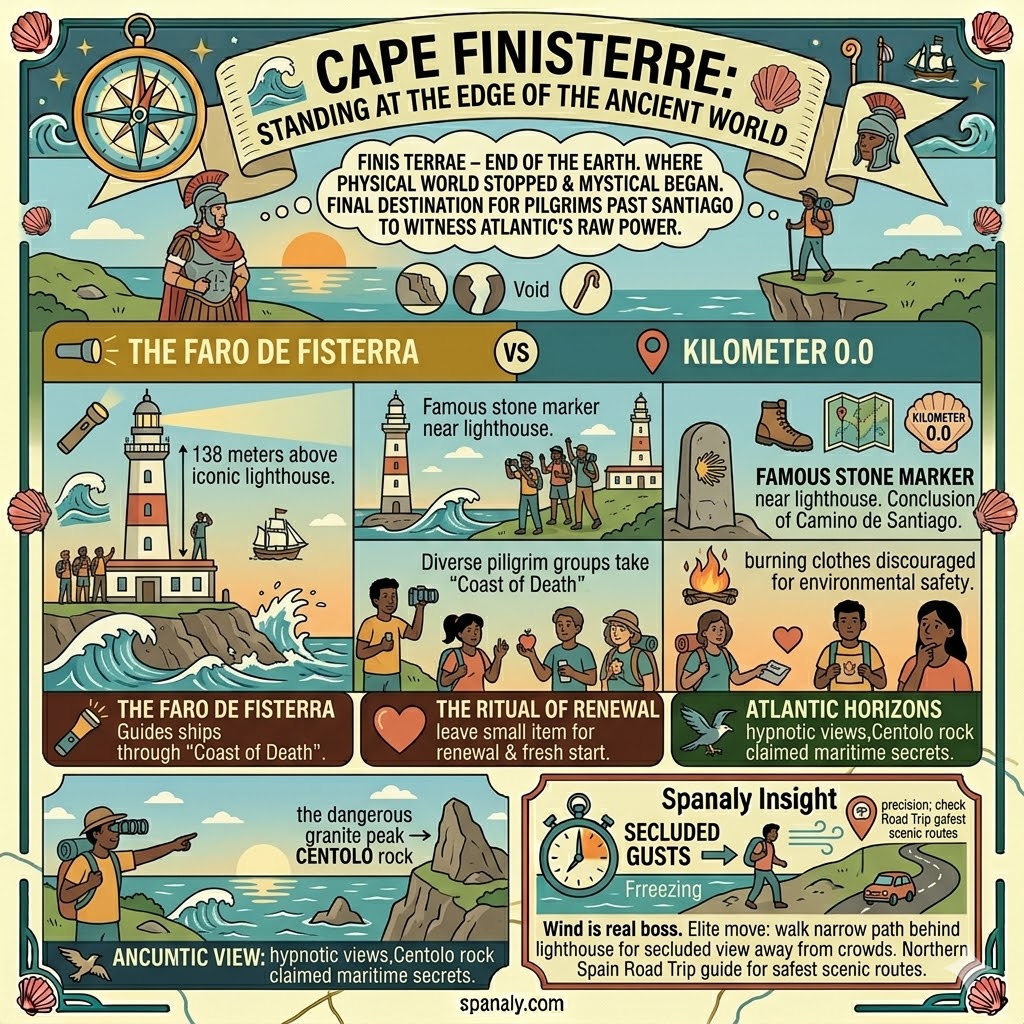
For centuries, Roman legions stood on these granite cliffs and watched the sun vanish into an endless void. They called it Finis Terrae the end of the earth a place where the physical world stopped and the mystical began. Today, the cape remains the final destination for thousands of pilgrims who walk past Santiago to witness the Atlantic’s raw power.
🔦 The Faro de Fisterra: Built in 1853, this iconic lighthouse sits 138 meters above the crashing waves to guide ships through the “Coast of Death”.
📍 Kilometer 0.0: Locate the famous stone marker near the lighthouse; it signifies the absolute conclusion of the Camino de Santiago trail.
🔥 The Ritual of Renewal: While burning clothes is now discouraged for environmental safety, many still leave a small personal item to symbolize a fresh start.
🦅 Atlantic Horizons: The view from the cliffs is hypnotic; look for the “Centolo” rock, a dangerous granite peak that has claimed many maritime secrets.
🚗 Reaching the Edge: Navigating the winding roads of the Costa da Morte requires precision; check our Northern Spain Road Trip guide for the safest scenic routes to the lighthouse.
Spanaly Insight: The wind is the real boss here. Even on sunny days, the “Cape effect” creates sharp, chilly gusts out of nowhere. Walk the narrow path behind the lighthouse. You will find a secluded view away from the selfie-stick crowds.
⛪ Muxía: Celtic Roots and Christian Legends
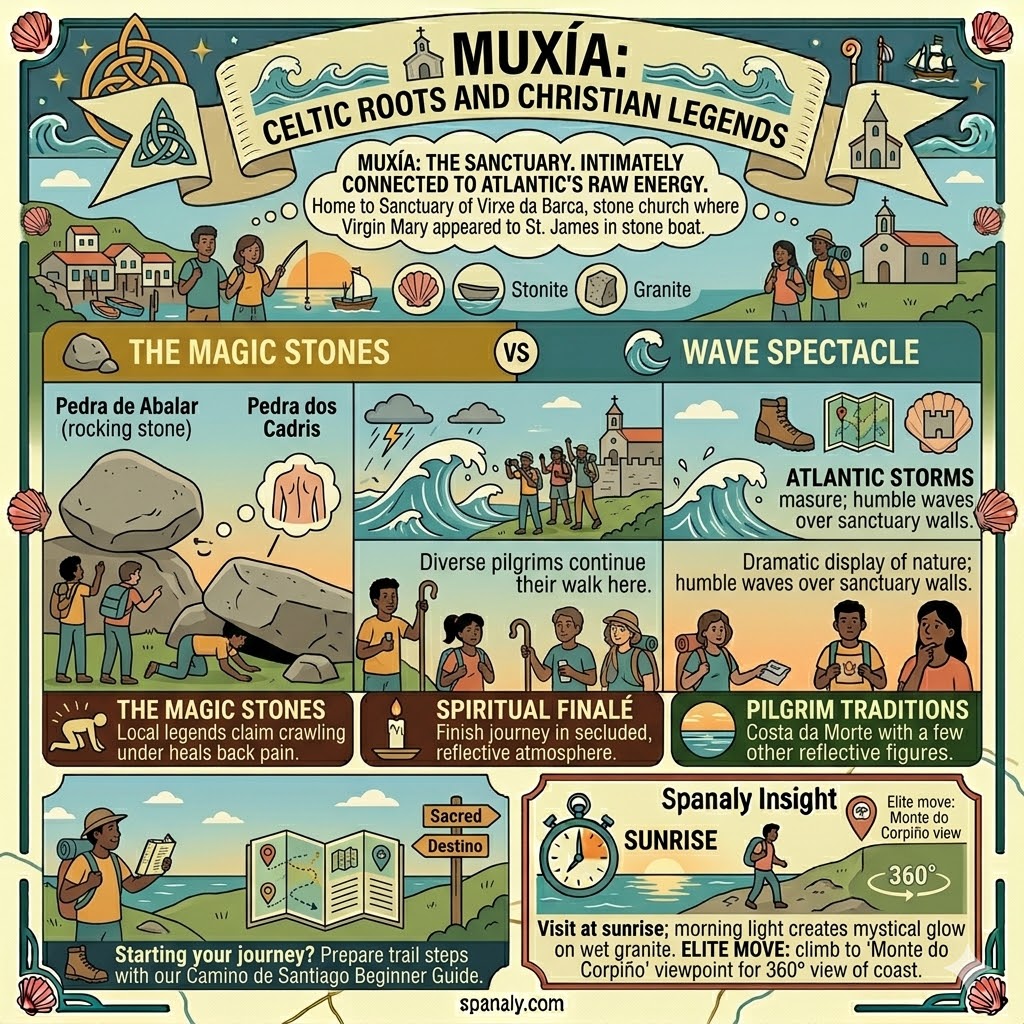
While Finisterre is the “celebration,” Muxía is the “sanctuary.” This small fishing village feels more intimately connected to the Atlantic’s raw energy. The granite shoreline is home to the Sanctuary of Virxe da Barca, a stone church built where the Virgin Mary supposedly appeared to Saint James in a stone boat.
🪨 The Magic Stones: Visit the Pedra de Abalar (rocking stone) and Pedra dos Cadris; local legends claim crawling under them heals back pain.
🌊 Wave Spectacle: During Atlantic storms, waves crash directly over the sanctuary walls, creating a dramatic and humbling display of nature.
🕯️ Spiritual Finalé: Many pilgrims continue their walk here to finish their journey in the most secluded and reflective atmosphere of the Costa da Morte.
🚶 Pilgrim Traditions: If you are starting your journey toward such sacred destinations, our Camino de Santiago Beginner Guide provides the essential steps to prepare for the trail.
Spanaly Insight: Visit at sunrise. Unlike Finisterre’s sunset crowds, morning light creates a mystical glow on Muxía’s wet granite rocks. Climb to the “Monte do Corpiño” viewpoint above the church. You will find a 360-degree view of the entire coastline.
🥾 Hiking the Camino dos Faros: The Most Scenic Atlantic Trails
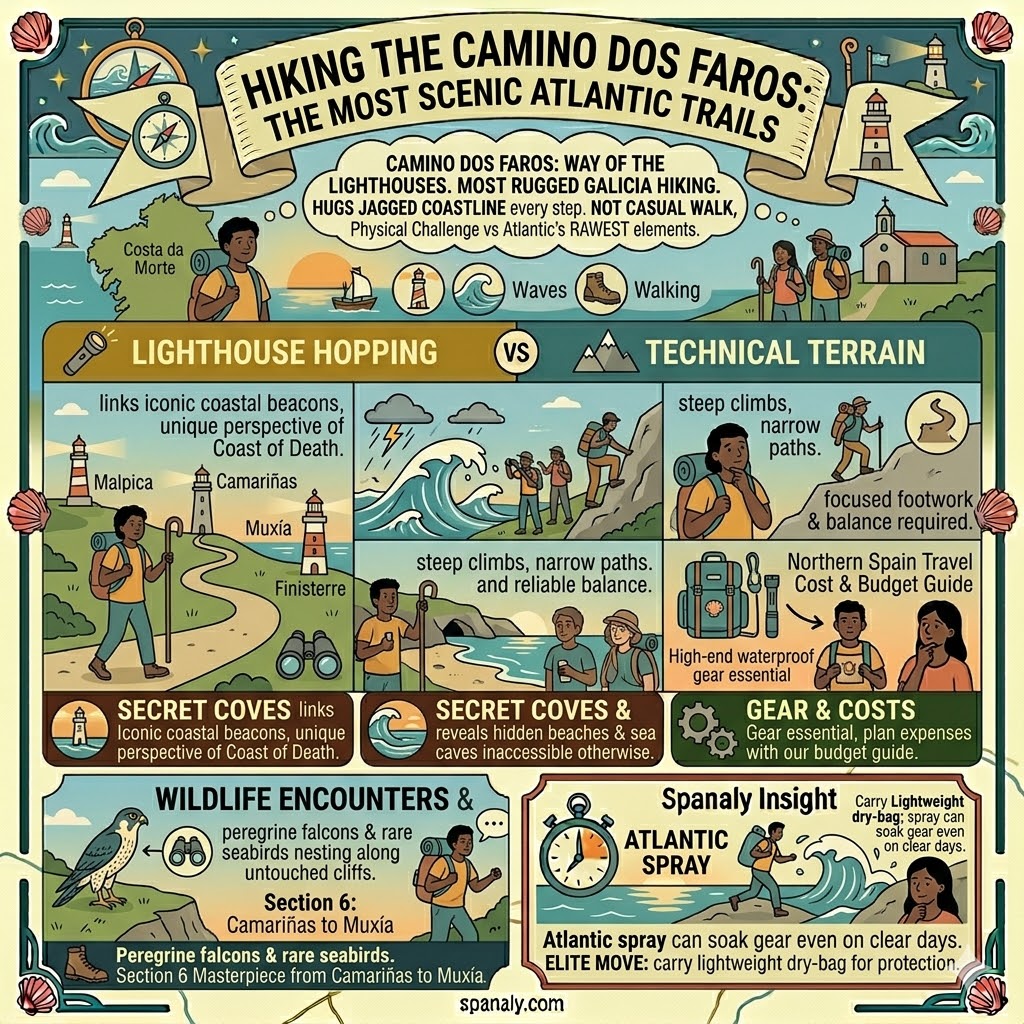
The “Way of the Lighthouses” is one of the most rugged and scenic coastal hiking experiences in Galicia. This 200km trail connects Malpica to Finisterre, hugging the jagged coastline every step of the way. It is not a casual walk; it is a physical challenge against the Atlantic’s rawest elements.
🔦 Lighthouse Hopping: The trail links iconic coastal beacons, offering a unique perspective of the “Coast of Death”.
⛰️ Technical Terrain: Expect steep granite climbs and narrow paths that require focused footwork and reliable balance.
🌊 Secret Coves: The path reveals hidden beaches and sea caves inaccessible by car or public transport.
💰 Gear and Costs: High-end waterproof gear is essential for this unpredictable Atlantic trek. Check our Northern Spain Travel Cost & Budget guide to plan your expenses for premium hiking equipment and local stays.
🦅 Wildlife Encounters: Watch for peregrine falcons and rare seabirds nesting along the untouched Atlantic cliffs.
Spanaly Insight: Section 6 is the masterpiece. The stretch from Camariñas to Muxía is the most atmospheric part of the route. Carry a lightweight dry-bag. Atlantic spray can soak your gear even on clear, windy days.
🏖️ Hidden Beaches: Praia de Langosteira and Secret Atlantic Coves
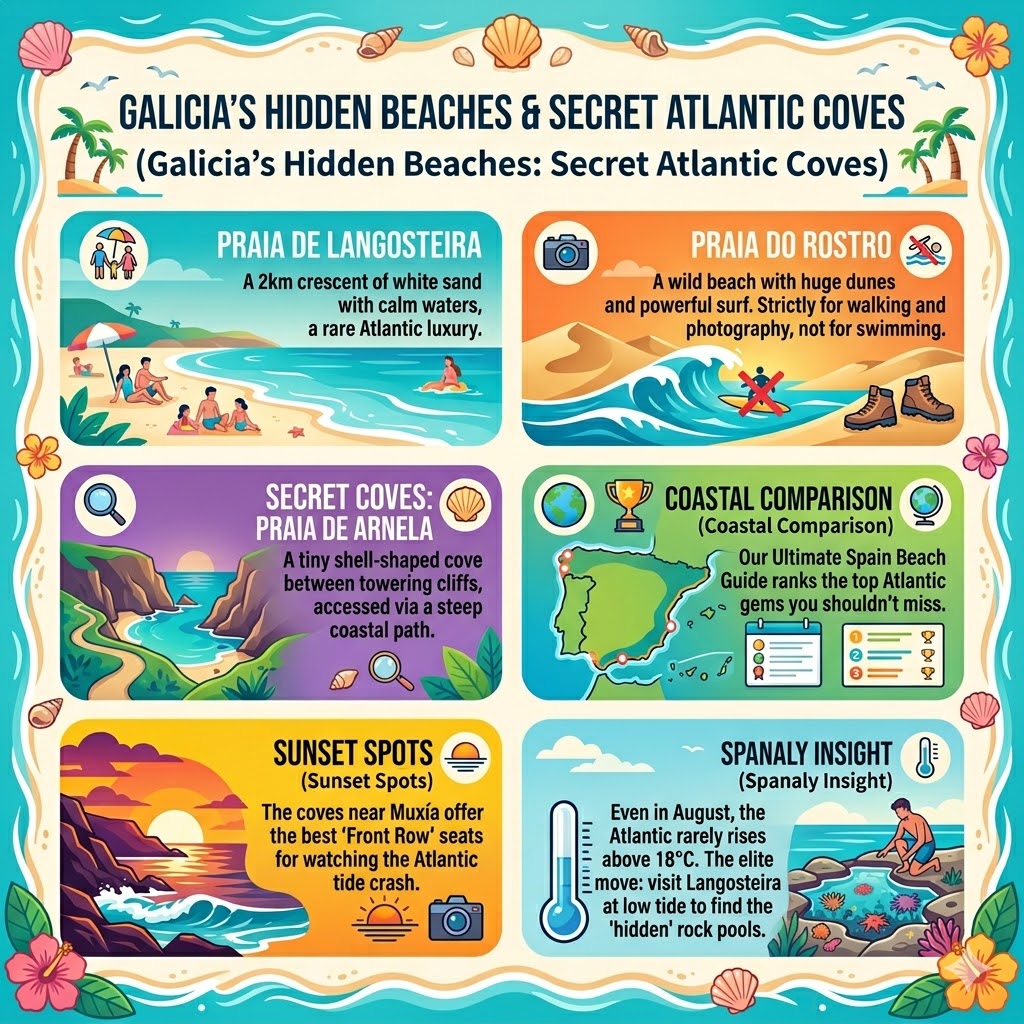
Galicia’s “Coast of Death” hides some of the most pristine white sands in Europe. Unlike the Mediterranean, these waters are bracing and crystalline, framed by jagged granite cliffs and lush green hills. Whether you seek a family-friendly stretch or a secluded cove, the Atlantic shoreline offers a raw, untouched beauty.
💎 Praia de Langosteira: This 2km crescent of white sand is the main beach of Finisterre; its calm waters are a rare Atlantic luxury.
🐚 Praia do Rostro: A wild, windswept beach famous for its massive dunes and powerful surf—strictly for walking and photography, not swimming.
🌊 Secret Coves: Explore the hidden “Praia de Arnela,” a tiny shell-shaped cove tucked between towering cliffs accessible only by a steep coastal path.
🏖️ Coastal Comparison: For those seeking more legendary shorelines across the region, our Ultimate Spain Beach Guide ranks the top Atlantic gems you shouldn’t miss.
🌅 Sunset Spots: The coves near Muxía offer the best “Front Row” seats for watching the Atlantic tide crash against the rocks in golden light.
Spanaly Insight: The water temperature is a reality check. Even in August, the Atlantic rarely rises above 18°C. Visit Langosteira at low tide. You will find “hidden” rock pools filled with tiny marine life. It is perfect for a quiet morning of exploration.
🦞 Gastronomy: The Best Seafood in Costa da Morte
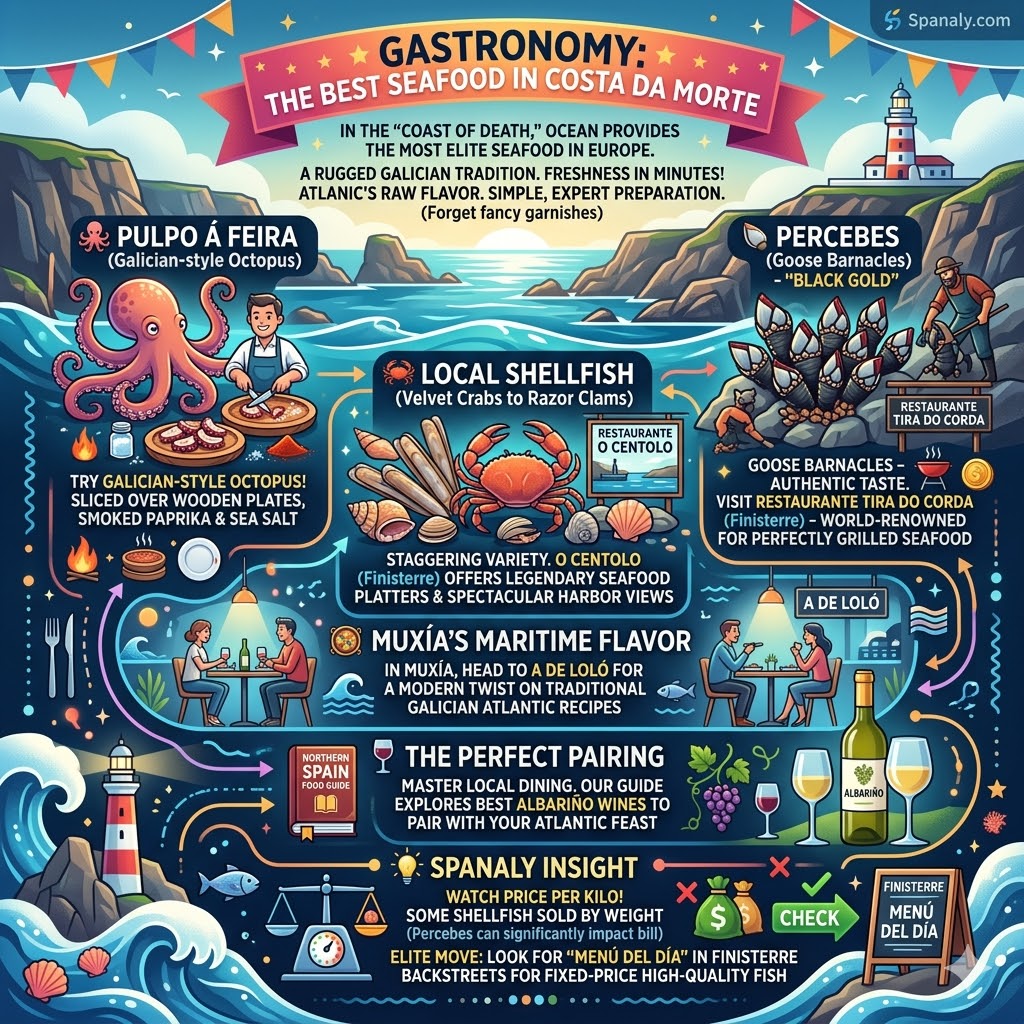
In the “Coast of Death,” the ocean provides some of the finest Atlantic seafood in the world. This isn’t just a meal; it’s a rugged Galician tradition where freshness is measured in minutes, not hours. Forget fancy garnishes here; the Atlantic’s raw flavor speaks for itself through simple, expert preparation.
🐙 Pulpo á Feira: You must try the Galician-style octopus, sliced over wooden plates with sea salt and smoked paprika.
🐚 Percebes (Goose Barnacles): These are the “black gold” of the coast. For an authentic taste, visit Restaurante Tira do Corda in Finisterre, world-renowned for its perfectly grilled seafood.
🦐 Local Shellfish: From velvet crabs to razor clams, the variety is staggering. O Centolo in Finisterre offers spectacular harbor views alongside its legendary seafood platters.
🥘 Muxía’s Maritime Flavor: In Muxía, head to A de Loló for a modern twist on traditional Galician Atlantic recipes.
🍷 The Perfect Pairing: To master the art of local dining, our Northern Spain Food Guide explores the best Albariño wines to pair with your Atlantic feast.
Spanaly Insight: Watch the price per kilo. Some high-end shellfish are sold by weight. This can significantly impact your bill. Look for the “Menú del Día” in Finisterre’s backstreets. It offers a high-quality, fixed-price introduction to Galician fish.
🕯️ The Pilgrim’s Epilogue: Ancient Myths and Atlantic Rituals
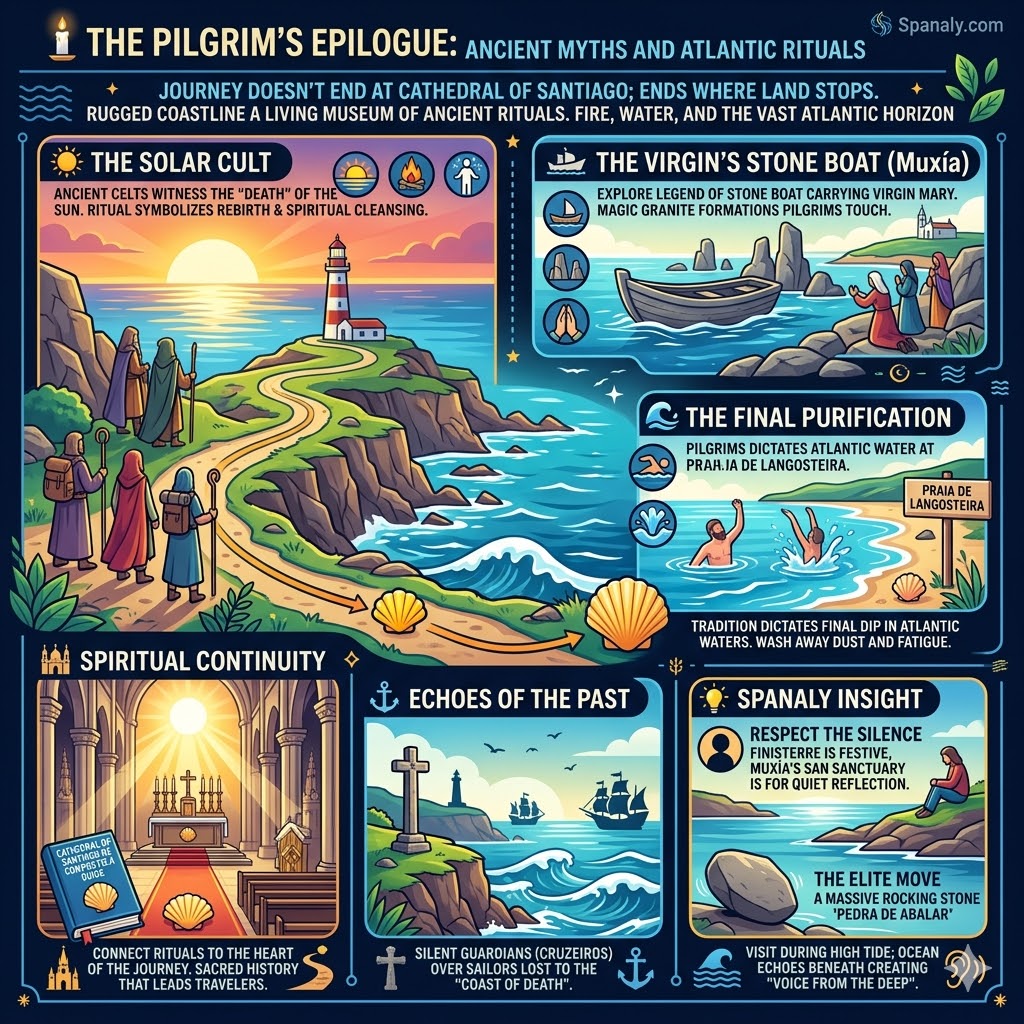
For many, the journey doesn’t end at the Cathedral of Santiago; it ends where the land literally stops. This rugged coastline is a living museum of ancient rituals that predate modern history. Here, the transition from pilgrim to observer happens through fire, water, and the vast Atlantic horizon.
☀️ The Solar Cult: Ancient Celts gathered at these cliffs to witness the “death” of the sun each evening, a ritual that symbolizes rebirth and spiritual cleansing.
🚢 The Virgin’s Stone Boat: In Muxía, explore the legend of the stone boat that carried the Virgin Mary, leaving behind the “magic” granite formations that pilgrims still touch for luck.
🌊 The Final Purification: Tradition dictates a final dip in the Atlantic waters at Praia de Langosteira to wash away the dust and fatigue of the long trail.
🕍 Spiritual Continuity: To understand how these rituals connect to the heart of the journey, our Cathedral of Santiago de Compostela guide details the sacred history that leads travelers to this final coast.
⚓ Echoes of the Past: Look for the small stone crosses (Cruzeiros) dotted along the cliffs; they stand as silent guardians over the sailors lost to the “Coast of Death”.
Spanaly Insight: Respect the silence. Finisterre is often festive, but Muxía’s sanctuary is for quiet reflection. Visit the Pedra de Abalar during high tide. The ocean echoing beneath the rock creates a hauntingly beautiful “voice”.
⚠️ The Reality Check: Navigating the "Coast of Death" Safely
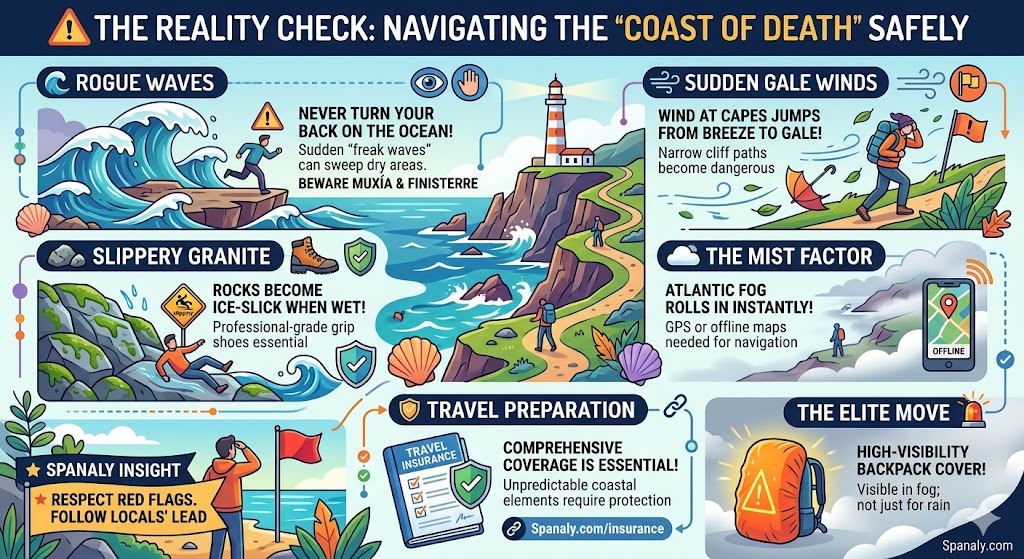
The “Costa da Morte” didn’t earn its name from a marketing department; it earned it from centuries of shipwrecks and the raw, unpredictable power of the Atlantic. While the beauty is undeniable, this coastline demands respect. This is not a manicured tourist resort—it is a wild frontier where nature still sets the rules.
🌊 Rogue Waves: Never turn your back on the ocean when standing on the rocks in Muxía or Finisterre; sudden “freak waves” can sweep over dry areas without warning.
💨 Sudden Gale Winds: The wind at the capes can jump from a breeze to a dangerous gale in minutes, making narrow cliff paths hazardous for unprepared hikers.
🪨 Slippery Granite: The iconic rocks near the sanctuaries become ice-slick when wet; wearing shoes with professional-grade grip is a safety necessity, not a suggestion.
🌦️ The Mist Factor: Atlantic fog (brétema) can roll in instantly, reducing visibility to zero and making navigation impossible without a GPS or offline map.
🛡️ Travel Preparation: Because of these unpredictable coastal elements, ensuring you have comprehensive coverage is essential; consult our Travel Insurance Spain Guide to protect your Atlantic adventure.
🚗 Getting There: How to Reach the Edge of the World
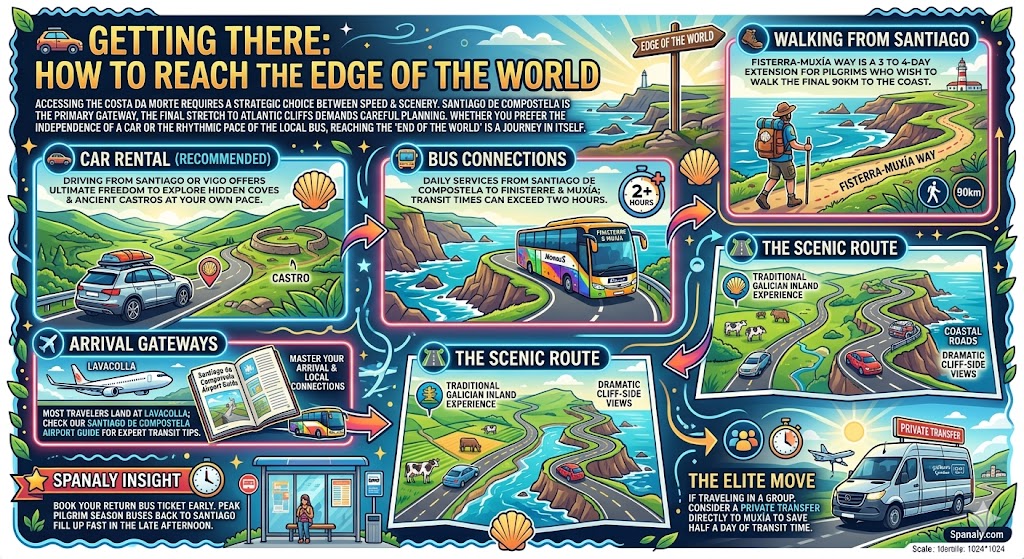
Accessing the Costa da Morte requires a strategic choice between speed and scenery. While Santiago de Compostela is the primary gateway, the final stretch to the Atlantic cliffs demands careful planning. Whether you prefer the independence of a car or the rhythmic pace of the local bus, reaching the “End of the World” is a journey in itself.
🏎️ Car Rental (Recommended): Driving from Santiago or Vigo offers the ultimate freedom to explore hidden coves and ancient “Castros” at your own pace.
🚌 Bus Connections: Monbus operates daily services from Santiago de Compostela to Finisterre and Muxía; however, transit times can exceed two hours.
🥾 Walking from Santiago: The Fisterra-Muxía Way is a 3 to 4-day extension for pilgrims who wish to walk the final 90km to the coast.
✈️ Arrival Gateways: Most travelers land at Lavacolla; to master your arrival and local connections, check our Santiago de Compostela Airport Guide for expert transit tips.
🛣️ The Scenic Route: Take the AC-552 road for a traditional Galician inland experience, or the coastal roads for dramatic cliff-side views.
🏨 Where to Stay: Boutique Stays with Atlantic Views
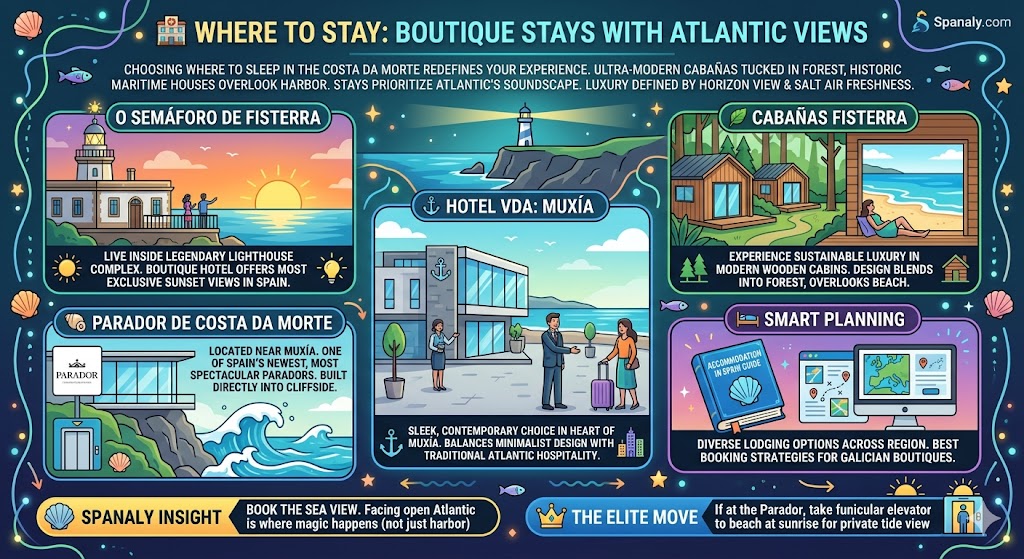
Choosing where to sleep in the Costa da Morte can redefine your entire experience. From ultra-modern “cabañas” tucked into the forest to historic maritime houses overlooking the harbor, the region offers stays that prioritize the Atlantic’s rhythmic soundscape. Here, luxury is defined by the view of the horizon and the freshness of the salt air.
✨ O Semáforo de Fisterra: Live inside the legendary lighthouse complex itself; this boutique hotel offers the most exclusive sunset views in Spain.
🌿 Cabañas Fisterra: Experience sustainable luxury in modern wooden cabins designed to blend into the Galician forest while overlooking the beach.
⚓ Hotel vda: Muxía: A sleek, contemporary choice in the heart of Muxía that balances minimalist design with traditional Atlantic hospitality.
🐚 Parador de Costa da Morte: Located near Muxía, this is one of Spain’s newest and most spectacular Paradors, built directly into the cliffside.
🛌 Smart Planning: For those arriving from the city and seeking more diverse lodging options across the region, our Accommodation in Spain guide breaks down the best booking strategies for Galician boutiques.
Spanaly Insight: Book the sea view. Harbor rooms are cheaper, but an open Atlantic view is where the magic happens. If staying at the Parador, take the funicular elevator to the beach at sunrise. Enjoy a private view of the crashing tide.
📅 Best Time to Visit: Weather Patterns and Local Festivals
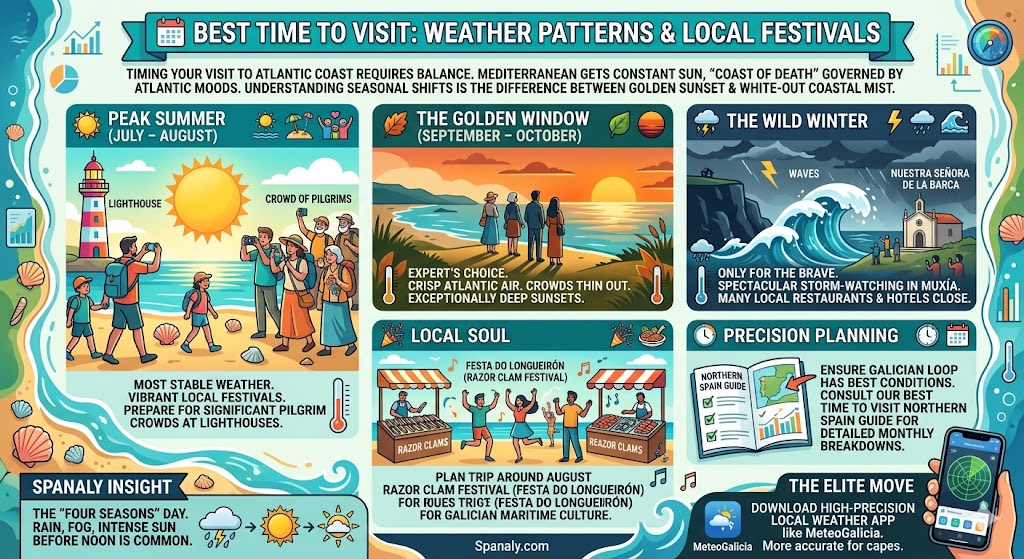
Timing your visit to the Atlantic coast requires a balance between manageable crowds and unpredictable weather. While the Mediterranean enjoys constant sun, the “Coast of Death” is governed by the Atlantic’s moods. Understanding these seasonal shifts is the difference between a golden sunset and a total white-out of coastal mist.
☀️ Peak Summer (July – August): Expect the most stable weather and vibrant local festivals, but prepare for significant pilgrim crowds at the lighthouses.
🍂 The Golden Window (September – October): This is the expert’s choice; the Atlantic air is crisp, the crowds thin out, and the sunsets are exceptionally deep.
⛈️ The Wild Winter: Only for the brave; storm-watching in Muxía is spectacular, though many local restaurants and boutique hotels close for the season.
🎉 Local Soul: Plan your trip around the Festa do Longueirón (Razor Clam Festival) in August for a true deep-dive into Galician maritime culture.
⏱️ Precision Planning: To ensure your entire Galician loop has the best possible conditions, consult our Best Time to Visit Northern Spain guide for detailed monthly breakdowns.
⏱️ Two-Day Itinerary: The Perfect Atlantic Loop
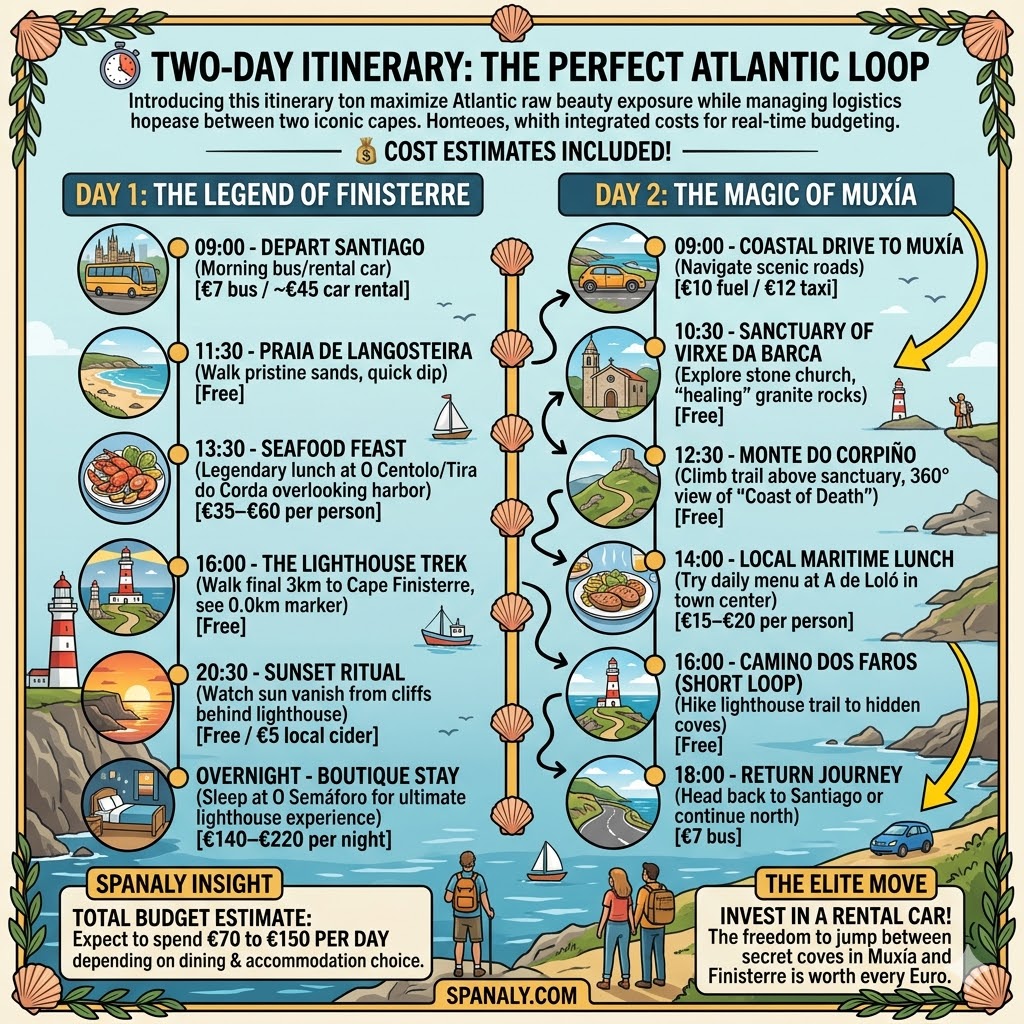
This route is designed to maximize your exposure to the Atlantic’s raw beauty while managing the logistical transit between the two most iconic capes in Galicia. We have integrated estimated costs to help you budget in real-time as you explore.
Day 1: The Legend of Finisterre
09:00 – Depart Santiago: Take the morning bus or rental car toward the coast. (Cost: €7 bus / ~€45 car rental per day).
11:30 – Praia de Langosteira: Walk the pristine white sands and take a quick dip in the bracing Atlantic waters. (Cost: Free).
13:30 – Seafood Feast: Enjoy a legendary lunch at O Centolo or Tira do Corda overlooking the harbor. (Cost: €35–€60 per person for premium seafood).
16:00 – The Lighthouse Trek: Walk the final 3km to Cape Finisterre to see the 0.0km marker. (Cost: Free).
20:30 – Sunset Ritual: Watch the sun vanish from the cliffs behind the lighthouse. (Cost: Free / €5 for a local cider).
Overnight – Boutique Stay: Sleep at O Semáforo for the ultimate lighthouse experience. (Cost: €140–€220 per night).
Day 2: The Magic of Muxía
09:00 – Coastal Drive to Muxía: Navigate the scenic roads connecting the two towns. (Cost: €10 fuel / €12 taxi).
10:30 – Sanctuary of Virxe da Barca: Explore the stone church and the legendary “healing” granite rocks. (Cost: Free).
12:30 – Monte do Corpiño: Climb the short trail above the sanctuary for a 360-degree view of the “Coast of Death”. (Cost: Free).
14:00 – Local Maritime Lunch: Try the daily menu at A de Loló in Muxía’s town center. (Cost: €15–€20 per person).
16:00 – Camino dos Faros (Short Loop): Hike a small section of the lighthouse trail toward the hidden coves. (Cost: Free).
18:00 – Return Journey: Head back to Santiago or continue your journey north. (Cost: €7 bus).
📸 Spanaly Elite Tips: The "Reddit" Secret Guide to Costa da Morte
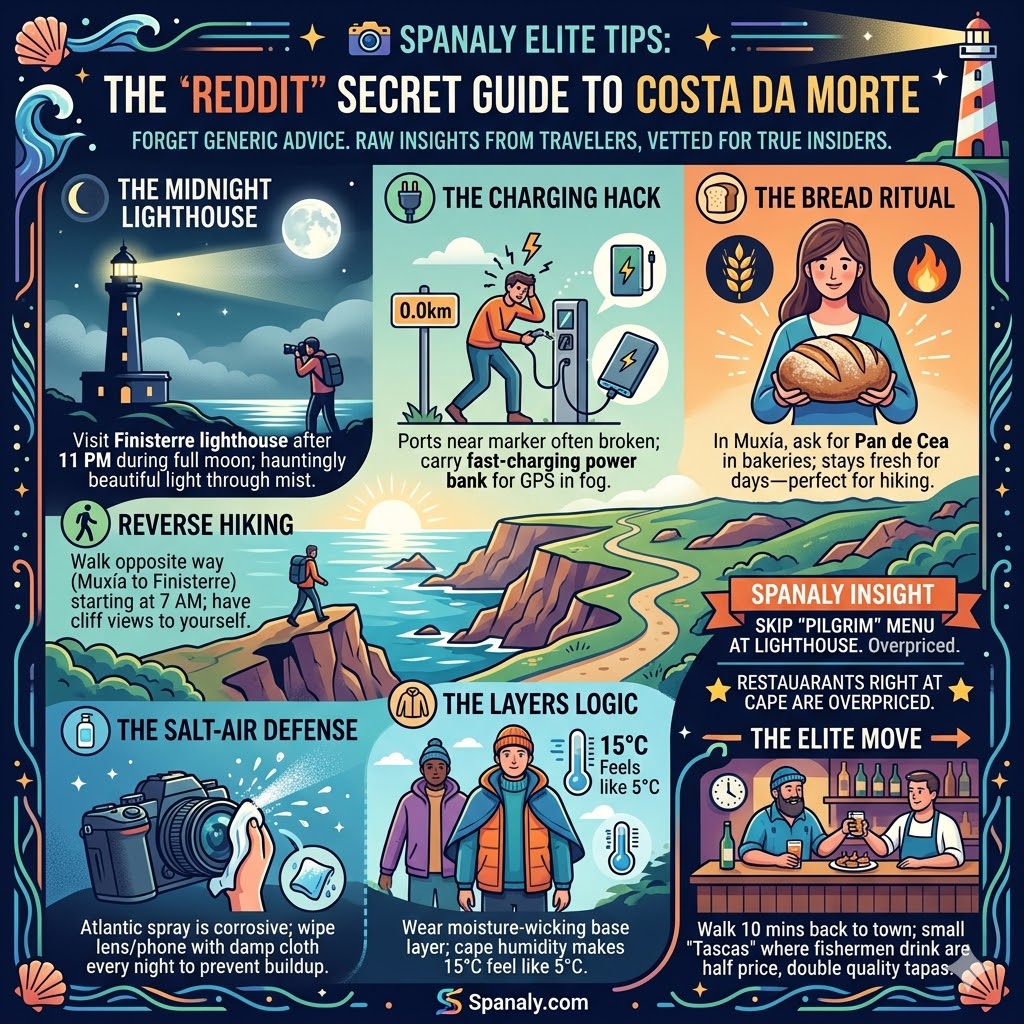
Forget generic advice found in brochures. These raw insights come from travelers who learned the hard way. Our community vetted these for those wanting a true insider experience.
🌑 The Midnight Lighthouse: Experience the lighthouse area just after dusk or during a full moon. Use the main paved access only. Always carry a professional headlamp for safety. Sudden fog makes cliff edges invisible at night.
🔌 The Charging Hack: Public charging ports near the “0.0km” marker are often broken. Carry a fast-charging power bank. Ensure your GPS remains active during thick coastal fog.
🍞 The Bread Ritual: Seek out authentic Galician “Hogaza” bread in local Muxía bakeries. This rustic, wood-fired bread stays fresh for days. It is the perfect fuel for long coastal hikes.
🚶 Reverse Hiking: Most people walk from Finisterre to Muxía. Walk the opposite way after the morning mist clears. You will enjoy dramatic Atlantic views in complete solitude.
🧴 The Salt-Air Defense: Atlantic spray is highly corrosive to electronics. Wipe your camera lens and phone screen every night. Use a damp cloth to prevent salt-crust buildup.
🧥 The Layers Logic: Do not just bring a jacket. Wear a moisture-wicking base layer for humidity. High humidity makes 15°C feel like 5°C.
Spanaly Insight: Skip the “Pilgrim” menu at the lighthouse. Restaurants at the cape are often overpriced. Walk 10 minutes back toward the town. Look for “Tascas” where local fishermen drink. The seafood tapas are better and half the price.
🛡️ Visitor FAQs – Finisterre & Muxía Guide
🛡️ Can I swim at the beaches near the lighthouses?
Swimming is extremely dangerous near the capes due to powerful undercurrents and rogue waves. Stick to the sheltered Praia de Langosteira in Finisterre for a safe dip. Most other coves in the Costa da Morte are perfect for photography but are not suitable for swimming even for experts.
🎫 Do I need to book a ticket to visit the lighthouses?
No, access to the Cape Finisterre and Muxía lighthouses is free and open to the public 24/7. However, if you wish to stay at the boutique hotel inside the Finisterre lighthouse or eat at its high-end restaurant, you must book several months in advance as capacity is very limited.
💧 Is there drinkable water along the hiking trails?
Natural springs are rare on the granite cliffs. We strongly recommend carrying at least 2 liters of water before starting any section of the Camino dos Faros. While town centers have public fountains with safe tap water, the coastal paths are remote and lack services for long stretches.
🚑 Is mobile signal reliable for navigation in the remote coves?
Expect frequent "dead zones" along the jagged coastline and between the cliffs. Always download your offline Google Maps or use a dedicated GPS app. If you are hiking alone, inform your accommodation about your route, as some areas near the hidden coves have zero cellular reception.
🏰 Is the terrain accessible for travelers with limited mobility?
The lighthouses themselves are accessible via paved roads, and the Sanctuary in Muxía is mostly flat. However, the coastal trails and hidden coves are filled with steep, irregular granite steps. For a comfortable experience, we recommend using a rental car to reach the main viewpoints directly rather than relying on the coastal footpaths.
Finisterre & Muxía Guide by Spanaly.com
Standing at the edge of the Atlantic is a transformative experience that defies simple description. Whether you came for the spiritual closure of the Camino or the raw beauty of the Galician coast, Finisterre and Muxía offer a profound sense of perspective.
🌅 Embrace the Silence: Let the Atlantic winds clear your mind as you watch a legendary sunset at Europe’s ancient edge.
🦐 Savor the Ocean: Treat your journey to the freshest seafood that the “Coast of Death” has to offer.
⛰️ Respect the Wild: Carry the memories of the granite cliffs and mystical sanctuaries back home with you.
🌿 Beyond the Capes: If you are ready to explore more of Galicia’s maritime magic, our Vigo & Rias Baixas Guide reveals the lush vineyards and calm estuaries just to the south.
Spanaly Insight: The Atlantic doesn’t just mark the end of a path; it marks the start of a new chapter. The Elite move: Take a small granite stone from the shore as a natural souvenir, leaving only footprints behind on the sacred sands of Muxía.