Table of Contents
Toggle⛰️ Discover Northern Spain’s Inland Soul
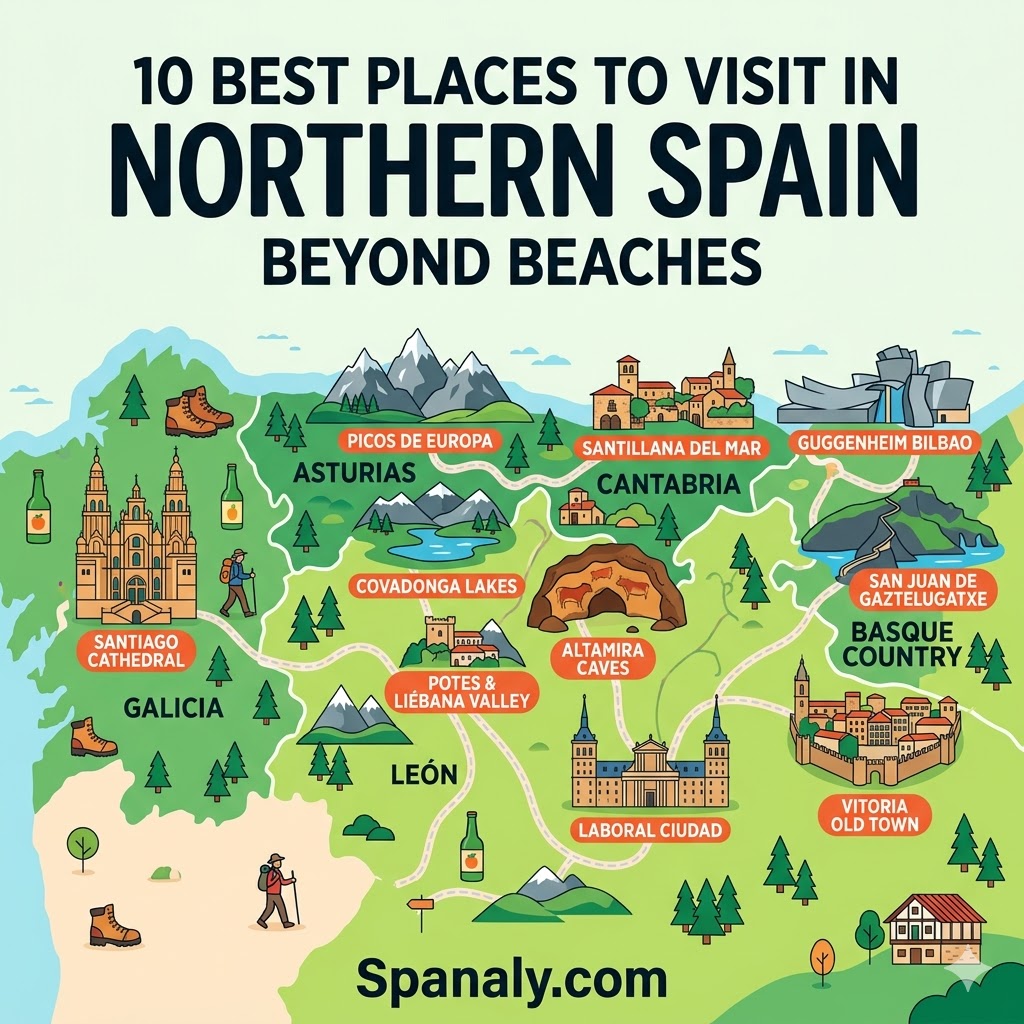
The mist clears as you ascend the jagged limestone massifs of the Picos de Europa. Below, ancient stone villages rest in valleys that haven’t changed for centuries. Most tourists stay on the sand, but the real “España Verde” lives here, in the lush, rainy interior.
Uncovering the hidden gems of the northern interior means trading the beach for Romanesque cathedrals and futuristic art hubs. This journey reveals a side of the Iberian Peninsula that feels more like a green alpine dream.
🥾 Authentic Paths: Hike through the clouds in Asturias or walk the spiritual trails of Galicia.
🏰 Living History: Step into medieval towns like Santillana del Mar, where time stands perfectly still.
🎨 Modern Marvels: Witness the titanium curves of the Guggenheim in Bilbao, a stark contrast to the surrounding mountain peaks.
To master your logistics across this vast region, start with our Ultimate Northern Spain Travel Guide for expert planning tips.
📸 Northern Spain Snapshot: Quick Essential Guide
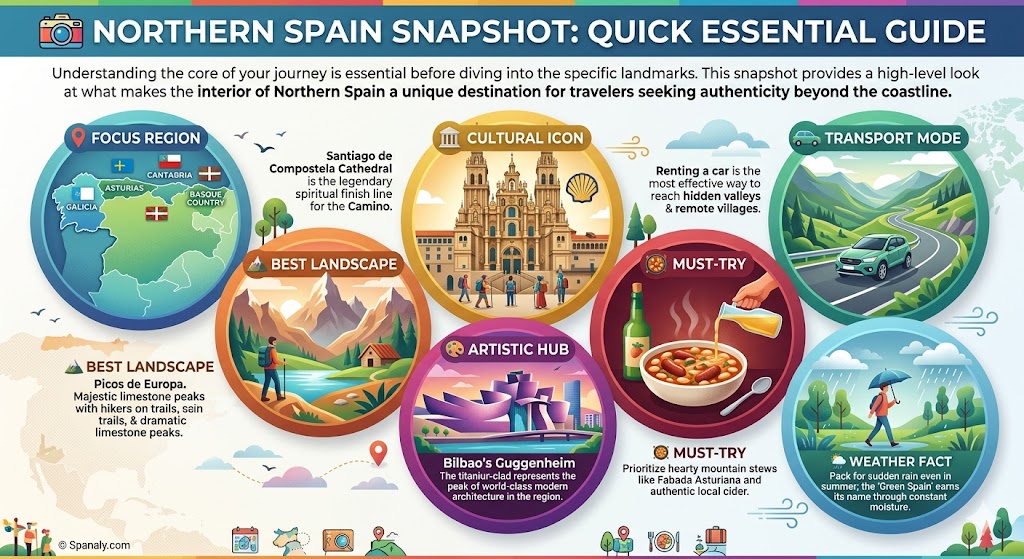
Understanding the core of your journey is essential before diving into the specific landmarks. This snapshot provides a high-level look at what makes the interior of Northern Spain a unique destination for travelers seeking authenticity beyond the coastline.
📍 Focus Region: Your adventure covers the diverse landscapes of Asturias, Cantabria, Galicia, and the Basque Country.
🏔️ Best Landscape: Picos de Europa stands as the ultimate destination for mountain hiking and dramatic limestone peaks.
🏛️ Cultural Icon: The Santiago de Compostela Cathedral remains the legendary spiritual finish line for the Camino.
🎨 Artistic Hub: Bilbao’s Guggenheim represents the peak of world-class modern architecture in the region.
🚗 Transport Mode: Renting a car is the most effective way to reach hidden valleys and remote villages.
🥘 Must-Try: Prioritize hearty mountain stews like Fabada Asturiana and authentic local cider.
🌦️ Weather Fact: Pack for sudden rain even in summer; the “Green Spain” earns its name through constant moisture.
⛰️ Picos de Europa: The Majestic Limestone Peaks
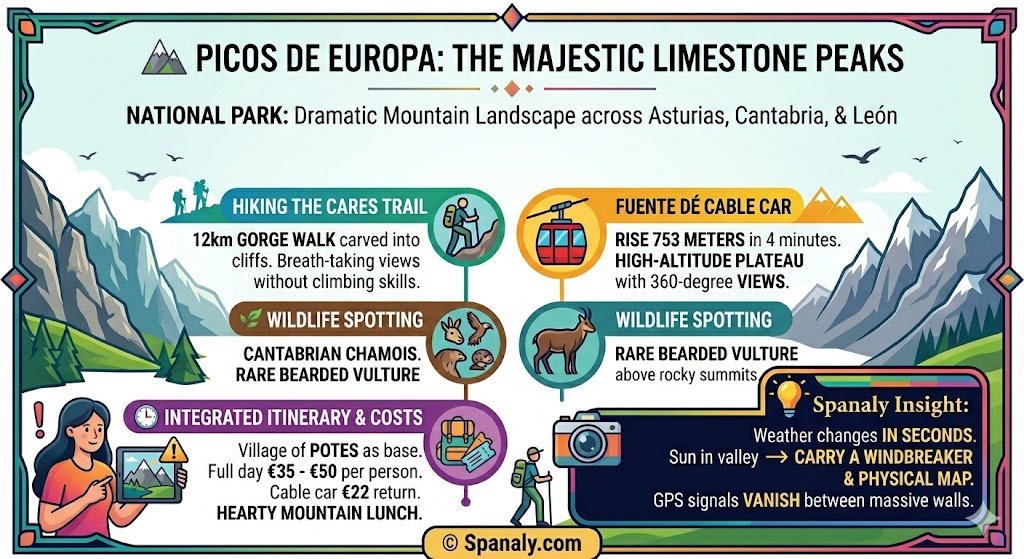
The Picos de Europa National Park is the crown jewel of inland Northern Spain, offering a dramatic landscape that feels worlds away from the Mediterranean. This mountain range, stretching across Asturias, Cantabria, and León, features jagged limestone peaks that pierce the clouds and deep gorges carved by emerald rivers. It stands as a sanctuary for hikers and nature enthusiasts seeking the region’s most untamed wilderness.
🧗 Hiking the Cares Trail: This 12km gorge walk is carved into the cliffs, offering breathtaking views without requiring professional climbing skills.
🚠 Fuente Dé Cable Car: Rise 753 meters in just four minutes to reach a high-altitude plateau with 360-degree views of the Cantabrian mountains.
🌿 Wildlife Spotting: Keep your eyes peeled for the Cantabrian chamois and the rare bearded vulture that soar above the rocky summits.
🕒 Mountain Logistics & Daily Budget
To truly experience the peaks, base yourself in the village of Potes. A full day of mountain exploration typically costs around €35 – €50 per person, including cable car tickets (€22 return) and a hearty mountain lunch. For a detailed schedule, follow our Santander to Picos de Europa itinerary to maximize your time in the high altitude.
Spanaly Insight: Weather in the Picos changes in seconds. Even if the sun is shining in the valley, always carry a windbreaker and a physical map, as GPS signals often vanish between the massive limestone walls.
🏛️ Santiago de Compostela: The Spiritual Heart of Galicia
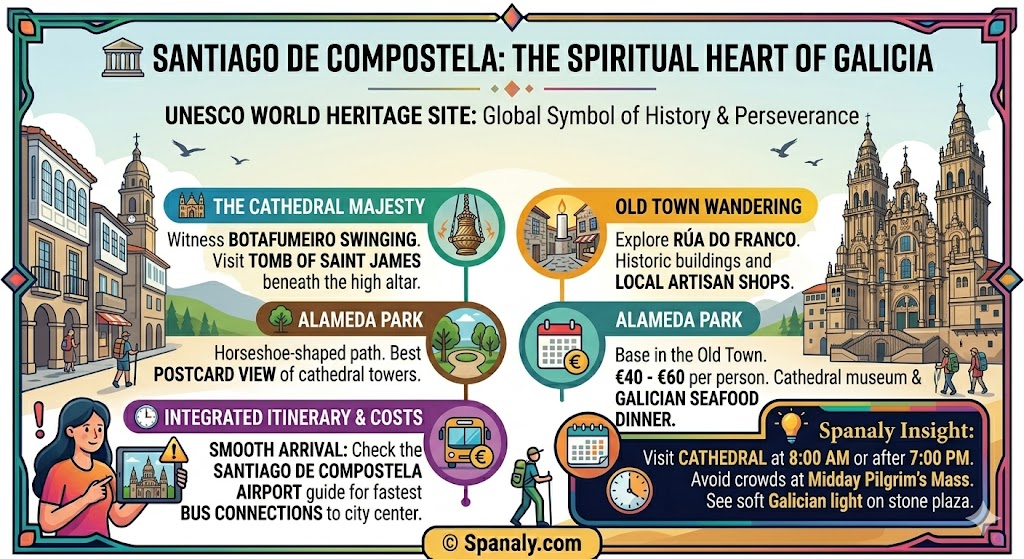
Santiago de Compostela is more than a city; it is a global symbol of perseverance and history. As the final destination of the legendary Camino de Santiago, its streets are filled with an electric energy from pilgrims arriving from all over the world. The entire old town is a UNESCO World Heritage site, dominated by the Romanesque, Gothic, and Baroque fusion of its legendary cathedral.
🕍 The Cathedral Majesty: Witness the Botafumeiro (giant incense burner) swinging through the transept and visit the tomb of Saint James beneath the high altar.
🕯️ Old Town Wandering: Explore the Rúa do Franco, famous for its historic granite buildings and local artisan shops.
🌳 Alameda Park: Walk the horseshoe-shaped path for the best postcard view of the cathedral towers rising above the city skyline.
🕒 Pilgrim Routes & Cathedral Expenses
A day in Santiago is best spent on foot. Expect to spend €40 – €60 per person, covering the Cathedral museum and tower tour (€12 – €15) and a traditional Galician seafood dinner. To navigate your arrival smoothly, check the Santiago de Compostela Airport guide for the fastest bus connections to the city center.
Spanaly Insight: Most visitors rush to the midday Pilgrim’s Mass. For a more peaceful experience, visit the cathedral at 8:00 AM or after 7:00 PM when the stone plaza reflects the soft Galician light without the heavy crowds.
🎨 Guggenheim Bilbao: A Modern Architectural Masterpiece

The Guggenheim Museum didn’t just change Bilbao; it redefined the architectural landscape of Northern Spain. This titanium-clad marvel, designed by Frank Gehry, sits on the edge of the Nervión River, reflecting the city’s industrial past and its artistic future. Even if you aren’t an art expert, the building itself is a landmark that justifies the trip inland.
🐕 Puppy and Maman: Walk around the exterior to see Jeff Koons’ flower-covered “Puppy” and Louise Bourgeois’ giant spider sculpture, “Maman”.
📐 The Atrium: Experience the 50-meter-high glass-and-stone atrium that serves as the heart of the museum’s interior light.
🖼️ Richard Serra’s “The Matter of Time”: Walk through massive weathering-steel sculptures that challenge your perception of space and movement.
🕒 Art Passes & City Planning
A visit to the museum and the surrounding Abandoibarra district usually takes about 4 to 5 hours. Budget approximately €30 – €45 per person, including the museum entrance fee (€13 – €18 depending on the season) and a selection of Pintxos at a nearby bar. To make the most of your visit to the Basque capital, use our things to do in Bilbao guide to find the best local spots within walking distance of the gallery.
🏰 Santillana del Mar: The "Town of Three Lies"
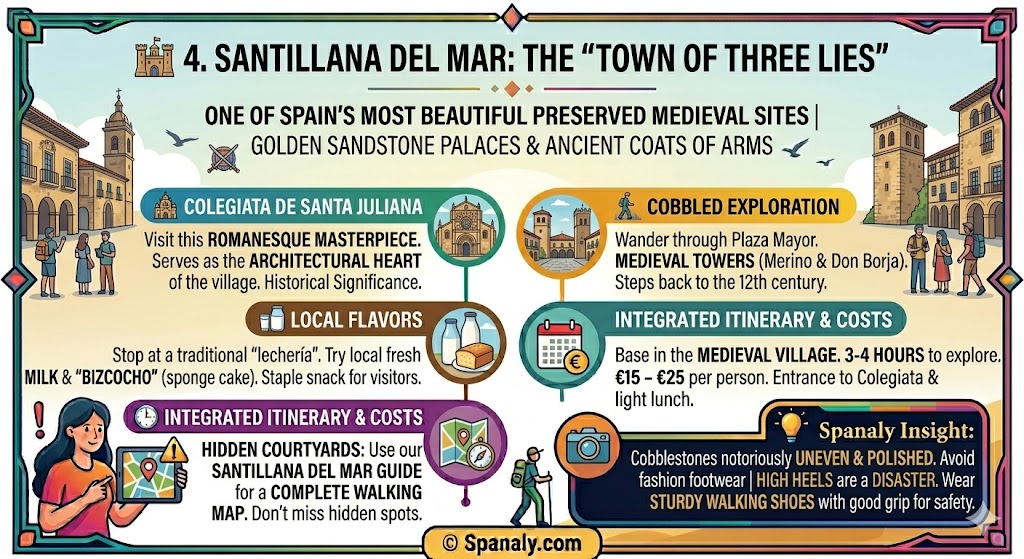
Known as the “Town of Three Lies” because it is neither Saint (Santi), nor flat (llana), nor by the sea (del Mar), this Cantabrian village is one of the most beautiful preserved medieval sites in Spain. Walking its cobbled streets feels like stepping back into the 12th century, with golden sandstone palaces and ancient coats of arms flanking every corner.
⛪ Colegiata de Santa Juliana: Visit this Romanesque masterpiece, which serves as the architectural heart of the village.
🚶 Cobbled Exploration: Wander through the Plaza Mayor, where the medieval towers of Merino and Don Borja stand as silent witnesses to history.
🥛 Local Flavors: Stop at a traditional “lechería” to try the local fresh milk and “bizcocho” (sponge cake), a staple snack for visitors.
🕒 Medieval Walk: Costs & Timing
A thorough exploration of the village takes approximately 3 to 4 hours. Expect to spend €15 – €25 per person, covering the entrance to the Colegiata and a light lunch. To ensure you don’t miss the hidden courtyards, refer to our Santillana del Mar guide for a complete walking map.
Spanaly Insight: The cobblestones here are notoriously uneven and polished by centuries of use. Avoid fashion footwear; high heels are a disaster on these streets. Wear sturdy walking shoes with good grip to enjoy the walk safely.
💧 Covadonga Lakes: Asturias’ Emerald Miracles
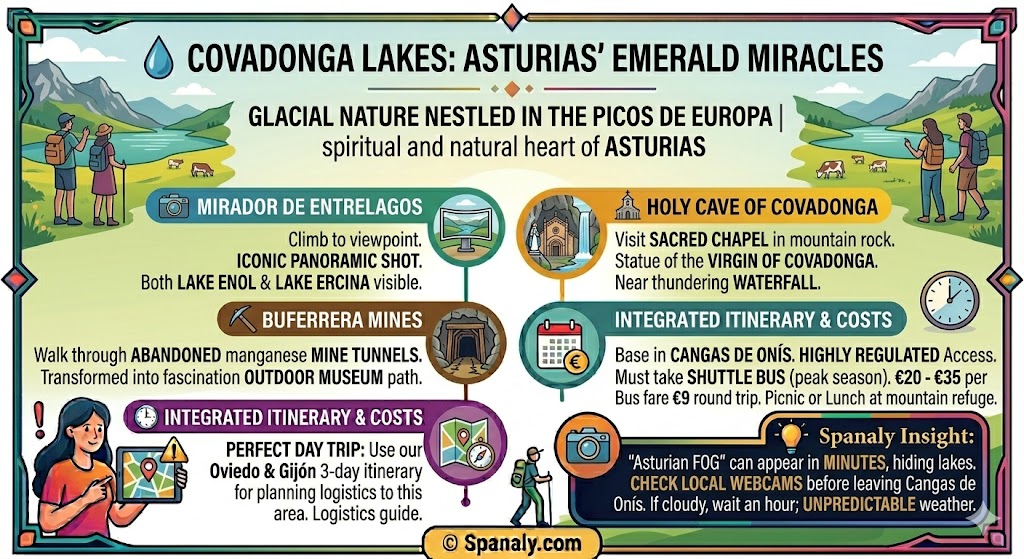
Nestled within the Picos de Europa, the Lakes of Covadonga (Enol and Ercina) showcase a breathtaking display of glacial nature. Vibrant emerald waters sit surrounded by lush pastures where cows graze freely beneath jagged limestone peaks. As the spiritual and natural heart of Asturias, this area remains a premier alpine escape for those seeking pure mountain air.
📷 Mirador de Entrelagos: Climb to this viewpoint for the iconic panoramic shot where you can see both Lake Enol and Lake Ercina simultaneously.
⛪ Holy Cave of Covadonga: Visit the sacred chapel carved directly into the mountain rock, housing the statue of the Virgin of Covadonga near a thundering waterfall.
⛏️ Buferrera Mines: Walk through the tunnels of these abandoned manganese mines, now transformed into a fascinating outdoor museum path.
🕒 Nature Shuttle & Access Fees
Access to the lakes is highly regulated to protect the environment. During peak seasons, you must take a shuttle bus from the Cangas de Onís area. Budget roughly €20 – €35 per person, covering the bus fare (€9 round trip) and a picnic or lunch at a mountain refuge. For a perfect day trip planning, check our Oviedo and Gijón 3-day itinerary which includes logistics for reaching this area.
Spanaly Insight: The “Asturian fog” can appear in minutes, completely hiding the lakes. Check the local webcams before leaving Cangas de Onís. If it’s cloudy, wait an hour; the weather here is as unpredictable as it is beautiful.
🎨 Altamira Caves: The Sistine Chapel of Prehistoric Art
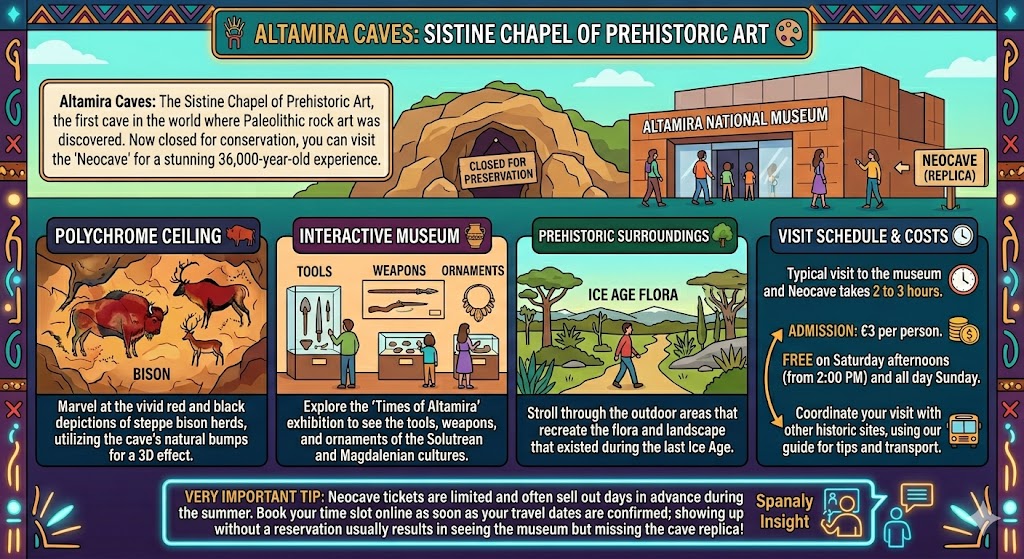
The Altamira Cave is a world-renowned archaeological site located near Santillana del Mar, containing some of the most important Upper Paleolithic cave paintings in existence. While the original cave is closed to the public to ensure its preservation, the Altamira National Museum and Research Center offers a stunning “Neocave”—a millimeter-perfect replica that allows you to experience the 36,000-year-old bison and deer drawings in their original context.
🦬 The Polychrome Ceiling: Marvel at the vivid reds and blacks used to depict herds of steppe bison, utilizing the natural bumps in the cave wall to create a 3D effect.
🏺 Interactive Museum: Explore the “Times of Altamira” exhibition to see the tools, weapons, and ornaments used by the Solutrean and Magdalenian people.
🌳 Prehistoric Surroundings: Walk through the museum’s outdoor grounds, which simulate the flora and landscape that existed during the last Ice Age.
🕒 Prehistoric Tour: Rates & Booking
A visit to the museum and the Neocave typically takes 2 to 3 hours. Admission is very affordable at €3 per person, and it is often free on Saturday afternoons (from 2:00 PM) and all day Sunday. To coordinate your visit with other nearby historic sites, follow our Altamira Caves guide for booking tips and transport options.
Spanaly Insight: Tickets for the Neocave are limited and often sell out days in advance during the summer. Book your time slot online as soon as your travel dates are confirmed; showing up without a reservation usually results in seeing the museum but missing the cave replica itself.
🐉 San Juan de Gaztelugatxe: The Dragonstone Stairway
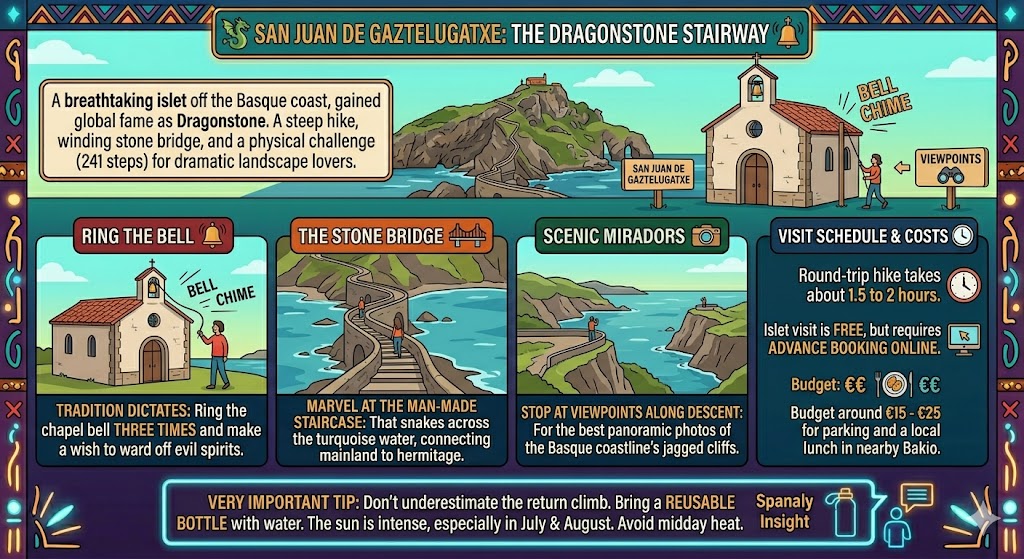
Perched on an islet off the Basque Country coast, San Juan de Gaztelugatxe gained global fame as “Dragonstone“. While seaside, the experience is a physical challenge involving a steep hike and a 241-step stone bridge. It is a legendary Atlantic landmark for those who crave dramatic landscapes and ancient coastal history.
🔔 Ring the Bell: Tradition dictates that once you reach the top, you must ring the chapel bell three times and make a wish to ward off evil spirits.
🌉 The Stone Bridge: Marvel at the man-made staircase that snakes across the turquoise water, connecting the mainland to the hermitage.
🦅 Scenic Miradors: Stop at the viewpoints along the descent for the best panoramic photos of the Basque coastline’s jagged cliffs.
🕒 Dragonstone Hike: Entry & Prep
The round-trip hike takes about 1.5 to 2 hours depending on your fitness level. While visiting the islet is free, you must book a time slot in advance online due to strict capacity limits. Budget around €15 – €25 for parking and a well-deserved local lunch in the nearby town of Bakio. For full logistics, read our San Juan de Gaztelugatxe guide before you start your climb.
🏘️ Potes & Liébana Valley: Medieval Charm in the Clouds
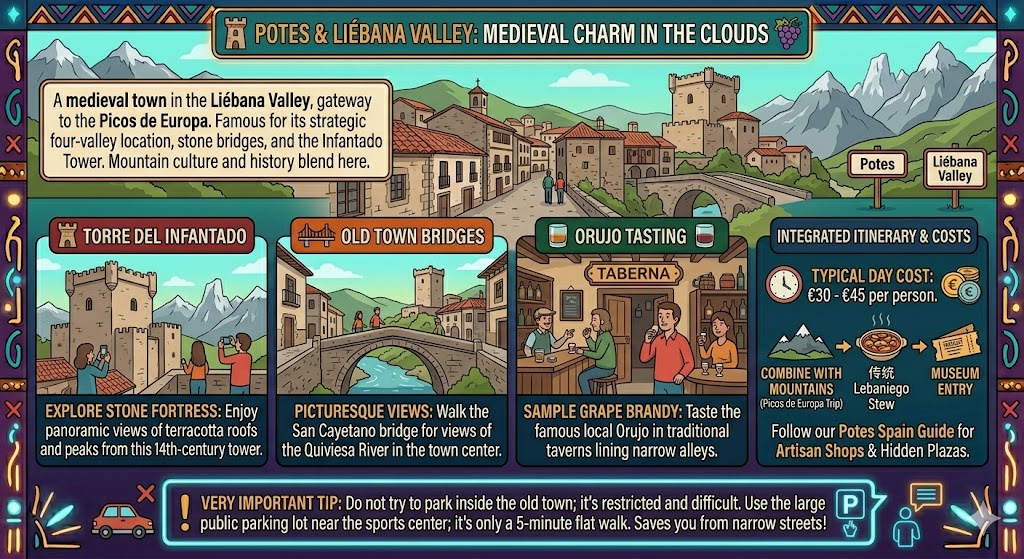
Potes serves as the historic gateway to the eastern massif of the Picos de Europa, where mountain culture and history blend seamlessly. This medieval gem is famous for its strategic location where four valleys meet, offering a retreat that feels perfectly preserved in time.
🏰 Torre del Infantado: Explore this 14th-century stone fortress for panoramic views of the terracotta roofs and surrounding limestone peaks.
🌉 Old Town Bridges: Walk across the San Cayetano bridge for the most picturesque view of the Quiviesa River flowing through the town center.
🥃 Orujo Tasting: Sample the legendary local grape brandy at the Picos de Cabariezo distillery for an authentic artisanal experience.
🕒 Village Guide: Prices & Local Eats A visit to Potes is best combined with a trip to the nearby mountains. A typical day here costs around €30 – €45 per person, including a museum entry and a traditional Cocido Lebaniego (chickpea stew) at local favorites like Casa Cayo. For a perfectly planned trip, follow our Potes Spain Guide to discover hidden plazas.
Spanaly Insight: Parking inside the old town is nearly impossible and restricted to residents. Use the large public parking lot near the sports center; it’s a 5-minute flat walk to the center and saves you from navigating dangerously narrow medieval streets.
🏗️ Laboral Ciudad de la Cultura: Spain’s Hidden Monumental Giant
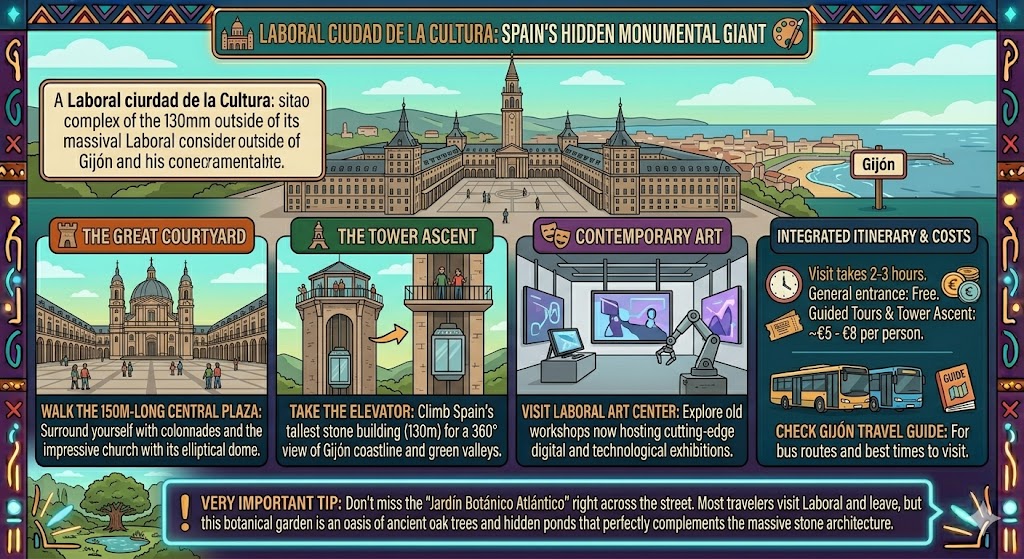
Imagine a stone fortress so vast it holds a central square larger than Venice’s San Marco. Located just outside Gijón, this monumental complex is the largest building in Spain and a true architectural marvel that often leaves travelers speechless. Originally an orphanage, it now functions as a high-tech cultural hub, dominated by a soaring tower that pierces the Asturian skyline.
🏰 The Great Courtyard: Walk through the 150-meter-long central plaza, surrounded by grand colonnades and an elliptical-domed church.
🗼 The Tower Ascent: Take the elevator to the top of the 130-meter tower—Spain’s tallest stone building—for 360-degree views of the coast.
🎭 Contemporary Art: Visit the LABoral Centro de Arte in the old workshops to see cutting-edge digital exhibitions.
🕒 Monumental Access & Tour Fees A visit takes about 2 to 3 hours. While general entrance is free, guided tours and the tower ascent cost approximately €5 – €8 per person. To coordinate your arrival, check our Gijón Travel Guide for bus routes and expert timing.
Spanaly Insight: Don’t miss the Jardín Botánico Atlántico right across the street. While most travelers leave after seeing the stone architecture, this botanical garden offers a lush oasis of ancient oak trees and hidden ponds.
⛪ Vitoria-Gasteiz: The Sustainable Historic Capital
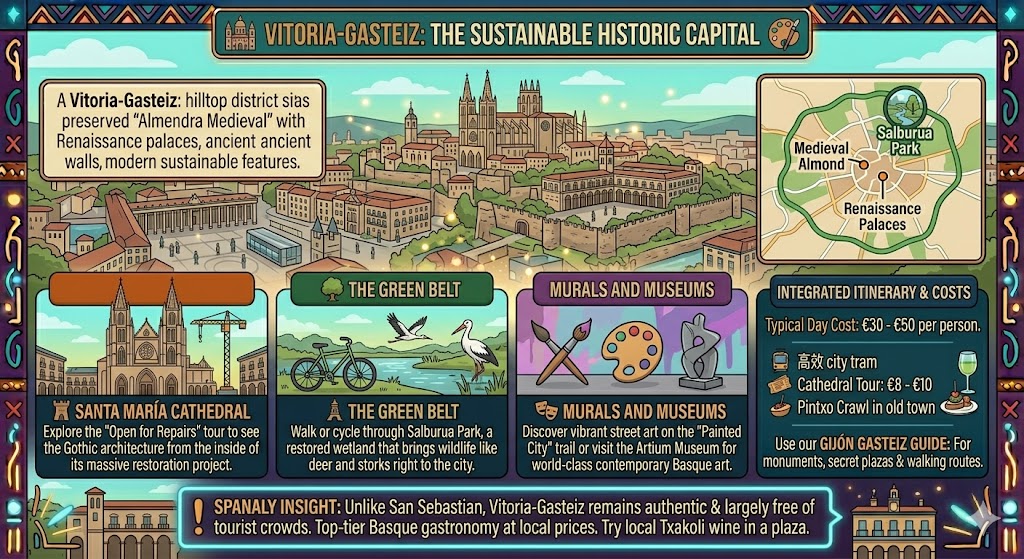
Vitoria-Gasteiz, the Basque capital, offers a masterclass in blending medieval heritage with urban nature. Its heart is the “Almendra Medieval” (Medieval Almond), a hilltop district where narrow streets wind past Renaissance palaces and ancient city walls.
🕍 Santa María Cathedral: Explore the “Open for Repairs” tour to witness Gothic architecture from the inside of a massive restoration project.
🌳 The Green Belt: Cycle through Salburua Park, a restored wetland that brings deer and storks right to the city’s edge.
🎨 Murals and Museums: Discover the “Painted City” street art trail or visit the Artium Museum for world-class contemporary Basque art.
🕒 Green Capital: Budget & Transport A day in Vitoria-Gasteiz is highly affordable and best explored by the city’s efficient tram system. Budget approximately €30 – €50 per person, covering the cathedral tour and a high-quality Pintxo crawl. Soak in the sustainable rhythm at Plaza de la Virgen Blanca, the city’s vibrant social heart. For a complete list of monuments, use our Vitoria-Gasteiz Things to Do Guide to plan your route.
Spanaly Insight: Unlike San Sebastian, this city remains authentic and largely free of tourist crowds. This means you can enjoy top-tier Basque gastronomy at local prices. Try the local Txakoli wine in a plaza; it is the best way to experience the city’s relaxed atmosphere.
🥘 Northern Spanish Gastronomy: Must-Try Inland Dishes
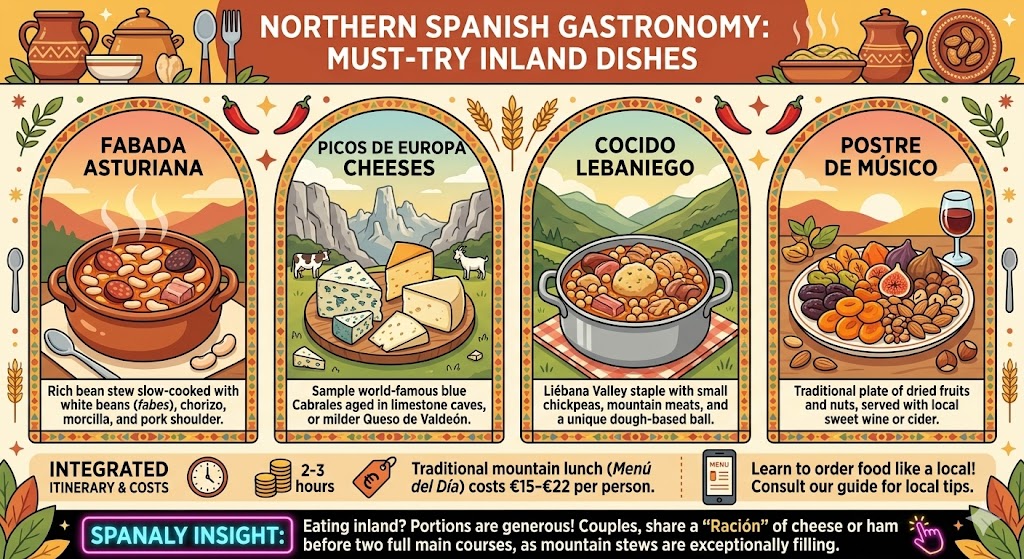
Stepping away from the coast shifts the culinary focus from seafood to the hearty, soul-warming flavors of the mountains and valleys. Inland Northern Spain is defined by its rich stews, cured meats, and artisanal cheeses that reflect the rugged landscape.
🍲 Fabada Asturiana: This rich bean stew from Asturias features large white beans (fabes) slow-cooked with chorizo, morcilla (blood sausage), and pork shoulder.
🧀 Picos de Europa Cheeses: Sample the world-famous Cabrales, a powerful blue cheese aged in limestone caves, or the milder Queso de Valdeón.
🥣 Cocido Lebaniego: A staple of the Liébana Valley, this heavy stew is made with small chickpeas, mountain meats, and a unique dough-based ball called relleno.
🍮 Postre de Músico: End your meal with a “musician’s dessert,” a traditional plate of dried fruits and nuts, often served with a glass of local sweet wine or cider.
🕒 Dining Out: Typical Menu Rates
A traditional multi-course mountain lunch (Menú del Día) typically costs between €15 – €22 per person. To learn the proper technique for pouring local drinks and ordering like a pro, consult our guide on how to order food like a local in Spain.
Spanaly Insight: When eating inland, portions are notoriously generous. If you are dining as a couple, consider sharing a “Ración” (large plate) of cheese or ham before committing to two full main courses, as the mountain stews are exceptionally filling.
🚗 How to Get Around: Trains vs. Road Trips
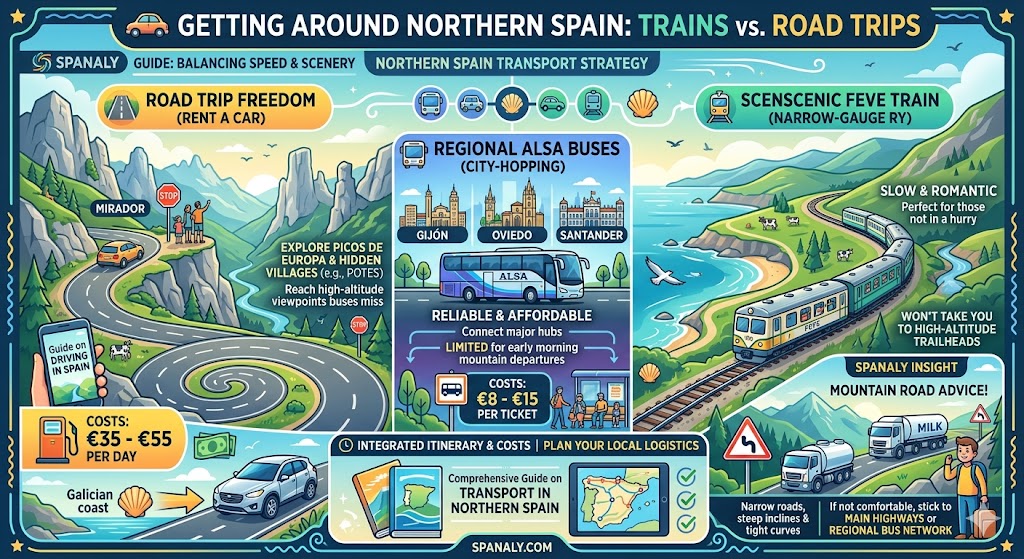
Moving through the rugged terrain of the north requires a strategy that balances speed with scenery. While the coastal cities are well-connected, reaching the deep valleys and limestone peaks mentioned earlier often demands a more personal approach to transport.
🛣️ The Freedom of a Road Trip: Renting a car is the absolute best way to explore the Picos de Europa and hidden villages like Potes. It allows you to stop at mountain miradors that buses simply cannot reach. For a complete logistical breakdown, check our guide on driving in Spain.
🚆 The Scenic FEVE Train: The narrow-gauge railway (FEVE) crawls along the northern coast and slightly inland. It is slow and “romantic,” perfect for those not in a hurry, but it won’t take you to the high-altitude trailheads.
🚌 Regional ALSA Buses: Reliable and affordable, these connect major hubs like Gijón, Oviedo, and Santander. They are great for city-hopping but limited when it comes to early morning mountain departures.
🕒 Car Rental vs. Bus Estimates
A small car rental usually costs €35 – €55 per day, excluding fuel. If you prefer public transport, a regional bus ticket between cities averages €8 – €15. To plan your route effectively, read our comprehensive guide on transport in Northern Spain to master the local logistics.
🌦️ Best Time to Visit Northern Spain for Hiking and Sightseeing
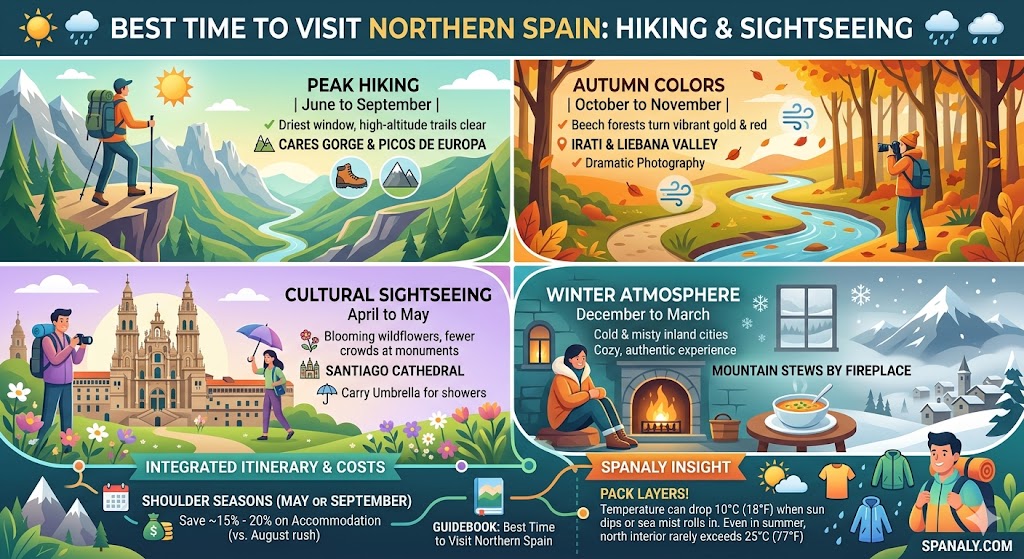
Choosing the right season is critical for experiencing the “Green Spain” without being constantly hindered by the region’s famous Atlantic rain. While the interior landscapes are beautiful year-round, your activity level should dictate your calendar.
🥾 Peak Hiking (June to September): This is the driest window for tackling high-altitude trails like the Cares Gorge or Picos de Europa, as snow usually clears by late June.
🍂 Autumn Colors (October to November): The beech forests of the Irati and Liebana valleys turn vibrant gold and red, offering the most dramatic photography opportunities with cooler, crisp air.
⛪ Cultural Sightseeing (April to May): Spring brings blooming wildflowers and fewer crowds at major monuments like the Santiago Cathedral, though you should carry an umbrella for frequent light showers.
❄️ Winter Atmosphere (December to March): Inland cities like Vitoria-Gasteiz can be quite cold and misty, creating a cozy, authentic atmosphere perfect for enjoying heavy mountain stews by a fireplace.
🕒 Seasonal Savings & Weather Prep
Traveling during the “shoulder seasons” (May or September) can save you approximately 15% – 20% on accommodation compared to the August rush. To plan your trip around the most favorable weather patterns, check our expert analysis on the best time to visit Northern Spain.
Spanaly Insight: Even in the height of summer, temperatures in the northern interior rarely exceed 25°C (77°F). Always pack layers; the temperature can drop by 10 degrees the moment the sun dips behind a limestone peak or a sea mist rolls inland.
🗺️ Planning Your Inland Northern Spain Itinerary
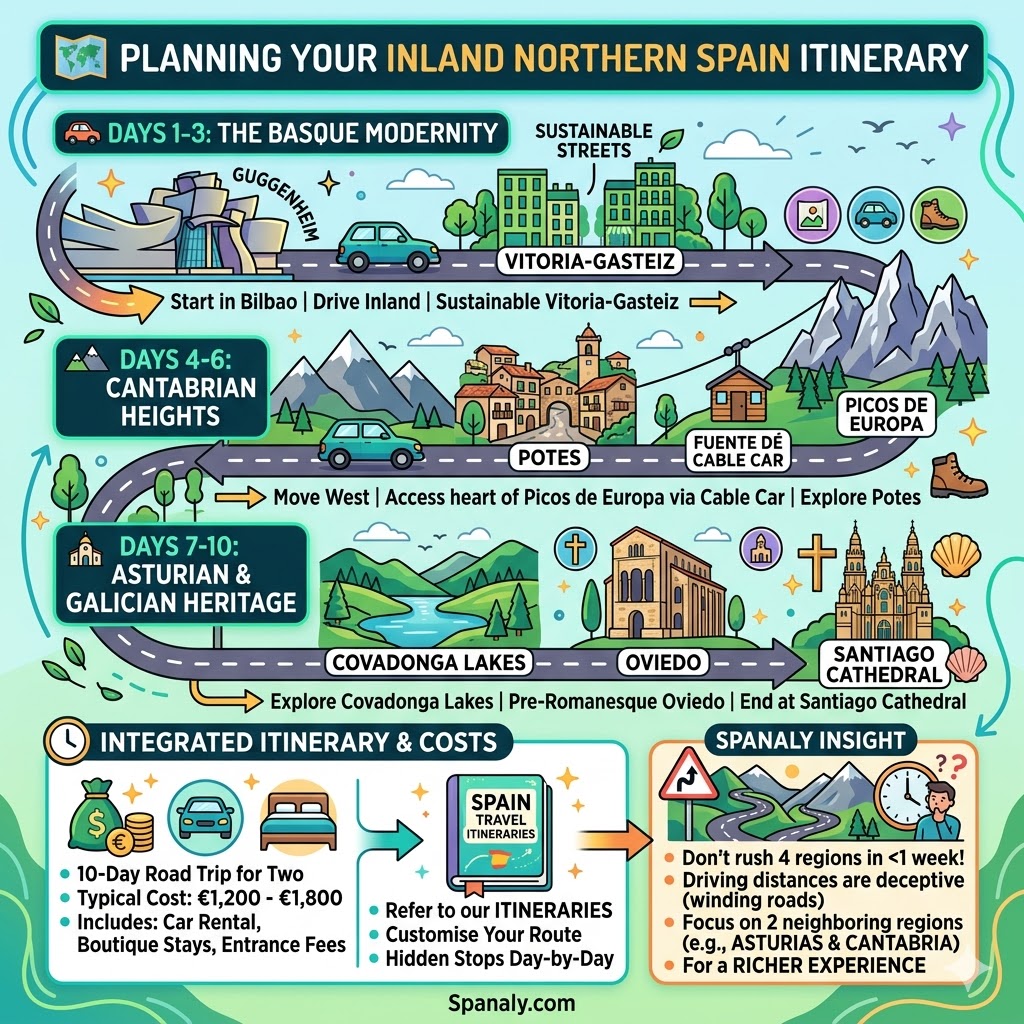
Connecting the diverse landmarks of the north requires a logical flow to avoid unnecessary backtrack across the mountains. This suggested route balances the rugged peaks of Asturias with the cultural sophistication of the Basque Country and the spiritual finish line in Galicia.
🚗 Days 1-3: The Basque Modernity: Start in Bilbao to witness the Guggenheim before driving inland to the sustainable streets of Vitoria-Gasteiz.
🏔️ Days 4-6: Cantabrian Heights: Move west toward Potes and use the Fuente Dé cable car to access the heart of the Picos de Europa.
⛪ Days 7-10: Asturian & Galician Heritage: Explore the Covadonga Lakes and the pre-Romanesque architecture of Oviedo before ending your journey at the Santiago Cathedral.
🕒 Route Efficiency & Overall Budget
A well-paced 10-day road trip across these inland gems typically costs between €1,200 – €1,800 for two people, including car rental, mid-range boutique stays, and entrance fees. For a day-by-day breakdown of activities and hidden stops, refer to our Spain travel itineraries to customize your route.
💎 Spanaly Elite Tips: The "Reddit-Style" Insider Knowledge

To truly master Northern Spain, you must look beyond the official brochures. These “Elite Tips” are gathered from local forums and seasoned travelers who have navigated the misty valleys of the interior.
🧀 The “Blue Cheese” Preservation Hack: If you buy authentic Cabrales or Valdeón cheese in the Picos de Europa, never wrap it in plastic film. Use the original wax paper or a damp cloth, or the “living” bacteria will suffocate and ruin the flavor before you get home.
⛽ The Village Fuel Rule: In the interior of Asturias and Cantabria, never let your tank drop below 25%. Google Maps often underestimates the distance between mountain petrol stations, and many small-town pumps close unexpectedly on feast days or mid-afternoon.
🚿 The “Rain Gear” Reality: Forget umbrellas; the Atlantic wind (Viento Sur) will snap them in seconds. Invest in a high-quality “breathable” rain shell. Locals wear layers of wool—it stays warm even when damp, unlike down jackets which lose insulation.
📷 The “Golden Hour” Mirror: For the best photos of the Guggenheim Bilbao, don’t just stand on the bridge. Cross the Salve Bridge to the opposite bank at sunset to capture the titanium scales reflecting the orange sky against the water.
🍽️ The “Sidería” Etiquette: In Asturian cider houses (Sidrerías), never pour your own cider unless you’ve mastered the escanciar (pouring from height). Wait for the waiter. Also, only pour a “culín” (a small splash) at a time—it must be drunk immediately while it’s still aerated.
🕒 Expert Hacks & Money-Saving Secrets
Following these local “unwritten rules” won’t cost you extra, but it will save you from the €60 – €100 headache of a mountain tow truck or ruined souvenirs. For more practical advice on preparing for the unique northern climate, see our guide on what to pack for Spain.
Spanaly Insight: Many inland villages in Galicia and Asturias are “Dead Zones” for modern e-SIMs. Always download your Google Maps for offline use before entering the Liébana or Sil Canyon regions, as the deep granite walls act as a natural signal jammer.
⛰️ Visitor FAQs – Northern Spain Inland Guide
🌲 Is it safe to hike alone in the Picos de Europa?
Yes, solo hiking is common and generally safe on marked trails like the Cares Gorge. However, the weather in the limestone peaks can change in minutes. Always inform your accommodation of your route and ensure you have an offline map, as mobile signals are often non-existent in deep canyons.
do I need to be a religious pilgrim to visit the Santiago Cathedral?
Not at all. The Cathedral of Santiago de Compostela is an architectural and cultural masterpiece open to everyone. While pilgrims come for spiritual reasons, thousands of tourists visit daily to admire the Romanesque carvings and the stunning Pórtico de la Gloria without participating in religious rites.
🍖 Are there vegetarian options in the meat-heavy mountain villages?
While traditional stews like Fabada use pork, modern Northern Spanish cuisine is evolving. In cities like Vitoria-Gasteiz and Oviedo, you will find excellent vegetarian Pintxos. In rural areas, look for Tortilla de Patatas, local artisanal cheeses, and Pimientos de Padrón to ensure a meat-free meal.
🚗 How difficult is driving in the interior valleys?
The main roads are excellent, but secondary routes to places like Potes or the Covadonga Lakes are narrow and winding. If you are prone to motion sickness or uncomfortable with sharp hairpins, consider using regional buses. Always avoid driving at night in the mountains due to local wildlife like wild boar and deer.
🥾 What is the specific "Northern Spain" dress code?
The key is layering. Even in July, mornings in the valleys can be misty and cool. A light, waterproof windbreaker is more useful than a heavy coat. For city visits like Bilbao, "smart-casual" is the norm, but for the mountains, prioritize moisture-wicking fabrics over denim, which takes forever to dry in the humid air.
Northern Spain Guide by Spanaly.com
Exploring the inland treasures of Northern Spain rewards the patient traveler with unmatched authenticity. While the coast is undeniably beautiful, the true soul of “Green Spain” resides in its misty peaks, medieval stone villages, and slow-paced mountain life.
🏔️ Embrace the Wild: Move beyond the main cities to discover the deep, magical valleys of Asturias and Cantabria.
🥘 Taste the Tradition: Every hearty mountain stew and artisanal cheese tells a story of a culture deeply connected to the land.
🚶 Slow Down: The north is a place to breathe the crisp air and wander without a fixed schedule.
📝 Prepare Wisely: Having a solid strategy for unpredictable weather and transport turns a good trip into an unforgettable one.
Spanaly Insight: The most memorable moments in the north usually happen when you lose GPS signal and stumble upon a hidden mountain tavern instead.
To ensure your logistics are as smooth as a freshly poured glass of cider in Oviedo, use our Ultimate Guide to Plan Your Trip to Spain to build your dream itinerary today.