Table of Contents
Toggle🛡️ Why Visit Santillana del Mar?
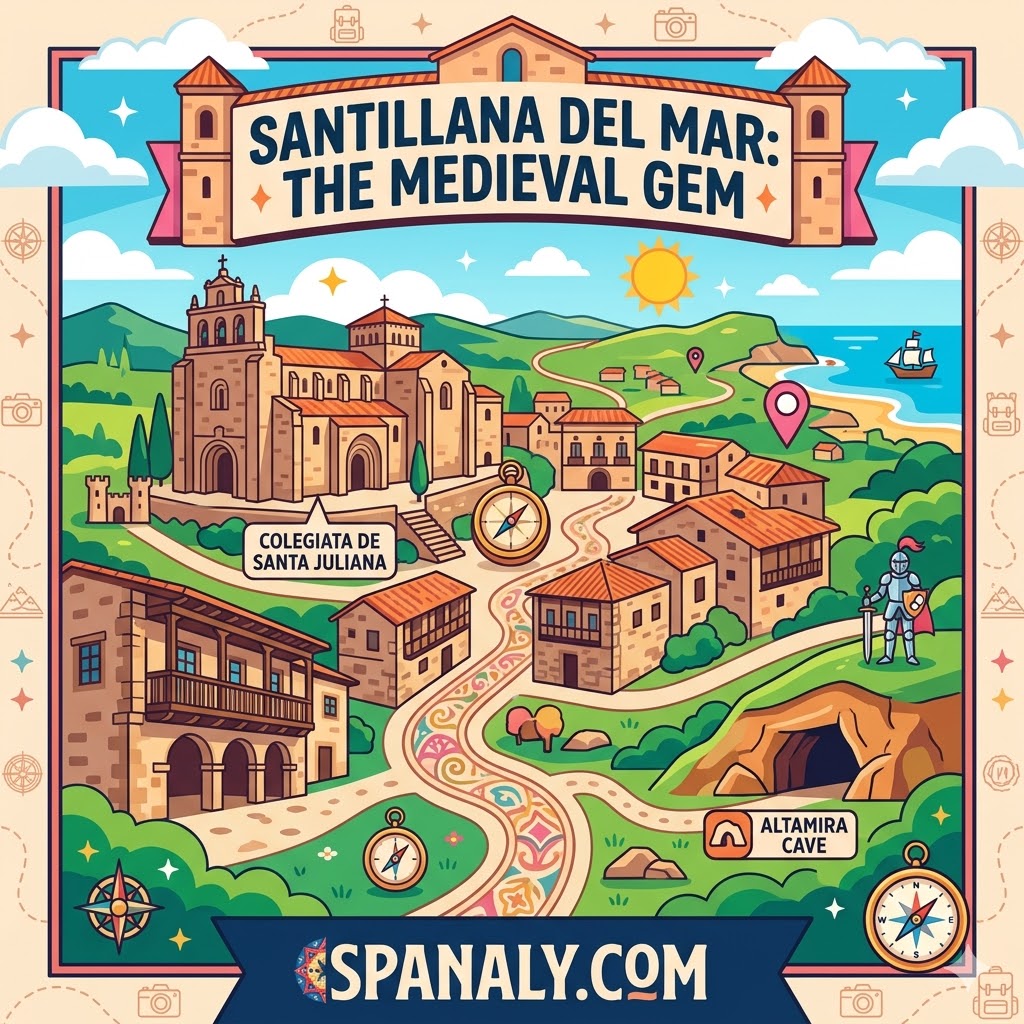
Visiting Santillana del Mar allows you to walk through one of Spain’s best-preserved medieval villages. Located in the heart of España Verde, this Cantabrian destination famously “lies” about its name.
🚫 Not Holy (Santa): The town has no religious origins despite its name.
🚫 Not Flat (Illana): Expect steep, winding cobblestone streets throughout the center.
🚫 No Sea (del Mar): The coast sits several kilometers away from the historic quarter.
Specifically, integrating this stop into your Northern Spain travel guide provides a perfect look at authentic stone architecture. However, prepare for high tourist crowds during summer weekends. Most visitors find the authentic atmosphere slightly diminished by the souvenir shops. Consequently, arriving before 10:00 AM helps you experience the town before the large groups appear.
Spanaly Insight: Look for the “Abbey” signs near the entrance. Locals know that the small dairy shops nearby sell the most authentic Sobao Pasiego cake in the region.
Try to wear sturdy walking shoes to handle the uneven medieval pavement. Make sure to explore the side alleys to escape the main tourist rush.
🛡️ Snapshot: Santillana del Mar Essentials at a Glance

Planning your trip to this medieval town requires smart logistics to maximize your experience. As a key stop in España Verde, Santillana del Mar offers a journey back in time.
📅 Quick Status: Known as the “Town of Three Lies” because it is neither Holy, flat, nor by the sea.
⏱️ Time Needed: The village is compact and can be fully explored in about 4 to 5 hours.
🚶 Primary Activity: Walking the 12th-century limestone streets to admire preserved stone architecture.
📍 Regional Hub: Located just 30 kilometers west of Santander, making it a perfect day trip.
Weekday visits in May or September offer a significantly more authentic atmosphere than crowded weekends. Consequently, choosing a Tuesday or Wednesday allows you to photograph the historic facades without the tourist rush.
⚖️ Santillana del Mar vs. Albarracín: A Medieval Rivalry
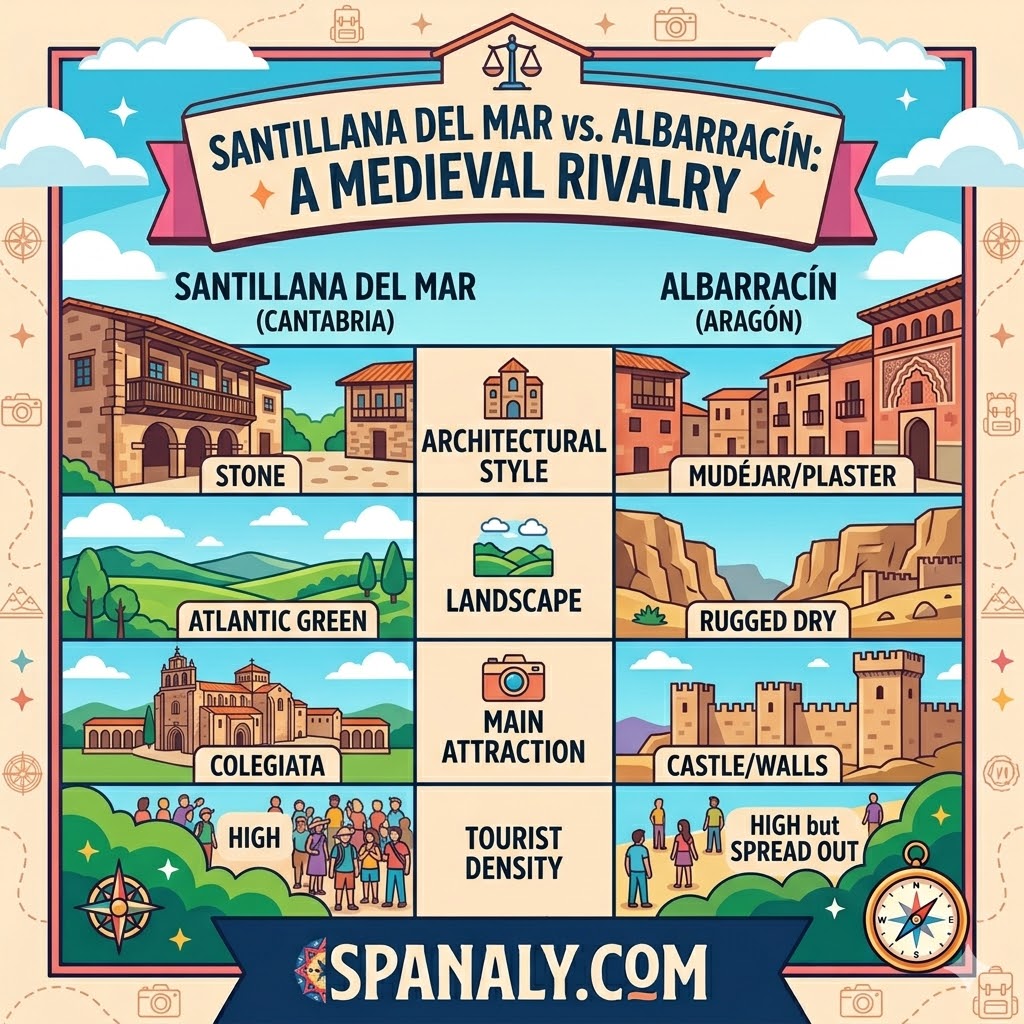
Choosing the most beautiful village in Spain often leads to a debate between Santillana del Mar in Cantabria and Albarracín in Teruel. Both locations offer a deep dive into the country’s historic heritage, but they cater to very different types of travelers.
| Feature | Santillana del Mar (Cantabria) | Albarracín (Aragón) |
|---|---|---|
| Architectural Style | Romanesque & Renaissance stone | Mudéjar & reddish plaster walls |
| Landscape | Green, Atlantic lush hills | Rugged, dry limestone cliffs |
| Main Attraction | Colegiata de Santa Juliana | Moorish castle & city walls |
| Tourist Density | Extremely high in summer | High, but more spread out |
Santillana sits within the heart of España Verde, making it a humid and verdant experience. Moreover, its proximity to the coast makes it a popular stop for those following a Northern Spain road trip itinerary. Consequently, the town feels more like a lived-in museum compared to the defensive, fortress-like feel of Albarracín.
Spanaly Insight: While Santillana is more accessible, Albarracín requires more strenuous walking due to its verticality. If you have mobility issues, Santillana’s flatter (though cobbled) streets are a safer choice.
Try to visit both if your schedule allows, as they represent the two different faces of medieval Spain. Make sure to check the local weather forecasts, as the Cantabrian rain can change your experience in seconds.
📍 Where is Santillana del Mar Located in Cantabria?
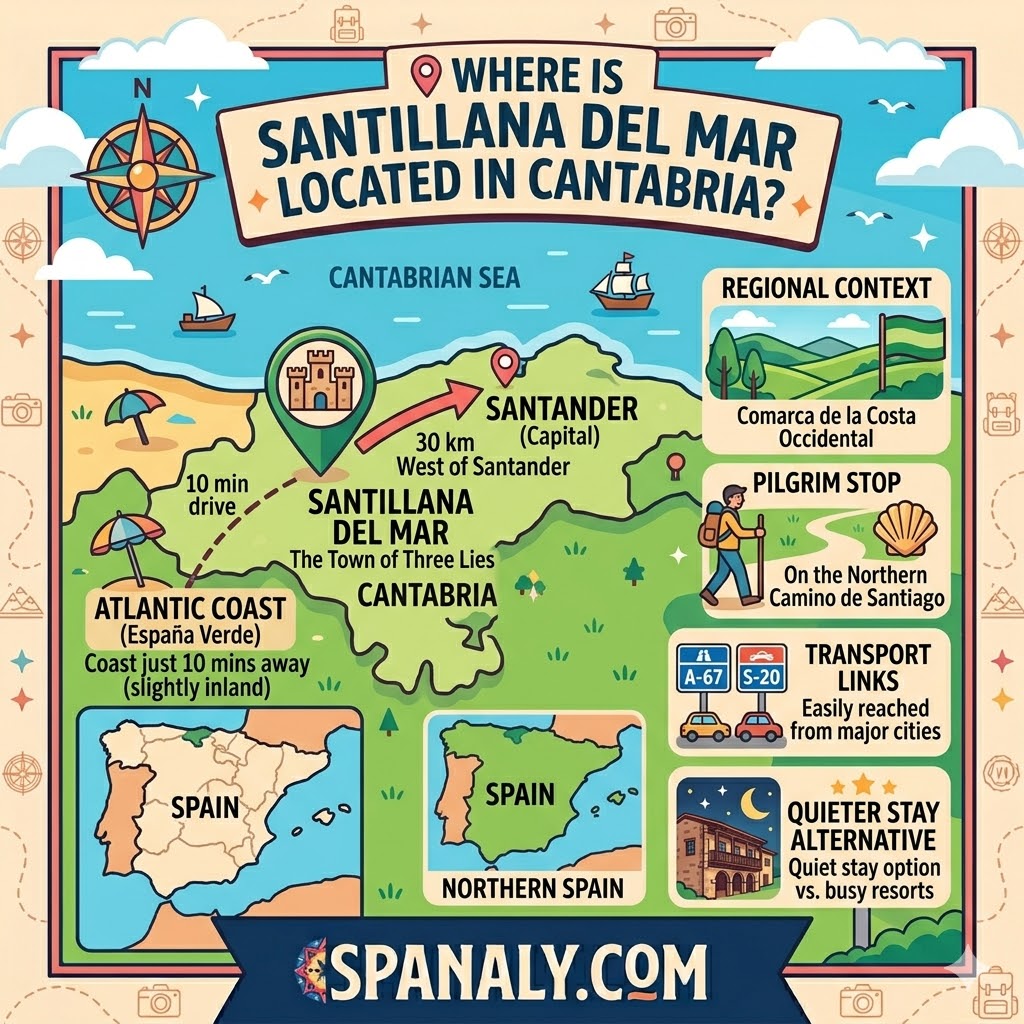
Finding Santillana del Mar is straightforward. It sits in the western part of the Cantabria region in Northern Spain. This medieval gem is strategically located just 30 kilometers west of Santander. Consequently, it serves as a central hub for exploring the wider España Verde territory.
⏱️ Driving Time: A quick 30-minute drive from Santander via the A-67 or S-20 highways.
🚌 Bus & Transport: Frequent “ALSA” bus services connect Santander to Santillana in about 45 minutes.
🚆 Train Access: There is no direct train station; the nearest stop is in Torrelavega (10-minute taxi ride away).
✈️ Nearest Airport: Santander Airport (SDR) is the closest gateway, located roughly 25 minutes from the town entrance.
🐚 Camino de Santiago: The town is a major stop on the Northern Way, welcoming pilgrims year-round.
Specifically, its location is perfect for those combining a city visit with a Santander travel guide exploration. Choosing to stay here provides a quieter alternative to the busier coastal resorts nearby. Moreover, the town is part of the Comarca de la Costa Occidental, surrounded by lush green hills.
Pro Tip: Most maps show the town near the sea, but the actual beaches like Playa de Santa Justa are a 10-minute drive away. Don’t walk there expecting a quick seaside stroll.
Make sure to plan your driving route carefully. The roads leading into the valley can be narrow and foggy. Try to use GPS coordinates for the main parking lots at the entrance to avoid pedestrian-only zones.
⛪ Best Historic Landmarks: Visiting the Colegiata de Santa Juliana

Exploring the Colegiata de Santa Juliana offers a direct window into 12th-century Romanesque architecture. This monument remains the architectural centerpiece of the town. It stands as one of the most significant Spanish Attractions in the Cantabria region.
Romanesque Cloisters: View the intricately carved capitals depicting biblical scenes.
Main Altarpiece: Examine the silver-plated Gothic masterpiece inside the nave.
Medieval Tombs: Discover the noble sarcophagi reflecting the town’s aristocratic past.
Furthermore, the surrounding square features uniform golden limestone buildings. However, the entrance fee feels expensive for the short visit time. Most visitors find the interior lighting quite dim for high-quality photography. Consequently, try to arrive during the morning for better natural light.
Spanaly Insight: Walk behind the church apse to find a quiet garden. This spot offers a unique bell tower view without the tourist crowds.
Make sure to respect the silence during active religious services. Try to visit the nearby Plaza Mayor immediately after to see the historic palace balconies.
🎨 How to Explore the Altamira Cave Museum Correctly?
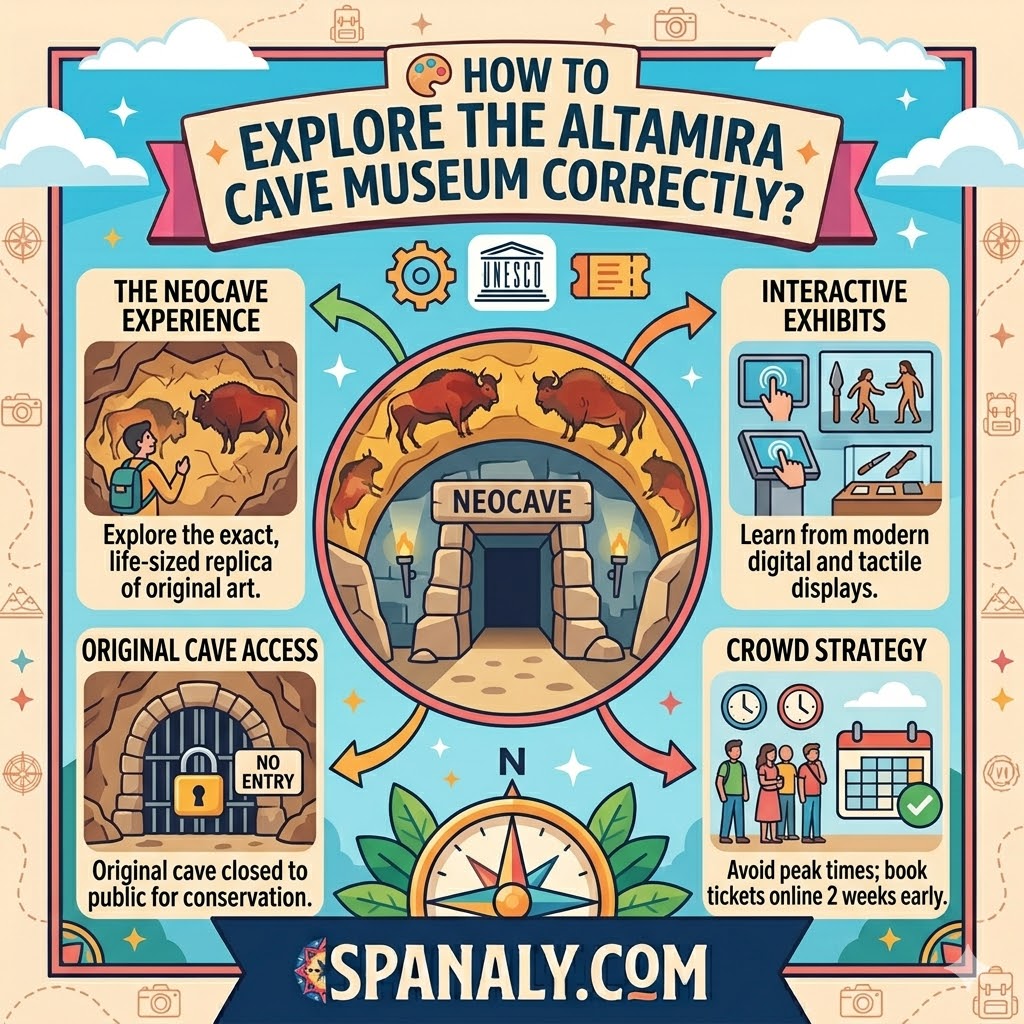
Visiting the Altamira Cave Museum provides a deep dive into prehistoric art dating back 36,000 years. This UNESCO World Heritage site sits just 2 kilometers from the town center. It represents a pinnacle of cultural heritage within the Spain Attractions tickets guide category.
The Neocave Experience: Explore the exact, life-sized replica of the original cave paintings.
Original Cave Access: Understand that the real cave remains closed to the general public for conservation.
Interactive Exhibits: Use the museum’s digital displays to learn about Upper Paleolithic daily life.
Furthermore, the “Neocave” offers a highly realistic atmosphere including controlled humidity and temperature. However, many visitors feel disappointed when they realize they aren’t entering the actual original cavern. Most people find the crowds during peak hours distracting for appreciating the subtle art details. Consequently, try to book your tickets online at least two weeks in advance.
Spanaly Insight: Check the museum’s official website for the Friday morning lottery. A tiny group of five lucky visitors is chosen weekly to enter the original cave for 37 minutes.
Make sure to arrive 15 minutes before your scheduled Neocave entry time. Try to combine this visit with a stroll through the museum’s outdoor botanical path for a complete experience.
🚶♂️ When is the Best Time to Walk the Medieval Streets?

Choosing the right moment determines your overall experience. The town’s atmosphere shifts dramatically with the seasons. Understanding the best time to visit Northern Spain helps avoid frequent rain.
🌸 Spring: Enjoy mild temperatures and blooming green landscapes.
☀️ Summer: Experience peak season with warm, sunny weather.
🍂 Autumn: Capture golden light on historic stone facades.
❄️ Winter: Witness the town in its quietest, most peaceful state.
Furthermore, narrow streets feel different during quiet morning hours. However, summer visits often match the best time to visit Spain. This leads to long restaurant wait times and crowds. Most travelers prefer weekday visits in May or September. Consequently, plan your walk for early morning or late afternoon.
Spanaly Insight: Visit during a rainy morning in November. Wet cobblestones create atmospheric photos without any tourist crowds.
Try to avoid August weekends for a quiet experience. Make sure to check the local Cantabrian forecast daily.
🥘 What to Eat: Authentic Cantabrian Flavors in the Old Town
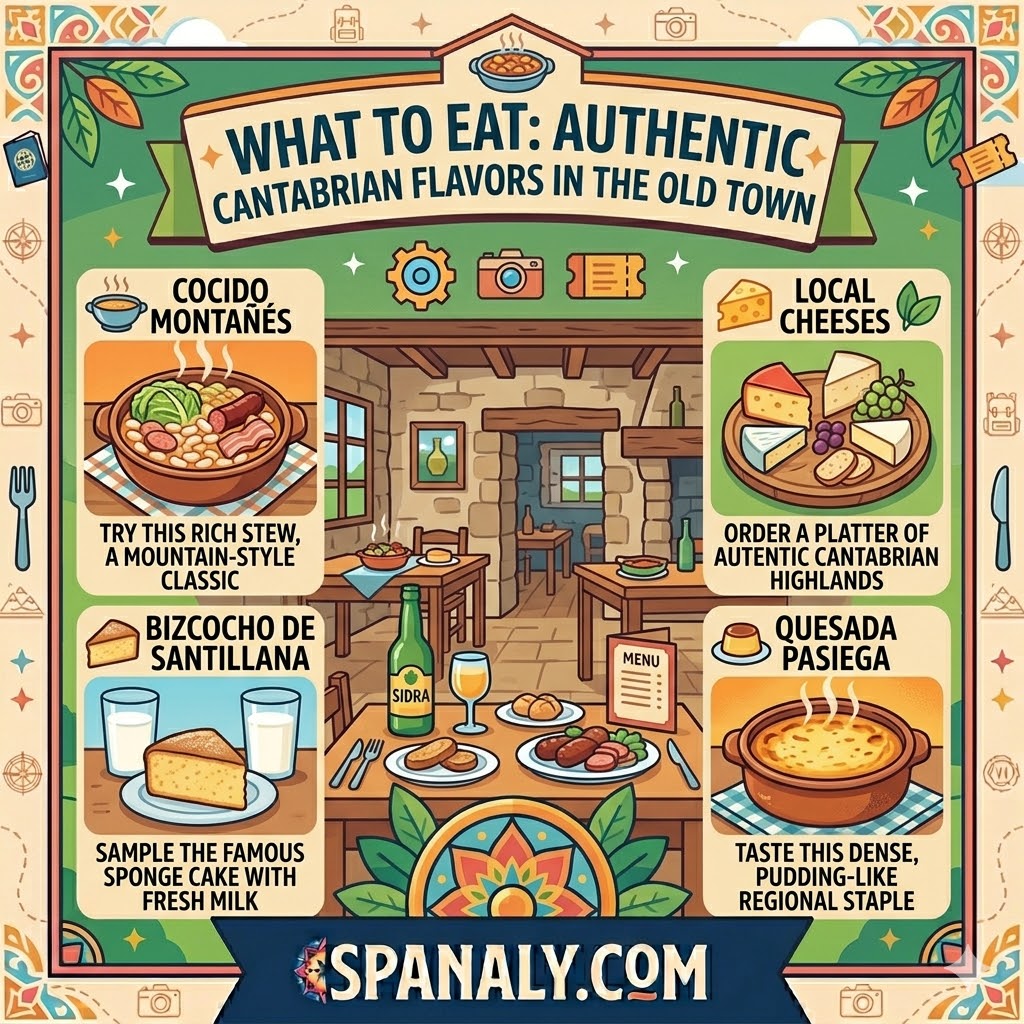
Dining in this medieval village allows you to taste the heavy, mountain-style cuisine of Northern Spain. The local gastronomy focuses on hearty stews and dairy-based desserts. Consequently, understanding the Northern Spain travel cost and budget helps you manage meal expenses in this tourist-heavy area.
🍲 Cocido Montañés: Try this rich stew made of white beans, cabbage, and various pork meats.
🍰 Bizcocho de Santillana: Sample the town’s famous sponge cake, traditionally served with a glass of fresh milk.
🧀 Local Cheeses: Order a platter of Quesuco de Liébana for an authentic taste of Cantabrian highlands.
🍮 Quesada Pasiega: Taste this dense, pudding-like cheesecake, which remains a regional staple for centuries.
Furthermore, many restaurants located in the Plaza Mayor offer set “Menú del Día” options for lunch. However, these tourist menus often sacrifice quality for speed during the busy summer months. Most locals find better authenticity in the smaller taverns hidden in the side alleys. Specifically, prices for a full meal are slightly higher here than in nearby rural villages.
Spanaly Insight: Look for the small windows selling “Milk and Cake” (Leche y Bizcocho). This is the town’s most iconic and affordable snack, perfect for a quick energy boost.
Try to avoid the main square restaurants if you want a quieter, more local dining experience. Make sure to pair your meal with a glass of local cider (Sidra) or white wine from the coast.
🎒 Visitor Essentials: Logistics, Parking, and Footwear

Planning a trip here requires understanding specific physical challenges. As a key España Verde stop, it offers a unique journey back in time. Checking a what to pack for Spain guide ensures you bring the right gear for the North.
🕙 Arrival: Reach the center before 10:00 AM to beat the tour buses.
👟 Shoes: Wear sturdy, non-slip footwear for the uneven and slippery medieval cobblestones.
🅿️ Parking: Use designated lots at the town entrance to avoid heavy fines.
🌦️ Weather: Carry a light waterproof jacket as frequent rain is common here.
Furthermore, the town is small and takes about 4 to 5 hours to explore. Weekday visits offer a significantly more authentic atmosphere than crowded weekends. Consequently, choosing a Tuesday or Wednesday allows for better photography without tourists.
Spanaly Insight: Find the small workshops on the southern edge. Local artisans there still carve wood by hand away from the main crowds.
Make sure to use the large designated parking lots at the entrance. Try to visit the “Colegiata” early in the morning for the best natural light.
🗺️ Suggested Itinerary: A Perfect Day Trip from Santander
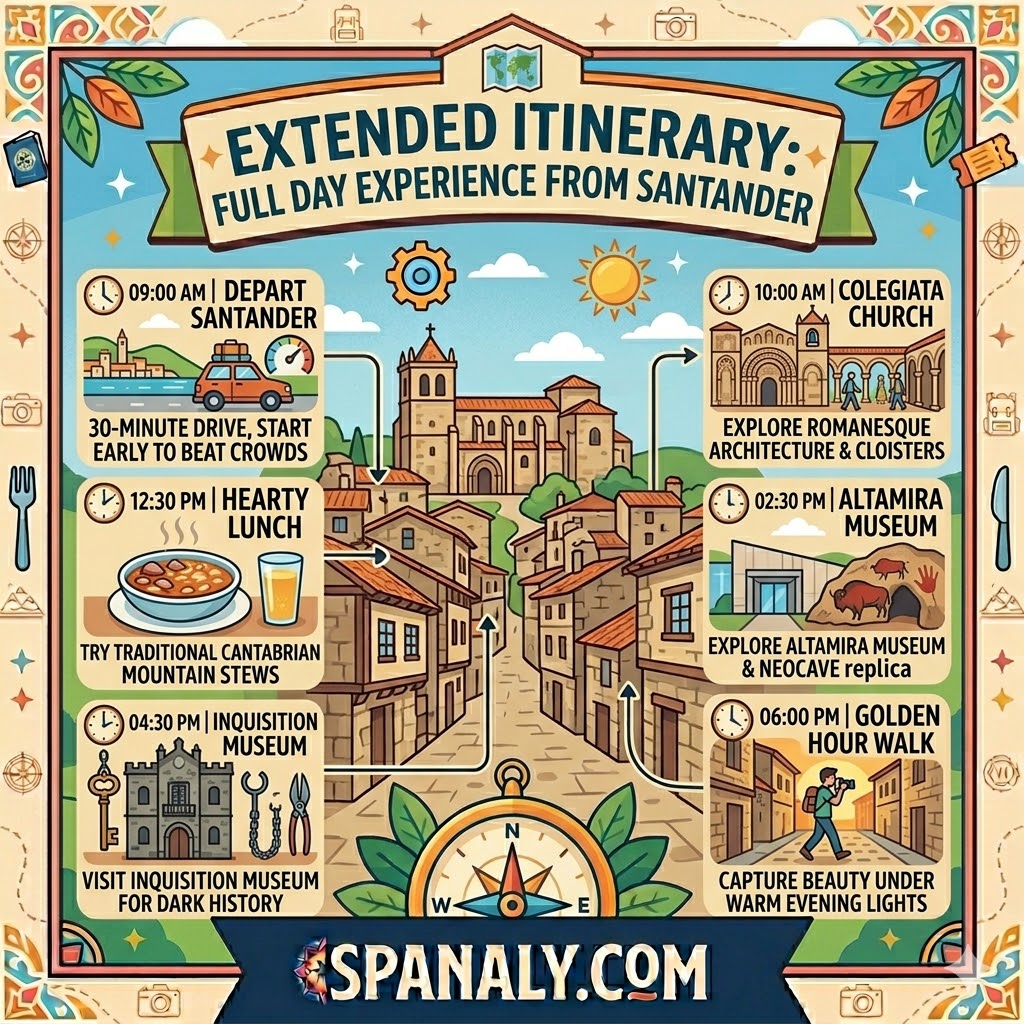
Experience the town’s transition from a busy museum to a quiet medieval village. This detailed schedule fits perfectly within your broader Spain travel itineraries and plans. Most visitors leave by 4:00 PM, missing the most atmospheric hours.
| Time | Activity | Estimated Cost |
|---|---|---|
| 09:00 AM | Depart Santander for the morning quiet. | €5 (Parking) |
| 10:00 AM | Visit the Colegiata and its Romanesque cloisters. | €5 (Entry) |
| 12:30 PM | Lunch: Try traditional Cantabrian stews. | €20 |
| 02:30 PM | Explore the Altamira Museum and Neocave. | €3 (Entry) |
| 04:30 PM | Visit the Inquisition Museum for dark history. | €4 (Entry) |
| 06:00 PM | Golden Hour walk through the Calle de Juan Infante. | Free |
| 07:30 PM | Evening Cider (Sidra) and tapas in Plaza Mayor. | €12 |
Furthermore, staying later allows you to witness the town under warm evening lights. Specifically, the stone facades turn deep orange during the late afternoon sunset. Consequently, your best photos will happen long after the tour groups have departed.
Spanaly Insight: The Inquisition Museum (Museo de la Tortura) is a fascinating, though grim, stop for the late afternoon. It provides a raw look at medieval justice and remains open when other sites close.
Make sure to stay for a local cider before heading back. Try to explore the side streets after 6:00 PM for total solitude.
💡 Spanaly Pro Tips: Insider Secrets from the Travel Community

Beyond the standard guides, these expert tips come from deep-dive discussions on platforms like Reddit and local traveler forums. They focus on maximizing your comfort and avoiding common tourist traps in the village.
The “Slippery Stone” Warning: Even high-end sneakers fail on the wet 12th-century limestone; prioritize footwear with Vibram soles or aggressive rubber patterns.
The Authentic Milk Window: Avoid the commercial cafes for your snack; look for the unassuming “Casa Quevedo” for the most traditional milk and sponge cake experience.
Tactical Parking Escape: If the main lots are full, use the secondary parking near the “Museo de la Tortura” entrance for a quicker exit towards the highway.
Photography Golden Window: The tour buses usually depart exactly at 5:00 PM; the hour between their exit and the museum closures offers the best lighting and empty streets.
Altamira Lottery Strategy: Visit the museum on Friday mornings before 10:30 AM to enter the lottery for the original cave access.
Furthermore, the town’s stone buildings act as a natural refrigerator even in peak summer. Consequently, always carry a light layer for indoor museum visits or evening strolls. Most travelers find that the “Three Lies” legend is actually a great conversation starter with local shopkeepers who appreciate tourists knowing the history.
Spanaly Insight: Skip the expensive “Tourist Menus” in the Plaza Mayor. Walk 5 minutes toward the outskirts to find local bars where workers eat; the food is more authentic and costs 40% less.
Make sure to charge your camera fully before entering, as cold stone walls drain battery life faster than usual. Try to avoid the main street for shopping, as the side alleys hide the real artisan leather and wood workshops.
🛡️ Visitor FAQs – Santillana del Mar Guide 2026
🏰 Why is Santillana del Mar called the "Town of Three Lies"?
Santillana del Mar is locally known as La Villa de las Tres Mentiras because it is not "Santa" (Holy), not "Illana" (Flat), and has no "Mar" (Sea). Despite these "lies," it remains one of the most famous medieval villages in Northern Spain.
👟 What shoes should you wear in Santillana del Mar?
You must wear sturdy, non-slip shoes to handle the 12th-century limestone cobblestones. These medieval streets are extremely uneven and become dangerously slippery when it rains in Cantabria. Avoid high heels or smooth soles to ensure your safety.
🚗 Where can I find parking in Santillana del Mar?
Public parking is strictly prohibited inside the historic medieval center. You should use the large designated parking lots located at the town entrance to avoid heavy local fines. This is the most efficient way to access the pedestrian-only zones.
🎨 How to get tickets for the Altamira Cave Museum?
For the Neocave replica, we recommend booking your Altamira tickets online at least two weeks in advance. Access to the original cave is restricted to a weekly lottery. You must visit the museum on Friday mornings before 10:30 AM to enter the draw.
🥛 What is the best local snack to try in the Old Town?
The most iconic snack is the Bizcocho de Santillana (sponge cake) served with a fresh glass of milk. Visit "Casa Quevedo" or the small artisan windows for the most authentic experience. It is an affordable and traditional staple of Cantabrian gastronomy.
Santillana del Mar Guide by Spanaly.com
Santillana del Mar remains one of Europe’s most authentic medieval treasures. Its preserved stone architecture offers a rare journey into Spain’s historic past. However, the true magic of this village isn’t found in the souvenir shops or the midday rush.
When the tour buses finally leave and the sun dips behind the Cantabrian hills, the real Santillana appears. Imagine walking these 12th-century streets in total silence, where only the sound of your footsteps on the ancient limestone remains. It is in these quiet moments that you truly feel the soul of the “Town of Three Lies.”
Historical Depth: Walk through centuries of perfectly preserved Cantabrian heritage and stone facades.
Artistic Value: Discover the “Sistine Chapel” of Prehistory at the nearby Altamira Museum.
Culinary Heart: Taste the rich, mountain flavors that define Northern Spanish gastronomy.
Perfect Location: Use the town as a strategic base for exploring the Cantabrian coastline.
Specifically, following a Magdalena Palace Santander guide provides a perfect royal contrast to this medieval experience. Consequently, planning your timing carefully ensures a more peaceful and contemplative visit.
Spanaly Insight: Don’t just stick to the main road. The most beautiful balconies and hidden floral courtyards are tucked away in the southern residential alleys, waiting for those who dare to wander.