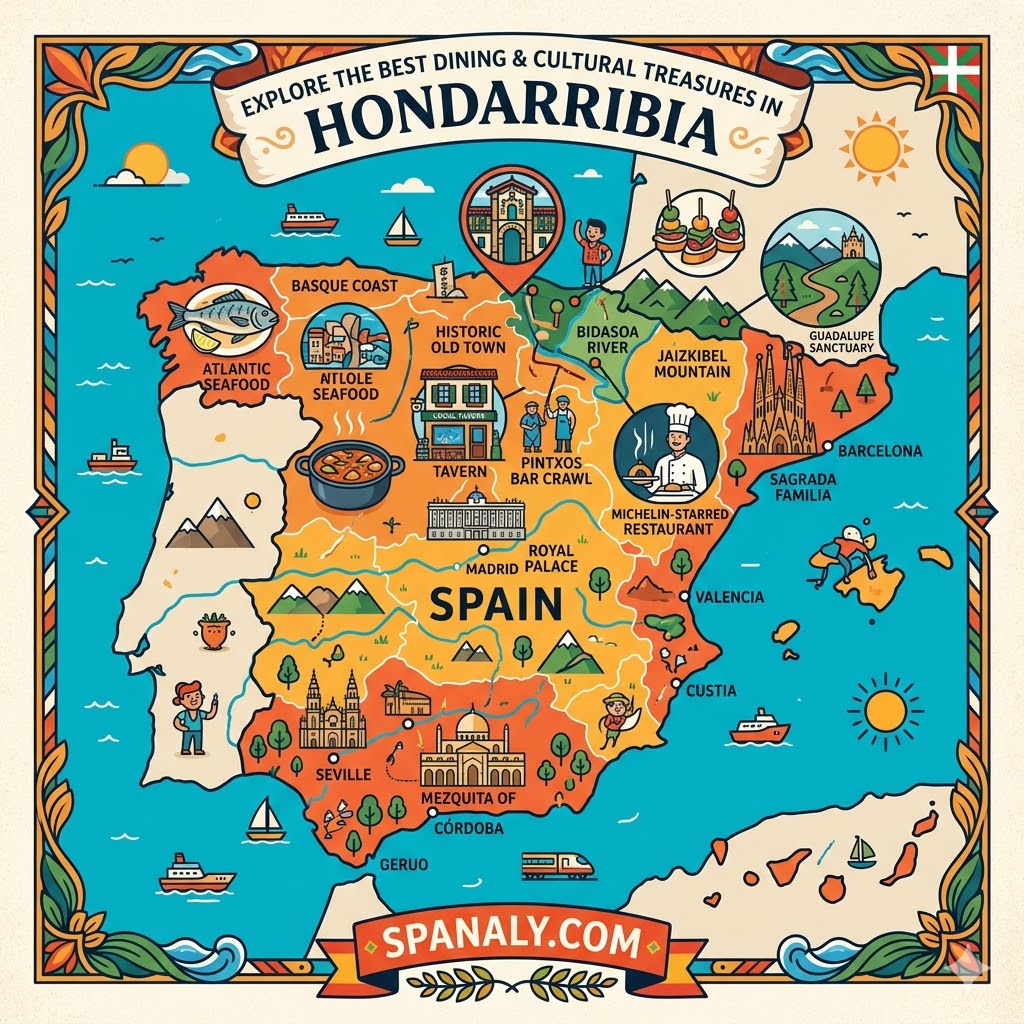
🏰 Hondarribia
Hondarribia is a beautifully preserved fortified town sitting right on the Spanish-French border. It offers the perfect mix of rich military history and one of the most authentic pintxos scenes in the Basque Country.
- 🏰 Fortified Soul: Wander through the Casco Viejo, home to some of the best-preserved 16th-century military walls in Gipuzkoa.
- 🍢 Culinary Hub: Explore the colorful La Marina district, where local seafood bars serve competitive pintxos that rival those in San Sebastián.
- 🌊 Atlantic Vibe: Stroll along the breezy Paseo Butrón for stunning views across the Bidasoa River to the French Basque coastline.
Spanaly Insight: Most visitors stay on the main streets, but the hidden “Muralla” walkways along the old walls offer the best photography conditions, especially at sunset. For a complete Northern Spain experience, check our Ultimate Northern Spain Travel Guide to see how Hondarribia fits into your route.
Table of Contents
Toggle📸 Snapshot: Essential Hondarribia Travel Facts
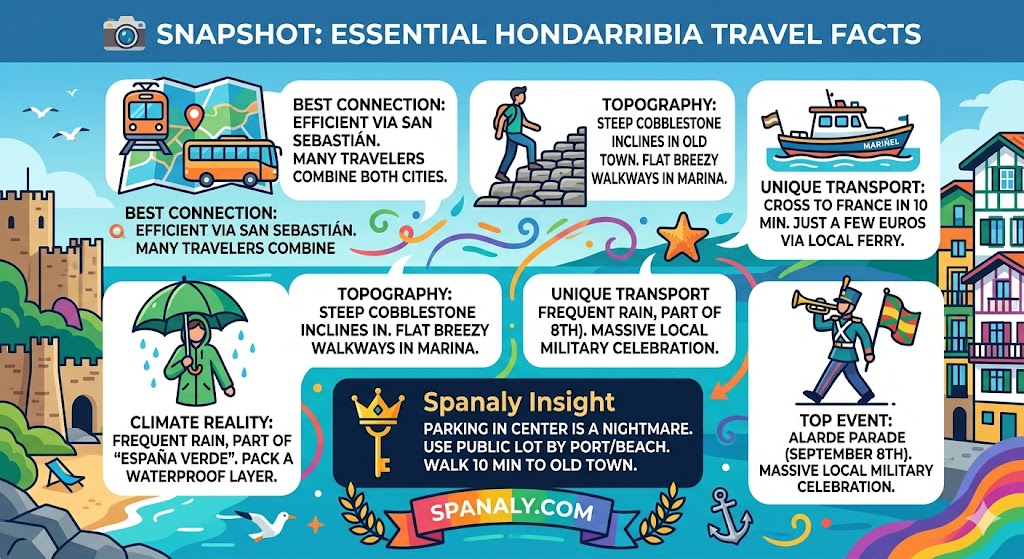
Hondarribia offers a rare look at a perfectly preserved military town on the northern tip of Gipuzkoa. Specifically, navigating its unique geography requires understanding its strategic location between the Atlantic and the Pyrenees.
Best Connection: The most efficient way to reach the town is from San Sebastián. In fact, many travelers combine both for a complete Basque experience.
Topography: Expect steep cobblestone inclines in the Old Town and flat, breezy walkways in the Marina district.
Unique Transport: You can cross to France in 10 minutes via the “Mariñel” boat for just a few euros.
Climate Reality: As part of España Verde, rain is frequent even in summer. Always pack a waterproof layer.
Top Event: The Alarde de Hondarribia on September 8th is a massive local military parade you shouldn’t miss.
Spanaly Insight: Parking in the center is a nightmare and strictly regulated for residents. Specifically, use the large public parking lot by the port (near the beach) and walk 10 minutes to the Old Town to avoid heavy fines.
If you want to master the local logistics of the region, make sure to read our guide on Transport in Northern Spain to navigate between these coastal gems effectively.
🆚 Hondarribia vs. Saint-Jean-de-Luz: The Border Battle
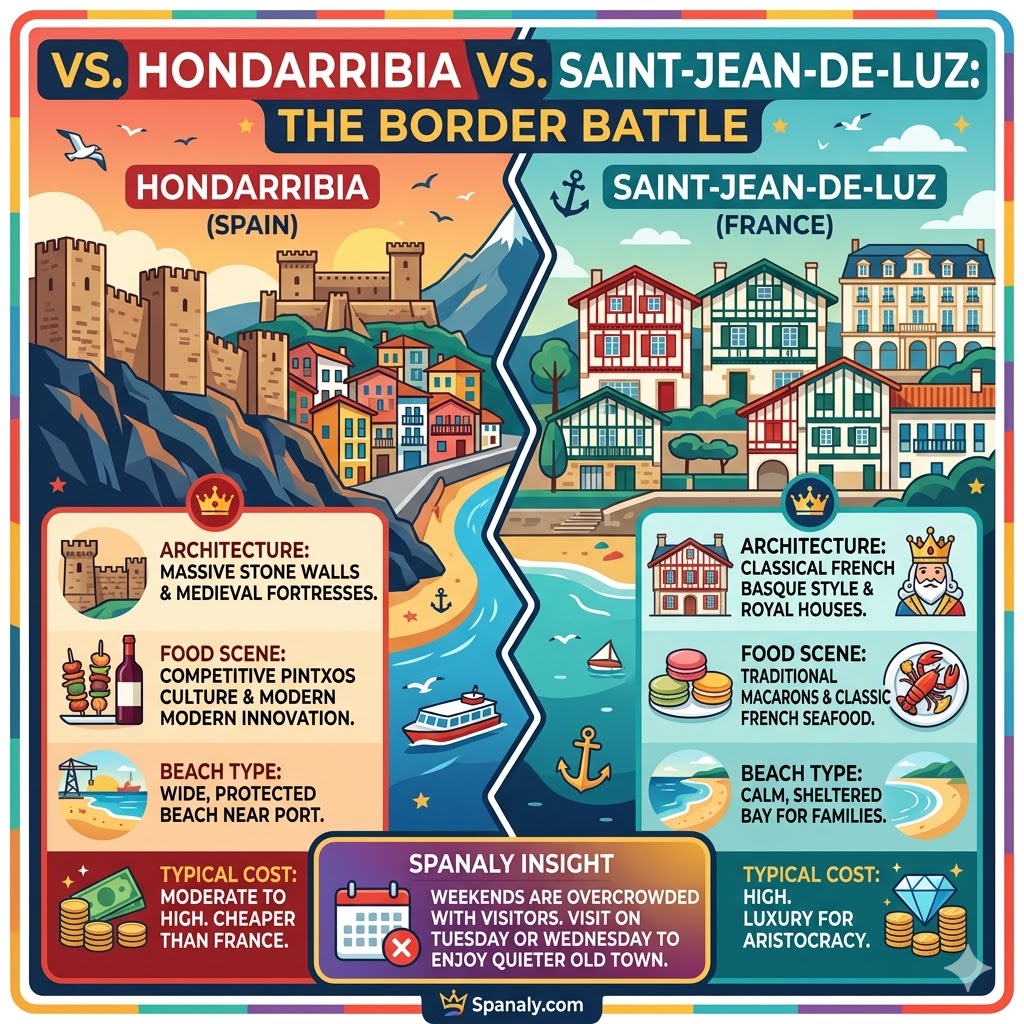
Choosing between these two Basque gems depends on your preference for military history or coastal elegance. Hondarribia offers a rugged, fortified atmosphere. Conversely, Saint-Jean-de-Luz provides a refined, French seaside experience. Both cities sit just minutes apart across the Bidasoa River.
| Feature | Hondarribia (Spain) | Saint-Jean-de-Luz (France) |
|---|---|---|
| Architecture | Massive stone walls and medieval fortresses. | Classical French Basque style and royal houses. |
| Food Scene | Competitive Pintxos culture and modern innovation. | Traditional Macarons and classic French seafood. |
| Beach Type | Wide, protected beach near the active port. | Calm, sheltered bay ideal for families. |
| Typical Cost | Moderate to high; generally cheaper than France. | High; luxury destination for French aristocracy. |
Spanaly Insight: Weekends in Hondarribia are often overcrowded with French visitors crossing for cheaper tapas. Visit on a Tuesday or Wednesday to enjoy the Old Town without the heavy crowds.
Navigating these border towns is easy if you understand the local transit. Check our guide on Renting a Car in Spain to plan your perfect cross-border road trip.
🏛️ Exploring Hondarribia Old Town (Casco Viejo)
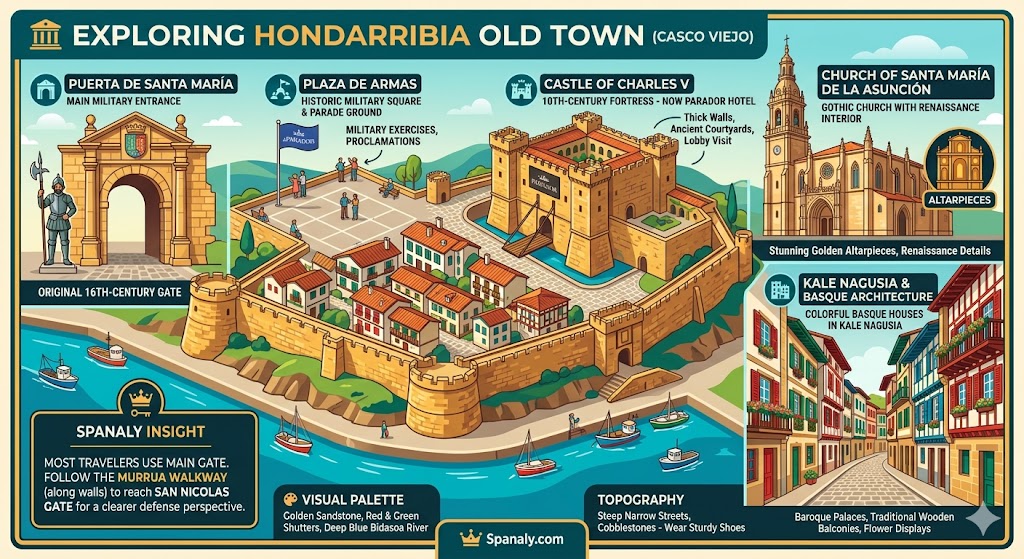
Hondarribia’s Old Town sits behind massive 16th-century sandstone walls. Specifically, this fortified area preserves the medieval layout of the Gipuzkoa region. Enter through the Puerta de Santa María to see the city’s military heritage. High stone walls protected this border stronghold from French invasions for centuries.
⚔️ Plaza de Armas & Castle: This square served as a military training ground for centuries. The 10th-century fortress now functions as a high-end Parador hotel.
⛪ Santa María Church: This Gothic church features Renaissance elements and stunning golden altarpieces. Construction lasted over 200 years due to various border conflicts.
🏡 Kale Nagusia: Walk this street to view ornate Baroque palaces and traditional wooden balconies. These houses showcase the wealth of 17th-century local merchants.
Spanaly Insight: Avoid the main gate during peak noon hours to escape tourist bottlenecks. Instead, use the Javier Ugarte entrance for a steeper but quieter ascent into the fortress.
Consequently, these cobblestone streets function as a living museum of Basque defense history. If you enjoy historic fortifications, check our guide to the Alcazar of Segovia for another masterpiece.
⛵ La Marina District: The Heart of Basque Gastronomy
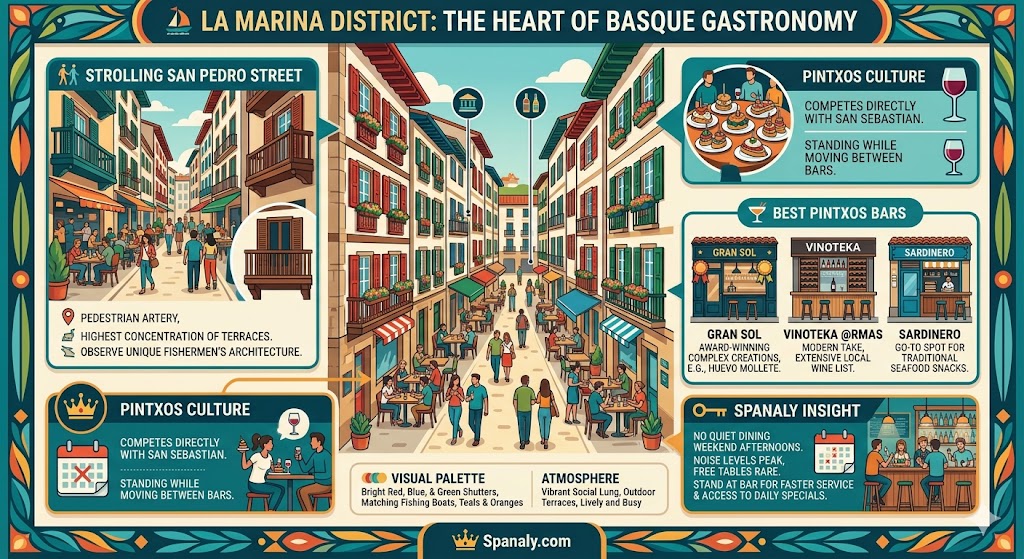
The Marina district functions as the city’s vibrant social and culinary lung. This area sits between the Old Town walls and the active fishing port. Traditional Basque houses here feature bright shutters to match the fishing boats.
🚶 San Pedro Street: This pedestrian artery hosts the highest concentration of outdoor terraces. Walk here to observe the unique “Fishermen’s Architecture”.
🍢 Pintxos Culture: Hondarribia competes directly with San Sebastian for the best miniature cuisine in Spain. Locals typically eat standing up while moving between bars every thirty minutes.
🏆 Gran Sol: Famous for award-winning, complex creations like the “Huevo Mollete”.
🍷 Vinoteka @rmas: Offers a more modern take with an extensive local wine list.
⚓ Sardinero: The go-to spot for traditional seafood-based snacks near the waterfront.
Spanaly Insight: Do not expect quiet dining on San Pedro Street during weekend afternoons. Noise levels peak around 2:00 PM, and finding a table is nearly impossible. Stand at the bar instead to get faster service and better access to daily specials.
Consequently, the Marina offers a sharp contrast to the silent atmosphere of the upper fortress. If you want to master the art of ordering, read our guide on How to Order Food Like a Local in Spain before your visit.
🏖️ Hondarribia Beach & Coastal Activities
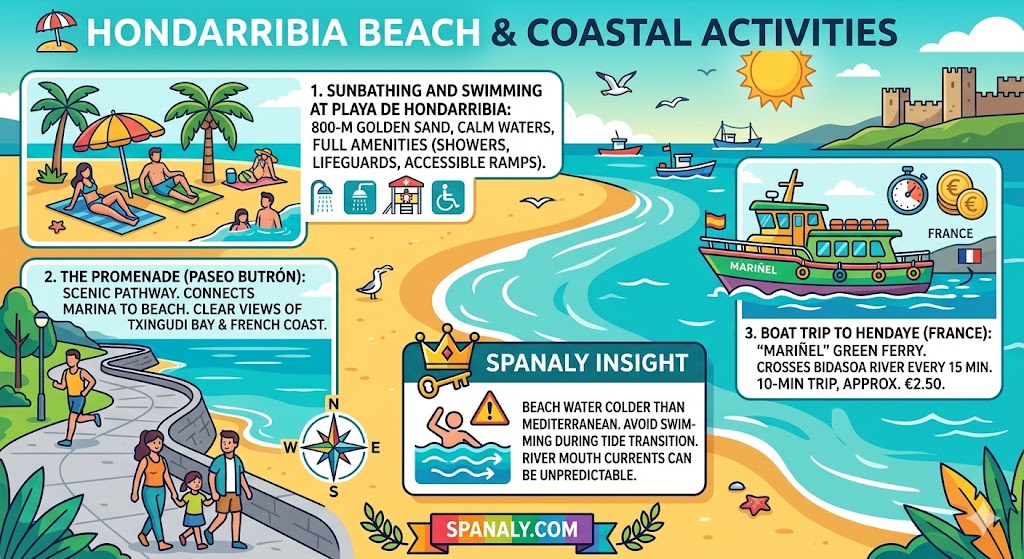
Hondarribia’s coastline serves as a functional recreational hub for both Spanish and French locals. Specifically, the bay area provides calm waters protected from the Atlantic’s heavy swells. You can easily navigate between the sandy shore and the international border via the waterfront.
Sunbathing and Swimming at Playa de Hondarribia: This 800-meter golden sand beach offers exceptionally calm waters. It features full amenities, including showers, seasonal lifeguards, and accessible ramps for disabled visitors.
The Promenade (Paseo Butrón): Walk this scenic pathway to connect the Marina district with the beach area. Specifically, it provides clear views of the TXingudi Bay and the French Basque coastline.
Boat Trip to Hendaye (France): A small green ferry, the “Mariñel,” crosses the Bidasoa River every fifteen minutes. The trip takes ten minutes and costs approximately €2.50 for a one-way ticket.
Spanaly Insight: The beach is significantly colder than Mediterranean spots due to Atlantic currents. Specifically, avoid swimming during the transition of the tide if you are not a strong swimmer, as currents near the river mouth can become unpredictable.
Consequently, the coastal area offers the best logistical blend of relaxation and international exploration. If you want to compare this to other northern shores, check our Spain Beach Guide for more Atlantic hidden gems.
🥾 Mount Jaizkibel: Hiking and Panoramic Views
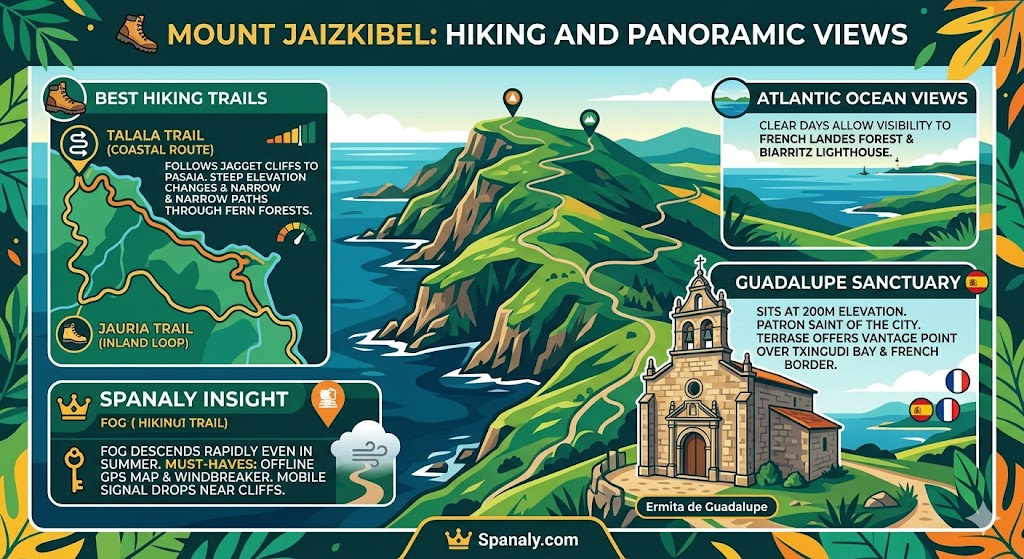
Mount Jaizkibel is the highest coastal peak in the Spanish Basque Country. It forms a dramatic barrier between the Cantabrian Sea and the Bidasoa valley. This area offers the most rugged hiking terrain near Hondarribia.
⛪ Guadalupe Sanctuary: This 16th-century chapel sits at an elevation of 200 meters. The terrace offers a clear vantage point over France.
🥾 Talaia Trail: This coastal route follows jagged cliffs toward Pasaia. Expect steep elevation changes and narrow paths through fern forests.
🔭 Atlantic Views: Clear days reveal visibility from the French Landes forest to the Biarritz lighthouse.
Spanaly Insight: Fog descends rapidly on Jaizkibel even during sunny summer afternoons. Do not attempt coastal trails without an offline GPS map and a windbreaker. Mobile signals often drop to zero in the deep ravines near the ocean.
Consequently, Jaizkibel is essential for travelers seeking physical activity beyond the city walls. If you want to explore more landmarks, visit our guide on Spanish Attractions to plan your next stop.
🏨 Where to Stay: Best Hotels in Hondarribia
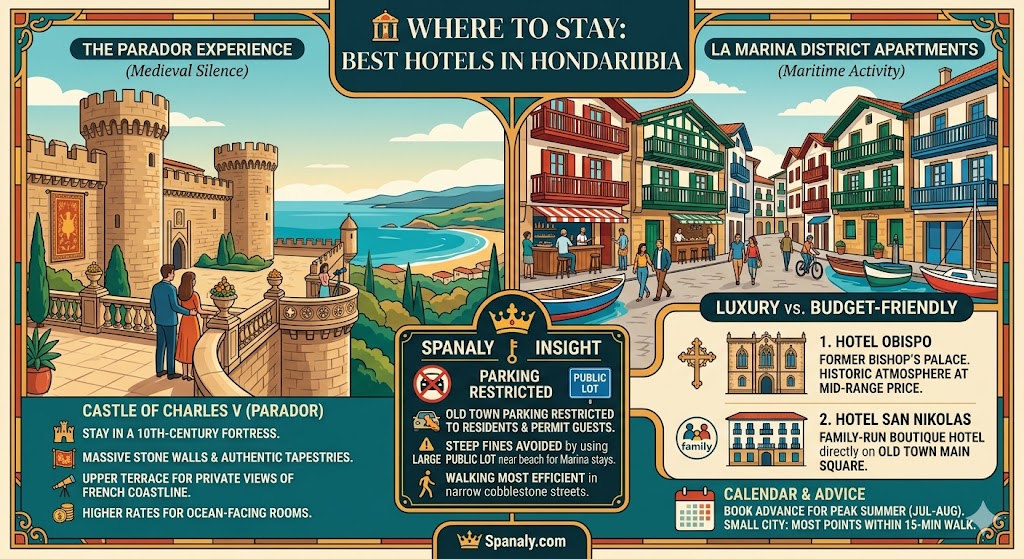
Hondarribia’s accommodation market splits between historic luxury inside the walls and functional apartments near the coast. Specifically, the city’s small size means most locations remain within a fifteen-minute walk of the main attractions. Choose your base based on your priority: medieval silence or maritime activity.
The Parador of Hondarribia Experience: This 10th-century fortress (Castle of Charles V) offers massive stone walls and authentic tapestries. Specifically, the upper terrace provides the best private views of the French coastline. Expect higher rates for rooms facing the ocean rather than the interior courtyard.
Luxury vs. Budget-Friendly Accommodations:
Hotel Obispo: A former bishop’s palace offering a historic atmosphere at a mid-range price point.
Hotel San Nikolas: A family-run boutique hotel located directly on the main square of the Old Town.
Apartments in La Marina: Best for longer stays or travelers wanting direct access to the pintxos bars.
Spanaly Insight: Parking within the Old Town walls is legally restricted to residents and hotel guests with permits. Specifically, if you stay in the Marina district, use the large public lot near the beach to avoid steep fines. Walking remains the most efficient way to navigate the narrow, cobblestone streets.
Consequently, booking in advance is mandatory during the peak summer months of July and August. For more cultural travel inspiration, see our guide on Spanish Festivals to coordinate your stay with local events.
📅 Local Festivals: The Alarde of Hondarribia
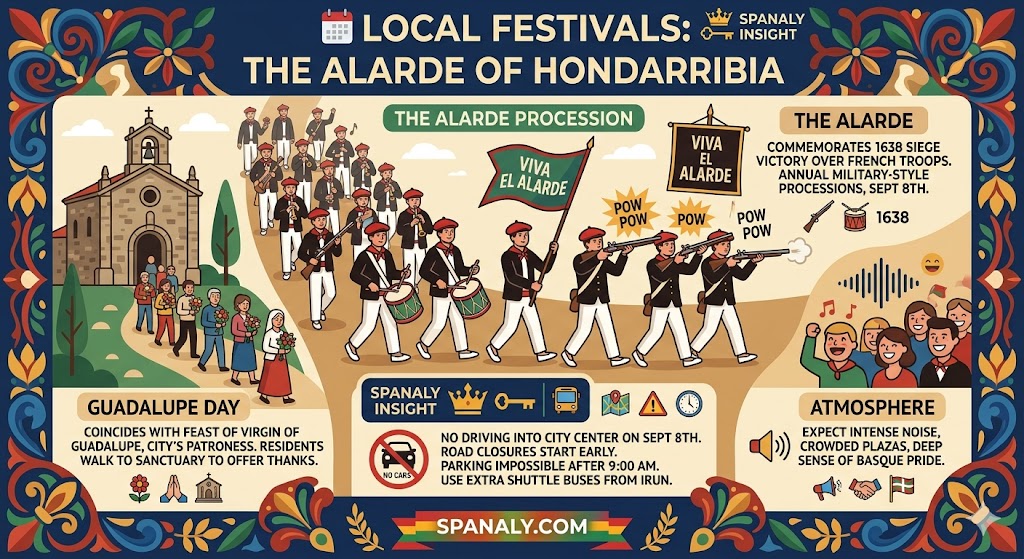
The Alarde stands as the most significant cultural event in Hondarribia’s annual calendar. Specifically, this parade commemorates the city’s victory over French troops during the 1638 siege. Locals take this tradition seriously, with thousands participating in military-style processions every September 8th.
The Procession: Company members dress in traditional white trousers, red berets, and black jackets. They march through the Old Town streets firing rhythmic volleys of blank gunpowder.
Guadalupe Day: The festival coincides with the feast of the Virgin of Guadalupe, the city’s patroness. Residents walk to the sanctuary to offer thanks for the historic liberation.
Atmosphere: Expect intense noise, crowded plazas, and a deep sense of Basque regional pride.
Spanaly Insight: Do not attempt to drive into the city center on September 8th. Road closures start early in the morning, and finding a parking spot becomes impossible after 9:00 AM. Specifically, use the extra shuttle buses from Irun to avoid getting trapped in traffic jams.
Witnessing the Alarde provides the deepest possible insight into the local identity and history. To see how this event compares to other national celebrations, explore our Major Spanish Festivals Guide for your trip planning.
🍽️ Where to Eat: Best Restaurants in Hondarribia
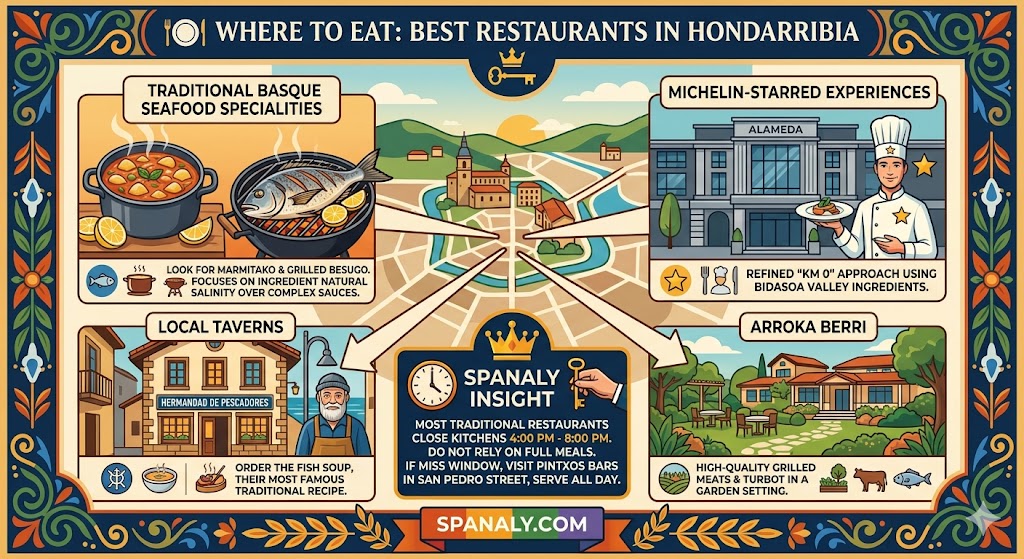
Hondarribia’s dining scene relies on daily catches from the Bidasoa estuary and the Atlantic. The city bridges rustic sailor traditions with modern culinary techniques. Explore the Marina and Old Town alleys for the freshest local produce.
🐟 Seafood Specialties: Try “Marmitako” tuna stew or grilled “Besugo” cooked over open charcoal. These dishes highlight natural salinity rather than complex sauces.
⭐ Alameda: This Michelin-starred restaurant offers a refined “Km 0” approach using Bidasoa valley ingredients.
⚓ Hermandad de Pescadores: A legendary institution located in the former fishermen’s guild building. Order their famous traditional fish soup.
🥩 Arroka Berri: Located slightly outside the center, it offers a garden setting for grilled meats and turbot.
Spanaly Insight: Most kitchens close strictly between 4:00 PM and 8:00 PM. Do not rely on finding full meals during these late afternoon hours. If you miss lunch, head to San Pedro Street for all-day pintxos.
The city offers a diverse price range for every type of traveler. To master the menu, check our guide to Spanish Cuisine to identify must-try regional delicacies.
🎒 What to Pack for Hondarribia
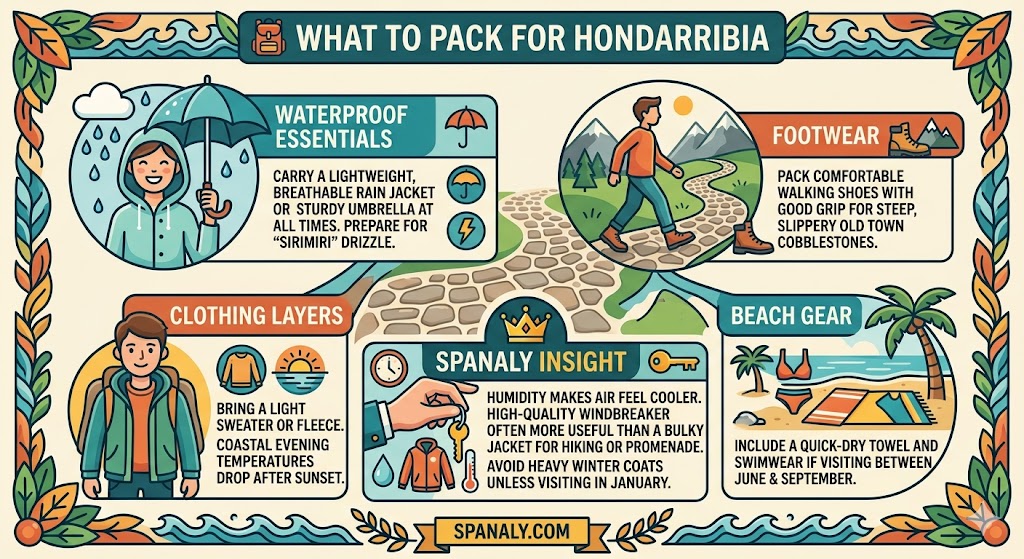
Packing for the Basque Country requires a strategic approach due to the unpredictable Atlantic climate. Specifically, you should prepare for “Sirimiri” (a fine Basque drizzle) that can appear even during sunny forecasts. Layers remain the most effective way to stay comfortable throughout the day.
Waterproof Essentials: Carry a lightweight, breathable rain jacket or a sturdy umbrella at all times.
Footwear: Pack comfortable walking shoes with good grip for the steep, slippery cobblestones in the Old Town.
Clothing Layers: Bring a light sweater or fleece, as coastal evening temperatures drop significantly after sunset.
Beach Gear: Include a quick-dry towel and swimwear if visiting between June and September.
Spanaly Insight: Do not rely on heavy winter coats unless visiting in January. Specifically, the humidity makes the air feel cooler than the actual thermometer reading. A high-quality windbreaker is often more useful than a bulky jacket for hiking Jaizkibel or walking the promenade.
A versatile wardrobe allows you to transition smoothly from a morning hike to an evening of pintxos. If you want to coordinate your wardrobe with the local weather, check our guide on the Best Time to Visit Northern Spain to plan perfectly.
🗺️ Suggested Itinerary: One Day in Hondarribia
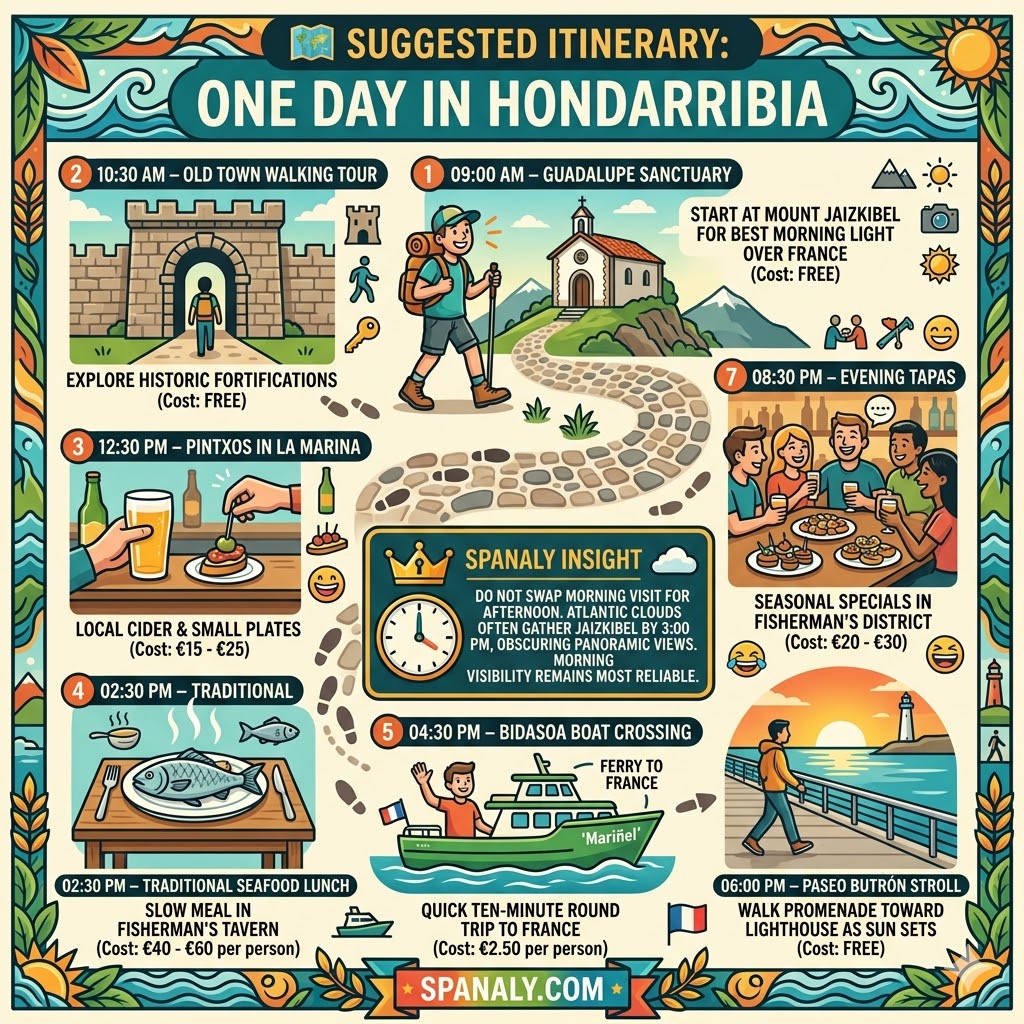
Maximizing a single day requires a balance between medieval exploration and coastal relaxation. This schedule ensures you visit high-altitude viewpoints before the afternoon fog descends. Follow this timeline for a seamless local experience.
🌅 09:00 AM – Guadalupe Sanctuary: Start at Mount Jaizkibel for the best morning light over France (Free).
🏰 10:30 AM – Old Town Tour: Enter via Puerta de Santa María to explore the stone fortifications (Free).
🍢 12:30 PM – La Marina Pintxos: Head to San Pedro Street for local cider and small plates (€15-€25).
🐟 02:30 PM – Seafood Lunch: Enjoy a slow meal at a tavern like Hermandad de Pescadores (€40-€60).
🚢 04:30 PM – Boat Crossing: Take the “Mariñel” ferry for a ten-minute round trip to France (€2.50).
🌅 06:00 PM – Paseo Butrón: Walk the promenade toward the lighthouse as the sun sets (Free).
🍷 08:30 PM – Evening Tapas: Conclude your day with seasonal specials in the fisherman’s district (€20-€30).
Spanaly Insight: Do not swap the morning mountain visit for the afternoon. Atlantic clouds often gather around Jaizkibel by 3:00 PM, obscuring all views. Morning visibility remains most reliable for photographers.
This route covers the city’s three distinct zones: the heights, the walls, and the water. If you want a broader journey, check our Northern Spain Road Trip guide for the ultimate coastal itinerary.
💡 Insider Tips: Secrets From the Travel Community
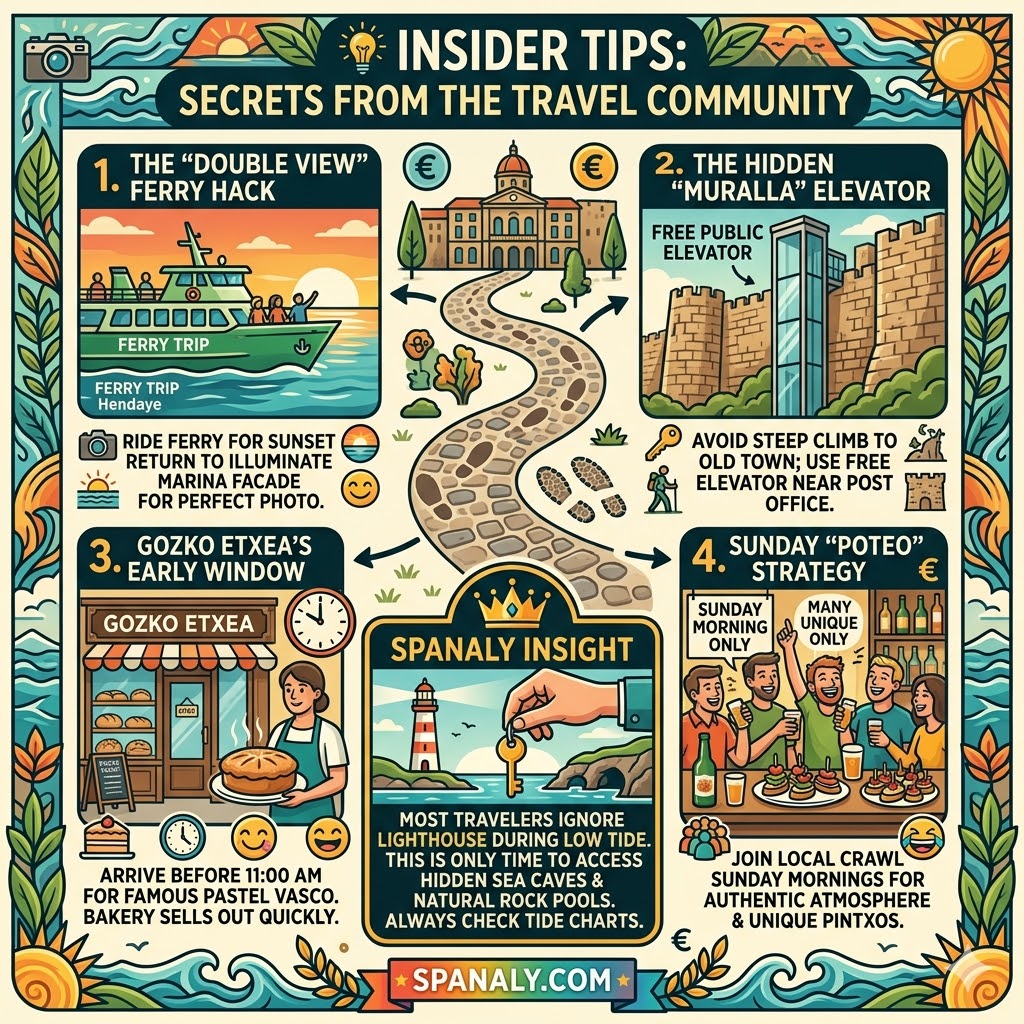
Beyond the standard tourist checklists, Hondarribia hides specific operational nuances known only to locals and frequent “Redditor” travelers. These tips focus on maximizing your visual experience and avoiding common logistical bottlenecks. Mastery of these details separates a casual visitor from a seasoned explorer.
The “Double View” Ferry Hack: Do not just ride the ferry to Hendaye; wait for the sunset trip back. Specifically, the golden hour light illuminates Hondarribia’s colorful Marina facade perfectly for photography from the water.
The Hidden “Muralla” Elevator: Avoid the steep climb to the Old Town by using the public elevator near the post office. It is free, tucked away, and saves your energy for walking the upper cobblestone streets.
Gozko Etxea’s Early Window: If you want the famous local “Pastel Vasco,” arrive before 11:00 AM. This boutique bakery often sells out of its signature cream-filled cakes long before the afternoon rush.
Sunday “Poteo” Strategy: Join the local “Poteo” (bar crawl) on Sunday mornings instead of Saturday nights. Specifically, the atmosphere is more authentic, less crowded, and features unique seasonal pintxos not served during the week.
Spanaly Insight: Most travelers ignore the lighthouse (Faro de Higuer) during low tide. Specifically, this is the only time you can access the hidden sea caves and natural rock pools along the base of the cliffs. Always check the local tide charts before planning your walk along the coastal path.
Applying these niche strategies ensures a deeper connection with the Basque rhythm of life. To ensure your digital connectivity remains seamless while exploring these hidden spots, make sure to review our latest technical setup guides on Spanaly.com.
🛡️ Visitor FAQs – Hondarribia Travel Safety & Logistics
🚢 Do I need a passport to take the boat to Hendaye, France?
Since both Spain and France are part of the Schengen Area, there is no formal border control. However, you should always carry a valid ID card or passport. Local maritime authorities occasionally conduct random spot checks on the ferry, and having your documentation ensures a smooth ten-minute crossing.
🅿️ Is it difficult to find parking in the city center?
Yes, parking in the historic Marina and Old Town is extremely limited and strictly regulated. We recommend using the large underground parking at Benta near the port. It is the most reliable option and provides immediate pedestrian access to the main restaurant district, saving you from getting stuck in narrow one-way streets.
🗣️ Will I face language barriers if I don't speak Basque?
Not at all. While Euskara (Basque) is the pride of the region, 100% of the population is fluent in Spanish. In the hospitality sector, most staff speak English and French due to the proximity to the border. Learning a simple "Kaixo" (Hello) is appreciated but never required for communication.
💳 Is cash still necessary for small purchases or pintxos?
Hondarribia is highly modernized, and contactless payments are accepted in nearly every bar and shop. However, carrying some small cash is useful for the boat ferry or if you plan to visit small traditional bakeries. For a "Pintxo crawl," digital wallets like Apple Pay or Google Pay are perfectly sufficient.
⛪ Is there a dress code for visiting the Guadalupe Sanctuary?
There is no formal "strict" dress code, but respectful attire is expected inside the sanctuary. Since it is located on a mountain, most visitors arrive in hiking or casual gear. Simply ensure your shoulders are covered and remove hats when entering the chapel to follow local religious customs.
Hondarribia Logistics Guide by Spanaly.com
Hondarribia rewards those who slow down and embrace its authentic Basque rhythm and maritime soul. Before you leave, keep these final essentials in mind:
- ⏱️ Timing is Key: Book your table in La Marina early, especially on weekends, to avoid disappointment.
- 🧥 Layer Up: The Atlantic “Sirimiri” drizzle can appear anytime — always carry a light waterproof layer.
- 🧭 Go Beyond: Walk the lighthouse trails at low tide for the most beautiful coastal views.
Ready for more dramatic coastal beauty? Discover the ancient geological wonders of the Flysch Route in our Zumaia Flysch Guide next.
Pack your boots, check the tide charts, and enjoy the real flavors and history of the Basque border.