 Welcome to the Spanish Coast
Dreaming of a Spanish escape but feeling overwhelmed by 3,000 miles of coastline? Most travelers stick to the famous spots and miss the true coastal soul of Spain. Finding a quiet Balearic cove or a lively Andalusian beach requires more than just sunblock. You need local knowledge to find a place that truly feels like a vacation.
Discovering the best beaches in Spain means looking beyond the crowded tourist hubs. We’ve walked these shores to find the spots that actually live up to their reputation. This guide is your personal roadmap to the finest shores on the Iberian Peninsula.
How to experience the coast like a local:
Look Beyond the Hype: We select beaches that offer authentic beauty, not just good marketing.
Time Your Visit: Learn when to visit to outsmart the peak summer crowds.
Find Hidden Paths: Discover the coastal routes that tour buses simply cannot reach.
Spain’s coastline is a mosaic of different worlds. Wild Atlantic cliffs in the North contrast with the warm, turquoise mirrors of the Mediterranean. Every province tells a different story through its unique landscape.
📊 Spain’s Coast by the Numbers: Why it’s the Best in Europe
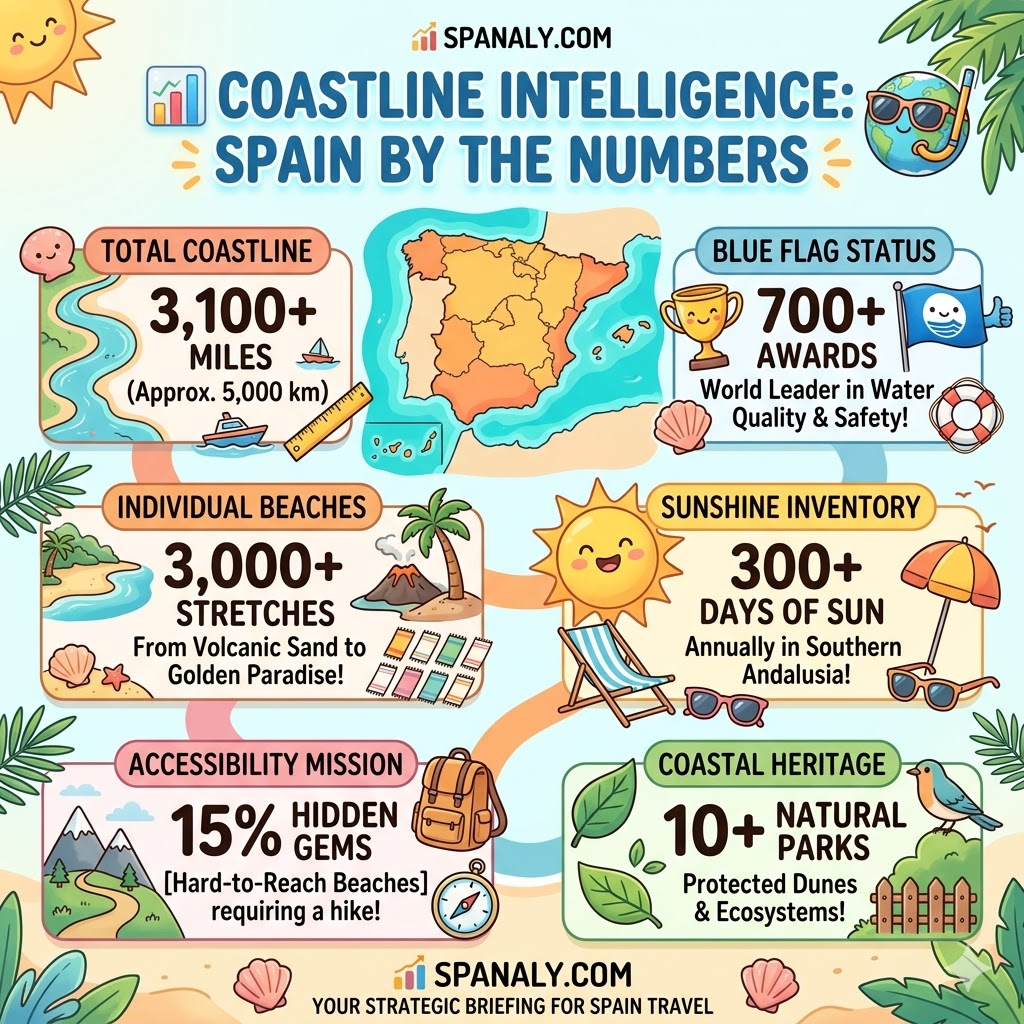
Understanding the scale of the Spanish coast helps you realize why it’s a global favorite. Spain isn’t just a holiday spot; it is a coastal powerhouse with world-leading standards. From the sheer variety of its shores to its record-breaking safety, these figures show exactly why your next beach trip should be here.
| What You Need to Know | The Real Facts & Figures |
|---|---|
| Total Coastline | Over 3,100 miles of diverse Atlantic and Mediterranean shores to explore. |
| World-Class Quality | 700+ Blue Flags—Spain consistently ranks #1 globally for cleanliness and safety. |
| Endless Choices | 3,000+ individual beaches, ranging from volcanic islands to golden sands. |
| Guaranteed Sun | 300 days of sunshine annually in the South, perfect for a long summer. |
| The 15% Rule | About 15% of the best spots are “hidden gems” that require a short hike to reach. |
| Protected Beauty | 10+ Natural Parks ensure the dunes and ecosystems stay wild and untouched. |
💡 Spanaly Insight While most people crowd the easy-access city beaches, the real magic is in that 15% of hidden coves. If a beach requires a 20-minute walk down a rocky path, you’ll find that the crowds usually drop by half, giving you double the personal space.
🏗️ Geography 101: Understanding Spain’s Different Seas
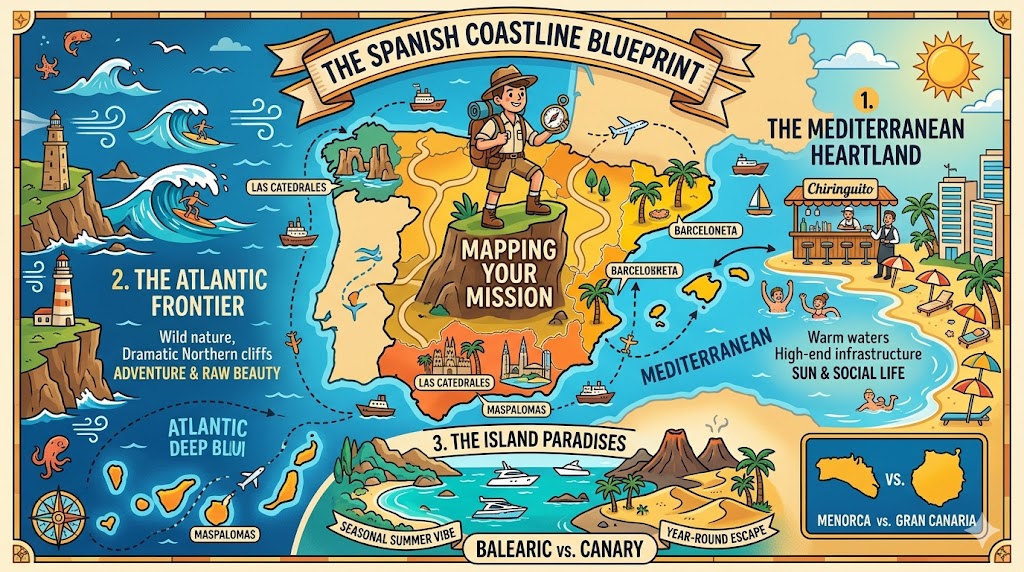
Spain’s coastline is a fascinating mosaic, not a single destination. Understanding the geography is your first tactical step. Transitioning between the wild Atlantic and warm Mediterranean requires different expectations.
🌊 The Mediterranean Heartland This region defines warm waters and high-end infrastructure. It stretches from the French border down to Andalusia. Here, golden sands meet vibrant chiringuitos and local services.
The Vibe: Sunny, social, and perfectly organized for travelers.
Top Pick: Try city shores like Barceloneta Beach for culture and sun.
Expert Tip: Book your sunbeds early during peak months.
🌬️ The Atlantic Frontier Heading West reveals wild nature and dramatic Northern cliffs. The Atlantic offers cooler water and stronger waves. It is the raw, untouched side of Spain.
The Vibe: Adventurous, breezy, and significantly less crowded.
Top Pick: Explore Playa de las Catedrales for incredible stone arches.
Expert Tip: Always check tide times before heading out.
🏝️ The Island Paradises The archipelagos offer two distinct coastal identities.
The Balearics: Mediterranean jewels like Mallorca and Ibiza with turquoise clarity.
The Canaries: Volcanic Atlantics famous for year-round sun and massive dunes.
🗺️ Top Regions: Where Should You Stay?
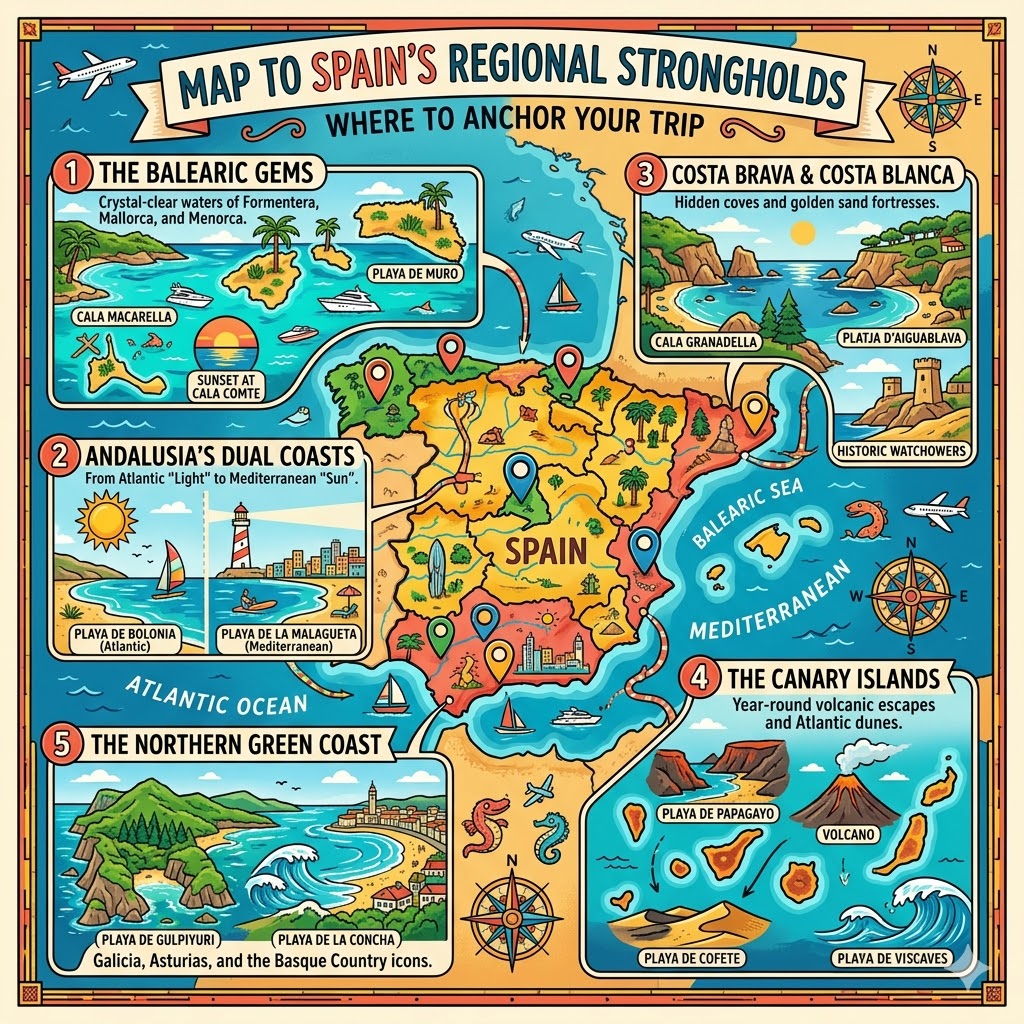
Choosing your base is a tactical decision that defines your entire journey. Spain offers distinct “strongholds” with unique landscapes. Your choice depends on whether you seek Mediterranean clarity or wild Atlantic energy.
💎 The Balearic Gems These islands are the crown jewels of the Mediterranean. Formentera and Menorca offer unmatched water transparency.
Menorca’s Secret: Cala Macarella provides a turquoise mirror framed by pine trees.
Mallorca’s Icon: Playa de Muro is perfect for family-friendly shallow waters.
Ibiza’s Sunset: Cala Comte offers the most strategic golden hour views.
☀️ Andalusia’s Dual Coasts Andalusia masters two different seas, transitioning from Mediterranean sun to Atlantic light.
Costa de la Luz: Try Playa de Bolonia in Tarifa for wild, wind-swept dunes.
Costa del Sol: Head to Playa de la Malagueta for high-energy urban vibes in Málaga.
🏰 Costa Brava & Costa Blanca These regions are famous for “golden sand fortresses” and hidden rocky coves.
The Hidden Cove: Cala Granadella in Javea is often voted Spain’s most beautiful.
Crystal Waters: Platja d’Aiguablava is essential for its incredible blue tones.
🌋 The Canary Islands This archipelago offers a year-round volcanic escape unique to Europe.
Lanzarote’s Pride: Playa de Papagayo features emerald waters sheltered by volcanic cliffs.
Fuerteventura’s Wild Side: Experience Playa de Cofete for a true sense of isolation.
🌿 The Northern Green Coast The North offers a lush “green” alternative to the scorched Southern provinces.
The Forest Beach: Explore Playa de Gulpiyuri, a unique inland beach hidden in a meadow.
Urban Perfection: Playa de la Concha in San Sebastián is a masterclass in city design.
🐚 Which Type of Beach Traveler Are You?
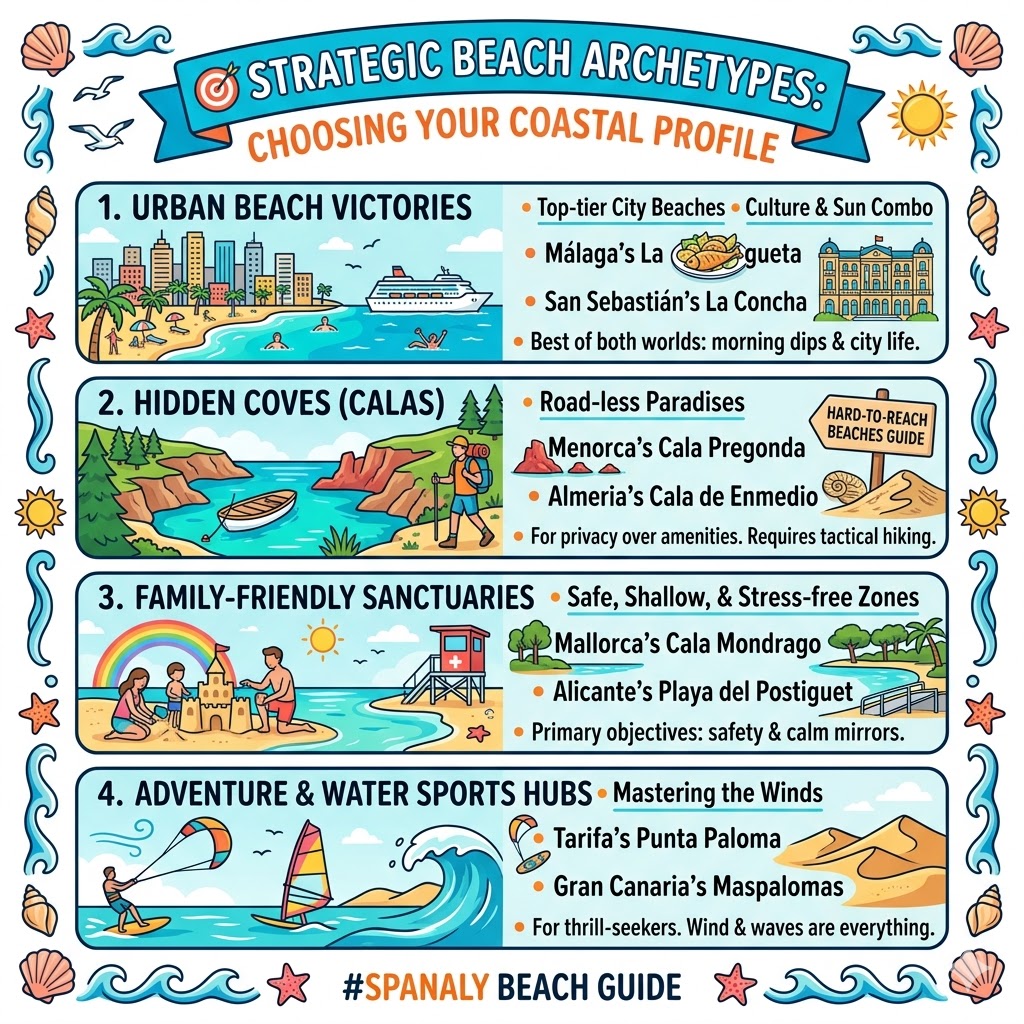
Not every beach serves the same mission. Identifying your “coastal profile” ensures you spend time where it truly counts. Spain offers everything from high-energy city stretches to silent, untouched paradises.
🏙️ Urban Beach Victories Perfect for travelers wanting morning sea dips followed by afternoon museum tours. Spain masters the urban beach like no other.
Barcelona’s Pulse: Try Nova Icaria Beach for a relaxed vibe away from the central crowds.
Málaga’s Classic: Visit Playa de la Malagueta for fresh seafood served right on the sand.
The Royal Shell: Experience Playa de la Concha in San Sebastián, Europe’s finest city beach.
🕵️ Hidden Coves (Calas) This archetype values privacy over amenities. Finding these “road-less” paradises requires tactical hiking but offers total peace.
Menorca’s Red Jewel: Cala Pregonda features a Martian-like red landscape.
Almeria’s Virgin Coast: Discover Cala de Enmedio for fossilized dunes and crystal waters away from development.
The Secret Strategy: Use our guide to Hard-to-Reach Beaches to master the hidden trails.
👨👩👧👦 Family-Friendly Sanctuaries Safety and shallow waters are the primary objectives here. These stress-free zones offer the perfect setup for a family mission.
Mallorca’s Playground: Cala Mondrago offers a natural park setting with calm, shallow mirrors.
Alicante’s Gem: Playa del Postiguet is essential for easy access and protected waters.
🏄 Adventure & Water Sports Hubs For thrill-seekers, the wind and the waves are the only variables that matter.
The Wind Capital: Master Punta Paloma in Tarifa for world-class kitesurfing and massive dunes.
Atlantic Dunes: Head to Maspalomas where the landscape feels like the Sahara meeting the sea.
⚙️ Essential Travel Tips: Getting Around & Logistics
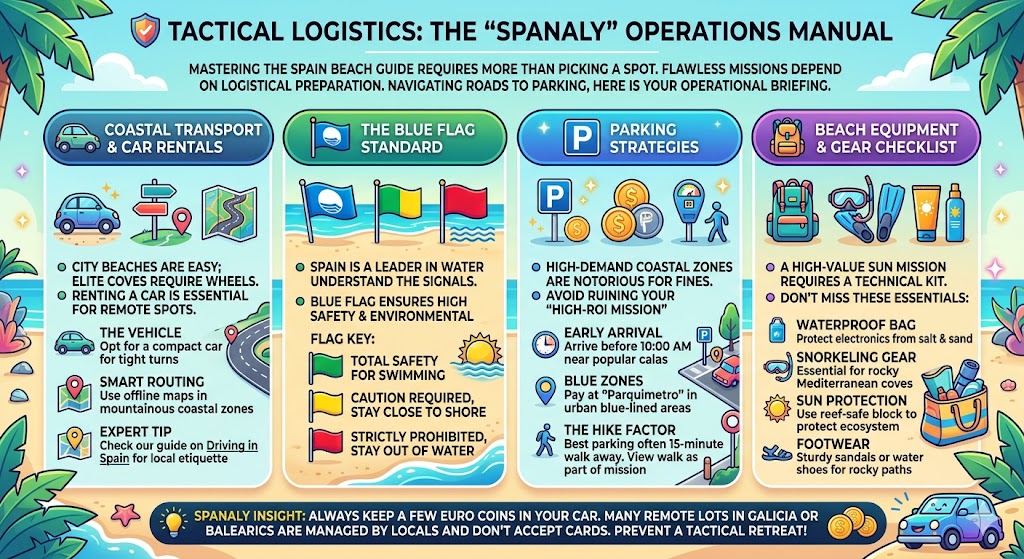
Enjoying the Spanish coast takes more than just picking a spot on a map. A smooth trip depends on knowing the local rhythm, from navigating cliffside roads to finding a legal parking spot. Here is what you need to know before you hit the road.
Coastal Transport & Car Rentals City beaches are easy to reach by bus or train, but the best hidden coves require your own wheels. Renting a car is often the only way to reach those quiet, remote spots.
Choose a Small Car: Opt for a compact vehicle to handle narrow streets and tight coastal turns easily.
Download Offline Maps: Cell service can drop in mountainous coastal zones, so keep your maps saved.
Local Road Rules: Check our guide on Driving in Spain to understand local etiquette and avoid fines.
Understanding the Beach Flags Spain leads the world in water quality, and the flag system is there to keep you safe. Always look for the flag before you jump in.
Green Flag: The water is calm and safe for everyone.
Yellow Flag: Use caution; there may be currents or waves. Stay close to the shore.
Red Flag: Swimming is strictly prohibited due to dangerous conditions.
Parking Without the Stress Popular beaches fill up fast, and local police are quick to issue fines for illegal parking.
Be an Early Bird: Try to arrive before 10:00 AM to grab a spot near the most famous coves.
Watch the Lines: In cities, blue lines mean you must pay at the nearby “Parquimetro”.
The 15-Minute Walk: Often, the best parking is a bit further away. Think of the walk as a scenic start to your beach day.
Your Beach Day Checklist Don’t forget these essentials for a comfortable day under the sun:
Waterproof Bag: Keep your phone and keys safe from sand and salt.
Snorkeling Gear: You’ll want this for the crystal-clear rocky coves.
Reef-Safe Sunscreen: Use eco-friendly block to protect Spain’s delicate marine life.
Good Footwear: Bring sturdy sandals or water shoes for those rocky “hard-to-reach” paths.
💡 Spanaly Insight Always keep a few Euro coins in your car. Many remote parking lots in Galicia or the Balearics are managed by locals who don’t accept cards. Having exact change can save you from a long drive back to an ATM.
🌡️ The Best Time to Visit for Perfect Weather
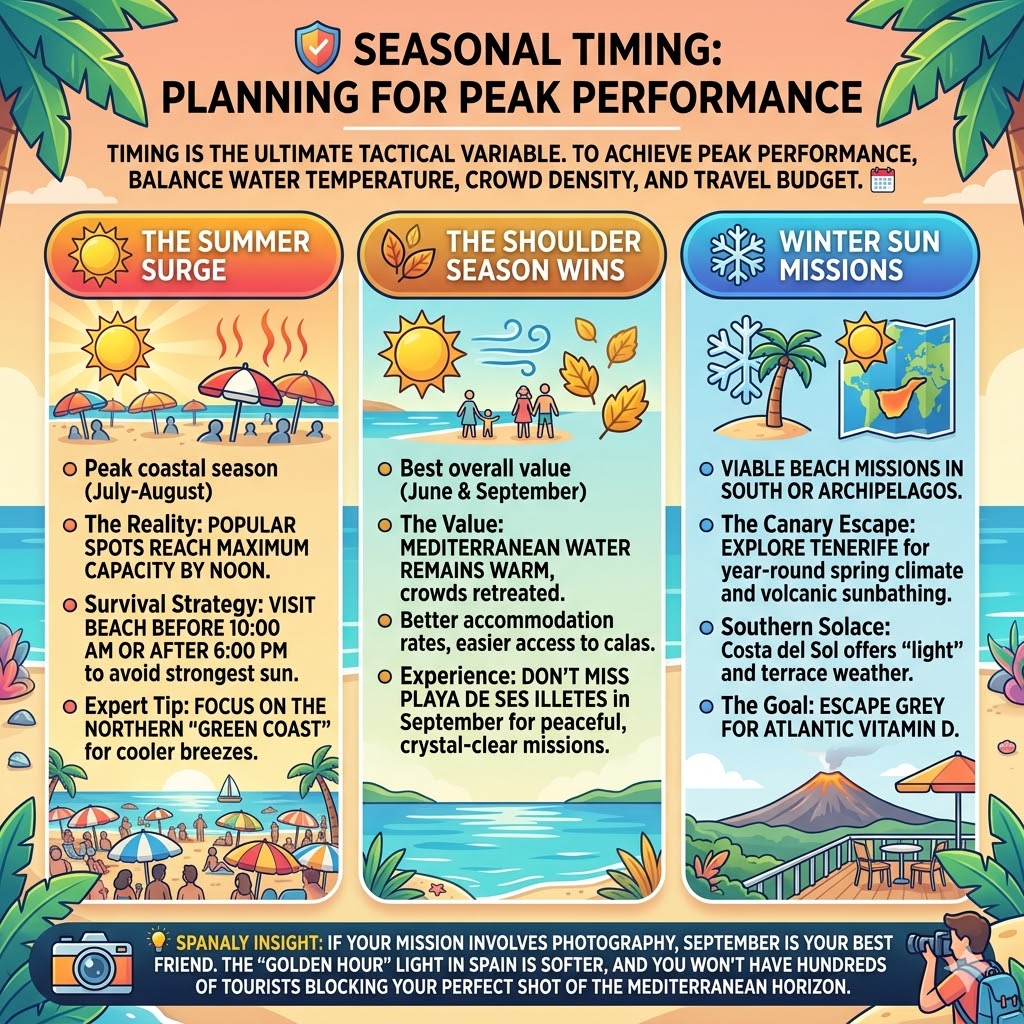
Timing is the ultimate tactical variable. A mission in July feels radically different from one in September. Achieving peak performance requires balancing water temperature, crowd density, and your budget.
☀️ The Summer Surge July and August represent the peak coastal season. While the energy is unmatched, prepare for significant crowds and high heat.
The Reality: Popular spots like Barceloneta Beach reach maximum capacity by noon.
Survival Strategy: Visit before 10:00 AM or after 6:00 PM to avoid the strongest sun.
Expert Tip: Focus on the Northern “Green Coast” for cooler breezes during these months.
🍂 The Shoulder Season Wins June and September offer the best overall value for smart travelers. These months are the “Goldilocks zone” of Spanish travel.
Why it works: Mediterranean water remains warm, but massive crowds have retreated.
The Value: Find better rates on accommodation in Spain and easier access to famous calas.
Experience: Visit Playa de ses Illetes in Formentera during September for a peaceful mission.
❄️ Winter Sun Missions Spain is among the few European spots where winter beach missions are viable. Focus on the South or the archipelagos.
The Canary Escape: Explore Tenerife for a year-round spring climate and volcanic sunbathing.
Southern Solace: Costa del Sol offers perfect “light” and terrace weather throughout winter.
The Goal: Escape grey Northern skies for a high dose of Atlantic Vitamin D.
💡 Spanaly Insight If your mission involves photography, September is your best friend. The “Golden Hour” light is softer, and fewer tourists will block your Mediterranean shots.
🥘 Local Life: Beach Bars, Food & Coastal Walks
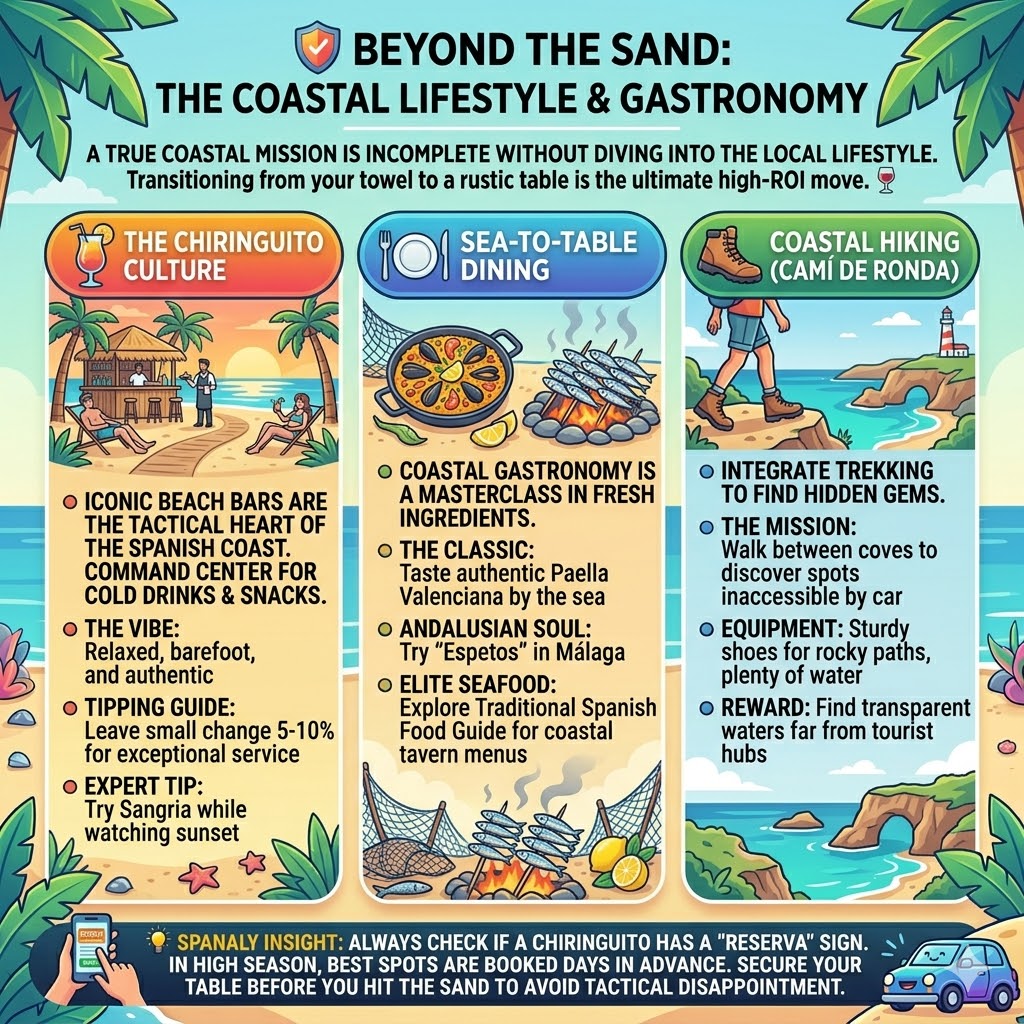
A coastal mission is incomplete without diving into the local lifestyle. Spain offers a unique blend of “Sea-to-Table” dining and active exploration. Moving from your towel to a rustic table is the ultimate high-ROI move.
🍹 The Chiringuito Culture These iconic beach bars are the tactical heart of the Spanish coast. They serve as your command center for cold drinks and local snacks.
The Vibe: Relaxed, barefoot, and authentic.
Tipping Guide: Leave small change (around 5-10%) if service is exceptional.
Expert Tip: Try a Sangria during sunset for a true local experience.
🍽️ Sea-to-Table Dining Coastal gastronomy focuses on fresh ingredients and regional identity.
The Classic: Taste an authentic Paella Valenciana by the sea.
Andalusian Soul: Try “Espetos” (sardine skewers) in Málaga for smoky, traditional flavor.
Elite Seafood: Use our Traditional Spanish Food Guide to master any coastal menu.
🥾 Coastal Hiking (Camí de Ronda) Integrating trekking with your beach visit helps find hidden gems. The “Camí de Ronda” in Costa Brava offers incredible views.
The Mission: Walk between coves to discover spots inaccessible by car.
Equipment: Bring sturdy shoes for rocky paths and plenty of water.
Reward: Find transparent waters far from main tourist hubs.
💡 Spanaly Insight Check for “Reserva” signs on Chiringuito tables. In high season, the best spots are booked days in advance. Secure your table before hitting the sand to avoid disappointment.
🌿 Eco-Travel: Staying Sustainable in Spain
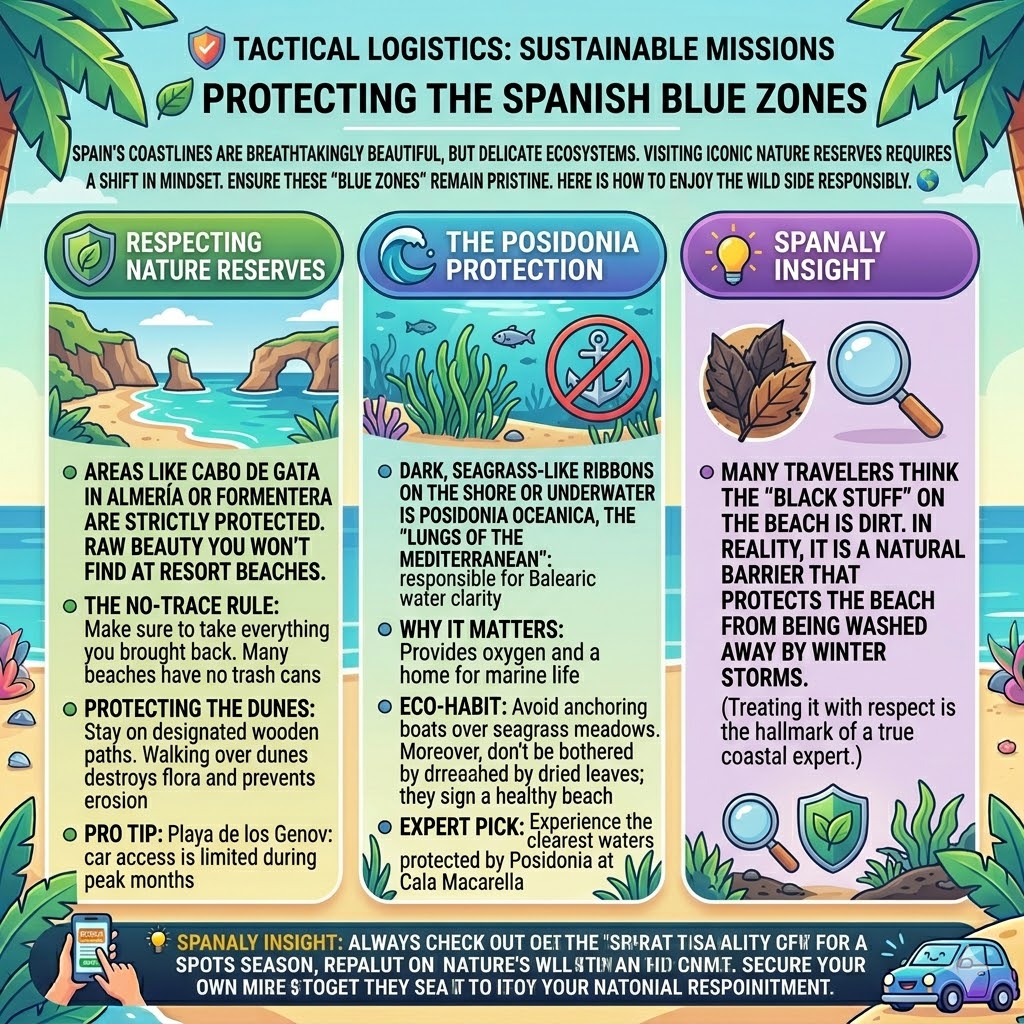
Spain’s coastlines are beautiful but delicate ecosystems. Visiting nature reserves requires a shift in mindset. Enjoy the wild side of Spain responsibly to keep these zones pristine.
🛡️ Respecting Nature Reserves Areas like Cabo de Gata or Formentera are strictly protected. They offer a raw beauty not found at resort beaches.
The No-Trace Rule: Take back everything you brought. Many wild beaches lack trash cans to discourage littering.
Protecting Dunes: Stay on designated wooden paths. Walking over dunes destroys flora and accelerates coastal erosion.
Pro Tip: Car access to Playa de los Genoveses is limited during peak months.
🌊 The Posidonia Protection You may see dark, seagrass-like ribbons on the shore. This is Posidonia Oceanica, the “lungs of the Mediterranean”. It is responsible for the turquoise clarity of Balearic waters.
Why it matters: It provides oxygen and essential homes for marine life.
Eco-Habit: Never anchor boats over seagrass meadows. Dried leaves on the sand indicate a healthy, living beach.
Expert Pick: Experience clear waters protected by Posidonia at Cala Macarella.
💡 Spanaly Insight Many travelers mistake the “black stuff” on the beach for dirt. In reality, it is a natural barrier protecting the sand from winter storms. Respecting it is the hallmark of a coastal expert.
🏨 Finding Your Perfect Base: Beachfront vs. Inland
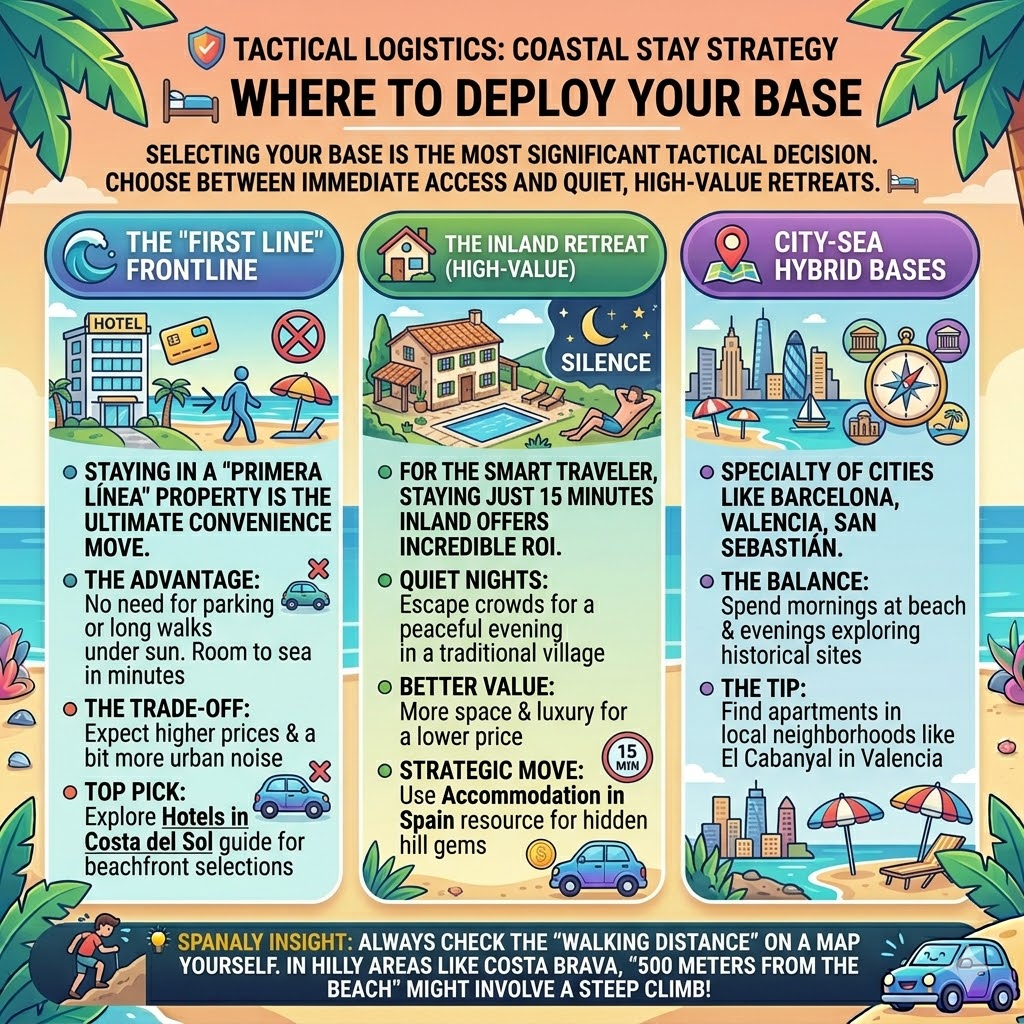
Selecting your base is the most significant tactical decision. In Spain, your location determines if you spend time on the sand or in traffic. Choose between immediate sea access and quiet, high-value retreats.
🌊 The “First Line” Frontline Staying in a “Primera Línea” (beachfront) property is the ultimate convenience move. It allows you to move from your room to the sea in minutes.
The Advantage: No need for parking or long walks under the sun.
The Trade-off: Expect higher prices and more urban noise during the night.
Top Pick: Explore our guide on Hotels in Costa del Sol for beachfront selections.
🏡 The Inland Retreat (High-Value) Staying just 15 minutes inland offers incredible ROI for smart travelers. Traditional “pueblos” or rural houses provide a more authentic atmosphere.
Quiet Nights: Escape coastal crowds for a peaceful evening in a traditional village.
Better Value: Find more space and luxury for a lower price than the coast.
Strategic Move: Use our Accommodation in Spain resource to find hidden gems.
📍 City-Sea Hybrid Bases Cities like Barcelona, Valencia, and San Sebastián offer the best of both worlds. You live in the heart of culture while staying close to the water.
The Balance: Spend mornings at the beach and evenings exploring historical sites.
The Tip: Search for apartments in neighborhoods like El Cabanyal in Valencia for a local vibe.
💡 Spanaly Insight Always check the “walking distance” on a map yourself. In hilly areas like Costa Brava, “500 meters” might involve a steep climb that feels like a mountain hike.
🚨 Safety First: Understanding Flags & Currents
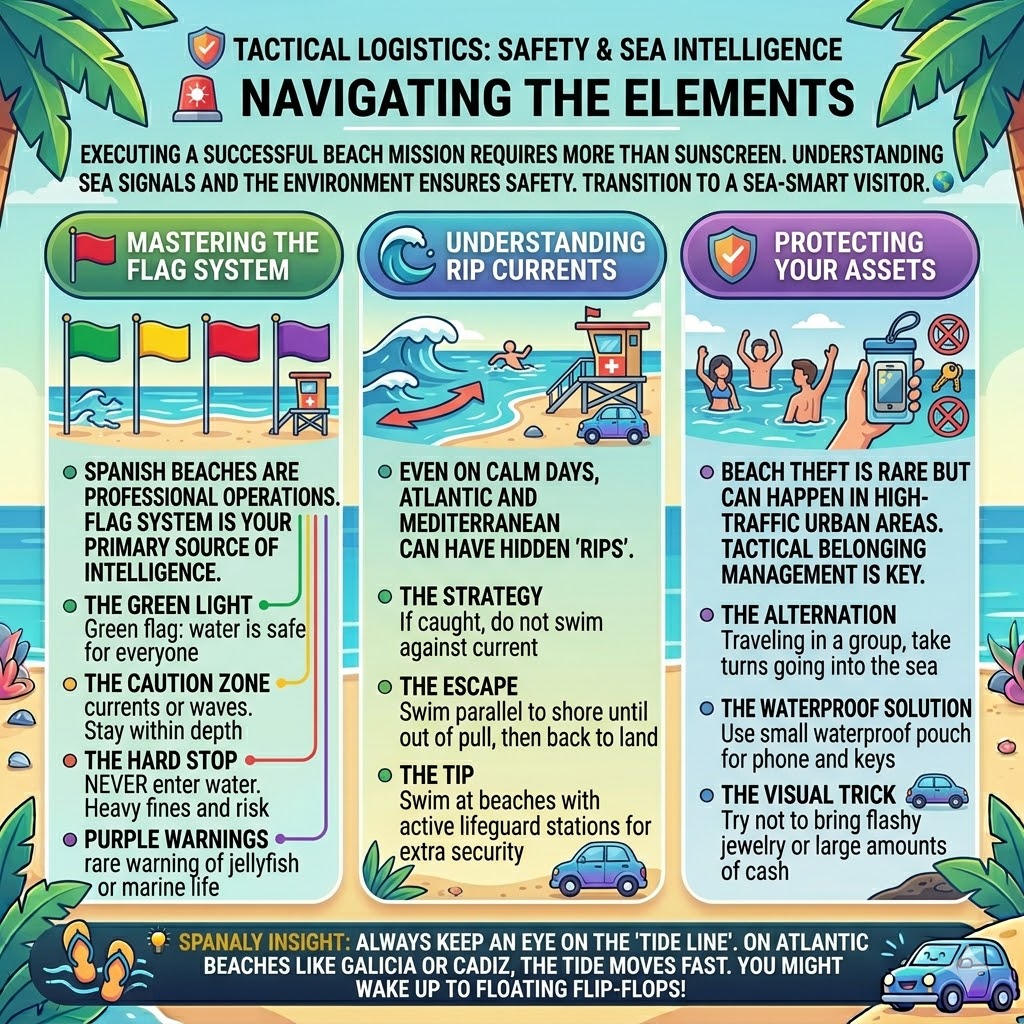
Staying safe on the beach is about more than just applying sunscreen. Learning to read the sea’s signals and respecting the local environment is what sets a smart traveler apart. By becoming “sea-smart,” you ensure that your holiday remains relaxing and worry-free.
Reading the Beach Flags Spanish beaches are well-managed, and the flags are your best guide to daily water conditions. Always check the flag near the lifeguard station before you head into the waves.
The Green Light: A green flag means the water is calm and safe for everyone to enjoy.
The Caution Zone: Yellow flags mean you should be careful. There might be currents or waves, so stay where you can still touch the ground.
The Hard Stop: Never enter the water when you see a red flag. It’s not just dangerous; you can face heavy fines for ignoring it.
Purple Warnings: These are rare, but they warn you about jellyfish or other marine life in the area.
Understanding Rip Currents Even when the surface looks calm, hidden “Rips” can form. These are strong channels of water that pull away from the shore.
Don’t Panic: If you get caught in one, never try to swim straight back to the shore against the pull.
The Side Step: Swim parallel to the beach until you feel the pull weaken, then make your way back to land.
Safety in Numbers: Whenever possible, choose beaches with active lifeguards for that extra peace of mind.
Keeping Your Belongings Secure While Spain is generally safe, it’s always wise to be careful with your valuables in busy urban areas. For more detailed advice, check our guide on travel safety in Spain.
The Buddy System: If you’re with friends, take turns watching the bags while others swim.
Waterproof Pouches: Use a small, wearable waterproof bag to keep your phone and keys with you in the water.
Keep it Simple: Leave expensive jewelry and large amounts of cash in your hotel safe rather than bringing them to the sand.
🏆 The Spanaly Selection: Our Top 10 Must-Visit Beaches
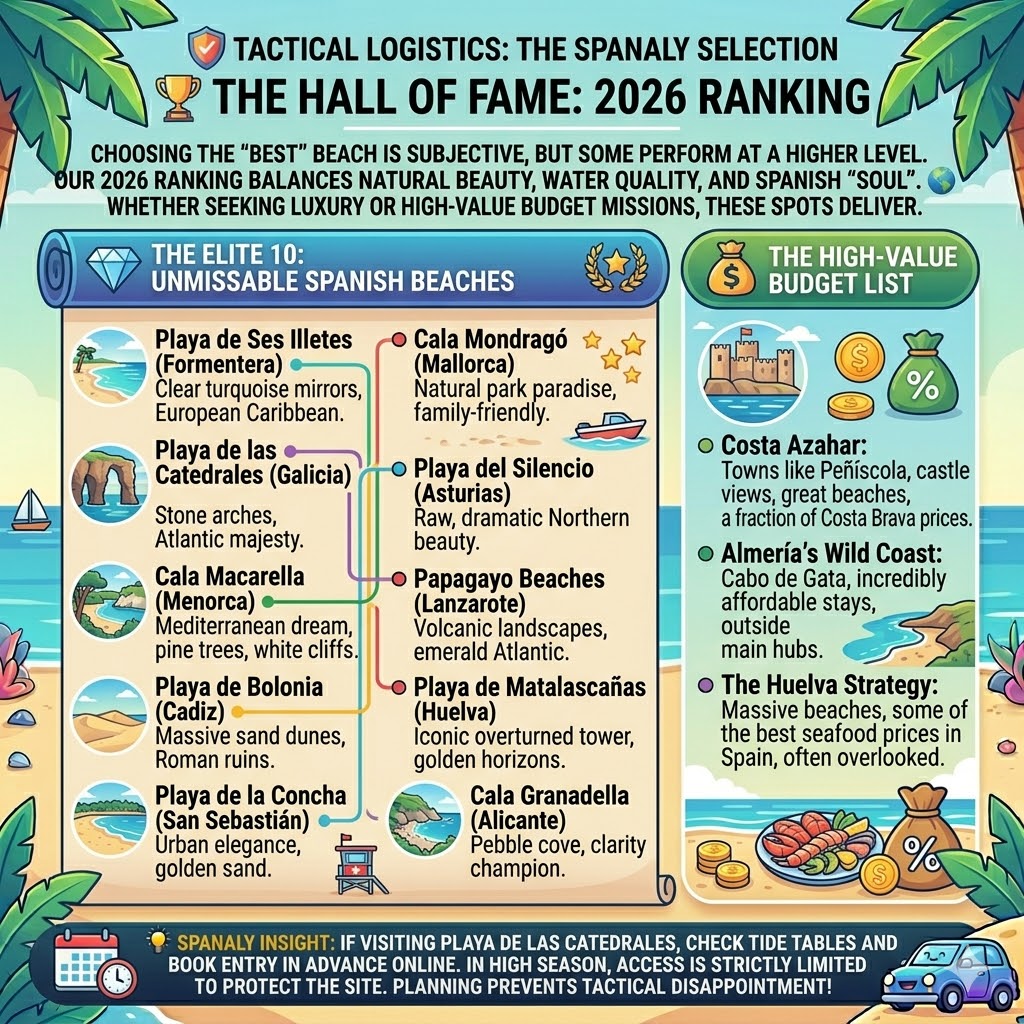
Choosing the “best” beach is subjective, but some locations perform at a higher level. Our ranking balances natural beauty, water quality, and unique Spanish soul. Whether you seek luxury or a high-value budget mission, these spots deliver.
💎 The Elite 10: Unmissable Spanish Beaches These heavy hitters define the Spanish coastal experience.
Playa de Ses Illetes (Formentera): Known as the “European Caribbean” for its turquoise mirrors.
Playa de las Catedrales (Galicia): A majestic cathedral of stone arches sculpted by the Atlantic.
Cala Macarella (Menorca): A Mediterranean dream tucked between pine trees and white cliffs.
Playa de Bolonia (Cadiz): Home to massive sand dunes and ancient Roman ruins on the shore.
Playa de la Concha (San Sebastián): The gold standard for urban elegance and golden sand.
Cala Mondragó (Mallorca): A protected natural park with shallow, family-friendly waters.
Playa del Silencio (Asturias): Perfect for those seeking raw, dramatic Northern beauty.
Papagayo Beaches (Lanzarote): Volcanic landscapes meeting calm, emerald Atlantic waters.
Playa de Matalascañas (Huelva): Famous for its iconic overturned tower and endless horizons.
Cala Granadella (Alicante): A stunning pebble cove famous for its extreme water clarity.
💰 The High-Value Budget List You don’t need a massive budget for a top-tier mission. These spots offer incredible ROI.
Costa Azahar: Peñíscola offers castle views and great beaches at lower prices than Costa Brava.
Almería’s Wild Coast: Find affordable stays near the pristine Cabo de Gata nature reserve.
The Huelva Strategy: This overlooked region offers massive beaches and excellent seafood prices.
💡 Spanaly Insight To visit Playa de las Catedrales, check tide tables and book your entry online in advance. Access is strictly limited during high season to protect the site.
💎 Insider Secrets: Local Hacks for a Better Trip
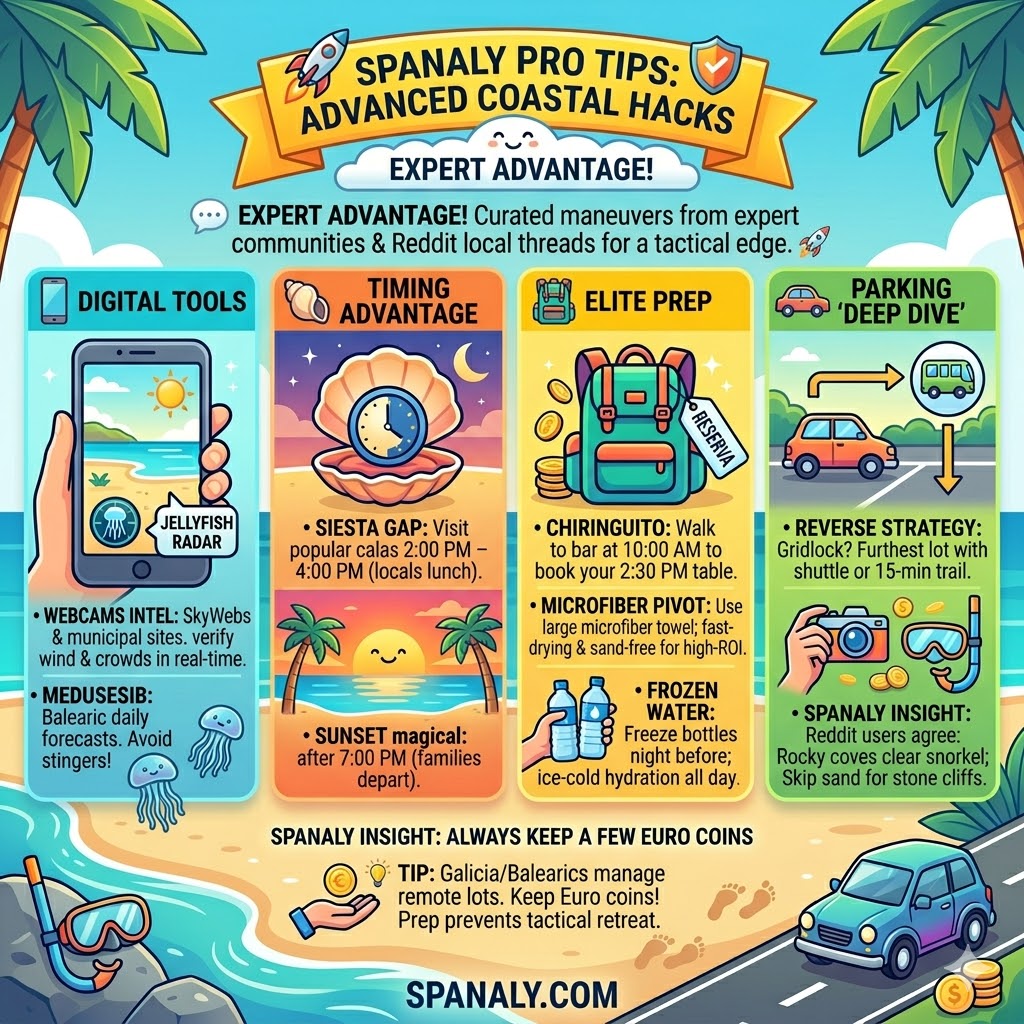
To truly master the coast, look beyond the brochures. These “insider maneuvers” give you a tactical advantage over the average tourist.
📱 The Digital Scout Don’t rely solely on Google Maps. Professional beach-hoppers use specialized digital tools.
Webcam Intel: Check “SkylineWebcams” or municipal sites before leaving your hotel to verify real-time wind and crowd levels.
MedusesIB App: Use this in the Balearics for a daily “jellyfish forecast” to avoid a sea full of stingers.
🐚 The “Hidden Hour” Strategy Most tourists follow a 11:00 AM to 5:00 PM schedule. Conquer the busiest beaches by pivoting your timing.
The Siesta Gap: Hit the sand between 2:00 PM and 4:00 PM. Most locals head to lunch, leaving a temporary “vacuum” of space.
Sunset Mission: Beaches like those in Cadiz are most magical after 7:00 PM when families head home.
🎒 Professional Gear & Logistics
The Chiringuito Booking: Never wait until you’re hungry. Walk to the beach bar at 10:00 AM and book your table for 2:30 PM.
The Micro-Fiber Pivot: Use large micro-fiber towels. They repel sand and dry fast, keeping your rental car clean.
The Frozen Water Trick: Freeze two large bottles of water the night before. They act as “ice packs” and provide cold hydration later.
🚗 The Parking “Deep Dive”
The Reverse Strategy: In crowded spots like Costa Brava, ignore the closest parking lot. Look for distant lots with shuttle services or 15-minute trails to avoid gridlock.
💡 Spanaly Insight Travelers often debate “Sand vs. Rocks”. Rocky coves (Calas) almost always have clearer water for snorkeling. If your mission is underwater photography, skip the dunes and head for the stone cliffs.
🏝️ Visitor FAQs – Ultimate Spain Beach Guide
🏖️ Is it legal to reserve a spot with an umbrella early in the morning?
Technically, many coastal municipalities now strictly prohibit "reserving" space with unattended umbrellas. In popular spots like Benidorm or the Costa del Sol, local police may remove equipment left before 9:00 AM. It is best to arrive in person to secure your favorite spot fairly.
🧴 Are there specific bans on certain types of sunscreen?
While there is no national ban yet, nature reserves like Cabo de Gata strongly recommend biodegradable or reef-safe sunscreens. These products lack Oxybenzone, which protects Spain's delicate Mediterranean Posidonia meadows and marine life from chemical damage.
🐶 Can I bring my dog to the beach in Spain?
During the high season, dogs are generally restricted from main swimming areas. However, Spain has hundreds of designated "Playas Caninas" (Pet-friendly beaches). You can find these clearly marked on local maps, especially in the Valencia and Catalonia regions, where specific zones are kept open for pets year-round.
🚿 Do all Spanish beaches provide free showers and toilets?
Most urban beaches (Blue Flag beaches) offer free foot showers and public restrooms. However, remote "Calas" or wild beaches in the Balearic Islands usually lack these facilities to preserve their natural state. We recommend bringing a large bottle of fresh water to rinse off sand after a mission at a hidden cove.
🚬 Is smoking allowed on the sand?
Spain is rapidly expanding its "Smoke-Free Beaches" (Playas sin humo) initiative. In regions like Galicia, Barcelona, and the Balearics, smoking on the sand can result in fines. Look for the "No Smoking" signs at the beach entrance to avoid a tactical error and help keep the sand clean.
Latest Coastal Intelligence by Spanaly.com
The Spanish coastline is more than just a destination; it’s a way of life that celebrates the sun, the sea, and the moment. By understanding the different regions and planning with a bit of local knowledge, you’re not just booking a trip—you’re ensuring a relaxing, high-quality escape that stays with you long after the tan fades. The Mediterranean sun is waiting.
🚀 Your Travel Checklist:
Trust the Local Experts: Use our regional guides to find the perfect home base for your trip.
Embrace Variety: Don’t be afraid to mix lively city beaches with quiet, hidden coves.
Protect the Coast: Help us keep these “Blue Zones” pristine by leaving no trace behind.
Start Planning: Don’t let your dream of a Spanish summer remain just a dream.
🗺️ Start Planning Your Trip Today A perfect journey starts with the right preparation. You can using our expert resources. We provide the local depth and insights you need for an unforgettable experience on the sand.
💡 Spanaly Final Thought The best beach in Spain is often the one you haven’t discovered yet. Some of the most rewarding memories start with a single step onto an unknown coastal trail. We’ll see you on the shore!