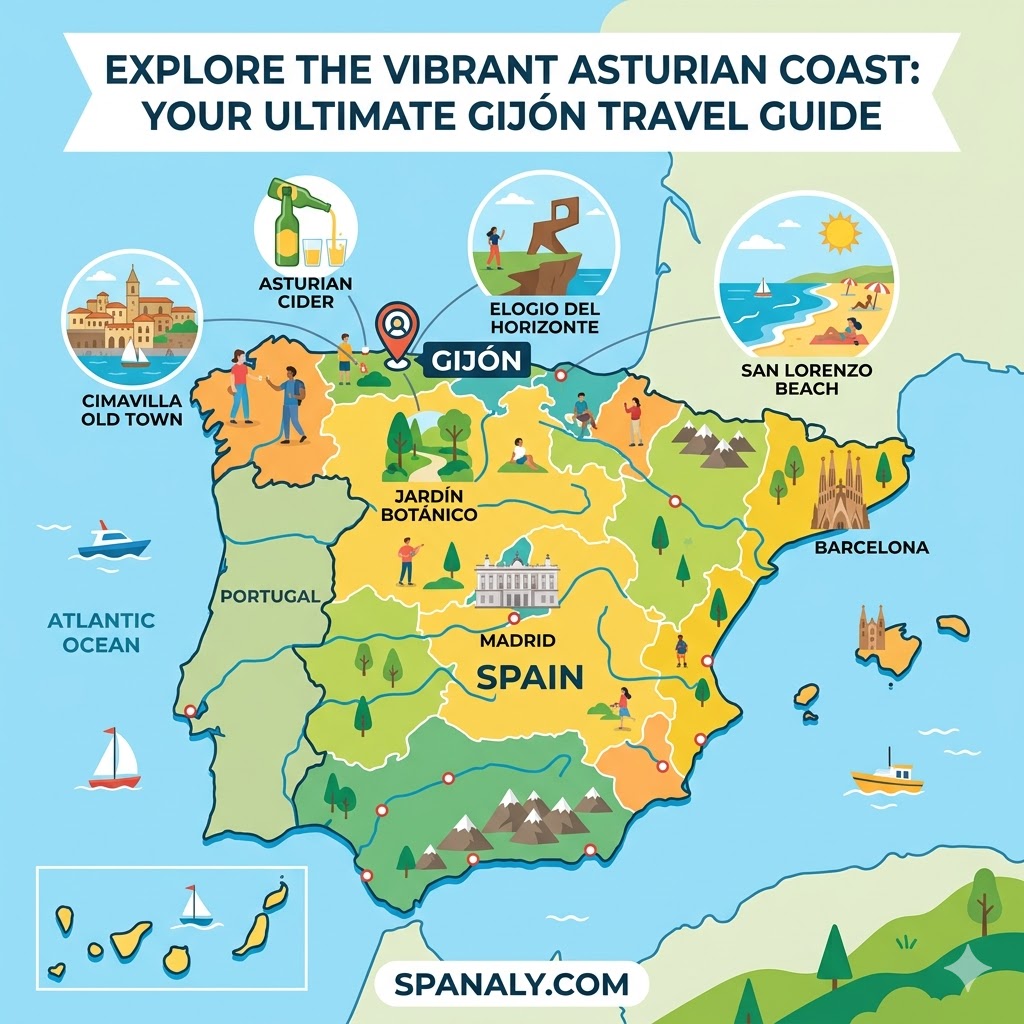
Inhale the salty Atlantic air as you walk the historic sea wall of Gijón, the raw and vibrant soul of España Verde. Unlike its quieter neighbors, this maritime powerhouse thrives on a unique blend of industrial grit and coastal beauty, where the energy of crowded cider houses meets the crashing waves of the Bay of Biscay.
🌊 Coastal Identity: Explore a city defined by two distinct harbors and an expansive, endless sea wall.
🍏 Cider Rituals: Witness the traditional high-pour technique in the legendary taverns of the Cimavilla district.
🏛️ Roman Roots: Walk through 2,000-year-old seaside thermal baths situated right at the edge of the Atlantic.
🏃 Active Vibes: Join thousands of locals for a sunset stroll along the iconic 3km San Lorenzo promenade.
🗺️ Navigate the Northern Coast Gijón serves as a prime gateway for exploring the rugged Cantabrian shoreline. To build an itinerary through Asturias and beyond, consult our Ultimate Northern Spain Travel Guide for expert logistics.
Table of Contents
Toggle📌 Gijón Travel Snapshot: Essential Trip Details
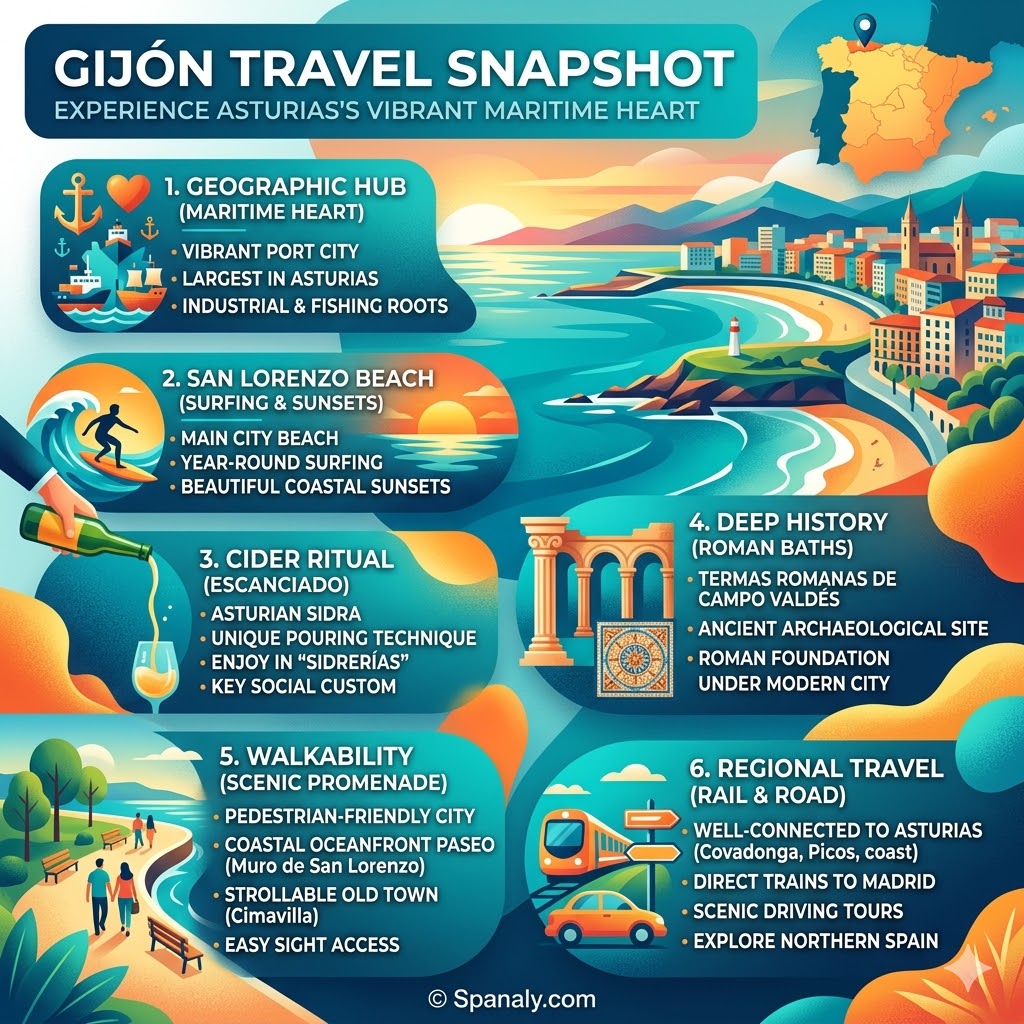
Before diving into the coastal alleys of Cimavilla, here is the functional breakdown of what makes Gijón a standout destination in España Verde. Unlike the more formal atmosphere of inland cities, Gijón operates on a rhythm of Atlantic tides and relaxed social gatherings.
📍 Geographic Hub: Gijón is the largest city in Asturias, serving as the region’s vibrant industrial and maritime heart.
🏖️ Iconic Shoreline: San Lorenzo Beach is the city’s primary social hub, good for surfing, swimming, or sunset strolls.
🍏 Liquid Gold: Cider (Sidra) is not just a drink here; it is a cultural ritual involving specific pouring techniques you must see to believe.
🏛️ Deep History: The city seamlessly blends Roman thermal baths with avant-garde 20th-century architecture.
🚶 Walkability: Most major sights are connected by a flat, scenic promenade that stretches for several kilometers along the coast.
🚉 Seamless Regional Travel
Gijón is positioned for those exploring the northern coast by rail or road. If you are arriving from other major Spanish hubs, understanding the logistics of the northern rail network is vital. Check our guide on transport in Northern Spain to coordinate your arrival and departure with expert precision.
💰 Estimated Daily Budget
Planning your expenses is easy in Gijón, as it remains more affordable than cities like San Sebastián or Madrid.
Budget (Hostels & Tapas): €45 – €60 per day.
Mid-range (Hotels & Sit-down Meals): €85 – €120 per day.
Luxury (Boutique Stays & Michelin Dining): €180+ per day.
⚖️ Gijón vs. Santander: Gritty Charm vs. Royal Elegance
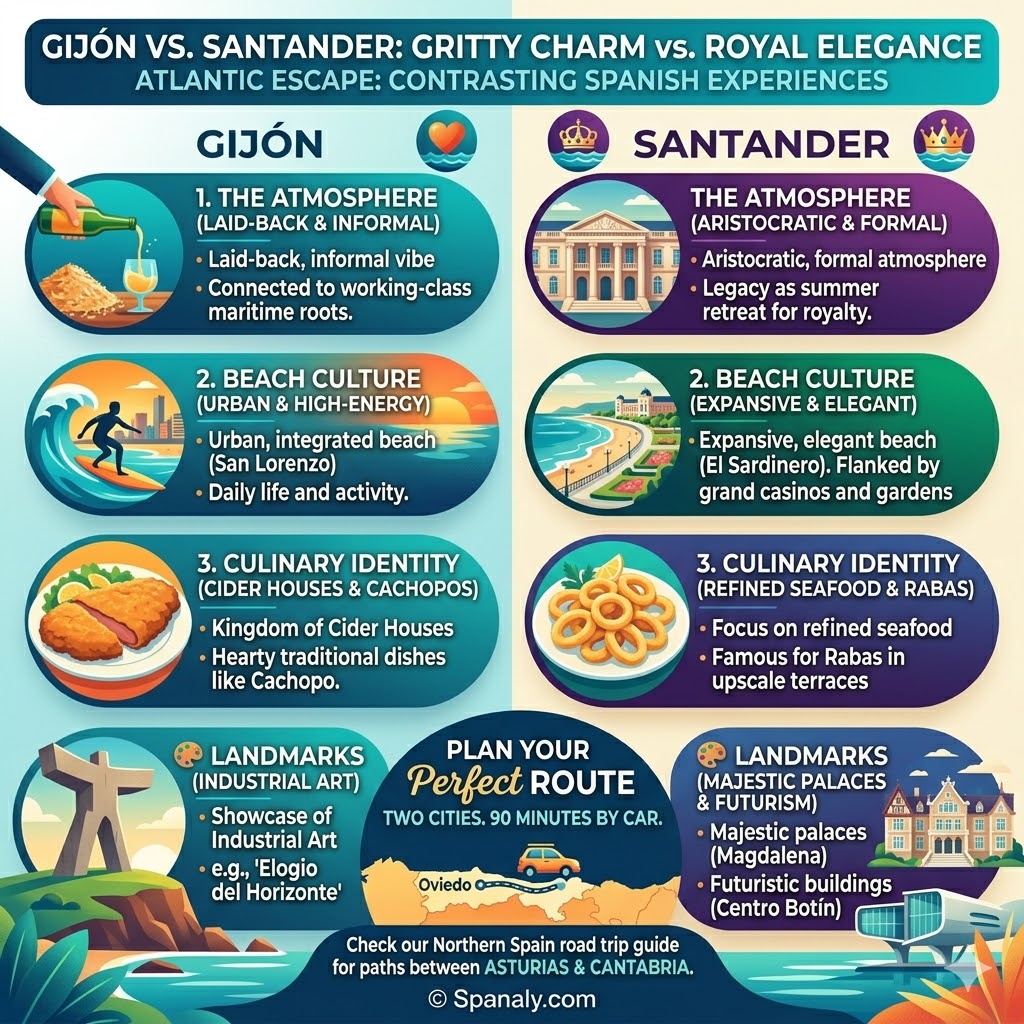
Deciding between these two northern giants depends on the “vibe” you seek for your Atlantic escape. While both are premier stops in España Verde, they offer contrasting Spanish experiences.
🏙️ The Atmosphere: Gijón is laid-back, informal, and deeply connected to its working-class maritime roots. Santander feels more aristocratic and formal, a legacy of its history as a summer retreat for Spanish royalty.
🏖️ Beach Culture: San Lorenzo in Gijón is an urban, high-energy beach integrated into the city’s daily life. Santander’s El Sardinero is expansive and elegant, flanked by grand casinos and gardens.
🥘 Culinary Identity: Gijón is the kingdom of cider houses and hearty Cachopos. Santander focuses on refined seafood and is famous for its Rabas (fried squid) enjoyed in upscale waterfront terraces.
🎨 Landmarks: Gijón showcases industrial art like the Elogio del Horizonte. Santander boasts the majestic Magdalena Palace and the futuristic Centro Botín.
🚗 Planning Your Coastal Route
If you can’t choose, you don’t have to. The two cities are only 90 minutes apart by car. To see how to fit both into a fluid route, check our Northern Spain road trip guide to map out your path between Asturias and Cantabria.
🏖️ Best Beaches in Gijón: San Lorenzo and Beyond
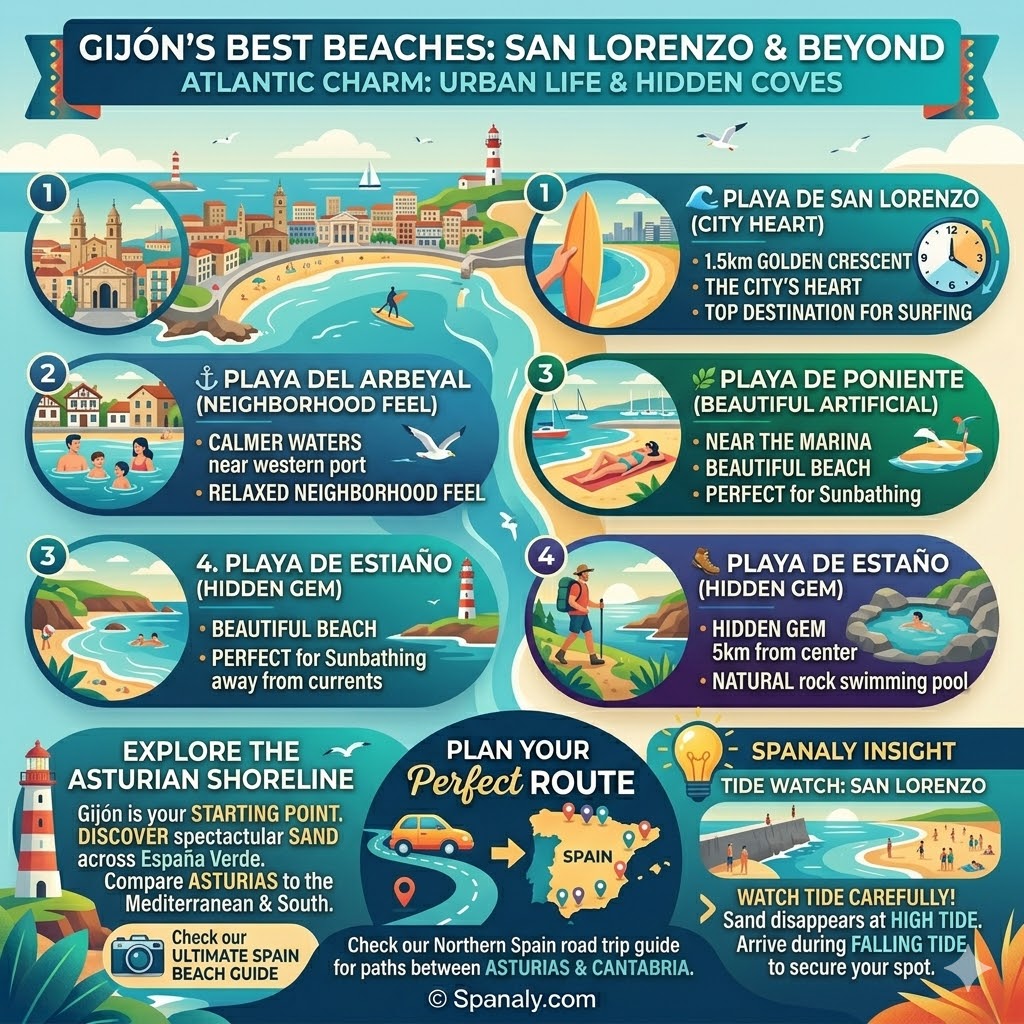
Gijón is a coastal powerhouse where urban life dissolves directly into the Atlantic. While the main city beach is a local playground, venturing just a few minutes away reveals rugged, hidden coves.
🌊 Playa de San Lorenzo: This 1.5km golden crescent is the city’s heart and a top destination for surfing.
⚓ Playa del Arbeyal: Located near the western port, this beach offers calmer waters and a neighborhood feel.
🌿 Playa de Poniente: An artificial but beautiful beach near the marina, Excellent for sunbathing away from strong currents.
🥾 Playa de Estaño: A hidden gem 5km from the center, featuring a natural swimming pool carved into the rocks.
🌊 Explore the Asturian Shoreline
Gijón is just the starting point for your coastal journey. If you are planning to explore the most spectacular stretches of sand in the country, check our ultimate Spain beach guide to discover how Asturias compares to the Mediterranean and the South.
Spanaly Insight: Watch the tide carefully at San Lorenzo. At high tide, the sand almost completely disappears, and locals move to the “Muro” (the sea wall). Arrive during the falling tide to secure your spot on the sand.
🏰 Cimavilla: Exploring the Historic Old Quarter
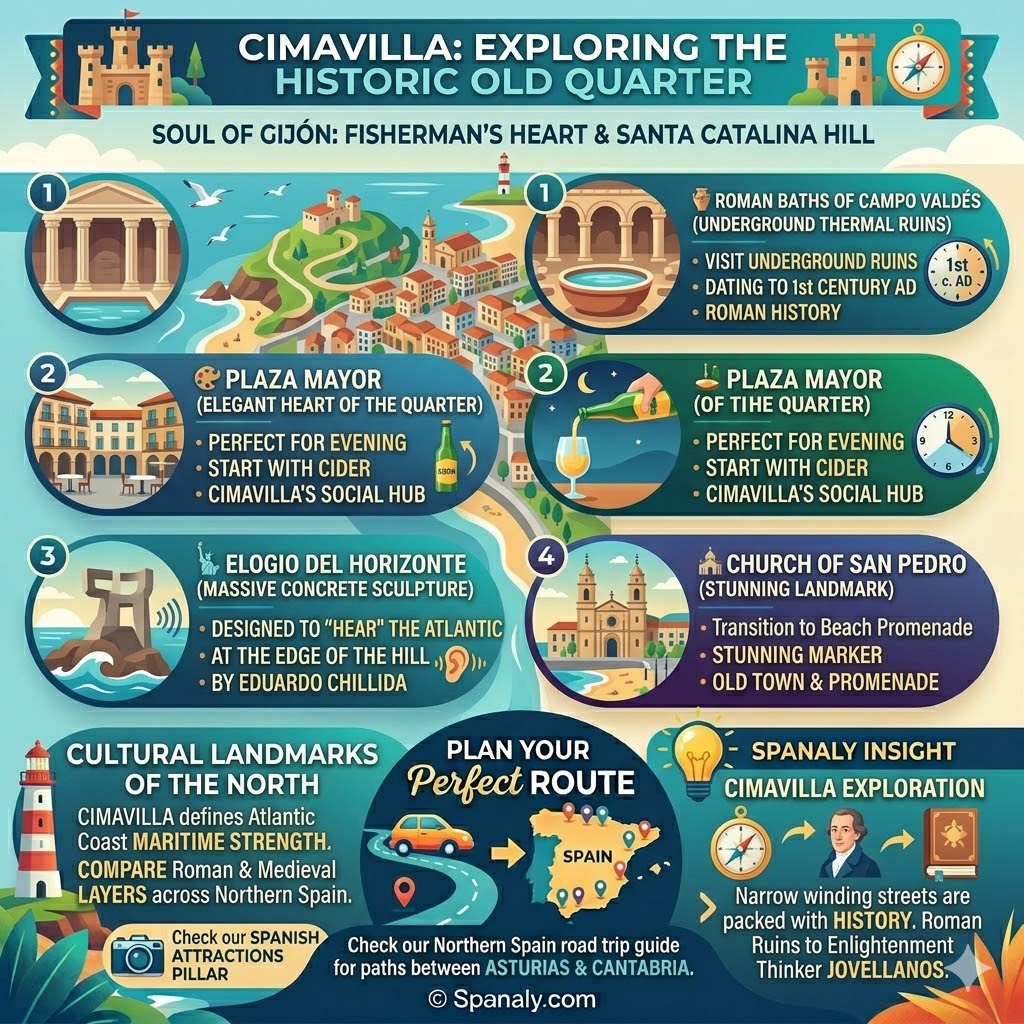
Cimavilla is the soul of Gijón, a former fisherman’s quarter perched on the Santa Catalina hill. Its narrow, winding streets are packed with history, from Roman ruins to the birthplace of the Enlightenment thinker Jovellanos.
🏺 Roman Baths of Campo Valdés: Visit these underground thermal ruins dating back to the 1st century AD.
🎨 Plaza Mayor: The elegant heart of the quarter, Ideal for starting your evening with a glass of cider.
🗽 Elogio del Horizonte: This massive concrete sculpture by Eduardo Chillida stands at the edge of the hill and is designed to “hear” the Atlantic.
⛪ Church of San Pedro: A stunning landmark marking the transition between the old town and the long beach promenade.
🏛️ Cultural Landmarks of the North
Cimavilla represents the historic maritime strength that defines much of Northern Spain. To compare these Roman and medieval layers with other major sites in the region, explore our Spanish Attractions pillar for a deeper look at the landmarks that shaped the Atlantic coast.
🌳 Top Attractions: From Laboral Ciudad de la Cultura to Jardín Botánico
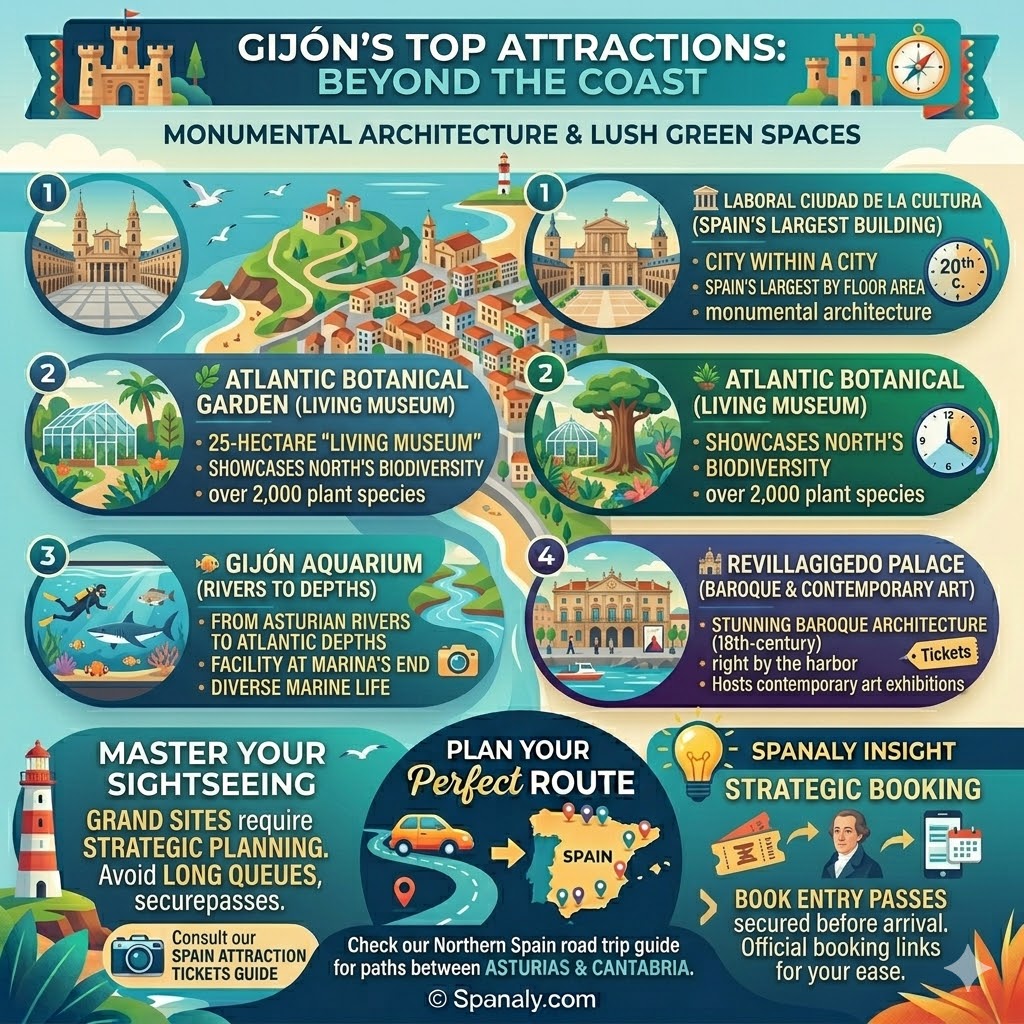
Beyond its famous coastline, Gijón boasts monumental architecture and lush green spaces that rival any major European capital. The city’s landmarks bridge the gap between 18th-century enlightenment and futuristic design.
🏛️ Laboral Ciudad de la Cultura: This is Spain’s largest building by floor area; a massive stone complex that feels like a city within a city.
🌿 Atlantic Botanical Garden: Walk through over 2,000 plant species in this 25-hectare “living museum” that showcases the biodiversity of the North.
🐠 Gijón Aquarium: Located at the end of the marina, this facility allows you to trace the journey from the Asturian rivers to the depths of the Atlantic.
🏰 Revillagigedo Palace: A stunning example of 18th-century Baroque architecture that now hosts contemporary art exhibitions right by the harbor.
🎟️ Master Your Sightseeing
Visiting these grand sites often requires strategic planning to avoid long queues. To ensure you have all your entry passes secured before you arrive, consult our Spain attraction tickets guide for expert booking tips and official links.
🎨 Art & Modernity: Elogio del Horizonte and Public Statues
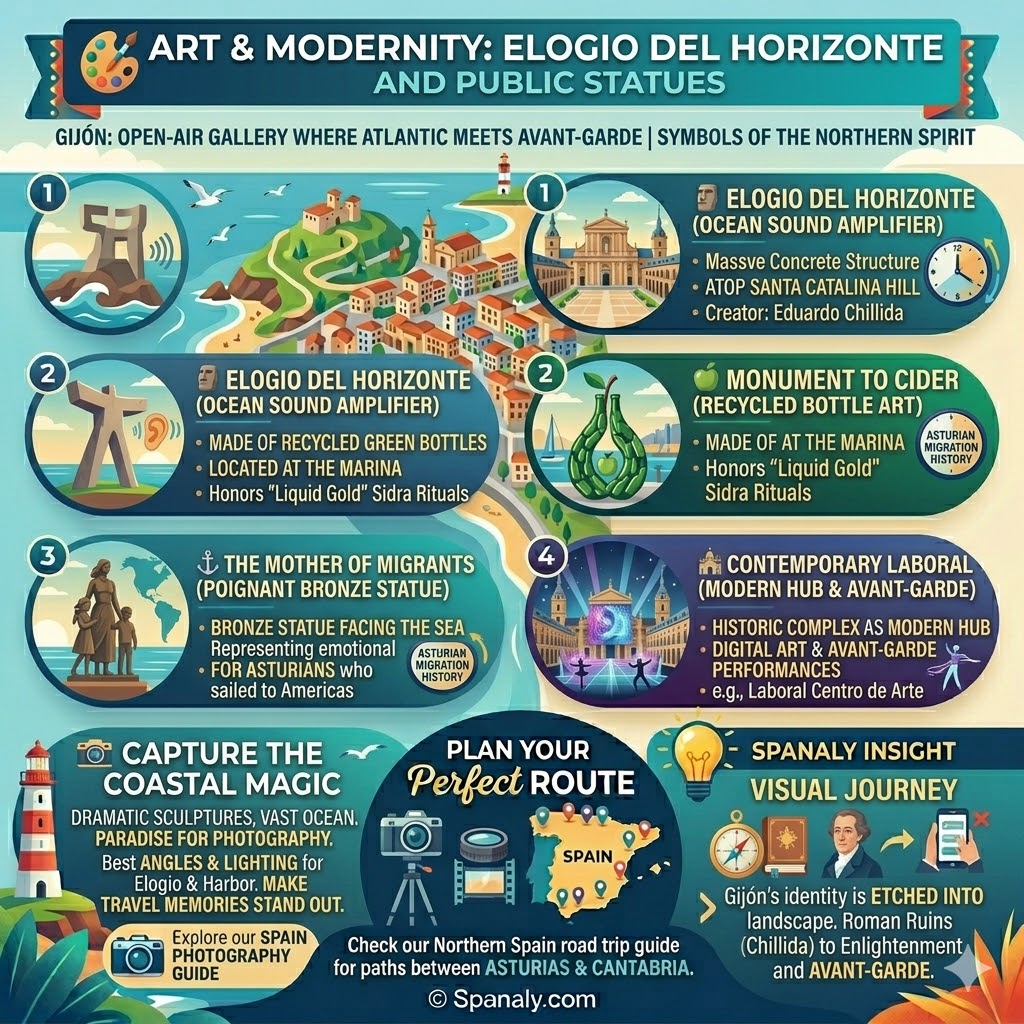
Gijón functions as a massive open-air gallery where the rugged Atlantic coastline meets avant-garde Spanish sculpture. The city’s cultural identity is physically etched into its landscape through iconic monuments that have become symbols of the northern spirit.
🌊 Elogio del Horizonte: Created by Eduardo Chillida, locals call this massive concrete structure “the place where the city listens to the ocean”. Stand in its center to hear the amplified roar of the waves echoing through the stone.
🍏 Monument to Cider: Located at the marina, this unique sculpture is made entirely of 3,200 recycled green glass bottles. It stands as a shimmering tribute to the city’s “liquid gold” and sustainable spirit.
💔 The Mother of Migrants: Known locally as “La Lloca del Rinconín,” this poignant statue faces the sea with a distressed expression. It honors the emotional history of Asturian mothers watching their children sail toward the Americas.
🏛️ Contemporary Laboral: Once a grand orphanage, this historic complex now serves as a modern hub for digital art. It bridges the gap between Gijón’s industrial past and its avant-garde future.
📸 Capture the Coastal Magic With its dramatic sculptures and vast ocean backdrops, Gijón is a paradise for photography enthusiasts. To find the absolute best angles and lighting for your shots, check our Guide to the best photography spots in Spain to make your travel memories stand out.
🥘 Gastronomy in Gijón: Seafood, Cider, and Michelin Stars
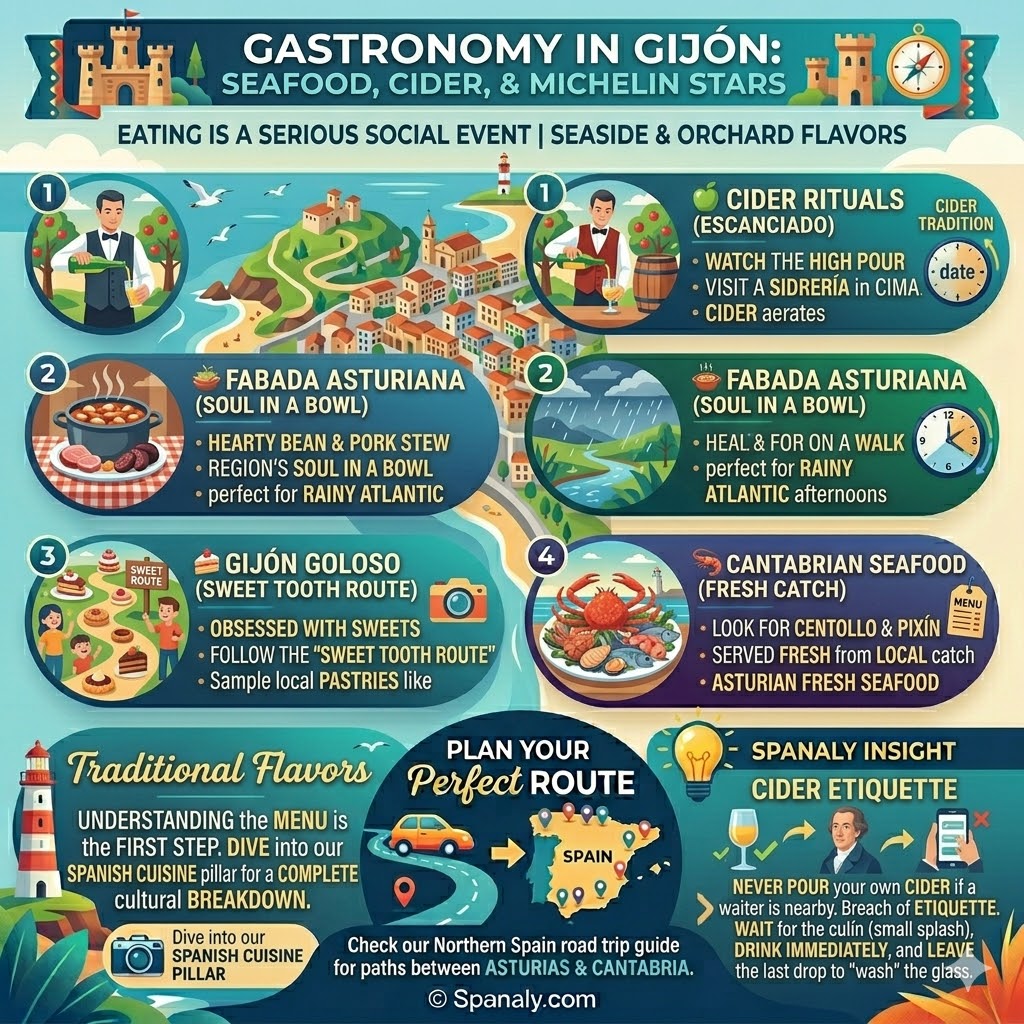
Eating in Gijón is a serious social event defined by generous portions and a deep connection to the Cantabrian Sea. The city’s culinary heart beats in its traditional taverns and innovative kitchens that celebrate Asturian heritage.
🍏 Cider Rituals: Visit legendary cider houses like Sidrería Tierra Astur Poniente or Sidrería El Lavaderu in Cimavilla to watch the escanciado (high pour).
🍲 Fabada Asturiana: Savor this iconic bean stew at established spots like Casa Gerardo (just outside the city) or the traditional La Galana in Plaza Mayor.
🍰 Gijón Goloso: Follow this famous “sweet tooth route” to sample Princesitas (almond treats) at the historic Confitería La Playa.
🦐 Cantabrian Seafood: Look for Centollo (spider crab) or Pixín (monkfish) served fresh at the harbor-front Sidrería Auga or Restaurante El Club Marítimo.
🍴 Traditional Flavors Understanding the local menu is the first step to dining like a resident. To deepen your knowledge of the ingredients and traditions found in the north, dive into our Spanish Cuisine pillar for a complete cultural breakdown.
Spanaly Insight: Never pour your own cider if a waiter is nearby, as it is a breach of local etiquette. Wait for the professional to pour a culín (a small splash), drink it immediately while sparkling, and leave the last drop to “wash” the glass.
🛍️ Shopping & Nightlife: Where to Spend Your Evenings

Gijón transforms as the sun dips below the Atlantic. The city’s commercial pulse gives way to a legendary nightlife that is far more laid-back and authentic than the glitzy clubs of the Mediterranean coast.
👗 Calle Corrida: This elegant pedestrian street is the shopping heart of the city, lined with high-end boutiques and major Spanish brands.
🏺 Cimavilla After Dark: The “Old Quarter” is the epicenter of nightlife, where narrow alleys are packed with traditional cider houses and small, alternative bars.
🍸 Fomento District: Head to the marina area for modern cocktail bars and dance clubs that stay vibrant until the early hours of the morning.
🎁 Mercado del Sur: A historic market for buying local Asturian delicacies like artisanal cheeses and canned seafood to take home.
🌙 Master the Spanish Night
Nightlife in the north follows its own set of unwritten rules, starting much later than you might expect. To navigate the social scene like an expert and avoid common tourist mistakes, dive into our nightlife in Spain guide for tips on timing, dress codes, and local etiquette.
Spanaly Insight: If you find yourself in Cimavilla on a weekend, look for “La Cuesta.” It is a famous slope where hundreds of locals gather to sit on the stone steps, drinking cider and socializing outdoors under the sea breeze.
🚌 How to Get to Gijón: Transport from Airport and Major Cities
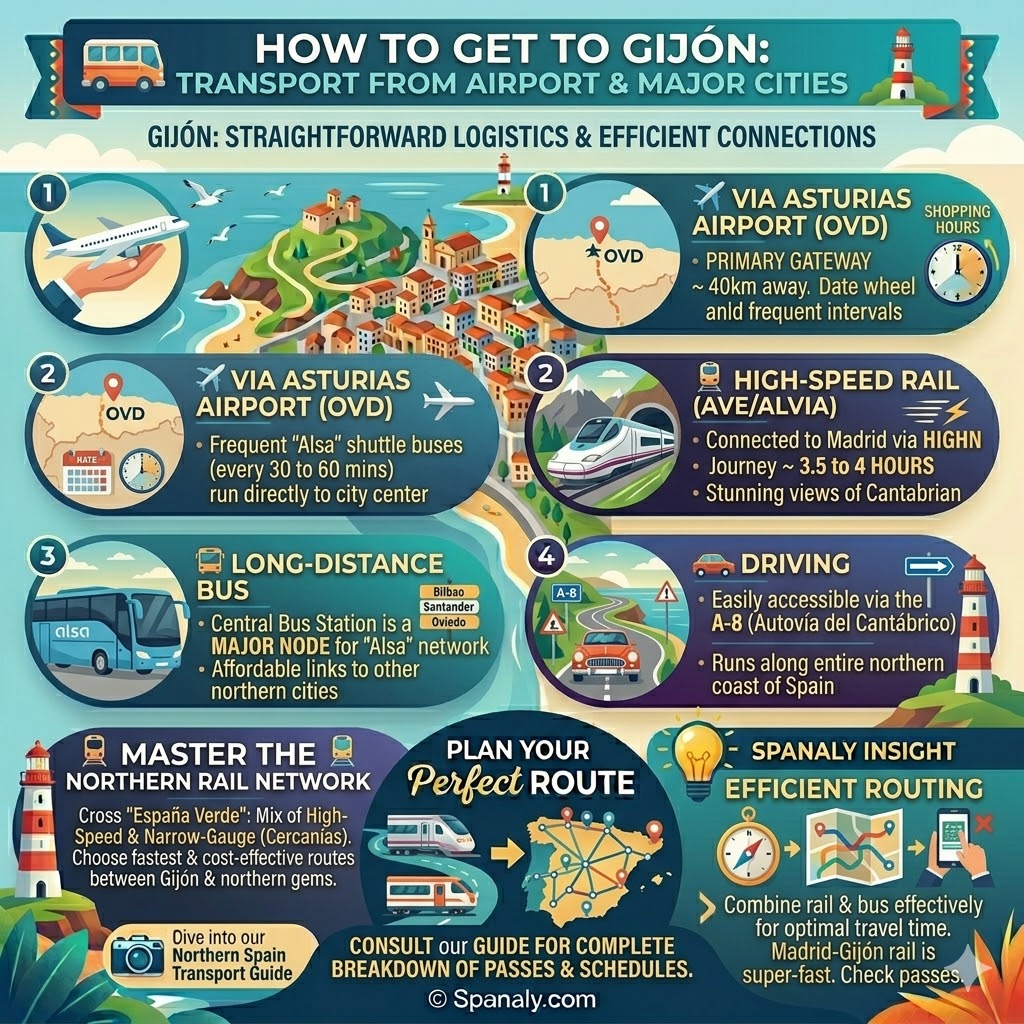
Navigating to Gijón is straightforward thanks to its status as a major regional hub. Whether you are flying into the rugged north or taking the high-speed rail from the capital, the logistics are efficient and well-connected.
✈️ Via Asturias Airport (OVD): Located about 40km away, this is the primary gateway. Frequent “Alsa” shuttle buses run every 30 to 60 minutes directly to Gijón’s city center.
🚆 High-Speed Rail (AVE/ALVIA): Gijón is connected to Madrid via the high-speed network. The journey takes approximately 3.5 to 4 hours, offering stunning views of the Cantabrian mountains.
🚌 Long-Distance Bus: The central bus station is a major node for the “Alsa” network, providing affordable links to Bilbao, Santander, and Oviedo.
🚗 Driving: Gijón is easily accessible via the A-8 (Autovía del Cantábrico), which runs along the entire northern coast of Spain.
🚆 Master the Northern Rail Network
Traveling across the “España Verde” region often involves a mix of high-speed lines and local narrow-gauge trains (Cercanías). To ensure you choose the fastest and most cost-effective routes between Gijón and other northern gems, consult our transport in Northern Spain guide for a complete breakdown of passes and schedules.
🏨 Where to Stay in Gijón: Best Neighborhoods and Hotels
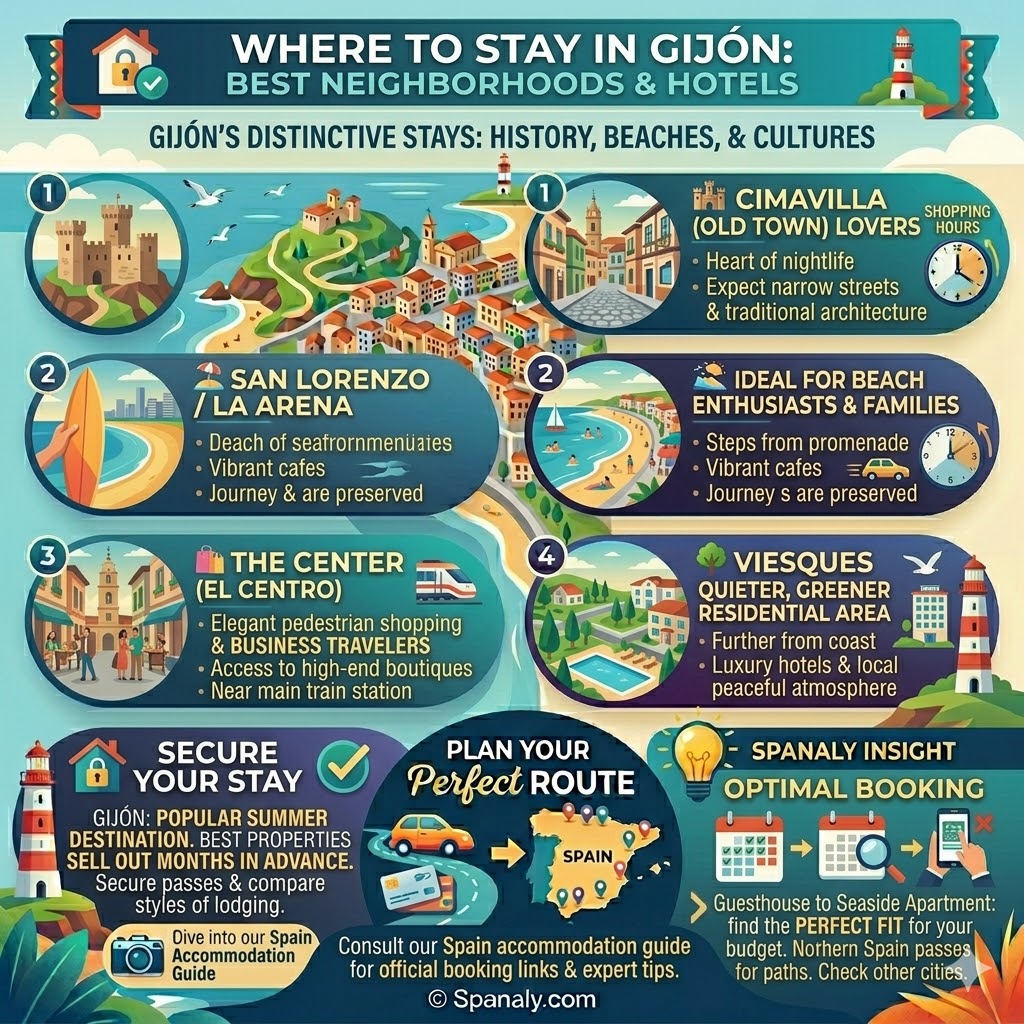
Choosing the right area in Gijón significantly impacts your experience. The city offers a clear divide between historic charm, beachside energy, and modern residential quiet.
🏰 Cimavilla (Old Town): Best for history lovers; stay at Hotel Valdés or boutique apartments to be in the heart of the nightlife and narrow traditional streets.
🏖️ San Lorenzo / La Arena: Ideal for beach enthusiasts; book a room at Hotel NH Gijón or Hotel Abba Gijón to be steps away from the promenade and vibrant cafes.
🛍️ The Center (El Centro): A top choice for shoppers; Hotel Hernán Cortés or Hotel Blue Marqués de San Esteban offer the best access to Calle Corrida boutiques and the train station.
🌳 Viesques: A quieter residential area; choose Parador de Gijón (located in the nearby Isabel la Católica Park) for a luxury, peaceful atmosphere away from the coast.
🏠 Secure Your Stay Gijón is a popular summer destination, and the best beachfront properties often sell out months in advance. To compare different styles of lodging—from historic guesthouses to modern seaside apartments—explore our Accommodation in Spain Guide to find the fit for your budget.
🌦️ Best Time to Visit Gijón: Weather and Summer Festivals

Gijón is a city of seasons, where the Atlantic climate dictates the social calendar. Unlike the scorching heat of Southern Spain, this coastal gem stays refreshingly cool, making it a sanctuary for those fleeing the summer sun.
🌡️ Summer (June – August): This is the peak season with temperatures averaging 22°C – 25°C, Ideally suited for beach life and outdoor dining.
🍂 Autumn (September – October): A beautiful time for foodies as the apple harvest begins, and the crowds at the cider houses thin out.
❄️ Winter (November – February): Cool and misty with temperatures around 10°C; it is the best time to enjoy a hearty Fabada by a fireplace.
🌸 Spring (March – May): The “Green Spain” landscapes are at their most vibrant, though you should always carry an umbrella for sudden Atlantic showers.
📅 Plan Your Seasonal Escape
Because Gijón’s weather is significantly milder and wetter than the Mediterranean coast, timing your trip is crucial for outdoor activities. To see how the Asturian climate fits into a larger regional trip, check our expert guide on the best time to visit Northern Spain for a month-by-month breakdown of weather and local events.
🗺️ Day Trips from Gijón: Asturias Coastal Route
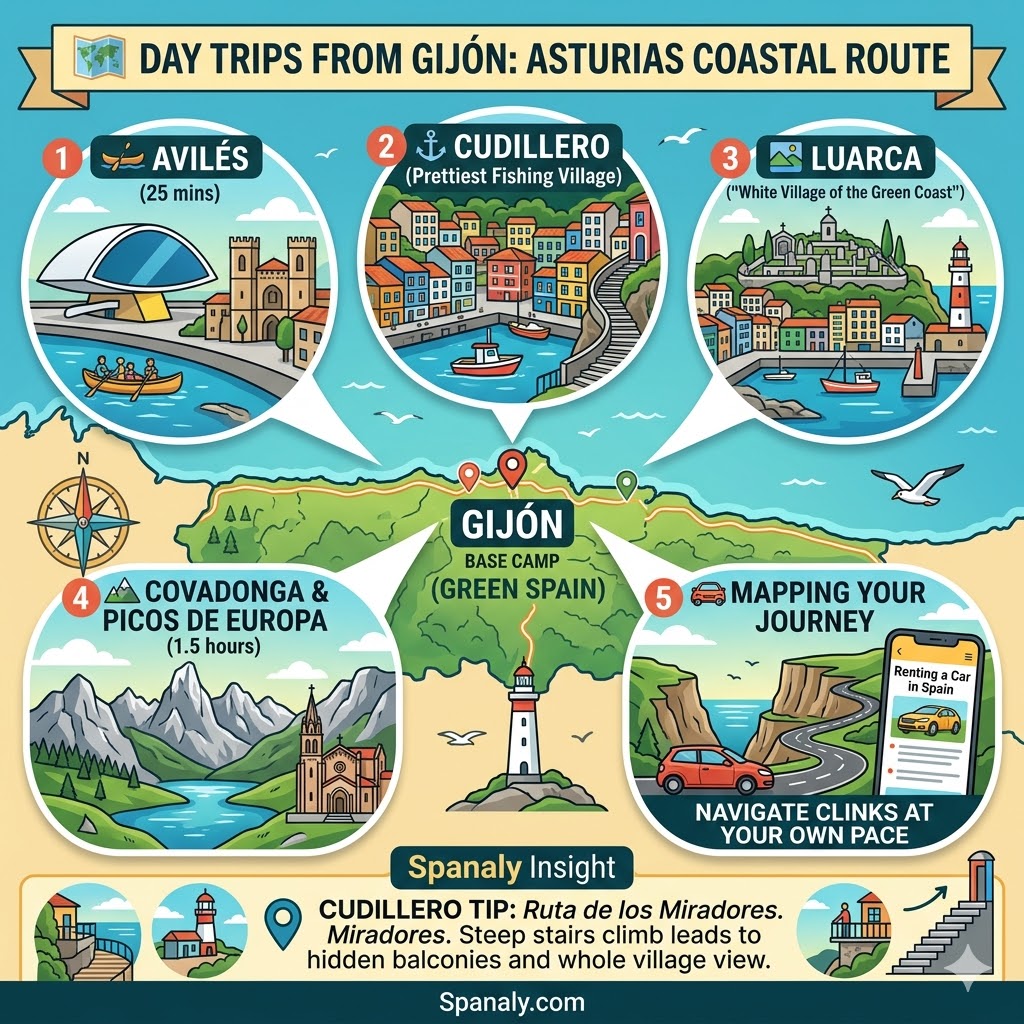
Gijón serves as the base camp for exploring the Untamed coastline of the Asturian coastline. Within an hour’s drive, you can transition from urban beaches to some of the most dramatic landscapes in Europe.
🛶 Avilés: Just 25 minutes away, featuring the futuristic Oscar Niemeyer International Cultural Centre and a stunning medieval old town.
⚓ Cudillero: Often cited as Spain’s most beautiful fishing village, with colorful houses hanging over a tiny turquoise harbor.
🏞️ Luarca: Known as the “White Village of the Green Coast,” famous for its spectacular hilltop cemetery and winding harbor streets.
⛰️ Covadonga & Picos de Europa: A slightly longer drive (1.5 hours) takes you to the soaring limestone peaks and glacial lakes of Spain’s first national park.
🚗 Mapping Your Journey
The best way to experience these hidden coastal gems is by having your own set of wheels to navigate the winding cliffs at your own pace. To prepare for the local roads and understand the rental process in the north, explore our renting a car in Spain guide for essential tips on insurance and logistics.
Spanaly Insight: If you visit Cudillero, don’t just stay by the water. Follow the signs for the “Ruta de los Miradores” (Viewpoints Route). The steep climb up the stairs behind the houses leads to balconies where you can see the entire village tucked into the cliffs like a hidden treasure.
🎒 Gijón Itinerary: 1, 2, or 3 Days Master Plan

This integrated itinerary combines the best of Gijón with estimated costs to help you manage your budget in real-time. Whether you have 24 hours or a full long weekend, this plan ensures you hit every cultural and culinary mark.
🕒 Day 1: The Maritime Soul & Roman Roots
Morning (10:00 – 13:00): Start at the Roman Baths of Campo Valdés (€3) followed by a walk up Santa Catalina hill to hear the ocean roar through the Elogio del Horizonte (Free).
Lunch (14:00 – 16:00): Head to a traditional Sidrería in Cimavilla. Order a Menú del Día featuring fresh seafood. (Cost: €15 – €22).
Afternoon (16:30 – 19:00): Walk the entire length of San Lorenzo Beach promenade. Stop for a coffee at a terrace overlooking the bay. (Cost: €3).
Evening (20:30 – Late): Tapas crawl in the “Ruta de los Vinos” area near the center. (Cost: €20 – €30).
🕒 Day 2: Monumental Architecture & Green Escapes
Morning (10:30 – 13:30): Take a short bus ride to Laboral Ciudad de la Cultura. Join a guided tour to climb the tower for panoramic views. (Cost: €5 – €8).
Lunch (14:00 – 15:30): Enjoy a picnic or a light meal near the Atlantic Botanical Garden across the street. (Cost: €10 – €15).
Afternoon (16:00 – 18:30): Explore the Botanical Garden’s hidden forest paths and historic lagoons. (Cost: €3).
Evening (20:00 – 22:00): Dinner at the marina area, focusing on Asturian cheeses and grilled meats. (Cost: €25 – €40).
🕒 Day 3: Hidden Coves & Sweet Traditions
Morning (09:30 – 13:00): Hike the Senda del Cervigón, a coastal path starting from the end of San Lorenzo, leading to quiet cliffs and hidden coves. (Free).
Lunch (13:30 – 15:00): Treat yourself to a Michelin-starred experience or a high-end seafood restaurant to celebrate your final day. (Cost: €50 – €90).
Afternoon (15:30 – 17:30): Follow the Gijón Goloso sweet route, sampling famous pastries at local bakeries. (Cost: €10).
Evening (18:30 – 20:30): Final sunset drinks at the “Muro” before departure. (Cost: €5 – €10).
🚉 Smart Regional Logistics
Gijón is a Excellent launchpad for a broader exploration of the north. To ensure you stay within your budget while moving between cities like Santander or Bilbao, check our detailed guide on Northern Spain travel cost and budget for money-saving transport hacks and regional pricing tips.
💡 Spanaly Tips: The Reddit-Approved Gijón Secrets
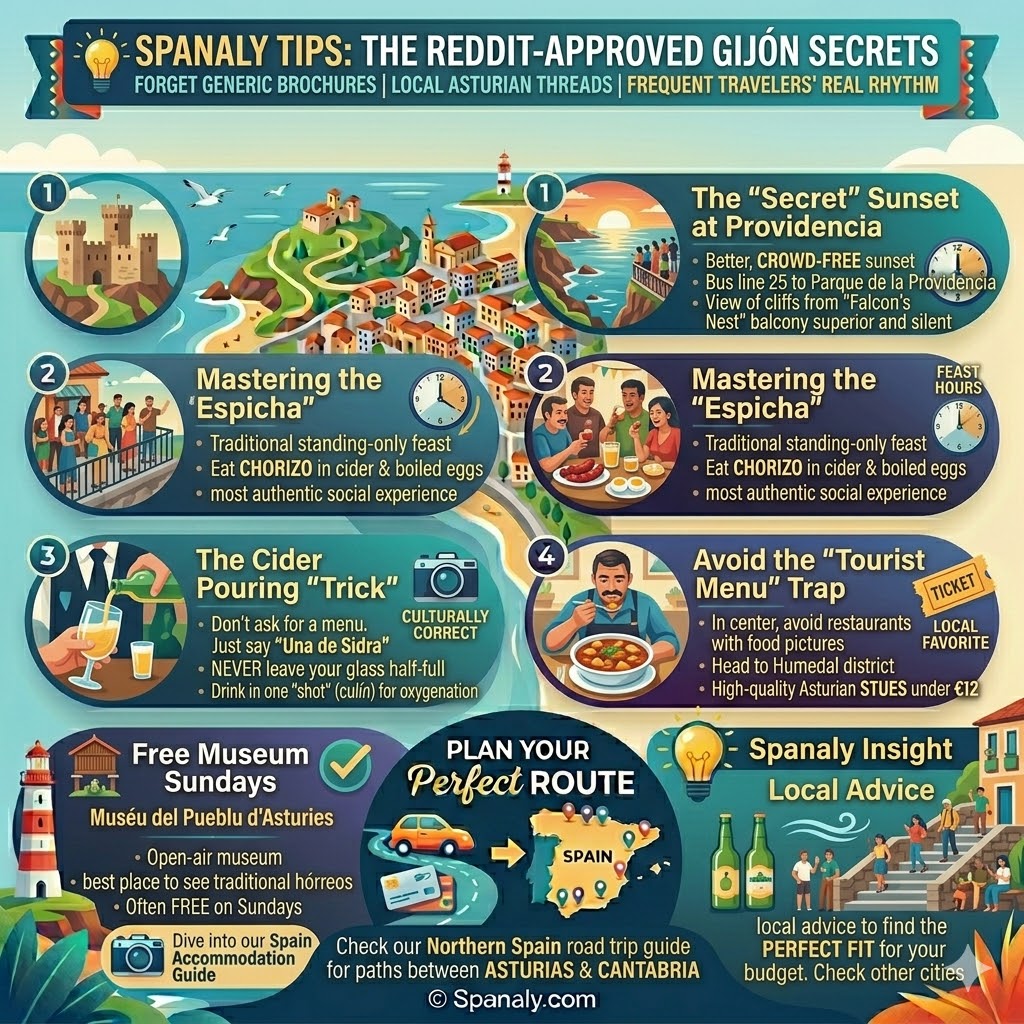
Forget the generic tourist brochures; these insights are gathered from deep dives into local Asturian threads and frequent travelers who know the city’s real rhythm.
The “Secret” Sunset at Providencia: Most tourists stop at the Elogio del Horizonte. For a better, crowd-free sunset, take bus line 25 to Parque de la Providencia. The view of the cliffs from the “Falcon’s Nest” balcony is superior and completely silent.
Mastering the “Espicha”: If you see a sign for an Espicha at a local cider cellar (Llagar), go in immediately. It is a traditional standing-only feast where you eat chorizo in cider and boiled eggs while the barrels are opened. It is the most authentic social experience in Gijón.
The Cider Pouring “Trick”: Local waiters appreciate it when you don’t ask for a menu in a Sidrería. Just say “Una de Sidra” and wait. Also, never leave your glass half-full; cider in Asturias is meant to be drunk in one “shot” (culín) to keep the oxygenation fresh.
Avoid the “Tourist Menu” Trap: In the center, avoid restaurants with pictures of food. Instead, head to the Humedal district. This is where local workers eat the Menú del Día, and you can find high-quality Asturian stews for under €12.
Free Museum Sundays: Many visitors don’t realize that the Muséu del Pueblu d’Asturies (an incredible open-air museum) is often free on Sundays. It is the best place to see traditional granaries (hórreos) without leaving the city.
🛡️ Visitor FAQs – Gijón Travel Safety & Logistics
🅿️ Is parking difficult to find in the city center?
Street parking in the center is mostly regulated ("Zona Azul"). It is best to use large underground car parks like Parking El Parchís or Parking San Agustín. For a free alternative, many locals park near the El Molinón stadium and take a quick bus or a 15-minute walk to the Marina.
🚲 Is Gijón bike-friendly for international tourists?
Absolutely. The city features an extensive network of flat bike lanes, especially the scenic route along the San Lorenzo promenade. You can easily rent e-bikes or traditional cycles at the Marina. The path connecting the city to the La Camocha greenway is Ideal for a nature-filled afternoon.
🧥 What should I pack for the "Gijón Weather"?
Always follow the layering rule. Even in peak summer, the Atlantic breeze can be chilly after sunset. A light, waterproof windbreaker is essential regardless of the forecast. Comfortable walking shoes are a must for the cobblestones of Cimavilla and the long coastal trails.
🐾 Is Gijón a pet-friendly destination?
Gijón is known as one of Spain’s most dog-friendly cities. While dogs are restricted on San Lorenzo beach during the high summer season, El Rinconín beach is open to pets all year. Many bars and "sidrerías" also allow well-behaved dogs on their terraces.
💬 Do I need to speak Spanish to enjoy the Cider Houses?
While basic phrases help, the staff in popular cider spots are used to international visitors. The language of cider is mostly visual! Simply point to the bottle, and the "escanciador" (waiter) will handle the rest. It is a welcoming, informal culture where a friendly smile goes a long way.
Latest Essential Updates by Spanaly.com
Gijón is a city that doesn’t try too hard to impress; it simply wins you over with its Authentic salt-of-the-earth vibe and honest hospitality. Whether you are surfing the swells of San Lorenzo or sharing a bottle of cider in a hidden Cimavilla alley, you are experiencing the authentic soul of Northern Spain.
🌊 Dive into the Atlantic: Don’t just watch the waves; embrace the salty breeze of the Bay of Biscay.
🍏 Taste the Tradition: Remember, cider in Gijón is a social ritual, not just a drink.
👟 Explore Every Alley: From Roman ruins to massive stone sculptures, the city is a living museum.
✨ Plan Your Next Stop: No trip to Asturias is complete without visiting the elegant neighbor. Pair your coastal adventure with our Oviedo travel guide to experience the perfect balance between the sea and the historic capital.
Gijón is waiting for you with an open harbor and a poured glass of cider. Pack your windbreaker, bring your appetite, and get ready to discover the electric atmosphere of the Green Coast.