Table of Contents
Toggle🕍 Santiago de Compostela
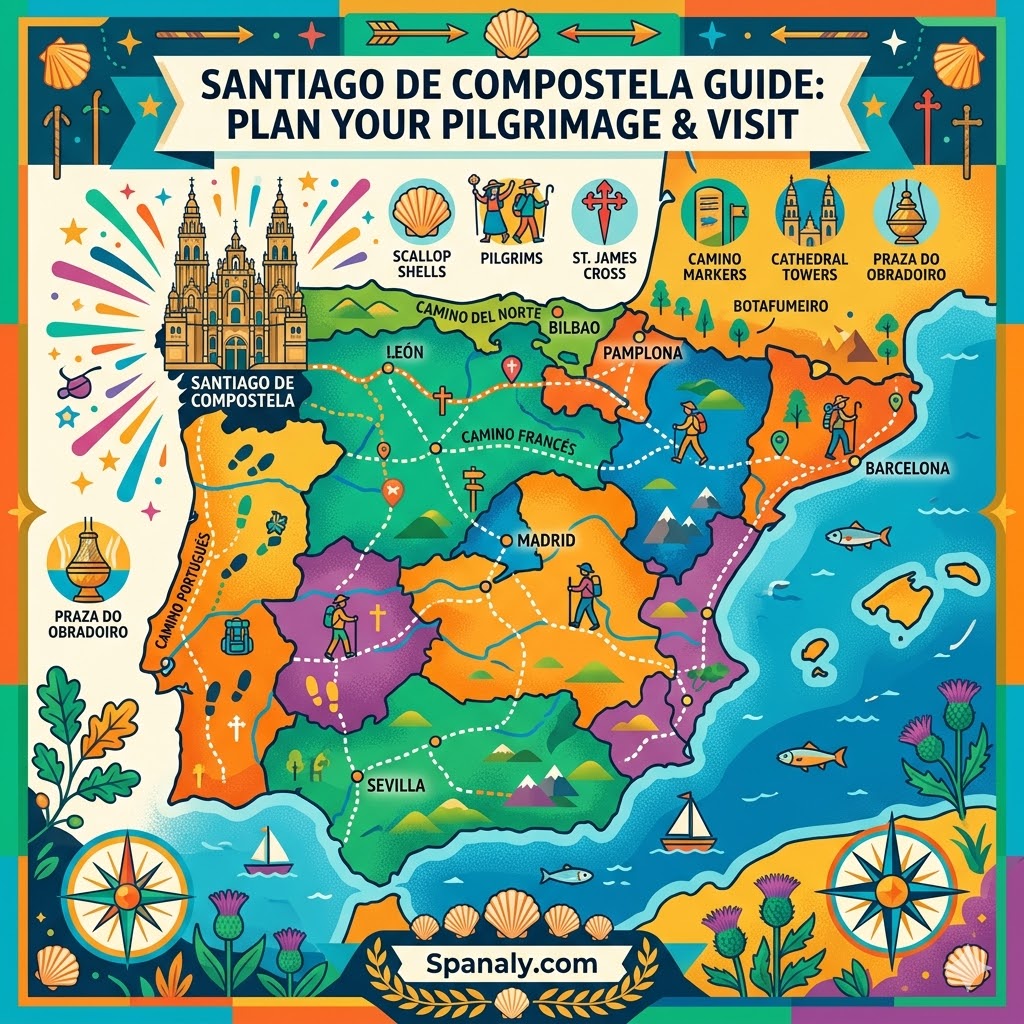
Santiago de Compostela is more than a city; it is the emotional and spiritual finish line of Northern Spain. This Santiago de Compostela Guide helps you navigate the historic stone-paved streets of Galicia’s capital, where ancient pilgrimage traditions meet a vibrant, modern atmosphere.
⛪ Spiritual Heart: Experience the breathtaking Santiago Cathedral and the historic Praza do Obradoiro.
🍽️ Galician Flavors: Discover why this city is a top destination for fresh seafood and local tapas.
🌿 Green Landscapes: Enjoy the unique Celtic atmosphere and lush parks that define the Galician region.
🧭 Regional Planning: To see how this city connects to the rest of the coast, consult our Ultimate Northern Spain Travel Guide for expert regional insights.
Imagine walking through narrow stone alleys where the scent of incense mixes with the salty Atlantic breeze. In Santiago, every corner holds a century of history waiting for you to arrive.
📋 Santiago de Compostela Snapshot: Essential Logistics
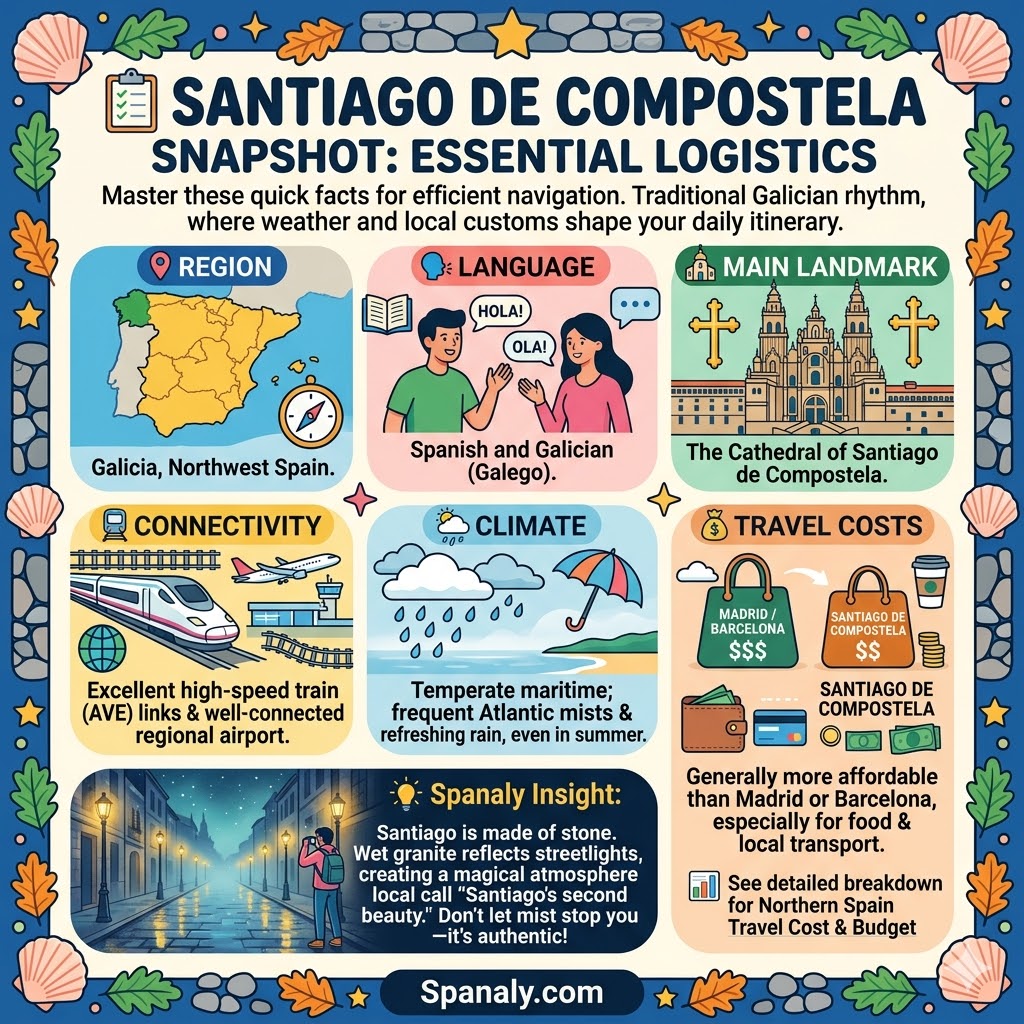
Before exploring the monumental plazas, mastering these quick facts will help you navigate the city efficiently. Santiago operates on a traditional Galician rhythm where the weather and local customs shape your daily itinerary.
📍 Region: Galicia, Northwest Spain.
🗣️ Language: Spanish and Galician (Galego).
⛪ Main Landmark: The Cathedral of Santiago de Compostela.
🚆 Connectivity: Excellent high-speed train (AVE) links and a well-connected regional airport.
🌦️ Climate: Temperate maritime; expect frequent Atlantic mists and refreshing rain, even in summer.
💰 Travel Costs: Generally more affordable than Madrid or Barcelona, especially for food and local transport. For a detailed breakdown of regional expenses, see our guide on Northern Spain Travel Cost & Budget.
Spanaly Insight: Santiago is a city made of stone. When it rains, the wet facades of the Old Town reflect the streetlights, creating a magical atmosphere that locals call “Santiago’s second beauty.” Don’t let the mist stop you; it’s part of the authentic experience.
🧭 Santiago de Compostela vs. Oviedo: Which Northern City Suits You?
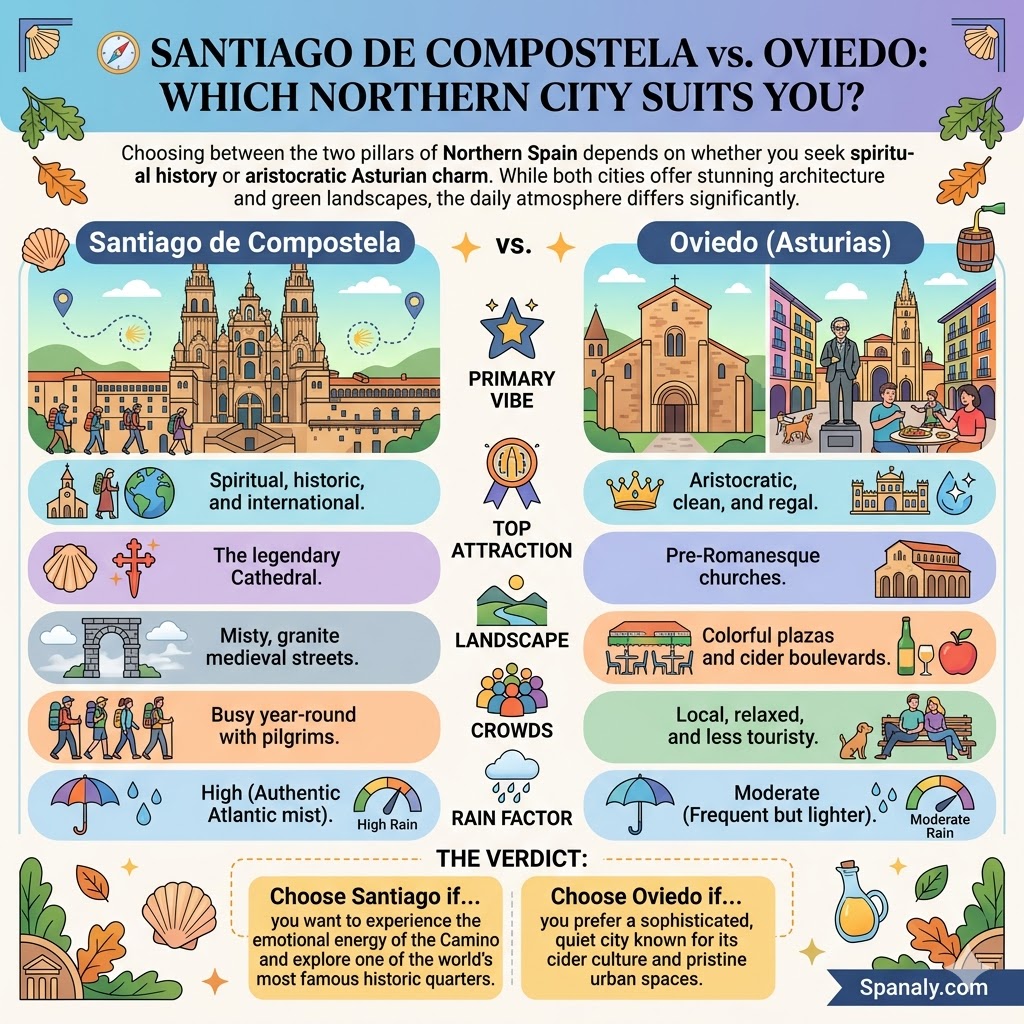
Choosing between the two pillars of Northern Spain depends on whether you seek spiritual history or aristocratic Asturian charm. While both cities offer stunning architecture and green landscapes, the daily atmosphere differs significantly.
| Feature | Santiago de Compostela | Oviedo (Asturias) |
| Primary Vibe | Spiritual, historic, and international. | Aristocratic, clean, and regal. |
| Top Attraction | The legendary Cathedral. | Pre-Romanesque churches. |
| Landscape | Misty medieval stone streets | Colorful plazas and cider boulevards. |
| Crowds | Busy year-round with pilgrims. | Local, relaxed, and less touristy. |
| Rain Factor | High (Authentic Atlantic mist). | Moderate (Frequent but lighter). |
The Verdict:
Choose Santiago if… you want to experience the emotional energy of the Camino and explore one of the world’s most famous historic quarters.
Choose Oviedo if… you prefer a sophisticated, quiet city known for its cider culture and pristine urban spaces.
Spanaly Insight: Both cities are exceptional hubs for exploring the wider region. If you decide to prioritize Oviedo’s unique pre-Romanesque art and cider scene, consult our dedicated Oviedo Travel Guide to plan your time in the Asturian capital.
🚆 How to Get to Santiago de Compostela: Transport Options

Santiago de Compostela is the main transport hub for western Galicia. Whether you are arriving by air from another Spanish city or traveling across the coast, the city is well-connected through a modern network of trains and buses.
✈️ By Air: Santiago-Rosalía de Castro Airport (SCQ) handles most international and domestic flights to the region. To plan your arrival and transfer from the terminal, consult our dedicated Santiago Compostela Airport Guide.
🚆 By Train: The high-speed (AVE and Alvia) trains connect Santiago to Madrid in approximately 3 hours. There are also frequent regional links to A Coruña, Vigo, and Villagarcía.
🚌 By Bus: The main bus station (Estación de Autobuses) is located near the city center. It offers reliable routes to nearby Galician towns and major hubs across Northern Spain.
🚗 Regional Transit: Navigating the northern coast requires understanding the different rail and road networks. For a full overview of your options, check our guide on Transport in Northern Spain.
Spanaly Insight: If you are arriving at the airport, look for the direct shuttle bus that runs every 30 minutes. It is the most cost-effective way to reach the historic center, dropping you off just a short walk from the main cathedral plaza.
⛪ Santiago de Compostela Cathedral: The Spiritual Heart
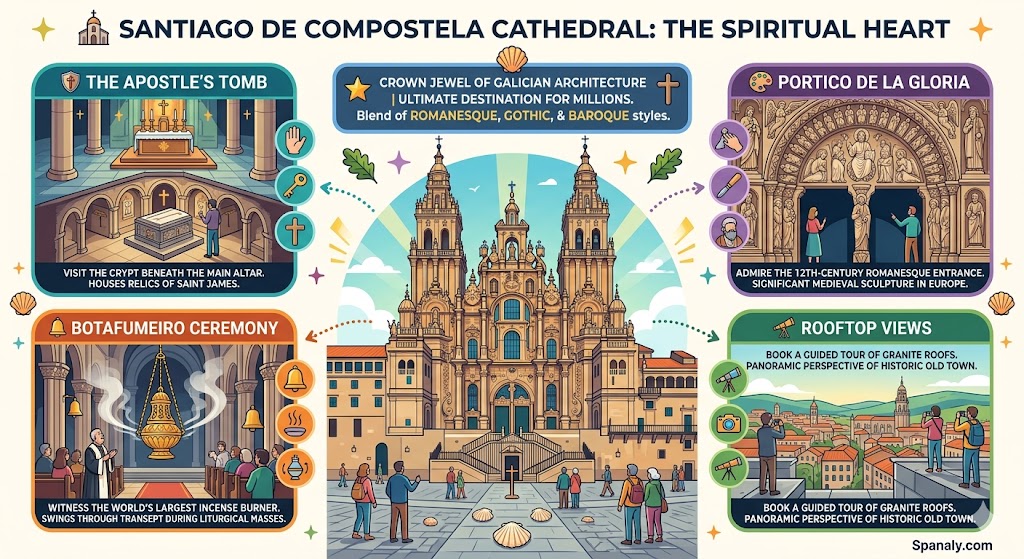
The Cathedral is the crown jewel of Galician architecture and the ultimate destination for millions of travelers. Standing in the center of Praza do Obradoiro, this masterpiece blends Romanesque, Gothic, and Baroque styles into one iconic structure.
🛡️ The Apostle’s Tomb: Visit the crypt beneath the main altar, which houses the relics of Saint James.
🔔 Botafumeiro Ceremony: Witness the world’s largest incense burner swinging through the transept during special liturgical masses.
🎨 Portico de la Gloria: Admire the 12th-century Romanesque entrance, one of the most significant medieval sculptures in Europe.
🔭 Rooftop Views: Book a guided tour of the cathedral’s ancient roofs for a panoramic perspective of the historic old town.
Spanaly Insight: Entry to the main cathedral is free, but access to the museum, rooftops, and the Portico requires a ticket. To guarantee your spot and avoid long queues, explore our dedicated Cathedral of Santiago de Compostela Guide for booking tips and visit times.
🧭 The Camino de Compostela: Finishing the Pilgrimage
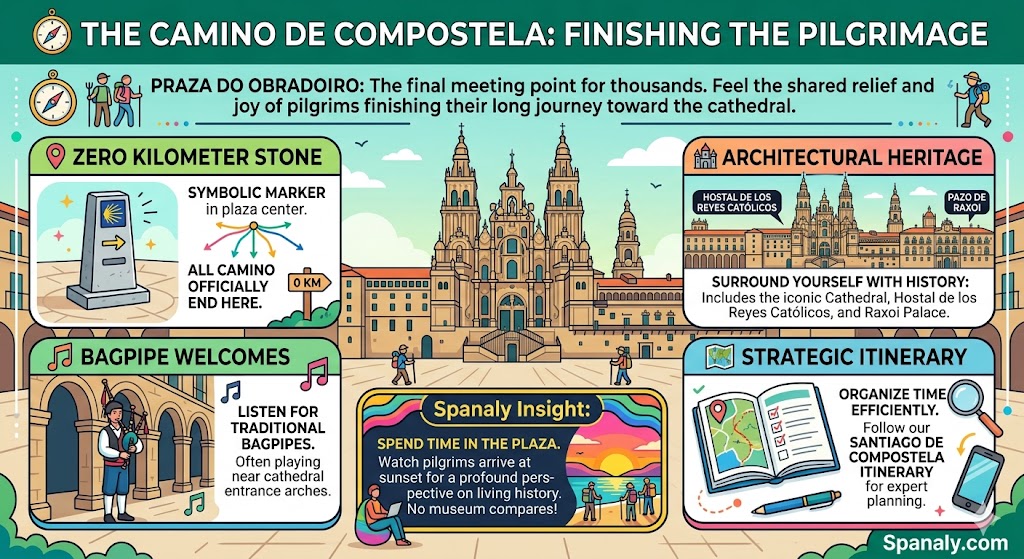
The Praza do Obradoiro serves as the final meeting point for thousands of pilgrims arriving from across Europe. Standing in this vast paved square, you can feel the shared relief and joy of those finishing their long journey toward the cathedral.
📍 Zero Kilometer Stone: Find the symbolic marker in the center of the plaza where all Camino routes officially end.
🏰 Architectural Heritage: Surround yourself with history, including the Hostal de los Reyes Católicos and the Raxoi Palace.
🎶 Bagpipe Welcomes: Listen for the traditional Galician bagpipes often playing under the arches near the cathedral entrance.
🗺️ Strategic Itinerary: To organize your time efficiently and see all the highlights of the square and beyond, follow our Santiago de Compostela Itinerary for expert planning.
Spanaly Insight: Even if you didn’t walk the Camino, spend some time sitting on the cool stone floor of the plaza. Watching the pilgrims arrive at sunset offers a profound perspective on the city’s living history that you won’t find in any museum.
🏛️ Best Things to Do in Santiago: Beyond the Cathedral
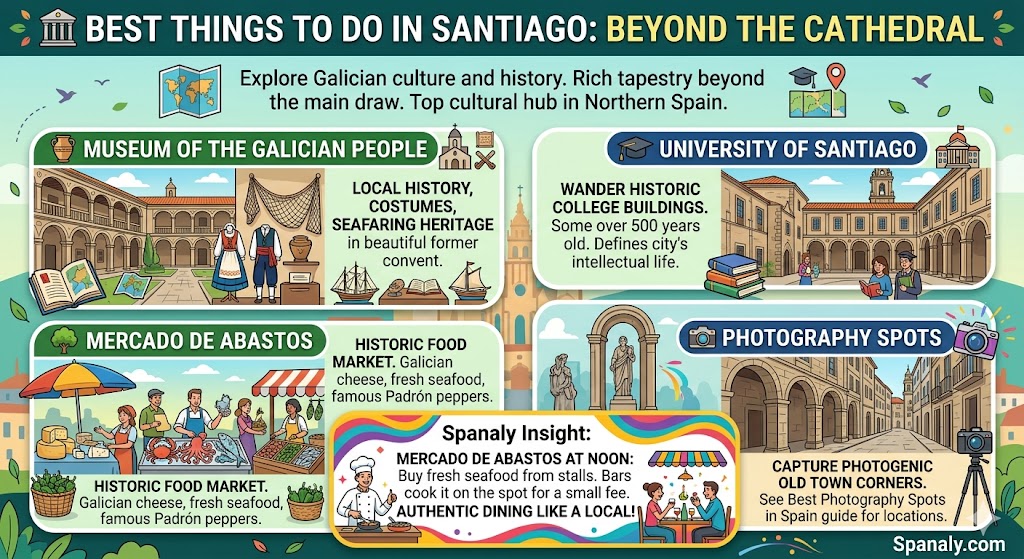
While the cathedral is the main draw, the rest of the city offers a rich tapestry of Galician culture and history. Exploring the surrounding streets and museums reveals why this city remains a top cultural hub in Northern Spain.
🏺 Museum of the Galician People: Discover the local history, traditional costumes, and seafaring heritage of the region in this beautiful former convent.
🌳 Mercado de Abastos: Visit the city’s historic food market to see local artisans selling fresh Galician cheese, seafood, and the famous Padrón peppers.
🎓 University of Santiago: Wander through the historic college buildings, some of which date back over 500 years and define the city’s intellectual life.
📸 Photography Spots: For those looking to capture the most photogenic corners of the old town, check our guide on the Best Photography Spots in Spain for expert locations.
Spanaly Insight: Head to the Mercado de Abastos around noon. You can buy fresh seafood directly from the stalls and take it to one of the small bars inside the market; they will cook it for you on the spot for a small fee. It is the most authentic way to dine like a local.
🌳 Parks and Views: Alameda Park & Monte do Gozo
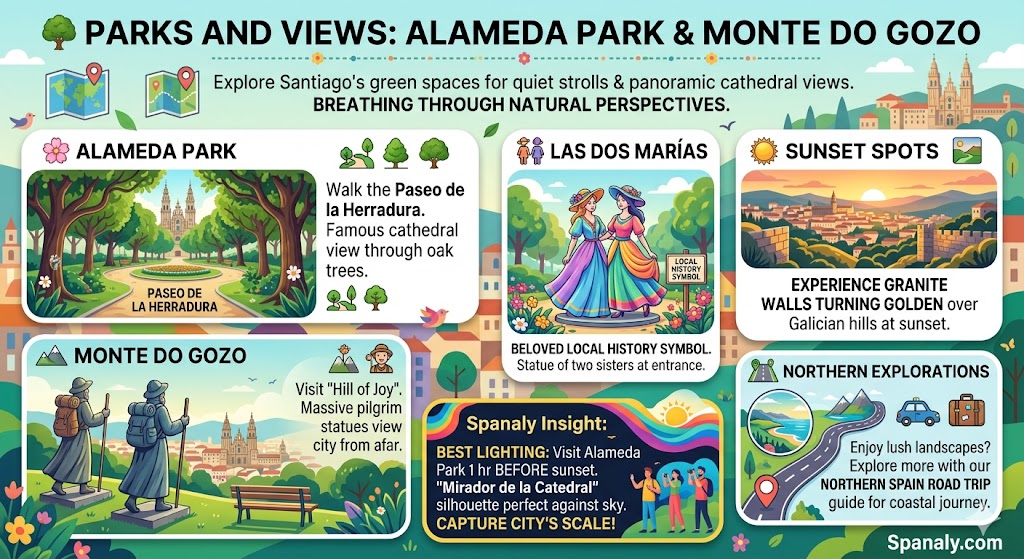
Santiago is a city that breathes through its green spaces. Whether you want a quiet stroll or a panoramic photo of the cathedral spires, these locations offer the best natural perspectives.
🌸 Alameda Park: Walk the “Paseo de la Herradura” for the most famous framed view of the cathedral through the oak trees.
👭 Las Dos Marías: Find the colorful statue of the two sisters at the park entrance, a beloved symbol of local history.
⛰️ Monte do Gozo: Visit the “Hill of Joy” to see the massive pilgrim statues looking down toward the city from afar.
🌅 Sunset Spots: Experience the ancient walls turning golden as the sun sets over the Galician hills.
🛣️ Northern Explorations: If you enjoy these lush landscapes, consider exploring more of the region with our Northern Spain Road Trip guide for a complete coastal journey.
Spanaly Insight: For the best lighting, visit Alameda Park an hour before sunset. The “Mirador de la Catedral” provides a perfect silhouette of the towers against the sky, making it the top spot for capturing the city’s scale.
🛍️ Shopping in Santiago: Silver, Jet Stone (Azabache) & Souvenirs
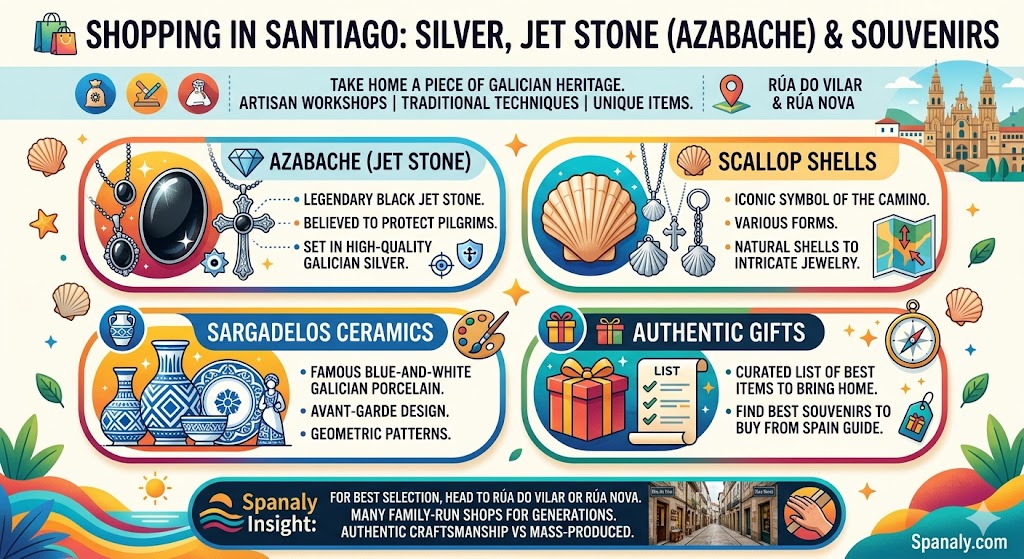
Shopping in Santiago de Compostela is an opportunity to take home a piece of Galician heritage. The narrow streets surrounding the cathedral are filled with artisan workshops where traditional techniques are still used to create unique items.
💎 Azabache (Jet Stone): Discover the legendary black jet stone, believed to protect pilgrims, often set in high-quality Galician silver.
🐚 Scallop Shells: Find the iconic symbol of the Camino in various forms, from natural shells to intricate jewelry.
🏺 Sargadelos Ceramics: Look for the famous blue-and-white Galician porcelain, known for its avant-garde and geometric designs.
🎁 Authentic Gifts: For a curated list of the best items to bring home from your journey, see our guide on the Best Souvenirs to Buy from Spain.
Spanaly Insight: Head to Rúa do Vilar or Rúa Nova for the best selection of silver and jet. Many small shops here have been family-run for generations, offering authentic craftsmanship that mass-produced souvenir stalls cannot match.
🍽️ Gastronomy in Santiago: Where to Eat Like a Local
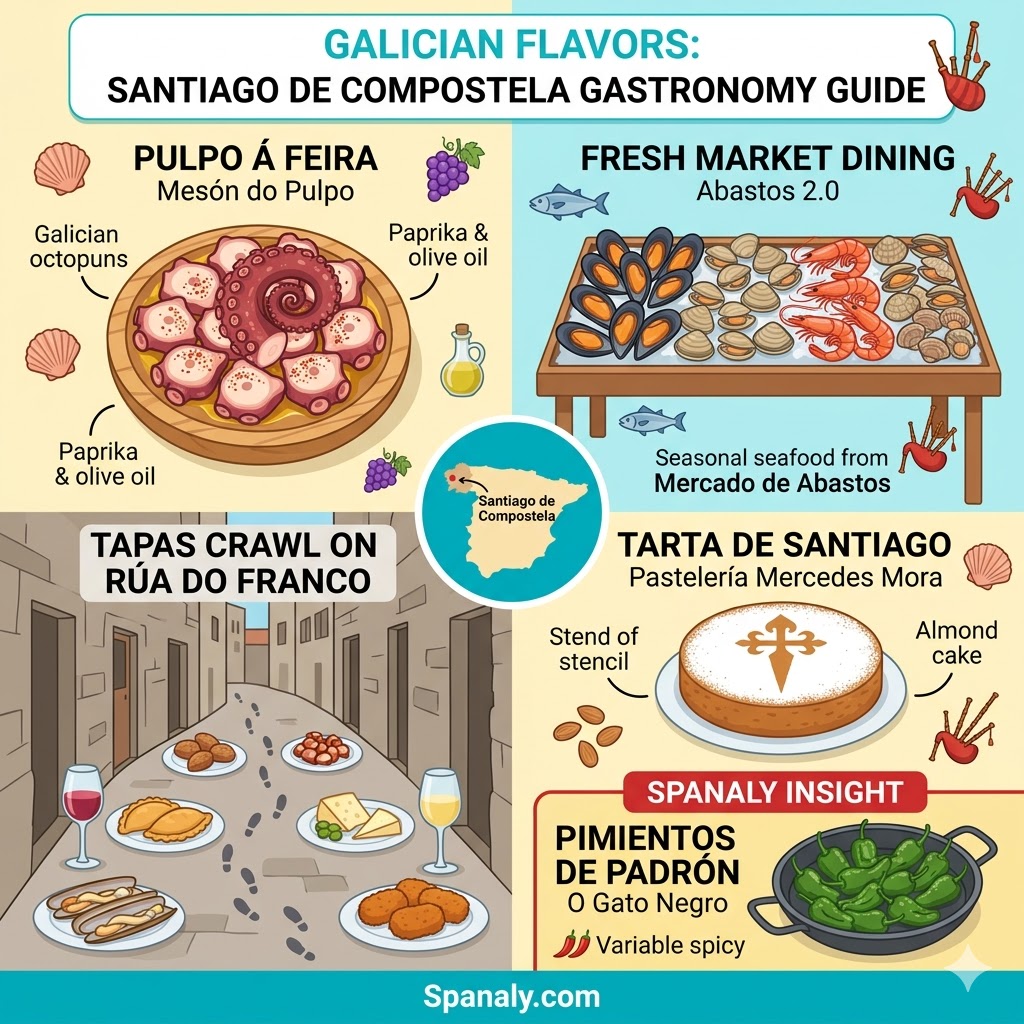
Dining in Santiago is a ritual of fresh ingredients and Atlantic flavors. The city’s culinary scene revolves around its maritime heritage and the high-quality produce found in the surrounding green valleys.
🐙 Pulpo á Feira at Mesón do Pulpo: Try the iconic Galician octopus served on traditional wooden plates in this authentic, no-frills spot near the cathedral.
🥧 Empanada Gallega at Panadería da Vila: Taste this essential savory pie filled with tuna, cod, or meat, wrapped in a perfectly golden crust.
🦐 Fresh Market Dining: Visit Abastos 2.0 inside the historic market to enjoy seasonal seafood prepared with a modern, creative twist.
🍷 Tapas Crawl on Rúa do Franco: Wander this famous street and stop at A Taberna do Bispo for an impressive display of diverse Galician tapas.
🍰 Tarta de Santiago at Pastelería Mercedes Mora: Enjoy the famous almond cake at this historic bakery, known for following original local recipes.
🥘 Culinary Heritage: To understand the depth of the local flavors and regional specialties, explore our complete Northern Spain Food Guide for a deeper look.
Spanaly Insight: For a truly local experience, look for “Pimientos de Padrón” on the menu at O Gato Negro. This tavern is one of the oldest in the city; it’s small and often crowded, but the authentic atmosphere, local wine, and lively energy are worth the wait.
🏨 Where to Stay in Santiago: Best Areas & Hotels

Choosing the right neighborhood in Santiago depends on whether you want to wake up to cathedral views or prefer a quieter, modern atmosphere. The city is compact, making most central locations highly walkable.
🕍 The Historic Center (Casco Viejo): Stay at Parador de Santiago – Hostal de los Reyes Católicos for a historic stay in one of the world’s oldest hotels directly on the main plaza.
🌳 Alameda Park Area: Choose Hotel San Lorenzo for a peaceful setting near the city’s best green spaces, offering a balanced mix of nature and proximity to the center.
🎨 San Pedro District: Stay at Moure Hotel if you prefer a boutique, modern vibe in a neighborhood known for its local artisan shops and traditional Galician architecture.
🚆 Near the Train Station: Opt for NH Collection Santiago de Compostela if you need easy access to regional transport while still being within walking distance of the Old Town.
🏡 Regional Comfort: To compare these options with other northern cities, explore our guide on Accommodation in Spain for expert booking advice across the region.
Spanaly Insight: If you are visiting during the festival of Saint James (July), book your stay at least six months in advance. The city reaches full capacity during this time, and prices in the Casco Viejo can double as the festival dates approach.
🌦️ Best Time to Visit Santiago de Compostela: Weather & Festivals

Santiago’s charm changes with the light and the mist. Choosing when to visit depends on whether you prefer the vibrant energy of summer festivals or the quiet, reflective atmosphere of a misty Galician autumn.
☀️ Summer (June – August): Expect pleasant temperatures and the most sunshine. This is the peak season for pilgrims, so the city is lively and bustling.
🎉 Saint James Festival (July 25th): Experience the city’s biggest celebration with spectacular fireworks, traditional music, and religious ceremonies. To see how this fits into the national calendar, check our guide on Major Spanish Festivals.
🍂 Autumn (September – October): A beautiful time to visit as the leaves in Alameda Park turn gold. The crowds thin out, but the Atlantic mist begins to return.
🌧️ Winter (November – March): Prepare for rain and cooler temperatures. While quiet, this is when you can experience the “magical granite reflection” in the old town with very few tourists.
🌦️ Regional Climate: For a broader look at the weather patterns across the northern coast, see our guide on the Best Time to Visit Northern Spain.
Spanaly Insight: If you want to witness the Botafumeiro (the giant incense burner) in action, try to visit during a major feast day like the Solemnity of St. James. It is one of the most powerful sensory experiences in Spain.
🕒 One Day in Santiago: A 24-Hour Itinerary
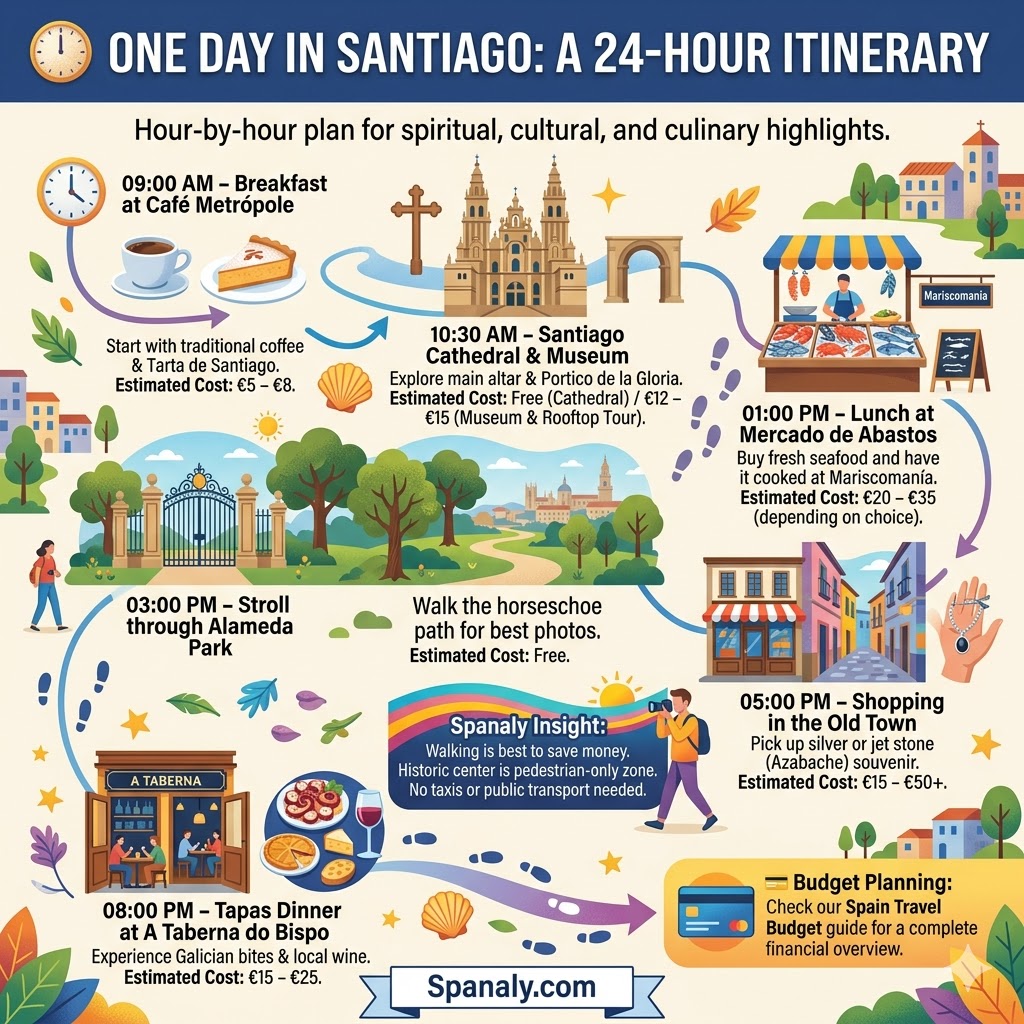
This hour-by-hour plan ensures you experience the spiritual, cultural, and culinary highlights of the city efficiently.
09:00 AM – Breakfast at Café Metrópole: Start with a traditional coffee and a slice of Tarta de Santiago.
Estimated Cost: €5 – €8.
10:30 AM – Santiago Cathedral & Museum: Explore the main altar and the Portico de la Gloria.
Estimated Cost: Free (Cathedral) / €12 – €15 (Museum & Rooftop Tour).
01:00 PM – Lunch at Mercado de Abastos: Buy fresh seafood and have it cooked at Mariscomanía.
Estimated Cost: €20 – €35 (depending on seafood choice).
03:00 PM – Stroll through Alameda Park: Walk the horseshoe path for the best photos of the city.
Estimated Cost: Free.
05:00 PM – Shopping in the Old Town: Pick up a silver or jet stone (Azabache) souvenir.
Estimated Cost: €15 – €50+ (depending on the item).
08:00 PM – Tapas Dinner at A Taberna do Bispo: Experience a variety of Galician bites and local wine.
Estimated Cost: €15 – €25.
💳 Budget Planning: To see how these costs fit into a larger trip, check our guide on Spain Travel Budget for a complete financial overview.
Spanaly Insight: Walking is the best way to save money here. The historic center is a pedestrian-only zone, so you won’t need to spend on taxis or public transport once you arrive in the heart of the city.
🛡️ Spanaly Elite Tips: The Reddit Insider Guide

Beyond the standard tourist advice, these “Elite Tips” come from seasoned travelers and locals who know the hidden rhythms of Santiago de Compostela.
🎻 The Tunnel Echo: Walk through the Arco de Palacio (the tunnel near the cathedral) at night. Local bagpipers play there because the hollow stone acoustics create a haunting, immersive sound you won’t hear in open plazas.
🥯 The Convent Secret: Visit the Convento de San Paio de Antealtares. There is a small revolving wooden window (torno) where you can buy handmade almond cookies directly from the cloistered nuns—a quiet, authentic alternative to busy bakeries.
💧 The Rain “Freebie”: Don’t buy an expensive umbrella. Santiago’s wind often breaks them. Instead, do as the locals do: wear a high-quality poncho or a “Chubasquero.” It keeps you dry while keeping your hands free for your camera.
🎒 The Luggage Hack: If you are arriving early, use the Correos (Post Office) luggage lockers near the cathedral. It is much cheaper and more secure than hotel storage if you are staying in an Airbnb with late check-in.
🎟️ Avoiding the “Noon Rush”: Most pilgrims aim to arrive for the 12:00 PM Pilgrim Mass. To see the cathedral in relative peace, visit at 8:00 AM or after 7:00 PM when the crowd thins out significantly.
🥾 Essential Gear: For those walking the final miles or exploring the hilly outskirts, check our Spain Trip Checklist to ensure you have the right footwear for wet cobbled streets.
Spanaly Insight: Look for the “Shadow of the Pilgrim” at night in Praza da Quintana. When the cathedral lights hit a specific granite pillar, a shadow appears that looks exactly like a cloaked pilgrim. It’s a local urban legend that makes for a mysterious and free late-night activity.
🛡️ Visitor FAQs – Santiago de Compostela Logistics Guide
🛡️ Is it safe to walk alone in the narrow medieval alleys at night?
Yes, Santiago is exceptionally safe for solo travelers. The historic center is well-lit and remains active late into the night due to the high volume of pilgrims and students. Local police patrol the main plazas frequently, ensuring a secure environment even in the quietest medieval lanes.
🎒 Can I enter the Cathedral with a large backpack?
No, large backpacks are strictly prohibited inside the Cathedral. You must leave your bags at one of the dedicated luggage storage offices (Consignas) located in Rúa do Vilar or near the Pilgrim’s Office before attempting to enter the sacred areas.
💧 Is the public tap water safe to drink in Santiago?
Absolutely. The tap water in Santiago is high-quality, soft, and safe to drink. Galician water is famous for its purity. You can refill your bottles at the historic stone fountains found throughout the old town to stay hydrated.
👗 Is there a strict dress code for the Cathedral?
While there isn't a formal uniform, a respectful dress code is expected. This means covering your shoulders and avoiding very short skirts or shorts. Additionally, hats and caps must be removed once inside the Cathedral premises.
🏛️ Are the medieval streets accessible for wheelchairs?
Santiago’s old town is mostly pedestrianized but paved with ancient uneven paving stones. While most main plazas are accessible, some narrow alleys have steep inclines. The Cathedral has a dedicated lift, but we recommend a sturdy motorized chair for the Casco Viejo.
Santiago de Compostela Guide by Spanaly.com
Santiago de Compostela is more than a destination; it is a profound journey into the heart of Spanish heritage. Whether you arrive as a pilgrim or a curious traveler, the city’s ancient stone streets and spiritual energy leave a lasting impression.
✨ Spiritual Legacy: From the majestic cathedral to the emotional arrivals in the plaza, history is alive here.
🍷 Galician Soul: Enjoy the world-class seafood and unique Celtic atmosphere that sets this city apart.
👣 Beyond the City: Santiago is the perfect gateway to exploring the rugged natural beauty of Northern Spain.
🏔️ Next Adventure: If you crave more dramatic landscapes after your visit, discover the breathtaking peaks in our Picos de Europa Asturias Guide for your next stop.
The mist over the cathedral towers and the sound of distant Galician bagpipes create one of the most unforgettable atmospheres in Spain. Start planning your Galician escape today and experience the magic of Santiago for yourself.