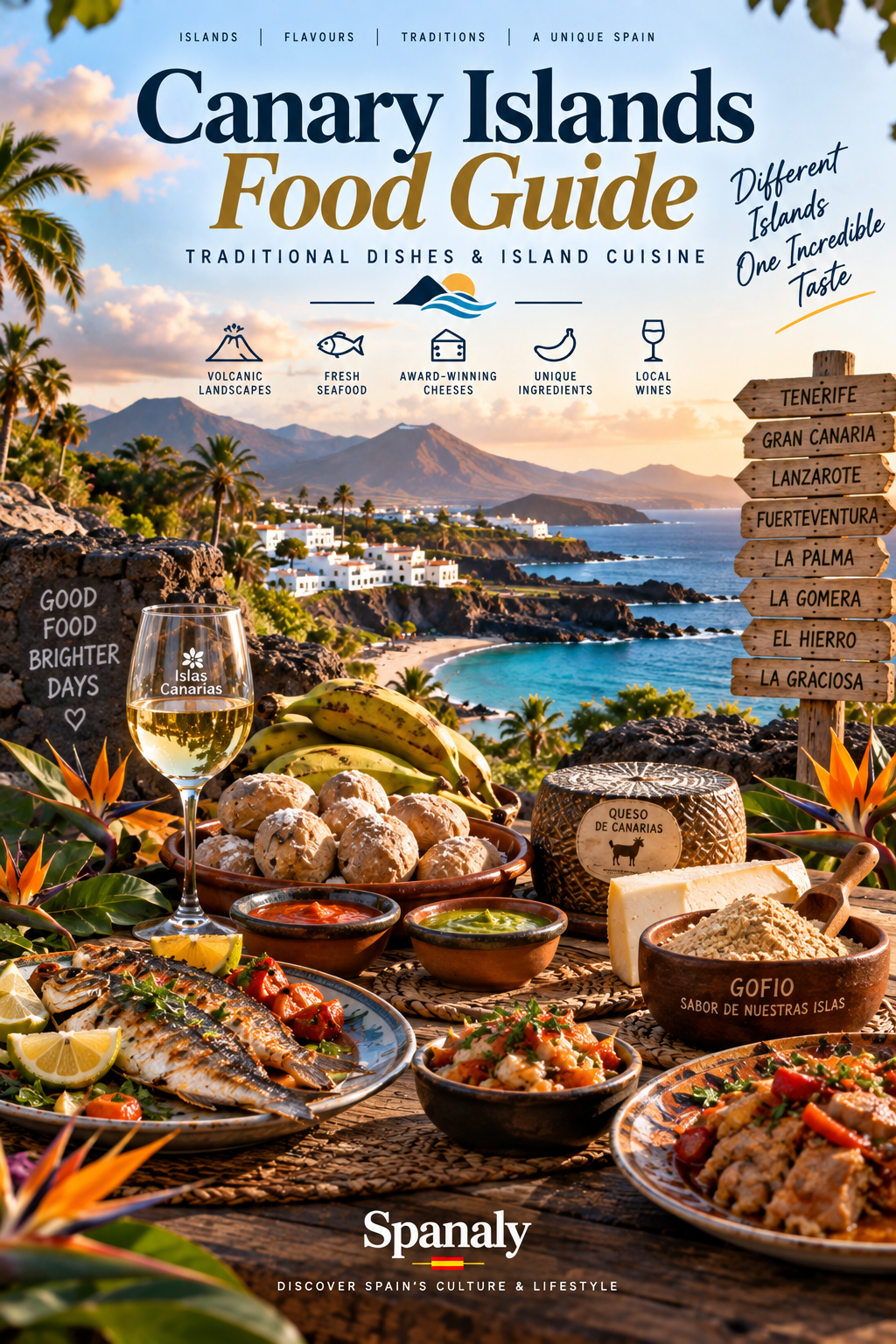
Canary Islands Food Guide: Traditional Dishes & Island Cuisine
An island cuisine shaped by volcanic landscapes, Atlantic fishing, local agriculture and traditions that vary from one island to another.
Canarian Food Is an Island Cuisine, Not One Recipe
The Canary Islands are best understood through a pantry built from potatoes, cereals, legumes, goat cheese, fish, local vegetables, fruit, sauces and volcanic-island agriculture.
That geography matters. The cuisine developed across separate islands with different landscapes, fishing traditions, crops and local products. A meal in Tenerife does not have to look exactly like a meal in Lanzarote, Fuerteventura, Gran Canaria, La Palma or La Gomera.
The common thread is not a single signature dish. It is the way simple ingredients are transformed into intensely local food: salted potatoes, toasted grain, mojo, fresh fish, stews, goat cheese and island sweets. For the wider Spanish context, compare this island pantry with Spanaly’s Spanish Cuisine Guide.
If You Only Have One Canarian Meal
Do not start by searching for the “best” Canarian dish. Start with the island you are visiting, then build the meal around one local reference.
Tenerife → papas, gofio, fish and mountain cooking
Gran Canaria → gofio, fish and Guía cheese
Fuerteventura → Majorero goat cheese
Lanzarote → volcanic agriculture and island wine
La Gomera → almogrote and palm-derived traditions
La Palma → Palmero cheese, fish and island sweets
El Hierro → quesadillas, cheese and local island cooking
La Graciosa → fresh fish and simple coastal plates
The same dish can appear across the archipelago, but the local product, preparation and landscape are what make the experience different.
Papas Arrugadas + Mojo
Start with the dish that immediately tells you you are in the Canary Islands. Small potatoes are cooked in salted water with their skins and finished so the skin wrinkles.
Gofio or Local Fish
Choose the second element according to where you are. Gofio connects the meal with the islands’ toasted-cereal tradition; on the coast, local fish makes the Atlantic side visible.
Island Cheese + Something Sweet
Finish with a local cheese or regional dessert. This is where the island differences become especially interesting.
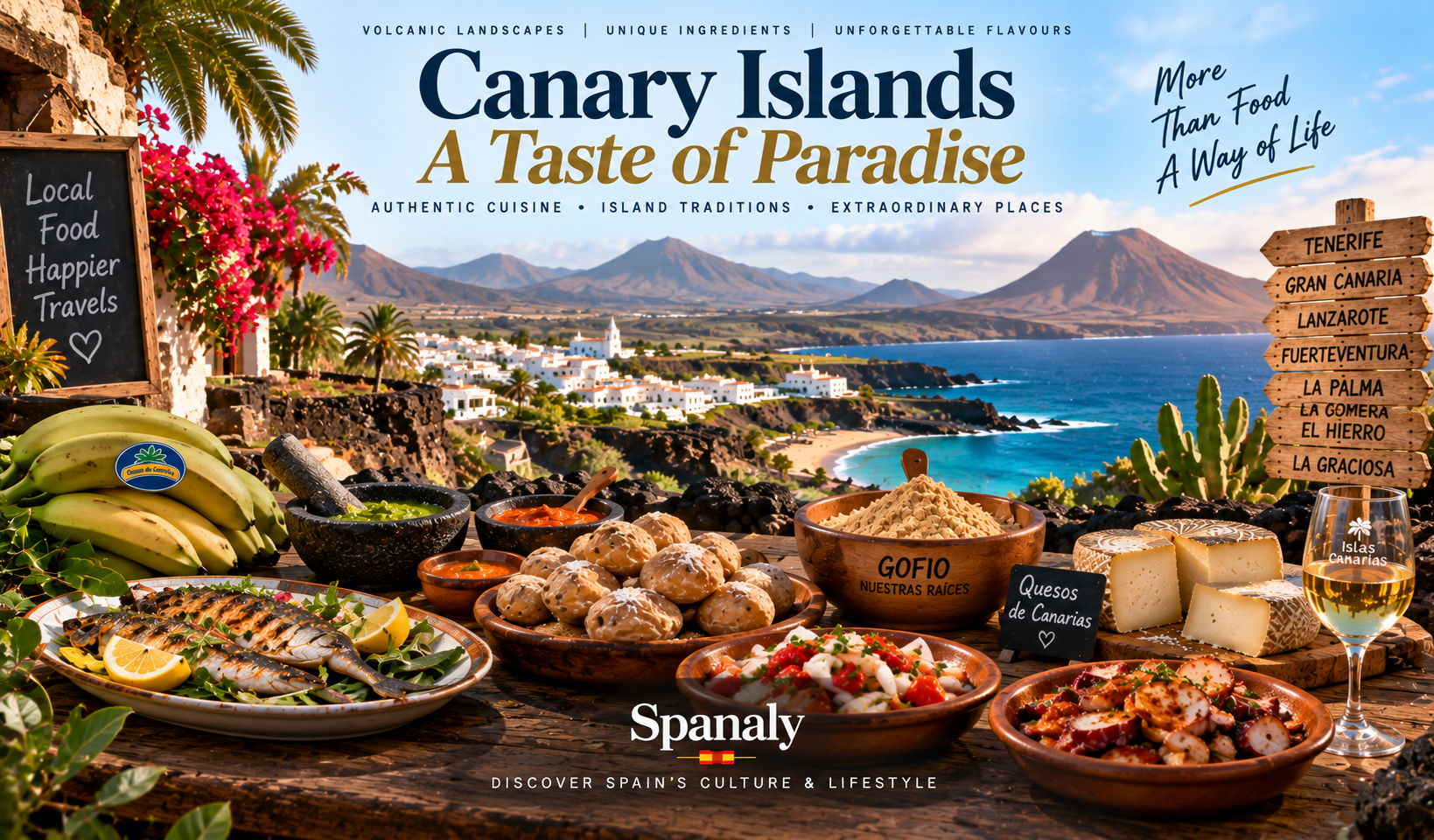
The Core of Canary Islands Cuisine
These dishes and preparations give you a working vocabulary for a Canarian menu.
Papas Arrugadas
THE CLASSICSmall potatoes cooked with plenty of salt and their skins on, leaving the characteristic wrinkled surface. They are commonly served with mojo and can accompany fish, meat or other dishes.
Mojo Picón & Mojo Verde
THE SAUCESMojo is central to the Canarian table. The red mojo is commonly associated with garlic, pepper, cumin, paprika, vinegar and oil; green versions often lean toward green pepper, coriander or parsley and are frequently used with fish.
Gofio
THE ANCIENT PANTRYGofio is made from toasted and milled cereals. It has deep roots in the islands and remains a flexible ingredient rather than one fixed dish: it can appear in milk, soups, escaldón, pellas and desserts.
Sancocho Canario
FISH + ROOT VEGETABLESA traditional fish dish often built around salted fish with potatoes and other island accompaniments, especially associated with festive and family cooking.
Ropa Vieja Canaria
LEFTOVERS INTO A DISHA traditional preparation based around shredded meat and chickpeas with potatoes and other ingredients. It reflects the practical, economical side of island cooking.
Potaje de Berros
VEGETABLE STEWA hearty watercress-based stew associated with Canarian home cooking, often combined with potatoes, legumes and other vegetables.
Escaldón de Gofio
TOASTED CEREAL + BROTHGofio is mixed with broth to create a thick, savoury preparation. Fish-based versions are particularly associated with coastal cooking.
Almogrote
LA GOMERAA strongly flavoured spread made with cured cheese, pepper, garlic and oil. It is one of the foods most closely associated with La Gomera.
Where the Cuisine Changes
The most useful way to explore Canarian food is to notice what each island puts in the foreground.
Potatoes, Gofio & Mountain Cooking
Look for papas arrugadas, gofio, local cheeses, fish and hearty dishes. Tenerife also gives you a good entry into the islands’ traditional potato varieties.
Gofio, Fish & Guía Cheese
Explore gofio preparations, fish, papas arrugadas and the protected cheese tradition of the Guía area. If you want a peninsular comparison for northern Spanish food culture, see the Basque Food Guide.
Goat Cheese & Arid Landscapes
Queso Majorero is the obvious food reference, with a long goat-herding tradition shaped by Fuerteventura’s dry landscape.
Volcanic Agriculture & Wine
Think beyond seafood: volcanic landscapes have shaped agriculture, and Lanzarote’s wine culture is one of the archipelago’s most distinctive food experiences. For a mainland rice-and-coast contrast, see the Valencia Food Guide.
Almogrote & Palm-Honey Traditions
Almogrote gives La Gomera a very recognisable savoury signature, while palm-derived products and traditional cooking add another layer.
Cheese, Fish & Island Sweets
Look for Palmero cheese, fresh fish, local wines and sweets such as bienmesabe and other almond-based preparations.
Cheese & Island Baking
El Hierro has a distinctive food identity built around local cheese, fish and traditional sweets including the island’s quesadillas.
Fresh Fish & Simple Plates
On this smaller island, the connection to fishing is especially visible. Fresh local fish, papas arrugadas, gofio and cheese make a natural meal.
A Few Local Names Worth Knowing
You do not need a long checklist. These are useful names when they appear naturally on menus or in local food markets.
Local Rabbit & Island Cooking
Rabbit appears in traditional Tenerife cooking, including preparations built around salmorejo-style seasoning. Look for it when you are eating beyond the tourist core.
Almogrote
A cured-cheese spread with pepper, garlic and oil. It is one of the clearest examples of how an island pantry becomes a recognisable local signature.
Quesadillas
A traditional sweet from El Hierro, not the Mexican tortilla-and-cheese dish associated with the same word.
Canary Islands Cheese Is Part of the Main Story
Cheese is not a side note in Canarian gastronomy. The Canary Islands government notes that cheese is fundamental to the islands’ food tradition, with at least one distinctive type associated with each island.
Queso Majorero DOP
Made primarily from goat’s milk, with protected-origin status and versions ranging from young to matured. Look for its characteristic diamond-patterned rind.
Queso Palmero DOP
A protected island cheese tradition that reflects La Palma’s goat-herding and dairy culture.
Flor de Guía DOP
The protected cheese tradition of the northeast of Gran Canaria, including Flor de Guía, Media Flor and Queso de Guía.
Words Worth Recognising on a Canary Islands Menu
Potatoes are central to the island table, with traditional varieties adding further local character.
Toasted cereal flour used in savoury and sweet preparations.
A family of sauces rather than one fixed recipe.
A local parrotfish commonly encountered in traditional fish cooking.
The Canary Islands banana has protected geographical status as an IGP product.
A palm syrup strongly associated with La Gomera and used in traditional preparations.
A historic wine reference across the islands, with Lanzarote especially known for its volcanic vineyard landscape.
Salted fish traditions connect the island table with long-standing preservation methods.
How to Eat Well in the Canary Islands
Do not order only papas
Papas arrugadas are the entry point, not the whole cuisine. Pair them with fish, cheese, meat or another regional dish. They are deliberately salty, so balance the meal with other dishes rather than ordering several potato-heavy plates.
Ask which island the product comes from
Cheese, wine, potatoes and sweets can have a strong island identity. Asking the origin turns a generic meal into a more local one.
Expect simple food with strong flavours
Salt, garlic, peppers, toasted cereals, olive oil and local produce often do more work than elaborate presentation.
Use the coast and the interior differently
At the coast, explore fish and seafood. Inland, leave room for gofio, stews, cheese, potatoes and agricultural products.
Ask about ingredients if you have restrictions
Gofio is cereal-based; fish dishes may contain bones; mojo recipes vary; cheese may be made from goat, sheep or mixed milk. Ask before ordering when an ingredient matters to you.
Save Room for Something Island-Specific
Bienmesabe
A rich almond-based sweet found in different island traditions. The name literally means “tastes good” and it is often served as a dessert accompaniment.
Quesadilla
Despite its name, this is a traditional sweet from El Hierro rather than the Mexican dish suggested by the word.
Gofio Desserts
Because gofio is so versatile, it also appears in sweets, including preparations with banana, milk, yoghurt and other ingredients.
Canarian Wines
Look for island wines and local denominations of origin. Malvasía is an important historical reference, while volcanic vineyard landscapes make Lanzarote especially distinctive.
Local Rum
Rum production is part of the islands’ food-and-drink culture and can be encountered in traditional drinks and after-dinner service.
Plátano de Canarias
The island banana is a major agricultural product and carries European IGP recognition.
Protected Products to Recognise
Gofio Canario
Protected as a Canary Islands geographical indication, reflecting the importance of toasted cereal flour to the regional pantry.
Queso Majorero
Fuerteventura’s protected goat-cheese tradition and one of the strongest examples of island food shaped by landscape.
Queso Palmero
La Palma’s protected cheese tradition.
Flor de Guía
The protected cheese designation associated with the northeast of Gran Canaria.
Plátano de Canarias
The Canary Islands banana is recognised by the European Union as an IGP product.
Continue Through Spain’s Regional Cuisines
The Canary Islands have their own island logic. These guides let you compare that identity with other Spanish food regions without turning this article into a national dish list.
Eat the Islands, Not Just the Dishes
Canarian cuisine becomes much more memorable when each plate is connected to the island that produced it. Start with papas and mojo, then add fish, gofio or cheese according to your location. In Lanzarote, pay attention to volcanic wine culture; in Fuerteventura, look for Majorero; in La Gomera, try almogrote. The practical rule is simple: the island should help decide the plate.
Official Canary Islands Food Resources
For current regional information and protected-product details, these official sources are the useful references behind the guide.