 SPANALY FOOD GUIDE
NAVARRE · NORTHERN SPAIN · FOOD & CULTURE
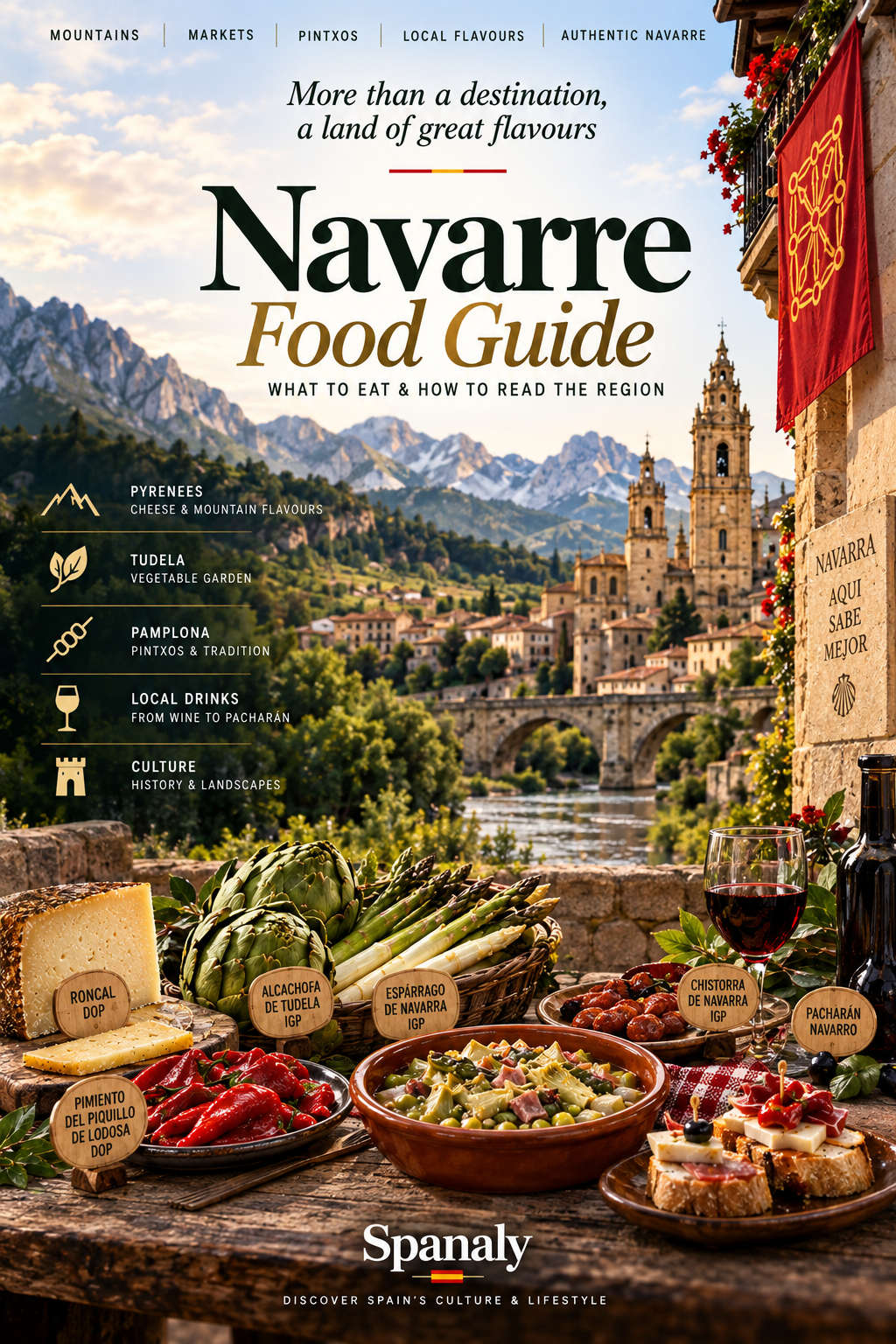
Navarre Food Guide:
What to Eat & How to Read the Region
Navarre is easier to understand through its geography than through a generic list of Spanish dishes. The Pyrenees lean toward shepherds’ food and cheese; the Ribera around Tudela is a market-garden powerhouse; Pamplona brings those products into a lively pintxos culture.
START HERE
Navarre food makes sense when you follow the land.
The easiest mistake is to treat Navarre as one long list of famous Spanish dishes. It is not. The region has a strong north-to-south food geography, and that geography tells you what to look for before you even open the menu.
Pamplona
Think pintxos, seasonal vegetables, Piquillo peppers, chistorra and substantial Navarrese cooking. The old town is the easiest place to sample the region socially, one small plate at a time.
Tudela & the Ribera
This is vegetable country: artichokes, asparagus, borage, Tudela lettuce and Menestra. In the right season, the produce itself can be the main event.
Pyrenean Navarre
Look for Roncal and Idiazabal cheeses, migas de pastor, mushrooms, lamb and mountain cooking. The food is closely tied to pasture, forests and shepherd traditions.
For the wider northern picture, continue to Spanaly’s Northern Spain Food Guide.
THE REGIONAL MAP
Three landscapes, three ways of eating
Official Navarre tourism follows essentially the same geography: mountain areas are associated with sheep, cows, cheeses and rural cooking, while the Ribera is the great vegetable-growing zone. Tudela sits at the heart of that southern food landscape.
Visit Navarra — Gastronomic Tourism · Spain.info — Cuisine of Navarre
IF YOU ONLY HAVE A FEW MEALS
Three Navarre food experiences to build your trip around
These are not a ranking. They are three different ways to understand Navarre. Choose according to your location, the season and how substantial you want the meal to be.
Menestra de verduras
Navarre’s vegetable identity in one dish. Seasonal vegetables such as artichokes, asparagus, peas, broad beans and borage are prepared individually before being brought together.
Pimientos del Piquillo de Lodosa
Sweet, roasted peppers with protected designation status linked specifically to Lodosa. They may be served simply or stuffed, with cod among the classic fillings.
A seasonal vegetable from Tudela
Sometimes the most useful choice is not a famous dish but the vegetable that is actually at its best. Artichokes, asparagus and other Ribera produce can tell you more about Navarre than a heavy mixed order.
READ THE MENU
Protected names are useful information
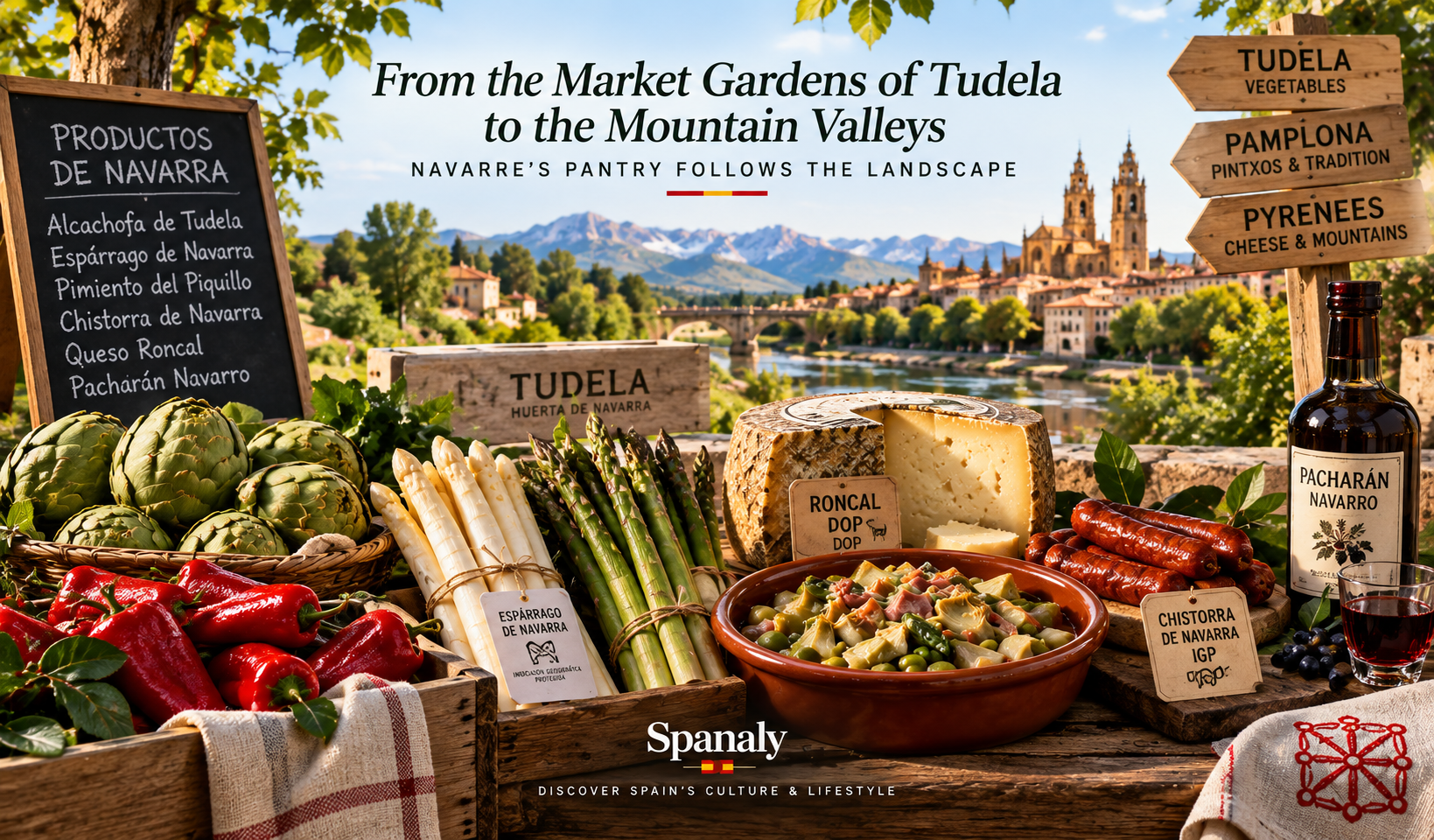
One of the most practical habits for a food-focused trip is learning which regional names carry a protected designation. In Navarre, the label can tell you something about origin and product identity — not just make the menu sound more local.
Protected designation specifically tied to the Lodosa area.
Protected Tudela artichoke associated with Navarre’s market-garden tradition.
Protected asparagus whose geographical area extends beyond Navarre alone.
Protected cheese strongly tied to the Navarrese Pyrenees.
EU-protected Navarrese sausage, registered in October 2024.
MAPA — Pimiento del Piquillo de Lodosa DOP · MAPA — Alcachofa de Tudela IGP · MAPA — Chistorra de Navarra IGP
PAMPLONA
Pintxos first, then decide how much dinner you need
Pamplona is the easiest place for a first taste of Navarre because the historic center brings regional ingredients into a lively bar-and-restaurant culture. The goal is not to collect every famous dish in one evening. Start small, see what looks good, then build the meal.
Start with one
If you are moving between bars, begin with one pintxo or small plate. Let the house show you what it does well.
Look for the region
Piquillo peppers, seasonal vegetables, chistorra, cod preparations and local cheeses are useful signs that you are exploring Navarrese ingredients.
Build one proper meal
For a longer lunch or dinner, pair one vegetable or cod dish with one substantial main instead of ordering several heavy plates.
For city planning, see Spanaly’s Pamplona Travel Guide. If you are visiting during the festival, also read the San Fermín Festival Guide.
TUDELA & THE RIBERA
When vegetables are the main event
Tudela is where Navarre’s food geography becomes especially obvious. The Ebro Valley’s market gardens support a strong tradition of fresh vegetables, and official tourism material repeatedly highlights artichokes, asparagus, borage, lettuce and Piquillo peppers.
Choose the season
Ask what is coming from the market garden now.
Choose one hero vegetable
Artichoke, asparagus or another fresh product can carry the starter.
Add one richer dish
Cod, lamb or another local preparation can follow if you want a fuller meal.
Stop before over-ordering
Vegetables deserve room on the table instead of being buried under too many dishes.
Fresh Tudela artichokes have an important season from late autumn into spring. Navarra asparagus is strongly associated with spring, while Piquillo peppers become especially visible around the autumn harvest. Preserved products mean you can encounter these ingredients outside their fresh windows, but the experience is different.
For the city itself, see Spanaly’s Tudela Travel Guide.
SEASON MATTERS
What to look for in Navarre by season
Spring
Think vegetables. Fresh asparagus, artichokes and seasonal Menestra become central choices.
Summer
Look for freshness. Smaller vegetable dishes and lighter preparations can make more sense in the heat.
Late summer
Watch for fresh pochas. Sangüesa’s fresh white beans are seasonal rather than an all-year dry pantry bean.
Autumn
Piquillo season. The Lodosa area becomes closely associated with the pepper harvest, while fresh produce continues to shape Ribera menus.
Winter
Go deeper. Borage, cardoon, other cold-season vegetables, migas and richer dishes naturally become more prominent.
Any season
Ask what is fresh. Preserved asparagus, peppers and other products remain available beyond their harvest windows.
Visit Navarra — Dishes you have to try · Visit Navarra — Winter Food in Navarre
WHAT TO DRINK
Navarre beyond the plate
Navarra wine
Navarre has its own D.O. wine identity. Regional wines fit naturally alongside vegetables, meat and cheese.
Pacharán Navarro
Pacharán is one of the products most closely identified with Navarre. It is traditionally enjoyed after a meal, so think of it as a digestif rather than the main drink.
Olive oil
Navarre also has a protected olive-oil identity. With fresh vegetables, good oil can be one of the simplest and most revealing finishes.
For the wider Spanish picture, see Spanaly’s Spanish Drinks Guide and Spanish Wine Regions Guide.
ORDERING WITHOUT OVER-ORDERING
Build a Navarre meal around one idea
Artichoke, asparagus, Menestra or Piquillo pepper.
Ajoarriero for cod, or lamb if you want something heavier.
Roncal or a traditional sweet such as canutillos.
Optional, in a small serving as a digestif.
FAQ
Navarre food questions
What food is Navarre most famous for?
Navarre is especially associated with market-garden produce such as Piquillo peppers from Lodosa, Tudela artichokes and Navarra asparagus, as well as Menestra, lamb dishes, local cheeses and Pamplona’s pintxos culture.
What should I eat in Pamplona?
Start with pintxos and small plates, then look for Piquillo peppers, seasonal vegetables, Chistorra de Navarra, cod preparations and local cheeses. For a full meal, lamb al chilindrón represents the heartier side of Navarrese cooking.
What is Menestra de verduras?
It is a traditional vegetable dish strongly associated with Navarre, particularly the Ribera. Artichokes, asparagus, peas, broad beans, borage and other seasonal vegetables can appear, with the exact combination changing through the year.
Are Piquillo peppers from Navarre?
The protected Pimiento del Piquillo de Lodosa is a Navarrese DOP specifically linked to Lodosa. That protected name is more precise than simply calling any roasted red pepper a “Piquillo from Navarre.”
When should I look for Navarre vegetables?
It depends on the product. Fresh Tudela artichokes have an important season from late autumn into spring; fresh Navarra asparagus is strongly associated with spring; Piquillo peppers are particularly associated with the autumn harvest; and fresh pochas are a late-summer seasonal product.
What cheese should I try in Navarre?
Roncal is the clearest Navarre-specific protected cheese to look for. Idiazabal is also important in Navarre and the wider northern food culture, but its protected geographical area extends into the Basque Country as well.
What is Chistorra de Navarra?
It is a thin sausage protected as an IGP whose production area is the Foral Community of Navarre. The EU registration dates to October 2024, so the full protected name is worth looking for on menus.
Does San Fermín affect a food trip to Pamplona?
Yes. San Fermín runs from 6–14 July and brings very large visitor numbers to Pamplona. Accommodation demand is particularly high at the beginning of the festival, so travelers focused mainly on food should check the calendar before choosing dates and book ahead if they travel during the fiestas.
OFFICIAL REFERENCES
Sources behind this guide
- Visit Navarra — Dishes you have to try
- Visit Navarra — Gastronomic Tourism
- Visit Navarra — Winter Food in Navarre
- Visit Navarra — San Fermín
- Spain.info — Cuisine of Navarre
- Government of Navarre — Protected Geographical Indications
- MAPA — Pimiento del Piquillo de Lodosa DOP
- MAPA — Alcachofa de Tudela IGP
- MAPA — Chistorra de Navarra IGP, registered October 2024