🥩 Extremadura Cuisine
Extremadura cuisine is rustic, smoky, and deeply tied to Iberian pasture traditions. This land values authentic, heritage-rich mountain flavors over trendy coastal plating.
The Vibe: Rustic, intensely flavorful, and deeply rooted in ancient Iberian pastures.
The Crown Jewel: World-renowned Jamón Ibérico de Bellota and raw milk cheeses.
The Secret: Heavy reliance on pure mountain oak smoke, wild herbs, and local pimentón.
Away from Spain’s crowded coastal tapas circuits, Extremadura preserves a slower, pasture-driven food culture centered on smoke, cured meats, and rural cooking traditions. To master the local logistics before planning your food journey, our comprehensive Extremadura Travel Guide outlines how to coordinate transit across these rural provinces. You can easily navigate historic dining hubs without losing precious time.
Spanaly Insight: Do not expect light meals here. Extremadura cuisine honors its shepherd roots, meaning every traditional plate features hearty portions packed with intense wood-fired flavor.
📊 Extremadura Food Snapshot: Quick Essentials
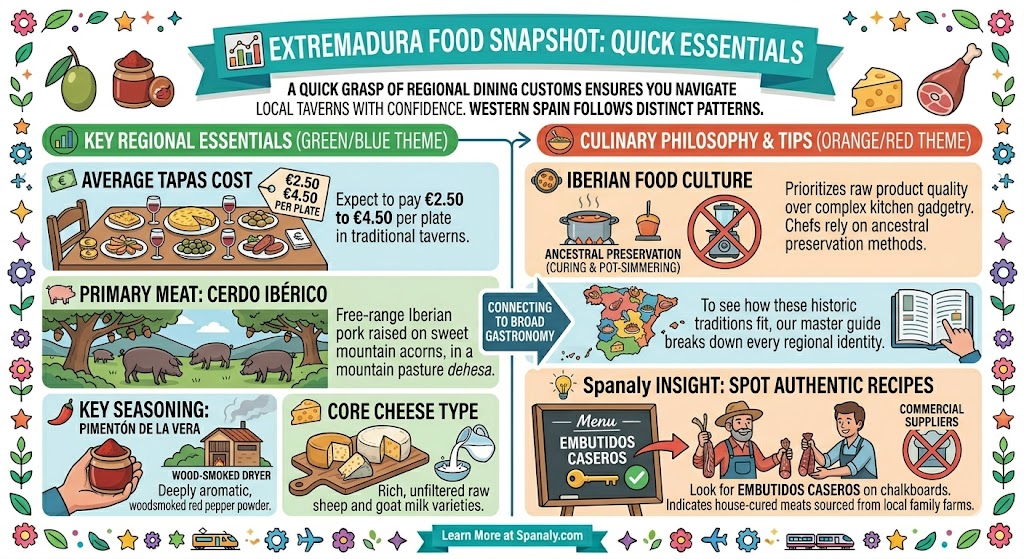
A quick grasp of regional dining customs ensures you navigate local taverns with absolute confidence. Western Spain follows distinct culinary patterns that differ from coastal holiday hubs.
Average Tapas Cost: Expect to pay €2.50 to €4.50 per plate in traditional taverns.
Primary Meat: Free-range Cerdo Ibérico (Iberian pork) raised on sweet mountain acorns.
Key Seasoning: Pimentón de la Vera, a smoked red pepper powder.
Core Cheese Type: Rich, unfiltered raw sheep and goat milk varieties.
Iberian food culture prioritizes raw product quality over complex kitchen gadgetry. Chefs rely on ancestral preservation methods like curing and slow pot-simmering. To see how these historic interior traditions fit into the country’s broader gastronomy, our master guide on Spanish Cuisine breaks down every regional food identity across the peninsula. You can easily train your palate to spot authentic recipes anywhere.
Spanaly Insight: Look for the phrase Embutidos Caseros on chalkboard menus. This indicates the tavern serves house-cured meats sourced directly from local family farms rather than commercial suppliers.
⚖️ Extremadura vs. Northern Spain: The Culinary Divide
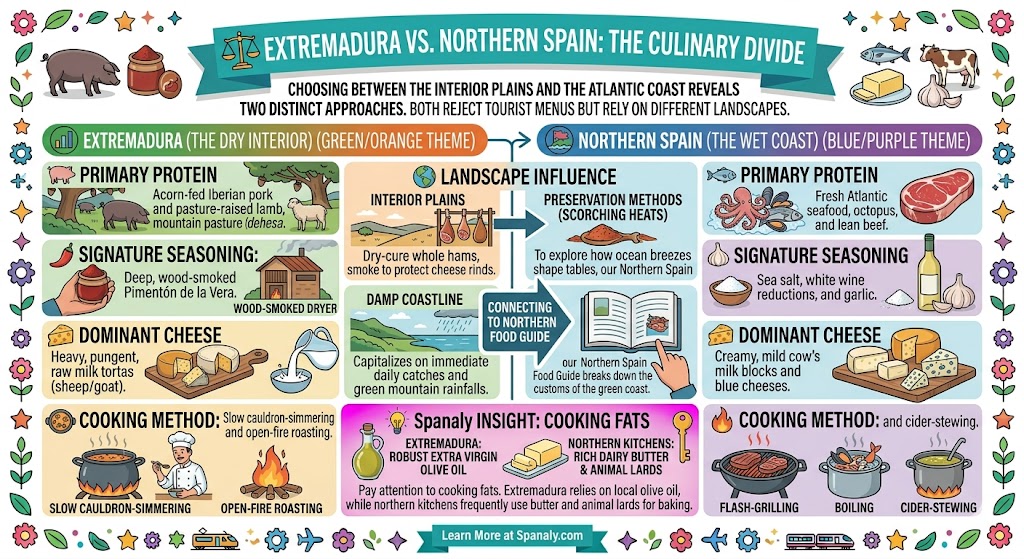
Choosing between the interior plains and the Atlantic coast reveals two distinct approaches to Spanish gastronomy. While both regions reject tourist-oriented menus, they rely on entirely different natural landscapes.
| Culinary Feature | Extremadura (The Dry Interior) | Northern Spain (The Wet Coast) |
| Primary Protein | Acorn-fed Iberian pork and pasture-raised lamb. | Fresh Atlantic seafood, octopus, and lean beef. |
| Signature Seasoning | Deep, wood-smoked Pimentón de la Vera. | Sea salt, white wine reductions, and garlic. |
| Dominant Cheese | Heavy, pungent, raw milk tortas (sheep/goat). | Creamy, mild cow’s milk blocks and blue cheeses. |
| Cooking Method | Slow cauldron-simmering and open-fire roasting. | Flash-grilling, boiling, and cider-stewing. |
The interior plains favor preservation methods designed to withstand scorching summer heats. Chefs dry-cure whole hams and utilize heavy smoke to protect cheese rinds. Conversely, the damp northern coastline capitalizes on immediate daily catches and green mountain rainfalls. To explore how ocean breezes shape the cantabrian tables, our Northern Spain Food Guide breaks down the cider house customs and seafood markets of the green coast. You can easily spot the radical shift in flavor profiles.
Spanaly Insight: Pay attention to the cooking fats used. Extremadura kitchens rely heavily on robust extra virgin olive oil, while northern kitchens often incorporate butter and dairy fats.
🏆 Top Traditional Extremadura Dishes You Must Try
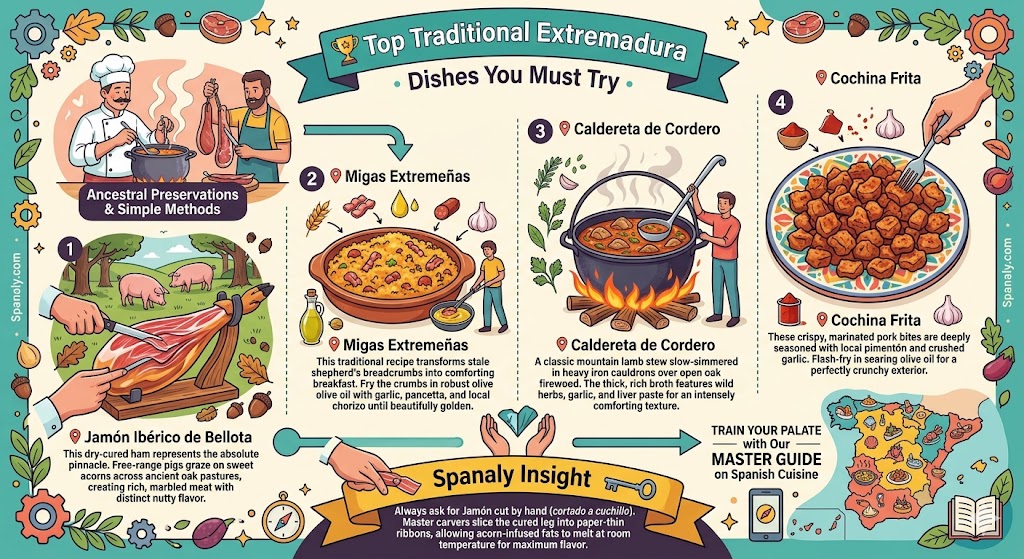
Extremadura cuisine favors simple, traditional cooking methods over complex kitchen gadgetry. Chefs rely on ancestral preservation techniques like curing and slow pot-simmering to protect rich mountain flavors.
📍 Jamón Ibérico de Bellota: This dry-cured ham represents one of the premium grades of Spanish pork production. Free-range Iberian pigs graze on sweet acorns across ancient oak pastures, creating rich, marbled meat with a distinct nutty flavor profile.
📍 Migas Extremeñas: This traditional recipe transforms stale Castilian shepherd’s breadcrumbs into a comforting breakfast staple. Cooks fry the crumbs in robust olive oil alongside garlic, pancetta, and local chorizo until beautifully golden.
📍 Caldereta de Cordero: A classic mountain lamb stew slow-simmered in heavy iron cauldrons over open oak firewood. The thick, rich broth features a blend of wild herbs, garlic, and liver paste to create an intensely comforting texture.
📍 Cochina Frita: These crispy, marinated pork bites are deeply seasoned with local pimentón and crushed garlic. Chefs flash-fry the meat in searing olive oil, ensuring a perfectly crunchy exterior that seals in all natural juices.
📍 Zorongollo: A refreshing traditional salad featuring roasted red peppers, ripe tomatoes, and crushed garlic. Local kitchens dress the tender pepper strips with premium extra virgin olive oil, serving it cold to balance heavy meat dishes.
📍 Sopa de Tomate Extremeña: A comforting, rustic tomato soup thickened beautifully with stale bakery bread and local aromatic mint leaves. Chefs often top the steaming bowls with ripe figs or poached eggs for a unique sweet-and-savory contrast.
To understand how these dry interior methods differ from the country’s coastal traditions, our master guide on Spanish Cuisine breaks down every regional food identity across the peninsula. You can easily train your palate to spot authentic recipes anywhere in Spain.
Spanaly Insight: Always ask for Jamón cut by hand (cortado a cuchillo). Master carvers slice the cured leg into paper-thin ribbons, allowing the acorn-infused fats to melt immediately at room temperature for maximum flavor.
🧀 Famous Extremadura Cheeses: From Creamy to Cured
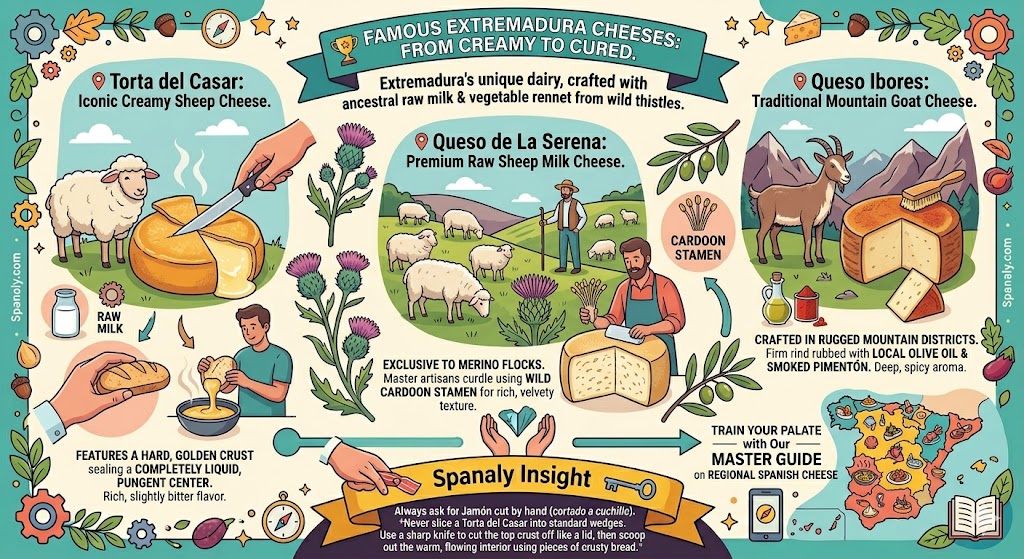
Extremadura produces some of the most unique dairy products in Western Spain. Local cheesemakers utilize ancestral methods, relying on raw milk and vegetable rennet derived from wild thistles to curdle their cheeses.
📍 Torta del Casar: The region’s most iconic creamy sheep cheese. It features a hard, golden crust that seals a completely liquid, pungent center with a rich, slightly bitter flavor profile.
📍 Queso de La Serena: A premium raw sheep milk cheese made exclusively from Merino flocks. Master artisans curdle the milk using wild cardoon stamen, creating a velvety texture.
📍 Queso Ibores: A traditional goat cheese crafted in the rugged mountain districts. Cheesemakers rub the firm rind with local olive oil and smoked pimentón, imparting a deep, spicy aroma to the white interior.
To see how these intense raw milk varieties compare to the country’s broader dairy traditions, our master guide on Regional Spanish Cheese breaks down every major variety from north to south. You can easily expand your cheese knowledge before exploring local markets.
Spanaly Insight: Never slice a Torta del Casar into standard wedges. Use a sharp knife to cut the top crust off like a lid, then scoop out the warm, flowing interior using pieces of crusty bread.
🌶️ The Essential Ingredients of Extremadura Cuisine
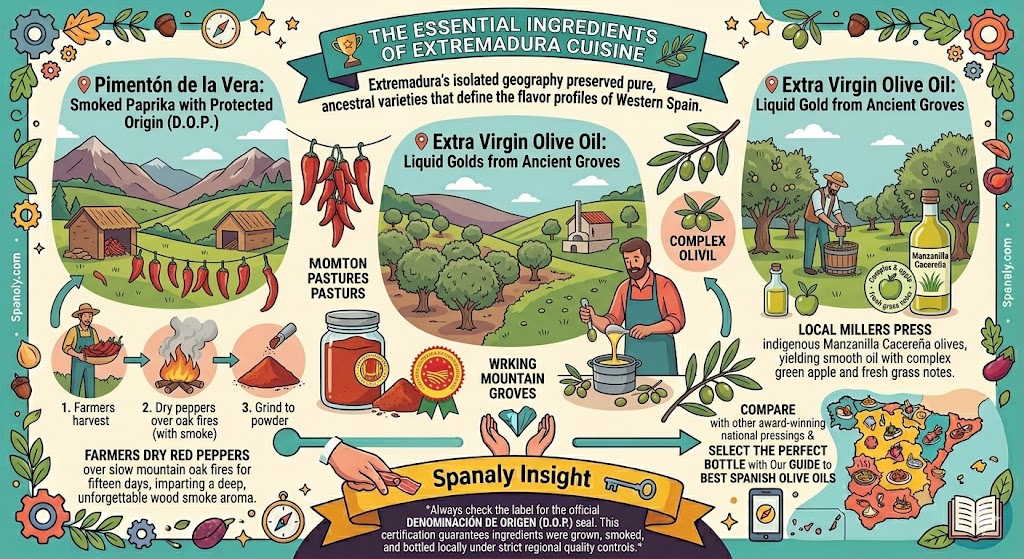
Simple recipes rely heavily on the quality of raw agricultural components. Extremadura’s isolated geography helped preserve pure, ancestral crop varieties that define the flavor profiles of Western Spain.
📍 Pimentón de la Vera: This famous Spanish smoked paprika carries a protected designation of origin. Farmers dry the red peppers over slow mountain oak fires for fifteen days, imparting a rich smoked aroma.
📍 Extra Virgin Olive Oil: Liquid gold flows from the ancient groves of Gata-Hurdes and Badajoz. Local millers press indigenous Manzanilla Cacereña olives, yielding an exceptionally smooth oil with complex green apple and fresh grass notes.
📍 Miel Villuercas-Ibores: This premium unpasteurized mountain honey carries strict regional quality protections. Wild chestnut forests and mountain broom flowers yield a dark nectar with caramelized undertones.
📍 Bellotas (Iberian Acorns): A core foundational element of the local Dehesa meadow ecosystem. Sweet evergreen oak acorns drop every winter, providing essential oleic acid that flavors free-range Iberian pork naturally.
To discover how these robust mountain varieties compare to other award-winning national pressings, our comprehensive guide to the Best Spanish Olive Oils outlines the top flavor profiles across the peninsula. You can easily select the perfect bottle to take home.
Spanaly Insight: Always check the label for the official Denominación de Origen (D.O.P.) seal. This certification guarantees the ingredients were grown, smoked, and bottled locally under strict regional quality controls.
🍷 Best Extremadura Wines and Local Beverages
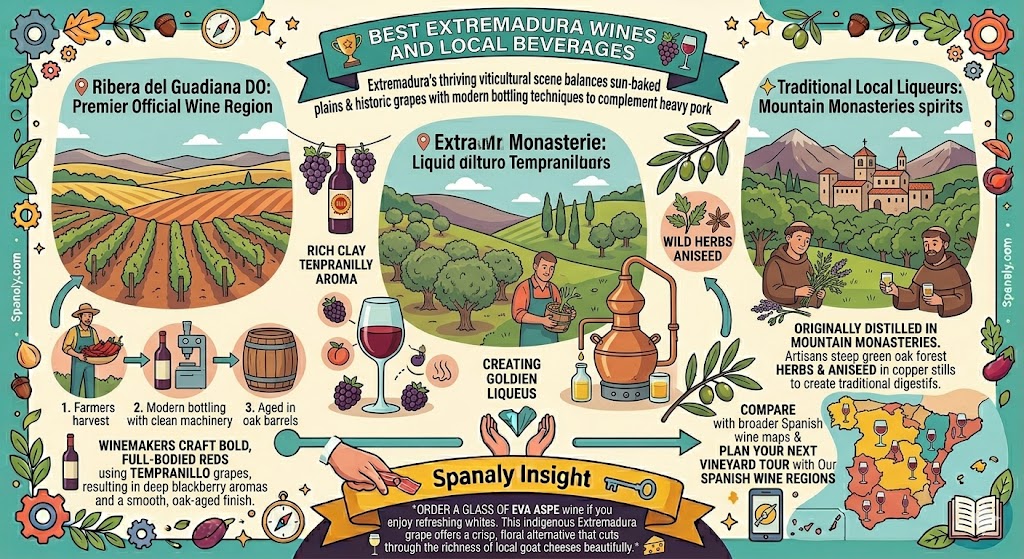
Western Spain hosts a thriving viticultural scene shaped by sun-baked plains and rich clay soils. Local producers balance historic grape varieties with modern bottling techniques to complement the region’s heavy pork dishes.
📍 Ribera del Guadiana DO: The province’s premier official wine region. Winemakers craft full-bodied red wines using Tempranillo grapes, resulting in blackberry aromas and an oak-aged finish.
📍 Traditional Local Liqueurs: Monks originally distilled these sweet spirits in mountain monasteries. Green oak forests provide wild herbs and aniseed, which artisans steep in copper stills to create traditional after-dinner digestifs.
To see how these robust interior vineyards compare to the country’s broader wine maps, our master guide on Spanish Wine Regions breaks down every major designation across the Iberian peninsula. You can easily plan your next vineyard tour.
Spanaly Insight: Order a glass of Eva Aspe wine if you enjoy refreshing whites. This indigenous Extremadura grape variety offers a crisp, floral alternative that cuts through the richness of local goat cheeses beautifully.
🍰 Traditional Extremadura Desserts and Sweet Treats
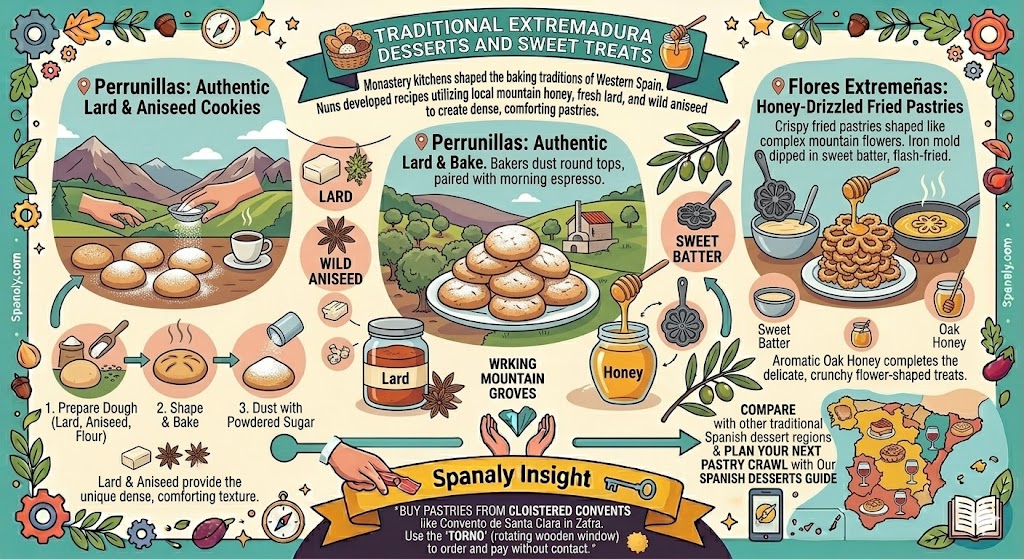
📍 Perrunillas: These authentic lard and aniseed cookies offer a crunchy texture that melts instantly on the palate. Bakers dust the round tops with powdered sugar, pairing them traditionally with morning espresso.
📍 Flores Extremeñas: Crispy fried sweet pastries shaped like intricate mountain flowers. Chefs dip heated iron molds into sweet flour batter, flash-frying the delicate shapes before drizzling them with warm oak honey.
To understand how these rich, convent-born recipes compare to the sweet bakeries of the pilgrimage routes, our master guide on Spanish Desserts breaks down the top traditional sweet treats across the country. You can easily map out your regional pastry crawl.
Spanaly Insight: Buy your pastries directly from cloistered convents like Convento de Santa Clara in Zafra. You order through a rotating wooden window (torno), paying the nuns directly for house-baked recipes without face-to-face contact.
🗺️ Strategic Food Hubs: Where to Eat in Extremadura
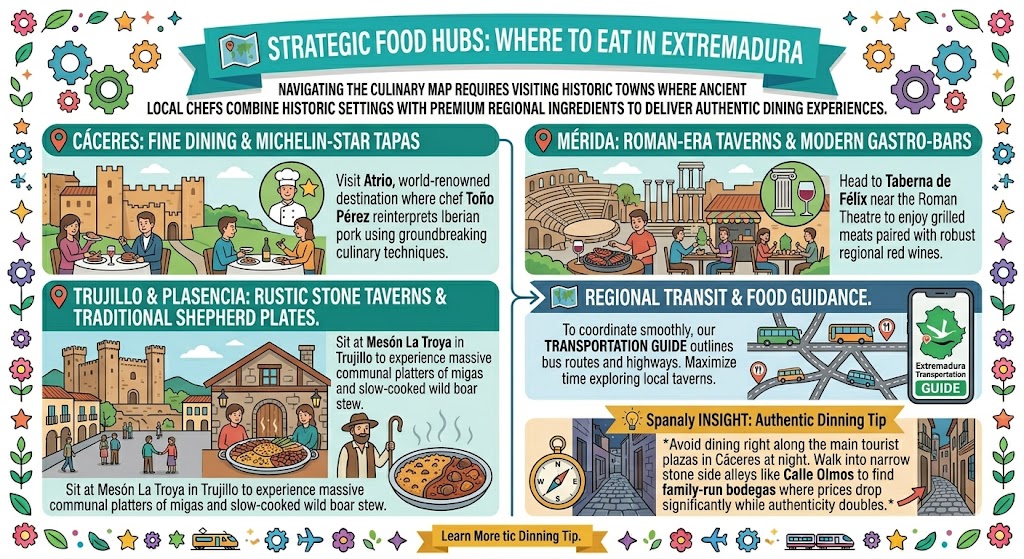
Navigating the culinary map of Western Spain requires visiting historic towns where ancient recipes thrive. Local chefs and family-run taverns combine historic settings with premium regional ingredients to deliver authentic dining experiences.
💡 Travel Disclaimer: While Extremadura hosts world-class luxury gastronomy, you do not need a massive budget to eat exceptionally well here. Simple neighborhood bars, historic food markets, and rustic village taverns offer some of the most authentic and affordable traditional meals in Spain.
📍 Cáceres: This medieval walled city blends elite fine dining with incredibly cheap neighborhood tapas bars. Visit Atrio for an ultra-luxury Michelin-starred pork menu, or head to the local Mercado de Abastos to taste artisan cheeses with locals at budget-friendly prices
📍 Mérida: Roman-era taverns, budget-friendly plazas, and modern gastro-bars line the historic streets surrounding ancient monuments. Head to Taberna de Félix near the Roman Theatre to enjoy affordable grilled meats paired with robust regional red wines.
📍 Trujillo & Plasencia: Historic main squares feature rustic stone taverns serving massive, low-cost traditional shepherd plates. Sit at Mesón La Troya in Trujillo to experience affordable communal platters of migas and slow-cooked wild boar stew.
To coordinate your regional transit smoothly between these diverse dining destinations, our comprehensive Extremadura Transportation guide outlines how to navigate bus routes and highways. You can easily maximize your time exploring local taverns.
Spanaly Insight: Avoid dining right along the main tourist plazas in Cáceres at night. Walk into the narrow stone side alleys like Calle Olmos to find family-run bodegas where prices drop significantly while authenticity doubles.
🧺 Best Food Markets in Extremadura
Exploring local food markets offers a direct look into the region’s rich agricultural traditions. These bustling commercial hubs allow you to taste and purchase authentic artisan products directly from regional producers.
📍 Mercado de Abastos (Cáceres): A vibrant covered market located right near the historic walled old town. Local vendors display premium rows of cured Ibérico meats, fresh mountain herbs, and authentic artisan sheep cheeses at highly affordable local prices.
📍 Mérida Central Market: This busy indoor market sits steps away from the city’s famous ancient Roman monuments. Head here during the morning hours to buy fresh seasonal fruits, traditional country bread, and local smoked paprika directly from family stalls.
📍 Village Food Fairs & Matanza Festivals: Small rural communities host traditional weekend livestock markets and winter harvest celebrations. These open-air gatherings provide an exceptional opportunity to sample wood-fired artisan sausages and unfiltered mountain honey alongside local residents.
🛒 Strategic Dining Tips for Food Travelers
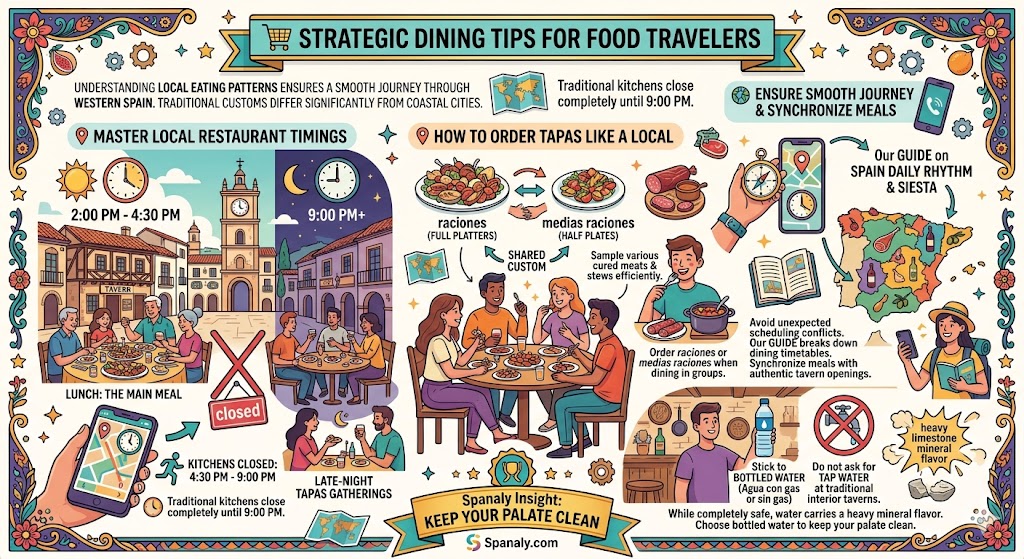
Understanding local eating patterns ensures a smooth journey through Western Spain. Traditional interior provinces strictly observe ancestral dining customs that differ significantly from major coastal cities.
📍 Master Local Restaurant Timings: Lunch serves as the main meal, running from 2:00 PM until 4:30 PM. Many traditional kitchens reopen around 8:30–9:00 PM, when locals gather for late-night tapas.
📍 How to Order Tapas Like a Local: Order raciones (full platters) or medias raciones (half plates) when dining in groups. This sharing custom allows you to sample various cured meats and stews efficiently.
To avoid unexpected scheduling conflicts during your journey, our master guide on the Spain Daily Rhythm & Siesta breaks down the country’s unique dining timetables. You can easily synchronize your meals with authentic tavern openings.
Spanaly Insight: Do not ask for tap water at traditional interior taverns. While completely safe, the water carries a heavy limestone mineral flavor. Stick to bottled water (agua con gas or sin gas) to keep your palate clean.
🟢 Vegetarian & Vegan Survival in Meat-Heavy Extremadura
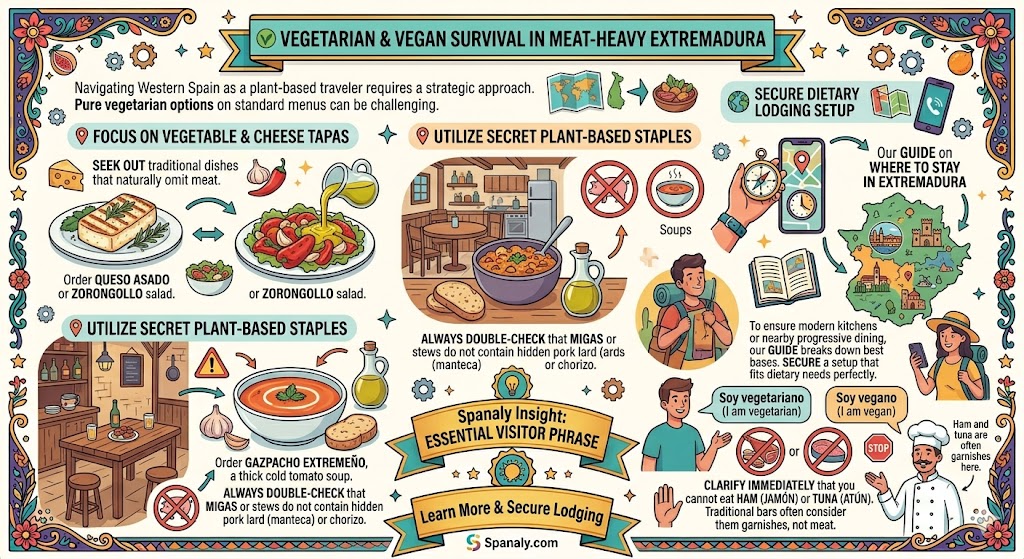
Navigating Western Spain as a plant-based traveler requires a strategic approach. Because regional taverns heavily prioritize cured pork and lamb stews, finding pure vegetarian options on standard menus can be challenging.
📍 Focus on Vegetable and Cheese Tapas: Seek out traditional dishes that naturally omit meat products. Order Queso Asado (grilled goat cheese) or Zorongollo, a refreshing local salad made with roasted red peppers, garlic, and rich olive oil.
📍 Utilize Secret Plant-Based Staples: Many rustic taverns serve Gazpacho Extremeño, a thick, cold tomato soup thickened with bread and olive oil. Always double-check that your Migas or vegetable stews do not contain hidden pork lard (manteca) or chorizo bits.
To ensure your accommodation choices feature modern kitchens or sit near progressive dining options, our curated guide on Where to Stay in Extremadura breaks down the best strategic bases across the province. You can easily secure a lodging setup that fits your dietary needs perfectly.
Spanaly Insight: Always use the explicit phrase Soy vegetariano (I am vegetarian) or Soy vegano (I am vegan) before ordering. Clarify immediately that you cannot eat ham (jamón) or tuna (atún), as traditional bars often consider these items minor garnishes rather than meat.
🚨 Common Food Mistakes Travelers Should Avoid
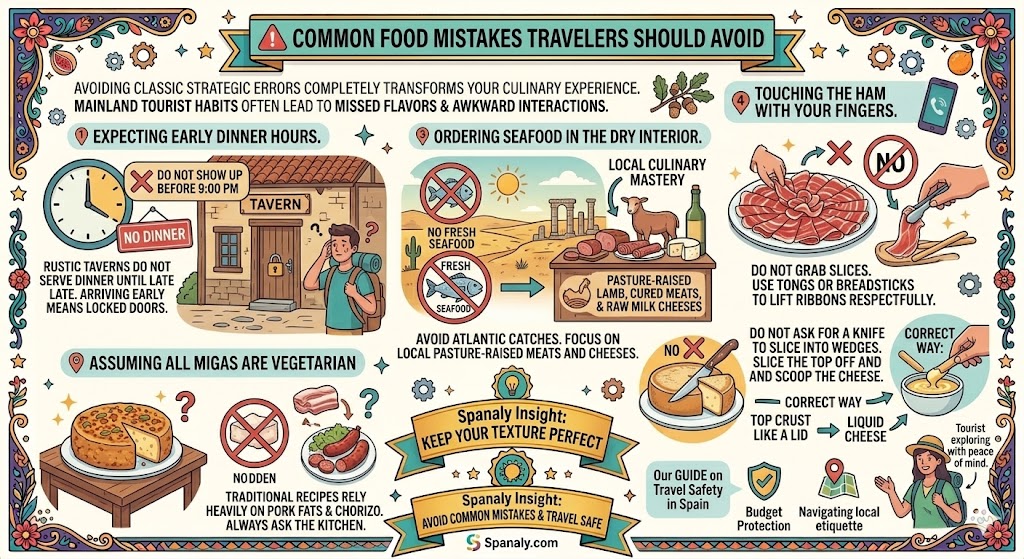
Avoiding classic strategic errors greatly improves your culinary experience in Western Spain. Mainland tourist habits often lead to missed flavors and awkward interactions in traditional taverns.
📍 Expecting Early Dinner Hours: Do not show up at rustic taverns looking for dinner before 9:00 PM. Arriving early means encountering locked doors or empty kitchens, as true locals never sit down for late-night tapas until late.
📍 Assuming All Migas Are Vegetarian: Never assume breadcrumb dishes are plant-based. Traditional recipes rely heavily on rendering pork fats and tossing in chorizo chunks, so always ask the kitchen before ordering.
📍 Ordering Seafood in the Dry Interior: Avoid prioritizing fresh Atlantic catches while exploring the sun-baked plains. Focus exclusively on pasture-raised lamb, cured meats, and raw milk cheeses where local culinary mastery shines.
📍 Handling Premium Sliced Ham Excessively: Avoid handling delicate ribbons of hand-cut ham too much with your fingers. Use the provided serving utensils or breadsticks when presented on communal platters.
To master these nuances and dive deeper into scams or cultural slip-ups across the country, our master guide on Travel Safety in Spain breaks down how to protect your budget and navigate local etiquette. You can travel through both the islands and the interior with peace of mind.
Spanaly Insight: Do not ask for a knife to slice Torta del Casar into standard wedges. Cutting this liquid cheese incorrectly ruins the texture; always slice the top crust off like a lid and scoop the cheese out.
🤫 Elite Local Secrets: Crowd-Sourced Food Hacks
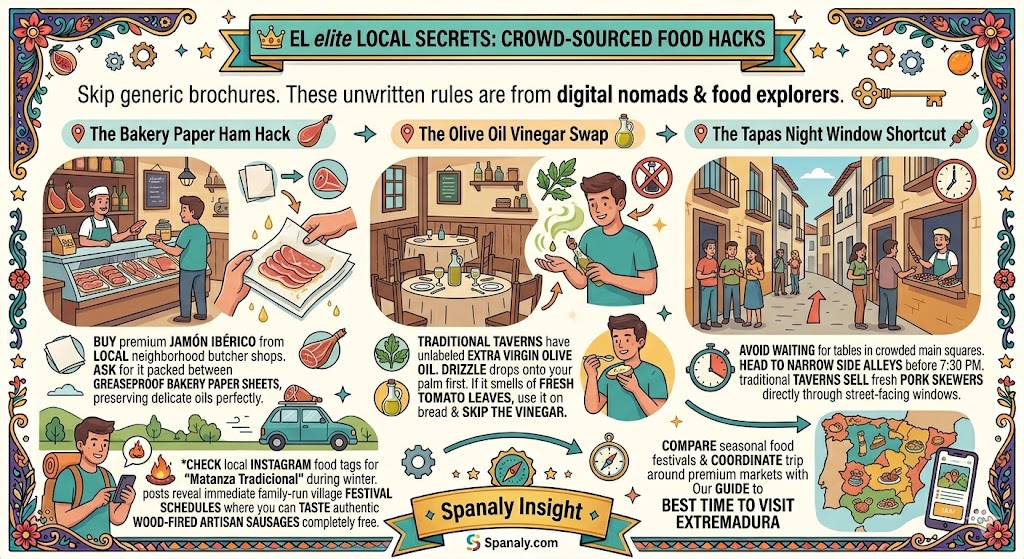
Skip the generic travel brochures and embrace these practical, unwritten rules sourced straight from seasoned food explorers who navigate Western Spain’s interior food scene daily.
📍 The Bakery Paper Ham Hack: Buy your premium Jamón Ibérico from local neighborhood butcher shops (charcuteries) rather than tourist boutiques. Ask them to pack it between greaseproof bakery paper sheets, which preserves the delicate oils during long car trips.
📍 The Morning Market Strategy: Visit historic covered markets before 11:00 AM to capture the best produce selections. Local cheese vendors often offer small tasting samples to early morning shoppers before the midday crowds arrive.
📍 The Media Ración Advantage: Order medias raciones (half-platters) instead of full plates (raciones) when dining in small groups. This practical strategy allows you to sample a wider variety of intense regional flavors without overordering.
📍 The Weekday Menu Route: Look for the Menú del Día (menu of the day) at rustic taverns during weekday lunch hours. These set menus offer affordable, house-cooked traditional stews that rarely appear on standard weekend à la carte options.
To optimize your scheduling before setting off on your culinary journey, our comprehensive guide on the Best Time to Visit Extremadura outlines seasonal food festivals and local harvest times. You can easily coordinate your trip around premium livestock markets and regional tasting events.
Spanaly Insight: Check local Instagram food tags for the phrase Matanza Tradicional during winter months. Real-time posts reveal immediate family-run village festival schedules where you can taste authentic, wood-fired artisan sausages completely free.
🥩 Visitor FAQs – Extremadura Food & Culinary Logistics Guide
🥩 Can I bring authentic Jamón Ibérico back to my home country?
Customs regulations depend entirely on your destination country. Travelers within the European Union can transport vacuum-sealed meats freely. Conversely, non-EU destinations like the United States enforce strict bans on raw pork products, meaning customs officers will confiscate whole legs or sliced packets at the border.
🧀 Why do some traditional raw milk cheeses have a slightly bitter aftertaste?
The unique bitterness is a proud hallmark of authentic local cheesemaking. Artisan producers curdle the sheep milk using vegetable rennet derived from the stamens of wild cardoon thistles rather than animal enzymes. This ancestral method yields a rich, complex flavor profile that contrasts beautifully with sweet wines.
🌶️ Is Extremadura food spicy due to the heavy use of Pimentón?
No, the local cuisine focuses on deep, wood-smoked flavor rather than tongue-burning heat. The famous smoked paprika comes in three distinct varieties: Dulce (sweet), Agridulce (bittersweet), and Picante (spicy). Most traditional taverns utilize the sweet variant to enrich stews without adding intense heat.
🕌 Can I easily find Halal food options in Extremadura?
Finding certified Halal restaurants in rural districts can be very difficult due to the region's heavy focus on pork. Muslim travelers should look for specialized Moroccan restaurants in major cities like Cáceres or Mérida. Alternatively, focus entirely on traditional egg dishes, fresh vegetable tapas, and famous raw sheep milk cheeses.
📅 Are table reservations strictly necessary at traditional taverns?
Reservations are highly recommended for formal weekend lunches or dining at high-profile gastro-bars. However, casual evening tapas crawls operate on a first-come, first-served basis. Simply walk in after 9:00 PM and secure a spot standing near the bar counter to enjoy an authentic local atmosphere.
🛒 Do traditional taverns in the interior provinces accept credit cards?
Yes, digital payment systems are universally integrated across city establishments and gastro-bars. However, keeping small cash coins remains essential when visiting remote mountain villages, traditional monastery bakeries, or purchasing fresh produce directly from small family-run agricultural markets.
🍷 What is the local custom regarding tipping at traditional restaurants?
Tipping is entirely optional and never mandatory across Spain. Locals rarely leave large percentages, usually rounding up to the nearest euro for casual tapas or leaving a 5% to 10% gratuity for exceptional sit-down service in fine dining establishments like Cáceres' Michelin-starred spots.
Extremadura Culinary Guide by Spanaly.com
Navigating Extremadura’s gastronomy requires embracing its rich historical roots and traditional cooking timetables. Slow down and let authentic regional ingredients guide your road trip.
🏆 Our Top Recommendation: Prioritize hand-cut acorn ham and raw milk tortas in Cáceres.
🛒 The Golden Rule: Respect the regional afternoon siesta hours to secure fresh tavern seating.
🌿 The Local Philosophy: Value raw product authenticity over complex, modern presentation styles.
Most international food journeys begin right in the heart of Spain’s bustling capital. To smoothly transition from your entry flight to the historic interior highway routes, our essential Madrid Barajas Airport Guide outlines terminal transfers, express car rentals, and train connections. You can land fully prepared to launch your culinary road trip westward.
💬 Join the Conversation: Which intense regional flavor are you most excited to try first? Drop a comment below to share your thoughts, or ask your burning culinary logistics questions before packing your bags!