🚗 Getting Around Extremadura
Transportation directly determines how much of Extremadura you can realistically experience. This vast inland region stretches far beyond its famous Roman cities, meaning your transit choice shapes your entire itinerary from the very beginning.
Whether you are planning a cultural city escape or building a complete Extremadura Travel Guide route through mountain valleys, medieval villages, and remote natural parks, choosing the right transportation method matters enormously.
🚙 The Driving Reality: Renting a car unlocks deep rural landscapes, hidden monasteries, scenic mountain roads, and destinations unreachable by regular public transit.
🚊 The Public Transit Reality: Trains and buses efficiently connect major urban centers like Mérida, Cáceres, and Badajoz while keeping transport costs lower.
This practical comparison breaks down costs, accessibility, route coverage, and real travel convenience to help you decide whether a rental car, train, or regional bus network best matches your Extremadura adventure.
🚗 Should You Rent a Car in Extremadura?
Deciding whether to secure an independent vehicle depends entirely on your specific destination list and sightseeing style. This quick, definitive checklist clarifies your transportation needs immediately.
✅ YES — Rent a Car If You Want to Visit:
Monfragüe National Park: Reaching hiking trails and high cliffside birdwatching viewpoints is significantly easier with a rental car.
The Jerte Valley: Exploring the famous cherry blossom routes and mountain streams can be difficult using public transport alone.
La Vera Region: Driving between isolated stone villages and natural swimming pools demands total road flexibility.
Guadalupe Monastery: Navigating deep into the mountain pass to visit this historic site requires a vehicle.
Scenic Countryside Road Trips: Cruising along quiet rural highways allows you to explore spontaneous frontier ruins freely.
❌ NO — Skip the Rental If You Only Visit:
Mérida: Modern high-speed trains drop you within walking distance of the massive ancient Roman monuments.
Cáceres: The majestic medieval walled old town is entirely pedestrianized and easily accessed via public transit tracks.
Badajoz: Frequent intercity rail lines link this historic border fortress city directly with major national transport hubs.
⏱️ Extremadura Transit: The Quick Snapshot
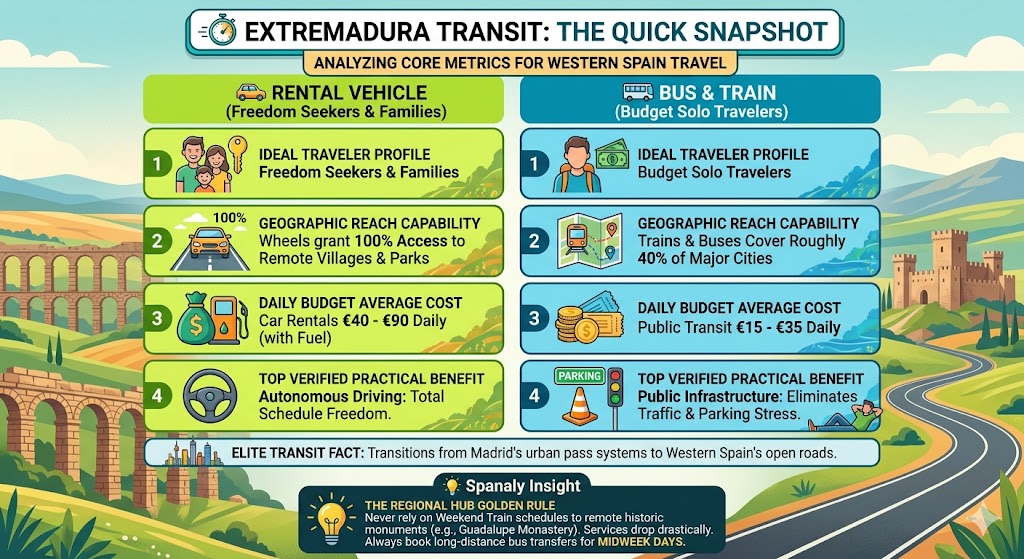
Western Spain features vast rural distances that heavily influence how you navigate between historic Roman ruins and medieval villages. Analyzing core travel metrics immediately clarifies whether you should secure a rental vehicle or rely on local public tracks.
Ideal Traveler Profile: Renting a car suits freedom seekers and families, while public transport works best for budget solo travelers.
Geographic Reach Capability: Vehicles grant comprehensive access to remote villages, while public transit connects major urban centers reliably.
Daily Budget Average Cost: Car rentals demand €40 to €90 daily with fuel, while public transit ranges between €15 and €35.
Top Practical Benefit: Independent driving provides total schedule freedom, while public infrastructure eliminates traffic and parking stress entirely.
Managing your transit strategy across Spain requires deep planning. If you start your journey from the capital, our detailed guide to Getting Around Madrid clarifies urban pass systems before you transition into Western Spain’s open roads.
💡 Spanaly Insight: Some regional transport schedules to remote historic monuments drop significantly on Saturdays and Sundays. If you choose public transit, checking weekend timetables in advance helps prevent unexpected overnight delays.
⚔️ Renting a Car vs. Public Transport: The Ultimate Showdown
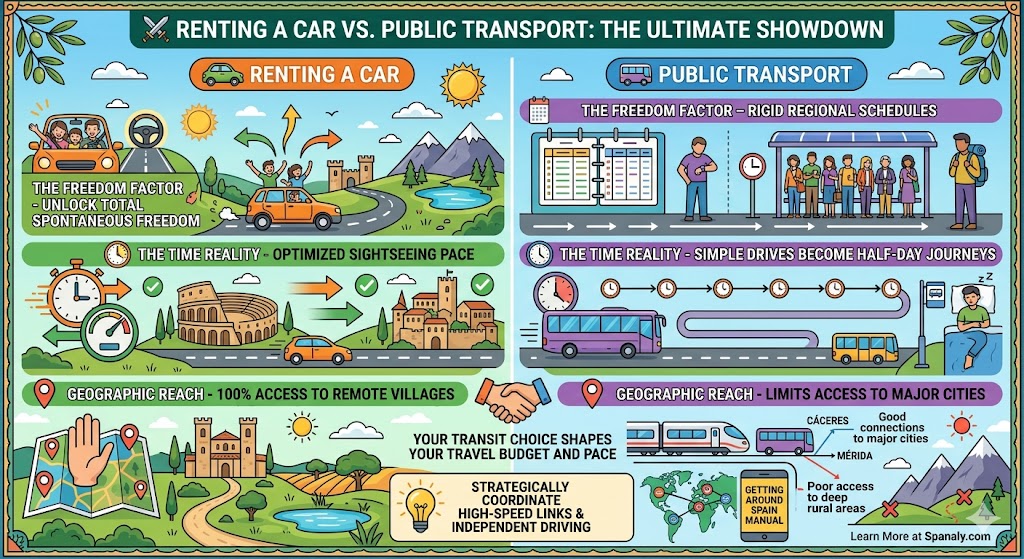
Choosing your transit method directly dictates how much of this historic frontier you can actually explore daily. Your decision fundamentally shapes your entire travel budget and sightseeing pace.
⚡ The Freedom Factor: Renting a vehicle unlocks total spontaneous freedom. You can stop at isolated medieval castles or natural mountain pools whenever you desire.
⏱️ The Time Reality: Public transit requires strict adherence to rigid regional schedules. Buses and trains often turn a simple one-hour drive into a half-day journey.
📍 Geographic Reach: Major cities like Cáceres and Mérida feature decent rail connections. Reaching deep rural meadows or remote monastic villages without a car is nearly impossible.
Your transit choice depends entirely on your specific itinerary goals. If you want to compare these rural transit choices with the broader national network, our master Getting Around Spain manual outlines every major alternative. Therefore, you can strategically coordinate high-speed links and independent driving options.
🚙 Renting a Car in Extremadura: Pros and Cons
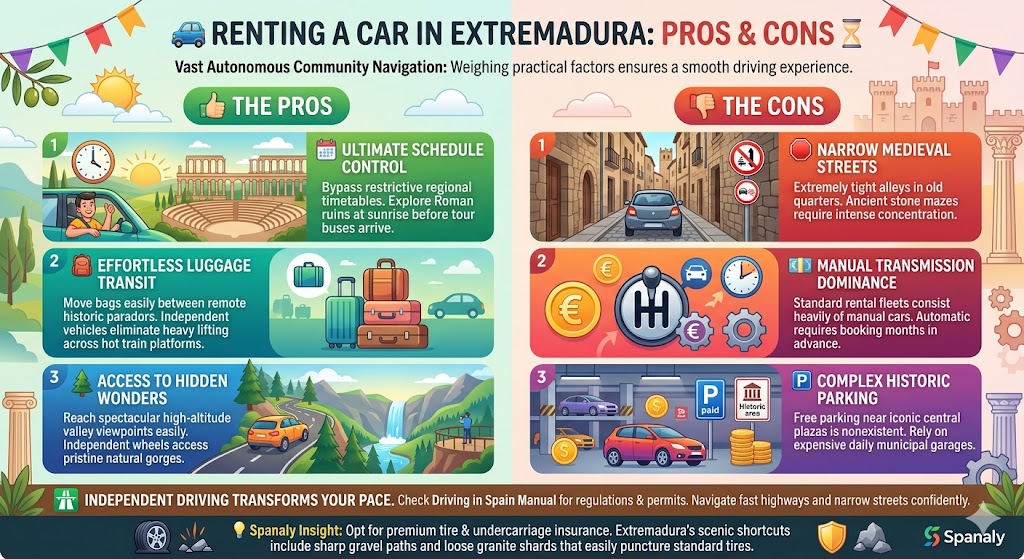
Navigating this vast Autonomous Community on wheels offers unparalleled logistical advantages alongside a few specific rural challenges. Weighing these practical factors beforehand ensures a smooth driving experience.
👍 The Pros
📅 Ultimate Schedule Control: You completely bypass restrictive regional timetables. You can explore Roman ruins at sunrise before tour buses arrive.
🎒 Effortless Luggage Transit: Moving bags between remote historic paradors becomes entirely stress-free. Independent vehicles eliminate heavy lifting across hot train platforms.
🌲 Access to Hidden Wonders: Independent wheels allow you to reach spectacular high-altitude valley viewpoints easily. Missing out on pristine natural gorges is never an issue.
👎 The Cons
🛑 Narrow Medieval Streets: Old quarters in cities like Cáceres feature extremely tight granite alleys. Navigating these ancient stone maze structures requires intense concentration.
💶 Manual Transmission Dominance: Standard rental fleets across the region consist heavily of manual cars. Securing an automatic transmission demands booking months in advance.
🅿️ Complex Historic Parking: Free parking near historic centers is often limited or difficult to find. Most travelers must rely on expensive underground municipal garages daily.
Independent driving completely transforms your frontier exploration pace. Before booking your vehicle, checking out our comprehensive Driving in Spain manual provides critical traffic regulations and international permit rules. In practice, you can navigate both fast highways and narrow village streets with absolute confidence.
💡 Spanaly Insight: When booking your vehicle, always opt for premium tire and undercarriage insurance coverage. Extremadura’s scenic shortcuts consist of sharp, unpaved gravel paths and loose granite shards that easily puncture standard rental tires.
🚊 Public Transport in Extremadura: Trains and Buses
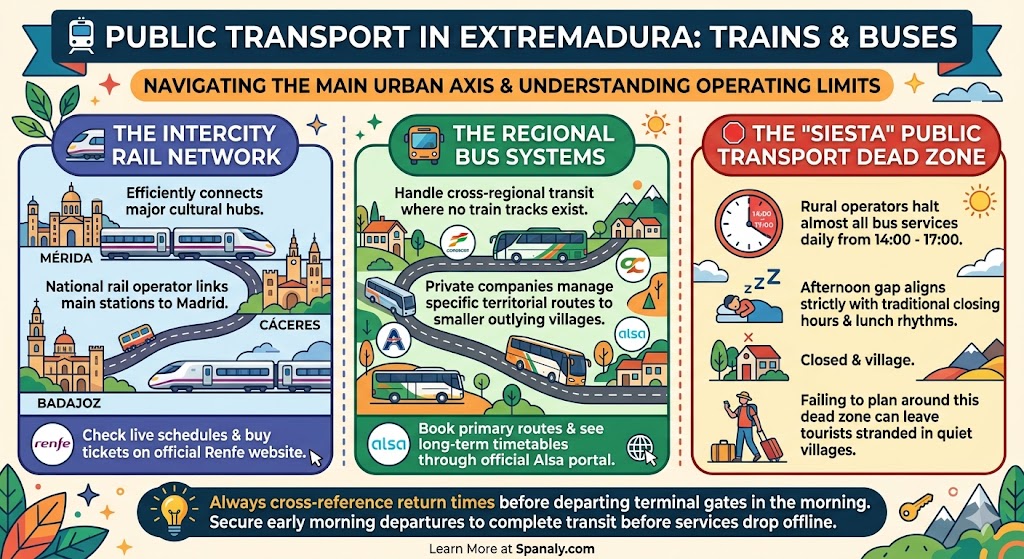
Navigating the region via public transit is entirely possible if you stick strictly to the main urban axis. However, relying on tracks and shared coaches requires understanding specific local operating limitations.
🚄 The Intercity Rail Network
Modern medium-distance trains efficiently connect major cultural hubs like Mérida, Cáceres, and Badajoz.
The national rail operator provides reliable daily services linking these main stations directly to Madrid.
You can check live schedules and purchase tickets directly on the official Renfe website.
🚌 The Regional Bus Systems
Long-distance coaches handle the vast majority of cross-regional transit where train tracks simply do not exist.
Different private companies manage specific territorial routes connecting larger cities to smaller outlying villages.
For primary routes, you can securely book tickets and inspect long-term timetables through the official Alsa portal.
🛑 Afternoon Schedule Reductions on Rural Routes
Some rural transit routes operate significantly reduced afternoon schedules between 14:00 and 17:00 daily.
This specific drop in frequency aligns closely with traditional Spanish lunch hours and local business closing rhythms.
Checking timetables carefully prevents long, unexpected waits at quiet countryside terminals.
Always cross-reference your return times before departing terminal gates in the morning. Securing early morning departures guarantees you complete your regional transit before afternoon services drop offline entirely.
🗺️ Driving in Extremadura: Scenic Routes and Parking Tips
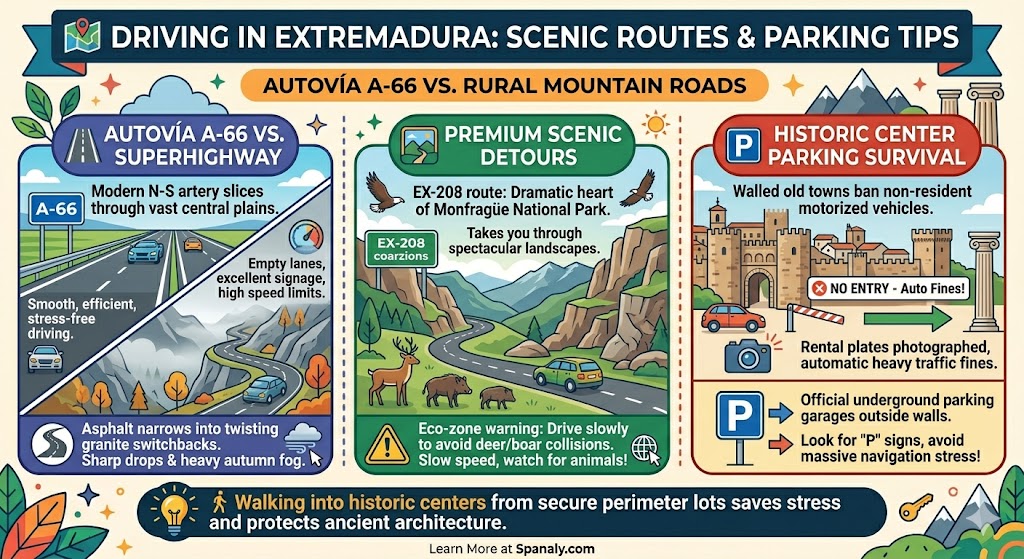
Taking the wheel reveals a landscape of open oak pastures, steep river canyons, and historic stone towns. Managing your driving route effectively requires adapting to sharp geographical transitions.
🛣️ Autovía A-66 vs. Rural Mountain Roads
The A-66 Superhighway: This smooth, modern north-south artery slices efficiently through the vast central plains. Driving here is completely stress-free, featuring empty lanes, excellent signage, and high speed limits.
The Northern Mountain Roads: Heading into the Jerte or La Vera valleys changes everything immediately. Here, asphalt narrows into twisting granite switchbacks with sharp drops and heavy autumn fog.
🏞️ Premium Scenic Detours
The EX-208 route takes you straight through the dramatic heart of Monfragüe National Park.
This specific drive offers spectacular roadside viewpoints where eagles soar directly above quartzite cliffs.
Always drive slowly along this eco-zone to avoid sudden collisions with crossing deer or wild boars.
🅿️ Historic Center Parking Survival
Walled old towns like Cáceres strictly ban all non-resident motorized vehicles from entering gate zones.
Cameras automatically photograph rental license plates, resulting in immediate, heavy municipal traffic fines.
Instead, always look for the large blue “P” signs indicating official underground parking garages outside walls.
Leaving your vehicle in a secure perimeter lot saves massive navigation stress. Walking into the historic centers from nearby transit squares ensures you enjoy the ancient stone architecture safely on foot.
🚌 Travelling Extremadura by Bus: Routes and Schedules
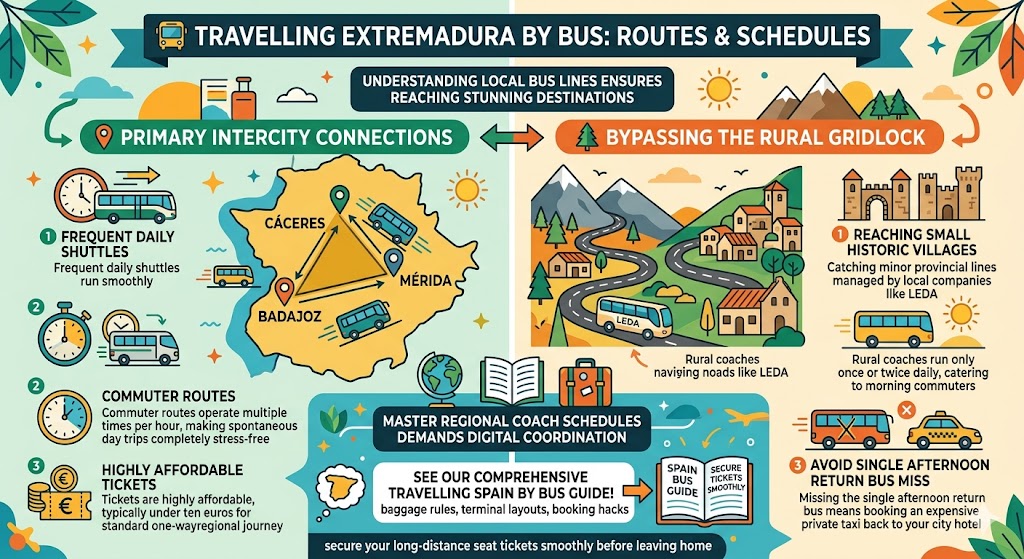
Coaches form the true backbone of rural transit across this vast frontier region. Understanding how to navigate these local bus lines ensures you can reach stunning destinations without independent wheels.
📍 Primary Intercity Connections
Frequent daily shuttles run smoothly between the primary urban golden triangle of Cáceres, Mérida, and Badajoz.
These commuter routes offer several daily departures, making planned day trips completely stress-free.
Tickets are highly affordable, typically costing under ten euros for a standard one-way regional journey.
🌲 Bypassing the Rural Gridlock
Reaching smaller historic mountain villages requires catching minor provincial lines managed by local companies like LEDA.
These rural coaches usually run only once or twice daily, catering to morning village commuters.
Missing the single afternoon return bus means booking an expensive private taxi back to your city hotel.
Mastering regional coach schedules demands a bit of pre-trip digital coordination. If you want to understand baggage rules, terminal layouts, and booking hacks, our comprehensive Traveling Spain by Bus guide outlines every essential detail. As a result, you can secure your long-distance seat tickets smoothly before leaving home.
🚄 Extremadura Train Travel: Connections and Speed
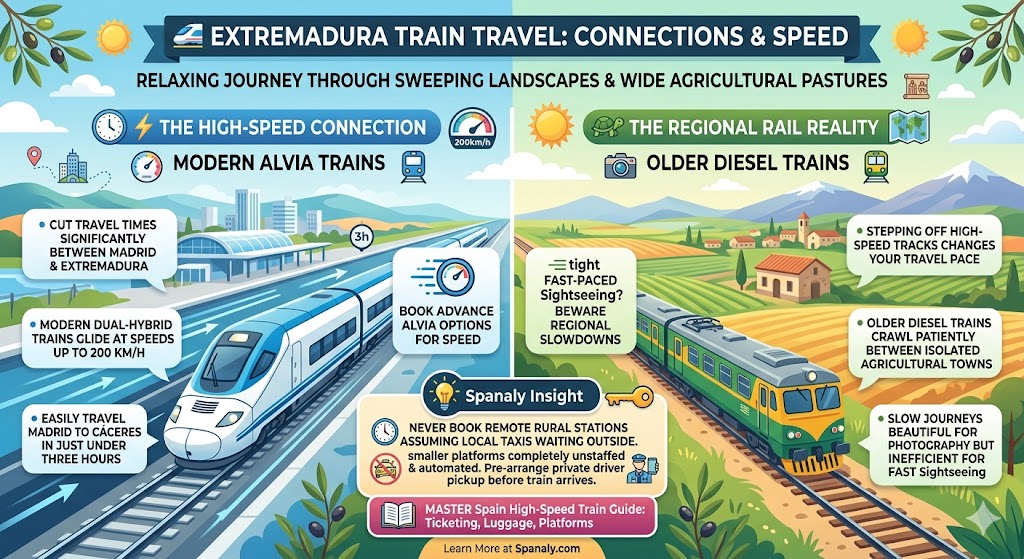
Rail travel across this region offers a highly relaxing journey through sweeping landscapes and wide agricultural pastures. Recent infrastructure upgrades mean getting to this remote frontier is now faster than ever before.
⚡ The High-Speed Connection
Modern Alvia trains cut travel times significantly between Madrid and the primary Extremaduran stations.
These dual-hybrid trains run efficiently on upgraded regional tracks at speeds up to 200 kilometers per hour.
You can easily travel from Madrid to Cáceres in just under three hours.
🐢 The Regional Rail Reality
Stepping off the main high-speed tracks onto slow regional lines changes your travel pace immediately.
Older diesel trains crawl patiently between isolated agricultural towns and small rural whistle-stops.
These slow journeys are beautiful for photography but highly inefficient for tight, fast-paced sightseeing itineraries.
Booking your seats well in advance ensures you secure the faster Alvia options. If you want to master ticketing platforms, luggage weight limits, and platform navigation, our master Spain High-Speed Train Guide outlines everything you need. For this reason, we recommend reviewing it to secure your premium cabin seats smoothly.
💡 Spanaly Insight: Never book train tickets to remote rural stations like Plasencia-Fuentidueñas assuming local taxis are waiting outside. Many smaller Extremaduran train platforms are completely unstaffed and automated, meaning you must pre-arrange a private driver pickup before your train arrives.
💰 Cost Comparison: Car Rental vs. Public Transport
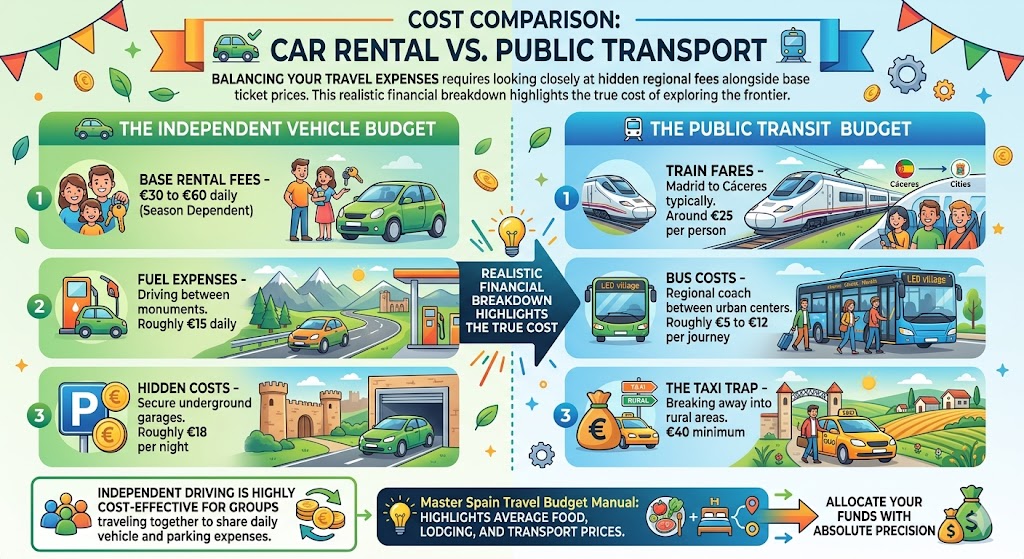
Balancing your travel expenses requires looking closely at hidden regional fees alongside base ticket prices. This realistic financial breakdown highlights the true cost of exploring the frontier.
🚗 The Independent Vehicle Budget
Base Rental Fees: Economy cars cost roughly €30 to €60 daily, depending heavily on the season.
Fuel Expenses: Driving long highway stretches between isolated monuments consumes significant fuel, totaling about €15 daily.
Hidden Costs: Secure underground parking garages near old town walls add roughly €18 per night.
🚊 The Public Transit Budget
Train Fares: High-speed Alvia tickets from Madrid to Cáceres typically average around €25 per person.
Bus Costs: Regional coach rides between primary urban centers cost roughly €5 to €12 per journey.
The Taxi Trap: Breaking away from fixed tracks into rural areas requires private taxis, costing €40 minimum.
📊 Estimated Total Transport Cost Per Day
| Travel Style | Rental Car Total | Public Transit Total | Best Value Verdict |
| Solo Traveler | €65–€93 | €20–€40 | Public Transit Saves Cash |
| Couples | €33–€47 per person | €35–€55 per person | Rental Car Adds Freedom |
| Families (3+) | €17–€24 per person | €50–€80 combined | Rental Car is Cheapest |
Independent driving becomes exceptionally cost-effective for groups traveling together to share daily vehicle and parking expenses. If you want to estimate your total nationwide spending patterns, our master Spain Travel Budget manual highlights average food, lodging, and transport prices. Consequently, you can allocate your funds with absolute precision.
📱 Digital Co-Pilot: Essential Local Transit Apps
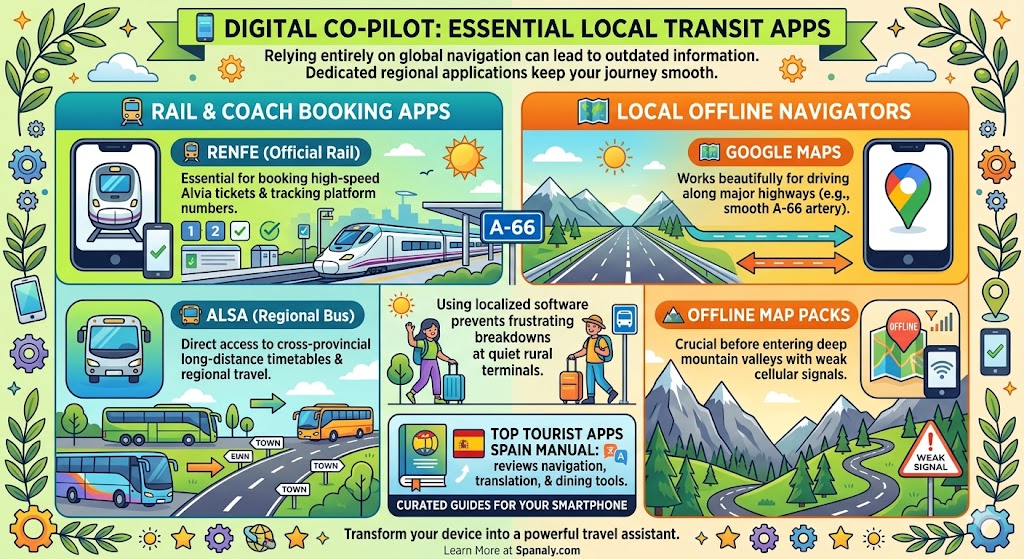
Relying entirely on global navigation programs inside this rural region often leads to outdated schedule information. Downloading dedicated regional transport applications keeps your journey running smoothly.
🚆 Rail & Coach Booking Apps
The official Renfe application is absolutely essential for booking high-speed Alvia tickets and tracking platform numbers.
For regional bus travel, downloading the Alsa app provides direct access to cross-provincial long-distance timetables.
🗺️ Local Offline Navigators
Google Maps works beautifully for driving along major highways like the smooth A-66 artery.
Downloading offline regional map packs is crucial before entering deep mountain valleys with weak cellular signals.
Using localized software prevents frustrating communication breakdowns at quiet rural bus terminals. If you want to optimize your smartphone for the entire Iberian peninsula, our curated Top Tourist Apps Spain manual reviews the best navigation, translation, and dining tools. Consequently, you can transform your device into a powerful travel assistant.
🛑 Common Transportation Mistakes Tourists Make in Extremadura
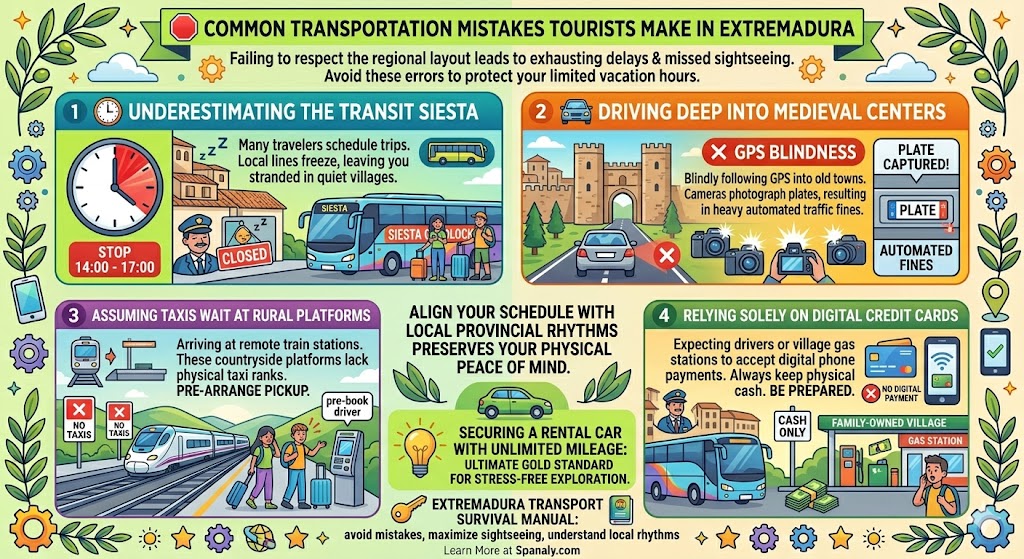
Failing to respect the regional transport layout often leads to exhausting delays and missed sightseeing opportunities. Avoiding these tactical transit errors protects your limited vacation hours.
Underestimating the Transit Siesta: Many travelers schedule regional bus trips between 14:00 and 17:00. Local lines freeze during these hours, leaving you completely stranded in quiet villages.
Driving Deep Into Medieval Centers: Tourists often blindly follow GPS navigation straight into walled historic old towns. Cameras photograph your plates instantly, resulting in heavy automated traffic fines.
Assuming Taxis Wait at Rural Platforms: Arriving at remote train stations without pre-booking a private driver is a major mistake. These automated countryside platforms lack physical taxi ranks entirely.
Relying Solely on Digital Credit Cards: Expecting small-town bus drivers or family-owned village gas stations to accept digital phone payments is risky. Always keep twenty euros in physical cash.
Aligning your travel schedule with local provincial rhythms preserves your physical peace of mind. Securing a rental car with unlimited mileage remains the ultimate gold standard for stress-free exploration.
🗺️ Elite Transport Insights: Backcountry Secrets
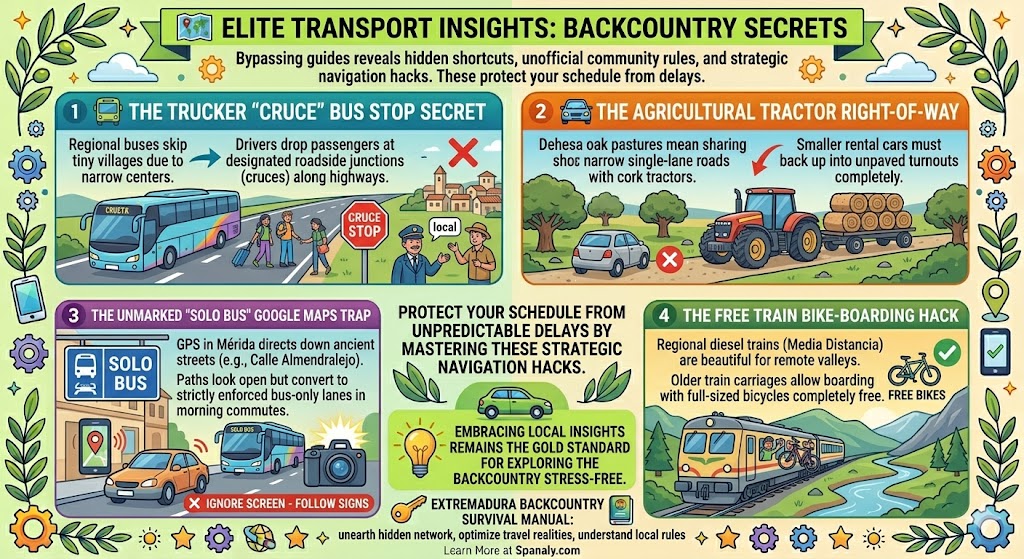
Mastering rural transit requires adapting to specific regional setups and local driving habits. These practical guidelines help you navigate secondary routes smoothly and avoid common delays.
📍 Understanding Highway Junction Bus Stops (Cruces)
Many long-distance regional buses bypass the narrow, time-consuming centers of tiny villages completely.
Instead, coaches pick up and drop off passengers at designated highway intersections called cruces.
Always verify your exact boarding location with station staff to ensure you wait at the correct highway junction.
🚜 Handling Agricultural Vehicles on Rural Roads
Driving through the rural Dehesa pastures means frequently encountering slow, heavy cork-harvesting tractors.
The narrow countryside lanes often feature dedicated gravel turnouts designed for passing traffic safely.
Pulling over into these spaces allows larger agricultural machinery to clear blind hills without causing accidents.
⛔ Navigating Active Municipal Bus Lanes
GPS software inside historic cities like Mérida sometimes struggles with dynamic local traffic rules.
Specific historic roads convert into strictly monitored bus-only zones during peak morning commuting hours.
Always prioritize physical overhead street signs over your digital navigation map to prevent automatic camera fines.
🚲 Transporting Bicycles on Regional Trains
Utilizing regional diesel lines (Media Distancia) offers an excellent way to access remote hiking valleys.
Unlike high-speed trains, these regional services permit travelers to bring full-sized bicycles aboard.
Checking availability during booking ensures you can easily combine train journeys with outdoor cycling trips.
💡 Spanaly Insight: Which Option Fits Your Travel Style?
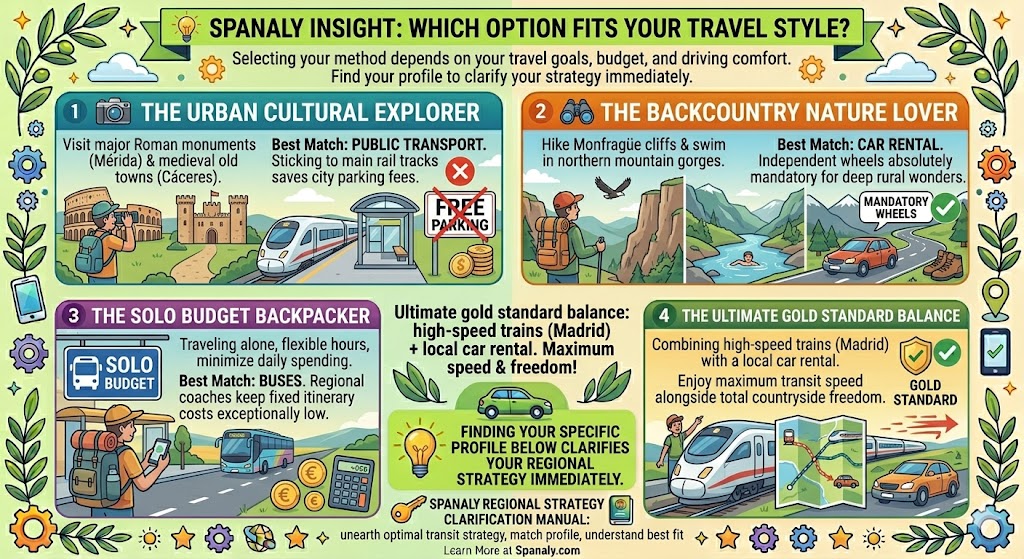
Selecting your final transit method depends entirely on your personal travel goals, budget limits, and baseline driving comfort. Finding your specific traveler profile below clarifies your optimal regional strategy immediately.
🏛️ The Urban Cultural Explorer
Your Profile: You want to visit major Roman monuments in Mérida and medieval old towns in Cáceres.
Your Best Match: Public transport. Sticking strictly to main rail tracks saves massive city parking fees.
🌲 The Backcountry Nature Lover
Your Profile: You plan to hike through Monfragüe cliffs and swim in pristine northern mountain gorges.
Your Best Match: Car rental. Independent wheels remain absolutely mandatory for reaching deep rural valley wonders.
🎒 The Solo Budget Backpacker
Your Profile: You are traveling alone, have flexible hours, and want to minimize daily travel spending.
Your Best Match: Buses. Relying on regional coaches keeps your fixed itinerary costs exceptionally low.
Ultimately, combining high-speed trains from Madrid with a local car rental offers the absolute gold standard balance. You enjoy maximum transit speed alongside total countryside freedom.
🚊 Visitor FAQs – Extremadura Transportation Guide
🎫 Can I use the Madrid Cercanías or Metro pass in Extremadura?
No, transit passes from Madrid do not function here. Extremadura features completely independent regional train networks and distinct provincial bus ticketing platforms. You must purchase separate tickets for each local leg online or directly at terminal windows.
⛽ Are there enough electric vehicle (EV) charging stations in rural areas?
Charging stations are frequent along major highways like the A-66. However, deep backcountry plains lack fast chargers. If renting an electric car, always check hotel compatibility or map out municipal plugs before driving into natural parks.
🐗 Is it safe to drive along countryside roads at night?
Driving after sunset requires extreme caution. The surrounding protected oak meadows host large populations of wild boars and deer. These animals frequently cross unlit rural lanes unexpectedly, making daytime driving much safer for international tourists.
🧳 Do regional buses have strict luggage weight limits?
Regional coaches rarely weigh your suitcases. You simply store your large bags inside the lower under-bus cargo compartments yourself before boarding. However, keeping small valuables at your seat is highly recommended for security during transit stops.
🚕 Can I easily use ride-sharing apps like Uber or Cabify here?
Availability of ride-sharing services can be limited outside major urban areas. You must rely entirely on official municipal white taxis found at designated town plaza ranks. Alternatively, you can call local radio-taxi numbers directly for pickups.
Extremadura Transport Guide by Spanaly.com
Navigating this historic frontier successfully boils down to balancing your personal sightseeing speed with the region’s geographical layout. Choosing the correct wheels ensures you experience every hidden wonder comfortably.
🚗 The Ultimate Verdict: Independent rental cars unlock direct road access to isolated valley villages and hidden medieval fortresses.
🚊 The Smart Alternative: Sticking to modern high-speed tracks handles major urban centers flawlessly while protecting your travel budget.
⏱️ The Golden Rule: Always cross-reference local afternoon bus gaps to avoid getting unexpectedly stranded during the regional siesta.
Your transportation choice acts as the ultimate blueprint for your entire regional itinerary. Before finalizing your vehicle bookings or train tickets, exploring our master Best Time to Visit Extremadura guide provides critical seasonal weather insights and festival schedules. Because of this, you can perfectly coordinate your transit methods with ideal local outdoor conditions.