🌸 The Scent of Blossoms & Ancient Stones
The air in the Jerte Valley smells heavily of sweet cherry blossoms, while woodsmoke drifts across the Roman ruins of Mérida. Extremadura remains Spain’s wild, untamed frontier. However, stepping into this sun-drenched region without checking the seasonal calendar can easily ruin your entire open-air itinerary.
Spring Peak: High-altitude meadows explode with color, making April ideal for rural exploration.
Summer Heat: Midday temperatures frequently smash past 40°C, emptying the historic plazas entirely.
Autumn Harvest: The golden oak forests come alive with wild mushroom foraging and acorn-fed livestock tracking.
Your perfect travel window depends entirely on your daily sightseeing goals. Birdwatchers and hikers should prioritize the crisp spring months. To map out your complete regional route, our master Extremadura Ultimate Guide provides deep breakdowns of the top historic destinations. Consequently, you can combine seasonal timing with perfect geographic planning.
✈️ Extremadura Travel Snapshot: Quick Practical Essentials

Navigating Extremadura efficiently requires a firm grasp of local infrastructure and regional logistics. This concise breakdown provides immediate answers to streamline your journey before leaving your hotel room.
Primary Airports: Choose Madrid-Barajas (MAD) or Seville (SVQ). Both major hubs sit roughly three hours away by rental vehicle or direct rail lines.
Internal Transit: Renting an economy vehicle remains the absolute gold standard. Regional bus lines operate infrequently between isolated historical villages.
Atmosphere Filter: Expect completely untouched monumental centers. The lack of mass tourism preservation means enjoying pristine cultural landmarks without dealing with chaotic crowds.
Aligning your entry point with national transit grids saves massive highway hours. If you need to master ticketing apps or regional routes, our Getting Around Spain manual outlines the most efficient transit strategies. Consequently, you can bridge the gap between high-speed rails and rural roads effortlessly.
💡 Spanaly Insight: Do not rely on local ridesharing applications inside Extremadura’s smaller towns. Standard municipal taxis dominate the market, meaning saving local dispatch phone numbers to your device is essential for late-night transit.
🗺️ Extremadura vs Andalusia: Inland Spain Weather Comparison
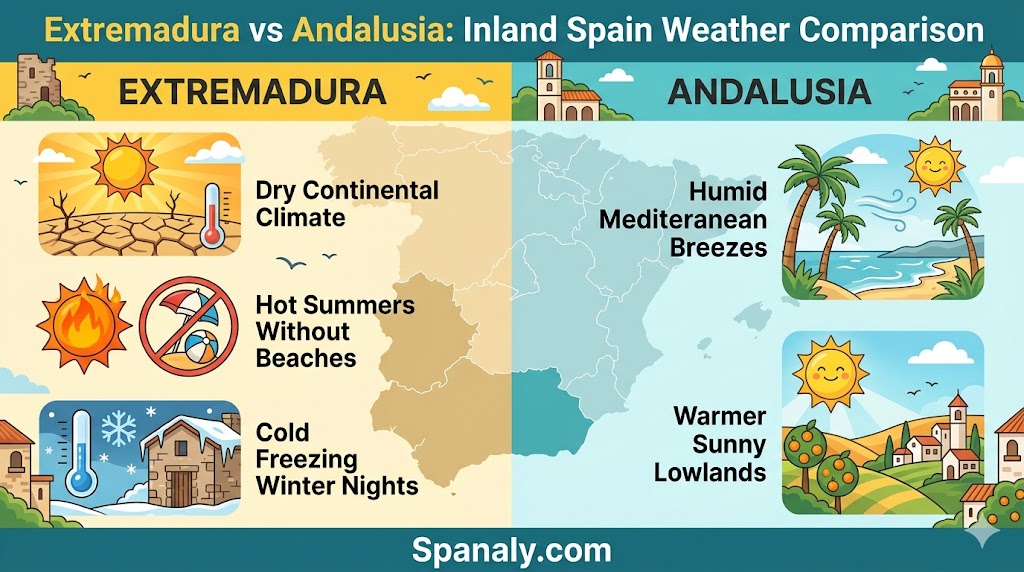
While both Extremadura and neighboring Andalusia share a sun-drenched southern profile, their internal microclimates present distinct challenges for unprepared travelers. Understanding these atmospheric differences directly impacts your daily sightseeing comfort.
The Humidity Split: Andalusia catches humid Mediterranean breezes. Extremadura experiences a dry, continental landlocked climate.
Summer Peaks: Both regions suffer intense summer heat waves. Extremadura lacks coastal beaches, making afternoon cooling impossible without mountain rock pools.
Winter Temperatures: Extremadura’s northern sierra catches cold Atlantic currents. Winter nights freeze faster than in sunny Andalusian lowlands.
Picking between these regions depends on your heat tolerance. Spring offers the ideal climate for open plains. If you want to compare these inland conditions with wet maritime zones, our Best Time to Visit Northern Spain breakdown highlights an emerald climate. Consequently, you can map out contrasting ecological zones easily.
💡 Spanaly Insight: Do not expect late-night coastal breezes here. Cities like Mérida trap ambient heat within their ancient granite monuments, making light linen clothing essential for evening strolls.
🌦️ Extremadura Weather and Climate by Season
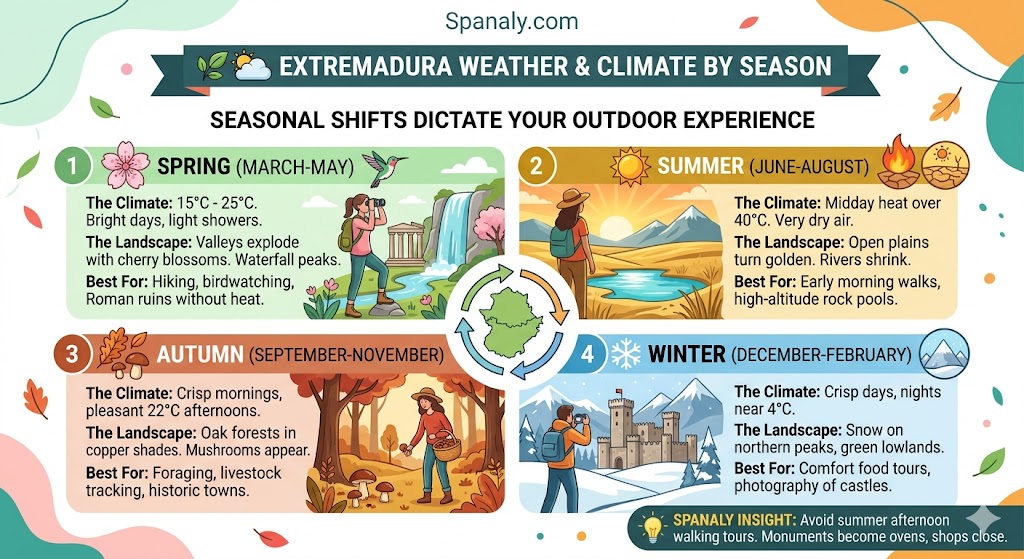
The regional climate shifts dramatically between lush green river valleys and scorched granite plains. Choosing your season carefully dictates your entire outdoor experience.
🌸 Spring (March to May)
The Climate: Temperatures hover between 15°C and 25°C. Days are bright with occasional light showers.
The Landscape: High-altitude valleys explode into white cherry blossoms. Natural waterfalls run at peak capacity.
Best For: Hiking, birdwatching, and exploring ancient Roman ruins without intense heat.
☀️ Summer (June to August)
The Climate: Midday heat routinely smashes past 40°C. The air is extremely dry and still.
The Landscape: The open plains turn completely golden. Rivers shrink to narrow mountain streams.
Best For: Early morning walks or swimming in fresh high-altitude natural rock pools.
🍂 Autumn (September to November)
The Climate: Crisp morning air gives way to pleasant afternoon temperatures around 22°C.
The Landscape: Oak forests turn brilliant shades of copper. Wild mushrooms carpet the damp forest floors.
Best For: Foraging, tracking livestock, and enjoying uncrowded historic town centers.
❄️ Winter (December to February)
The Climate: Days are surprisingly crisp and clear. Nighttime temperatures frequently drop toward 4°C.
The Landscape: Snow caps the northern mountain peaks, contrasting with green lowland pastures.
Best For: Comfort food tours and peaceful photography of medieval stone castles.
Tracking these seasonal patterns prevents major clothing mistakes. Spring remains the ultimate window for complete regional exploration. If you want to check how these seasons align with traditional Spanish celebrations, our Spanish Festivals guide outlines top nationwide cultural events. Notably, you can blend perfect weather with vibrant local folklore.
📈 Extremadura Weather Month-by-Month
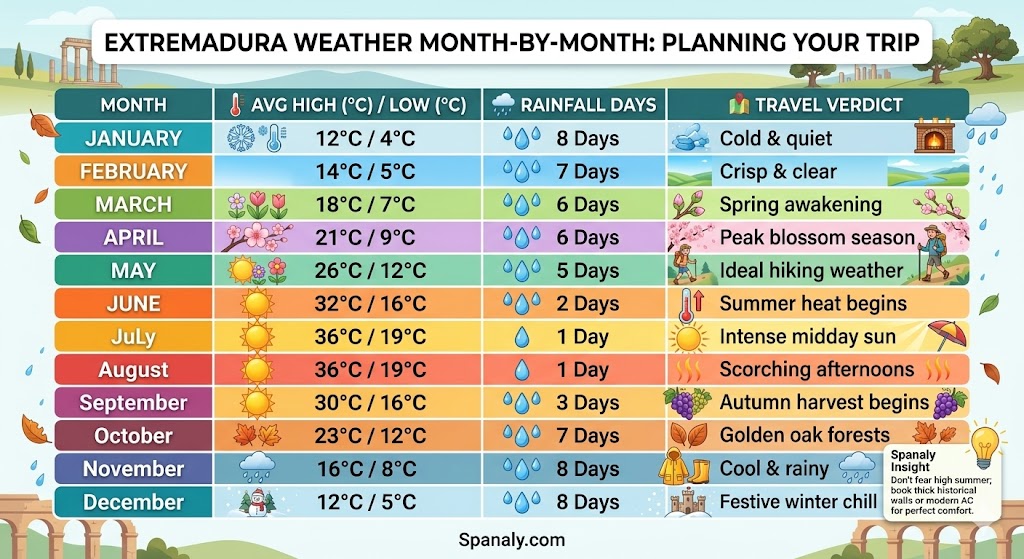
The table below breaks down average temperatures and rainfall across the region. These figures reflect the central plains, so mountain valleys will track slightly cooler.
| Month | Avg High (°C) | Avg Low (°C) | Rainfall Days | Travel Verdict |
| January | 12°C | 4°C | 8 Days | Cold & quiet |
| February | 14°C | 5°C | 7 Days | Crisp & clear |
| March | 18°C | 7°C | 6 Days | Spring awakening |
| April | 21°C | 9°C | 6 Days | Peak blossom season |
| May | 26°C | 12°C | 5 Days | Ideal hiking weather |
| June | 32°C | 16°C | 2 Days | Summer heat begins |
| July | 36°C | 19°C | 1 Day | Intense midday sun |
| August | 36°C | 19°C | 1 Day | Scorching afternoons |
| September | 30°C | 16°C | 3 Days | Autumn harvest begins |
| October | 23°C | 12°C | 7 Days | Golden oak forests |
| November | 16°C | 8°C | 8 Days | Cool & rainy |
| December | 12°C | 5°C | 8 Days | Festive winter chill |
Packing lightweight layers helps you manage the sharp day-to-night temperature drops. Spring and autumn offer the most reliable conditions for extensive driving tours. If you want to dive deeper into planning budgets around these seasonal variations, our Spain Travel Budget manual highlights how seasonal timing directly impacts accommodation rates. Consequently, you can optimize your wallet alongside your weather comfort.
🗺️ Regional Weather Variations: Plains vs Mountain Ranges
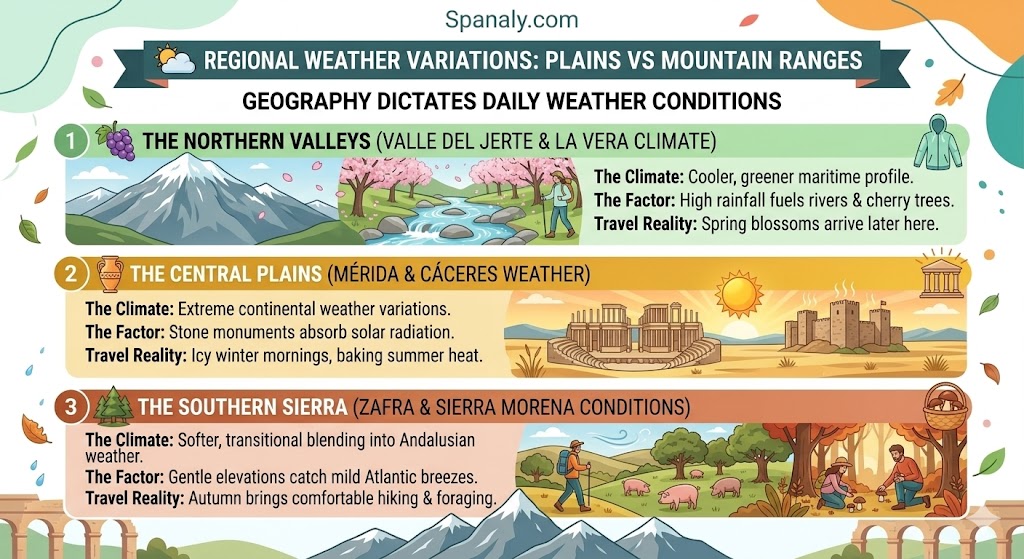
Extremadura’s diverse geography creates distinct microclimates across its borders. Regional elevation dictates daily weather conditions far more than standard national forecasts indicate.
🍇 The Northern Valleys (Valle del Jerte & La Vera Climate)
The Climate: Sheltered by massive Sierra de Gredos peaks, this zone enjoys a cooler, greener maritime profile.
The Factor: High rainfall fuels rushing mountain rivers, natural rock pools, and millions of delicate cherry trees.
Travel Reality: Spring blossoms arrive later here compared to the warmer central valley flatlands.
🏺 The Central Plains (Mérida & Cáceres Weather)
The Climate: This vast, flat plateau experiences extreme continental weather variations.
The Factor: Ancient stone monuments absorb solar radiation daily without coastal winds to cool them.
Travel Reality: Winter mornings feel icy, while summer afternoons bring intense, baking heat waves.
🌲 The Southern Sierra (Zafra & Sierra Morena Conditions)
The Climate: Rolling hills offer a softer, transitional climate blending into northern Andalusian weather patterns.
The Factor: Gentle elevations catch mild Atlantic breezes, supporting dense oak meadows called dehesas.
Travel Reality: Autumn brings comfortable hiking temperatures alongside prime mushroom foraging conditions.
Planning your route around these elevation shifts maximizes daily comfort. Switching to mountain valleys provides immediate relief during warmer months.
If you want to explore premier historical monuments across similar landscapes, our Spanish Attractions guide outlines top architectural marvels. Consequently, you can map out your sightseeing loop effortlessly.
🎭 Best Festivals in Extremadura: Cultural Events & Celebrations

The region’s calendar bursts with ancient customs, lively music, and theatrical performances. Aligning your travel dates with these authentic celebrations transforms a basic sightseeing trip into a deep cultural immersion.
🌸 Fiesta del Cerezo en Flor (Jerte Valley Cherry Blossom Festival)
The Experience: Over two million cherry trees paint the northern mountain slopes in brilliant shades of snowy white.
The Vibe: Local villages host traditional craft markets, wine tastings, and open-air folklore musical performances.
The Timing: This fleeting natural spectacle occurs over ten days, typically starting during late March.
🏛️ Festival de Mérida (International Classical Theatre Festival)
The Experience: World-class actors perform ancient Greek and Roman dramas under the stars in a genuine Roman theater.
The Vibe: The ancient stone arches glow under soft golden spotlights, creating an unforgettable evening atmosphere.
The Timing: This prestigious cultural event runs throughout July and August, attracting theater lovers nationwide.
✝️ Semana Santa in Cáceres & Mérida (Holy Week Traditions)
The Experience: Hooded penitents carry massive wooden floats through pitch-black medieval streets illuminated only by candles.
The Vibe: Haunting vocal chants bounce off old palace walls, creating a deeply solemn and emotional historical experience.
The Timing: This spiritual event occurs annually during spring, depending on the lunar liturgical calendar.
🎺 Festival WOMAD Cáceres
The Experience: International artists gather inside the walled old town to celebrate global music, arts, and dance.
The Vibe: Vibrant, colorful crowds fill the historic plazas, enjoying completely free open-air concerts until midnight.
The Timing: This energetic world music festival takes over the city every May.
Historical festivals draw massive crowds from across the Iberian Peninsula. Securing your accommodation months in advance is essential for spring events. If you want to explore more vibrant folklore traditions across the mainland, our Spanish Festivals manual highlights the ultimate cultural celebrations. Consequently, you can build your itinerary around Spain’s most iconic living history.
💡 Spanaly Insight: Buy your tickets for the Mérida Theatre Festival early online. The ancient stone benches get incredibly hot, so bringing a soft seating cushion ensures total comfort during three-hour performances.
🦉 Best Time to Visit Extremadura for Wildlife & Birdwatching

Extremadura stands as Europe’s premier ecotourism sanctuary. Massive untouched habitats attract passionate nature photographers and ornithologists from across the globe every season.
🦅 Monfragüe National Park: Peak Seasons for Birders
The Experience: Towering quartzite cliffs provide natural nesting ledges for rare birds of prey.
The Species: Look for Eurasian black vultures, Spanish imperial eagles, and black storks soaring overhead.
The Peak Window: Plan your visit between February and May to witness dramatic territorial courtship displays.
🦆 Wintering Cranes and Waterfowl in the Dehesa
The Experience: Over one hundred thousand graceful cranes migrate south from Scandinavia annually.
The Species: The birds carpet oak pastures, foraging eagerly for sweet acorns alongside local Iberian pigs.
The Peak Window: Visit between November and February to hear their iconic, echoing calls at sunset.
Early morning hours offer the highest probability for rare wildlife sightings. Spring guarantees lush, comfortable weather for waiting at remote viewing shelters. If you want to expand your outdoor itinerary into Spain’s iconic northern peaks, our Picos de Europa Asturias Guide outlines incredible mountain wildlife trails. Consequently, you can combine deep forest birdwatching with dramatic high-altitude hiking adventures.
💡 Spanaly Insight: Pack high-quality binoculars and a steady tripod. Park rangers strictly enforce viewing distance laws around rock formations like Salto del Gitano to protect vulnerable nesting pairs.
🥩 Best Time to Visit Extremadura for Food & Gastronomy
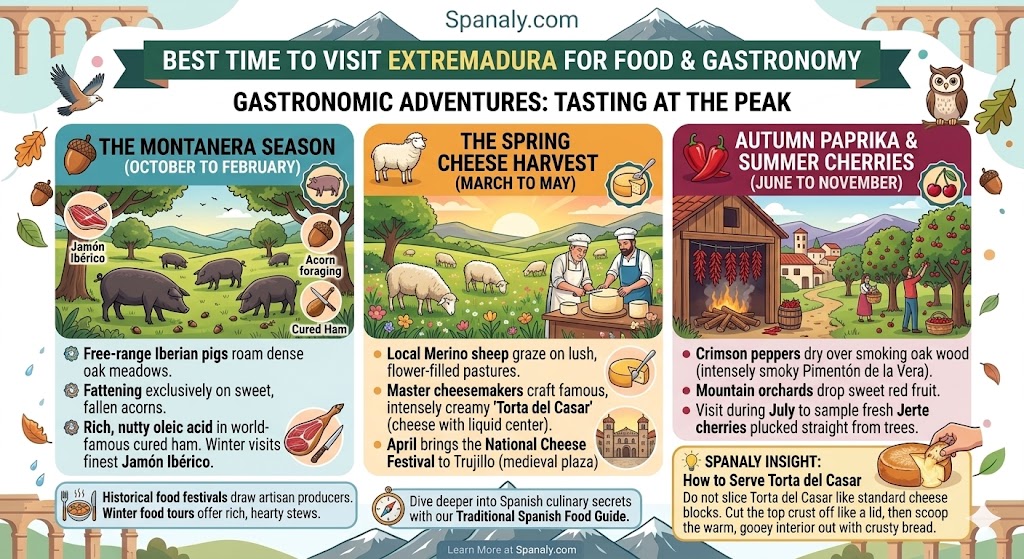
Extremadura’s culinary calendar revolves strictly around ancient agricultural cycles, meaning a harvest-season visit guarantees the freshest local products and seasonal specialties.
🐷 The Montanera Season (October to February)
The Tapestry: Free-range Iberian pigs roam dense oak meadows, fattening exclusively on sweet, fallen acorns.
The Flavor: This unique foraging cycle infuses the world-famous cured ham with rich, nutty oleic acid.
The Bite: Visiting during winter guarantees tasting the finest, freshly sliced cuts of premium Jamón Ibérico.
🧀 The Spring Cheese Harvest (March to May)
The Tapestry: Local Merino sheep graze on lush spring pastures, producing rich, aromatic milk.
The Flavor: Master cheesemakers craft Torta del Casar, a famous, intensely creamy cheese with a liquid center.
The Bite: April brings the national cheese festival to Trujillo, filling the medieval plaza with gourmet tasting stalls.
🍒 Autumn Paprika & Summer Cherries (June to November)
The Tapestry: Crimson peppers dry over smoking oak wood, while mountain orchards drop sweet red fruit.
The Flavor: The resulting Pimentón de la Vera provides an intensely smoky, deep aroma to regional stews.
The Bite: Visit during July to sample fresh Jerte cherries plucked straight from village orchard trees.
Historical food festivals draw artisan producers from across the Iberian Peninsula. Winter food tours offer rich, hearty stews perfect for cooler trail weather.
If you want to dive deeper into the country’s ultimate culinary secrets, our Traditional Spanish Food Guide breaks down iconic regional recipes. You can master your gourmet ordering strategies effortlessly.
💡 Spanaly Insight: Do not slice Torta del Casar like standard cheese blocks. Cut the top crust off like a lid, then scoop the warm, gooey interior out with crusty bread.
🎒 Packing for Extremadura: What to Wear in Every Season
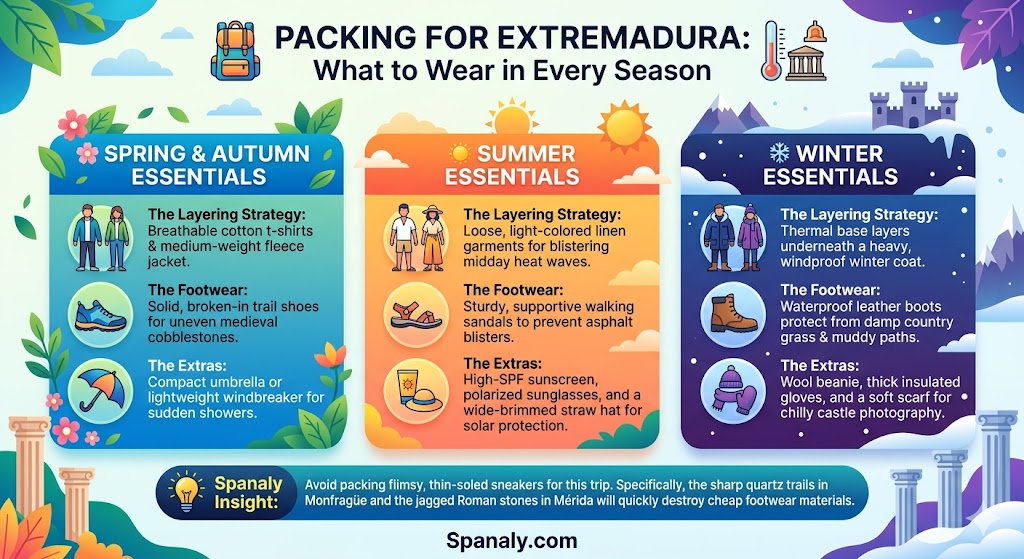
The temperature shifts between blazing afternoons and freezing mountain nights require strategic clothing choices.
Packing versatile, high-quality layers ensures total comfort during extensive historical exploration.
🌸 Spring & Autumn Essentials
The Layering Strategy: Pack breathable cotton t-shirts alongside a medium-weight fleece jacket.
The Footwear: Solid, broken-in trail shoes are essential for navigating uneven medieval cobblestones.
The Extras: Keep a lightweight windbreaker in your daypack for sudden afternoon showers.
☀️ Summer Essentials
The Layering Strategy: Loose linen garments offer maximum airflow during blistering midday heat waves.
The Footwear: Sturdy, supportive walking sandals prevent hot asphalt blisters during long walking tours.
The Extras: High-SPF sunscreen and a wide-brimmed hat provide crucial solar protection.
❄️ Winter Essentials
The Layering Strategy: Thermal base layers underneath a windproof winter coat keep freezing night winds out.
The Footwear: Waterproof leather boots protect your feet from damp country grass and muddy historical paths.
The Extras: Pack a wool beanie and thick gloves for chilly castle photography sessions.
Historical plazas trap intense solar radiation throughout the afternoon. Dressing in adaptable layers allows you to adjust quickly to rapid microclimate shifts.
If you want a complete nationwide checklist, our master What to Pack for Spain breakdown outlines every essential travel item. You can secure your luggage requirements effortlessly.
💡 Spanaly Insight: Avoid packing flimsy, thin-soled sneakers for this trip. The sharp quartz trails in Monfragüe and the jagged Roman stones in Mérida will quickly destroy cheap footwear materials.
⚠️ Common Weather Mistakes Tourists Make in Extremadura
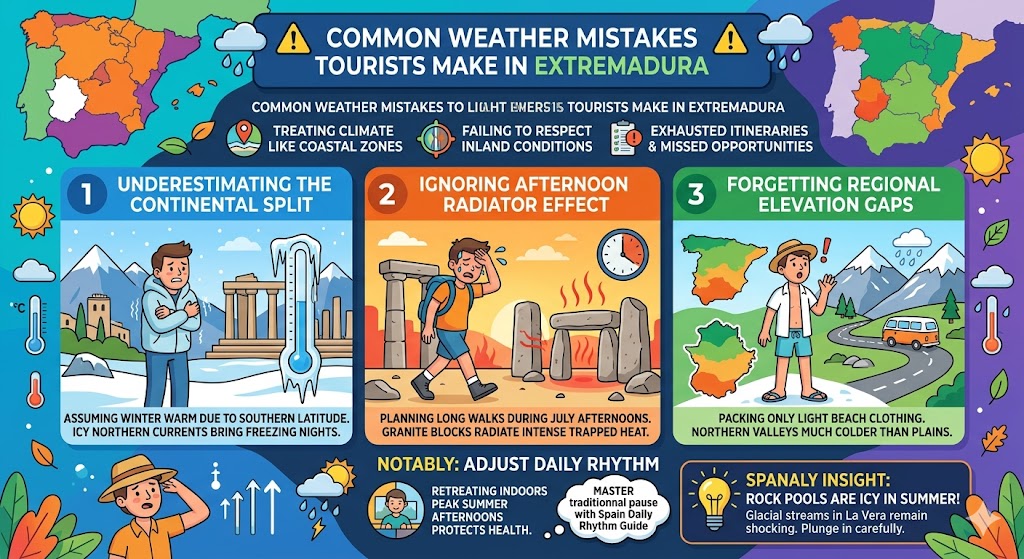
Many travelers treat Extremadura’s climate like Spain’s mild coastal zones. Failing to respect the inland atmospheric conditions often leads to exhausted itineraries and missed sightseeing opportunities.
Underestimating the Continental Split: Visitors often assume winter remains warm because of the southern latitude. Icy northern currents bring freezing night temperatures.
Ignoring the Afternoon Radiator Effect: Tourists frequently plan long Roman theater walks during July afternoons. Old granite blocks radiate intense trapped heat like hot brick ovens.
Forgetting Regional Elevation Gaps: Packing only light beach clothing for a complete cross-regional road trip is a major mistake. Northern valleys track significantly colder than central plains.
Ignoring these sharp regional climate shifts completely ruins outdoor sightseeing plans. Aligning your daily walks with cool morning hours protects your physical health. You can explore the historic frontier comfortably without facing dangerous thermal exhaustion.
💡 Spanaly Insight: Do not expect mountain rock pools to be warm in summer. Glacier-fed streams in La Vera remain shockingly icy even during intense August heat waves, so plunge in carefully.
🗺️ Ultimate Extremadura Seasonal Itineraries & Pro Tips
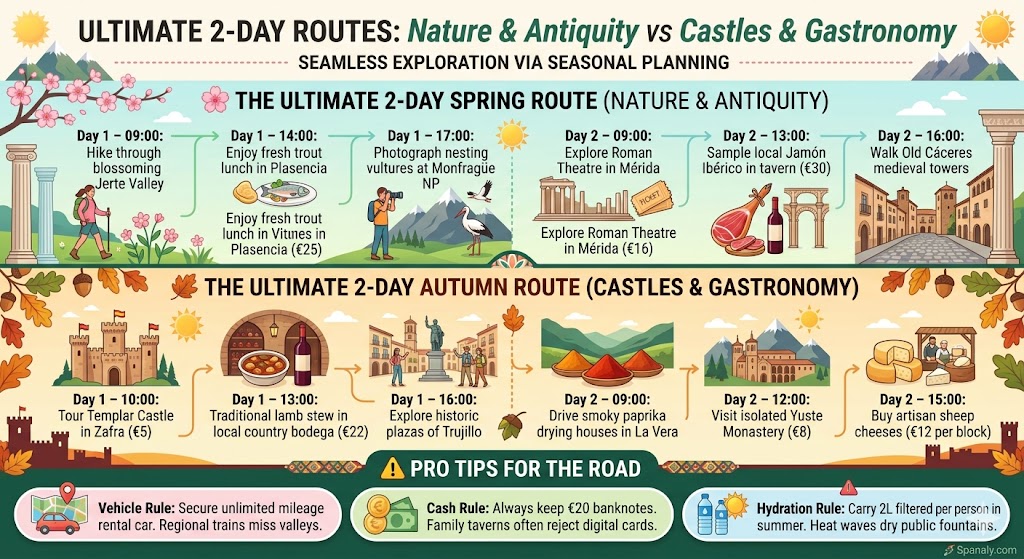
Planning your daily route around seasonal conditions ensures seamless exploration. These hour-by-hour operational tracks blend historical sightseeing with realistic regional budget projections.
🌸 The Ultimate 2-Day Spring Route (Nature & Antiquity)
Day 1 – 09:00: Hike through the blossoming Jerte Valley orchards.
Day 1 – 14:00: Enjoy a fresh trout lunch in Plasencia (€25 per person).
Day 1 – 17:00: Photograph spectacular nesting vultures at Monfragüe National Park cliffs.
Day 2 – 09:00: Explore the massive Roman Theatre in Mérida (€16 entry ticket).
Day 2 – 13:00: Sample local acorn-fed Jamón Ibérico in a historic tavern (€30 lunch).
Day 2 – 16:00: Walk through the stunning medieval towers of Old Cáceres.
🍂 The Ultimate 2-Day Autumn Route (Castles & Gastronomy)
Day 1 – 10:00: Tour the magnificent Templar Castle in Zafra (€5 entry).
Day 1 – 13:00: Enjoy a traditional lamb stew inside a local country bodega (€22 lunch).
Day 1 – 16:00: Explore the historic plazas of Trujillo, the home of famous conquistadors.
Day 2 – 09:00: Drive through the smoky paprika drying houses of La Vera valley.
Day 2 – 12:00: Visit the isolated Royal Monastery of Yuste (€8 admission).
Day 2 – 15:00: Buy artisan sheep cheeses straight from a rural monastery workshop (€12 per block).
⚠️ PRO TIPS FOR THE ROAD
Vehicle Rule: Secure a rental car with unlimited mileage. Regional train services do not connect remote mountain valleys.
Cash Rule: Always keep €20 in physical banknotes. Family-owned village taverns often reject international digital credit cards.
Hydration Rule: Carry two liters of filtered water per person during summer. Public drinking fountains dry up completely during heat waves.
Managing your daily schedule prevents exhaustion under the intense continental sun. Pre-booking historic monastery tickets guarantees entry during busy harvest festivals. If you want to view a full collection of similar driving routes across the mainland, our Spain Travel Itineraries guide outlines premium regional loops. Consequently, you can connect your historic transit hours with perfect seasonal activities.
💡 Elite Insights: Social Media Backcountry Secrets

Digital travel forums reveal that exploring Extremadura successfully requires bypassing conventional guidebook advice. These community-sourced realities prevent major on-the-ground frustrations.
🗝️ The Local Site Access Reality
Many smaller, remote medieval ruins lack official ticket booths and appear locked after standard visiting hours.
In some rural villages, local caretakers or tavern owners hold keys to smaller historical chapels or watchtowers.
Engaging politely with residents or buying a local drink can sometimes unlock unique, off-hours access to these hidden sites.
⛽ The Trucker Highway Gastronomy
Finding authentic, traditional food involves completely ignoring the commercial restaurants lining the historic plazas.
Instead, look for the unassuming highway gas stations along the main A-66 route.
These roadside stops house hidden family kitchens serving incredible wood-fired stews to regional truck drivers.
🏞️ The Hidden Gorge Parking Trap
Do not blindly follow old social media photos showing cars parked directly along northern mountain streams.
Environmental police now issue heavy, immediate fines to protect these fragile river ecosystems.
Wise travelers always use the designated shuttle lots situated just outside the valley villages.
🎟️ The Unadvertised Roman Joint Pass
Buying single entry tickets at Mérida’s main monument gates is highly inefficient.
Ticket booths rarely promote the comprehensive Entrada Conjunta pass to international tourists.
Always explicitly ask for this joint ticket to unlock seven premium archaeological ruins for a fraction of the cost.
☀️ Visitor FAQs – Extremadura Weather & Travel Logistics
🦟 Are mosquitoes a major problem during the spring river valley thaws?
Yes, rushing mountain streams attract large insect populations. The damp riverside oak forests can get heavily congested. Packing a reliable eco-friendly insect repellent prevents painful bites during late afternoon hikes.
🚗 Is it safe to drive across the open central plains during peak summer afternoons?
Driving is safe but demands proper preparation. Crucially, extreme temperatures strain car engines and cooling fluids. Always inspect your vehicle's coolant levels before crossing remote, unshaded rural stretches.
🥶 Do rural boutique hotels provide adequate indoor heating during freezing winter nights?
Most historical stone buildings feature restored wood stoves or modern radiators. However, isolated farmhouses can feel breezy. Booking accommodations with verified climate control settings guarantees comfortable evening sleeping conditions.
☀️ Can I safely rely on public mountain fountains for clean drinking water in summer?
No, many lower-altitude natural springs dry up completely during intense heat waves. Additionally, standing summer pools risk bacterial contamination. Consequently, buy sealed bottled water from village grocery stores before heading deep into nature.
⚡ Are sudden mountain thunderstorms common when hiking during autumn?
Yes, rapid atmospheric shifts generate intense cloudbursts over high northern peaks. These weather changes cause flash flooding along narrow granite canyons. Checking the official local radar forecast before leaving ensures trail safety.
Extremadura Climate Guide by Spanaly.com
Extremadura feels completely different from Spain’s crowded coastal destinations. It is a profound masterclass in authentic Spanish history, wild nature, and culinary soul. The scent of smoking paprika and the ancient glow of Roman stone will stay with you long after you leave. Therefore, downloading offline navigation maps is highly essential before driving into these remote historic territories.
Be Adaptable: Let the changing seasonal rhythms guide your daily steps through the historic plains.
Be Bold: Taste the gooey torta cheese, explore a locked castle, and embrace the midday silence.
Be Prepared: Pack your protective layers early to navigate the sharp microclimate shifts without unnecessary stress.
Spain is a land of endless adventure. If you crave a complete shift in weather profile after exploring these sun-drenched plains, consider heading out for a refreshing coastal escape. Our comprehensive Las Palmas Travel Guide outlines a spectacular, breeze-soaked Atlantic paradise. Notably, it is another iconic Spanish destination that perfectly blends historic architecture with pleasant maritime temperatures.
We hope this guide helps you navigate the frontier climate like a true local. Now, pack your camera, secure your rental car, and get ready for an unforgettable journey. ¡Buen viaje!