🥘 Cantabrian Food Guide
Salt air mixes with the scent of slow-simmered beans in the narrow alleys of Santoña and Potes. In Cantabria, eating is a rugged Atlantic ritual where the freshness of the Bay of Biscay meets the hearty traditions of the Picos de Europa.
Maritime Mastery: Discover why Santoña’s hand-pressed anchovies are the gold standard of Spanish gastronomy.
Highland Comfort: Savor the Cocido Montañés, a masterpiece of white beans and mountain greens.
Artisan Heritage: Taste the buttery Sobao Pasiego, a dessert born from the green valleys of the Pas region.
The Grill Tradition: Experience high-altitude beef and ocean-driven seafood prepared over open charcoal flames.
Northern Context: To see how these flavors anchor your journey through España Verde, explore our Northern Spain Travel Guide.
📌 Snapshot: Essential Cantabrian Food Facts
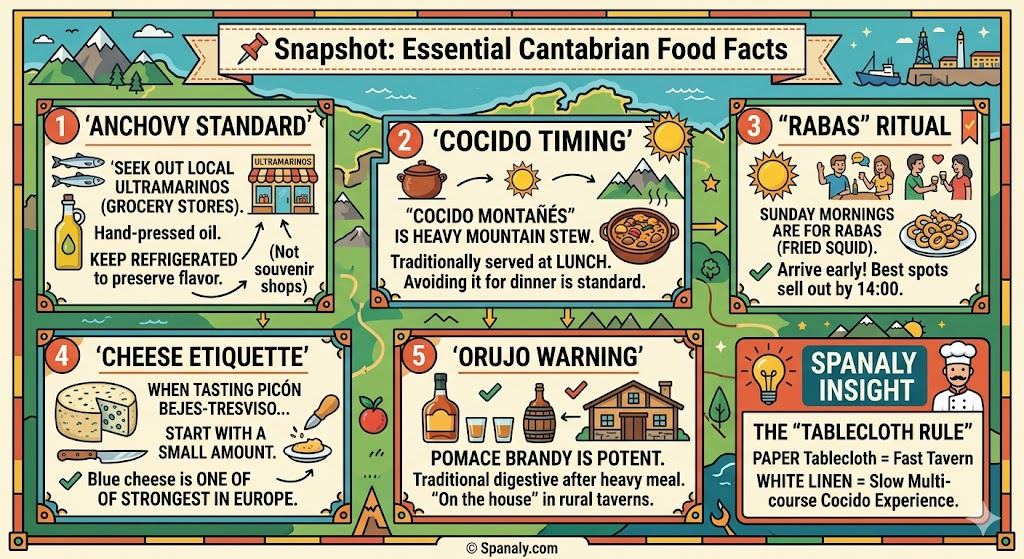
Dining in Cantabria is defined by the contrast between its maritime gastronomy and rugged mountain traditions. Here is the breakdown for your culinary tour:
The Anchovy Standard: Never buy Santoña anchovies from souvenir shops; seek out local Ultramarinos (grocery stores) where they are kept refrigerated to preserve the hand-pressed oil.
Cocido Timing: The Cocido Montañés is a heavy mountain stew traditionally served at lunch; ordering it for dinner is a common mistake that most locals avoid.
The “Rabas” Ritual: Sunday mornings are for Rabas (fried squid); the best spots in Santander sell out by 14:00, so arrive early to join the local social rhythm.
Cheese Etiquette: When tasting Picón Bejes-Tresviso, start with a small amount; this blue cheese is one of the strongest in Europe and can be overwhelming.
Orujo Warning: This local pomace brandy is potent; it is traditionally served after a heavy meal as a digestive, often offered “on the house” in rural mountain taverns.
National Context: To understand how these northern flavors fit into the wider world of Spanish gastronomy, see our Spanish cuisine guide.
Spanaly Insight: Pay attention to the “Tablecloth Rule.” In Cantabrian mountain villages, a paper tablecloth usually signals a fast-paced tavern, while white linen means you should prepare for a slow, multi-course Cocido experience.
⚔️ Cantabrian vs. Basque Cuisine
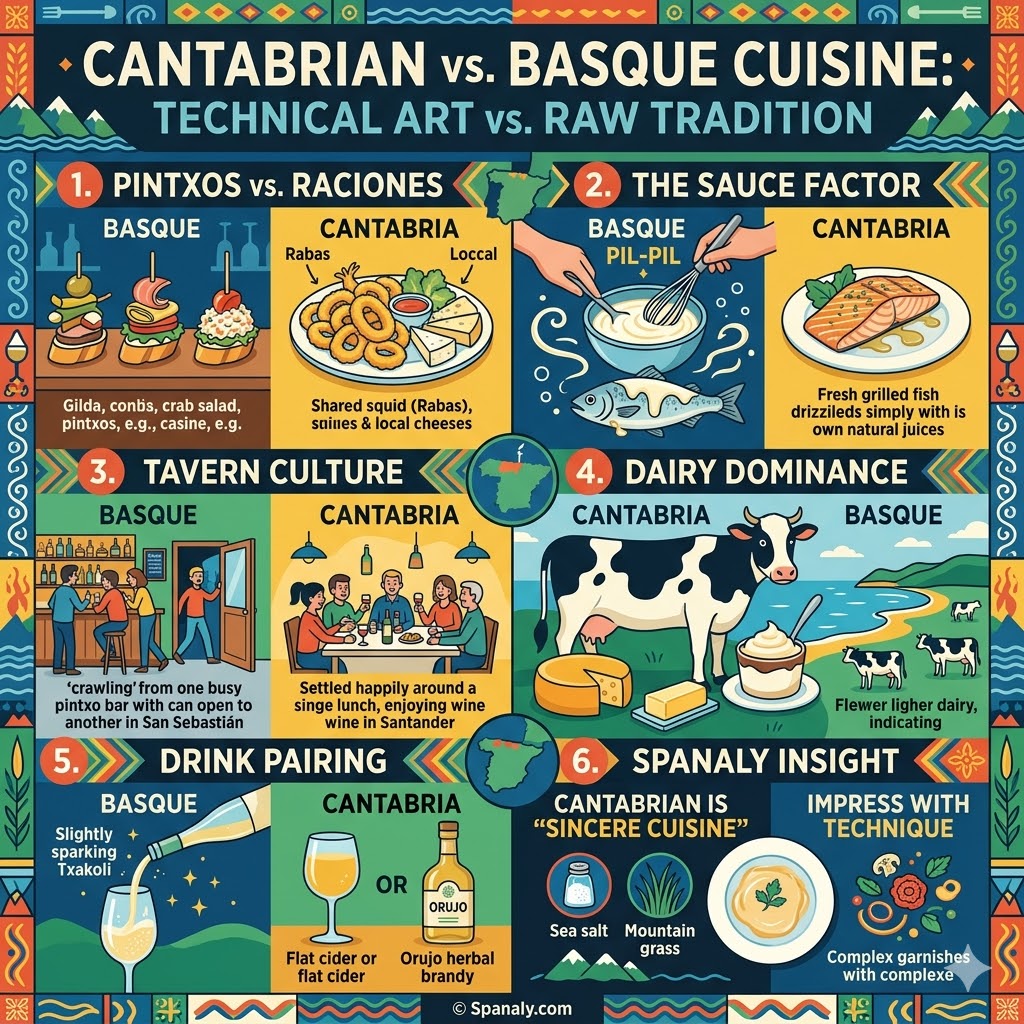
While both regions share the same coastline, their culinary philosophies offer a distinct contrast between “Technical Art” and “Raw Tradition.”
Pintxos vs. Raciones: Basque dining revolves around small, complex Pintxos; Cantabria favors Raciones (large shared plates) of fried squid or local cheeses.
The Sauce Factor: Basque chefs are masters of complex emulsions like Pil-Pil; Cantabrian kitchens rely on the natural juices of the product with minimal intervention.
Tavern Culture: In San Sebastián, you crawl between bars; in Cantabrian towns like Santander, you typically settle in one spot for a long, social lunch.
Dairy Dominance: Cantabria has a much deeper cattle and dairy culture, leading to heavier use of butter and cream in desserts compared to the Basque coast.
Drink Pairing: Swap the slightly sparkling Basque Txakoli for a glass of flat Cantabrian cider or a potent Orujo herbal brandy.
Regional Contrast: Understanding these differences is essential when exploring the Basque food guide to see how modern techniques compare to northern rustic traditions.
⚓ Signature Seafood: Anchovies of Santoña & Bay Catch
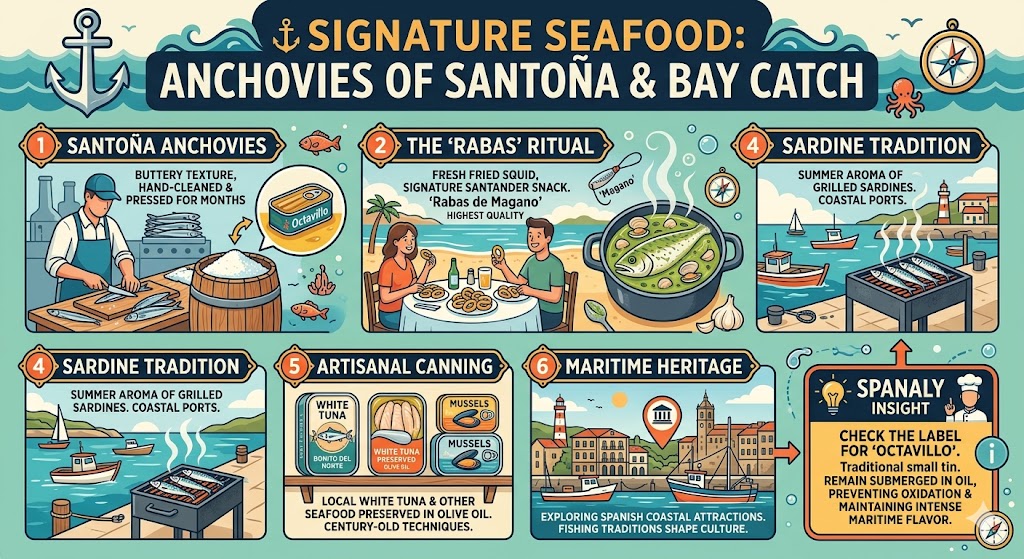
The sound of the morning tide in Santander is often drowned out by the rhythmic tapping of artisanal canning knives. From deep-sea fishing to century-old preservation, these maritime dishes represent the raw soul of the northern coast.
Santoña Anchovies: These are the undisputed stars of Cantabrian preserves; each fillet is hand-cleaned and pressed in salt for months to achieve a buttery texture.
The “Rabas” Ritual: Fresh fried squid is the signature snack of Santander; look for “Rabas de Magano” for the highest quality caught using traditional jigging methods.
Cantabrian Hake: Usually served in “Green Sauce” (en Salsa Verde) with garlic and clams, highlighting the freshness of the morning catch.
Sardine Tradition: During summer, the aroma of grilled sardines fills the coastal air, especially in fishing ports like Castro Urdiales and Laredo.
Artisanal Canning: Beyond anchovies, local white tuna (Bonito del Norte) is preserved in high-quality olive oil using century-old techniques.
Maritime Heritage: Exploring the Spanish attractions along the coast reveals how these fishing traditions have shaped the architecture and culture of northern ports.
Spanaly Insight: When buying anchovies, check the label for “Octavillo.” This traditional small tin size ensures the fillets remain submerged in oil, preventing oxidation and maintaining the intense maritime flavor.
🍲 Cocido Montañés: The Hearty Mountain Bean Stew
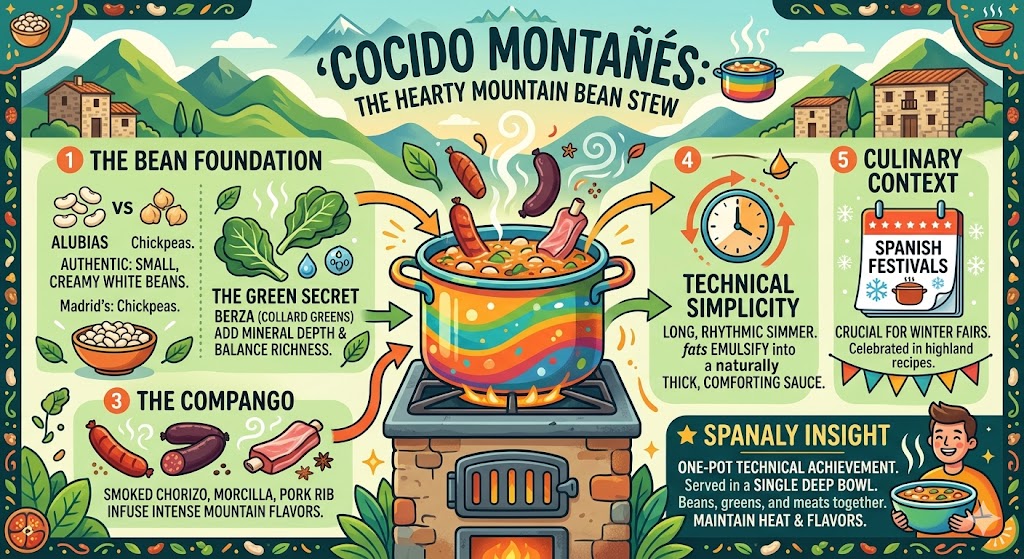
Deep in the emerald highlands, the diet shifts from maritime lightness to robust, earth-driven recipes that have sustained rural families for centuries. This mountain stew reflects the practical cooking traditions of rural Cantabria., prioritizing warmth and mineral depth over complex plating.
The Bean Foundation: Authentic Cocido Montañés relies on small, creamy white beans (Alubias) rather than the chickpeas used in central Spain.
The Green Secret: Local collard greens (Berza) provide a distinct mineral layer that perfectly balances the fatty richness of the meats.
The Compango: Smoked chorizo, morcilla, and pork rib slow-simmer together, infusing the broth with intense, smoky mountain flavors.
Simplicity: The stew depends on a long, rhythmic simmer until the fats emulsify into a naturally thick, comforting sauce.
Culinary Context: Many winter fairs celebrate this specific dish, so check the Spanish festivals calendar to align your visit with these local feasts.
Spanaly Insight: Forget the multi-course soup tradition; in Cantabrian peaks, the beans, greens, and meats are served in one deep bowl to preserve heat.
🥩 Cantabrian Beef: High-Altitude Grass-Fed Tradition
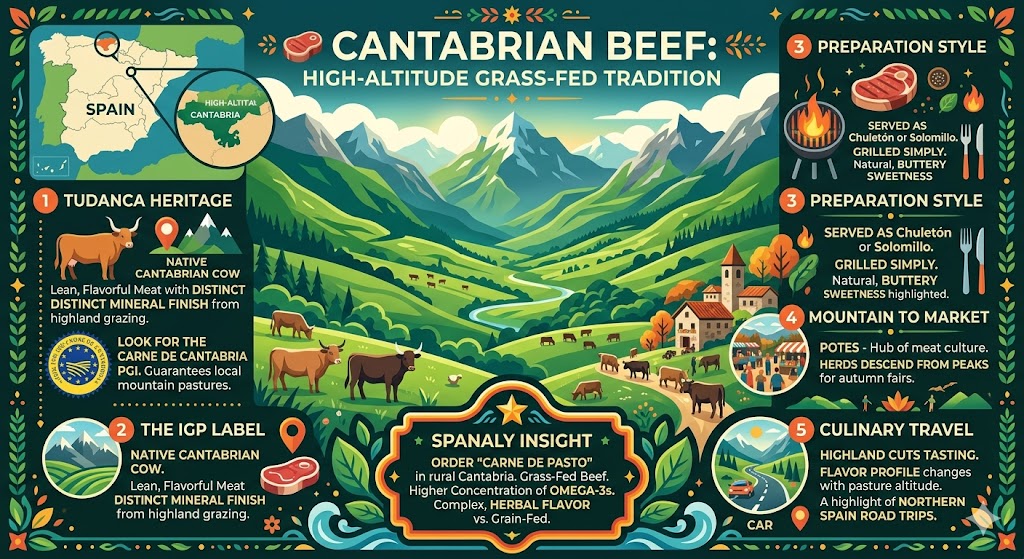
The emerald valleys of Pas and Liébana serve as the foundation for a unique “Northern Meat” identity. The humid Atlantic climate and steep mountain grazing give Cantabrian beef its clean, herbal flavor.
Tudanca Heritage: Seek out the native Tudanca breed on local menus; it is prized for its lean, flavorful meat with a distinct mineral finish from highland pastures.
The IGP Label: For guaranteed quality, ensure your steak carries the Carne de Cantabria PGI tag, which certifies the animal was raised in traditional local pastures.
Minimalist Preparation: Local chefs avoid heavy charring, preferring a simple grill (Chuletón or Solomillo) to highlight the meat’s natural, buttery sweetness.
Regional Context: Tasting these highland cuts is essential when exploring the best places to visit in Northern Spain, where the flavor profile changes directly with the altitude of the pastures.
Spanaly Insight: When dining in rural taverns, specifically ask for “Carne de Pasto” (grass-fed beef) to experience a more complex, herbal flavor compared to standard grain-fed options.
🧀 Artisan Cheeses: Quesucos de Liébana & Blue Picón
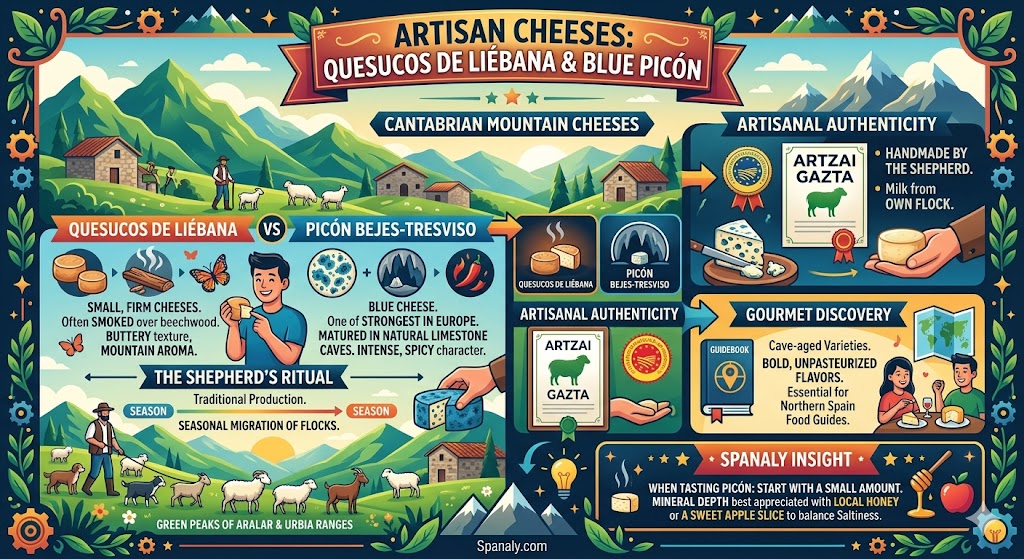
Imagine the smell of cold limestone and damp earth as you enter a natural aging cave deep in the Picos de Europa. This high-altitude “laboratory” is where ancient techniques transform mountain milk into some of Europe’s most complex dairy masterpieces.
Picón Bejes-Tresviso: This blue cheese matures in natural caves to develop its intense, spicy character and mineral depth.
Quesucos de Liébana: These small, firm cheeses are often smoked over beechwood, providing a buttery texture and a rustic mountain aroma.
The Shepherd’s Ritual: Production follows the seasonal movement of flocks through the Aralar and Urbia green ranges.
Artisanal Authenticity: Look for the “Artzai Gazta” label to ensure the cheese was handmade by the shepherd using their own milk.
Gourmet Discovery: Sampling these cave-aged varieties is essential for anyone following a Northern Spain food guide.
Spanaly Insight: Start with a small amount of Picón; pair it with local honey or apple slices to balance its intense, spicy finish.
🍰 Traditional Desserts: Sobao Pasiego & Quesada
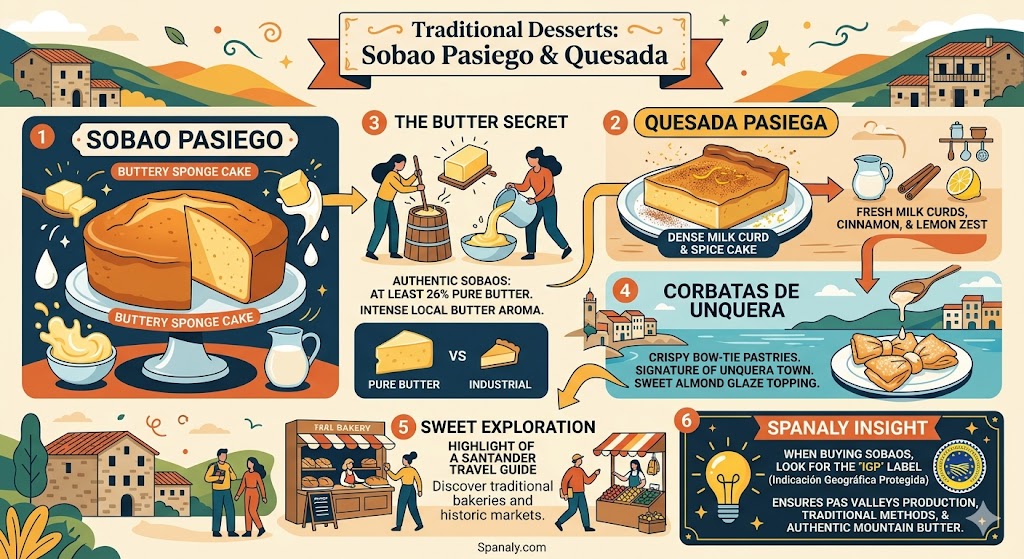
The sweet aroma of high-quality mountain butter often hits you before you even enter a traditional village bakery. These desserts represent a transition from rustic farmhouse staples to refined masterpieces of the Pas Valleys.
Sobao Pasiego: This buttery sponge cake is a protected treasure of the Pas Valleys, defined by its intense aroma of high-quality local butter.
Quesada Pasiega: A dense, pudding-like cake made from fresh milk curds, cinnamon, and lemon zest, representing the soul of rural Cantabrian kitchens.
The Butter Secret: Authentic Sobaos must contain at least 26% pure butter, creating a melt-in-the-mouth texture that industrial versions cannot replicate.
Corbatas de Unquera: These crispy, bow-tie-shaped puff pastries are a signature of the coastal town of Unquera, often topped with a sweet almond glaze.
Sweet Exploration: Discovering these traditional bakeries is a highlight of a Santander travel guide, especially when visiting the historic markets.
Spanaly Insight: When buying Sobaos, look for the IGP (Indicación Geográfica Protegida) label. This ensures the cake was produced in the Pas Valleys using traditional methods and authentic mountain butter.
🍷 Local Drinks: Orujo de Liébana & Northern Sidra
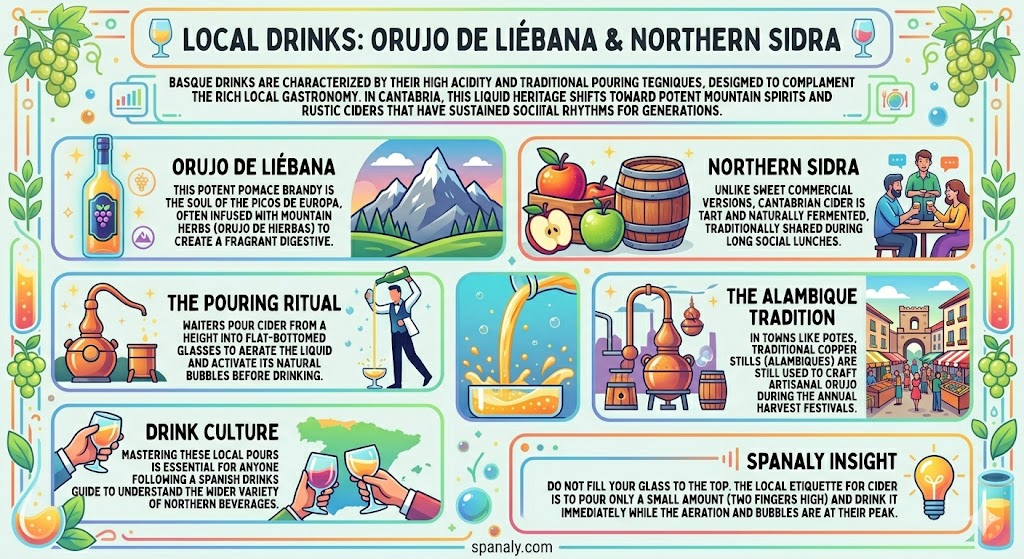
The sharp aroma of cider and mountain herbs fills taverns across Cantabria after long seafood lunches and cold evenings in the Picos. This liquid heritage marks a shift from the light Atlantic wines toward potent mountain spirits and rustic ciders that have sustained social rhythms for generations.
Orujo de Liébana: This potent pomace brandy is the soul of the Picos de Europa, often infused with wild mountain herbs (Orujo de Hierbas) to create a fragrant digestive.
Northern Sidra: Unlike sweet commercial versions, Cantabrian cider is tart and naturally fermented, traditionally shared during long social lunches.
The Pouring Ritual: Waiters pour cider from a height into flat-bottomed glasses to aerate the liquid and activate its natural bubbles before drinking.
The Alambique Tradition: In towns like Potes, traditional copper stills (Alambiques) are still used to craft artisanal Orujo during the annual harvest festivals.
Drink Culture: Mastering these local pours is essential for anyone following a Spanish drinks guide to understand the wide variety of northern beverages.
🍴 Top Places to Eat: Best Restaurants in Cantabria
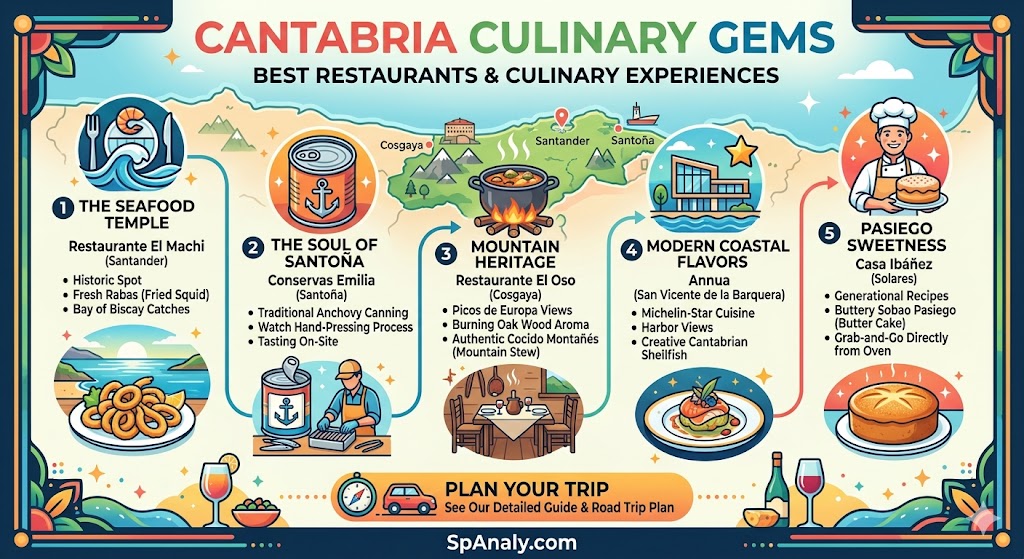
In Cantabria, choosing where to eat is almost a cultural discipline. The region offers a spectrum of dining, from the world’s most awarded kitchens to humble taverns where quality is a religion.
The Seafood Temple: Hear the sound of the tide at Restaurante El Machi in Santander; this historic spot is famous for its fresh Rabas and local Bay of Biscay catches.
The Soul of Santoña: Visit Conservas Emilia to watch the hand-pressing process of the world’s best anchovies before tasting them on-site.
Mountain Heritage: The smell of burning oak wood hits you at Restaurante El Oso in Cosgaya; it is the ultimate destination for an authentic Cocido Montañés in the heart of the Picos de Europa.
Modern Coastal Flavors: Step onto the harbor of San Vicente de la Barquera to dine at Annua, where Michelin-starred techniques highlight the purity of Cantabrian shellfish.
Pasiego Sweetness: Stop at Casa Ibáñez in Solares to grab a buttery Sobao Pasiego directly from the oven, following recipes passed down through generations.
Strategic Planning: To navigate these culinary hotspots effectively, check our detailed Santander travel guide or see how they fit into a larger Northern Spain road trip.
🗓️ The Seasonal Calendar: When to Eat What
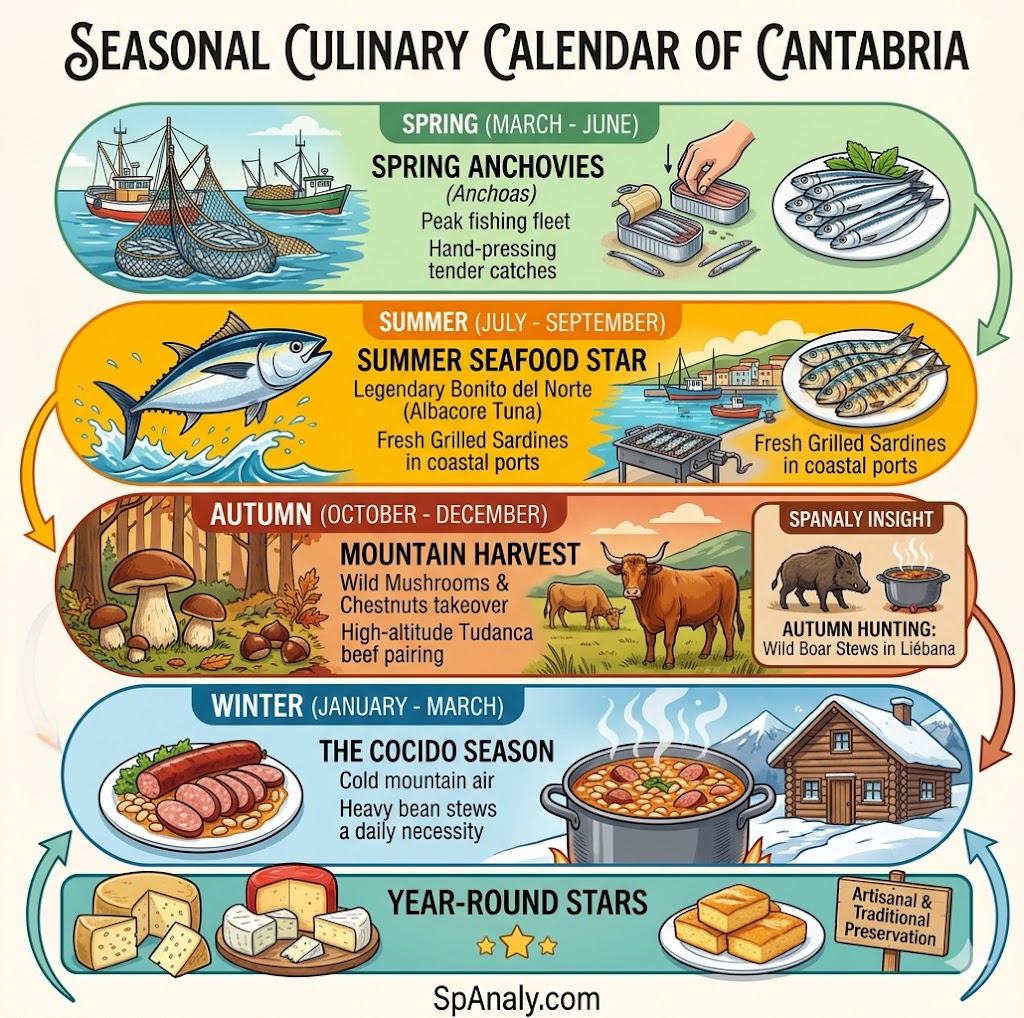
Eating in Cantabria is a journey through the seasons, where the menu changes based on the Bay of Biscay’s rhythm and the mountain harvest.
Spring (March – June): This is the peak for “Spring Anchovies” (Anchoas); the fishing fleet brings in the most tender catches for hand-pressing.
Summer (July – September): Savor the legendary Bonito del Norte (albacore tuna) and fresh sardines grilled in coastal fishing ports.
Autumn (October – December): Wild mushrooms and chestnuts take over mountain menus, often paired with high-altitude Tudanca beef.
Winter (January – March): The “Cocido Season” is at its height, where the cold mountain air makes the heavy bean stews a daily necessity.
Year-Round Star: Artisanal cheeses like Picón Bejes-Tresviso and buttery Sobaos remain staples regardless of the season due to traditional preservation.
Regional Planning: To see how these seasonal peaks align with your travel dates, check the best time to visit Northern Spain for a perfect culinary experience.
Spanaly Insight: Autumn is the best time for “Mountain Hunting Cuisine.” Many rural taverns in the Liébana valley serve wild boar stews that are a rare delicacy outside these colder months.
🚶 24-Hour Santander Food Itinerary
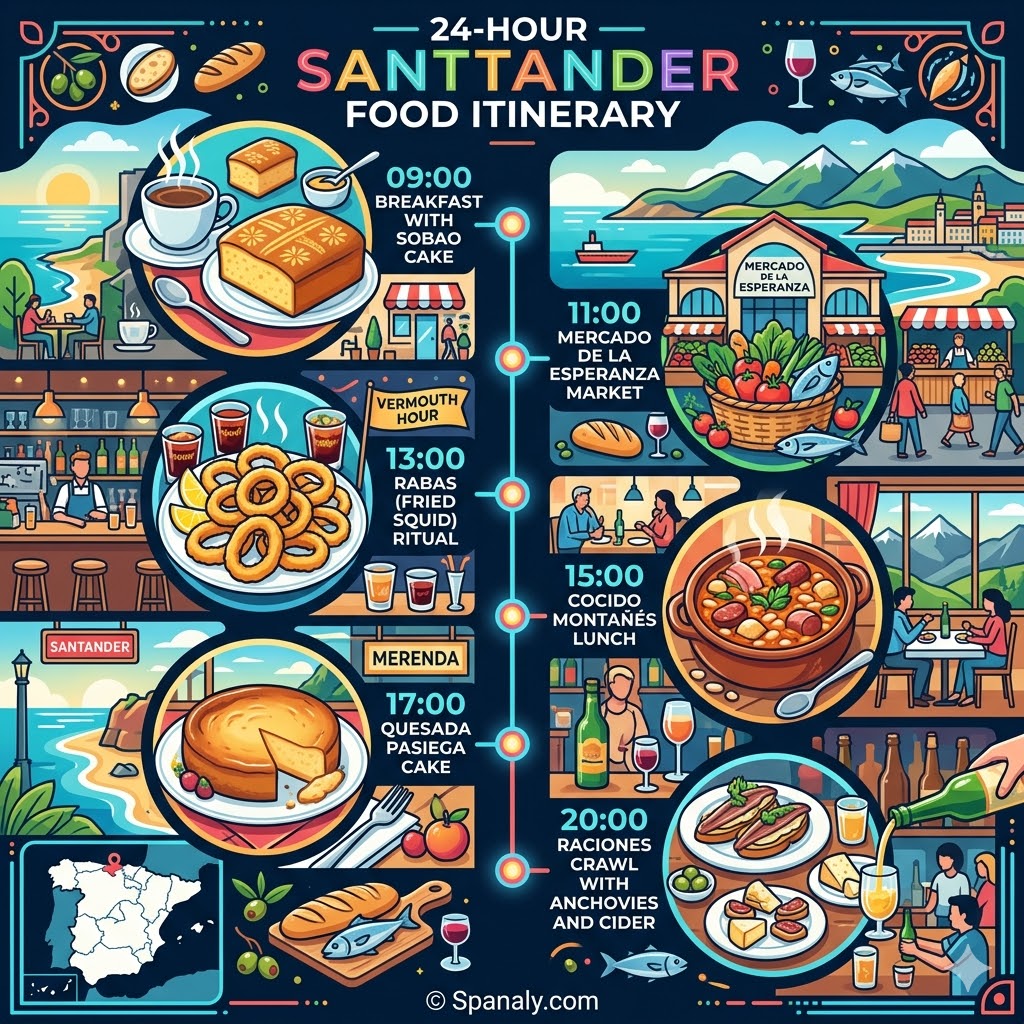
This high-efficiency route covers the absolute essentials of Cantabrian gastronomy in a single day, focusing on the historic city center and the maritime district.
09:00 – Traditional Breakfast (€7): Start at a local cafe near Plaza Porticada with Cafe con Leche and a large, buttery Sobao Pasiego fresh from the Pas Valleys.
11:00 – Market Immersion (€0 – €12): Explore Mercado de la Esperanza to see daily northern coast catches; grab some vacuum-packed Quesucos de Liébana to take home.
13:00 – The “Rabas” Ritual (€10): Visit a traditional tavern in the fishing district (Barrio Pesquero) for a plate of fresh fried squid and a glass of vermouth before the lunch rush.
15:00 – Hearty Mountain Lunch (€35): Enjoy a sit-down meal featuring a full Cocido Montañés at a local institution, followed by a small glass of Orujo to help digestion.
17:00 – Sweet Siesta (€5): Stop by a traditional bakery for a slice of Quesada Pasiega, a dense and creamy curd cake that represents the soul of rural Cantabria.
20:00 – Evening Raciones Crawl (€25): Move through the streets of the city center, sharing plates of Santoña anchovies and Cantabrian beef with a bottle of local cider.
Budgeting Tip: To effectively manage your expenses while exploring these northern flavors, check our guide on Northern Spain travel cost and budget for detailed pricing.
🚫 Common Mistakes to Avoid in Cantabrian Taverns
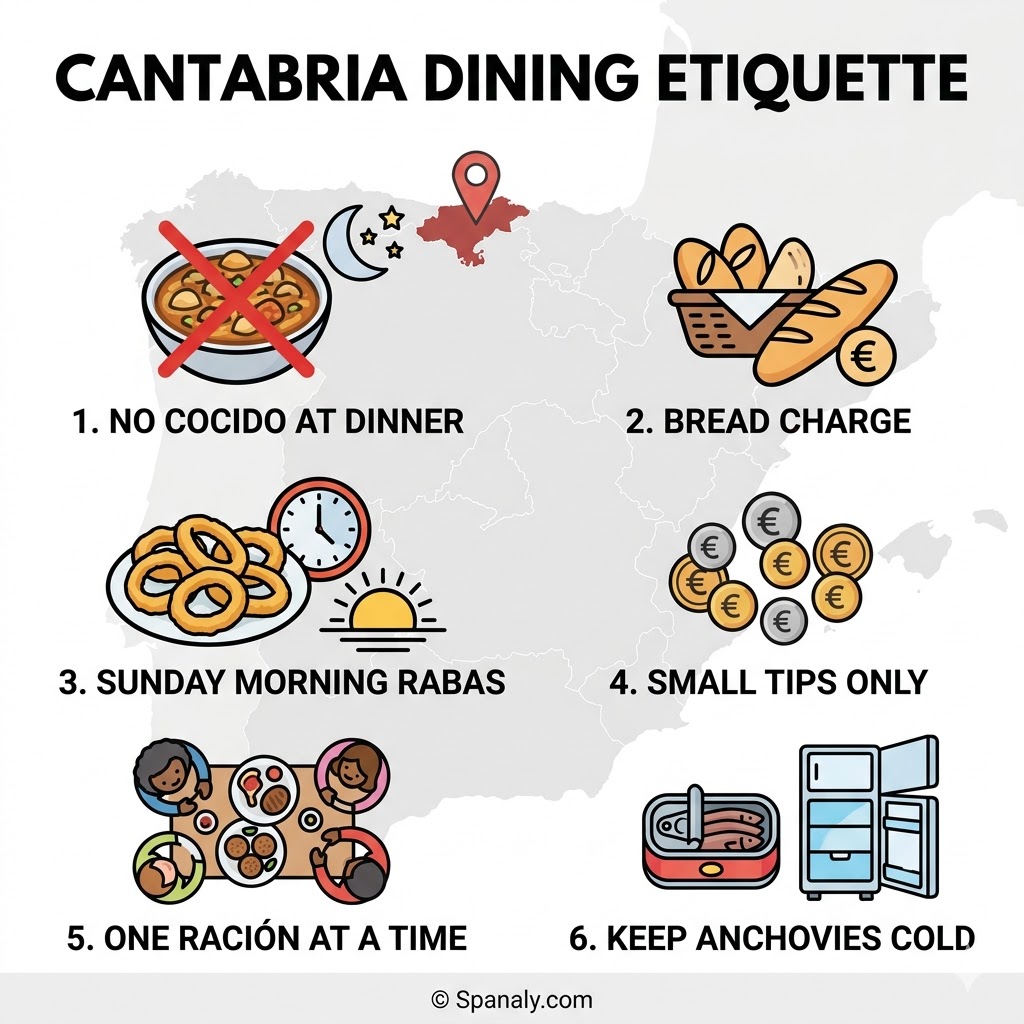
Avoiding these cultural traps will help you dine with the confidence of a Santander local and ensure you experience the authentic social rhythm of the North.
Ordering Cocido for Dinner: Most authentic mountain taverns only serve Cocido Montañés at lunch due to its heavy nature; asking for it at night is a clear sign of a tourist oversight.
The Bread Misconception: Do not assume the bread placed on your table is free; in most traditional Cantabrian restaurants, it is a standard charge called Pan y Servicio.
Missing the “Rabas” Window: Many visitors try to order fried squid late in the evening; however, the best local spots only serve them during the Sunday morning social hour.
Over-Tipping: Large tips are not expected in rural Cantabrian taverns; leaving a few small coins as change is the standard local practice to show appreciation.
Order Pacing: Avoid ordering your entire meal at once in a tavern; it is best to order food like a local in Spain by starting with one Ración and adding more as you go.
Assuming All Anchovies are Fresh: Never buy canned anchovies from non-refrigerated souvenir shelves; high-quality Santoña preserves must be kept cold to maintain their integrity.
Spanaly Insight: If you see a “Menu del Día” with Cocido on a Monday, be cautious. Locals know the best stews are often prepared on weekends or specific feast days when the ingredients are at their freshest from the mountain harvest.
💎 Spanaly Elite Tips: Insider Secrets for Foodies
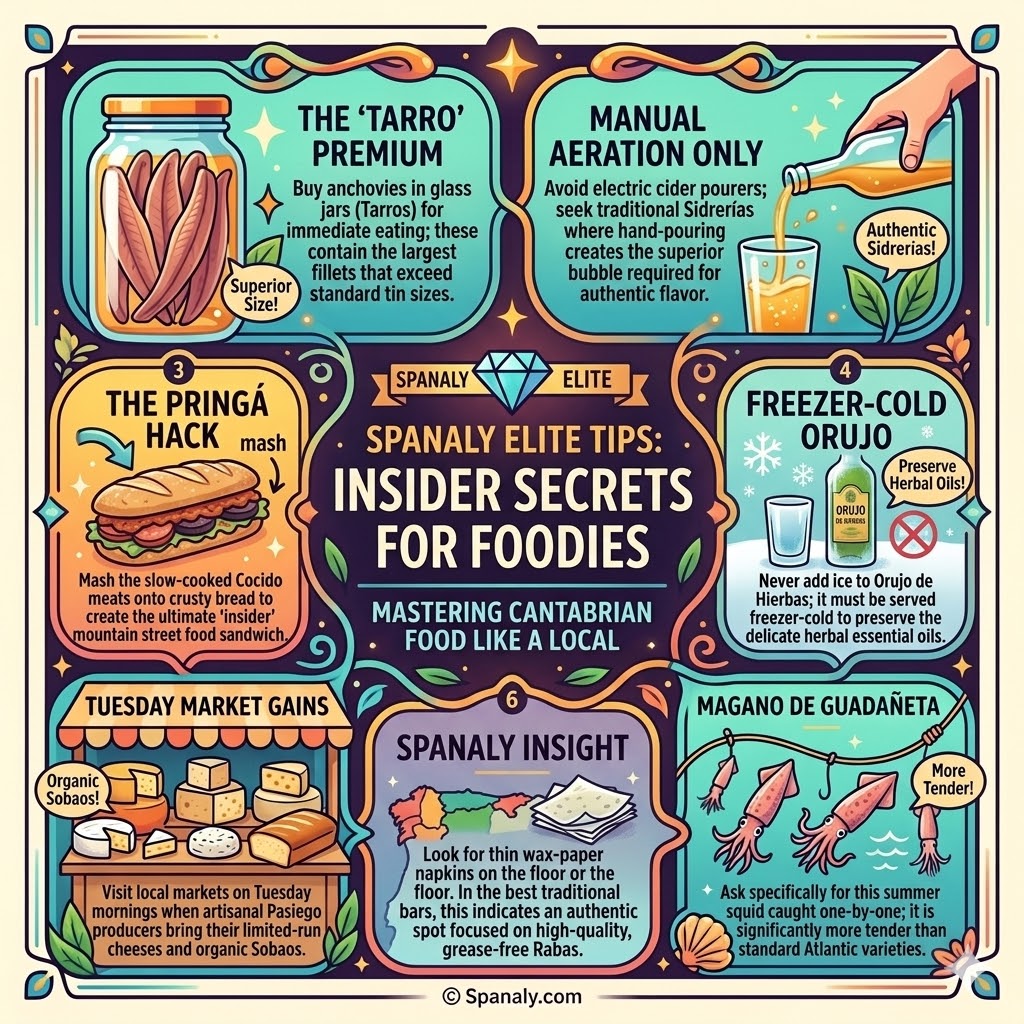
These “hacks” come from local gastronomic circles and social media insiders who navigate the Cantabrian food scene like true professionals.
The “Tarro” Premium: Buy anchovies in glass jars (Tarros) for immediate eating; these contain the largest fillets that exceed standard tin sizes.
Manual Aeration Only: Avoid electric cider pourers; seek traditional Sidrerías where hand-pouring creates the superior bubble required for authentic flavor.
The Pringá Hack: Mash the slow-cooked Cocido meats onto crusty bread to create the ultimate “insider” mountain street food sandwich.
Tuesday Market Gains: Visit local markets on Tuesday mornings when artisanal Pasiego producers bring their limited-run cheeses and organic Sobaos.
Freezer-Cold Orujo: Never add ice to Orujo de Hierbas; it must be served freezer-cold to preserve the delicate herbal essential oils.
Magano de Guadañeta: Ask specifically for this summer squid caught one-by-one; it is significantly more tender than standard Atlantic varieties.
Coastal Context: Understanding these nuances is a highlight of a Northern Spain road trip, where local techniques change from one fishing port to the next.
Spanaly Insight: Watch the napkins. In the best traditional bars, thin wax-paper napkins on the floor indicate an authentic spot focused on high-quality, grease-free Rabas.
🍴 Visitor FAQs – Cantabrian Food Guide
🐟 Can I carry Santoña anchovies in my hand luggage?
Yes, but with caution. Canned anchovies are safe for checked bags. In carry-on, they fall under the 100ml liquid rule because of the oil. To avoid issues at security, we recommend purchasing vacuum-sealed packs at the airport or checking your tins to maintain the cold chain and prevent leaks.
🥦 Is the traditional mountain stew suitable for vegetarians?
Authentic Cocido Montañés is slow-cooked with pork products and fats, making it unsuitable for vegetarians. However, many coastal restaurants now offer "Rabas de Magano" (fried squid) or high-quality artisanal cheeses as meat-free alternatives. Always ask for platos sin carne in rural taverns to find local vegetable-based specials.
🕒 Do I need a reservation for Sunday "Rabas"?
For a seated experience in Santander’s fishing district, booking 48 hours in advance is essential. While most locals stand at the bar for the Sunday social hour (13:00-15:00), the most popular seafood spots fill up quickly. Arrive early to secure a spot and enjoy the freshest catch of the day.
🍰 How long do Sobaos and Quesada stay fresh for the trip home?
Sobaos Pasiegos are very durable and stay fresh for up to three weeks in their original packaging. Quesada is more delicate and should be bought on your last day. Both travel well in cabin luggage, but you should refrigerate them immediately upon arrival to preserve the integrity of the high-quality mountain butter.
🍶 How do I identify a truly artisanal "Orujo" spirit?
Check the bottle for the "Orujo de Liébana" official seal. Authentic herbal spirits have a pale, olive-gold color and a clear consistency. Avoid bottles with neon-bright colors, as they often contain artificial dyes. A true artisanal Orujo will have a balanced, complex aroma of mountain herbs without being overly syrupy.
Cantabrian Food Guide by Spanaly.com
As the plates are cleared and the last drop of Orujo is finished, you’ll realize that Cantabria offers a rare, “sincere” culinary identity. It is a place where the quality of the product is the only technique that matters.
Respect the Season: Align your visit with the fishing or harvest cycles for the most flavor profiles.
Mountain and Sea: Balance your itinerary between the salty alleys of Santoña and the smoky taverns of Potes.
Artisanal Trust: Seek out the IGP and official seals to ensure you are supporting traditional, high-altitude producers.
The Northern Path: After mastering these coastal flavors, continue your culinary exploration by diving into the Galician cuisine guide to discover the secrets of the Atlantic’s western edge.
In Cantabria, meals are never rushed; because food here is not entertainment, but identity.