Castilla y León Food Guide: What to Eat
Follow the provinces, not a generic list of Spanish dishes.
Castilla y León is a map of cuisines
The most useful way to eat in Castilla y León is to let the province choose the dish.
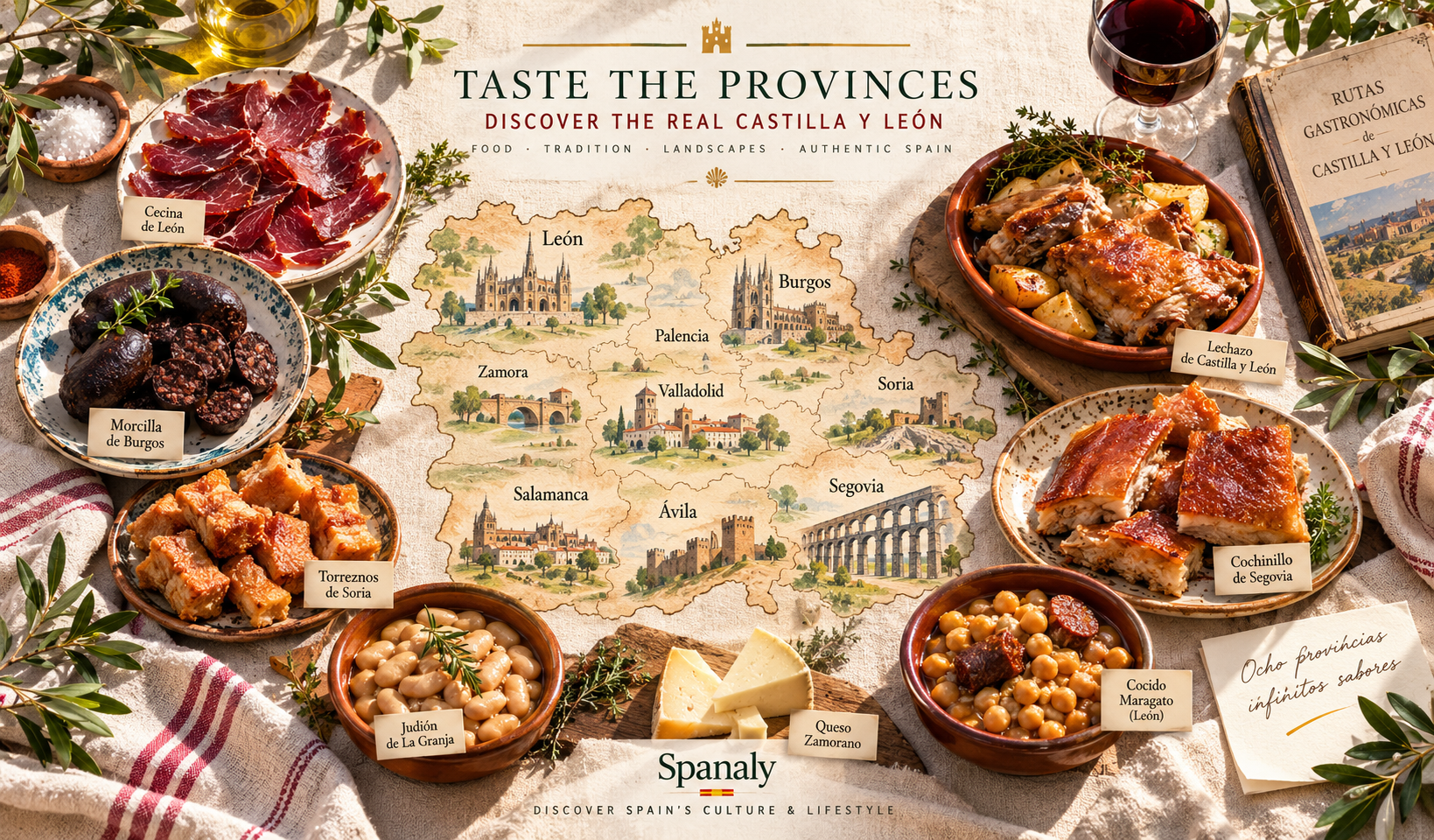
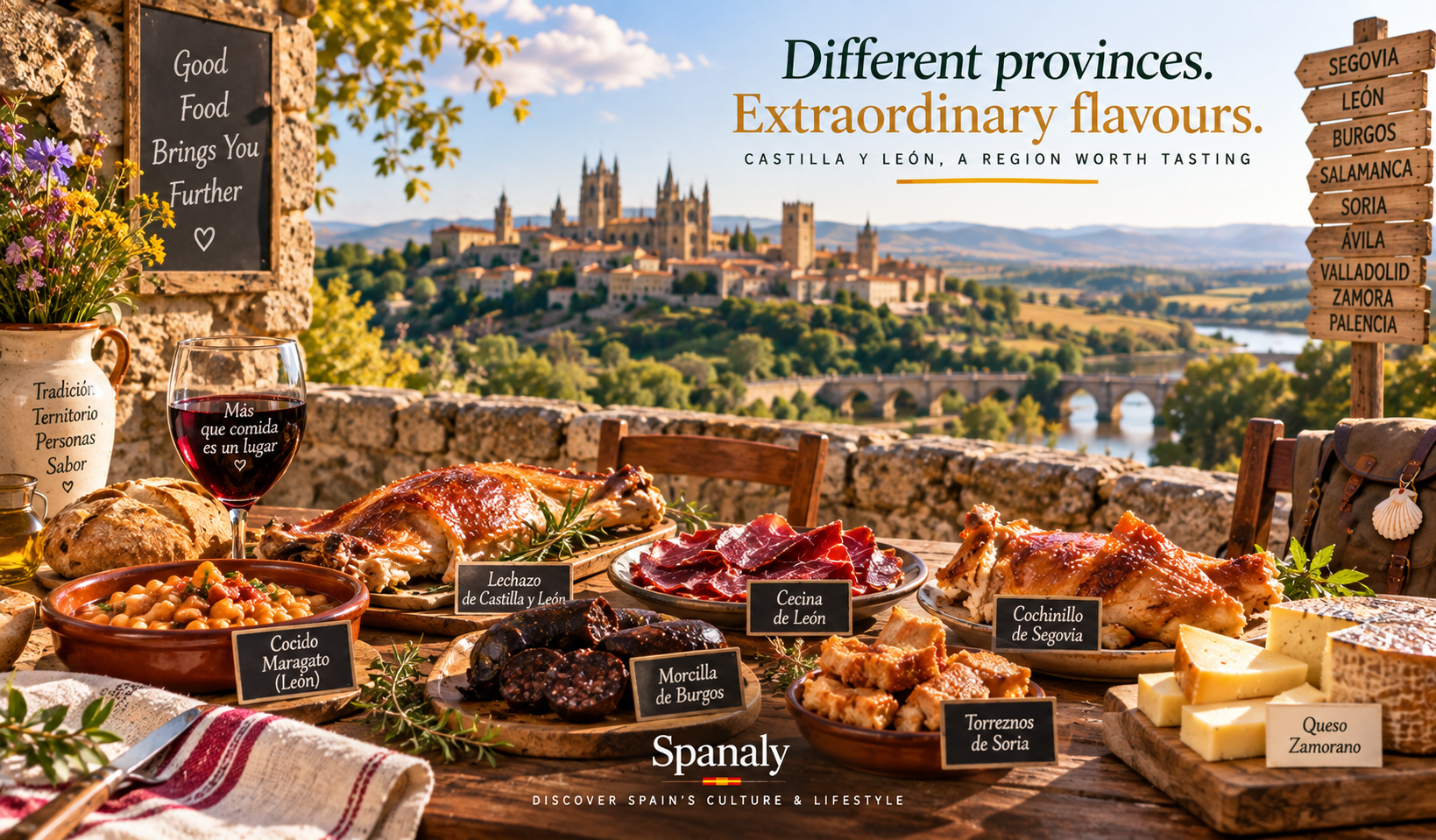
Across nine provinces, the food changes with the landscape. Segovia has its roast traditions, León its cured beef and mountain-influenced cooking, Burgos its morcilla, Salamanca its Guijuelo products, while Soria, Zamora, Ávila and Valladolid each bring their own ingredients and recipes.
There is a common thread: inland agriculture, livestock, bread, legumes, curing, roasting and wine. But that does not make the region one giant menu.
Three rules that prevent a heavy meal
Lechazo ≠ cochinillo
Lechazo is young lamb. Cochinillo is suckling pig, strongly associated with Segovia. They are two different roast traditions.
Make lunch the roast meal
Traditional asadores are built around substantial oven dishes. Give the meal time instead of trying to fit a large roast into a quick evening stop.
One heavy plate is enough
Torreznos + morcilla + cecina before lechazo is a lot. Pick one substantial main and use a small sharing plate if you want another local taste.
Don’t chase the “best roast” in the region.
The province, town or food tradition should tell you what to order. The same logic makes a food trip here more interesting than simply collecting famous Spanish dishes.
What to eat in Castilla y León
Lechazo Asado
Young milk-fed lamb roasted in a traditional oven is one of Castilla y León’s defining dishes. The preparation is deliberately restrained: the quality of the lamb and the roasting do the work.
Cochinillo Asado · Segovia
Suckling pig is a different story from lechazo. Segovia is the reference point, with crisp skin and very tender meat. The protected IGP Cochinillo de Segovia was registered at EU level in 2024.
Cecina de León
Thinly sliced cured beef is one of León’s clearest food signatures. The protected IGP Cecina de León belongs on the table as a starter or sharing plate rather than as another heavy main.
Morcilla de Burgos
Burgos-style morcilla is traditionally made with rice and onion and seasoned before being cooked or grilled. Its protected IGP status reflects its defined regional identity.
Cocido Maragato · León
This is not simply another chickpea stew. In Maragatería, the meal is traditionally served in a reversed order: the meats first, then the chickpeas, then the soup.
Hornazo · Salamanca
A filled baked bread associated with Salamanca, hornazo makes a useful contrast to the region’s spoon dishes and roasts. It works particularly well for a casual local-food stop or bakery visit.
Explore Salamanca →Torreznos de Soria
Thick strips of pork belly with a crisp exterior are strongly associated with Soria. The product now has IGP Torrezno de Soria status, registered in 2024.
Botillo del Bierzo
A distinctive cured pork product from Bierzo in León, traditionally cooked before serving. It belongs to a colder, mountain-influenced food culture where preservation remains important.
Judión de La Granja
Large white beans associated with La Granja and the Segovia area. This is proper spoon food: comforting, substantial and a natural alternative when you want something other than roast meat.
Sopas de Ajo
Garlic soup brings bread, garlic, paprika and broth together in a simple dish that makes particular sense in the colder months. Valladolid is especially associated with this traditional preparation.
A province-by-province eating map
Use this as a quick decision tool when planning a city break or road trip.
Segovia
Cochinillo is the headline dish, with Judión de La Granja offering a substantial bean-based alternative.
Segovia travel guide →León
Cecina, Cocido Maragato and Botillo give the province one of the region’s strongest food identities.
León travel guide →Burgos
Morcilla de Burgos leads the local pantry, alongside cheeses and traditional roast cooking.
Burgos travel guide →Salamanca
Guijuelo, hornazo and pork-based traditions define a major part of the province’s food culture.
Salamanca travel guide →Soria
Torreznos are the obvious food reference, joined by mushrooms and other mountain-influenced products.
Ávila
Judías de El Barco de Ávila, local beef and traditional escabeches show a side of the province beyond its roast-meat reputation.
Ávila travel guide →Zamora
Queso Zamorano, Garbanzo de Fuentesaúco and regional wines make the province worth exploring slowly.
Valladolid
Roasts, garlic soup, stews and the wines around Rueda create a strong food-and-wine route.
Valladolid travel guide →Beyond the famous plates
Legumes
Protected products include Judías de El Barco de Ávila, Lenteja de La Armuña, Garbanzo de Fuentesaúco and Lenteja de Tierra de Campos.
Cheese
Queso Zamorano and Queso de Valdeón are among the region’s protected cheeses. They are useful additions when a meal needs a smaller final course rather than another main.
Spanish Cheese Guide →Cured products
Cecina, morcilla, botillo and other cured foods reflect an inland tradition built around preservation and winter cooking.
Bakery
Mantecadas de Astorga carry IGP status and are a good example of how the region’s food identity extends beyond meat and stews.
The wine map belongs on the food map
Ribera del Duero, Rueda, Toro and Bierzo are among the names travelers will encounter repeatedly. The choice becomes more useful when it follows the local food.
Rueda naturally appears beside lighter regional dishes, while the red-wine traditions of Ribera del Duero and Toro make sense with roasted meats and cured products. Bierzo adds another dimension through the food culture of León’s northwest.
Explore Spanaly’s Spanish Wine Regions Guide →A better way to build the meal
Choose the main first
If you are ordering lechazo, cochinillo or cocido, decide that before filling the table with starters.
Add one local taste
Cecina, morcilla, torreznos or cheese can be the single sharing plate that gives the meal another regional dimension.
Give the roast time
Traditional oven meals are not designed as fast food. Lunch is the natural moment for a long asador meal.
Read the label
DOP and IGP names can tell you more about origin than a menu simply saying “local specialty”.
Respect the weather
Cocido, garlic soup and bean dishes make particular sense in cold weather. A heavy menu can feel very different in summer.
Save room for the bakery
A local pastry or protected bakery product can finish the meal without adding another substantial savory course.