🏰 Avila
Stepping into Avila feels like traveling back in time. Famous for its intact medieval walls, this city offers a unique glimpse into Spain’s storied past. If you are looking for the perfect Avila travel guide to plan your visit, you have found the right place.
Timeless Architecture: The city’s granite walls are the most complete in Spain, encircling a historic center rich with cathedrals and palaces.
Expert Planning: We filter the noise to provide actionable itineraries, ensuring you see the icons and the local secrets.
Regional Context: To see how this medieval treasure fits into the broader national landscape, check our Cities in Spain guide for complete regional inspiration.
Your Journey: Whether you seek deep history or quiet, cobblestone charm, we provide the tools to navigate Avila at your own pace.
Spanaly Insight: Many visitors rush through the city in a few hours. Stay overnight to experience the silence of the streets once the tour buses depart.
📍 Avila at a Glance
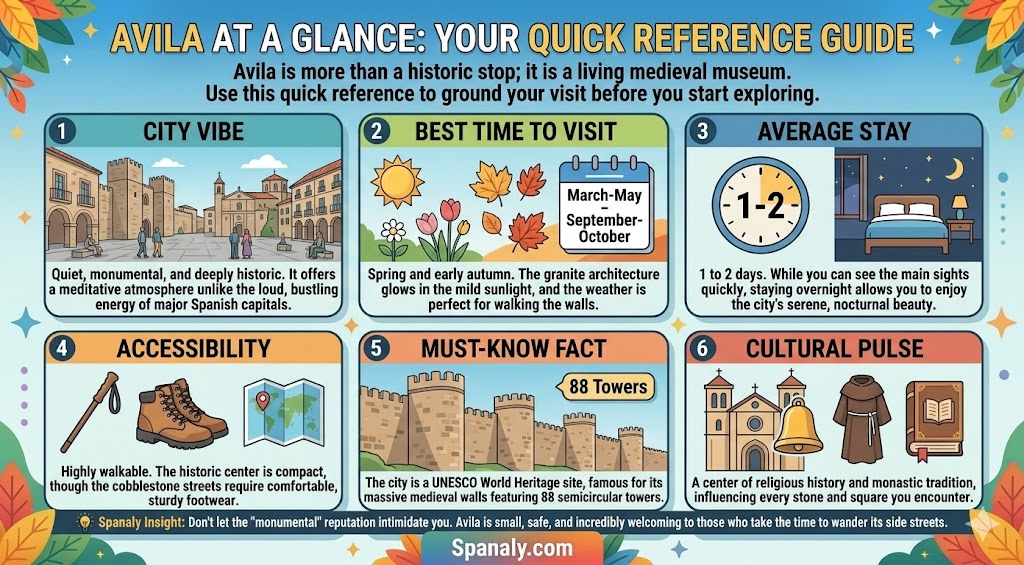
Avila is more than a historic stop; it is a living medieval museum. Use this quick reference to ground your visit before you start exploring.
City Vibe: Quiet, monumental, and deeply historic. It offers a meditative atmosphere unlike the loud, bustling energy of major Spanish capitals.
Best Time to Visit: Spring and early autumn. The granite architecture glows in the mild sunlight, and the weather is perfect for walking the walls.
Average Stay: 1 to 2 days. While you can see the main sights quickly, staying overnight allows you to enjoy the city’s serene, nocturnal beauty.
Accessibility: Highly walkable. The historic center is compact, though the cobblestone streets require comfortable, sturdy footwear.
Must-Know Fact: The city is a UNESCO World Heritage site, famous for its massive medieval walls featuring 88 semicircular towers.
Cultural Pulse: A center of religious history and monastic tradition, influencing every stone and square you encounter.
Spanaly Insight: Don’t let the “monumental” reputation intimidate you. Avila is small, safe, and incredibly welcoming to those who take the time to wander its side streets.
⚖️ Avila vs. Other Spanish Cities: Why It’s Unique
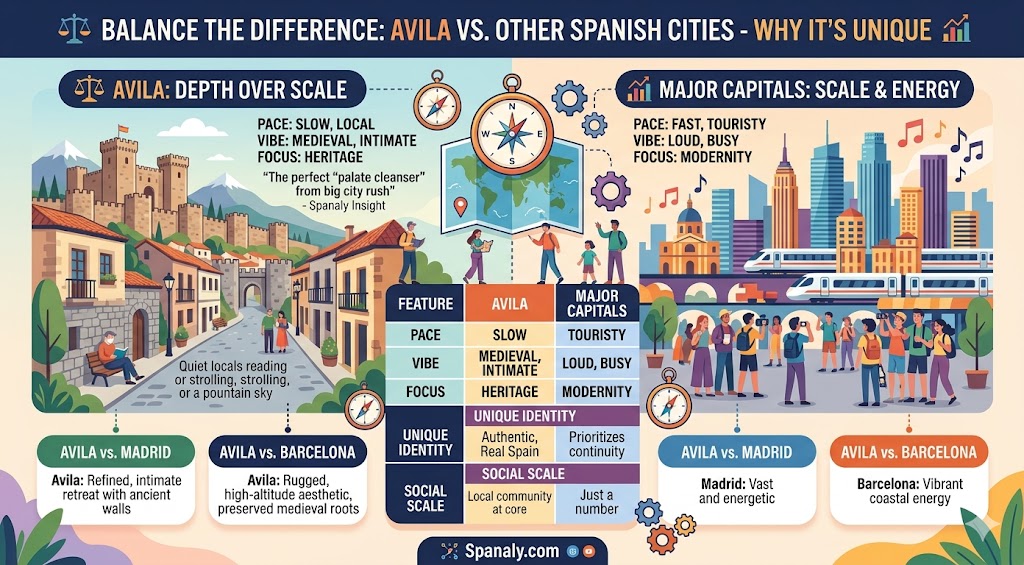
Avila offers depth over scale. While major capitals rush, this city favors history and quiet contemplation. Our Why Visit Spain guide helps you weigh these regional differences.
| Feature | Avila | Major Capitals |
|---|---|---|
| Pace | Slow, Local | Fast, Touristy |
| Vibe | Medieval, Intimate | Loud, Busy |
| Focus | Heritage | Modernity |
Avila vs. Madrid: Madrid is vast and energetic. Conversely, Avila is a refined, intimate retreat protected by ancient stone walls.
Avila vs. Barcelona: Barcelona offers vibrant coastal energy. Avila provides a rugged, high-altitude aesthetic with deep, preserved medieval roots.
Unique Identity: Unlike Mediterranean hubs, the city prioritizes cultural continuity. You experience a more authentic, real Spain here.
Social Scale: In big cities, you are just a number. Here, the local community remains the core of daily life.
Spanaly Insight: If overwhelmed by the intensity of major capitals, Avila acts as a perfect “palate cleanser.” It lets you enjoy culture without the rush.
🏰 5 Top Landmarks to See in Avila
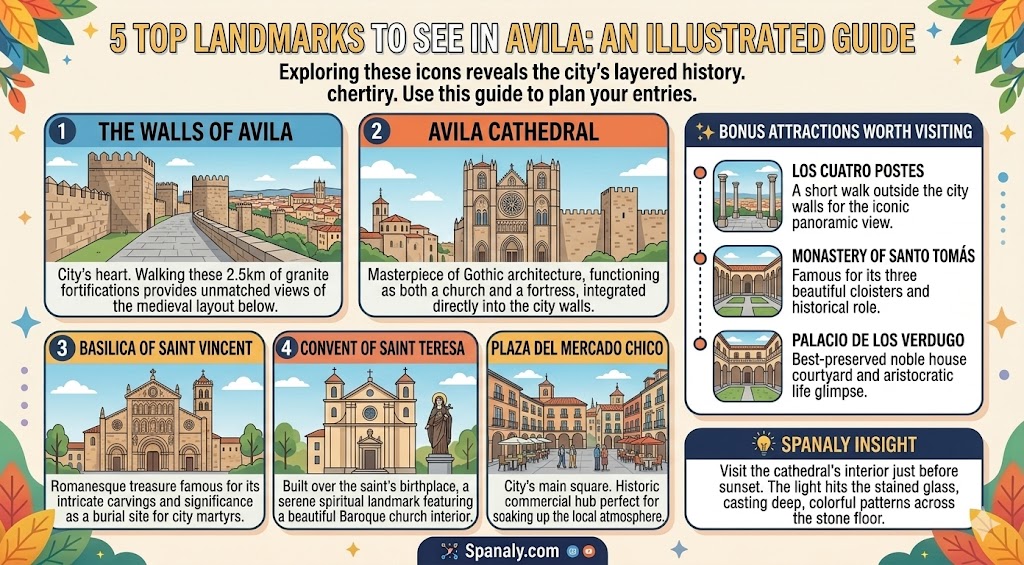
Exploring these icons reveals the city’s layered history. Before your tour, check our Spain Attraction Tickets Guide to secure your entries and skip the queues efficiently.
The Walls of Avila: This is the city’s heart. Walking these 2.5km of granite fortifications provides unmatched views of the medieval layout below.
Avila Cathedral: A masterpiece of Gothic architecture, it functions as both a church and a fortress, integrated directly into the city walls.
Basilica of Saint Vincent: This Romanesque treasure is famous for its intricate carvings and its significance as a burial site for city martyrs.
Convent of Saint Teresa: Built over the saint’s birthplace, this site is a serene spiritual landmark featuring a beautiful Baroque church interior.
Plaza del Mercado Chico: The city’s main square. It serves as the historic commercial hub and is perfect for soaking up the local atmosphere.
✨ Bonus Attractions Worth Visiting
Los Cuatro Postes: A short walk outside the city walls. It offers the most iconic panoramic view of the entire walled city.
Monastery of Santo Tomás: Famous for its three beautiful cloisters and its role in the history of the Spanish Inquisition and Catholic Monarchs.
Palacio de los Verdugo: One of the best-preserved noble houses. Its courtyard and architecture offer a rare glimpse into aristocratic life in old Avila.
🎨 Hidden Gems & Local Secrets

True discovery in Avila happens away from the main plazas. These spots reveal the city’s quiet, authentic character to those willing to look beyond the guidebooks.
El Jardín de Zuloaga: Tucked behind the Cathedral, this intimate garden is often overlooked. It provides a peaceful, shaded escape with unique stone sculptures and a perfect view of the apse.
The “Postigo” Alleyways: Instead of the main gates, explore the smaller postern gates (postigos) along the northern wall. They lead to narrow, winding alleys where time seems to have stopped completely.
Convent of La Encarnación: While famous, its quiet courtyards are often empty. It is a profound, meditative space where Saint Teresa spent much of her life.
Torreón de los Guzmanes: This fortified tower often hosts local cultural exhibits. It offers a rare chance to see a private noble tower from the inside without the crowds.
Artisan Pottery Workshops: Seek out the small family-run clay workshops near the city outskirts. They maintain traditional techniques that are slowly vanishing in larger hubs.
Spanaly Insight: Look for the small, non-descript stone carvings on the door lintels of private homes in the Jewish Quarter. They are hidden symbols of the city’s diverse medieval heritage that most tourists walk past daily.
For more inspiration on finding the road less traveled, explore our Spain Travel Itineraries Plans to uncover similar quiet corners across the country.
🏨 Where to Stay in Avila
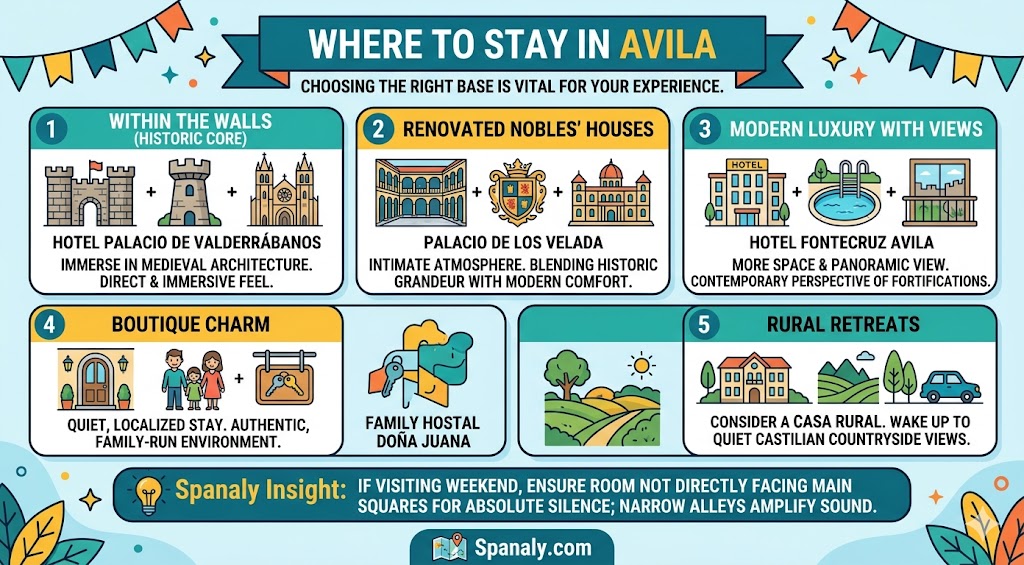
Choosing the right base is vital for your experience. Our Accommodation in Spain guide offers essential tips for booking the perfect stay.
Within the Walls (Historic Core): Staying here is an experience in itself. Hotel Palacio de Valderrábanos sits directly across from the Cathedral, offering a direct, immersive feel of medieval architecture.
Renovated Nobles’ Houses: Look for converted palaces for an intimate atmosphere. Palacio de los Velada features a stunning 16th-century courtyard and sits right in the city center, blending historic grandeur with modern comfort.
Modern Luxury with Views: For those preferring more space and panoramic views, Hotel Fontecruz Avila is located just outside the walls, providing a contemporary perspective of the fortifications.
Boutique Charm: For a quiet, localized stay, look for small guesthouses like Hostal Doña Juana. These offer excellent service and an authentic, family-run environment away from the commercial noise.
Rural Retreats: If you have a car, consider staying at a nearby manor house or casa rural on the outskirts. It allows you to wake up to the quiet views of the Castilian countryside.
🍽️ Gastronomy: The Flavors of Avila
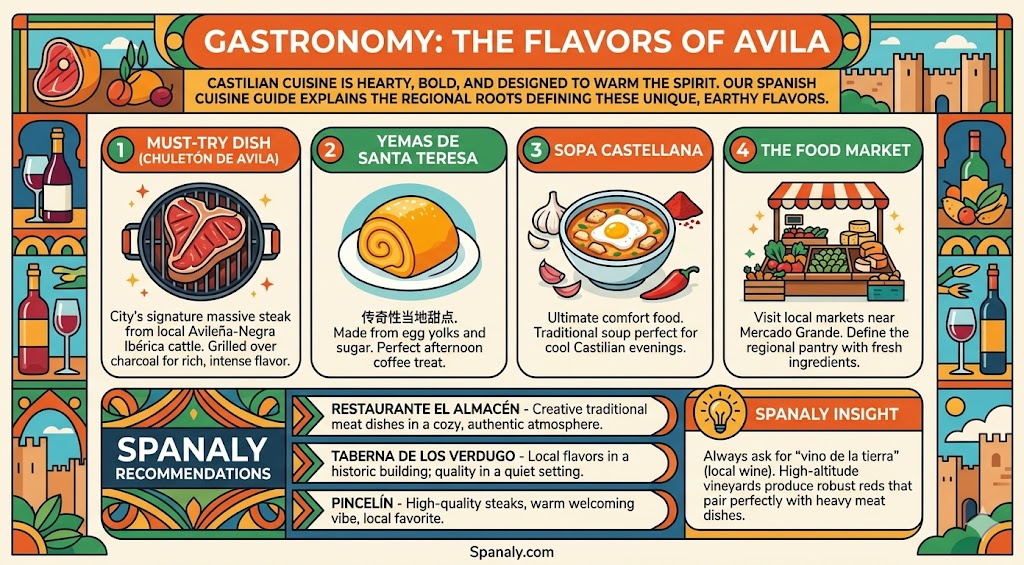
Castilian cuisine is hearty, bold, and designed to warm the spirit. Our Spanish Cuisine guide explains the regional roots defining these unique, earthy flavors.
Must-Try Dish (Chuletón de Avila): This is the city’s signature. A massive, premium-grade T-bone steak from local Avileña-Negra Ibérica cattle, grilled over charcoal to retain its rich, intense flavor.
Yemas de Santa Teresa: A legendary local sweet. These small, golden-yellow pastries made from egg yolks and sugar are the perfect treat to pair with your afternoon coffee.
Sopa Castellana: A traditional bread soup made with garlic, paprika, and a poached egg. It is the ultimate comfort food, especially during the cool Castilian evenings.
The Food Market: Visit the local markets near Mercado Grande. You will find the freshest seasonal produce, including local legumes and artisanal cheeses that define the regional pantry.
Spanaly Recommendations:
Restaurante El Almacén: Known for its creative take on traditional meat dishes while maintaining a cozy, authentic atmosphere.
Taberna de los Verdugo: A fantastic spot to experience local flavors in a historic building; perfect for those who want quality in a quiet setting.
Pincelín: A reliable choice for high-quality steaks and a warm, welcoming vibe that feels like a local favorite.
Spanaly Insight: Always ask for the “vino de la tierra” (local wine). The high-altitude vineyards of the province produce robust reds that pair perfectly with the heavy meat dishes of the region.
🧳 Essential Logistics for Visiting Avila
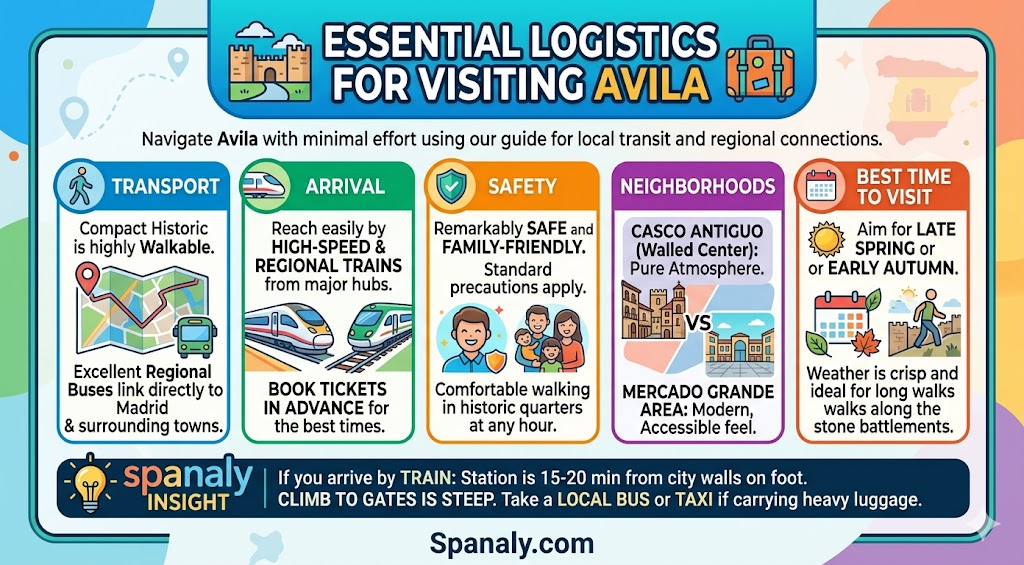
Navigating the city requires minimal effort if you plan well. Use our Getting Around Spain guide to master local transit and regional connectivity options.
Transport: Avila is highly walkable, as the historic center is compact. Regional bus connections are excellent, linking the city directly to Madrid and surrounding towns.
Arrival: You can reach the city easily by high-speed trains or regional rail from major hubs. Booking tickets in advance ensures you get the best travel times.
Safety: The city is remarkably safe and family-friendly. Standard urban precautions apply, but you will feel comfortable walking through the historic quarters at any hour.
Neighborhoods: Stick to the Casco Antiguo (walled center) for pure atmosphere or the Mercado Grande area for a more modern, accessible feel.
Best Time to Visit: Aim for late spring or early autumn. The weather is crisp and ideal for long walks along the stone battlements.
Spanaly Insight: If you arrive by train, the station is about 15-20 minutes away from the city walls on foot. Take a quick local bus or taxi if you are carrying heavy luggage; the climb to the wall gates is steep.
📸 Best Photo Spots in Avila
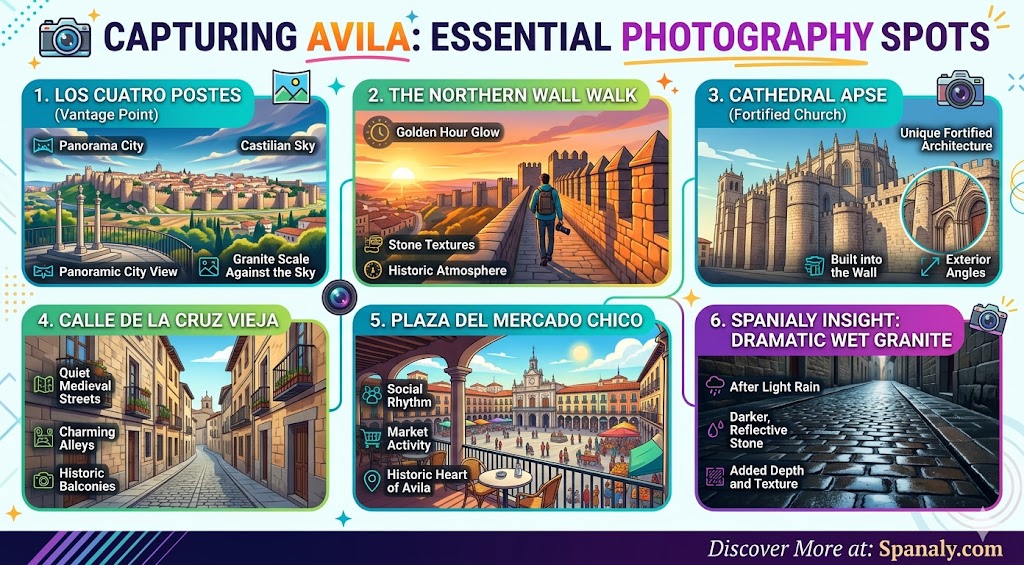
Capturing the essence of this medieval city requires finding the right angles that highlight its massive granite scale. Our Best Photography Spots in Spain guide offers extra tips for lighting and composition across the region.
Los Cuatro Postes: This is non-negotiable. From this viewpoint, you get the absolute best panoramic shot of the entire walled city against the backdrop of the Castilian sky.
The Northern Wall Walk: Climb the battlements during the “golden hour.” The sunlight hits the old stone in a way that makes the granite glow with a deep, golden-orange hue.
Cathedral Apse: Photograph the Cathedral from the exterior path near the wall. It shows how the church is literally built into the fortification, a unique architectural feat.
Calle de la Cruz Vieja: Capture the narrow, winding cobblestone streets framed by historic stone balconies. It perfectly encapsulates the quiet, medieval atmosphere.
Plaza del Mercado Chico: Frame your shot from the balcony of a local café. It captures the social rhythm and the vibrant, historic architecture of the city’s heart.
Spanaly Insight: For the most dramatic photos, head to the wall walk right after a light rain. The wet granite darkens and becomes highly reflective, adding depth and texture to your images that dry stone simply cannot match.
🚗 Best Day Trips From Avila
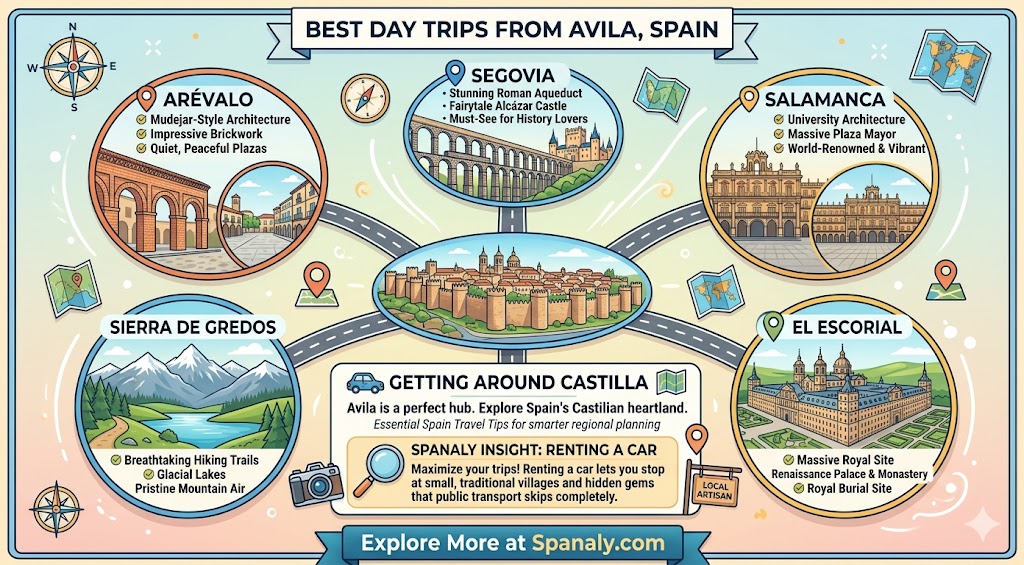
Avila serves as a perfect hub for exploring the rugged beauty of the Castilian heartland. To see how these locations connect to your wider journey, explore our Essential Spain Travel Tips for smarter regional planning.
Segovia: Just a short drive away, this city is famous for its stunning Roman aqueduct and fairytale castle, the Alcázar. It is a must-see for history lovers.
Salamanca: Known as the “Golden City,” its university architecture and massive Plaza Mayor are world-renowned. It offers a vibrant, youthful energy contrasted with deep historic roots.
El Escorial: This massive royal site is a masterpiece of Spanish Renaissance architecture. It serves as a palace, monastery, and royal burial site all in one.
Sierra de Gredos: For those who love nature, these mountains offer breathtaking hiking trails, glacial lakes, and pristine mountain air just an hour from the city.
Arévalo: A quieter, hidden gem known for its impressive Mudejar-style brick architecture and peaceful plazas that remain largely untouched by mass tourism.
Spanaly Insight: Renting a car is the best way to maximize these trips. While some spots have train links, having your own vehicle lets you stop at small, traditional villages along the way that public transport skips entirely.
🗺️ Avila Itinerary: The Perfect 24-Hour Plan
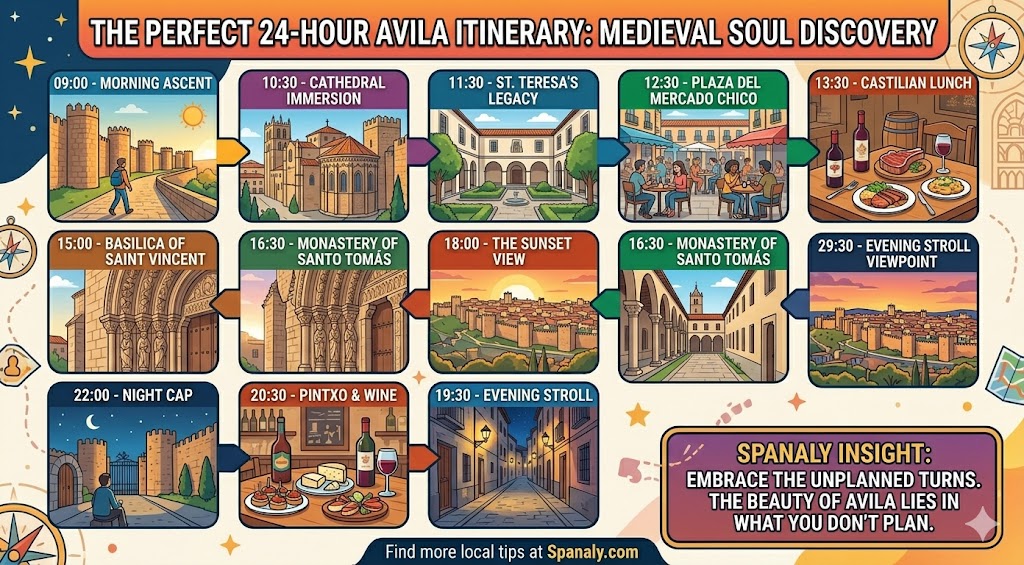
This schedule is designed to immerse you in the medieval soul of the city while balancing iconic landmarks with authentic moments.
09:00 – Morning Ascent: Start at the Walls of Avila. Walking the battlements early ensures you avoid crowds and catch the best morning light over the stone towers.
10:30 – Cathedral Immersion: Explore the Avila Cathedral. Take your time in the apse, which is famously integrated into the city walls themselves.
11:30 – St. Teresa’s Legacy: Walk to the Convent of Saint Teresa. The quiet courtyard provides a reflective pause before the city wakes up fully.
12:30 – Plaza del Mercado Chico: Reach the city’s heart. Sit at a terrace café for a coffee and observe the transition from morning calm to social activity.
13:30 – Castilian Lunch: Find a traditional tavern and order the Chuletón de Avila. Pair it with local wine for the true regional experience.
15:00 – Basilica of Saint Vincent: Head to this Romanesque marvel just outside the walls. The intricate carvings are best viewed in the soft afternoon light.
16:30 – Monastery of Santo Tomás: Explore the quiet cloisters here. It’s a bit of a walk, but the serenity and historical weight are well worth the effort.
18:00 – The Sunset View: Take a taxi or a quick drive to Los Cuatro Postes. This is where you witness the entire city illuminated by the setting sun.
19:30 – Evening Stroll: Return to the walled center. Wander the back alleys of the Jewish Quarter as the street lamps flicker on.
20:30 – Pintxo & Wine: End your day in the taverns near Mercado Grande. Sample local cheeses and seasonal tapas in an informal, lively setting.
22:00 – Night Cap: Enjoy a final quiet moment under the stars near the main wall gates before heading back to your hotel.
🚫 Common Mistakes to Avoid in Avila
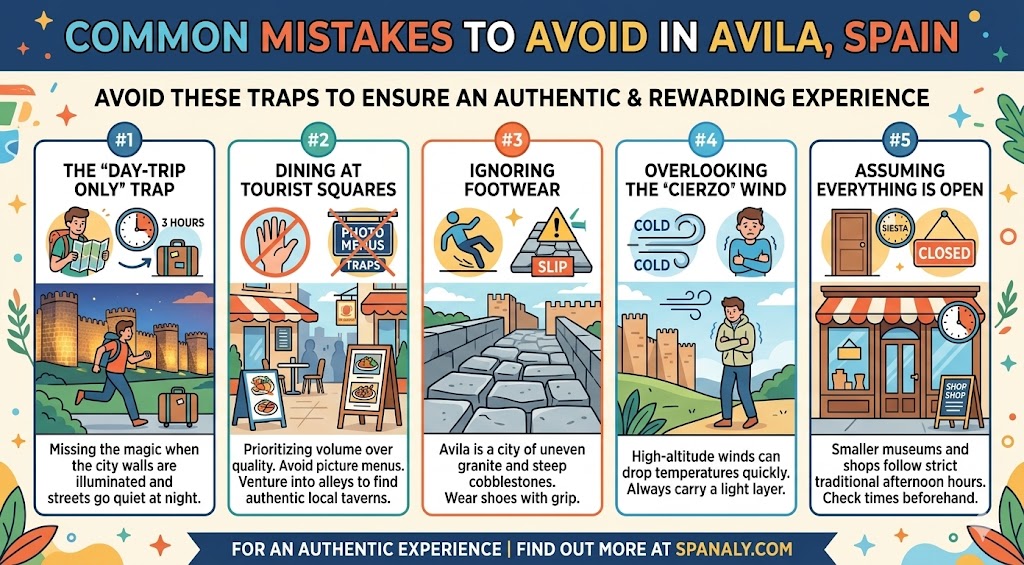
Most travelers miss the city’s true essence by sticking to surface-level habits. Avoid these traps to ensure a more authentic and rewarding experience.
The “Day-Trip Only” Trap: Most visitors treat Avila as a 3-hour stopover between Madrid and Salamanca. By leaving before sunset, you miss the magical atmosphere when the city walls are illuminated and the streets go quiet.
Dining at Tourist Squares: Avoid any restaurant with picture menus displayed outside. These places prioritize volume over quality; venture into the alleys to find taverns where locals actually eat.
Ignoring Footwear: Avila is a city of uneven granite and steep cobblestones. Wearing fashion sneakers without grip will make walking the walls and alleys exhausting.
Overlooking the High-Altitude Winds: Even on sunny days, the harsh plateau winds can drop temperatures quickly. Always carry a light layer, or you will be forced back indoors by the chill.
Assuming Everything is Open: Many smaller museums and shops follow strict, traditional afternoon hours (siesta). Check times beforehand so you don’t find yourself locked out of your planned stops.
Spanaly Insight: The biggest mistake is treating Avila as a museum rather than a living city. Give it at least 24 hours; the stone walls only reveal their deep, historic character once the day-tripper crowds subside.
💡 Spanaly Pro Tips for Avila
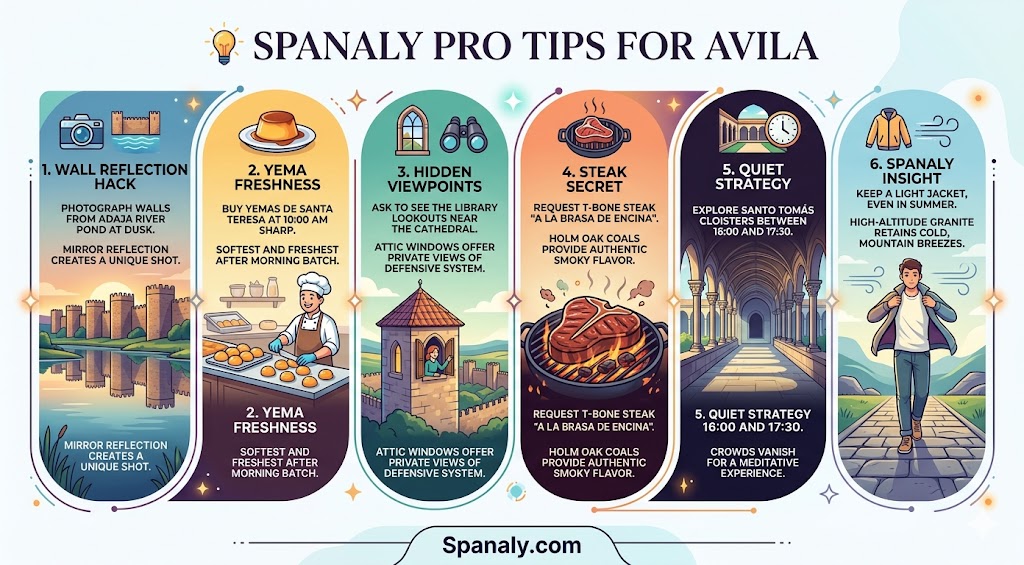
Gain a local edge with these insider secrets, gathered from real-time community insights and proven local habits.
Wall Reflection Hack: Photograph the walls from the Adaja River pond at dusk. The mirror reflection creates a shot most tourists miss.
Yema Freshness: Buy Yemas de Santa Teresa at 10:00 AM sharp. They are softest and freshest right after the morning batch is prepared.
Hidden Viewpoints: Ask to see the library lookouts near the Cathedral. Some attic windows offer private views of the entire defensive system.
Steak Secret: Always request your T-bone steak “a la brasa de encina.” Holm oak coals provide a smoky, authentic flavor standard grills lack.
Quiet Strategy: Explore the Santo Tomás cloisters between 16:00 and 17:30. The crowds vanish, leaving you alone in this meditative, historic space.
Spanaly Insight: Keep a light jacket, even in summer. High-altitude granite retains cold, and sharp mountain breezes turn warm afternoons into chilly evenings quickly.
Avila is a rare treasure where history is not just observed but felt in every stone. Whether you come for the medieval walls, the hearty local cuisine, or the meditative quiet of its narrow streets, this city offers an experience that lingers long after you leave.
Final Tip: Don’t rush your visit. The true magic of Avila reveals itself once the sun sets and the medieval walls light up under the night sky.
Beyond Avila: Once you have mastered this walled wonder, expand your northern exploration. Discover more hidden traditions by reading our Pamplona Travel Guide for an entirely different, high-energy Spanish experience.
Start Planning: Use our tips, pack your comfortable shoes, and prepare for a journey into the heart of Castile.