SPANALY · MADRID FOOD GUIDE
Madrid Food Guide: What to Eat and Where to Eat
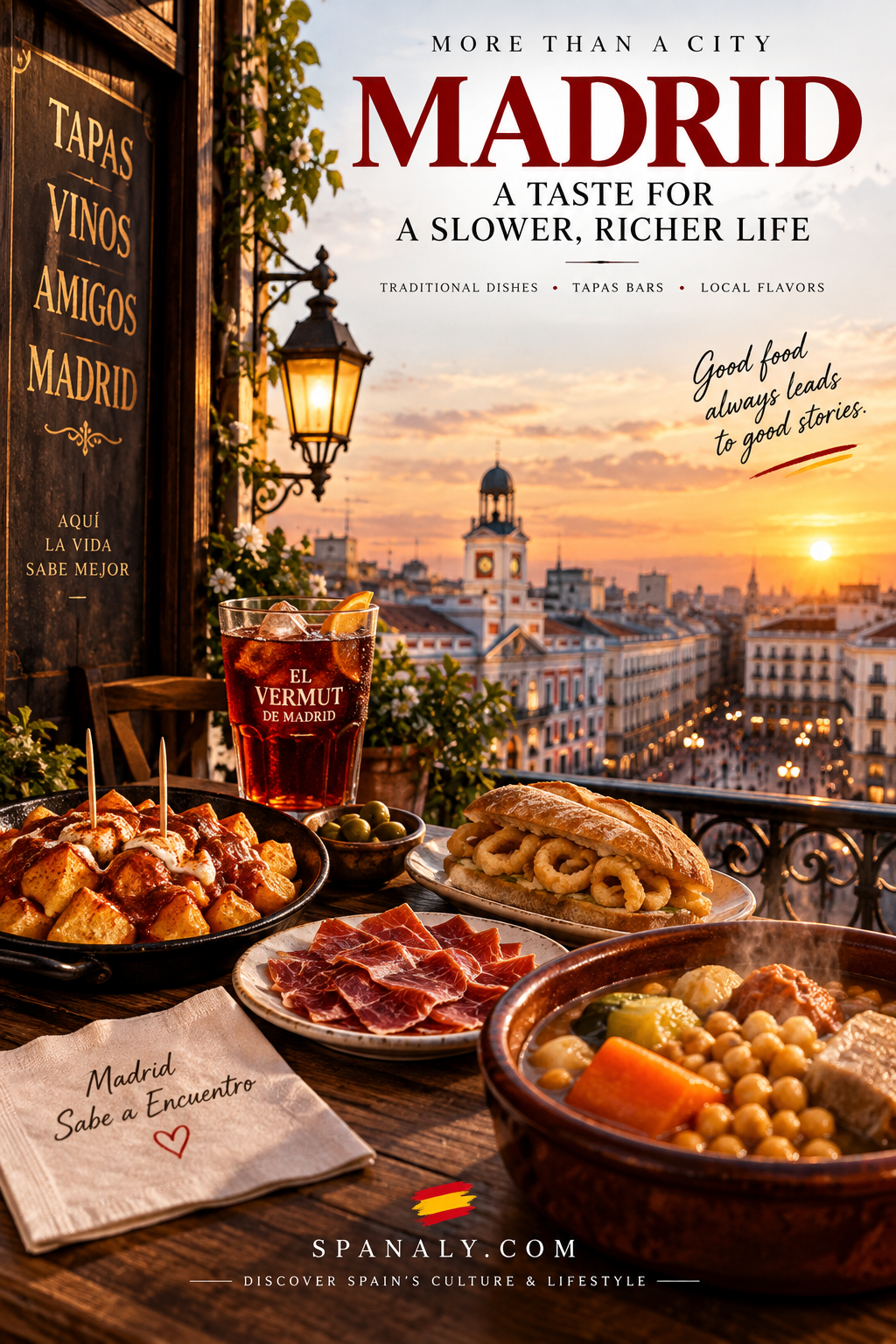
Madrid is best understood through its eating rhythm: a serious lunch, small plates shared across several bars, a vermouth stop, churros when the moment calls for them, and traditional dishes that make sense only when you give them time.
THE BIG PICTURE
Madrid is an eating rhythm, not a capital-city checklist
Madrid food makes more sense once you stop looking for one single signature cuisine. The city is the capital, a meeting point for regional cooking and a place where old tabernas, neighborhood bars, markets and contemporary restaurants share the same streets.
The useful question for a traveler is therefore not only “What is Madrid famous for?” It is “What should I eat at this point in the day, and where does it fit into my route?”
A proper Madrid food day can begin with churros and chocolate, move into a substantial lunch, pause for a walk, continue with vermouth and tapas, and finish later than visitors from many countries expect. The city rewards that slower structure.
START HERE
If you have only one food day in Madrid
Build the day around one substantial traditional meal and several smaller experiences. You do not need to collect every famous dish.
Churros con chocolate or a simple Spanish breakfast.
Plan one serious traditional meal. Cocido is the classic choice.
Walk, explore and leave space between meals.
Vermouth or a caña, followed by two or three shared tapas.
Move to a neighborhood restaurant or continue the tapas crawl.
01 · THE RHYTHM
How a Madrid food day actually works
The same dish can feel completely different depending on when you eat it. Madrid’s food culture is built around pauses, social stops and a later evening.
Morning
Breakfast can be simple
Coffee and toast are enough for many mornings. If you want a more distinctly Madrid-style start, look for churros con chocolate.
Early afternoon
Lunch is the serious meal
Traditional cooking fits naturally here. A slow dish such as Cocido Madrileño is not a quick sightseeing snack; allow time for it.
Late afternoon
Leave the table
This is where many visitors go wrong. Do not fill every gap with food. Walk, visit a museum or explore another neighborhood.
Evening
Tapas become mobile
A drink, a small plate, another bar, another street. The point is movement and sharing rather than one oversized order. For the wider Spanish context, compare Madrid’s rhythm with Spanaly’s Seville tapas guide.
Night
Dinner can come late
Dinner often starts later than visitors expect. If you eat early, choose accordingly; if you want the local evening atmosphere, allow the city to get going first.
02 · MADRID’S DEFINING MEAL
Cocido Madrileño: the dish that needs a plan
If you want to understand Madrid through one traditional dish, Cocido Madrileño deserves the first place on the list. It is a slow, substantial stew built around chickpeas, meat, vegetables and broth, and it is traditionally served in separate stages rather than as one undifferentiated bowl.
This matters for travelers. Cocido is not the dish to squeeze between two major attractions. Treat it as the main event of lunch.
How to approach it
Choose a traditional restaurant and allow time for the meal.
Check whether Cocido is being served that day.
Broth first, then chickpeas and vegetables, then the meats.
One full Cocido meal can be enough for the main part of your day.
THE THREE VUELCOS
What actually arrives at the table?
The warm opening course, usually served with noodles.
The heart of the stew, with chickpeas, potatoes and vegetables.
The final stage brings the meats and other traditional accompaniments.
Do not assume availability. Cocido is strongly associated with traditional lunches and cooler weather, but schedules vary by restaurant. Check before building your sightseeing day around it.
03 · WHAT TO EAT
Madrid’s essential dishes, with the right moment for each
Some belong to the city itself. Others belong to the wider Spanish bar tradition but have become part of everyday Madrid eating. The useful distinction is knowing how to use each one.
Cocido Madrileño
The full Madrid lunch.
Chickpeas, meats, vegetables and broth served in stages. It is substantial, traditional and best treated as a planned lunch rather than a casual bite.
Bocadillo de Calamares
Madrid’s famous squid sandwich.
Fried squid rings in bread. The historic center, especially around Plaza Mayor, is the natural setting for this simple city classic.
Callos a la Madrileña
A rich tripe stew.
Tripe cooked with paprika and pork products such as chorizo and morcilla. It is one of the more intensely traditional choices.
Huevos Rotos
Eggs, potatoes and ham.
Fried eggs are broken over potatoes, often with Iberian ham. The runny yolk becomes part of the sauce and the dish is naturally suited to sharing.
Churros con Chocolate
The classic chocolate-and-churros ritual.
Crisp fried dough with thick hot chocolate. It belongs naturally to breakfast, a café break or a late-night sweet stop.
Tortilla Española
Spain’s potato omelet, perfect for bars.
Tortilla is not unique to Madrid, but it is fundamental to the capital’s tapas culture. Order a portion and compare texture and doneness between bars.
Patatas Bravas
Crisp potatoes with a bold sauce.
A straightforward tapas choice that works well early in a bar crawl. It is filling enough to share without taking over the entire meal.
Soldaditos de Pavía
Battered cod with a Madrid history.
Fried pieces of cod, traditionally associated with Madrid’s older tapas culture. They are a useful choice when you want to go beyond the standard international list.
Cochinillo Asado
Roast suckling pig from the Castilian tradition.
Cochinillo is important to the wider Castilian food culture and has a strong place in Madrid’s historic restaurants. Segovia is the stronger regional reference, so Madrid should not present it as its own defining dish.
04 · TAPAS CULTURE
Tapas in Madrid: move, share, repeat
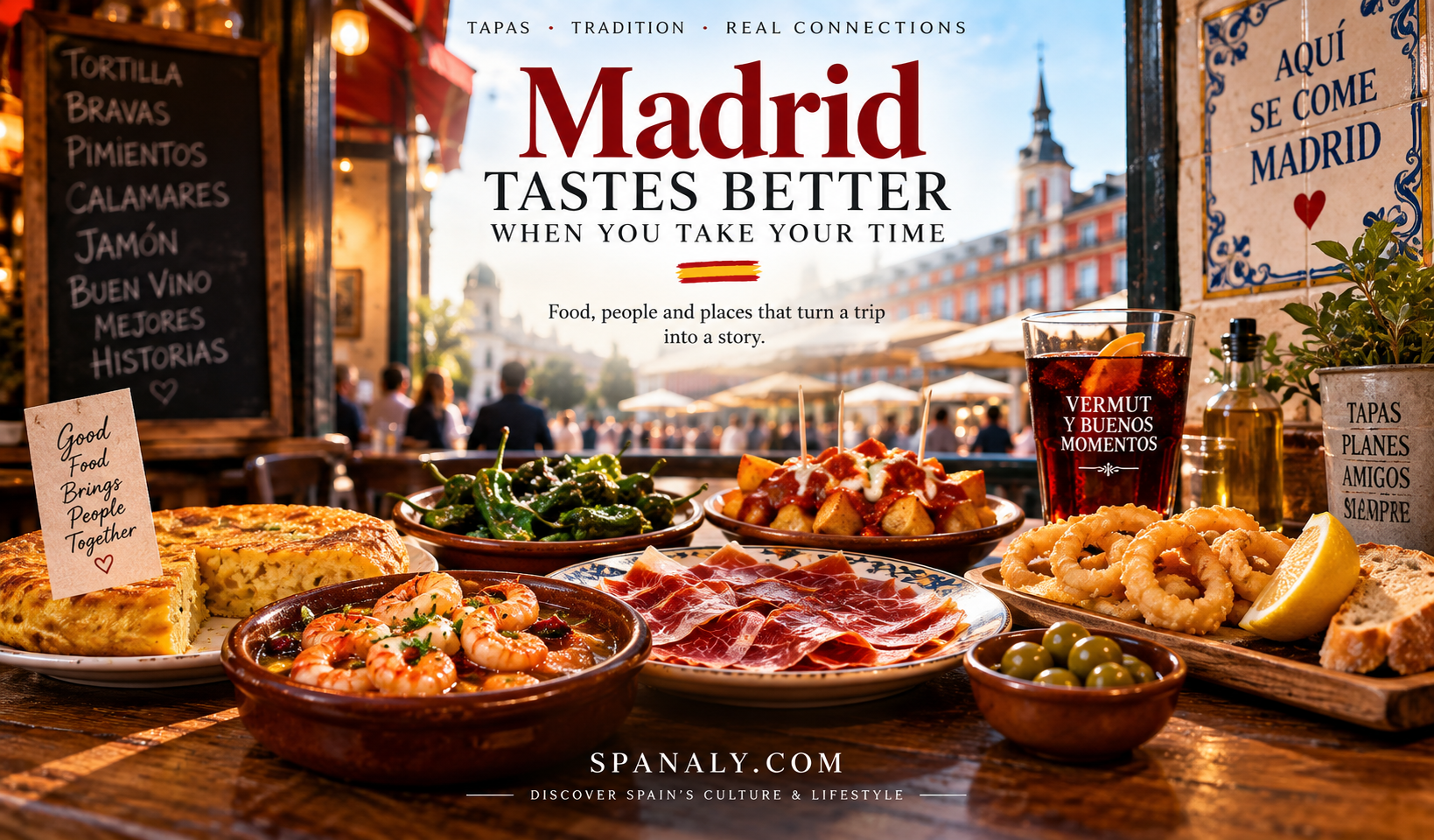
Madrid’s tapas culture is social and mobile. The mistake is treating tapas as a list of small dishes to order all at once.
Start small
Order one or two plates and see how hungry you are. A table covered with food after the first stop defeats the purpose of a crawl.
Know the portion words
A tapa is small; a ración is larger and is normally better suited to sharing. Exact sizes vary by establishment.
Use drinks as anchors
A caña or vermouth can be the reason for a short stop. You do not need a full meal every time you enter a bar.
Let the neighborhood change
A central snack can lead into a different district for dinner. Madrid’s food scene becomes more interesting when you move beyond the same tourist streets.
WHAT TO DRINK
Caña, vermouth or wine?
There is no single correct drink. Match it to the moment.
05 · HISTORY ON THE PLATE
Historic bars and restaurants worth understanding
Madrid’s historic establishments are valuable because they show how the city’s food culture survived across generations. They are not a permanent ranking of “the best restaurants.”
Sobrino de Botín
Historic restaurantFounded in 1725 and recognized by Guinness World Records as the world’s oldest restaurant, Botín is a historical destination in its own right. Its wood-fired oven is associated with Castilian roast suckling pig and lamb.
Use it for: a planned historic meal. Reserve rather than treating it as a spontaneous tapas stop.
La Casa del Abuelo
Traditional tabernaFounded in 1906 near Puerta del Sol, this long-running taberna is known for its gambas, sweet wine and traditional tapas atmosphere.
Use it for: a short central-Madrid aperitif or tapas stop.
Bodega de la Ardosa
Historic barOpened in 1892, La Ardosa is one of the city’s old bars and sits close to the modern Chueca, Malasaña and Fuencarral area. Traditional choices include tortilla and other bar snacks.
Use it for: a small traditional stop while exploring the surrounding neighborhoods.
Casa Labra
Historic tapas stopCasa Labra dates to 1860 and is particularly associated with soldaditos de Pavía and croquettes. For a broader look at this Spanish bar classic, see Spanaly’s Spanish Croquetas guide. It is a useful example of how a small traditional dish can carry a long urban history.
Use it for: a quick traditional bite near the Puerta del Sol area.
06 · MARKETS
Mercado de San Miguel: taste it, but understand it
San Miguel is useful for variety, but it should not be confused with a traditional neighborhood food market.
Mercado de San Miguel
The market opened in 1916 as a local food market and was transformed into a gourmet market in 2009. Today it is one of Madrid’s most visited food attractions, close to Plaza Mayor, with a broad range of Spanish and gourmet products.
That makes it excellent for sampling. It is less useful if your goal is to observe an ordinary neighborhood market routine.
USE IT LIKE THIS
- Go when your route already passes through the historic center.
- Order small portions rather than building a huge meal.
- Use it for variety when a group cannot agree on one cuisine.
- Do not make it your only market experience in Madrid.
For a more local market feel
Mercado de San Antón
In Chueca, with a more contemporary food-hall character. Useful when your sightseeing already takes you through the neighborhood.
Mercado de Vallehermoso
In Chamberí, combining food shopping with a varied modern gastronomic offer.
Mercado de Antón Martín
A good example of the overlap between traditional market shopping and newer food businesses.
Mercado de la Paz
A long-established market in Salamanca, useful when you want food exploration away from the main historic-center circuit.
Simple rule: San Miguel is a destination for tasting. Neighborhood markets are better when your goal is to see how food fits into everyday city life.
07 · WHERE TO EAT
Choose the neighborhood before choosing the restaurant
Madrid is easier to eat when the food plan follows the geography. Do not cross the city for one plate if a strong food district is already on your route.
Plaza Mayor & Sol
Best for: first-timers
Historic Madrid, bocadillo de calamares, famous old establishments and easy access to San Miguel.
Eat here: a snack or first taste, then move on.
La Latina
Best for: traditional evening
A natural area for tabernas, shared plates and a lively evening food route.
Eat here: tapas and raciones rather than one giant meal.
Lavapiés
Best for: diverse neighborhood eating
A more mixed urban food environment where traditional Madrid sits beside international influences.
Eat here: dinner after exploring the district.
Chueca
Best for: modern food + markets
A strong choice for San Antón, contemporary restaurants and a lively evening atmosphere.
Eat here: a market stop followed by neighborhood dining.
Malasaña
Best for: old + new together
Historic bars sit alongside younger restaurants and creative food businesses.
Eat here: compare a traditional bar with a modern meal.
Chamberí & Ponzano
Best for: a longer evening
A good fit for travelers who want to move beyond the historic center and spend more time around local bars and restaurants.
Eat here: dinner or a longer tapas evening.
08 · READY-TO-USE ROUTES
Three ways to build your Madrid food day
The classic day
- Churros and coffee in the morning.
- Historic-center sightseeing.
- Bocadillo de calamares as a snack.
- Plaza Mayor and nearby streets.
- Planned traditional lunch if Cocido is available.
- Walk and museum time.
- Vermouth or caña.
- Two or three tapas in La Latina or another nearby district.
The traditional day
- Light breakfast.
- Explore a traditional market or neighborhood.
- Reserve a proper Cocido lunch.
- Leave a long gap after lunch.
- Walk through a different district.
- Vermouth with a lighter tapa.
- Finish with a small tapas crawl.
The modern contrast
- Churros or a simple café breakfast.
- Explore Chueca or Malasaña.
- Visit a neighborhood market.
- Choose a contemporary Spanish lunch.
- Rest or sightsee during the afternoon.
- Vermouth and a traditional tapa.
- Dinner around Chamberí or Ponzano.
09 · PRACTICAL KNOW-HOW
What travelers should know before eating in Madrid
Do not make Cocido a rushed stop
Check availability, reserve when appropriate and keep the rest of the day flexible. One full Cocido meal can carry the main part of your lunch.
Tapas first, ración later
Start with small plates. Add a larger shared portion only after you know what everyone wants.
Do not spend the whole day in Sol
The center is useful for your first bites, but move to La Latina, Lavapiés, Chueca, Malasaña or Chamberí for a broader picture.
Use San Miguel for tasting
It is a gourmet market and major visitor attraction. Enjoy it for variety, but do not confuse it with a normal neighborhood market.
Check allergies before ordering
Traditional Madrid dishes can include gluten, seafood, eggs, dairy, pork and offal. Ask about ingredients rather than guessing from a dish name.
Plan by geography
The best restaurant is often the one that fits your route. Avoid crossing Madrid repeatedly for isolated food stops.
USEFUL SPANISH
Four phrases that actually help
10 · BUDGET
How much should you expect to spend?
Madrid can work at different budgets. The biggest variable is how you structure the day: a tapas crawl, a market stop and a traditional restaurant produce very different bills.
Snack + tapas
Choose simple breakfasts, one iconic snack, small tapas and shared plates. This is the easiest way to taste widely without turning every stop into a full meal.
Proper lunch + tapas
Make lunch the main expense, then keep the evening flexible with drinks and shared tapas.
Historic restaurant
Reserve a classic restaurant such as Botín when history and a formal meal are part of the experience you want.
2026 planning note: restaurant prices change frequently. Use the current menu or reservation page before setting a precise daily food budget rather than relying on an old fixed range.
11 · SEASONAL RHYTHM
What changes through the year?
Winter
This is when hearty dishes make the most intuitive sense. Cocido and other slow-cooked foods fit naturally into colder days.
Spring
Longer daylight makes food-and-walking routes easier. Combine a proper lunch with outdoor neighborhood exploration.
Summer
Keep the hottest part of the day lighter and let evening tapas do more of the work. Markets and terraces can become useful pauses.
Autumn
Cooler evenings bring traditional taverns and heavier dishes back into focus while the city remains comfortable for long walks.
OFFICIAL RESOURCES
Useful Madrid food resources from the city itself
These official Tourism Madrid pages are useful for checking the wider food scene, historic establishments and market context before you plan a food route.
12 · MADRID IN THE SPANISH FOOD MAP
Madrid is the meeting point, not the whole story
The capital brings together food traditions from across Spain. If Madrid is part of a longer trip, use the regional guides to see how the food changes as you travel.
14 · FAQ
Madrid food questions travelers actually ask
What is the most famous food to eat in Madrid?
Cocido Madrileño is the traditional dish most closely associated with the city. For a quick experience, the bocadillo de calamares is one of Madrid’s best-known snacks, especially around the historic center.
What should I order if I try Cocido Madrileño?
You do not normally choose one isolated ingredient. The traditional meal is served in stages: broth first, followed by chickpeas and vegetables, then the meats and other accompaniments. Ask the restaurant how they serve their version.
Do I need to reserve Cocido?
For a well-known traditional restaurant, reservation is sensible. Availability varies by restaurant and day, so check before building your itinerary around Cocido.
Is Cocido Madrileño served every day?
Not necessarily. It is strongly associated with traditional lunch service and cooler weather, but restaurants set their own schedules. Always check the day’s availability.
Where should I eat a bocadillo de calamares?
The historic center around Plaza Mayor is the classic area to look for one. Treat it as a snack or light meal during sightseeing rather than a reason to skip a planned traditional lunch.
Is Madrid good for tapas?
Yes. The city has a deep tapas and taberna culture. The best approach is usually to move between a few places, order small amounts and share rather than filling the table at the first stop.
What is the difference between a tapa and a ración?
A tapa is a smaller serving, while a ración is a larger portion generally intended for sharing. The exact size depends on the bar.
What is a caña?
A caña is a small draft beer and one of the most common simple choices for a tapas stop.
When is vermouth a good choice in Madrid?
Vermouth works naturally as an aperitif before lunch or as a lighter early-evening stop, especially when paired with a small tapa.
Is Mercado de San Miguel a traditional local market?
It began as a local food market, but today it is a gourmet market and major visitor attraction. Use it for variety and tasting; choose a neighborhood market when you specifically want a more everyday market experience.
Should I eat only around Plaza Mayor and Sol?
No. The center is excellent for first tastes and historic food stops, but districts such as La Latina, Lavapiés, Chueca, Malasaña and Chamberí show different sides of Madrid’s eating culture.
Is cochinillo a Madrid dish?
Cochinillo belongs more broadly to Castilian cooking, with Segovia being the stronger regional reference. Madrid’s historic restaurants also serve it, so it can be part of a Madrid food experience without presenting it as the city’s defining dish.
Is Callos a good choice for everyone?
No. Callos is a traditional tripe dish with a rich, meaty profile. Travelers who enjoy offal and slow-cooked dishes may find it rewarding; others may prefer tortilla, bravas or other tapas.
Is Madrid expensive for food?
Madrid can fit different budgets. Simple tapas, snacks and shared plates can keep costs controlled, while historic restaurants and contemporary dining can cost considerably more. Check current menus rather than relying on old price ranges.
What should travelers with food allergies do?
Ask directly about ingredients and preparation. Traditional dishes may contain gluten, eggs, dairy, seafood, pork or other ingredients that are not obvious from the English name alone.
What is the biggest mistake to avoid on a Madrid food trip?
Trying to eat the entire city in one day. Madrid works better when you choose one main meal, leave space between eating occasions, and move geographically instead of crossing the city for every famous dish.
THE SPANALY TAKEAWAY
Eat Madrid slowly enough to understand it
Madrid does not need to be conquered dish by dish. The better experience is a sequence: something warm in the morning, a serious lunch, a long gap, vermouth or a caña, two or three tapas, and a late evening that belongs to the neighborhood you chose.
Start with Cocido if you want the city’s traditional heart. Try the calamari sandwich around the historic center. Use San Miguel for tasting, not as your definition of everyday Madrid. Then move away from the tourist core and let La Latina, Lavapiés, Chueca, Malasaña or Chamberí show you another side of the city.
That is the real Madrid food guide: not a ranking of restaurants, but a way of moving through the city with enough time to notice what is on the plate and why it belongs there.