📍 Úbeda
Forget the crowded coastal hubs and step into the stone-carved elegance of Andalusia. Our Úbeda travel guide is your essential roadmap to exploring one of Spain’s most stunning Renaissance landmarks, where every street corner hides a 16th-century palace and a story waiting to be heard.
A Renaissance Masterpiece: Discover why this UNESCO World Heritage city is considered a living museum of Spanish architecture.
Genuine Andalusian Vibe: Experience a destination that values quiet history, artisan olive oil, and the slow, deliberate pace of local life.
Expertly Planned: We strip away the tourist noise, providing you with actionable routes that ensure you see the icons and find the best local secrets.
Regional Context: To see how this architectural marvel fits into your broader northern or southern adventure, explore our complete Cities in Spain collection.
Spanaly Insight: Úbeda is not a city to be rushed; it is a place to be felt. Spend your first hours simply walking the old town walls to understand why this city remains the crown jewel of the Jaén province.
📍 Úbeda at a Glance
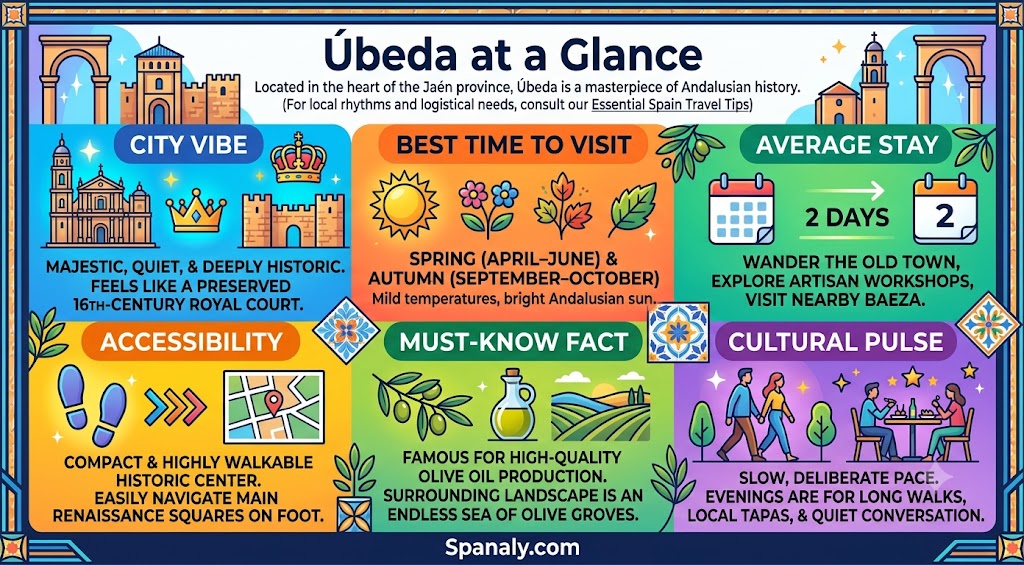
Úbeda, located in the heart of the Jaén province, is a masterpiece of Andalusian history. To master the practical side of your Spanish journey, consult our Essential Spain Travel Tips to understand the local rhythms and logistical needs of your visit.
City Vibe: Majestic, quiet, and deeply historic. It feels like stepping into a perfectly preserved 16th-century royal court.
Best Time to Visit: Spring (April–June) and autumn (September–October). You will find mild temperatures perfect for exploring stone plazas under the bright Andalusian sun.
Average Stay: 2 days. This duration lets you comfortably wander the old town, explore the artisan workshops, and visit nearby Baeza.
Accessibility: The historic center is compact and highly walkable. You can easily navigate the main Renaissance squares on foot.
Must-Know Fact: Úbeda is famous for its high-quality olive oil production; the surrounding landscape is an endless sea of olive groves.
Cultural Pulse: A slow, deliberate pace where evenings are meant for long walks, local tapas, and quiet conversation in stone-walled plazas.
📍 Úbeda vs. Major Spanish Cities
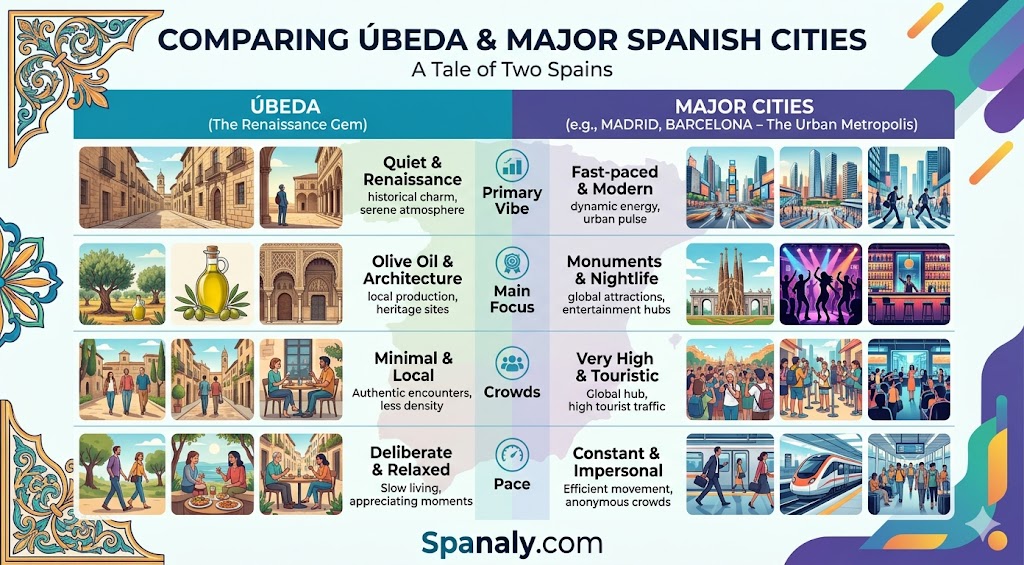
Úbeda offers a refreshing escape from the frantic pace of major tourist hubs. While cities like Madrid or Barcelona focus on sheer volume, Úbeda prioritizes architectural intimacy and cultural essence. Our Why Visit Spain guide provides a deeper perspective on choosing destinations that align with your personal travel style.
| Feature | Úbeda | Major Spanish Cities |
| Primary Vibe | Quiet & Renaissance | Fast-paced & Modern |
| Main Focus | Olive Oil & Architecture | Monuments & Nightlife |
| Crowds | Minimal & Local | Very High & Touristic |
| Pace | Deliberate & Relaxed | Constant & Impersonal |
Pace: Life here moves with the seasons and the olive harvest. You experience a rare, genuine side of southern Spain.
Vibe: Intimate and regal. The city avoids the commercial “tourist-trap” energy often found in high-traffic urban centers.
Unique Identity: Úbeda retains a distinct Renaissance spirit, shaped by its history as a sanctuary for noble families and master artisans.
🏰 Top 5 Must-See Landmarks in Úbeda
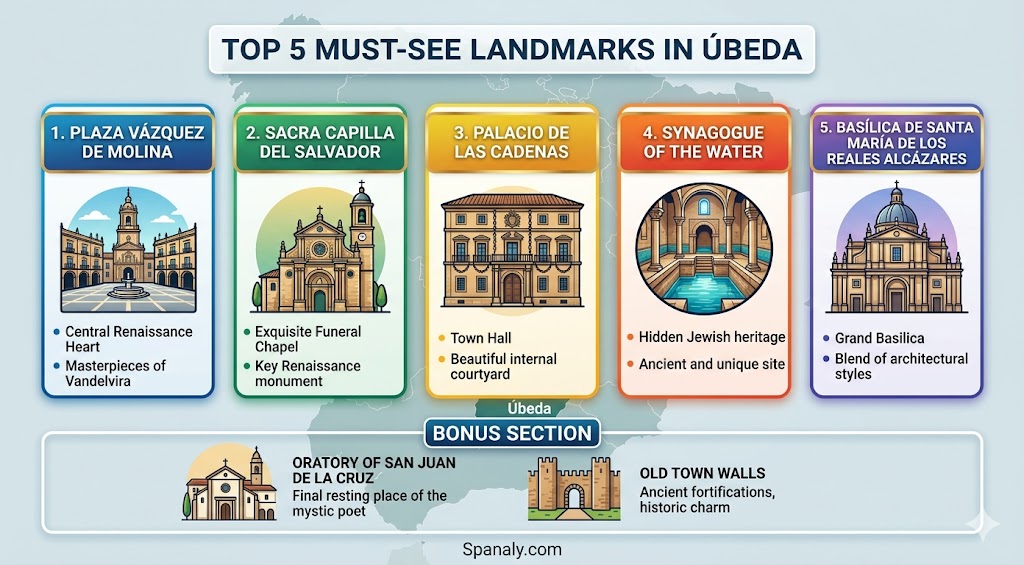
Úbeda’s historical weight is undeniable. Walking these plazas feels like stepping directly into a Golden Age painting. For seamless entry into these sites, consult our Spain Attraction Tickets Guide to save time and skip the queues.
Plaza Vázquez de Molina: This is the city’s heart. It houses the most significant collection of Renaissance palaces in all of Europe.
Sacra Capilla del Salvador: Marvel at the intricate facade. This chapel serves as the ultimate example of the Spanish Renaissance artistic style.
Palacio de las Cadenas: Admire the imposing stone design. It currently functions as the City Hall and showcases stunning architectural symmetry.
Synagogue of the Water: Descend into this hidden gem. You will find a restored, ancient Jewish site featuring a unique ritual bath.
Basílica de Santa María de los Reales Alcázares: Explore this historic site built over a former mosque. Its diverse architectural layers tell the story of Spain.
Bonus Attractions: Specifically, visit the Oratory of San Juan de la Cruz for a moment of quiet reflection. Furthermore, walk the Old Town Walls at dusk for an unmatched view of the endless Jaén olive groves.
🎨 Hidden Gems & Local Secrets in Úbeda
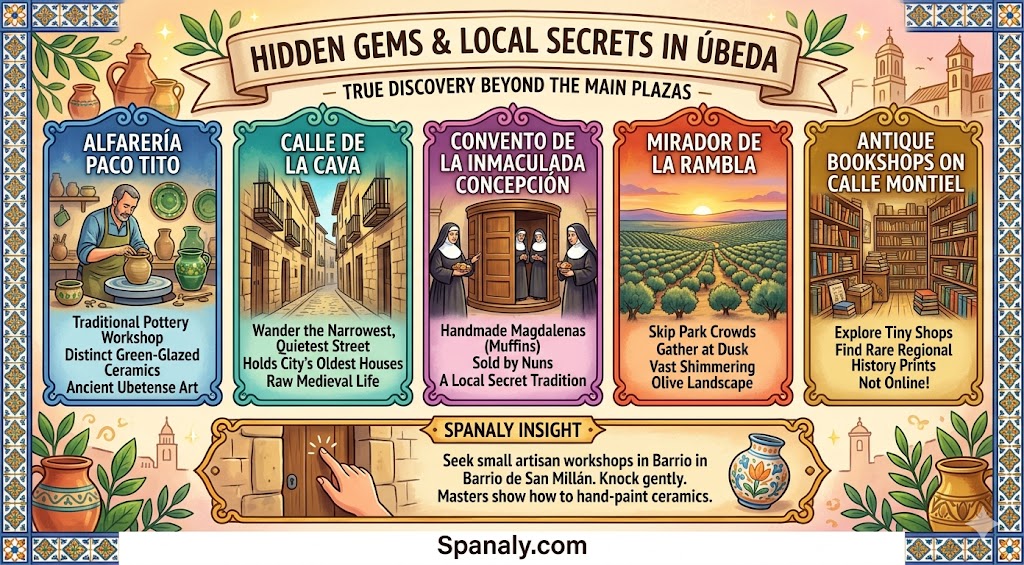
True discovery here requires leaving the main plazas behind. These spots reveal the city’s unscripted character, far from the standard tourist path.
Alfarería Paco Tito: Visit this traditional pottery workshop. The Tito family has preserved the ancient, distinct green-glazed ceramics that define local Ubetense art.
Calle de la Cava: Wander this narrow, quiet street. It holds the city’s oldest houses and offers a raw, unfiltered window into medieval life.
Convento de la Inmaculada Concepción: Locals visit here specifically for the handmade magdalenas (muffins) sold by the cloistered nuns through a wooden revolving door.
Mirador de la Rambla: Skip the crowded park views. Locals gather here at dusk to watch the light change over the vast, shimmering olive landscape.
Antique Bookshops on Calle Montiel: Explore these tiny, cluttered shops. You will often find rare prints of regional history that simply don’t exist online.
Spanaly Insight: Seek out the small, unlabeled artisan workshops in the Barrio de San Millán. If you knock gently, local masters are often happy to show you how they hand-paint their famous ceramics.
🏨 Where to Stay in Úbeda
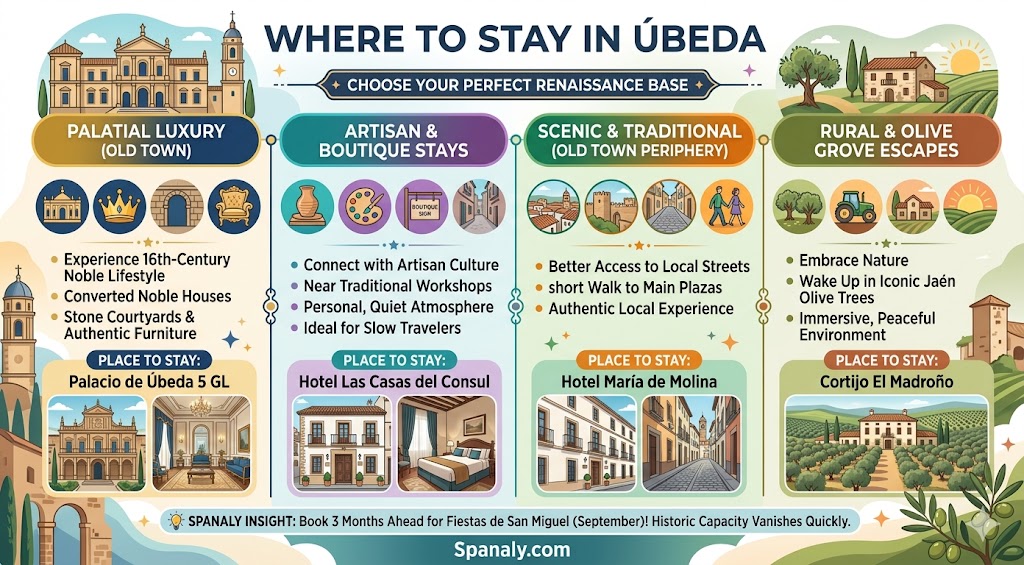
Choosing the right base defines your connection to the city’s Renaissance heritage. Our Accommodation in Spain guide offers extra tips for booking stays that balance historic charm with modern comfort.
Palatial Luxury (Old Town): Experience the 16th-century lifestyle by staying in converted noble houses. These hotels feature stone courtyards and authentic period furniture.
Place to Stay: Palacio de Úbeda 5 GL. It is a stunning, meticulously restored Renaissance palace that offers a true premium experience.
Artisan & Boutique Stays: Select smaller boutique hotels located near the artisan workshops. These provide a more personal, quiet atmosphere perfect for slow travelers.
Place to Stay: Hotel Las Casas del Consul. This charming property perfectly captures the city’s traditional aesthetic with intimate, well-appointed rooms.
Scenic & Traditional (Old Town Periphery): Choose these areas for better access to local streets while remaining within a short walk of the main plazas.
Place to Stay: Hotel María de Molina. It sits in a prime location, offering simple, clean, and classic lodging for those focused on exploring.
Rural & Olive Grove Escapes: If you prefer nature, look for manor houses on the city’s edge. You will wake up surrounded by the iconic Jaén olive trees.
Place to Stay: Cortijo El Madroño. This provides an immersive, peaceful environment that feels worlds away from the urban noise.
Spanaly Insight: If you visit during the Fiestas de San Miguel, book at least three months ahead. The city’s limited historic hotel capacity vanishes quickly when locals and regional visitors return for the festivities.
🍽️ Gastronomy: Úbeda Food Guide
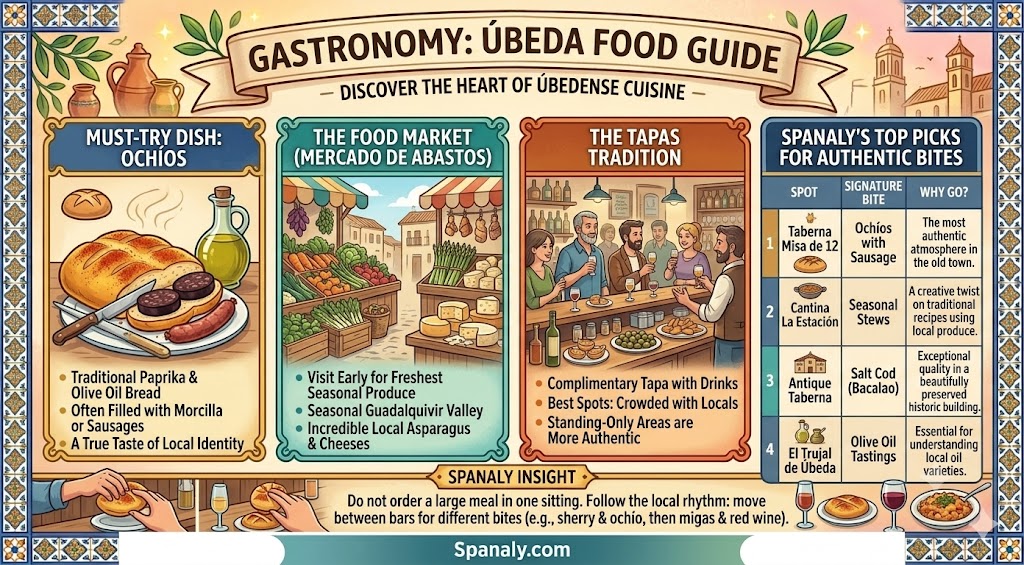
Úbeda’s cuisine is a reflection of the land itself—rustic, honest, and defined by the liquid gold of the region: extra virgin olive oil. To master the art of local dining, read our How to Order Food Like a Local in Spain guide before heading out.
Must-Try Dish (Ochíos): You cannot leave without eating an Ochío. This traditional bread is seasoned with paprika and olive oil. It is often filled with morcilla (black pudding) or local sausages.
The Food Market (Mercado de Abastos): Visit the local market early to see the freshest seasonal vegetables from the Guadalquivir valley. You will find incredible local asparagus and high-quality cheeses.
The Tapas Tradition: In Úbeda, drinks often come with a complimentary tapa. The best spots are usually those where the counter is crowded with locals standing and chatting.
🍴 Spanaly’s Top Picks for Traditional Bites:
| Spot | Signature Bite | Why Go? |
| Taberna Misa de 12 | Ochíos with sausage | The most deep-rooted atmosphere in the old town. |
| Cantina La Estación | Seasonal stews | A creative twist on traditional recipes using local produce. |
| Antique Taberna | Salt cod (Bacalao) | Exceptional quality in a beautifully preserved historic building. |
| El Trujal de Úbeda | Olive oil tastings | Essential for understanding the different varieties of local oil. |
Spanaly Insight: Do not order a large meal in one sitting. Follow the local rhythm: start with a dry sherry at one bar, move to an Ochío at another, and finish with a local red wine paired with migas at a third.
🧳 Essential Logistics for Visiting Úbeda
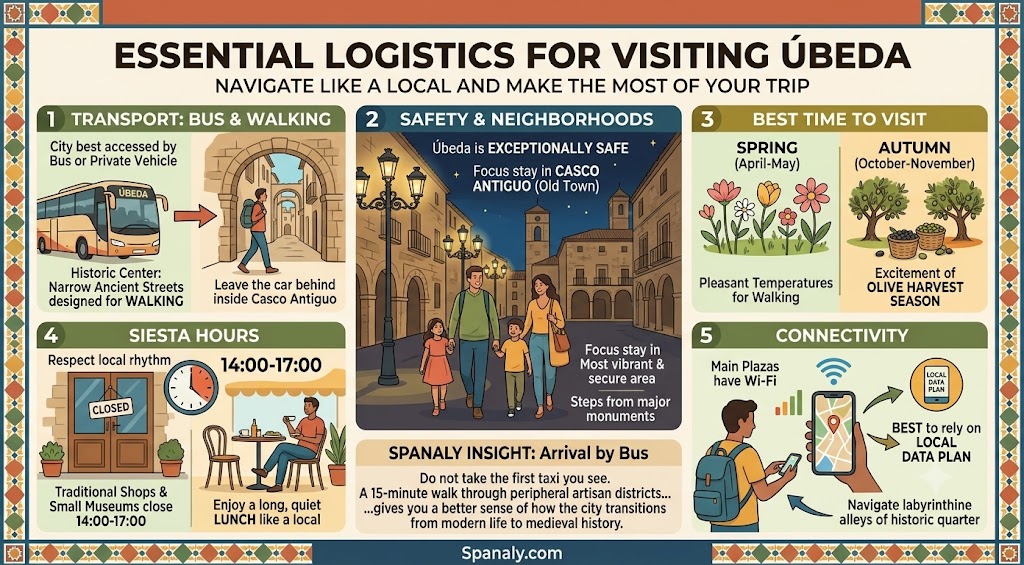
Navigating Úbeda is straightforward once you understand the local pace. Use our Getting Around Spain guide to master regional transit options and ensure smooth connectivity throughout your journey.
Transport: The city is best accessed by bus or private vehicle. Once inside the historic center, leave the car behind, as the narrow, ancient streets are designed for walking.
Safety & Neighborhoods: Úbeda is exceptionally safe. Focus your stay in the Casco Antiguo (Old Town); it is the most vibrant and secure area, keeping you within steps of every major monument.
Best Time to Visit: Aim for the shoulder seasons. Spring (April–May) offers pleasant temperatures for walking, while autumn (October–November) coincides with the excitement of the olive harvest season.
Siesta Hours: Respect the rhythm of the city. Most traditional shops and small museums close between 14:00 and 17:00. Use this time to enjoy a long, quiet lunch like a local.
Connectivity: While the main plazas have Wi-Fi, it is best to rely on a local data plan if you plan to navigate the labyrinthine alleys of the historic quarter.
Spanaly Insight: If you arrive by bus, do not take the first taxi you see. A 15-minute walk from the station will take you through the peripheral artisan districts, giving you a better sense of how the city transitions from modern life to medieval history.
📸 Best Photo Spots in Úbeda
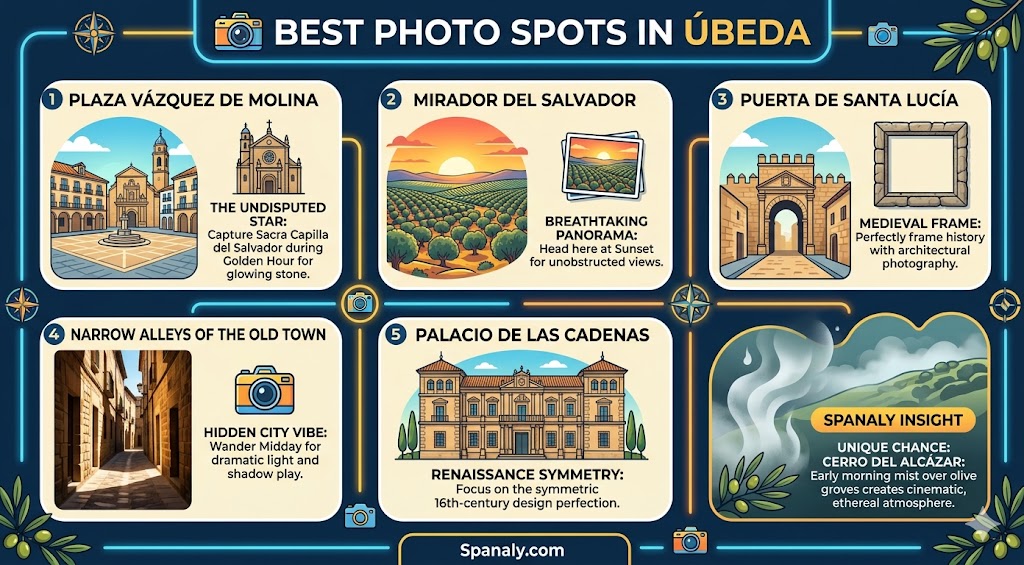
Úbeda’s Renaissance architecture provides a stunning backdrop for any photographer. To capture the best light and angles throughout your Spanish trip, our Best Photography Spots in Spain guide offers professional tips to elevate your portfolio.
Plaza Vázquez de Molina: This is the undisputed star. Capture the Sacra Capilla del Salvador during the golden hour when the stone glows with an intense, warm hue.
Mirador del Salvador: For a breathtaking panoramic shot, head here at sunset. It offers an unobstructed view over the endless “sea” of Jaén olive groves that surround the city.
Puerta de Santa Lucía: This ancient gate frames the medieval history of the city perfectly. It’s an ideal spot for architectural photography with a touch of raw, stone texture.
The Narrow Alleys of the Old Town: Wander without a map at midday. The high, stone walls create dramatic shadows and light-play that are perfect for capturing the “hidden city” vibe.
Palacio de las Cadenas: Focus on the symmetry of its facade from the center of the plaza. It showcases the perfection of 16th-century Renaissance design.
Spanaly Insight: If you want a truly unique shot, visit the Cerro del Alcázar area in the early morning. The mist rising from the olive groves below the city walls creates a cinematic, ethereal atmosphere you won’t find anywhere else.
🚗 Best Day Trips From Úbeda
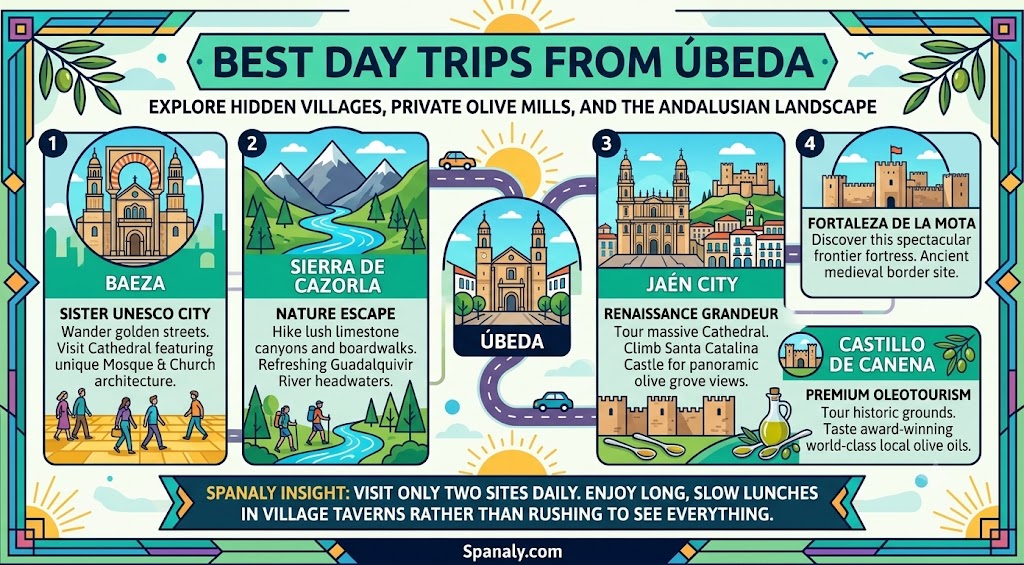
Úbeda is an ideal base for exploring Andalusia. Rent a car to reach hidden villages and private olive mills. Consult our Spain Travel Itineraries Plans guide for a seamless journey.
Baeza: Explore this sister UNESCO city. Wander golden streets and visit the cathedral featuring unique mosque and church architecture.
Sierra de Cazorla: Visit for nature. Hike lush limestone canyons and boardwalks near the Guadalquivir River’s refreshing headwaters.
Jaén City: Tour the massive Renaissance cathedral. Climb Santa Catalina Castle for panoramic views over vast, rolling olive groves.
Alcalá la Real: Discover the Fortaleza de la Mota. This spectacular frontier fortress sits on the ancient medieval border.
Castillo de Canena: Enjoy premium “Oleotourism.” Tour the historic castle grounds and taste award-winning, world-class local olive oils.
Spanaly Insight: Visit only two sites daily. Enjoy long, slow lunches in village taverns rather than rushing to see everything.
🗺️ Úbeda Itinerary: The 24-Hour Plan
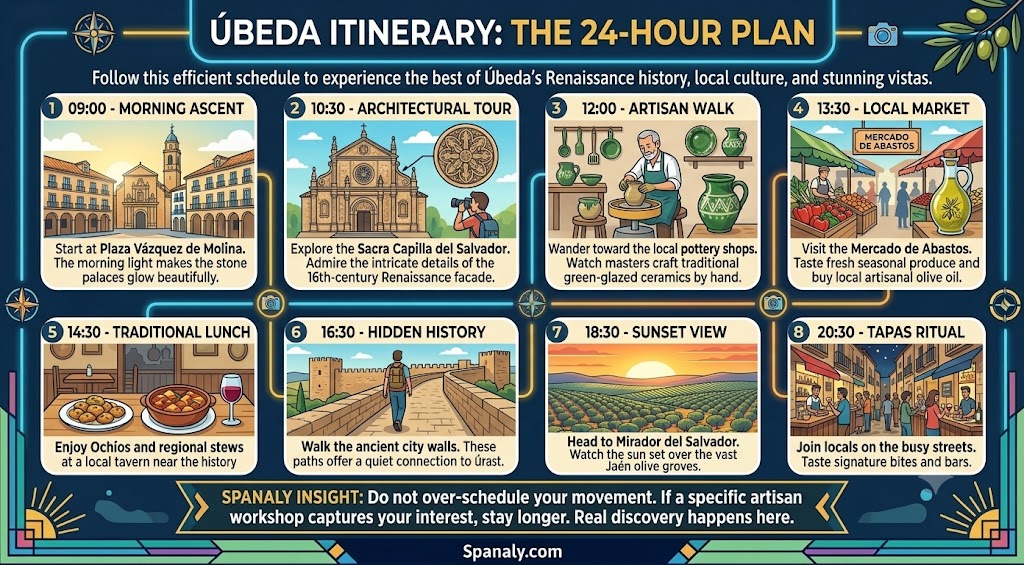
Follow this efficient schedule to experience the best of Úbeda’s Renaissance history, local culture, and stunning vistas.
09:00 – Morning Ascent: Start at Plaza Vázquez de Molina. The morning light makes the stone palaces glow beautifully.
10:30 – Architectural Tour: Explore the Sacra Capilla del Salvador. Admire the intricate details of the 16th-century Renaissance facade.
12:00 – Artisan Walk: Wander toward the local pottery shops. Watch masters craft traditional green-glazed ceramics by hand.
13:30 – Local Market: Visit the Mercado de Abastos. Taste fresh seasonal produce and buy local artisanal olive oil.
14:30 – Traditional Lunch: Enjoy Ochíos and regional stews at a local tavern near the historic town center.
16:30 – Hidden History: Walk the ancient city walls. These paths offer a quiet connection to Úbeda’s medieval military past.
18:30 – Sunset View: Head to Mirador del Salvador. Watch the sun set over the vast Jaén olive groves.
20:30 – Tapas Ritual: Join locals on the busy streets. Taste signature bites and local wines at several bars.
Spanaly Insight: Do not over-schedule your movement. If a specific artisan workshop captures your interest, stay longer. Real discovery happens here.
🚫 Common Mistakes to Avoid in Úbeda
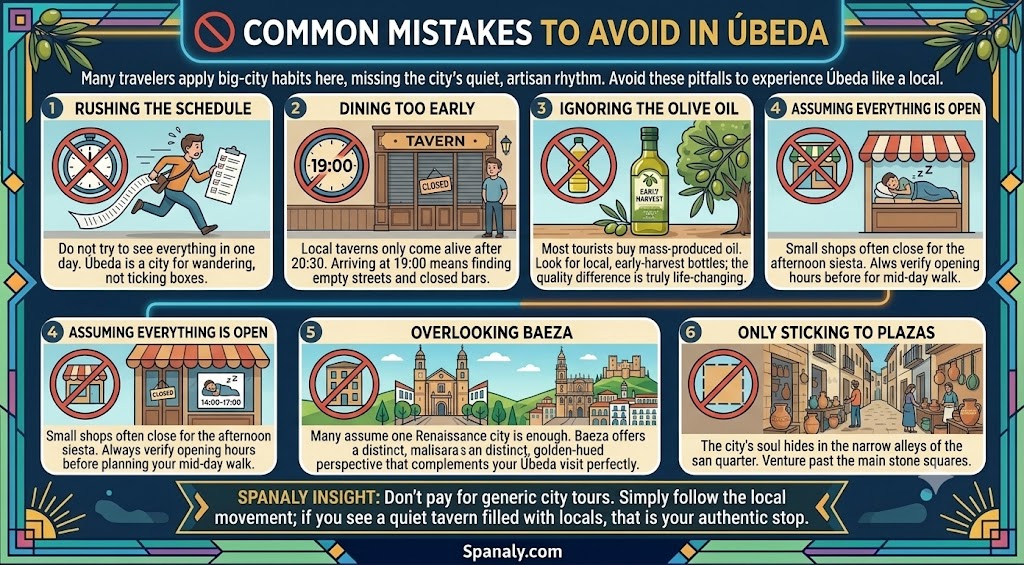
Many travelers apply big-city habits here, missing the city’s quiet, artisan rhythm. Avoid these pitfalls to experience Úbeda like a local.
Rushing the Schedule: Do not try to see everything in one day. Úbeda is a city for wandering, not ticking boxes.
Dining Too Early: Local taverns only come alive after 20:30. Arriving at 19:00 means finding empty streets and closed bars.
Ignoring the Olive Oil: Most tourists buy mass-produced oil. Look for local, early-harvest bottles; the quality difference is truly life-changing.
Assuming Everything is Open: Small shops often close for the afternoon siesta. Always verify opening hours before planning your mid-day walk.
Overlooking Baeza: Many assume one Renaissance city is enough. Baeza offers a distinct, golden-hued perspective that complements your Úbeda visit perfectly.
Only Sticking to Plazas: The city’s true character hides in the narrow alleys of the artisan quarter. Venture past the main stone squares.
Spanaly Insight: Don’t pay for generic city tours. Simply follow the local movement; if you see a quiet tavern filled with locals, that is your authentic stop.
💡 Spanaly Pro Tips
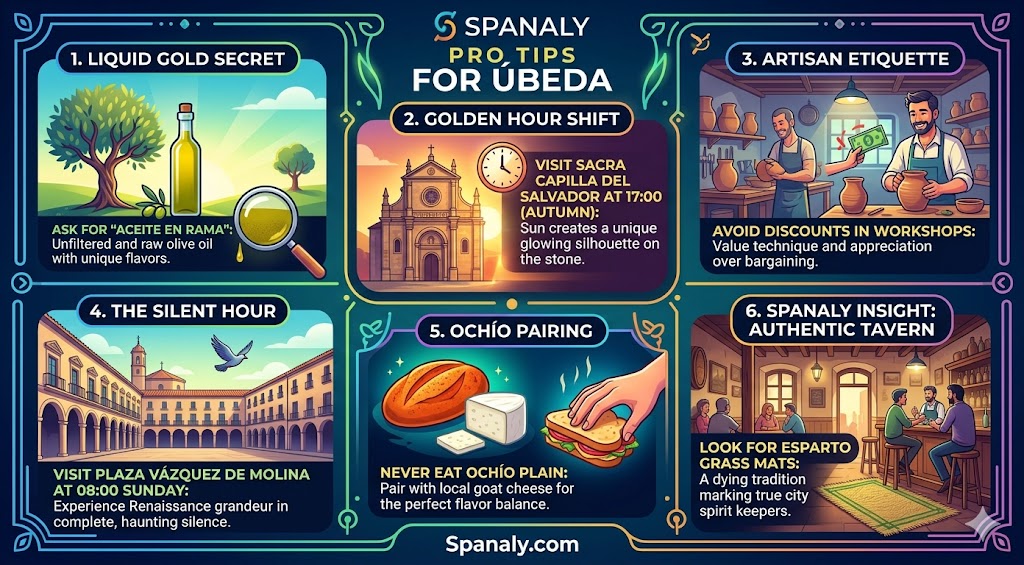
These insider insights offer a fresh perspective on Úbeda, gathered from local artisans and seasoned explorers who know the city’s true heartbeat.
The “Liquid Gold” Secret: When buying olive oil, ask for Aceite en Rama. It is unfiltered and raw, preserving flavors you cannot find in standard bottles.
The Golden Hour Shift: Visit the Sacra Capilla del Salvador at exactly 17:00 in autumn. The sun hits the stone at an angle that creates a unique, glowing silhouette.
Artisan Etiquette: When visiting workshops in the San Millán district, avoid asking for discounts. Local masters value appreciation for their technique more than bargaining.
The Silent Hour: Head to the Plaza Vázquez de Molina at 08:00 on Sunday. It is the only moment you will experience the city’s Renaissance grandeur in complete, haunting silence.
Ochío Pairing: Never eat an Ochío plain. Locals know the secret is pairing the paprika bread with local goat cheese for the perfect flavor balance.
Spanaly Insight: If you want to identify an authentic tavern, look for the esparto grass mats on the floor. It is a dying tradition, but those who use them are the keepers of the true city spirit.
Úbeda is more than a destination; it is a lesson in how history thrives through craft and stone. The city’s rhythm preserves its past.
Observe the Details: Monumental plazas demand respect, but the true mastery lies in small details—pottery glazes and twilight light on limestone walls.
Contrast Your Journey: After walking these quiet, golden streets, pivot toward a different landscape. Our Logroño Travel Guide offers a rugged, culinary-focused regional counterpart to this refined elegance.
Practice Patience: Apply the patience learned here to future travels. Observe the process behind the results to genuinely uncover Spain’s hidden layers.
Spanaly Insight: Your connection to Úbeda is cemented when you stop searching for attractions and follow the scent of olive oil through narrow, unmapped alleys.