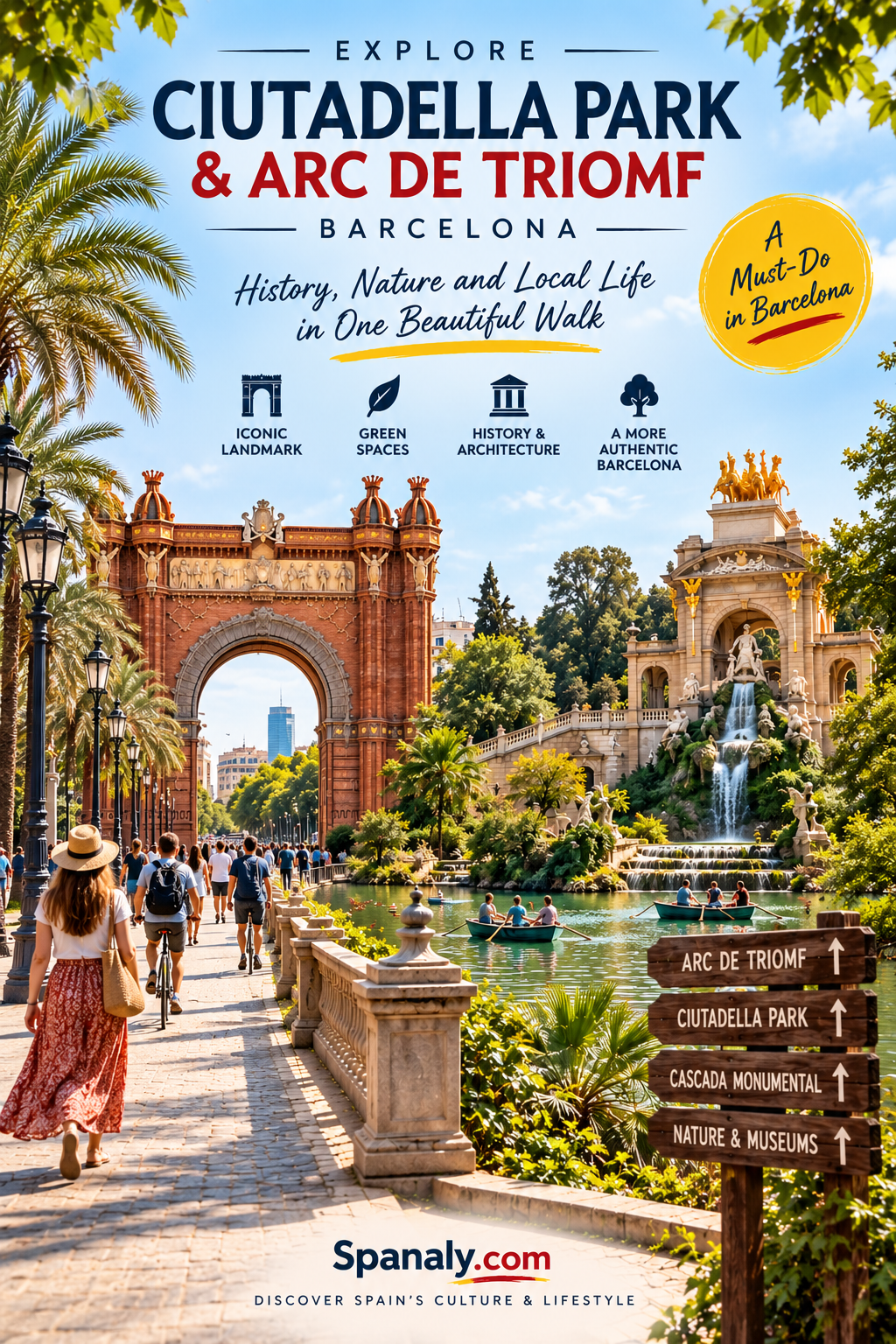
Ciutadella Park & Arc de Triomf
Barcelona’s Green Heart, One Easy Walk
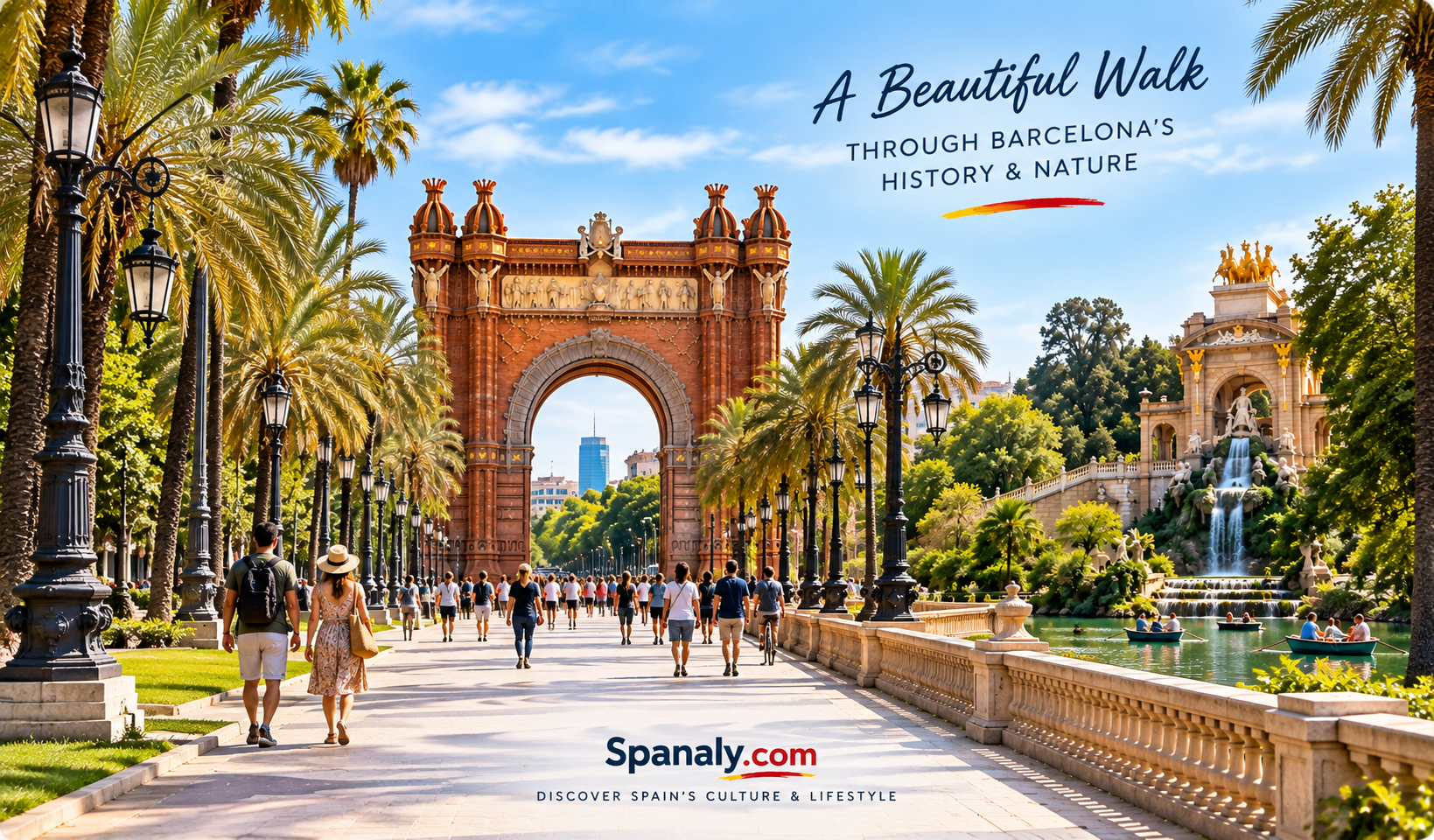
Start beneath the red-brick Arc de Triomf, follow Passeig de Lluís Companys, and let the city gradually open into Ciutadella Park.
Not two attractions.
One continuous experience.
The Arc de Triomf is the entrance to the story. Passeig de Lluís Companys is the visual link. Ciutadella is where the route slows down.
Together, they create one of Barcelona’s easiest city walks: architecture, history, trees, water and open space without constantly changing direction.
Three details that make the visit better
Why “Ciutadella”?
The name comes from the military citadel ordered by Philip V after Barcelona surrendered in 1714. The fortress was later demolished and its grounds were transformed into the public park.
Free park, separate Zoo
The Arc, promenade and public park are a free walk. Barcelona Zoo occupies part of the same site, but it is a separate paid attraction.
Look twice at the waterfall
The Cascada Monumental was designed by Josep Fontserè, with the young Antoni Gaudí contributing to parts of the work.
Arc → Promenade → Park → El Born
Arc de Triomf: a gateway, not a war monument
Barcelona built the Arc de Triomf for the 1888 Universal Exhibition. Architect Josep Vilaseca designed it as the gateway to the exhibition grounds in what is now Ciutadella Park.
That purpose changes how you should read the monument. Unlike Paris’s famous triumphal arch, Barcelona’s arch was created to welcome visitors and represent the city at an international exhibition.
At the top, the shields are associated with the 49 Spanish provinces represented in the period design, beneath Barcelona’s coat of arms.
The friezes and reliefs refer to welcoming nations, awards, agriculture, industry, commerce and art.
Why is it called Ciutadella?
“Ciutadella” comes from the citadel that once occupied this part of Barcelona.
After the War of the Spanish Succession, Philip V ordered a large military fortress to be built after Barcelona’s surrender in 1714. Its construction changed the northeastern edge of the city and required the demolition of homes in the surrounding area.
In the 19th century, the fortress was demolished and the land was transformed into a public park. By the time of the 1888 Universal Exhibition, the former military site had become one of Barcelona’s major public spaces.
Heritage of Catalonia · La Ciutadella ↗Inside Ciutadella Park
This is where the route changes pace. You don’t need to “collect” every feature.
Cascada Monumental
The park’s visual centrepiece, designed by Josep Fontserè. The monumental fountain was developed in the 19th century and completed with its sculpture programme around the exhibition era.
The Lake
A calm counterpoint to the city streets. It is a place to pause, walk around the water or simply let the visit breathe.
The Parliament
The former arsenal of the old citadel is now the seat of the Parliament of Catalonia, giving the park a direct link to its earlier history.
Umbracle & Hivernacle
Historic exhibition-era structures add architecture and botanical character without requiring you to turn the walk into a museum circuit.
Yes, Gaudí is here — but don’t turn it into a Gaudí hunt.
Josep Fontserè designed the monumental waterfall, and the young Antoni Gaudí worked with him on parts of the project. Barcelona Tourism specifically notes his association with decorative elements such as the rockwork and iron details.
It is a useful connection to notice, not a reason to rush through the park looking for a “Gaudí attraction.”
Barcelona Tourism · Cascada i Llac ↗Free walk. Separate ticket for the Zoo.
Arc + promenade + public park
The core experience is simply walking: Arc de Triomf, Passeig de Lluís Companys, Ciutadella’s paths, lake and outdoor spaces.
Barcelona Zoo
The Zoo shares the Ciutadella site, but it is a separate attraction with its own admission. Give it dedicated time if it is important to your trip.
This distinction matters especially for families: don’t treat the Zoo as a quick 20-minute add-on to an already full historic walk.
Choose one main addition.
Ciutadella is better when you leave space for it. After the park, continue naturally into El Born or choose one paid cultural stop — not everything at once.
2–4 hours, without rushing
See the arch, details and the beginning of the exhibition axis.
Walk the full perspective toward the park entrance.
Waterfall, lake, greenery and the historic buildings around the park.
Continue toward El Born, or simply slow down and enjoy the park.
Make the visit easier
Quick answers
Is Barcelona’s Arc de Triomf a military victory arch?
No. It was built as the gateway to Barcelona’s 1888 Universal Exhibition.
Why is the park called Ciutadella?
The name refers to the military citadel that Philip V ordered after Barcelona’s surrender in 1714. The former fortress site was later transformed into the public park.
Is Ciutadella Park free?
The public park and the walking route are free. The Barcelona Zoo is a separate attraction with separate admission.
Did Gaudí design Ciutadella Park?
No. Josep Fontserè was responsible for the park and monumental waterfall project. The young Gaudí collaborated on parts of the waterfall project.
How long should I spend here?
Allow roughly 2–4 hours for a comfortable visit without the Zoo. Add dedicated time if you choose a paid attraction.
Let Barcelona slow down for a while.
Arc de Triomf gives you the architecture. The promenade gives you the perspective. Ciutadella gives you the breathing space. And El Born gives you a natural next chapter.
That is why this route works so well: you are not collecting isolated sights. You are following one piece of Barcelona as it changes from exhibition city to historic neighbourhood to green public space.