
Table of Contents
Toggle🥘 Paella Valenciana
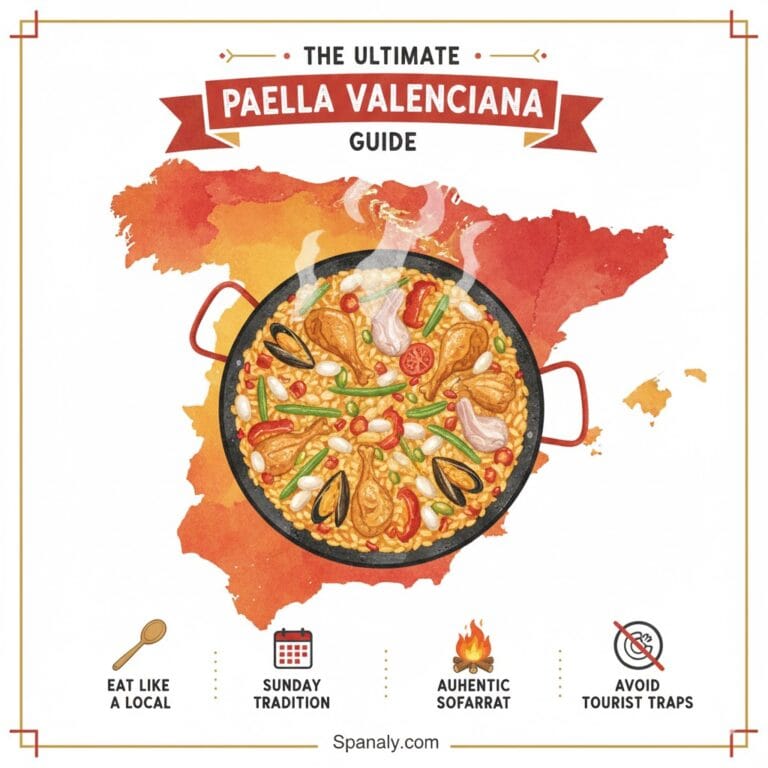
Paella Valenciana is far more than just a meal; it is a living symbol of Spain’s culinary heritage. Indeed, this masterpiece reflects the fertile lands of Valencia and stands as a crown jewel within Spanish Cuisine. Every grain of rice and every pinch of saffron tells a story of tradition that spans centuries.
✨ A Cultural Icon: It captures the warmth of shared family meals and the art of flavor precision.
✨ From Fields to Fame: Born in the humble fields of Albufera, it has evolved into a global gastronomic phenomenon.
✨ Your Gateway to Spain: Understanding this dish is the ultimate way to discover the authentic soul of the Mediterranean.
Ultimately, paella embodies the spirit of Spanish tradition. Furthermore, exploring its roots helps you appreciate the regional diversity found in our Barcelona Travel Guide. This guide ensures you distinguish between a simple rice dish and a true Valencian legacy.
💡 Spanaly Insight: Don’t rush the experience! In fact, authentic paella requires patience and an open flame. Therefore, we recommend looking for restaurants that cook to order to ensure you taste the perfect balance of fresh ingredients.
🌍 The Origins: From Albufera Fields to Global Fame
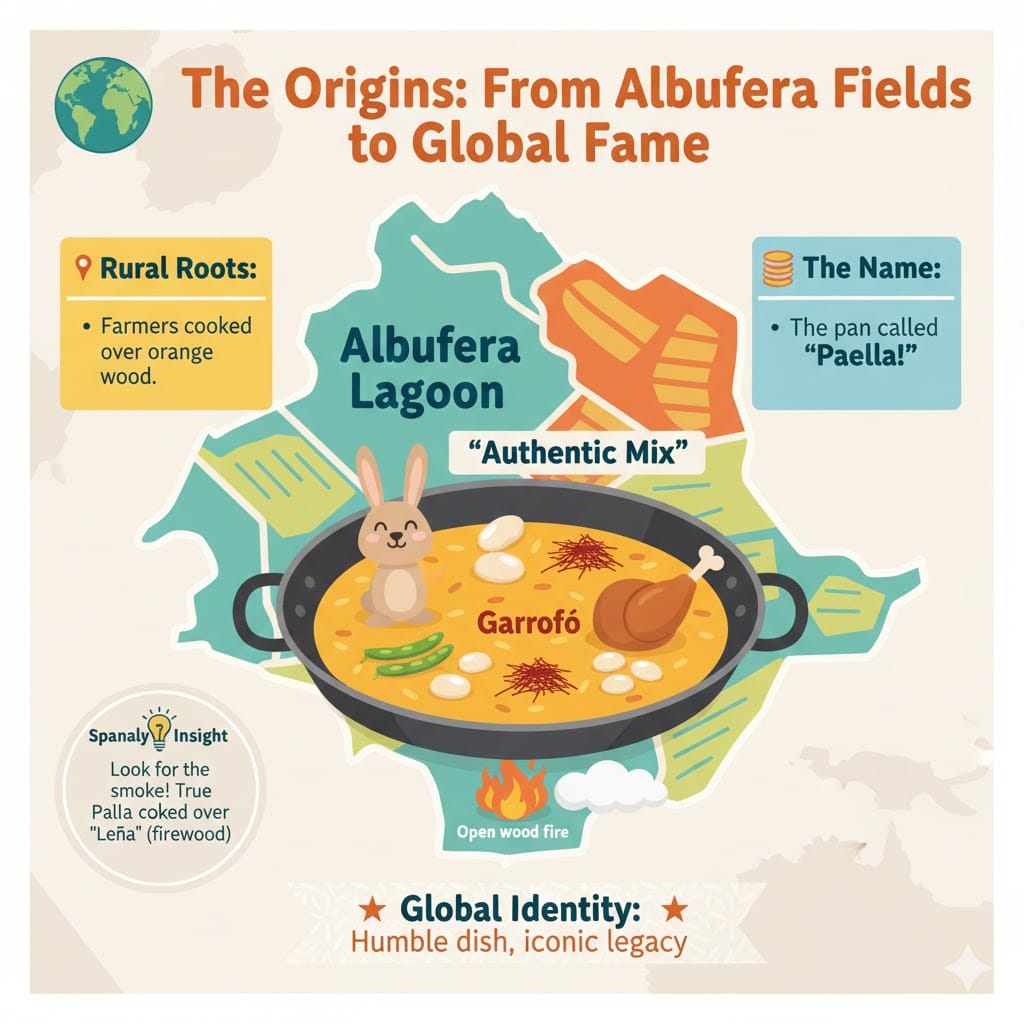
The history of paella begins in the rice fields of the Albufera Lagoon, just a short distance from the city center. During the 19th century, farmers created this hearty meal using simple, local ingredients. Today, this tradition stands as a cornerstone of Valencia Spain Travel for any food enthusiast.
📍 Rural Roots: Laborers cooked rice over open fires using orange wood to infuse the dish with a unique, smoky aroma.
🥘 Authentic Mix: The original recipe featured rabbit, chicken, and local beans, reflecting the region’s agricultural abundance.
✨ Global Identity: While it began as a humble farmer’s lunch, it eventually grew into Spain’s most famous culinary export.
Indeed, the evolution of paella mirrors the vibrant history of the region. Furthermore, understanding its roots is as essential as exploring La Lonja Valencia to appreciate the city’s rich heritage. Ultimately, the dish remains a testament to the Valencian way of life, blending simplicity with high-quality ingredients.
💡 Spanaly Insight: Respect the clock! In fact, locals traditionally eat paella only during lunch. Therefore, we recommend following the Spain Daily Rhythm to enjoy your meal exactly like a true Valencian.
🥘 The Pan (La Paella): Why the Vessel Matters
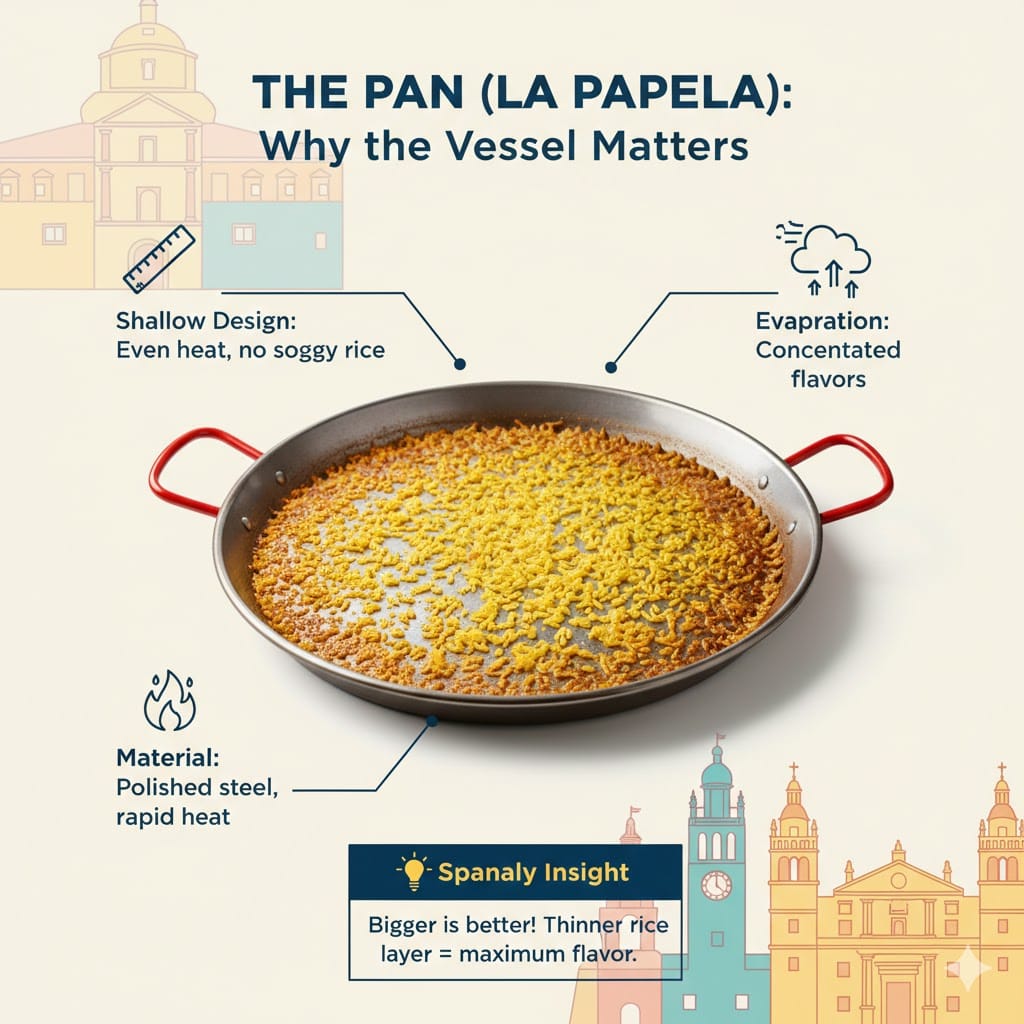
In Valencia, the word “Paella” describes the pan itself before it describes the food. This wide, shallow vessel is not just a tool; it is a critical engineering feat for the perfect rice. Choosing the right pan is as vital for a chef as finding the Best Areas to Stay in Barcelona is for a traveler.
📏 Shallow Design: The thin layer of rice ensures even heat distribution and prevents the bottom from getting soggy.
💨 Evaporation: The large surface area allows liquid to evaporate quickly, concentrating the flavors within each grain.
🔥 Material: Traditionally made of polished steel, these pans respond rapidly to temperature changes over an open fire.
Indeed, the pan’s shape is what creates the legendary texture of the dish. Furthermore, a well-seasoned pan carries the essence of previous meals, much like the historic streets of the Gothic Quarter Barcelona carry the city’s past. Ultimately, without this specific vessel, you are simply cooking rice, not crafting an authentic Valencian masterpiece.
💡 Spanaly Insight: Bigger is better! In fact, a larger pan for a smaller amount of rice creates a thinner layer, which is the secret to a professional result. Therefore, we recommend asking for a “thin” paella when dining out to ensure maximum flavor.
🌿 Authentic Ingredients: The Strict Ten Components
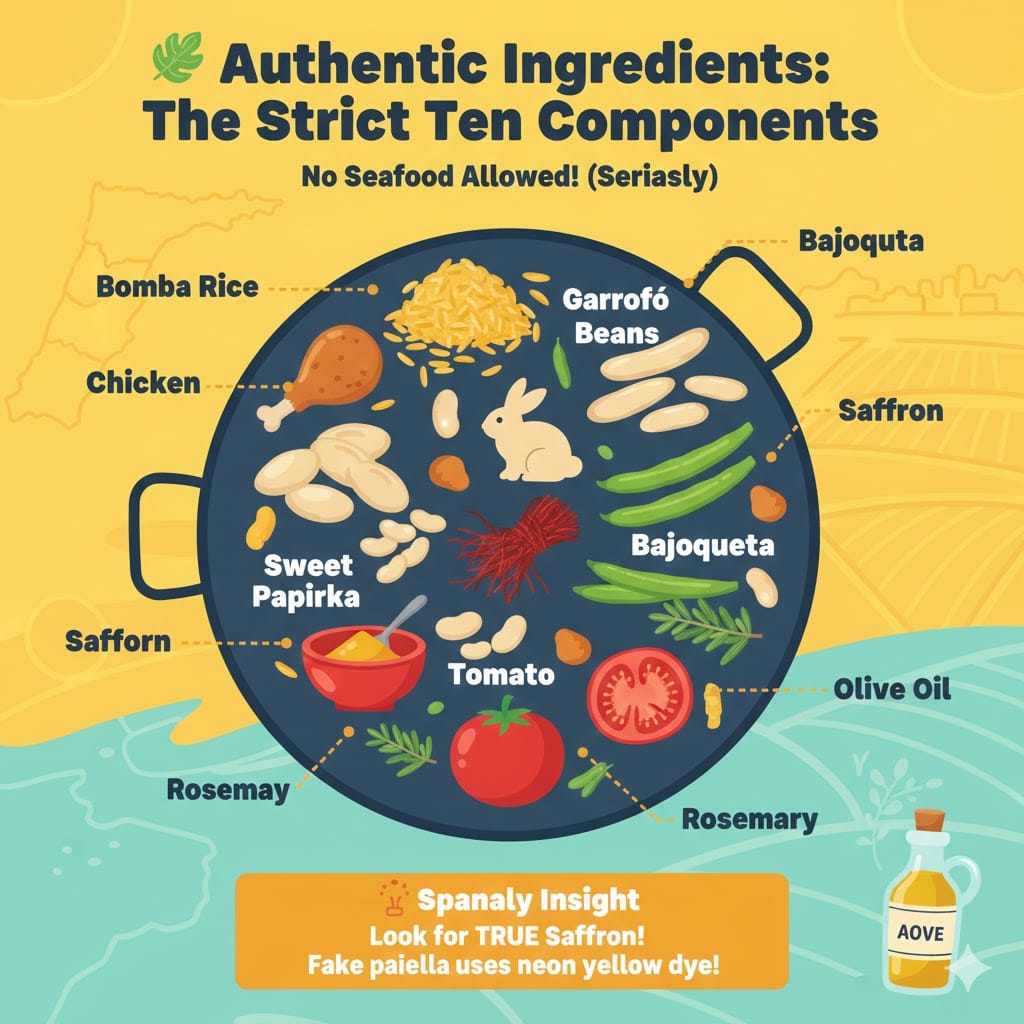
A true Paella Valenciana adheres to a rigid set of ingredients protected by tradition. Substitutions are rarely welcomed, as each component plays a specific role in the dish’s chemistry. Understanding these staples is as fundamental as learning Basic Spanish Language Tips before your first trip to Spain.
🌾 The Rice: Short-grain Bomba rice is essential; it absorbs massive amounts of broth while remaining firm.
🍖 The Proteins: Authentic recipes strictly use chicken and rabbit. Snails are traditional but remain optional.
🌱 The Beans: You must include bajoqueta (green beans) and garrofó (a large, creamy white bean).
✨ The Aromatics: Olive oil, saffron, sweet paprika, salt, tomato, and a sprig of rosemary for the final aroma.
Indeed, the absence of seafood is what defines this version. Furthermore, sourcing these ingredients from a local market is a ritual, much like visiting Mercado de Triana Seville to find fresh Andalusian produce. Ultimately, this strict list ensures that every bite carries the authentic weight of Valencian history.
💡 Spanaly Insight: No yellow food coloring! In fact, true saffron provides a deep, earthy aroma and a natural golden hue. Therefore, we recommend avoiding “fake” paellas that use artificial dyes, which you can easily spot by their neon-yellow color.
🔥 The Art of the Socarrat: Mastering the Cooking Method
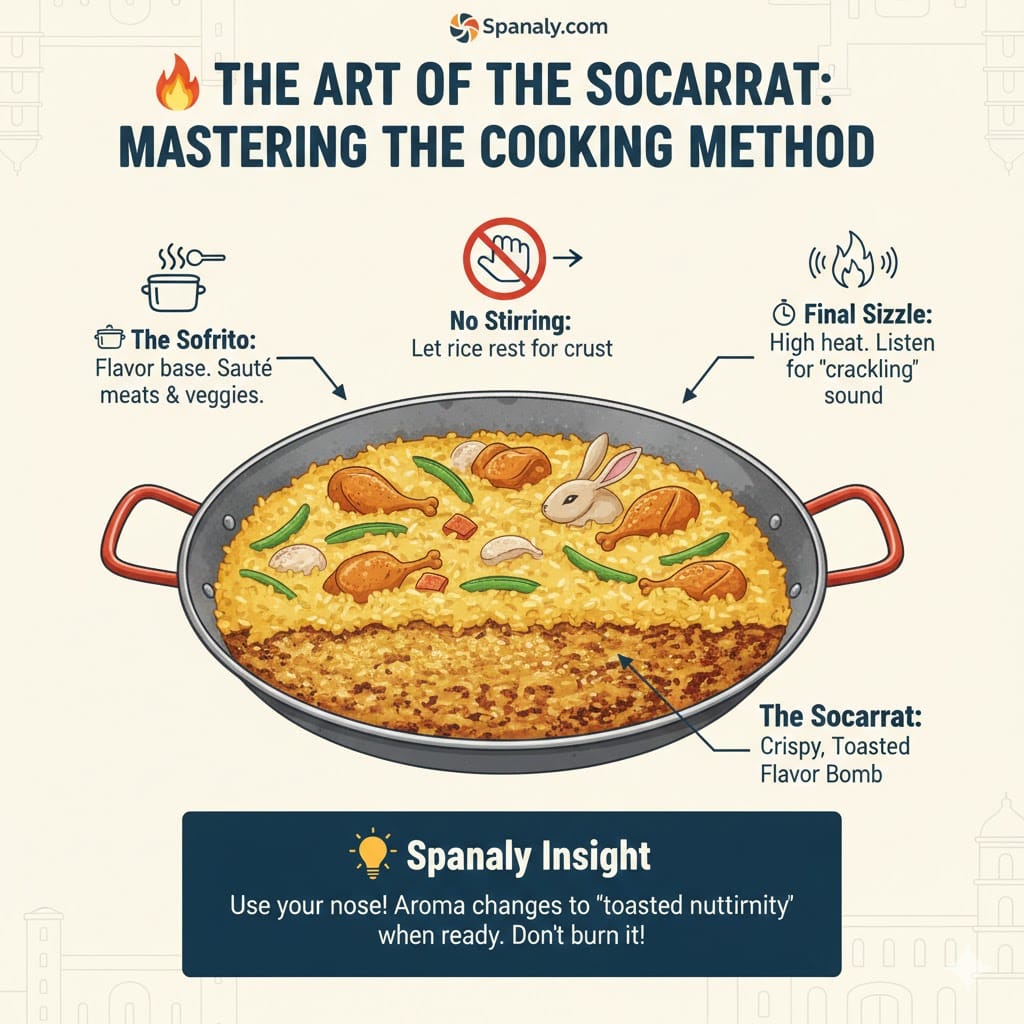
Cooking paella is a meticulous dance between heat and timing. The ultimate goal for any master chef is to achieve the Socarrat—the toasted, caramelized layer of rice at the bottom of the pan. Mastering this technique is as rewarding as discovering the Madrid Hidden Gems that most tourists overlook.
🥘 The Sofrito: Start by sautéing meats and vegetables to create a rich flavor base. This step is the foundation of the entire dish.
🚫 No Stirring: Once you add the broth and rice, stop stirring immediately. Letting the rice rest allows the starch to settle and the bottom to toast.
⏱️ The Final Sizzle: In the last few minutes, increase the heat slightly. Listen for a faint “crackling” sound—that is the signature of a perfect Socarrat forming.
Indeed, the Socarrat provides a smoky, intense flavor that defines a high-quality meal. Furthermore, learning this method requires patience, much like navigating the Public Transport Barcelona Guide for the first time. Ultimately, the contrast between the tender top rice and the crunchy bottom is what makes Paella Valenciana a culinary legend.
💡 Spanaly Insight: Use your sense of smell! In fact, the aroma changes from “boiled rice” to “toasted nuttiness” when the Socarrat is ready. Therefore, we recommend staying close to the pan in the final minutes to prevent burning this delicate crust.
🍽️ How to Eat Like a Local: The Golden Rules of Paella
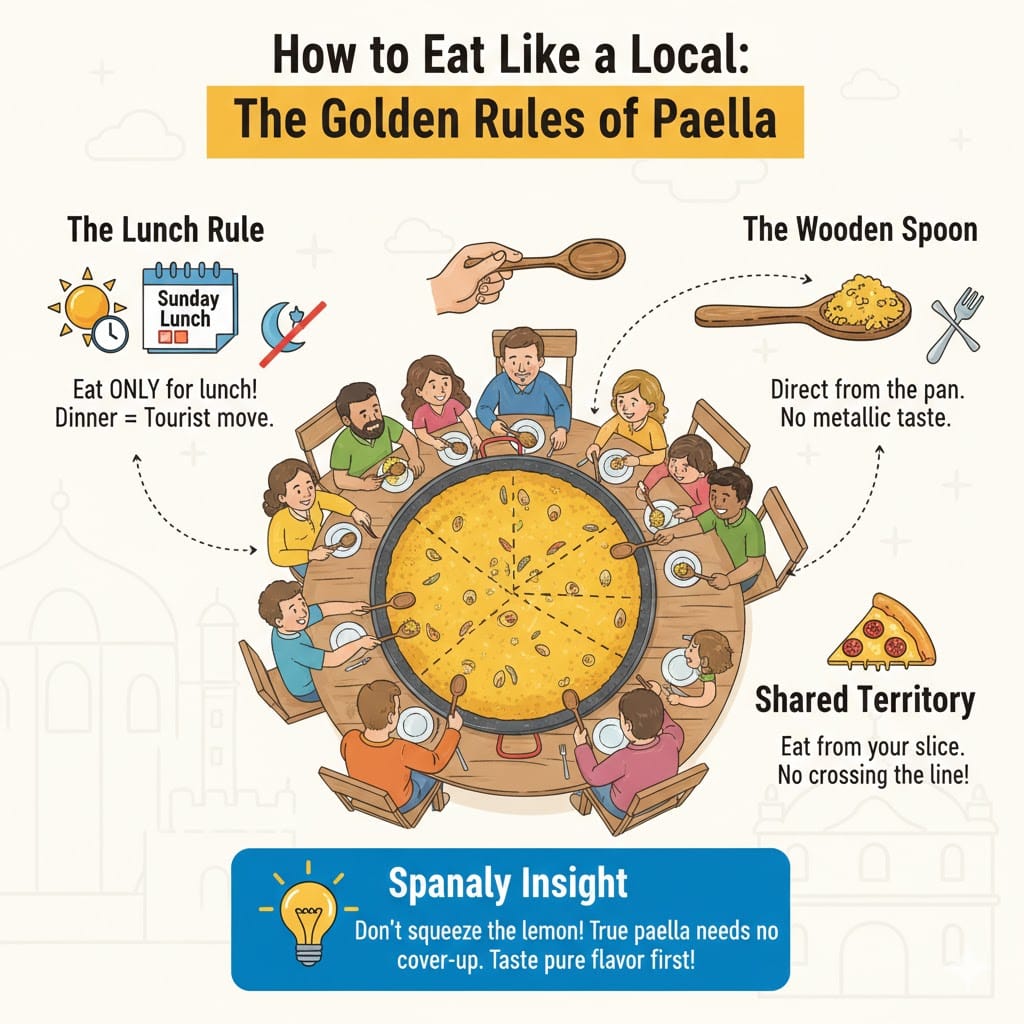
Eating paella is a social ritual governed by unwritten rules that locals hold dear. To truly enjoy the experience, you must look beyond the plate and embrace the tradition. Respecting these customs is just as important as maintaining Travel Safety in Spain during your adventures.
☀️ The Lunch Rule: Locals almost exclusively eat paella during lunch. In fact, eating a heavy rice dish for dinner is considered a “tourist move” because it takes hours to digest properly.
🥄 The Wooden Spoon: Traditionally, experts eat directly from the pan using a wooden spoon. This prevents the metallic taste of steel from interfering with the delicate saffron flavors.
🥘 Shared Territory: The pan is divided like a pizza. You should eat only from the triangular section directly in front of you, working your way toward the center.
Indeed, sharing a paella is the ultimate bonding experience for Spanish families. Furthermore, understanding the social flow of a meal helps you navigate the Spain Daily Rhythm with ease. Ultimately, following these golden rules transforms a simple lunch into a deep cultural connection.
💡 Spanaly Insight: Don’t squeeze the lemon yet! In fact, locals only add lemon to mask the flavor of a mediocre or “fishy” rice. Therefore, we recommend tasting the first bite without it to appreciate the chef’s authentic seasoning.
🔄 Paella vs. Seafood Rice: Knowing the Difference
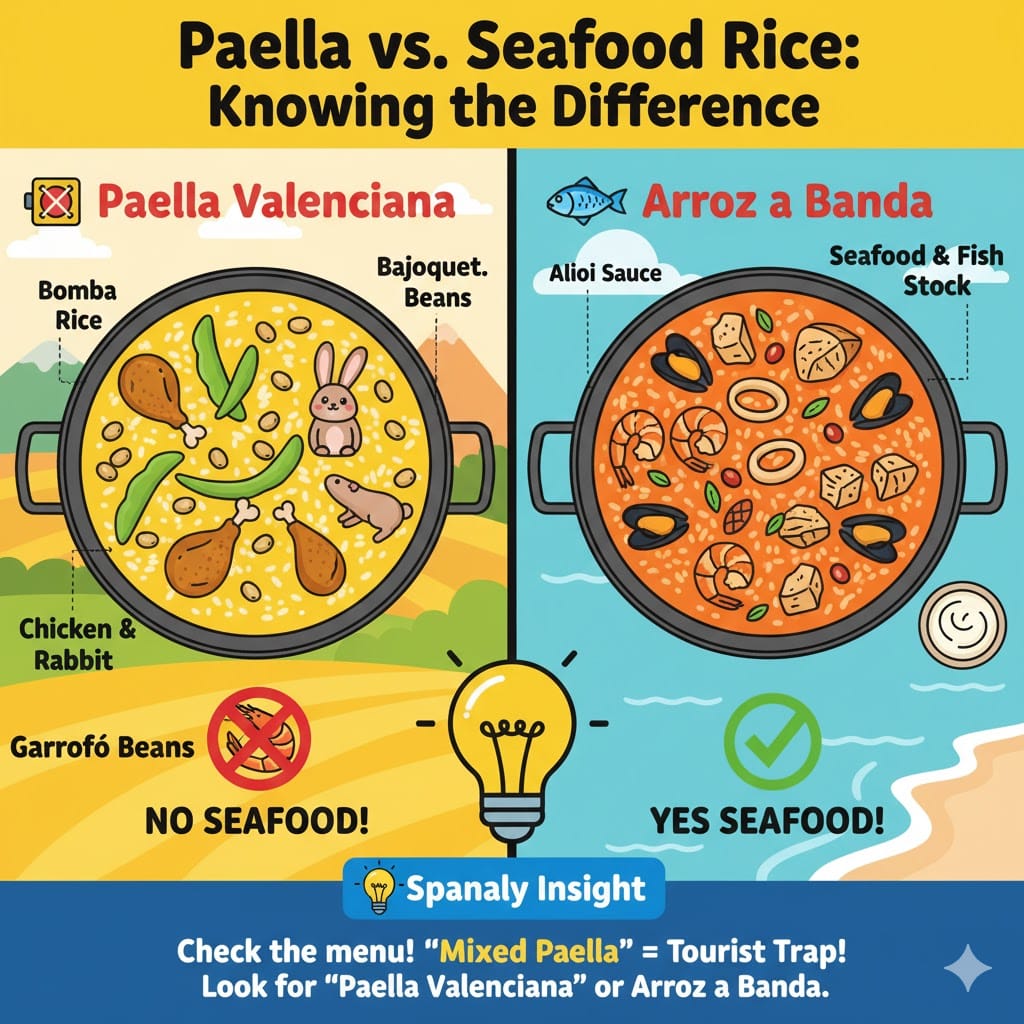
One of the most common mistakes travelers make is labeling every Spanish rice dish as “Paella.” In reality, there is a clear distinction between the authentic Valencian recipe and its seafood-based cousins. Distinguishing between them is as crucial as choosing the Best Time to Visit Spain to avoid the crowds.
🥘 Paella Valenciana: The mountain version. It features a dry texture, meat (rabbit and chicken), and specific beans. It never contains shrimp, mussels, or peas.
🐟 Arroz a Banda: The fisherman’s version. This dish focuses entirely on seafood, cooked in a deep fish stock. It is often served with a side of Alioli (garlic mayo).
🦐 Arroz del Senyoret: The “gentleman’s” rice. All seafood is peeled and shells are removed, making it easy to eat without getting your hands dirty.
Indeed, while both are delicious, they represent different regional traditions. Furthermore, if you find yourself in a coastal city, trying a seafood version is a must, perhaps after exploring the Barceloneta Beach Barcelona coastline. Ultimately, knowing the difference ensures you receive exactly what you’re craving when you order.
💡 Spanaly Insight: Check the menu! In fact, authentic restaurants will list “Paella Valenciana” and “Arroz a Banda” separately. Therefore, we recommend avoiding places that offer a “Mixed Paella” (meat and seafood combined), as this is often a sign of a tourist-oriented kitchen.
🍷 Perfect Pairings: What to Drink with Your Meal
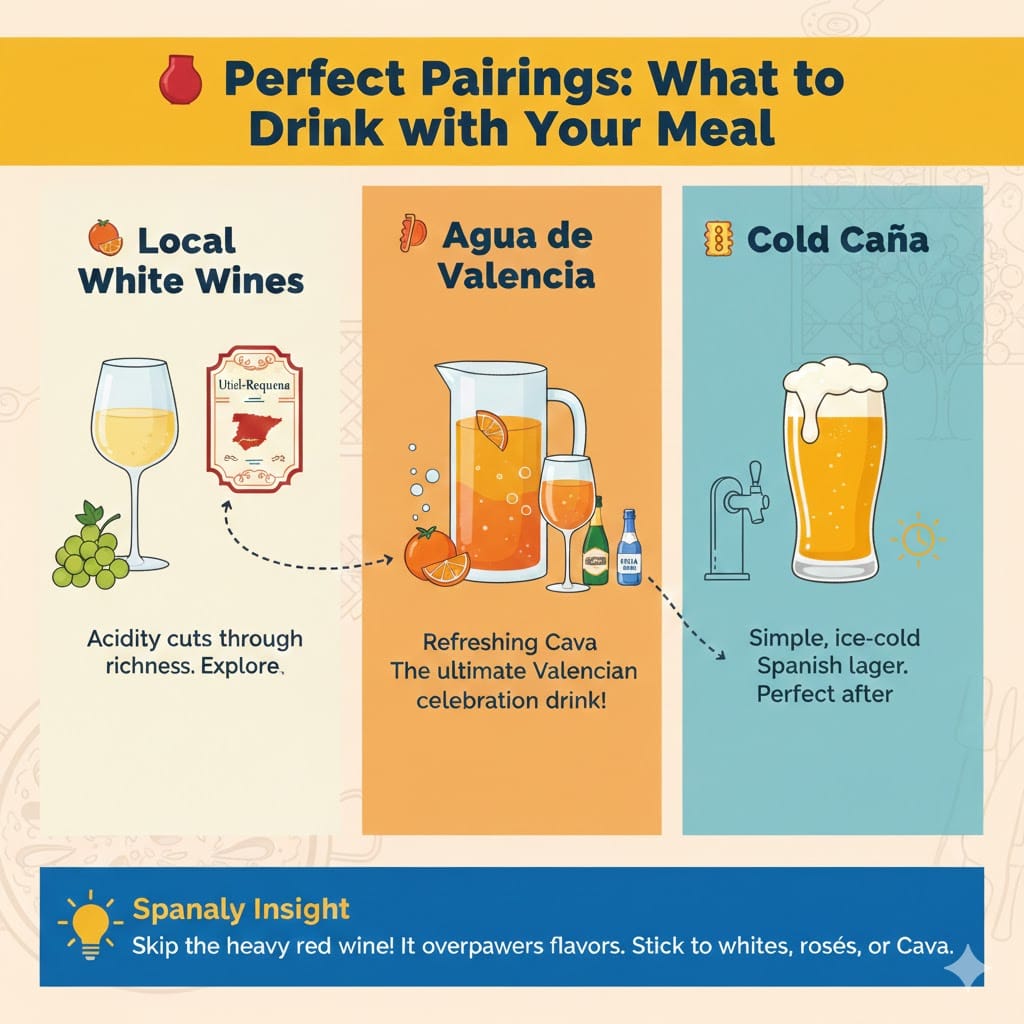
To elevate your Valencian feast, choosing the right beverage is essential. While many tourists reach for Sangria, locals know that certain drinks complement the smoky, rich flavors of the rice much better. Selecting the perfect drink is just as important as knowing the Tipping in Spain Guide to handle your bill like a pro at the end of the meal.
🍷 Local White Wines: Look for a crisp, cold white wine from the Utiel-Requena region. Exploring different Spanish Wine Regions reveals that high-acid whites are the best choice to cut through the richness of the Bomba rice.
🍹 Agua de Valencia: This is a refreshing cocktail made of fresh orange juice, cava, gin, and vodka. It is the ultimate Valencian celebration drink for a long weekend lunch.
🍻 Cold Caña: Sometimes, a simple, ice-cold Spanish lager is all you need, especially if you are dining after a long walk through the Retiro Park Madrid.
Indeed, the right pairing enhances the saffron’s earthy notes and balances the palate. Furthermore, choosing a drink from the same area where the rice is grown follows the old Spanish rule: “what grows together, goes together.” Ultimately, whether you choose a sparkling Cava or a local craft beer, the goal is to prepare your taste buds for the next delicious bite of Socarrat.
💡 Spanaly Insight: Skip the heavy red wine! In fact, high tannins often overpower the delicate saffron and rabbit flavors. Therefore, we recommend sticking to whites, dry rosés, or a cold glass of Cava for the most authentic and balanced experience.
📍 Where to Find the Best Paella in Spain
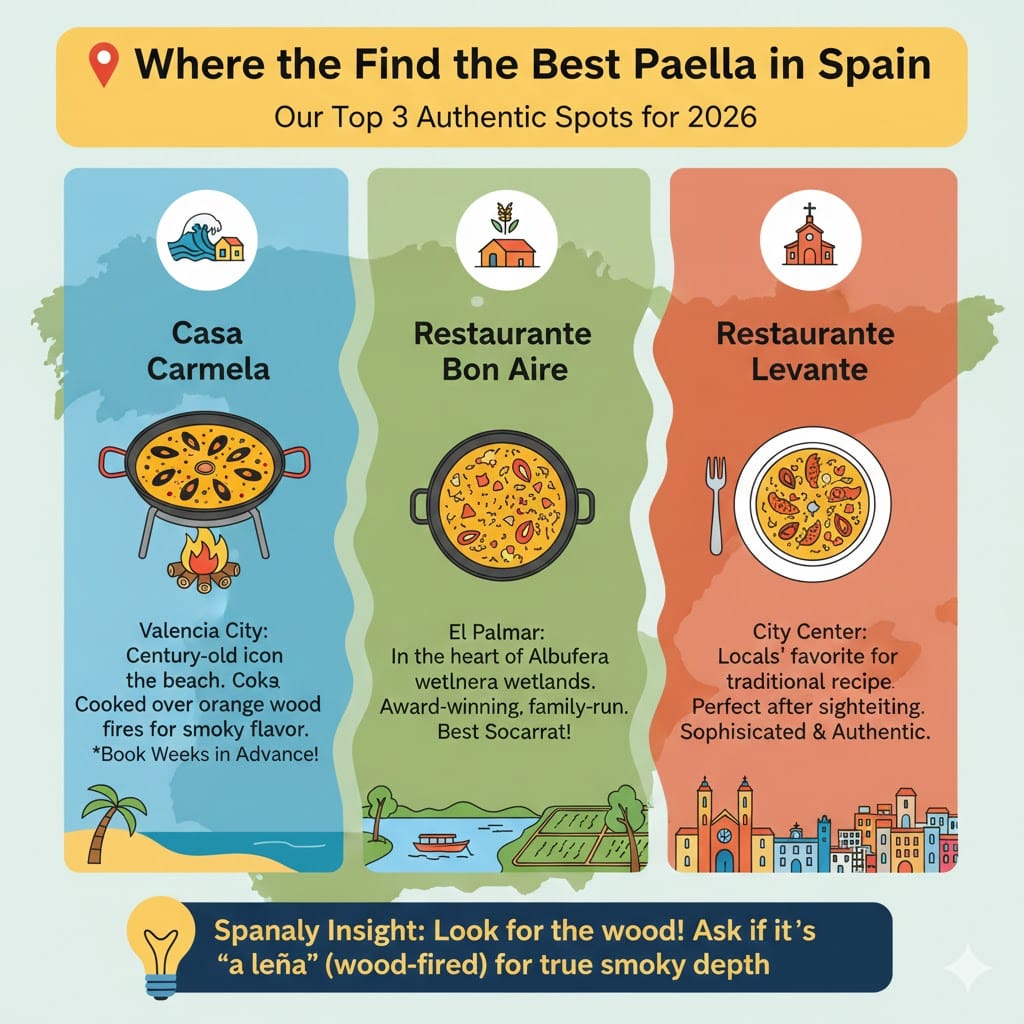
While you can find rice dishes across the country, the true pilgrimage leads to Valencia. From beachfront legends to hidden farmhouse gems, these are the top spots to experience authenticity in 2026. Finding these locations is as essential for your itinerary as booking the Best Tours in Madrid to complete your Spanish journey.
🌊 Casa Carmela (Valencia City): A century-old icon near Malvarrosa Beach. They still cook over orange wood fires, giving the rice a unique smoky aroma. Note: You must book weeks in advance for 2026, especially for their wood-fired Valencian paella.
🌾 Restaurante Bon Aire (El Palmar): Located in the heart of the Albufera wetlands—the birthplace of rice. Led by award-winning chefs, this family-run gem offers a rural vibe and arguably the best Socarrat in the region.
⛪ Restaurante Levante (City Center): Hailed by locals as the home of the most consistent traditional Paella Valenciana. It’s the perfect stop after a morning of sightseeing, offering a sophisticated but deeply traditional menu.
Indeed, these restaurants represent the “gold standard” of Spanish gastronomy. Furthermore, a meal here is a slow experience, much like strolling through the Park Guell Barcelona; you cannot rush perfection. Ultimately, dining at these locations ensures you are not just eating, but participating in a living Valencian tradition.
💡 Spanaly Insight: Look for the wood! In fact, the most authentic restaurants (like Casa Carmela) display their firewood prominently. Therefore, we recommend asking if the paella is “a leña” (wood-fired) to ensure you are getting the smoky depth that defines a true masterpiece.
📅 When to Eat Paella: Seasons and Celebrations
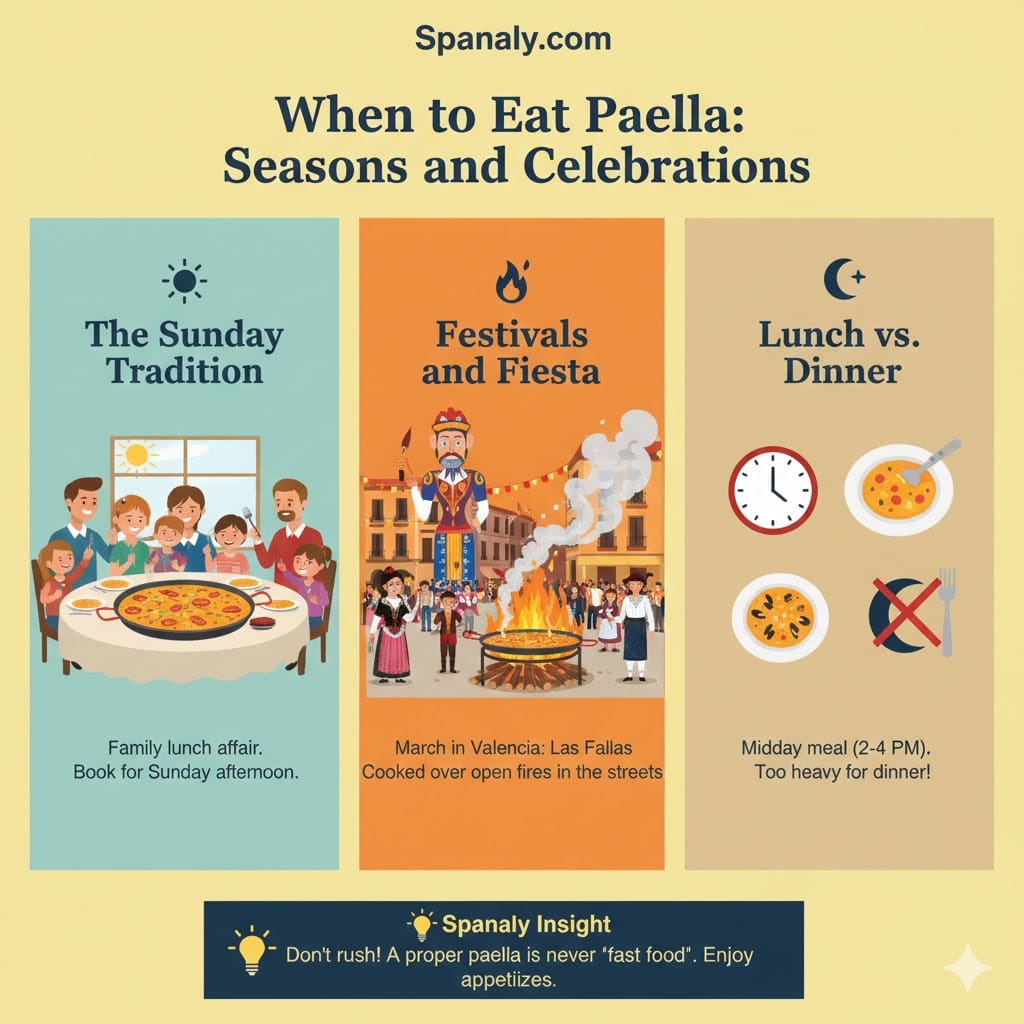
In Spain, Paella is far more than just a meal; it is a cultural ritual tied to specific times and grand celebrations. Understanding the “when” is just as vital as knowing the Best Time to Visit Spain to ensure your culinary journey aligns with local traditions.
☀️ The Sunday Tradition: Traditionally, Sunday lunch is the sacred time for Paella. It is the day families gather around a massive pan to socialize. To experience the most authentic atmosphere, we recommend booking your table for a Sunday afternoon.
🔥 Festivals and Fiesta: If you visit Valencia in March, you will witness the city transform during its most famous celebration. In fact, as highlighted in our Ultimate Spain Festivals Guide, Paella takes center stage during festivals like Las Fallas, where hundreds of pans are cooked over open fires in the streets.
🌙 Lunch vs. Dinner: Authenticity dictates that Paella is a midday meal. Because it is rich and filling, Spaniards rarely eat it for dinner. Therefore, to eat like a local, you should plan your feast between 2:00 PM and 4:00 PM.
Indeed, timing your meal with these traditions ensures you get the freshest ingredients and the most vibrant atmosphere. Furthermore, much like the process of deciding to Apply for a Digital Nomad Visa Spain, a little bit of planning goes a long way in making your stay memorable. Ultimately, whether it’s during a local “Fiesta” or a quiet Sunday, Paella is a celebration of life itself.
💡 Spanaly Insight: Don’t rush! In fact, a proper wood-fired paella is never “fast food.” Therefore, we recommend arriving at the restaurant with plenty of time to enjoy your appetizers while the rice develops its perfect texture in the kitchen.
⚠️ Avoiding Tourist Traps: How to Spot Frozen Paella
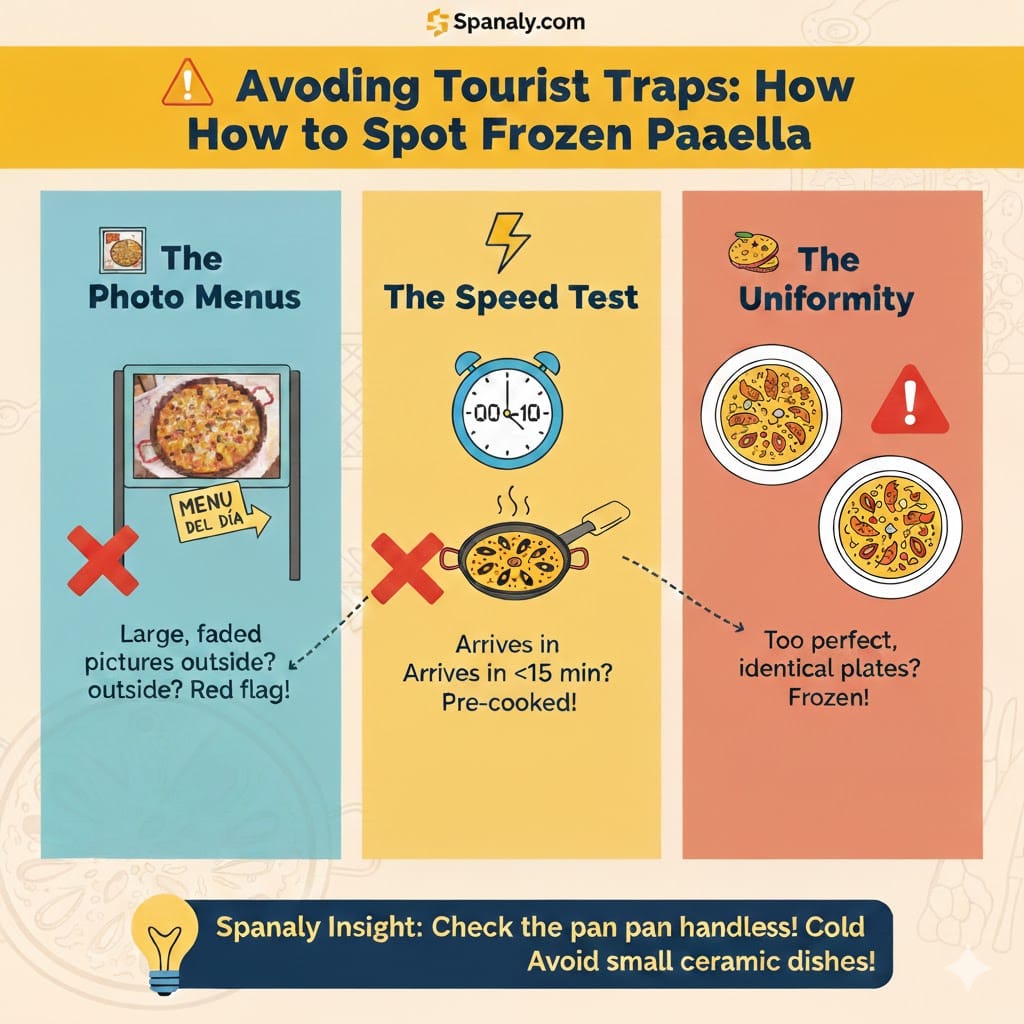
Unfortunately, many restaurants in high-traffic areas serve “pre-cooked” or frozen rice dishes under the guise of authenticity. Identifying these traps is as crucial as knowing how to use Public Transport Madrid to avoid overpaying for taxis during your stay. To ensure you’re getting a fresh meal, look for these warning signs.
🖼️ The Photo Menus: If the restaurant has large, sun-faded photos of paella on a board outside, it’s a red flag. Authentic places rely on their reputation and fresh daily ingredients, not plastic signs.
⚡ The Speed Test: A real paella takes at least 20 to 40 minutes to prepare from scratch. In fact, if your rice arrives in less than 15 minutes, it was almost certainly pre-cooked or microwaved.
🥘 The Uniformity: Authentic rice has slight variations in color and texture. Furthermore, frozen versions often look “perfectly yellow” and have perfectly arranged toppings that look identical on every table.
Indeed, the difference in taste between fresh and frozen is night and day. Furthermore, staying vigilant about what you eat is an essential part of Travel Safety in Spain, as it protects you from both culinary disappointment and overpricing. Ultimately, a little bit of observation will save you from a mediocre meal and a “tourist tax” price tag.
💡 Spanaly Insight: Check the pan handles! In fact, if the handles are cold to the touch when the dish arrives, the rice was likely heated in a microwave and transferred to a pan. Therefore, we recommend being cautious of any “Paella” served in individual, small ceramic dishes instead of the traditional flat iron pan.
💡 Spanaly Pro Tips for Foodies
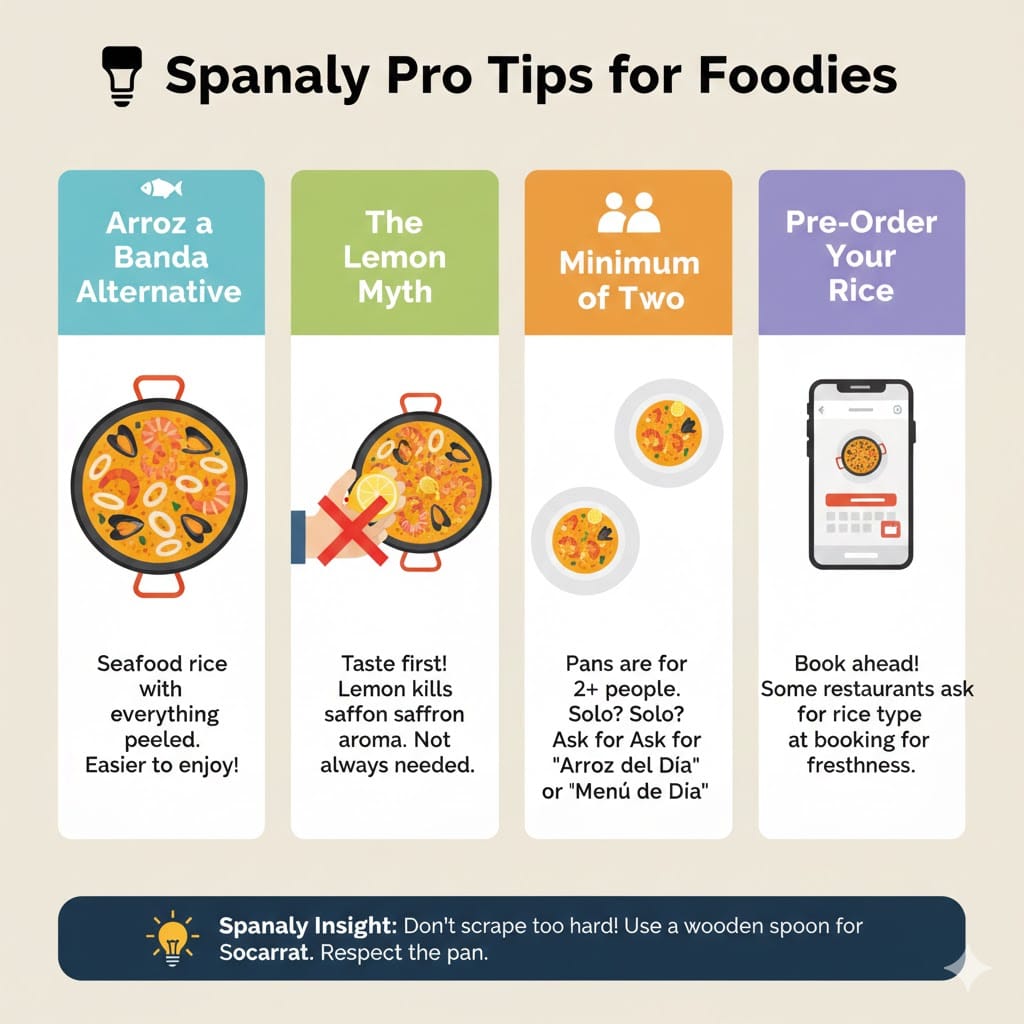
To truly master the art of the Valencian feast, keep these expert tips in mind. These “insider secrets” will ensure your experience is as seamless as choosing the Essential Spanish Cookware for your own kitchen—a must-know for any culinary enthusiast.
📞 The “Arroz a Banda” Alternative: If you find the traditional rabbit and snail version too “bony,” order Arroz a Banda. It is cooked in a rich fish stock but served with all the seafood already peeled and “clean,” making it much easier to enjoy without the mess.
🍋 The Lemon Myth: While most restaurants serve paella with lemon wedges, many purists believe squeezing lemon over the rice kills the delicate saffron aroma. In fact, we recommend tasting the rice first; if it’s cooked perfectly, you won’t need the acidity of the lemon.
🥘 Minimum of Two: Keep in mind that most authentic pans are prepared for a minimum of two people. If you are a solo traveler, look for the “Arroz del Día” on a Cost of Living in Spain friendly Menú del Día to avoid paying for a double portion.
📱 Pre-Order Your Rice: When booking a table at a high-end Arrocería, the staff might ask you which rice you want at the time of booking. This is because they start the broth and prep based on the number of pans for the day to ensure maximum freshness and quality.
Indeed, following these cultural nuances will earn you the respect of the staff and locals alike. Furthermore, knowing how to navigate these menus is a sign of a seasoned traveler who values quality over convenience. Ultimately, the best tip is to be patient; a great paella is a slow-cooked masterpiece that cannot be rushed.
💡 Spanaly Insight: Don’t scrape too hard! While you want the Socarrat, avoid scraping the actual metal of the pan with your spoon. In fact, use a wooden spoon if provided, as it preserves the flavor and respects the tradition of the vessel.
🥘 Visitor FAQs – Paella Valenciana Secrets 2026
🌿 Can I find a Vegetarian version of Paella Valenciana?
🌾 Is Paella gluten-free and safe for Celiacs?
💰 Why is Paella so expensive in some restaurants?
🥄 Is it true that Paella shouldn't be eaten with a fork?
🥡 Can I take the leftovers home (Doggy Bag)?
Authentic Paella Guide by Spanaly.com
✨ The Soul of Valencia
Paella is more than food—it’s a celebration of life. 🥘
Savor the Moment: Don’t rush. Authentic rice takes time! ⏳
Keep it Real: Look for the Socarrat and avoid the tourist traps. 🔍
Share the Joy: It’s always better with good company and a cold drink. 🍷
Hungry for more Spanish flavors? 😋
If you loved the rich taste of Valencia, you’ll definitely enjoy the creamy, refreshing Salmorejo: The Ultimate Spanish Cold Soup. It’s the perfect dish to cool down after a sunny feast! 🍅🥣
¡Buen provecho! See you on the sunny terraces of Spain! 🇪🇸✨