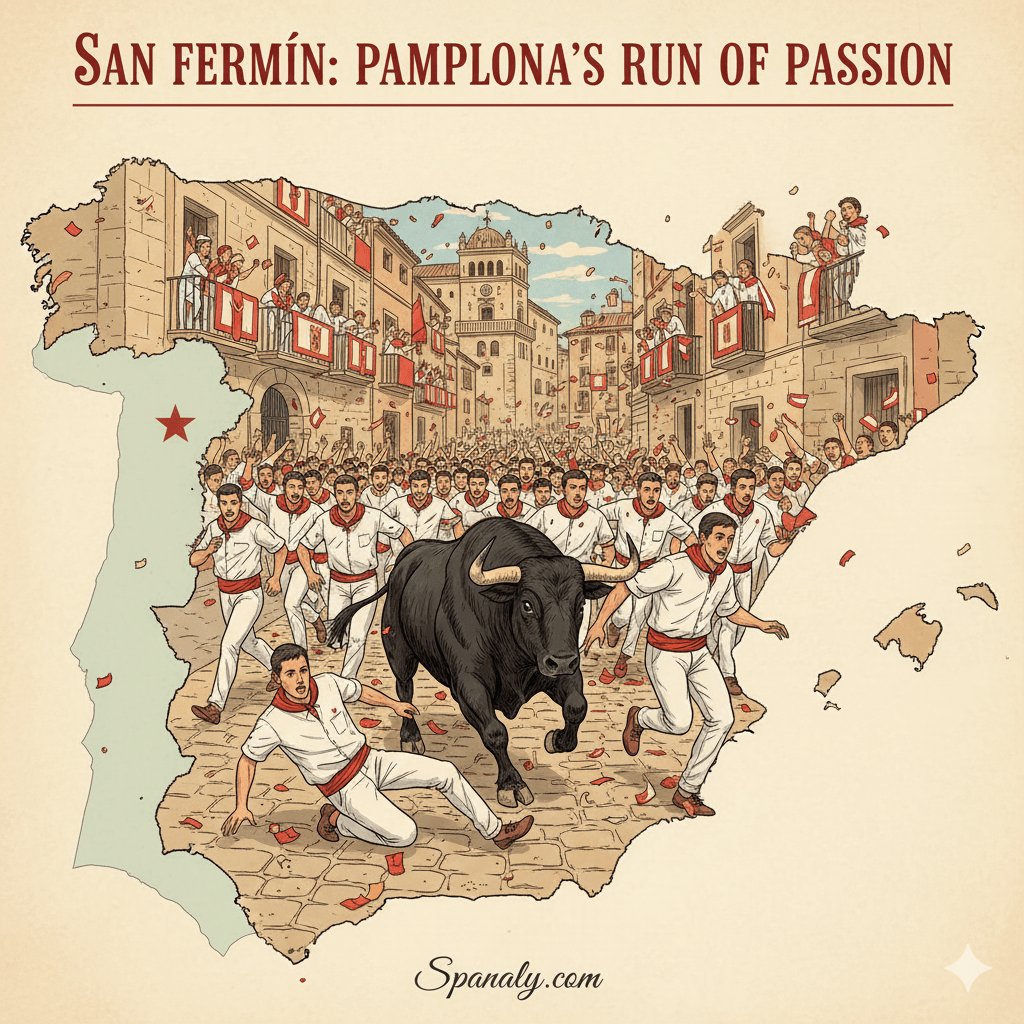
🗺️ Every summer, the city of Pamplona awakens to the world-famous San Fermín Festival. Beyond the thrilling Running of the Bulls, this nine-day event is a vibrant tapestry of history and communal joy. Consequently, this San Fermin Festival Guide serves as your essential roadmap to experiencing Pamplona‘s most legendary heritage.
In addition to the adrenaline-pumping races, these festivities are a major highlight of the calendar of traditional festivals in Spain. Therefore, whether you are a thrill-seeker or a culture lover, this guide ensures you capture the true spirit of the city from the opening Chupinazo to the final farewell
Table of Contents
Toggle⏳ Origins and History: The Roots of Pamplona's Pride
The San Fermín Festival traces its roots back to the Middle Ages, originally starting as a religious feast to honor San Fermín, the patron saint of Pamplona and Navarre. Over centuries, this sacred celebration merged with commercial cattle fairs and bullfighting spectacles. Consequently, what began as a solemn devotion transformed into the world-famous event we see today.
In addition to its religious origins, the festival’s global fame was propelled by Ernest Hemingway in the 1920s. However, for the locals, the heartbeat of the festival remains its strict ceremonial timeline. Understanding this schedule is vital for any San Fermin Festival Guide to ensure you don’t miss the key moments.
| Key Event | Date & Time | What Happens? |
| The Chupinazo | July 6 at 12:00 PM | The official opening rocket fired from City Hall balcony. |
| San Fermín Procession | July 7 at 10:00 AM | A solemn and beautiful parade honoring the saint. |
| The Encierro | July 7–14 at 8:00 AM | The daily Running of the Bulls through the old town. |
| Pobre de Mí | July 14 at Midnight | The emotional closing ceremony where candles are lit. |
In short, the transition from the explosion of the Chupinazo to the tearful Pobre de Mí represents the full emotional cycle of Pamplona. Therefore, knowing these milestones allows you to appreciate the festival’s historical depth beyond just the adrenaline of the streets.
🐂 The Running of the Bulls (Encierro)
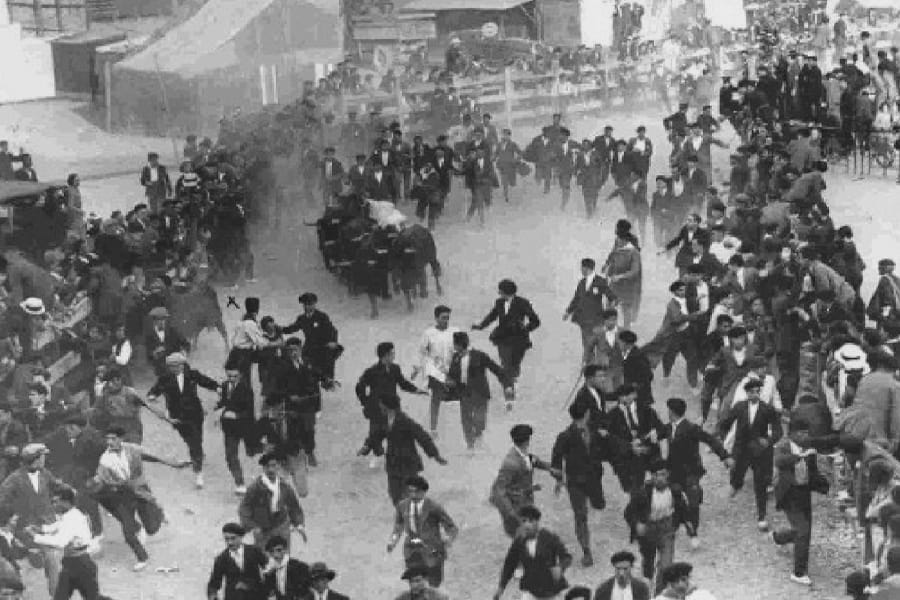
The Encierro is undoubtedly the most iconic event of the San Fermín Festival, occurring daily at 8:00 a.m. from July 7th to the 14th. In addition to being a display of raw courage, it is a highly regulated ritual that requires both physical fitness and mental focus. For anyone using a San Fermin Festival Guide, understanding the mechanics of the run is essential for safety.
While the race lasts only about two to three minutes, the preparation begins hours earlier. Hundreds of runners, dressed in the traditional white and red attire, gather in the historic streets of Pamplona to face six fighting bulls and six steers.
| Encierro Fact | Details |
| Total Distance | 875 meters (approx. 0.54 miles). |
| The Route | Through the narrow streets of Santo Domingo, Mercaderes, and Estafeta. |
| The Finish Line | The Pamplona Bullring (Plaza de Toros). |
| The Signal | Four rockets are fired to indicate the stages of the run. |
⚠️ Safety and Rules for Runners
Consequently, participation is not a game and carries significant risks. Therefore, if you plan to run in Pamplona, you must follow these non-negotiable rules:
Age Limit: You must be at least 18 years old.
No Alcohol: Under no circumstances should you run while intoxicated.
No Distractions: Backpacks, cameras, and flip-flops are strictly forbidden on the route.
Exit Strategy: If you fall, do not get up immediately; stay down and cover your head until the bulls have passed to avoid being gored.
In summary, the Encierro is a heart-pounding tradition that defines the spirit of Pamplona. However, witnessing it from a balcony is often a much safer and equally thrilling alternative for most visitors.
🎭 Traditions and Festivities Beyond the Bulls
While the adrenaline of the Encierro grabs the headlines, the soul of the San Fermín Festival lies in its diverse cultural celebrations. In addition to the morning races, the city of Pamplona transforms into a continuous open-air theater. Consequently, any comprehensive San Fermin Festival Guide must highlight the cultural gems that define the Navarrese spirit.
| Tradition | Description | Why It’s Special |
| Gigantes y Cabezudos | A parade of 4-meter-tall giants and “Big-Headed” figures. | A beloved family tradition that dates back over 150 years. |
| The Charangas | Lively brass bands that roam the streets all day and night. | They provide the festive “soundtrack” that keeps the city dancing. |
| Daily Fireworks | A world-class international fireworks competition at the Citadel. | Each night at 11:00 PM, the sky over Pamplona lights up in a spectacular show. |
| Rural Sports | Traditional Basque exhibitions of stone lifting and wood chopping. | A raw display of strength that honors the region’s agricultural roots. |
🎶 The Music and the Streets
Furthermore, the festive atmosphere is fueled by the Peñas (social clubs). These groups, dressed in their specific colors, lead the parades with banners and music. While wandering the historic center of Pamplona, you will encounter spontaneous dancing and singing in every plaza. Therefore, the city feels like one giant, welcoming community.
🧒 Family Fun: Giants and Big-Heads
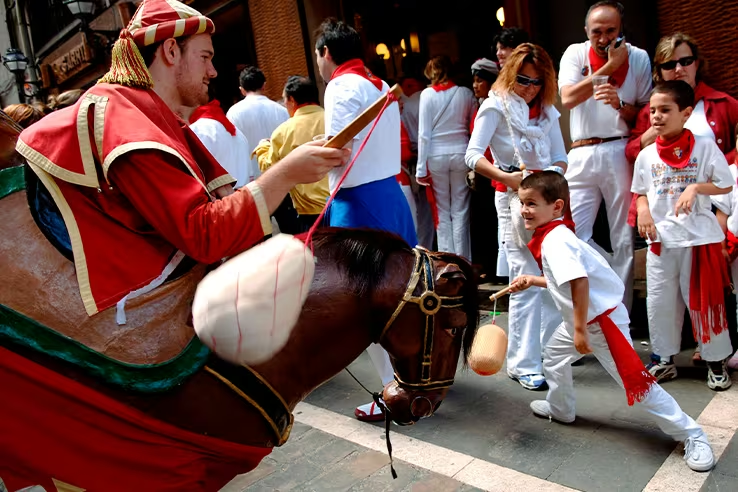
Moreover, if you are traveling with family, the Comparsa de Gigantes y Cabezudos is a must-see. The eight giants representing the four corners of the world are the true “celebrities” for children in Pamplona. Consequently, watching the children hand over their pacifiers to the giants is one of the most heartwarming traditions you will witness.
🏛️ Cultural Significance: From Hemingway to Basque Heritage
The San Fermín Festival is far more than a sequence of events; it is a profound symbol of Spanish identity and Navarrese pride. In addition to its local importance, the festival’s fame reached a global scale thanks to the American writer Ernest Hemingway. His 1926 novel, The Sun Also Rises, immortalized the intensity, drama, and raw emotion of Pamplona in July. Consequently, generations of travelers have been drawn to the city, seeking the same “lost generation” spirit Hemingway so vividly described.
While international visitors often come for the thrill, the core of the festival remains deeply rooted in the Basque and Navarrese spirit. Therefore, understanding the cultural layers is essential for any San Fermin Festival Guide.
| Cultural Pillar | Meaning & Impact |
| Devotion | The religious connection to San Fermín remains the moral compass of the city. |
| Courage | Facing the bulls is seen as a rite of passage and a display of nobleza (nobility). |
| Community | The Peñas (local clubs) ensure that the festival remains a shared experience for all generations. |
| The Hemingway Legacy | His love for Pamplona transformed it from a local fair into a global bucket-list destination. |
🖋️ The Hemingway Connection
Furthermore, Hemingway didn’t just write about the festival; he lived it. He was captivated by the “honesty” of the bullfights and the unbridled joy of the streets. Today, you can still visit his favorite haunts, such as Café Iruña in Plaza del Castillo, which remains a living museum of that era. In summary, the cultural significance of San Fermín lies in this unique intersection of local tradition and world literature.
💡 Insider Tips for a Perfect San Fermín Experience
To navigate the chaos of the festival like a pro, follow these concentrated San Fermin Festival Guide tips. Furthermore, these small adjustments can significantly improve your safety and enjoyment in Pamplona.
| Tip Category | Actionable Advice |
| 🎟️ Accommodation | Book at least 6 months in advance; prices triple during the festival. |
| 🧣 The Uniform | Wear all white with a red scarf (pañuelo) and sash (faja) to be treated like a local. |
| 👀 Encierro Views | If you aren’t running, rent a balcony space early. Street-level views are often blocked by crowds. |
| 🚆 Transport | Use the “Villavesas” (local buses); they run 24/7 during the festival. |
| 🍴 Dining | Avoid the main square for lunch; head to Calle San Nicolas for better, cheaper pintxos. |
| 🗣️ Communication | While English is widely spoken in tourist areas, knowing a few essential Spanish phrases for travelers will help you connect more deeply with the locals during the festivities. |
✨ Essential Highlights
The First Drink: Traditionally, the first drink after the Chupinazo is Sangria or Kalimotxo (red wine and cola).
Safety First: If you find yourself in a crowd crush, move diagonally to the edges. In addition to this, keep your belongings in a front-facing pouch to avoid pickpockets.
The “Sirimiri” Prep: While July is hot, northern Spain can have sudden light rain. Therefore, a light, foldable waterproof jacket is a smart addition to your pack.
📍 Practical Information for Visitors
For a seamless trip to the San Fermin Festival, timing and logistics are key. Consequently, here is the essential data you need to organize your visit to Pamplona efficiently.
| Detail | Essential Info |
| 📅 Dates | July 6th (12:00 PM) to July 14th (Midnight). |
| ✈️ Arrival | Pamplona Airport (PNA) or high-speed train (AVE) from Madrid/Barcelona. |
| 🚌 Local Travel | The city center is pedestrian-only; use the 24h festival bus service. |
| 🌡️ Weather | Hot days (25–30°C) and cooler nights; occasional summer thunderstorms. |
🚉 Getting There and Around
Many visitors choose the bus or train to avoid the extreme parking difficulties in Pamplona during July. High-speed trains connect Pamplona to major hubs, making it easy to continue your journey with our Madrid City Guide or explore Catalonia. In addition to this, many travelers choose to explore the nearby Basque capital; you can find the best things to do in our Bilbao Travel Guide Attractions article. Therefore, once you arrive, walking is the most practical way to navigate the historic heart of the festival.
🐂 Visitor FAQs – San Fermín Festival
📅 When does the San Fermín Festival take place?
The festival is held annually from July 6th to July 14th. It starts with the Chupinazo rocket at noon on the 6th and ends with the "Pobre de Mí" ceremony at midnight on the 14th.
🐂 Is it mandatory to run with the bulls?
No, the run is optional. Many visitors enjoy the festival by watching from balconies, attending concerts, parades, and fireworks, experiencing the vibrant street life without participating in the run.
⚠️ Is the Running of the Bulls dangerous?
Yes, the Encierro is inherently dangerous. It requires high physical fitness and strict adherence to safety rules. First-time visitors are strongly advised to observe rather than participate.
👕 What should visitors wear during San Fermín?
The traditional attire is white clothes with a red scarf and sash. While not mandatory, wearing this helps you blend in and fully embrace the unique festival atmosphere.
🏨 How far in advance should I book accommodation?
Book at least 5 to 6 months in advance. Pamplona fills up quickly and prices spike as July approaches. Nearby towns are a great alternative if city hotels are full.
👨👩👧 Is San Fermín suitable for families?
Yes, with planning. Daytime parades and fireworks are family-friendly, but late nights and the crowded bull-run route are less suitable for young children.
🚲 How easy is it to move around Pamplona?
The historic center is mostly pedestrian-only during the festival. Walking is best, while 24-hour local buses connect outer neighborhoods and hotels efficiently.
Created by Spanaly.com
🌅 The San Fermín Festival is more than a heart-pounding race; it is a profound celebration of history, courage, and communal pride. From the explosive joy of the Chupinazo to the solemn candlelit farewell of Pobre de Mí, Pamplona offers an experience that stays with you forever.
In summary, this San Fermin Festival Guide highlights that while the bulls provide the adrenaline, the people and their traditions provide the soul. Therefore, whether you come for the thrill or the culture, you will leave with a deep respect for the unbreakable spirit of Navarre. ¡Viva San Fermín!