The Mezquita de Córdoba is more than just a monument; it is a living narrative of Spain’s complex history. Standing in the heart of Andalusia, this breathtaking structure represents the peak of Moorish architecture. Additionally, it showcases a stunning Christian Renaissance fusion. Historically, this site served as the spiritual center of the Umayyad Caliphate. Therefore, it remains an essential stop for anyone exploring the Andalusian soul.
Moreover, walking through its gates feels like entering a time capsule. The Mezquita de Córdoba offers a rare experience where an Islamic Mosque and a Christian Cathedral coexist in perfect harmony. Whether you are arriving from the historic streets of Toledo or the majestic Alhambra in Granada, this site will captivate you. Consequently, it stands as a Spanish Historical Monument that you simply cannot miss.
📊 Quick Facts: Mezquita de Córdoba
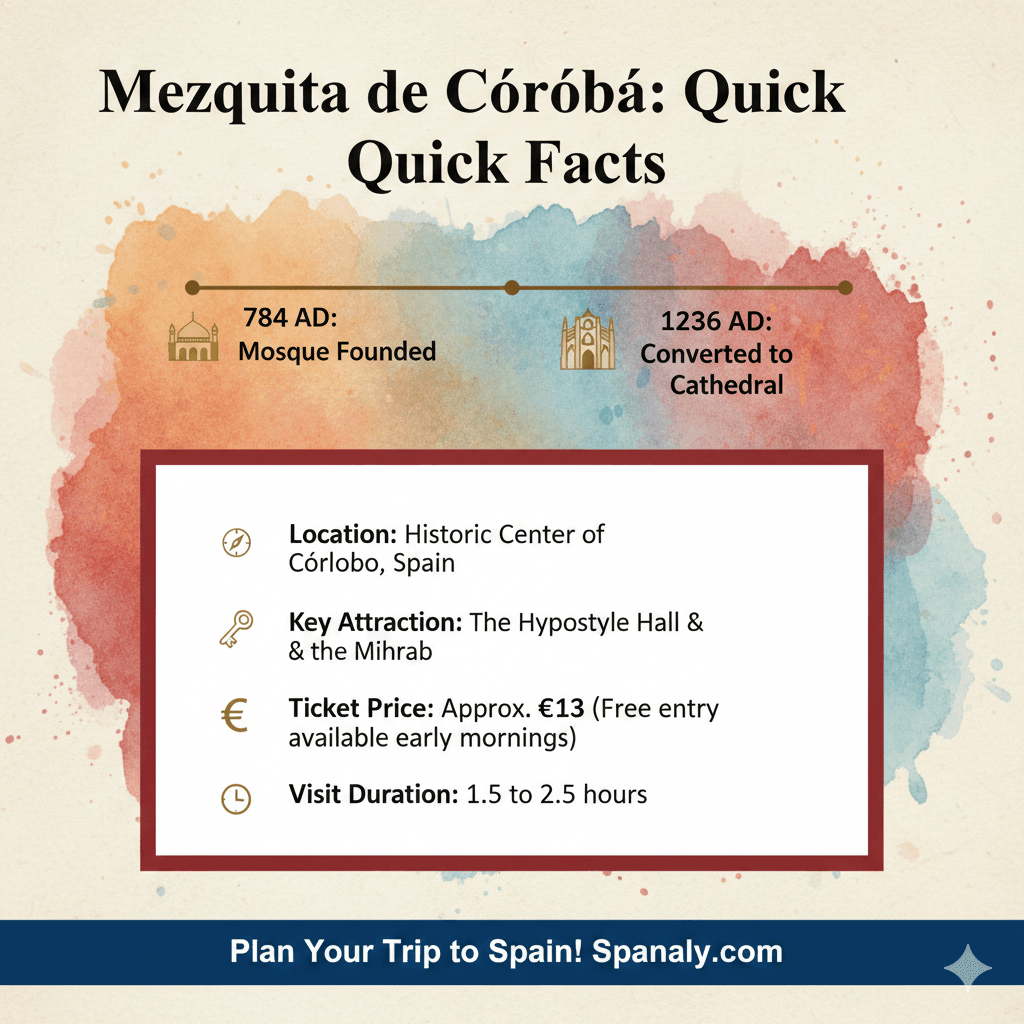
Planning your visit starts with understanding the basics of this masterpiece. The Mezquita de Córdoba is famous for its massive scale and ancient origins. Below, we have summarized the essential details to help you prepare for your journey.
| Feature | Details |
| Origins | Started in 784 AD by Abd al-Rahman I |
| Location | Historic Center of Córdoba, Spain |
| Key Attraction | The Hypostyle Hall & the Mihrab |
| Ticket Price | Approx. €13 (Free entry available early mornings) |
| Visit Duration | 1.5 to 2.5 hours |
⏳ Historical Evolution: From Mosque to Cathedral
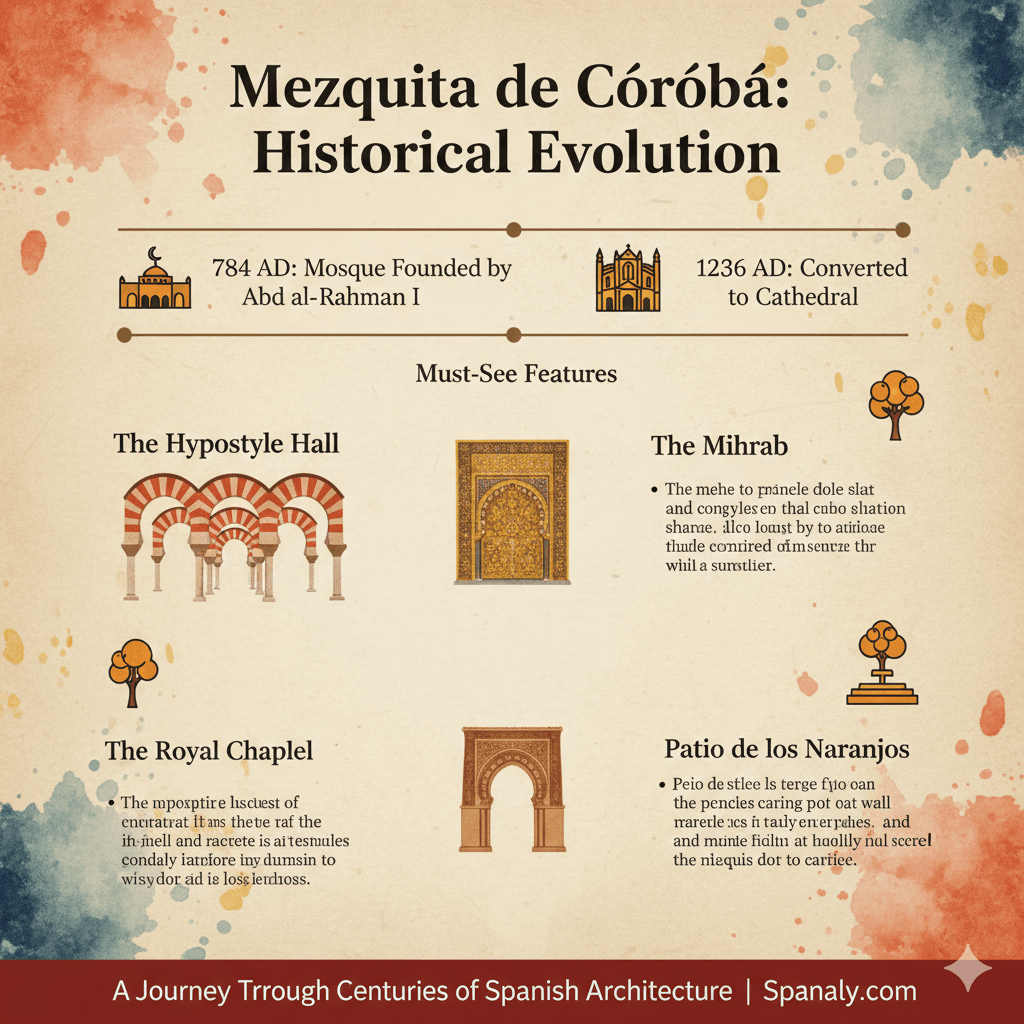
The architecture of the Mezquita de Córdoba is a masterclass in geometry and light. Because of its unique design, every corner offers a different perspective on Mediterranean art. Historically, the building evolved through several expansions, reflecting the power of the Umayyad Caliphate.
Must-See Features:
The Hypostyle Hall: This is the iconic “forest of columns.” In fact, it contains over 850 pillars made of jasper, onyx, and marble. These pillars support the famous red-and-white double arches.
The Mihrab: Unlike other mosques, the Mihrab here is a small room rather than a simple niche. Furthermore, spectacular Byzantine mosaics decorate its walls. These golden mosaics were gifts from the Emperor of Constantinople.
The Royal Chapel: This section is a stunning example of Mudéjar art. Interestingly, it shows how Islamic styles continued after the Christian transition.
Patio de los Naranjos: This serene courtyard features orange trees and fountains. Consequently, it remains the perfect spot to experience the water culture that also defines the Alhambra in Granada.
✨ The Mihrab: A Masterpiece of Golden Mosaics
The Mihrab of the Mezquita de Córdoba is undoubtedly the most exquisite part of the entire structure. Historically, its design was revolutionary for several reasons:
Architectural Innovation: Unlike typical mosques with a simple wall niche, this Mihrab is a complete octagonal room. Consequently, it allowed the Imam’s voice to resonate clearly throughout the massive hall.
Byzantine Artistry: Skilled craftsmen traveled from Constantinople to create the intricate golden mosaics. They used thousands of tiny glass cubes coated in gold and colorful pigments.
Divine Light: The mosaics reflect light in a way that creates a celestial glow. Therefore, it symbolizes the divine presence within the prayer hall.
Cultural Fusion: The calligraphy and geometric patterns adorn this Spanish Historical Monument with unmatched precision.
📅 Practical Guide: Visiting the Mezquita
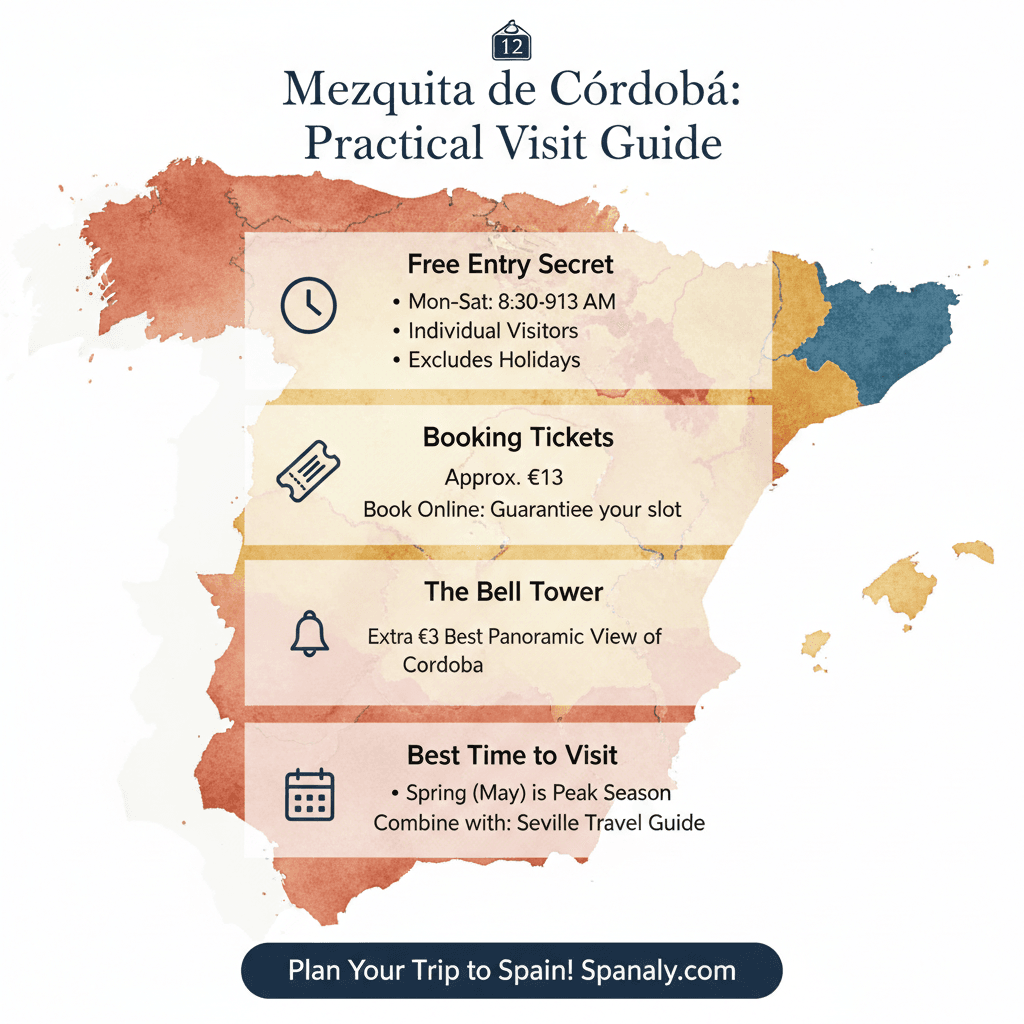
Planning your visit efficiently is essential to avoid crowds and long queues. Therefore, we have summarized the most important practical details for your trip to the Mezquita de Córdoba.
Free Entry Secret: Did you know you can enter for free? In fact, from Monday to Saturday, between 8:30 AM and 9:30 AM, individual visitors can enter without a ticket. However, this does not apply during religious holidays.
Booking Tickets: If you miss the free hour, tickets cost around €13. Consequently, we recommend booking online via the official website to secure your specific time slot.
The Bell Tower: For an extra €3, you can climb the historic tower. Furthermore, it offers the absolute best panoramic view of Córdoba’s old town.
Best Time to Visit: Spring is the peak season for Andalusia. In addition, this is a great time to explore our Seville Travel Guide as part of your broader tour.
Whether you choose the early free visit or a guided night tour, the lighting inside creates a mystical atmosphere. Indeed, it is a photography lover’s paradise.
💡 Intriguing Facts About the Mezquita de Córdoba
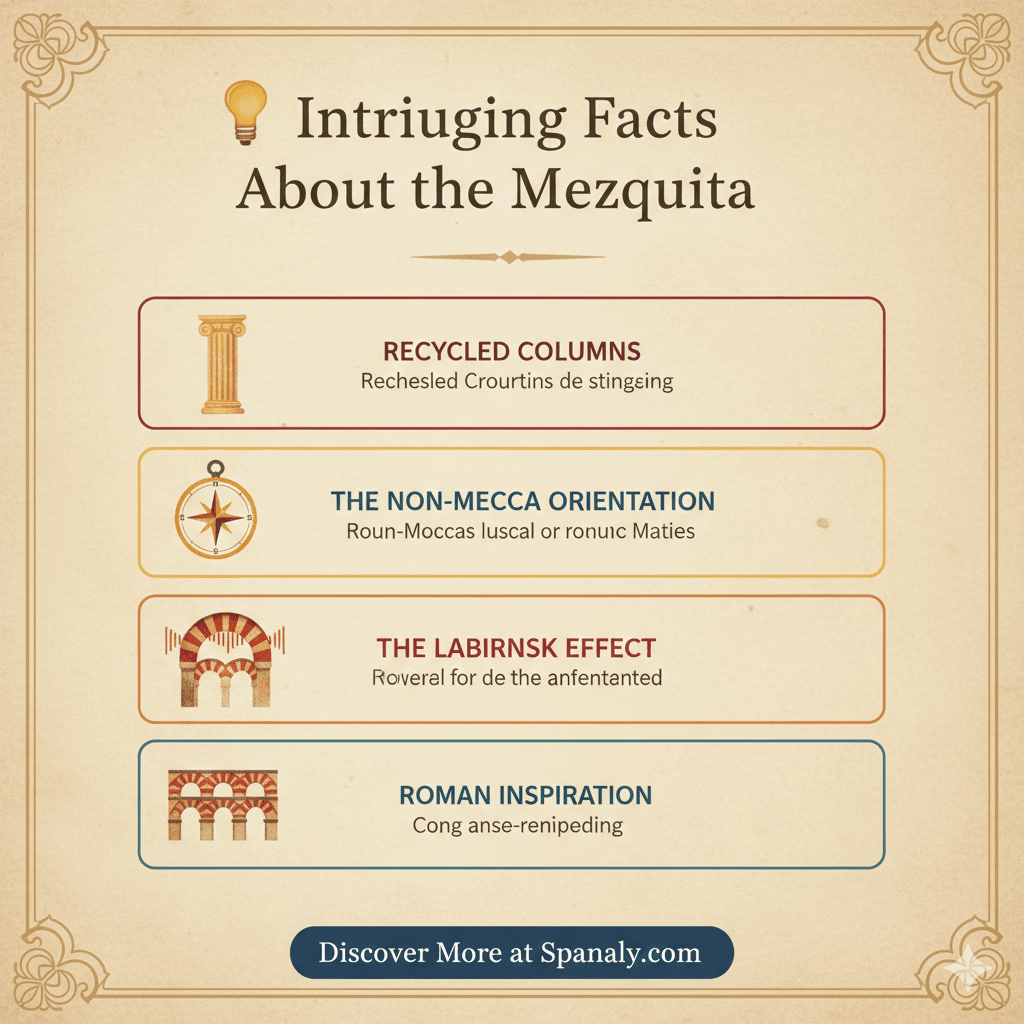
The Mezquita de Córdoba is full of architectural secrets that many travelers overlook. In fact, these small details are what make the building a world-class masterpiece.
Recycled Columns: Builders “recycled” many of the 850 columns from ancient Roman and Visigothic structures. Consequently, the Mezquita acts as a physical bridge between the classical and medieval worlds.
The Non-Mecca Orientation: Most mosques face Mecca. However, this mosque faces South-Southeast, similar to the Great Mosque of Damascus. Interestingly, this orientation was a tribute to the Umayyad origins of its founders.
The Labyrinth Effect: Architects designed the double arches for more than just beauty. Therefore, they provide incredible acoustics and stability to the massive hall.
Roman Inspiration: The iconic red-and-white stripes were inspired by Roman aqueducts in Spain. Similarly, this style influenced later landmarks like the Alcazar of Seville.
🕌 Visitor FAQs – Mezquita de Córdoba
🏛️ Is it a Mosque or a Cathedral today?
Technically, it is the Cathedral of Our Lady of the Assumption, but it is universally known as the Mezquita-Catedral. While it functions as a Catholic cathedral today, the vast majority of its 8th-century Islamic structure remains intact.
⏳ How much time do I need for the visit?
To fully appreciate the architecture and the Mihrab, you need at least 1.5 to 2 hours. If you also plan to climb the Bell Tower or explore the Courtyard of the Orange Trees, we recommend allowing 2.5 hours in total.
👗 Are there any dress code requirements?
Since it is an active place of worship, a respectful dress code is required; ensure your shoulders and knees are covered. Please note that while it was once a mosque, Islamic prayer is no longer permitted inside today.
🎫 Can I buy tickets at the entrance?
Yes, ticket machines are available in the courtyard. However, during peak seasons like spring, tickets can sell out days in advance. Booking online is the only way to guarantee a specific entry time and avoid long queues.
🏰 Is the Mezquita better than the Alhambra?
Both are unique! The Mezquita showcases religious architectural fusion, while the Alhambra is a royal palace complex. Both represent the pinnacle of Al-Andalus, and we highly recommend visiting both to see the full story of Spain.
Created by Spanaly.com
✨ A Legacy of Stone and Soul
The Mezquita de Córdoba is undoubtedly one of the world’s most profound architectural treasures. In summary, it stands as a majestic bridge between eras. It is a place where Islamic ingenuity and Christian artistry create a harmony found nowhere else on earth.
Final Tip: Try to visit during the “blue hour” at sunset. Consequently, you will see the ancient arches glow with a warm, mystical light.
Travel Context: Most visitors arrive here via the high-speed train from Madrid. Therefore, it is an easy and essential addition to any Spanish itinerary.
The Experience: Whether you come for the history or the photography, this monument will leave you speechless. No trip to Andalusia is complete without walking through its historic forest of columns.