Table of Contents
Toggle🥚 Tortilla Española
When you think of the Mediterranean lifestyle, few dishes are as iconic and comforting as the Tortilla Española. This simple yet flavorful masterpiece represents the very heart of Spanish home cooking.
🥘 Culinary Soul: Crafted from just eggs, potatoes, and onions (the great debate!), it’s a staple in every household.
🏠 Humble Roots: A culinary bridge that connects simple peasant food to world-class Spanish Cuisine.
✨ Timeless Tradition: Whether enjoyed in a historic Madrid bar or your own kitchen, it reflects a passion for fresh, honest ingredients.
🥄 Pure Comfort: Known for its buttery texture, it is the ultimate comfort food found in every corner of the country.
💡 Spanaly Insight: The secret to a legendary tortilla isn’t just the ingredients, but the soul put into the “flip.” To understand why this dish is so affordable yet precious, check our guide on the Cost of Living in Spain to see how local markets fuel this tradition.
⚔️ Tortilla Española vs. Italian Frittata: The Key Differences
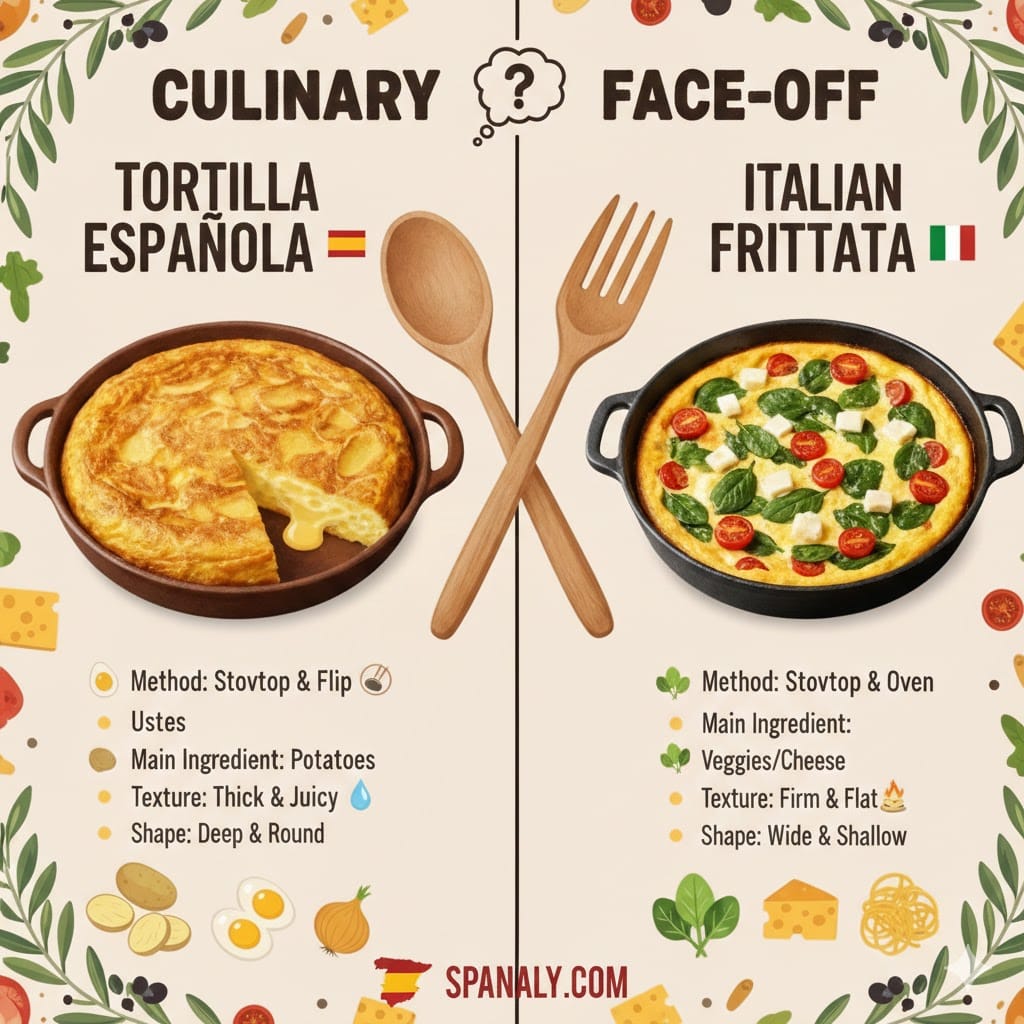
While they might look similar at a glance, the Spanish Tortilla and the Italian Frittata are celebrated for different reasons. Understanding these nuances helps you appreciate the deep-rooted traditions of the Spain Daily Rhythm.
🥘 The Cooking Ritual: A Tortilla is a stovetop commitment. It requires a slow poach of ingredients and a daring “flip” to cook both sides. The Frittata is often more relaxed, starting on the stove and finishing under an oven broiler.
🥔 Hearty vs. Versatile: In Spain, potatoes are the absolute stars, cooked until buttery. In Italy, the Frittata acts as a canvas for leftover pasta, seasonal greens, or various cheeses.
💧 Juicy vs. Firm: The ultimate goal for a Spanish chef is a jugosa (runny/juicy) center that flows slightly when cut. An Italian Frittata aims for a firmer, more cake-like consistency throughout.
🍳 The “Look”: A traditional Tortilla is thick, rounded, and deep, while a Frittata is usually flatter and wider.
In Short:
Tortilla Española: Thick, potato-heavy, stovetop-flipped, and creamy.
Italian Frittata: Flat, versatile fillings, oven-finished, and firm.
💡 Spanaly Insight: Just as you wouldn’t confuse these two dishes, don’t confuse your travel plans! If you are heading to the coast to try the freshest regional versions, make sure to check our Barceloneta Beach Guide for the best spots to enjoy a “Pincho de Tortilla” with a Mediterranean breeze.
📜 A Brief History: From War Relief to National Icon
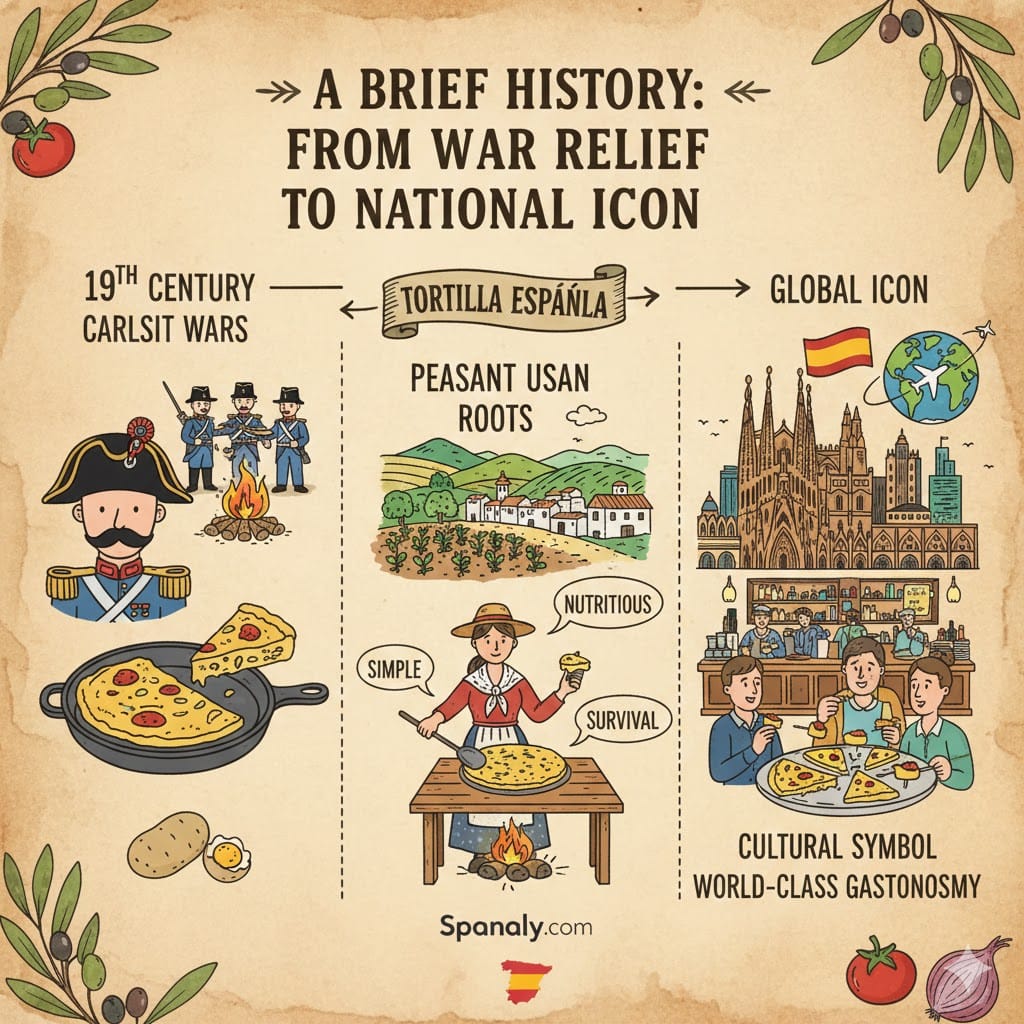
The story of the Tortilla Española is a fascinating blend of necessity and creativity. While potatoes arrived from the Americas in the 16th century, they were initially viewed with suspicion. It took a period of intense struggle to turn this tuber into a national treasure.
⚔️ The General’s Invention: Legend credits General Tomás de Zumalacárregui during the Carlist Wars (19th century) for “inventing” the dish. Seeking a cheap, nutritious way to feed his hungry army in Navarra, he created this high-energy omelette.
🌾 Peasant Resourcefulness: Beyond the battlefield, the tortilla was the ultimate survival meal for farmers. It allowed them to stretch a few precious eggs into a filling family feast by adding abundant potatoes and onions.
📈 From Rural to Royal: What began as a humble secret in the North slowly conquered the city taverns of Madrid and the grand dining rooms of Seville.
🌍 A Global Ambassador: Today, it stands alongside Gazpacho Andaluz as a symbol of Spanish cultural identity, proving that the simplest ingredients often tell the most powerful stories.
💡 Spanaly Insight: History is best felt where it happened. If you want to see how tradition meets modern life, exploring the Gothic Quarter in Barcelona will lead you to some of the oldest “tabernas” where the recipe has remained unchanged for over a century.
🧅 The Great Debate: To Onion or Not to Onion?
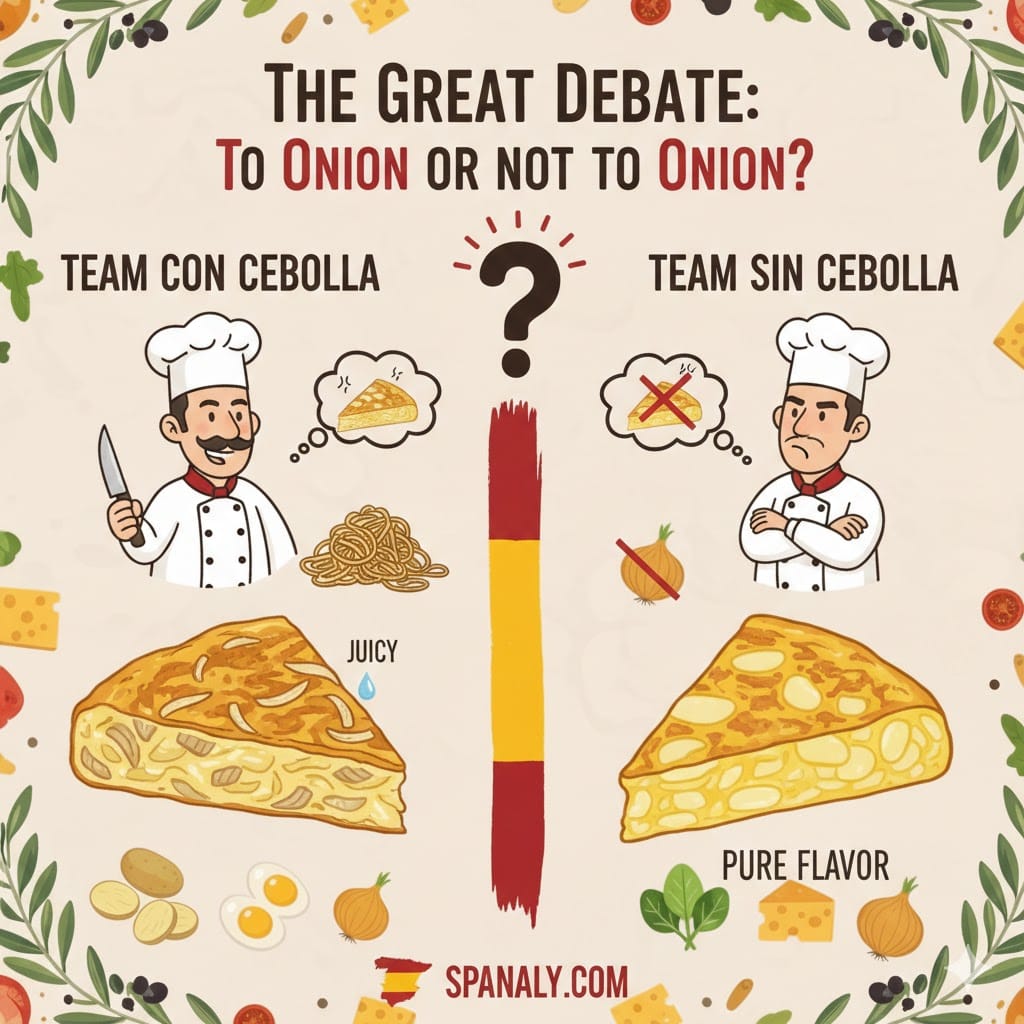
In Spain, there is a culinary dividing line as famous as any political border: the presence of onion in a tortilla. This debate is so passionate that Spaniards even have names for each camp—the “Concebollistas” (with onion) and the “Sincebollistas” (without onion).
🤝 Team “Concebolla”: Supporters argue that slow-cooked, caramelized onions provide a vital sweetness and extra moisture (jugosidad) that balances the starchiness of the potatoes.
🚫 Team “Sincebolla”: Purists believe that a true tortilla should only taste of high-quality eggs and buttery potatoes. For them, onions are a distraction from the dish’s essential simplicity.
🧑🍳 The Chef’s Verdict: Most modern restaurants tend to serve the version with onion as it stays moist longer, but at traditional Spanish Festivals, you will find both versions proudly served.
🗳️ Your Vote Matters: Whether you prefer the savory-sweet profile or the pure egg-and-potato taste, choosing a side is part of the initiation into Spanish life.
💡 Spanaly Insight: This debate often sparks lively conversations at the dinner table. If you want to witness this passion firsthand while exploring the capital, check our Madrid Travel Guide for the best “Tabernas” where you can taste-test both versions and decide for yourself!
🛒 Essential Ingredients: The Golden Trio
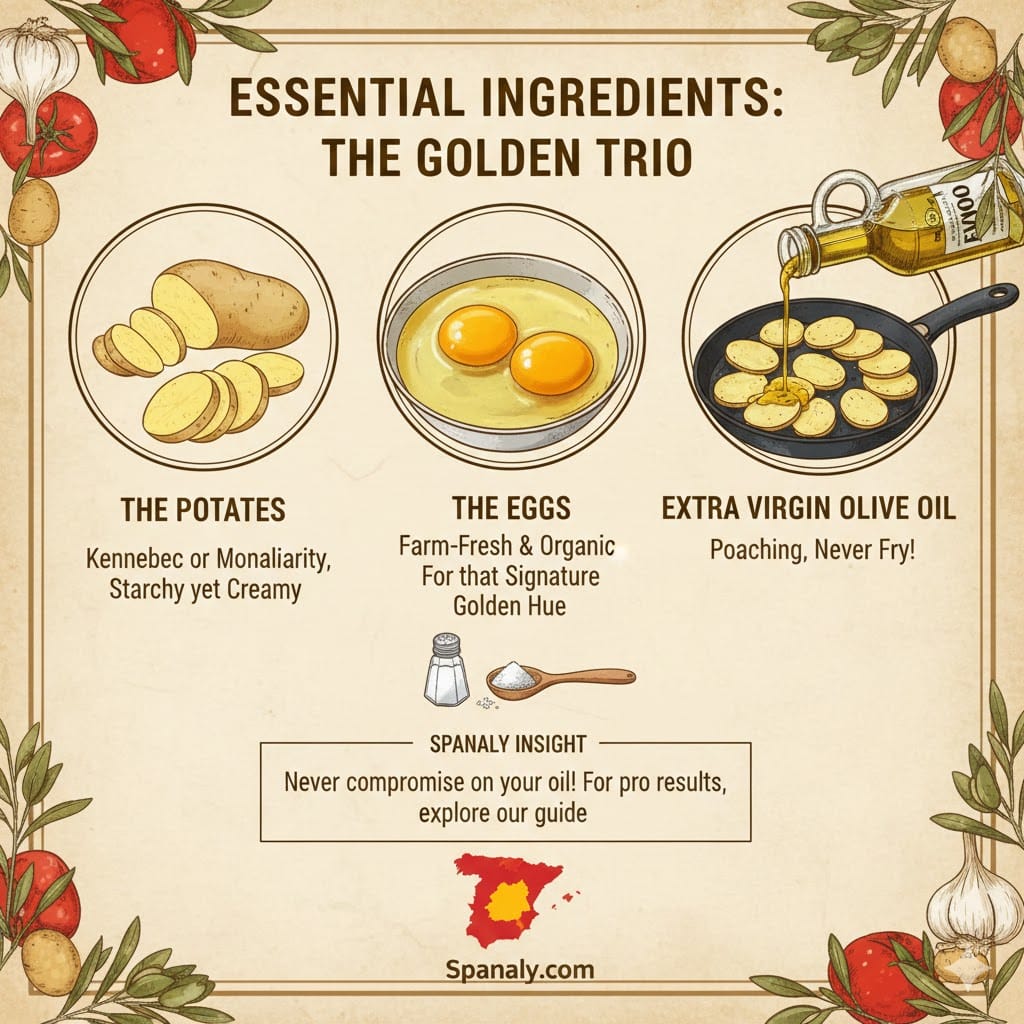
The magic of a Tortilla Española lies in its simplicity. With only three main ingredients, there is nowhere for poor quality to hide. To achieve that authentic Mediterranean taste, you must choose your components with the care of a Spanish grandmother.
🥔 The Potatoes (Patatas): Not all potatoes are equal. In Spain, chefs prefer the Kennebec or Monalisa varieties. They should be starchy enough to hold their shape but creamy enough to melt in your mouth after poaching.
🥚 The Eggs (Huevos): For that signature golden hue, farm-fresh, organic eggs are essential. They provide the rich, velvety bind that holds the potatoes together without feeling heavy.
🫒 Extra Virgin Olive Oil (EVOO): This is the soul of the dish. The potatoes aren’t fried; they are “poached” (confited) in a generous amount of oil.
🧂 Salt: Just a pinch to enhance the natural sweetness of the potatoes and the richness of the eggs.
💡 Spanaly Insight: Never compromise on your oil! The flavor of your tortilla depends entirely on the liquid gold you use. For a truly professional result, explore our curated list of the Best Spanish Olive Oils to find the perfect match for your kitchen.
🍳 Essential Tools: Why the Pan Matters
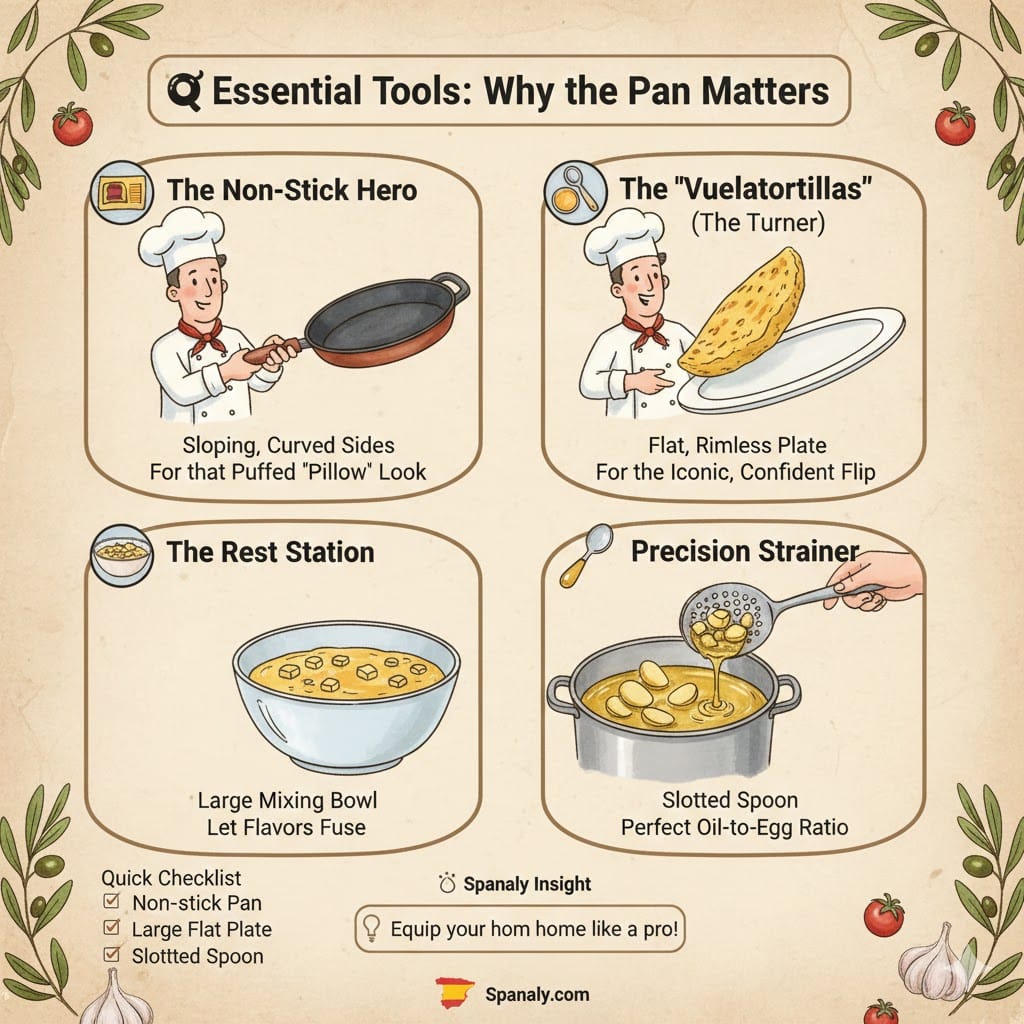
Your tools are just as important as your technique. In Spain, a “Tortilla Pan” is a prized possession. It is often used only for this dish. To get that creamy interior and rounded shape, you need these specific kitchen allies:
🥘 The Non-Stick Hero: Use a high-quality non-stick pan. This ensures the eggs slide out easily. Look for curved sides to create that beautiful “puffed” look.
🍽️ The “Vueltatortillas”: Don’t fear the flip! You just need a flat, rimless plate. Ensure it is slightly wider than your pan for a seamless transition.
🥣 The Rest Station: A large bowl is vital. Professional chefs let the potatoes soak in the eggs here. This few-minute rest fuses all the flavors together.
🥄 The Precision Strainer: Use a slotted spoon to lift your potatoes. It removes excess oil while keeping the “liquid gold” flavor.
Quick Checklist:
Non-stick Pan: For a smooth, tear-free slide.
Large Flat Plate: For a confident, easy flip.
Slotted Spoon: For the perfect oil-to-egg ratio.
💡 Spanaly Insight: Setting up an authentic kitchen requires the right gear. Want to cook like a local in Madrid? Check our expert guide to Essential Spanish Cookware to find tools that last a lifetime.
👨🍳 The Master Method: The Step-by-Step "Flip"
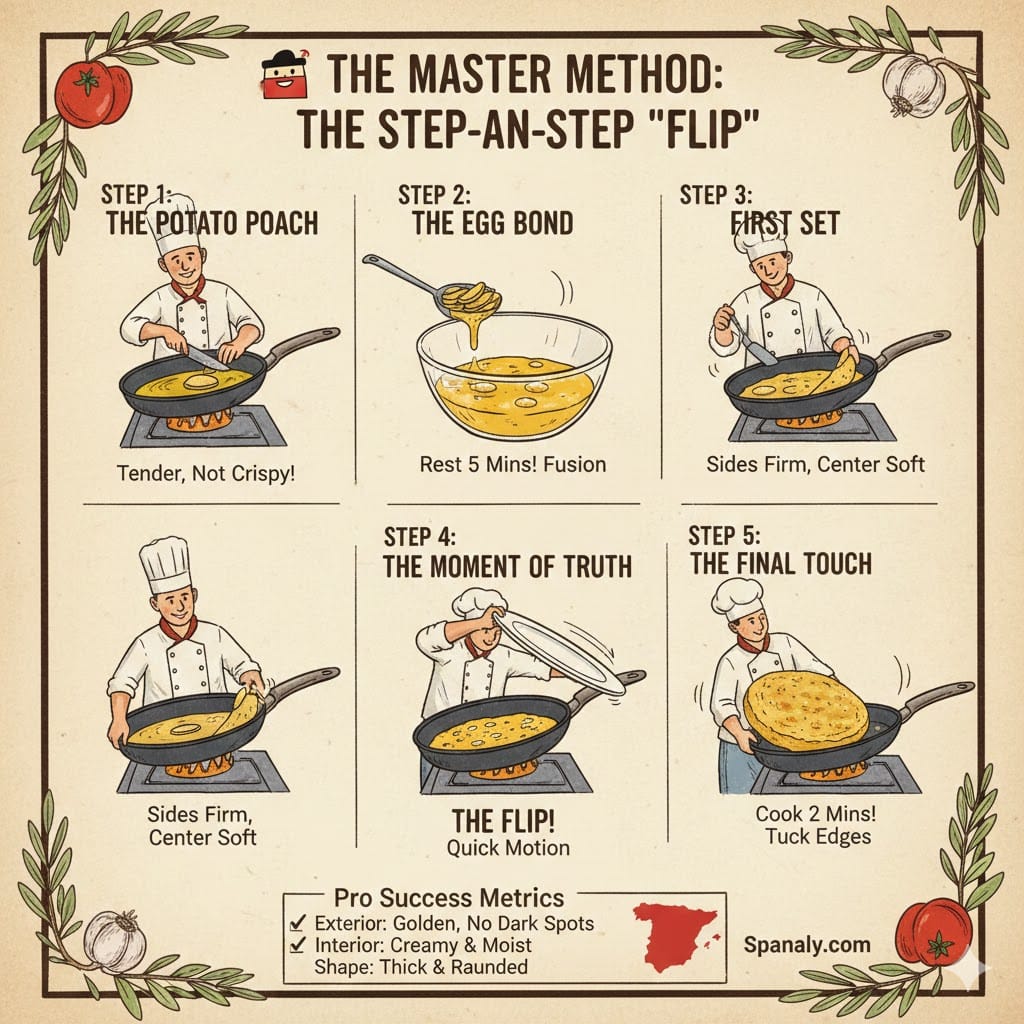
Creating a masterpiece requires patience and precision. Follow these steps for a golden, juicy tortilla every time. This is how the pros do it in the heart of Spain:
Step 1: The Potato Poach. Peel and thin-slice your potatoes. Heat your olive oil on low. Submerge the potatoes until they are tender. They should be soft, never crispy or brown.
Step 2: The Egg Bond. Whisk your farm-fresh eggs in a large bowl. Transfer the hot potatoes into the eggs using a slotted spoon. Add salt and let it rest for five minutes. This fusion is the secret to a unified texture.
Step 3: The First Set. Pour a little oil into your pan. Add the mixture over medium-high heat. Use a spatula to shape the edges. Wait until the sides are firm but the center remains slightly soft.
Step 4: The Moment of Truth. Place a flat plate over the pan. Hold it firmly and flip in one quick motion. The tortilla will land on the plate. Carefully slide it back into the pan to cook the second side.
Step 5: The Final Touch. Cook for two more minutes. Tuck the edges in with your spatula for that iconic rounded shape. Let it rest for a few minutes before slicing.
Pro Success Metrics:
Exterior: Uniformly golden with no dark spots.
Interior: Creamy, moist, and slightly “runny” for the authentic touch.
Shape: Thick, symmetrical, and perfectly rounded.
💡 Spanaly Insight: Presentation is everything in Spanish gastronomy. If you want to serve your tortilla like a true local, discover the art of the Spanish Tapas Experience to learn about the best side dishes and pairings. Also, if you are planning a trip to taste the real thing, check our Madrid Travel Guide for the city’s legendary tortilla bars!
🗺️ Regional Variations: From Runny Basque to Hearty Madrid
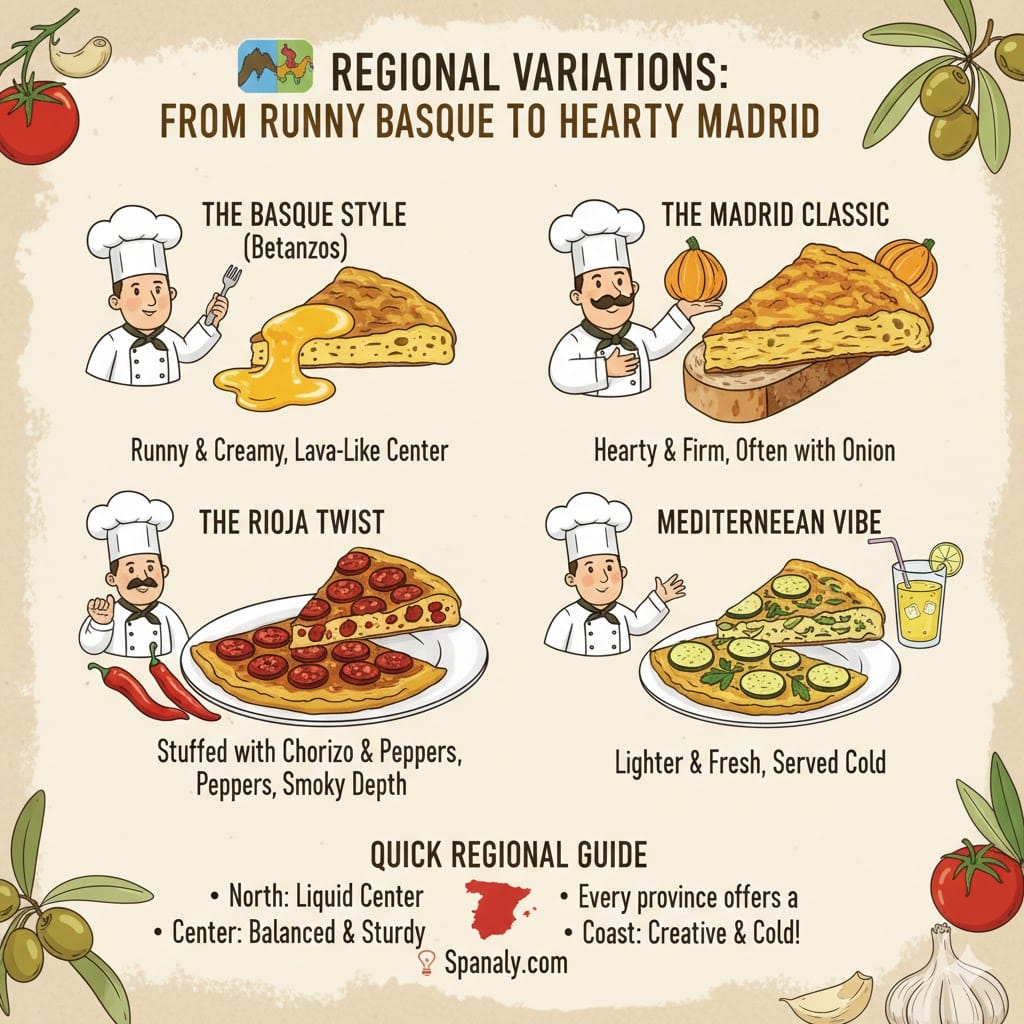
Spain is a mosaic of flavors. The tortilla changes as you travel across its provinces. While the base ingredients stay the same, the “soul” of the dish adapts to local tastes. Here is how different regions serve their favorite omelette:
🥚 The Northern “Betanzos” Style: This version is famous in the Basque Country and Galicia. It is incredibly “runny.” When you cut a slice, the golden egg flows out like lava. It is rich and perfect for dipping crusty bread.
🧅 The Castilian Standard: In the heart of Spain, tortillas are usually firm and sturdy. They are often served as a “Pincho” in local taverns. Most chefs here believe onions are essential for a juicy texture.
🌶️ The Rioja & Navarre Twist: These regions love to experiment. You will often find tortillas stuffed with spicy chorizo or roasted peppers. These bold flavors add a smoky depth to every bite.
🥔 The Mediterranean Vibe: Along the coast, tortillas are often lighter. Some locals even add seasonal vegetables like zucchini. It is common to enjoy these versions cold during a sunny beach day.
Quick Regional Guide:
The North: Liquid center, very yellow, minimal cooking time.
The Center: Balanced, hearty, usually includes onions.
The Coast: Creative fillings, often served at room temperature.
💡 Spanaly Insight: Every province offers a unique bite. To truly understand the diversity of Spanish flavors, why not learn How to Order Food Like a Local in Spain? If you are traveling to the south to sample their tapas culture, our guide to the Mercado de Triana in Seville is a great place to start your culinary journey!
🍴 Serving & Etiquette: How to Eat it Like a Local
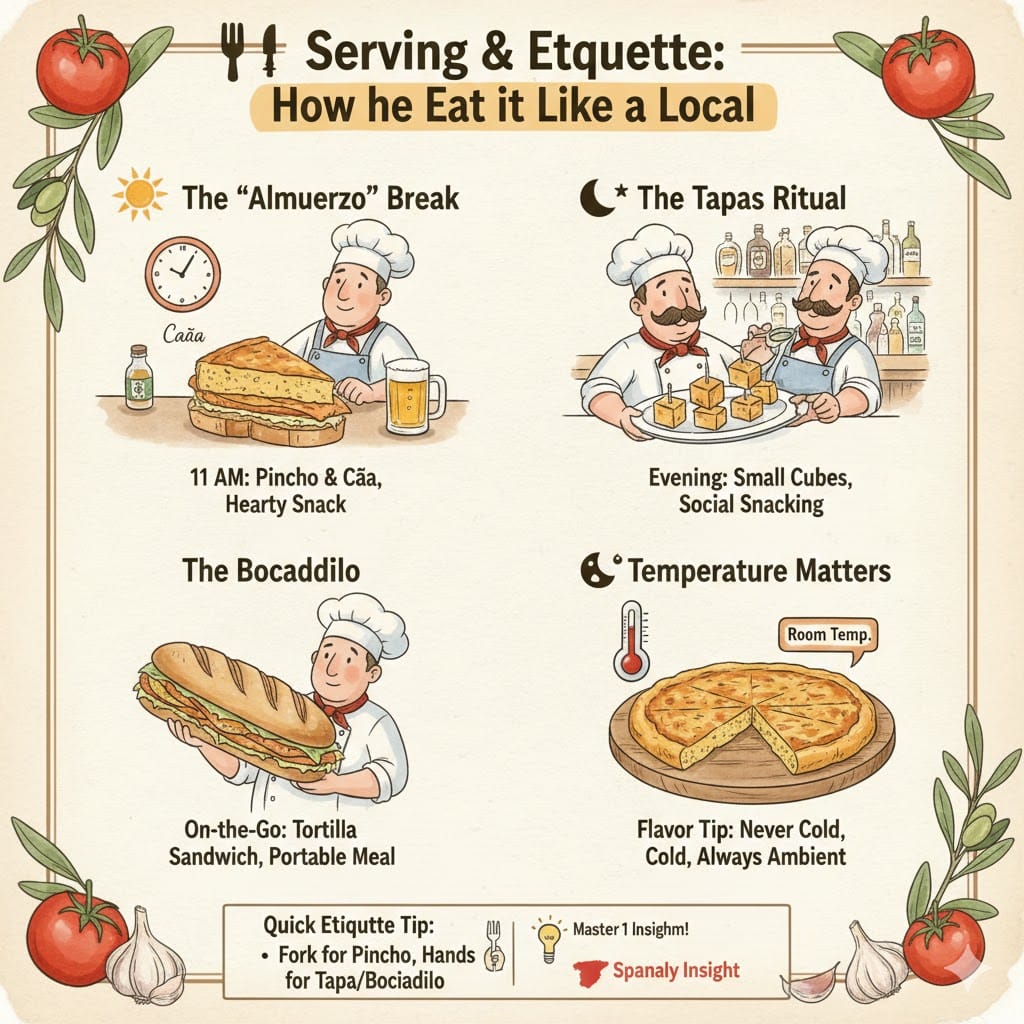
In Spain, the Tortilla is a culinary chameleon. It fits every hour and every mood. To enjoy it like a true local, you must understand the “when” and “how” of this national treasure:
🌞 The “Almuerzo” Break: Around 11:00 AM, Spain pauses. This is the prime time for a Pincho de Tortilla. It is served as a large wedge with a piece of crusty bread. Locals pair it with a small beer (Caña) or a coffee.
🌙 The Tapas Ritual: In the evening, the tortilla shrinks into a Tapa. It is often served as small cubes secured with a toothpick (Palillo). It is the perfect companion for a social night out.
🥪 The Bocadillo: Heading to a football match or a picnic? The Bocadillo de Tortilla is a legendary sandwich. A thick slice of tortilla is tucked into a fresh baguette. It is simple, portable, and filling.
🌡️ Temperature Matters: Never eat a tortilla straight from the fridge. In Spain, it is usually served at room temperature. This allows the olive oil and egg flavors to breathe and soften.
Etiquette Tip: Using a fork is standard for a Pincho. However, for a Bocadillo or a small Tapa cube, using your hands or a toothpick is perfectly fine.
💡 Spanaly Insight: Understanding the daily rhythm is key to enjoying Spanish life. To learn more about when locals eat and rest, check our guide on the Spain Daily Rhythm: Siesta & Mealtimes. If you are enjoying your tortilla in a crowded bar, make sure to read about Cultural Etiquette in Spain to blend in like a native!
🍷 The Perfect Pairing: What to Drink & Eat with Your Tortilla
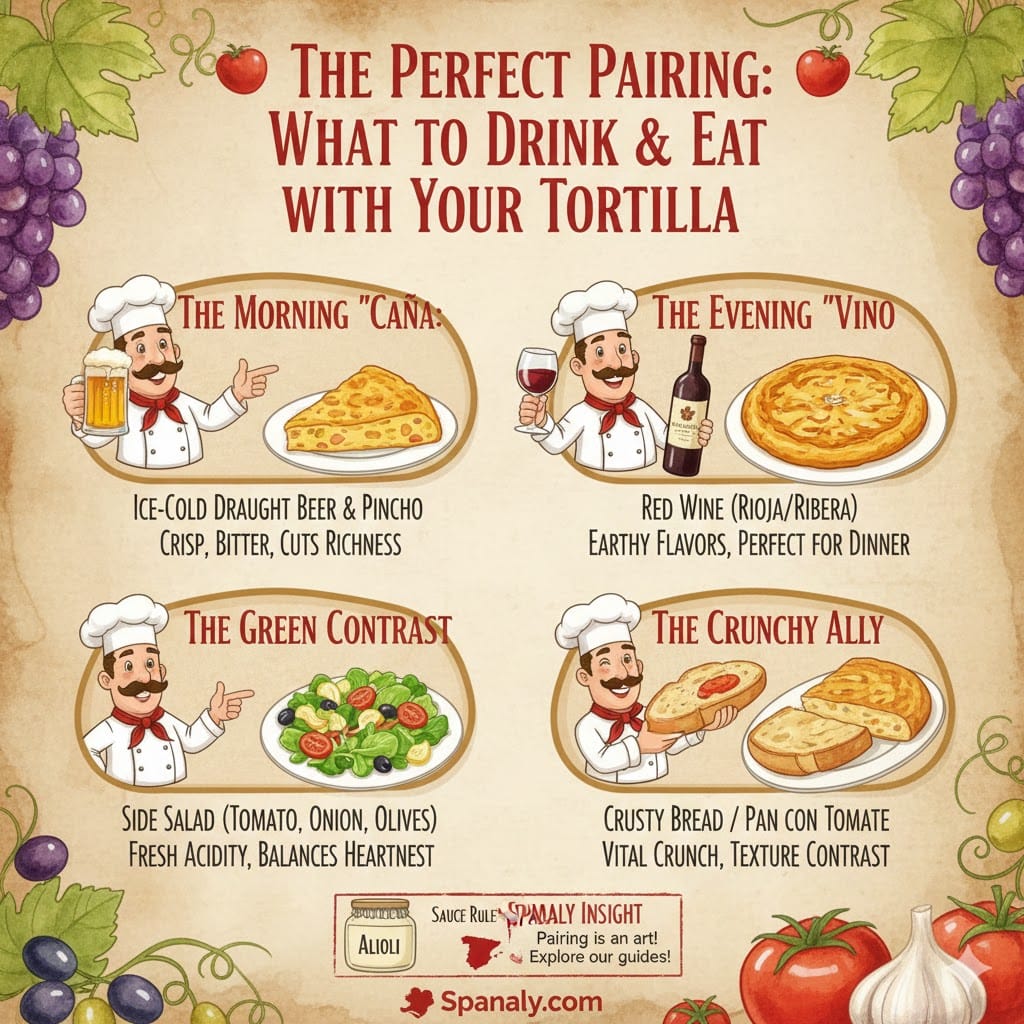
A Tortilla Española is rarely eaten alone. In Spain, it is part of a social symphony. To elevate your experience, you need the right companions. Here are the traditional pairings that make every bite better:
🍺 The Morning “Caña”: A small, ice-cold glass of draught beer is the classic choice. The crisp bitterness cuts through the richness of the olive oil. It is the gold standard for a mid-morning break.
🍷 The Evening “Vino”: For a late-night dinner, opt for a glass of red wine. A young, fruity wine complements the earthy potatoes. To find the perfect bottle, explore our guide to the most famous Spanish Wine Regions.
🥗 The Green Contrast: Many locals serve tortilla with a simple side salad. Fresh tomatoes and white onions provide a refreshing acidity. This balance is key to a hearty Mediterranean meal.
🥖 The Crunchy Ally: Never forget the bread! Whether it is a crusty baguette or “Pan con Tomate,” you need a crunch. It provides a vital contrast to the soft, creamy texture of the eggs.
The “Sauce” Rule: Traditionalists prefer it plain. However, a side of creamy Alioli (garlic mayonnaise) is now a popular and delicious addition in many modern bars.
💡 Spanaly Insight: Pairing is an art form that varies by city. If you want to experience these flavors in their most authentic setting, check our tips on How to Order Food Like a Local in Spain. For those traveling to the coast, our Barceloneta Beach Guide features the best spots to enjoy a tortilla with a sea view!
✅ Pro-Tips: Secrets for a Juicy "Jugosa" Texture
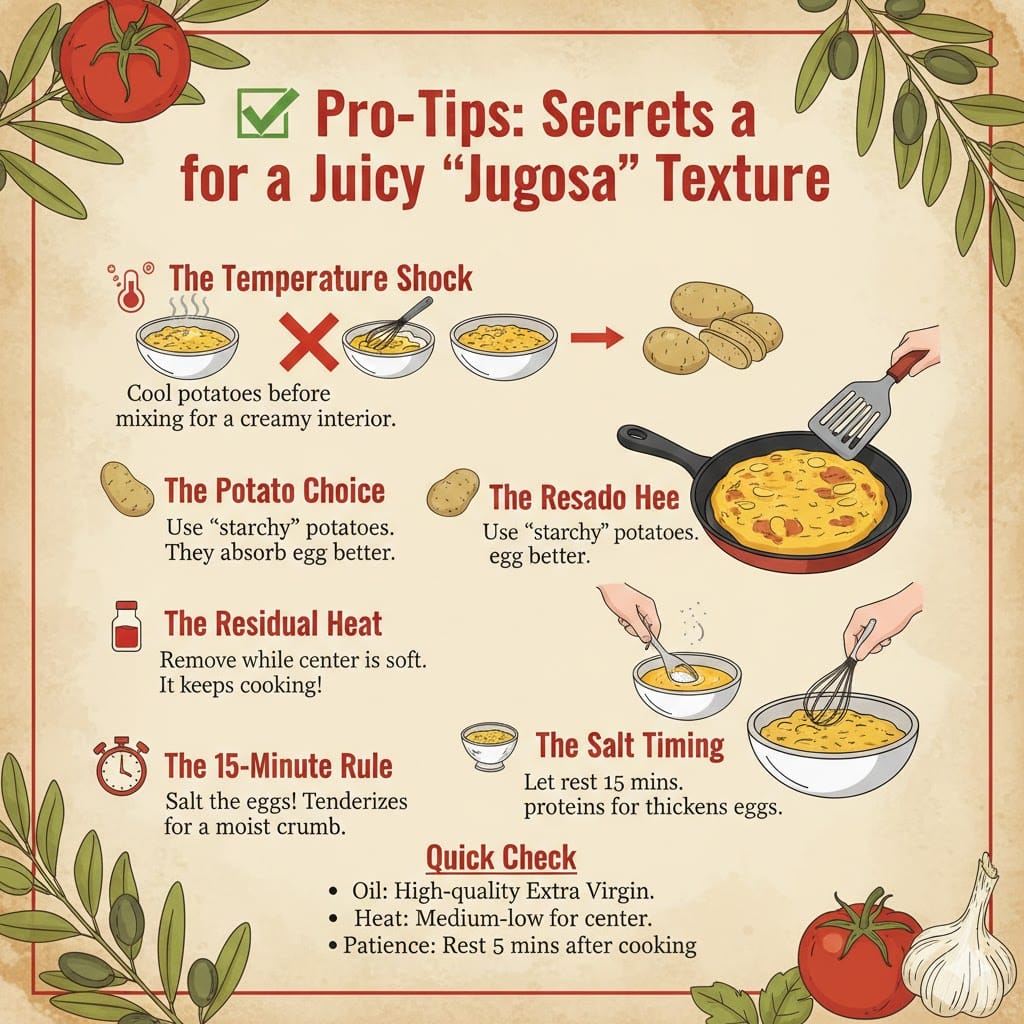
Achieving the perfect jugosa (juicy) texture is the ultimate goal. It requires more than just mixing ingredients. These insider secrets will transform your cooking from basic to professional:
🌡️ The Temperature Shock: Never add cold eggs to hot potatoes. Let your poached potatoes cool slightly before mixing. This prevents the eggs from “scrambling” instantly and ensures a creamy, custardy interior.
🥔 The Potato Choice: Use “starchy” potatoes. In Spain, we look for older potatoes rather than new ones. They absorb the egg better, creating a unified structure that won’t fall apart during the flip.
🍳 The Residual Heat: Don’t overcook it! The tortilla continues to cook even after you slide it onto the plate. Remove it from the heat while the center still feels slightly soft to the touch.
🧂 The Salt Timing: Salt your eggs, not just your potatoes. Whisking salt into the eggs breaks down the protein strands. This results in a much more tender and moist crumb.
🥣 The 15-Minute Rule: If you have time, let the potato and egg mixture sit for 15 minutes before frying. The potatoes release starch which naturally thickens the “liquid gold” of the eggs.
Quick Check:
Oil: Always use high-quality Extra Virgin.
Heat: Medium-low is your friend for the center; high is only for the crust.
Patience: Let it rest for 5 minutes after cooking before slicing.
🍳 Visitor FAQs – Mastery of the Spanish Tortilla
❄️ Can you freeze a Spanish Tortilla?
Technically yes, but it is not recommended. Freezing changes the texture of the potatoes, making them grainy and watery once thawed. For the best experience, enjoy it fresh or keep it in the fridge for up to 3 days.
🥔 Which specific potato variety is best for Tortilla?
In Spain, chefs prefer the Kennebec or Monalisa varieties. They hold their shape during poaching but remain creamy. If you are abroad, look for "Yukon Gold" or any waxy potato that won't turn into mash easily.
🔥 What is the best way to reheat leftovers?
Avoid the microwave if possible as it makes the eggs rubbery. The best method is a low-heat skillet for 1-2 minutes on each side. Alternatively, let it sit at room temperature for 30 minutes to regain its natural flavor.
🥚 Is the "runny" center safe to eat?
In Spain, the "Tortilla de Betanzos" is famous for its liquid center. While generally safe if eggs are fresh and handled properly, those with sensitive health (pregnant women or elderly) should opt for the firm, fully cooked version.
🔪 Should I peel the potatoes or leave the skin on?
For an authentic Spanish Tortilla, the potatoes must always be peeled. Leaving the skin on changes the traditional smooth texture and is considered a culinary "taboo" in traditional Spanish households.
Created by Spanaly.com
✨ More Than Just an Omelette
The Tortilla Española is the true soul of Spain. It’s humble, golden, and brings people together around the table. Whether you like it runny, firm, with or without onions, every slice tells a story of tradition.
🍳 Simplicity at its best: Just 3 ingredients creating endless joy.
🏠 A taste of home: The ultimate comfort food in every Spanish kitchen.
🥂 A social icon: Best enjoyed with friends and a cold drink.
Ready for your next culinary adventure? If the tortilla has won your heart, you cannot miss Spain’s other legendary masterpiece. Dive into our authentic guide to Paella Valenciana and discover the secrets behind the world’s most famous rice dish!
Buen provecho! 🇪🇸