Table of Contents
Toggle🍫 Churros con Chocolate
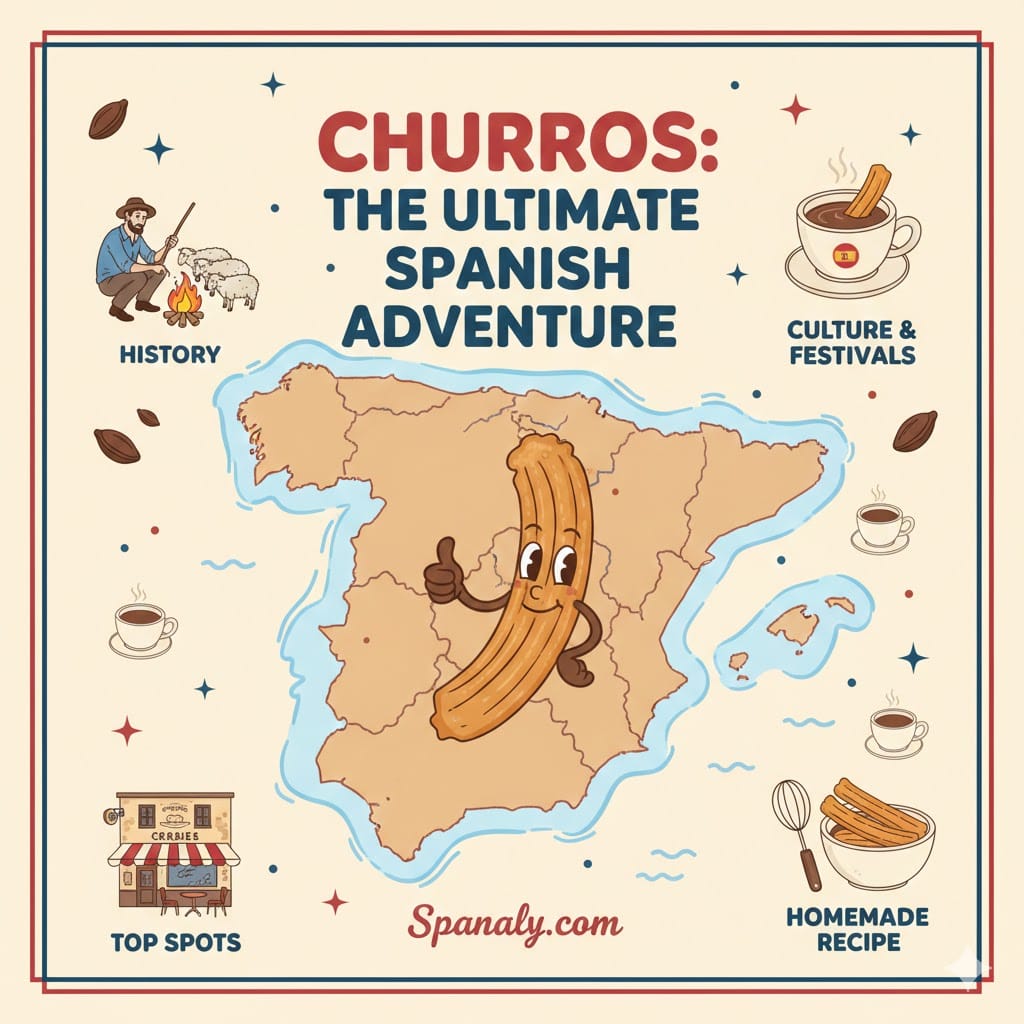
The comforting aroma of freshly fried dough transports you instantly to the heart of Spain. Indeed, this iconic pairing of crispy churros and velvety chocolate defines the local sweet experience. Specifically, it serves as a delicious ritual that locals cherish throughout the day. Consequently, you cannot truly understand Spanish street food without tasting this masterpiece.
✨ A Cultural Ritual: Spaniards enjoy this duo for breakfast or as a famous late-night tradition.
🥨 Simple Ingredients: This treat relies on flour, water, and salt, elevated by centuries of tradition.
🏙️ Urban Tradition: From the streets of Madrid to the corners of Seville, churros unite the entire country.
☕ Perfect Texture: The contrast between the crunchy exterior and the silky chocolate creates a unique sensation.
Furthermore, these treats represent the joy of simple, honest Spanish gastronomy. In fact, you will find them at the heart of every major festival or family gathering. Ultimately, for a deeper look at the country’s flavors, explore our guide to Spanish Cuisine.
⚔️ The Great Debate: Churros vs. Porras
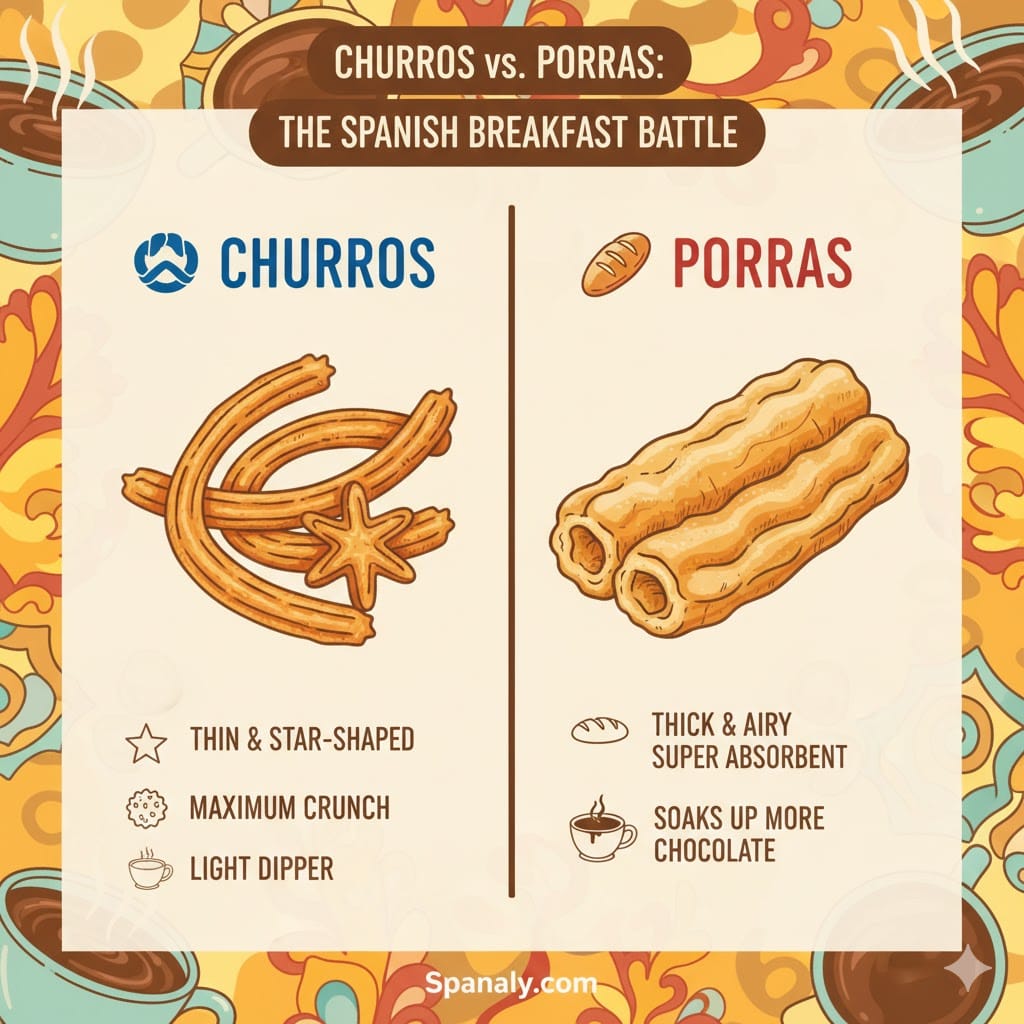
Every Spanish churrería presents a classic choice between two crispy rivals. Notably, while they share similar ingredients, their texture and preparation differ significantly. Specifically, choosing the right one depends on whether you prefer maximum crunch or a soft, airy bite. Consequently, understanding these differences will help you order like a true local.
🥨 Classic Churros: These are thin, star-shaped, and deeply crunchy. Specifically, the star-shaped nozzle ensures the dough cooks evenly and stays firm.
🥖 Traditional Porras: These are the thicker, larger cousins of the churro. Notably, the dough includes a touch of baking soda or yeast to create a hollow, airy center.
☕ The Dipping Factor: Churros offer a light snack. In contrast, porras act like a sponge. Therefore, many Spaniards prefer porras because they absorb more of the rich hot chocolate.
🥘 Savory Alternatives: Spanish snacks aren’t always sweet. Indeed, if you want a savory traditional experience, you should try our guide to Espinacas con Garbanzos.
💡 Spanaly Insight: Watch the locals! In fact, most residents in Madrid order “porras” for breakfast to fuel their day. Notably, they often save the thinner “churros” for a lighter afternoon snack (merienda). Therefore, try both to see which one wins your heart.
🥨 What Exactly are Churros?
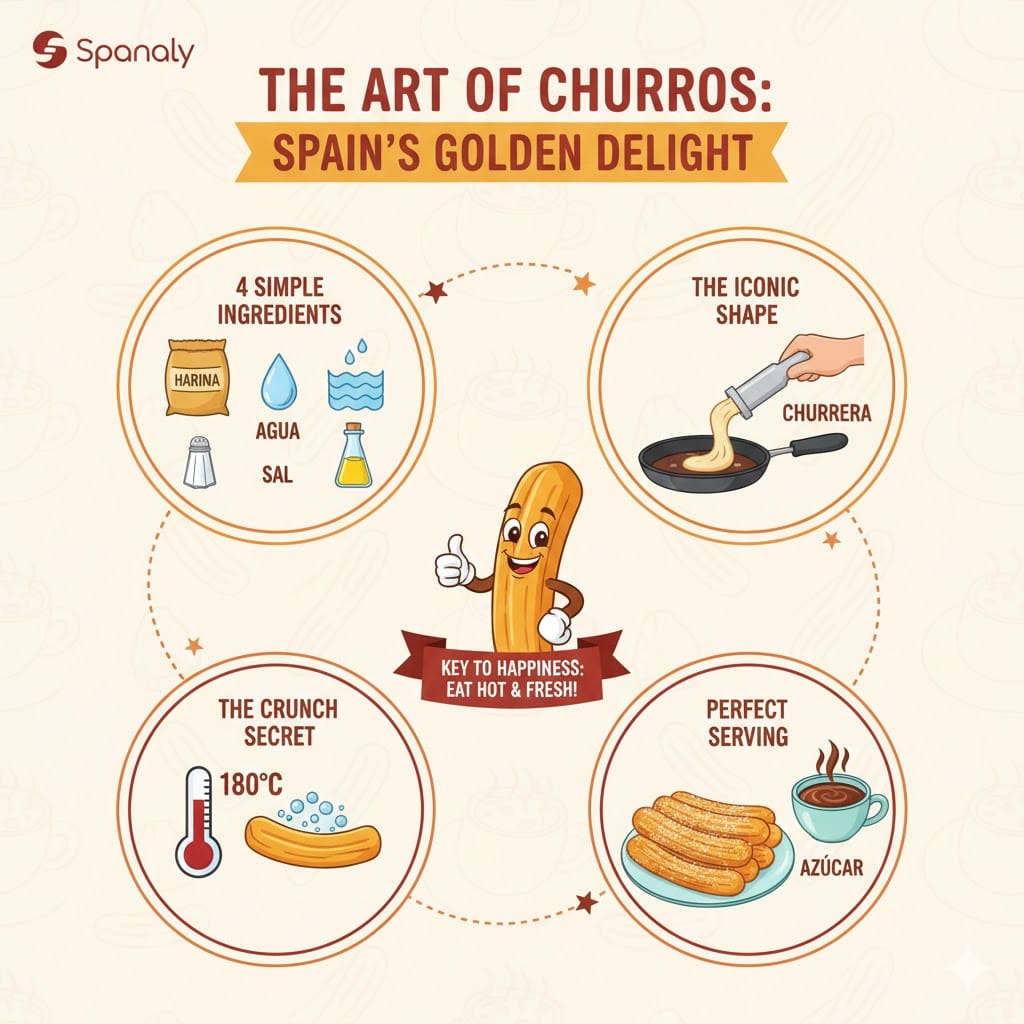
Churros are long, ridged sticks of fried dough. Notably, they feature a crisp exterior and a soft, airy center. Specifically, the traditional recipe relies on just four humble ingredients: flour, water, salt, and high-quality oil. Consequently, this simplicity allows the texture to take center stage.
✨ The Star Shape: Pipers push the dough through a star-shaped nozzle. Specifically, this design creates more surface area for maximum crunch.
🌡️ The Crunch Secret: Mastery of the oil temperature defines the perfect churro. Notably, the oil must reach exactly 180°C to prevent a greasy texture.
🧂 Simple Seasoning: Chefs typically dust them with fine sugar immediately after frying. In addition, some modern versions include a hint of cinnamon.
🍳 Specialized Craft: Specialized cafés called Churrerías prepare them fresh to order. Ultimately, you should always eat them hot for the best experience.
Indeed, these treats embody the honest spirit of Spanish gastronomy. Furthermore, you can find similar dedication to quality in our guide to Seville Travel, where historic churrerías abound. Ultimately, the perfect churro should never feel heavy; it should feel like a light, golden cloud.
💡 Spanaly Insight: Look for the bubbles! In fact, fresh churros should always have tiny surface bubbles. Notably, these indicate that the dough reacted perfectly with the hot oil. Therefore, avoid any churros that look flat or overly smooth.
☕ The Art of Spanish Hot Chocolate
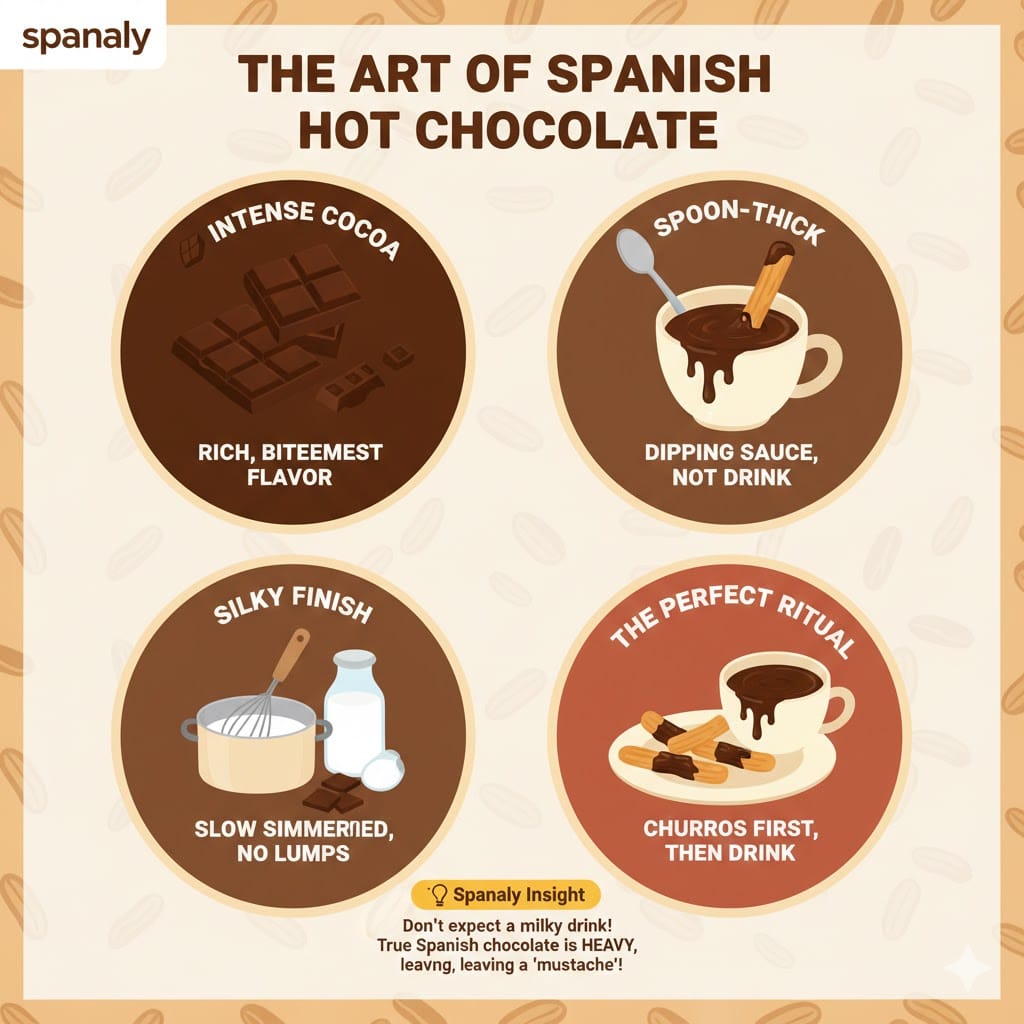
Spanish hot chocolate (chocolate a la taza) is not your average cocoa drink. Notably, it features a dark, intensely rich, and incredibly thick consistency. Specifically, chefs use high-quality dark chocolate, whole milk, and a touch of cornstarch to achieve a pudding-like texture. Consequently, this liquid gold serves as a dipping sauce rather than a light beverage.
🍫 Intense Cocoa: Traditional recipes use chocolate with high cocoa content for a deep, bittersweet flavor.
🥄 Spoon-Thick: The texture remains so thick that a churro can stand upright in the cup. In fact, it should coat the dough perfectly in every dip.
🥛 Silky Finish: Slow simmering ensures a smooth and glossy appearance without any lumps.
🔄 The Perfect Ritual: Locals never sip this chocolate first. Instead, they finish the churros before drinking the remaining chocolate.
Indeed, this ritual rivals café con leche as the most beloved morning tradition in major cities. Furthermore, the experience feels as authentic as the flavors found in our Madrid Travel Guide. Ultimately, the secret lies in the patience of the slow-cook process, which allows the flavors to mature.
💡 Spanaly Insight: Don’t expect a milky drink! In fact, if your chocolate looks thin or watery, it isn’t authentic. Notably, true Spanish chocolate should be heavy enough to leave a thick “mustache” on your lip after the first taste.
📜 A Bite of History

The true origins of churros remain a fascinating mystery. Notably, two popular theories compete to explain how this golden dough reached the Iberian Peninsula. Specifically, the story involves both rugged Spanish shepherds and adventurous Portuguese sailors. Consequently, this blend of cultures shaped the churro we love today.
🐑 Shepherd’s Invention: Many believe Spanish shepherds created churros. In fact, they needed a simple dough to fry over open fires while tending flocks in the mountains.
🚢 Eastern Influence: Another theory suggests Portuguese traders brought the idea from China. Notably, they adapted a salty fried pastry called Youtiao into a sweet European treat.
👑 Royal Indulgence: By the 19th century, churros moved from mountain fires to elegant Madrid cafés. Specifically, they became a fashionable breakfast for the aristocracy.
🌎 Global Expansion: Spanish explorers eventually took the recipe to Latin America. Furthermore, each country added its own twist, like the famous dulce de leche fillings.
Indeed, churros became a permanent fixture of Spanish life during the 1800s. In fact, this historic evolution mirrors the architectural layers you might find in our Alhambra Granada Guide. Ultimately, Spain remains the spiritual home where the tradition of dipping them into chocolate truly flourished.
💡 Spanaly Insight: Why the name “Churro”? In fact, legend says shepherds named the pastry after the “Churra” sheep. Notably, the ridged shape of the fried dough perfectly matched the curved horns of these local animals. Therefore, the name itself is a tribute to Spain’s pastoral roots.
🎉 Culture & Festivals: More Than Just a Snack
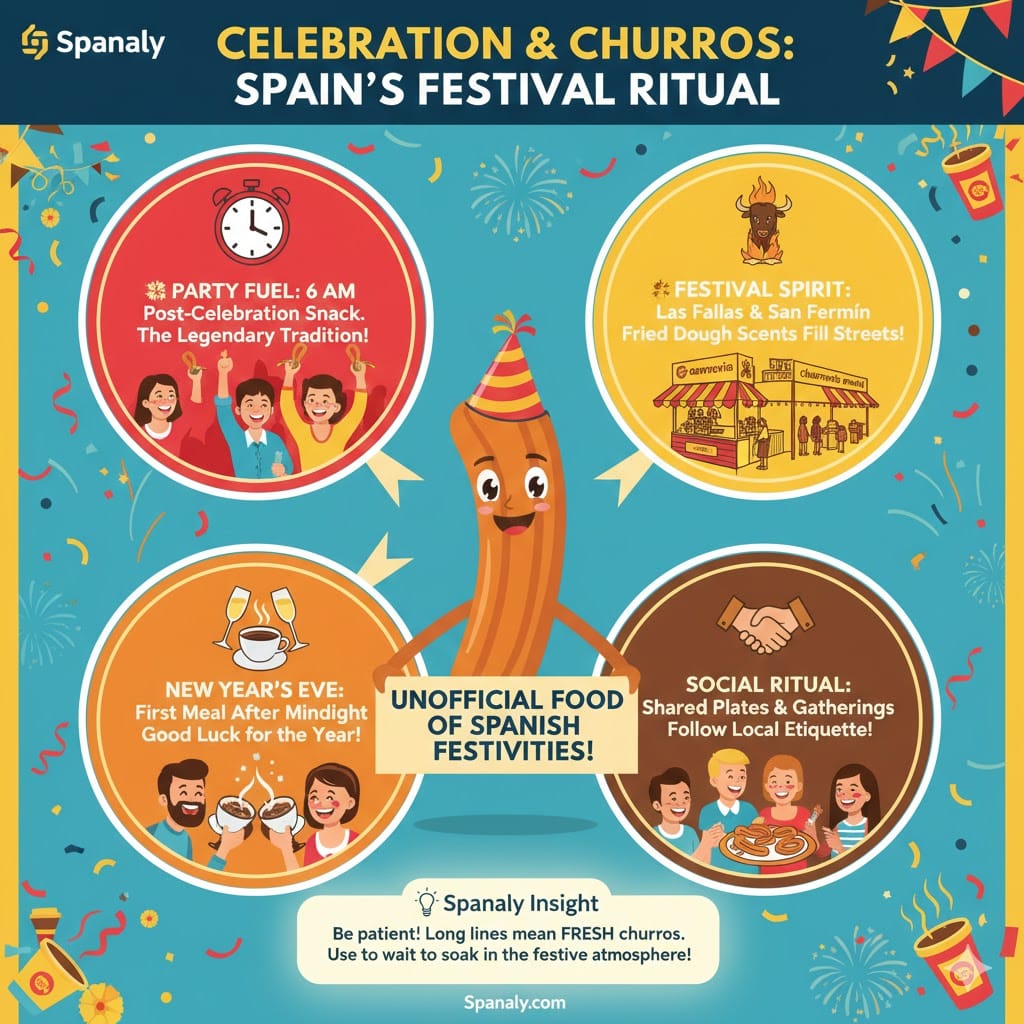
In Spain, eating churros is a deeply social ritual. Notably, people rarely enjoy them alone. Specifically, churros represent celebration, family gatherings, and late-night recovery. Consequently, they have become the unofficial food of Spanish festivities.
🎊 The Ultimate Party Fuel: Locals flock to churrerías after major celebrations. Specifically, having churros at 6:00 AM after a long night is a legendary tradition. In fact, you can find more about these vibrant traditions in our Ultimate Spain Festivals Guide.
🎆 Las Fallas & San Fermín: During these world-famous festivals, mobile churro stalls (churrerías móviles) line every street corner. Notably, the smell of frying dough defines the atmosphere of these events.
🥂 New Year’s Eve Ritual: Thousands of Spaniards start the New Year with a cup of hot chocolate. Specifically, it is the first meal they eat after the clock strikes midnight.
🤝 Social Etiquette: Sharing a plate of churros requires following local customs. Notably, understanding Cultural Etiquette in Spain will help you navigate these busy social settings like a local.
Indeed, the churro is a symbol of Spanish joy and resilience. Furthermore, it brings people together regardless of their age or background. Ultimately, no trip to a Spanish festival feels complete without a greasy brown paper cone filled with fresh churros.
💡 Spanaly Insight: Be patient! In fact, during festival seasons, the lines at famous churrerías can be very long. Notably, this wait is part of the experience. Therefore, use the time to soak in the festive atmosphere and chat with the locals around you.
📍 Top Spots in Spain: Where to Find the Best Churros
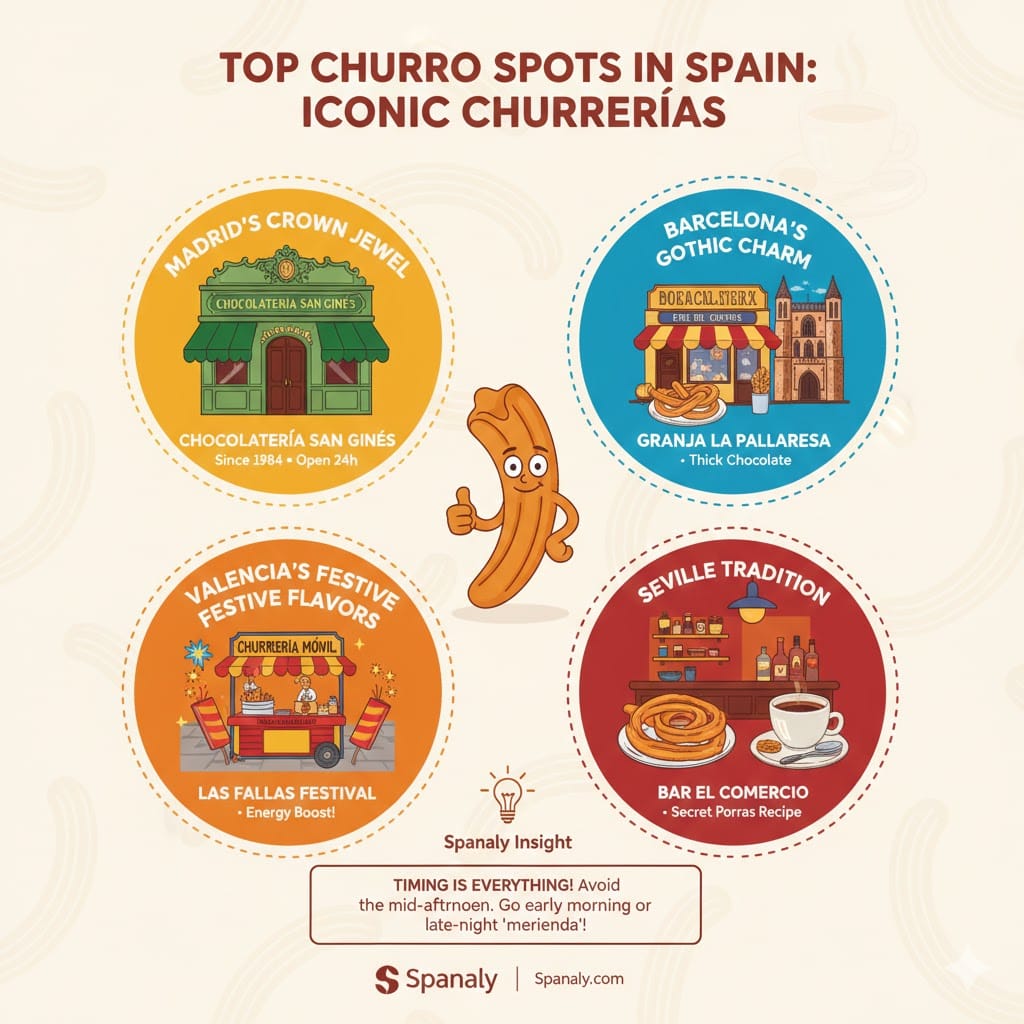
Finding the perfect churrería is a highlight of any Spanish adventure. Notably, every major city boasts iconic establishments with decades of history. Specifically, these spots maintain traditional methods to ensure the highest quality. Consequently, visiting them offers a true taste of Spanish culinary heritage.
🏰 Madrid’s Crown Jewel: Chocolatería San Ginés remains the most famous spot in the capital. Notably, it has served churros since 1894. Specifically, you can easily reach this historic gem while getting around Madrid during your sightseeing tour.
🏙️ Barcelona’s Gothic Charm: Granja La Pallaresa is legendary for its thick chocolate. In fact, it provides a perfect break while exploring the winding alleys of the Gothic Quarter in Barcelona.
🥘 Valencia’s Festive Flavors: During the famous spring celebrations, mobile stalls serve fresh churros on every corner. Notably, these treats provide the energy needed to experience the Las Fallas Festival in Valencia to the fullest.
🏛️ Seville’s Tradition: Bar El Comercio serves some of the thickest and most delicious porras in Andalusia. Ultimately, their secret recipe remains a favorite for those visiting the nearby Alcazar of Seville.
Indeed, these locations represent more than just food; they are living museums. Furthermore, each region puts a slight local spin on the dipping experience. Ultimately, the best churrería is often the one where you see the longest line of hungry locals.
💡 Spanaly Insight: Timing is everything! In fact, avoid the mid-afternoon rush if you want a seat. Notably, the most authentic experience happens early in the morning or during the late-night merienda. Therefore, plan your visit accordingly to enjoy the bustling atmosphere without the stress.
👨🍳 Homemade Spanish Churros: The Authentic Recipe
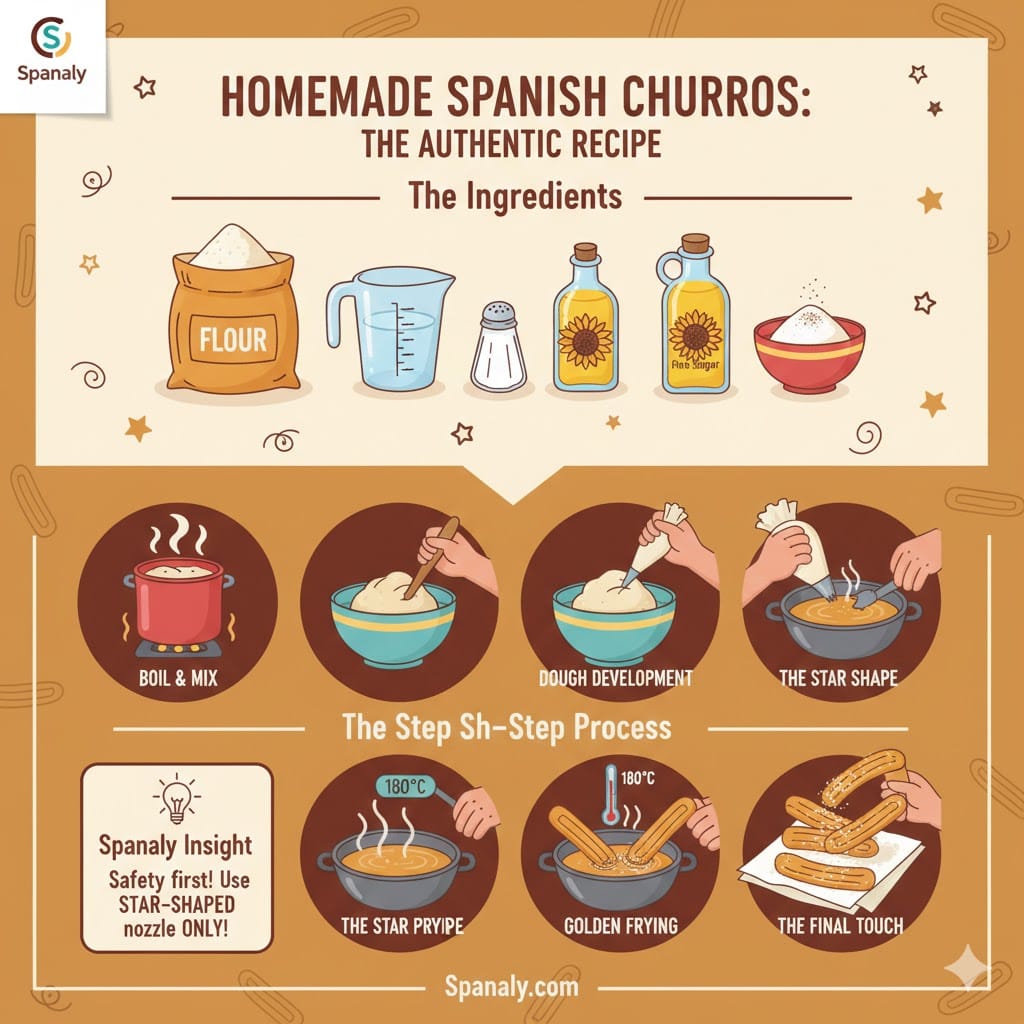
Bringing the taste of a Spanish churrería into your kitchen is surprisingly simple. Notably, you don’t need fancy equipment to achieve professional results. Specifically, the secret lies in the ratio of the ingredients and the temperature of the water. Consequently, following these steps will guarantee a light, non-greasy finish.
The Ingredients:
Water: 1 cup (250ml).
Flour: 1 cup (all-purpose).
Salt: 1/2 teaspoon.
Oil: For frying (use high-quality sunflower or olive oil).
Topping: Fine sugar (mixed with cinnamon if desired).
The Step-by-Step Process:
Boil & Mix: Bring the water and salt to a rolling boil. Specifically, remove from heat and immediately add the flour all at once.
Dough Development: Stir vigorously until a smooth dough ball forms and pulls away from the sides. Notably, let it rest for 5 minutes to cool slightly.
The Star Shape: Place the dough in a piping bag with a large star-shaped nozzle. In fact, this shape is crucial to prevent the churros from bursting in the oil.
Golden Frying: Heat the oil to 180°C. Specifically, pipe 4-inch strips directly into the oil and fry until golden brown (about 2 minutes per side).
The Final Touch: Drain on paper towels and toss in sugar immediately while still hot.
Indeed, homemade churros are best enjoyed with a side of thick chocolate. Furthermore, you can find more inspiration for traditional dishes in our Traditional Spanish Food Guide. Ultimately, the joy of making them at home is seeing the “bubbles” form on the surface, just like in Madrid.
💡 Spanaly Insight: Safety first! In fact, never use a round nozzle, as the dough might explode. Notably, the ridges of the star shape allow the steam to escape during frying. Therefore, always ensure your piping bag is sturdy and your nozzle is the correct shape.
📝 Pro Tips: Eat Churros Like a True Spaniard
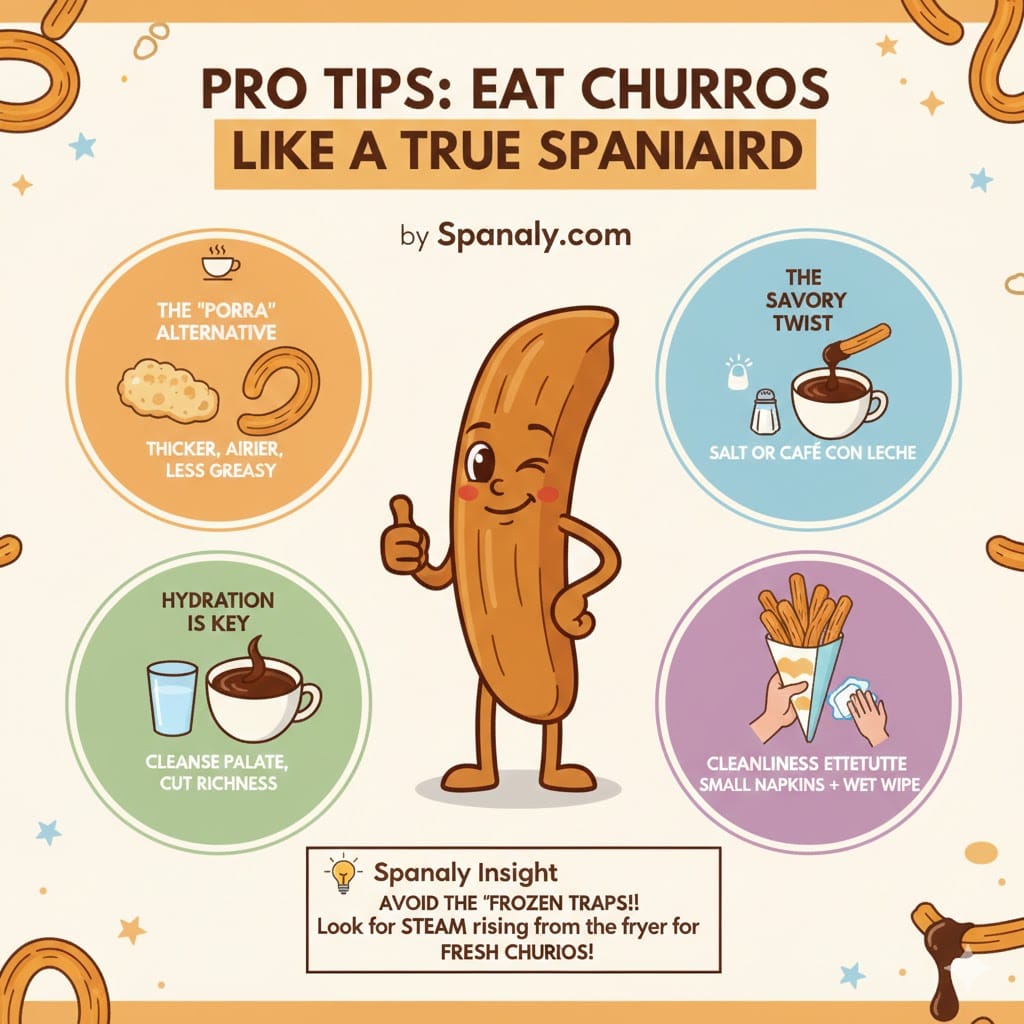
To truly master the art of the churro experience, you need to look beyond the sugar coating. Notably, small details in how and when you order can transform your meal. Specifically, these expert tips ensure you enjoy this treat without the typical tourist mistakes. Consequently, you will navigate the churrería scene with total confidence.
☕ The “Porra” Alternative: If you find churros too thin, ask for a Porra. In fact, it is the thicker, airier cousin of the churro, found mostly in Madrid and Andalusia.
🥛 The Savory Twist: While most people go for sweet, try dipping your churro in a little salt or even a cafe con leche. Notably, many locals prefer this less sugary start to their day.
🥤 Hydration is Key: Spanish chocolate is incredibly rich. Specifically, always ask for a small glass of tap water (un vaso de agua) to cleanse your palate between dips.
🥡 Takeaway Culture: If the shop is too crowded, order a cartucho (a paper cone) to go. Notably, enjoying hot churros while walking through the Maria Luisa Park in Seville is a top-tier local experience.
🧼 Cleanliness Etiquette: Use the tiny, wax-paper napkins provided. In fact, they aren’t great for absorption, but they are a staple of Cultural Etiquette in Spain. Ultimately, don’t be afraid to ask for a proper wet wipe if things get messy!
Indeed, these subtle habits separate the travelers from the tourists. Furthermore, applying these tips will make your morning ritual feel more authentic and enjoyable. Ultimately, the best tip is to leave your calorie counter at the hotel and simply enjoy the golden crunch.
💡 Spanaly Insight: Avoid the “Frozen Traps”! In fact, if you see a mountain of churros sitting cold behind a glass display, keep walking. Notably, a true churrería only pipes the dough when you order. Therefore, always look for the steam rising from the fryer to ensure maximum freshness.
🎓 Visitor FAQs – Authentic Spanish Churros
✨ Are Spanish churros vegan or dairy-free?
Yes, traditionally they are. The authentic dough consists only of flour, water, and salt. However, while the pastry is vegan, the chocolate dipping sauce often contains milk, so be sure to check if you have a dairy sensitivity.
☕ Can I order churros during the afternoon Siesta?
It depends on the location. Most traditional churrerías close during the Siesta hours (2 PM to 5 PM) and reopen for the merienda (afternoon snack). In tourist hubs like Madrid, some spots stay open 24/7, but always check the local rhythm.
🌾 Is there a gluten-free version available in Spain?
While rare in small villages, cities like Barcelona and Madrid have dedicated Sin Gluten churrerías. These shops use corn or rice flour and separate fryers to prevent cross-contamination, allowing everyone to enjoy this golden treat.
🥣 Should I drink the leftover chocolate?
Absolutely! It is common practice to drink the remaining thick chocolate once the churros are finished. Many locals even order a small glass of water alongside to balance the richness of the cocoa—a subtle but important part of Spanish etiquette.
🛒 Can I find "Churros con Chocolate" in supermarkets?
While supermarkets sell frozen versions, they lack the signature crunch and airy texture of fresh ones. For the best experience, always visit a specialized street stall or café where the dough is fried to order in front of you.
✨ Savor the Crunch!
Exploring Spain through its churros is a journey of flavor, history, and pure joy. Notably, this simple dough has conquered hearts from mountain villages to royal palaces. Specifically, whether you prefer them for breakfast or a late-night snack, they offer an authentic taste of Spanish life.
🍫 Dip & Sip: Don’t forget—finish the churros first, then enjoy the chocolate.
📍 Stay Local: Look for the steam and the crowd to find the freshest batch.
🇪🇸 Cultural Hub: Every bite connects you to centuries of Spanish tradition.
🥣 Try More: If you love rich textures, don’t miss our guide on Salmorejo: Spanish Cold Soup for another culinary masterpiece.
Indeed, no visit to the Iberian Peninsula is complete without that first, hot, crunchy bite. Furthermore, the memories of a shared plate of churros often last longer than the trip itself. Ultimately, we hope this guide helps you find your favorite spot in Spain!
💡 Spanaly Farewell: Life is short—eat the churros, dip them deep, and always wear your chocolate “mustache” with pride!