Table of Contents
Toggle🛍️ Shopping in Ronda: Finding Authenticity Beyond the View
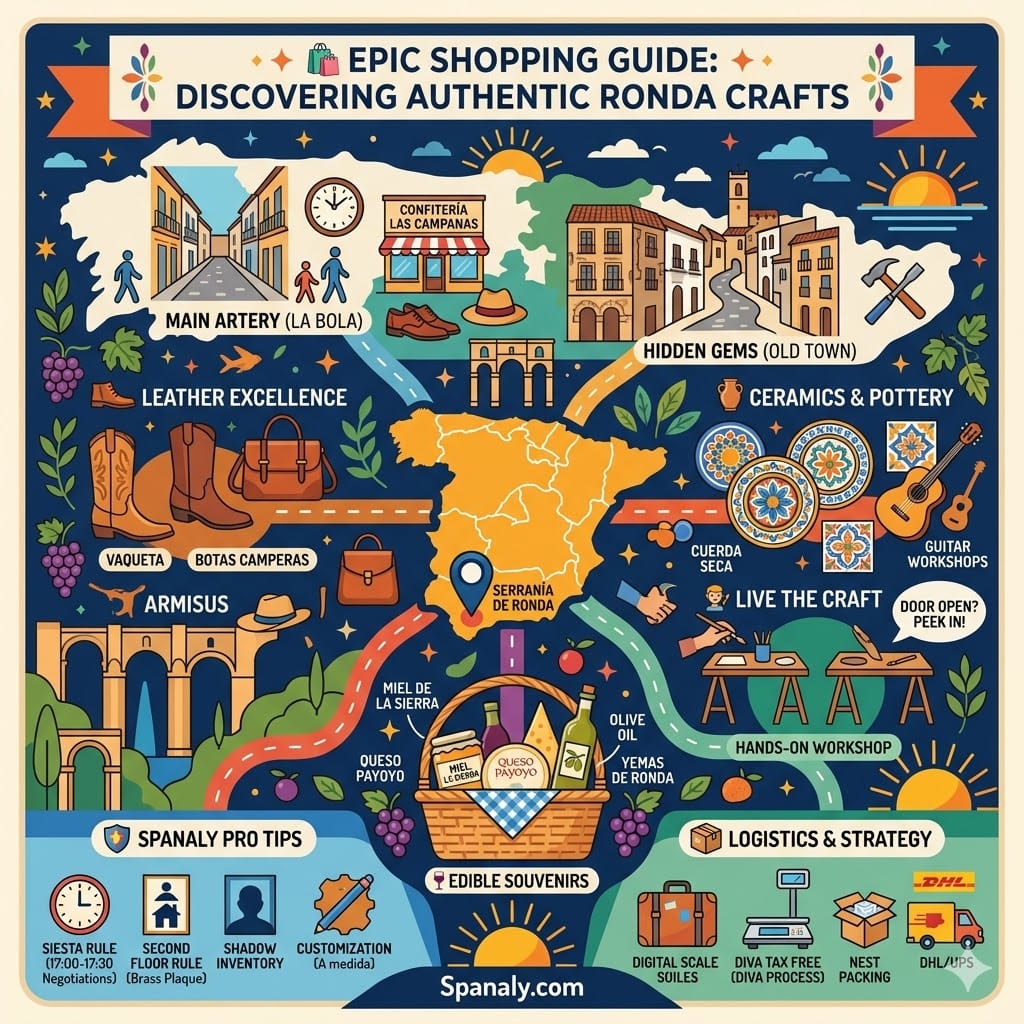
Shopping in Ronda is a journey through centuries of Andalusian craftsmanship that remains remarkably alive in the city’s cobblestone streets. While most visitors come for the bridge, the real experts know that the valley’s soul is found in its workshops. Whether you are hunting for buttery-soft leather, hand-painted ceramics, or local delicacies, our Ultimate Ronda Travel Guide ensures you navigate the markets with precision. Forget the mass-produced trinkets found in coastal hubs; here, every purchase tells a story of mountain tradition and artisanal pride.
📍 The Experience: Traditional guilds meeting modern boutique flair.
🧤 Best Buys: World-class leatherwork, hand-carved wood, and mountain honey.
🚶 The Route: A strategic path from the modern “La Bola” to hidden Old Town ateliers.
💰 Value: High-quality goods at prices significantly lower than Madrid or Seville.
💡 Spanaly Insight
Avoid falling for the “view tax” at shops located directly in front of major monuments. The real value is hidden in the streets parallel to Calle Espinel; there, you will find the same high-quality craftsmanship at nearly half the price, often dealing directly with families who have owned these workshops for generations.
📊 Ronda Shopping Snapshot: Essential Data for Travelers
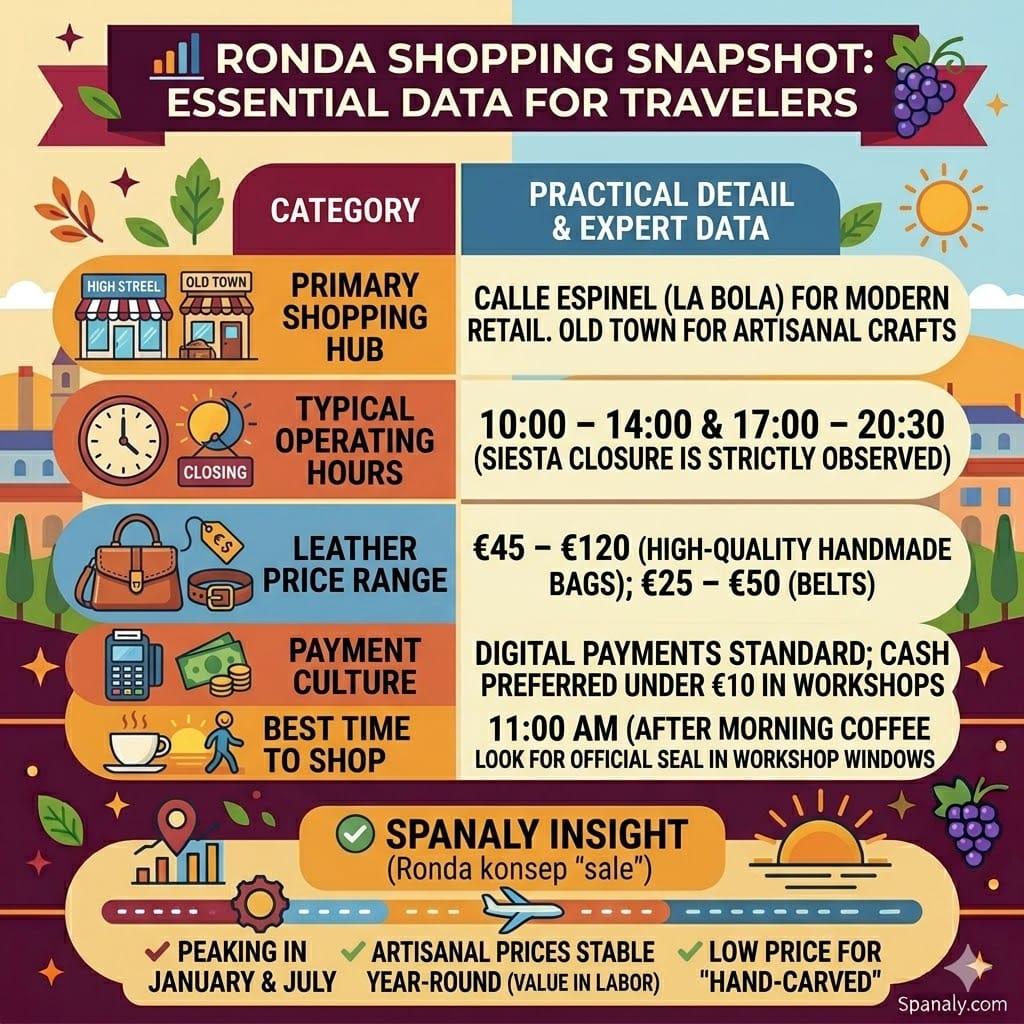
Before heading out to explore the workshops, review these practical logistics to align your shopping mission with the city’s operational rhythm. Understanding these details will help you distinguish between a high-quality investment and a standard tourist purchase. While you are planning your haul, check our guide on the Best Souvenirs to Buy from Spain to see how Ronda’s crafts rank on a national level.
| Category | Practical Detail & Expert Data |
|---|---|
| Primary Shopping Hub | Calle Espinel (La Bola) for modern retail; Old Town for artisanal crafts. |
| Typical Operating Hours | 10:00 – 14:00 and 17:00 – 20:30 (Siesta closure is strictly observed). |
| Leather Price Range | €45 – €120 for high-quality handmade bags; €25 – €50 for belts. |
| Payment Culture | Digital payments are standard, but smaller workshops prefer cash for purchases under €10. |
| Best Time to Shop | 11:00 AM (after the morning coffee rush and before the midday heat). |
| Authenticity Marker | Look for the “Artesanía de Andalucía” official seal in workshop windows. |
💡 Spanaly Insight
In Ronda, the concept of a “sale” (Rebajas) follows the national Spanish calendar, typically peaking in January and July. However, artisanal prices remain stable year-round because the value is in the labor, not the inventory. If you find a “hand-carved” item at a suspiciously low price during peak season, it is likely an imported imitation.
🛍️ The Main Artery: Shopping Along Calle Espinel (La Bola)
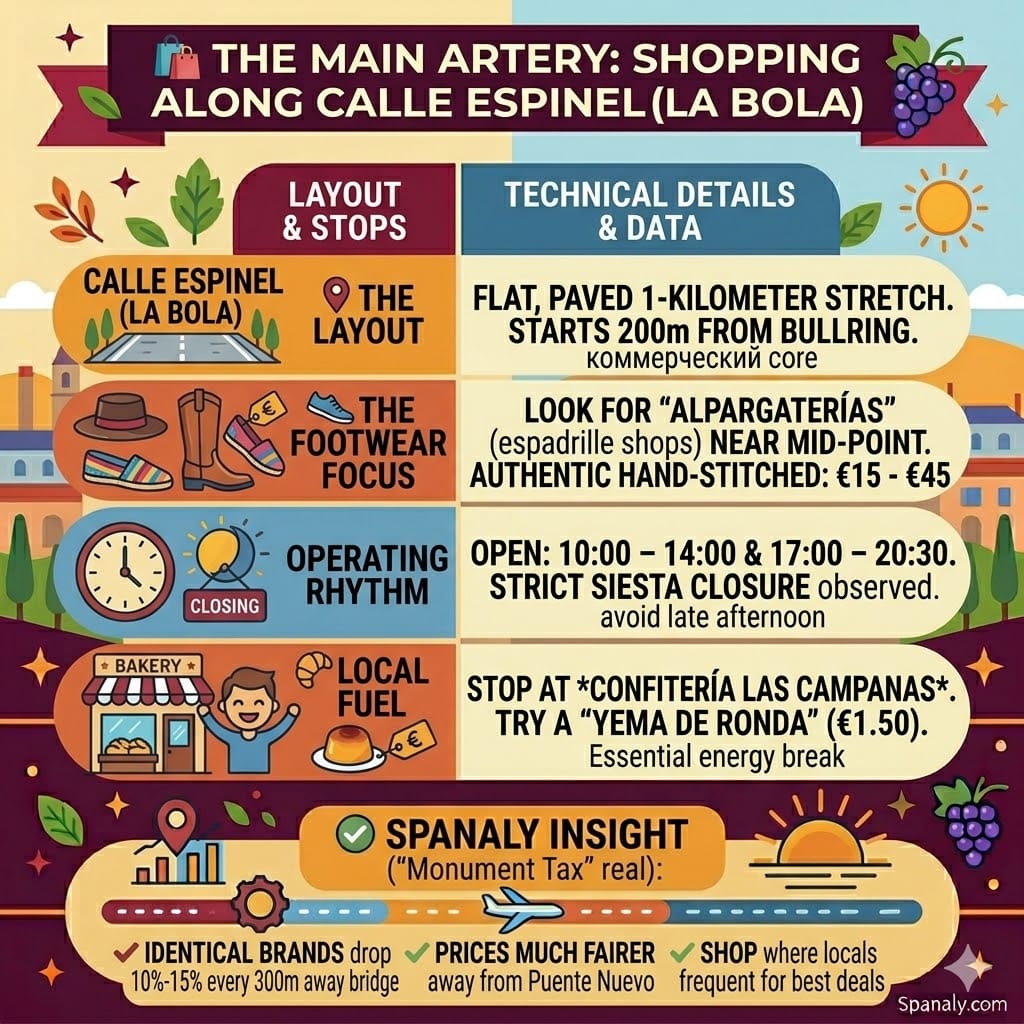
To navigate Shopping in Ronda like an expert, you must start at Calle Espinel, a 1-kilometer pedestrian stretch locally known as “La Bola.” This is the city’s commercial core, linking the modern district with the historic bridge. While you will see familiar Spanish brands, the real value lies in the local family-run boutiques that have occupied these storefronts for decades. If you are following a One Day Ronda Itinerary, this street is your most efficient route for high-quality leather shoes and traditional hats.
📍 The Layout: A flat, paved walk starting just 200 meters from the Bullring and extending deep into the modern town.
👟 The Footwear Focus: Look for “Alpargaterías” (espadrille shops) near the mid-point of the street. Authentic hand-stitched pairs range from €15 to €45.
🕰️ Operating Rhythm: Shops open at 10:00, but the entire street shuts down for siesta from 14:00 to 17:00. Do not plan your shopping for the late afternoon, as you will find only shuttered doors.
🥐 Local Fuel: Stop at Confitería Las Campanas for a “Yema de Ronda” (€1.50). It is a quick, high-energy local pastry essential for a long walking day.
💡 Spanaly Insight
The “Monument Tax” is real on La Bola. For identical leather brands, prices typically drop by 10% to 15% for every 300 meters you walk away from the Puente Nuevo. If you see a pair of boots you like near the bridge, keep walking toward the end of the street; you will likely find the same pair at a much fairer price in the shops frequented by locals.
👞 Leather Excellence: Where to Find Authentic Ronda Leatherwork
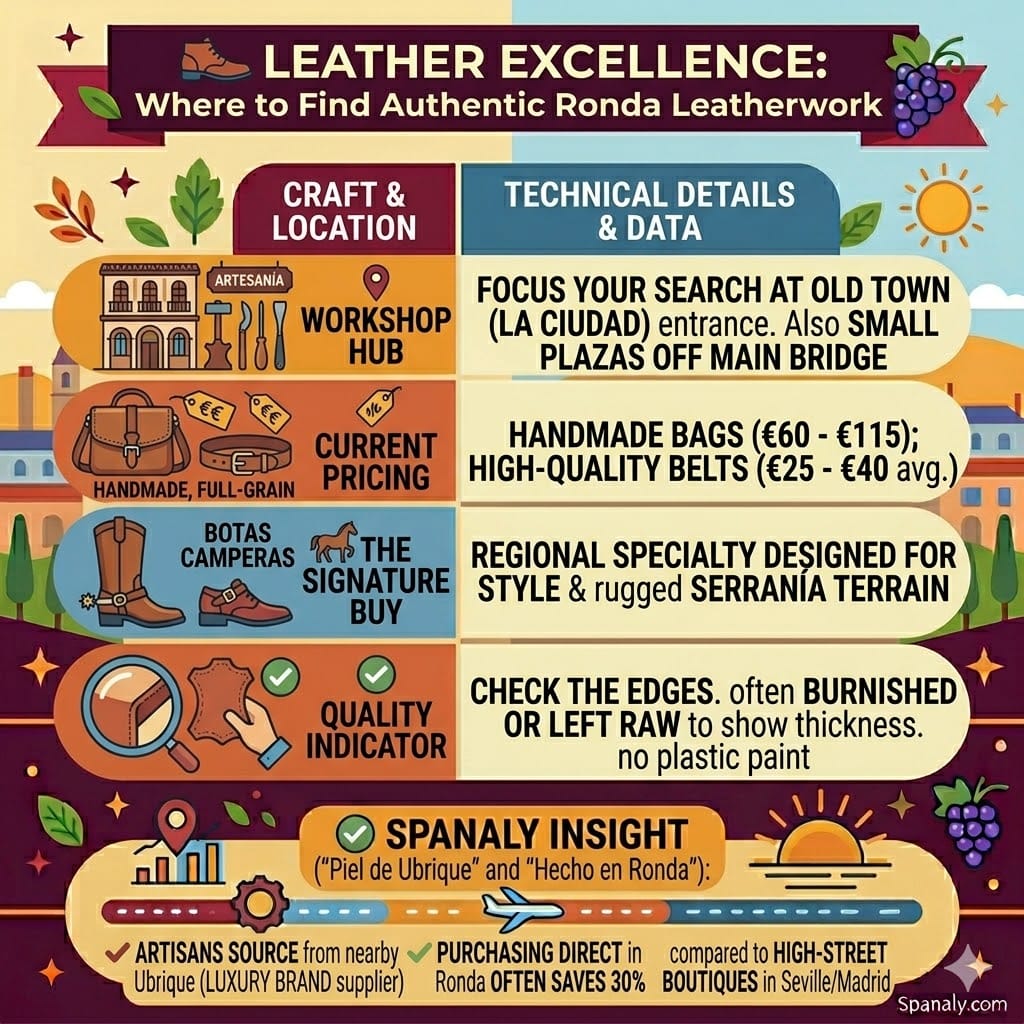
Ronda remains a regional powerhouse for leather production, a tradition deeply rooted in its equestrian and mountain culture. To secure the best Shopping in Ronda experience, you must prioritize “Artesanía” workshops over generic souvenir stalls. The local leather is known for its durability and thick, natural finish. For a smooth visit to these traditional workshops, make sure to review our Ronda Travel Tips regarding local opening hours and payment etiquette.
📍 Workshop Hub: Focus your search on the entrance of the Old Town (La Ciudad) and the smaller plazas just off the main bridge.
🏷️ Current Pricing: A handmade, full-grain leather bag typically costs between €60 and €115. High-quality belts average €25 to €40.
🐎 The Signature Buy: “Botas Camperas” (Andalusian country boots) are the gold standard here, designed for both style and the rugged Serranía terrain.
✅ Quality Indicator: Check the edges of the leather. In authentic Ronda workshops, the edges are often burnished or left raw to show the thickness, rather than being covered in plastic-like paint.
💡 Spanaly Insight
Look specifically for “Piel de Ubrique” labels or items stamped with “Hecho en Ronda.” Ubrique is a nearby “white village” that supplies leather to the world’s top luxury brands, and many Ronda artisans source their raw materials from there. Purchasing these items in Ronda directly from the maker often saves you 30% compared to high-street boutiques in Seville or Madrid.
🏺 Ceramics & Pottery: The Moorish Influence in Local Clay
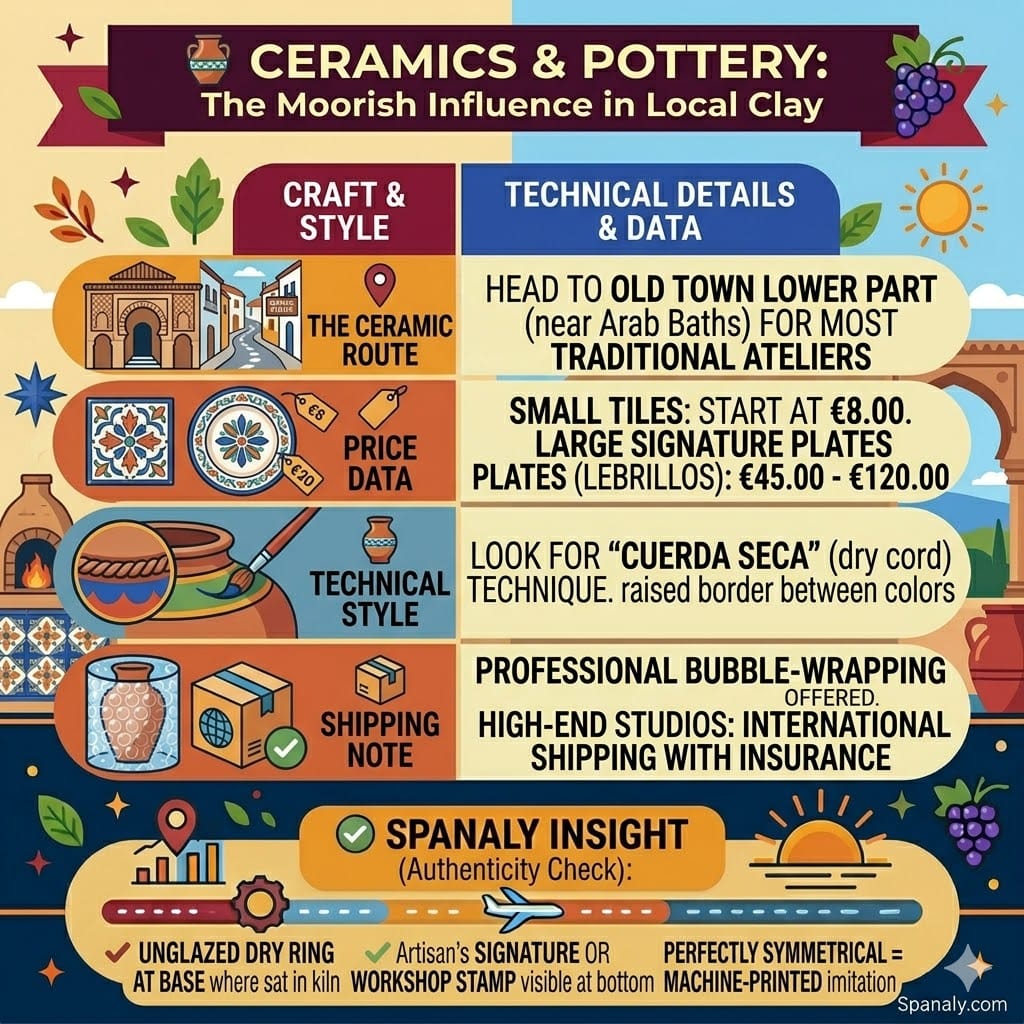
Ceramics in Ronda are more than just souvenirs; they are a direct link to the city’s Islamic heritage. When Shopping in Ronda, you will notice a distinct color palette—cobalt blue, copper green, and manganese black—which mirrors the patterns found in the Alhambra Granada Guide. Unlike the mass-produced tiles found in coastal gift shops, Ronda’s authentic pottery is hand-thrown and double-fired in local kilns.
📍 The Ceramic Route: Head to the lower part of the Old Town (near the Arab Baths) to find the most traditional ateliers.
🏷️ Price Data: Small hand-painted decorative tiles start at €8.00. Large, signature plates (Lebrillos) range from €45.00 to €120.00 depending on the complexity of the pattern.
🏺 Technical Style: Look for “Cuerda Seca” (dry cord) technique. This method creates a raised, textured border between colors, preventing them from mixing during firing.
📦 Shipping Note: Most established ceramic shops offer professional bubble-wrapping services. High-end studios provide international shipping with insurance, essential for larger decorative pieces.
💡 Spanaly Insight
To verify if a piece is truly hand-painted, look at the base of the ceramic. Authentic Ronda pottery will have a dry, unglazed ring at the bottom where it sat in the kiln, and you should be able to see (and often feel) the artisan’s signature or workshop stamp. If the pattern is 100% perfectly symmetrical without a single “human” imperfection, it’s likely a machine-printed imitation.
🖼️ Hidden Gems: Artisanal Workshops in the Old Town (La Ciudad)
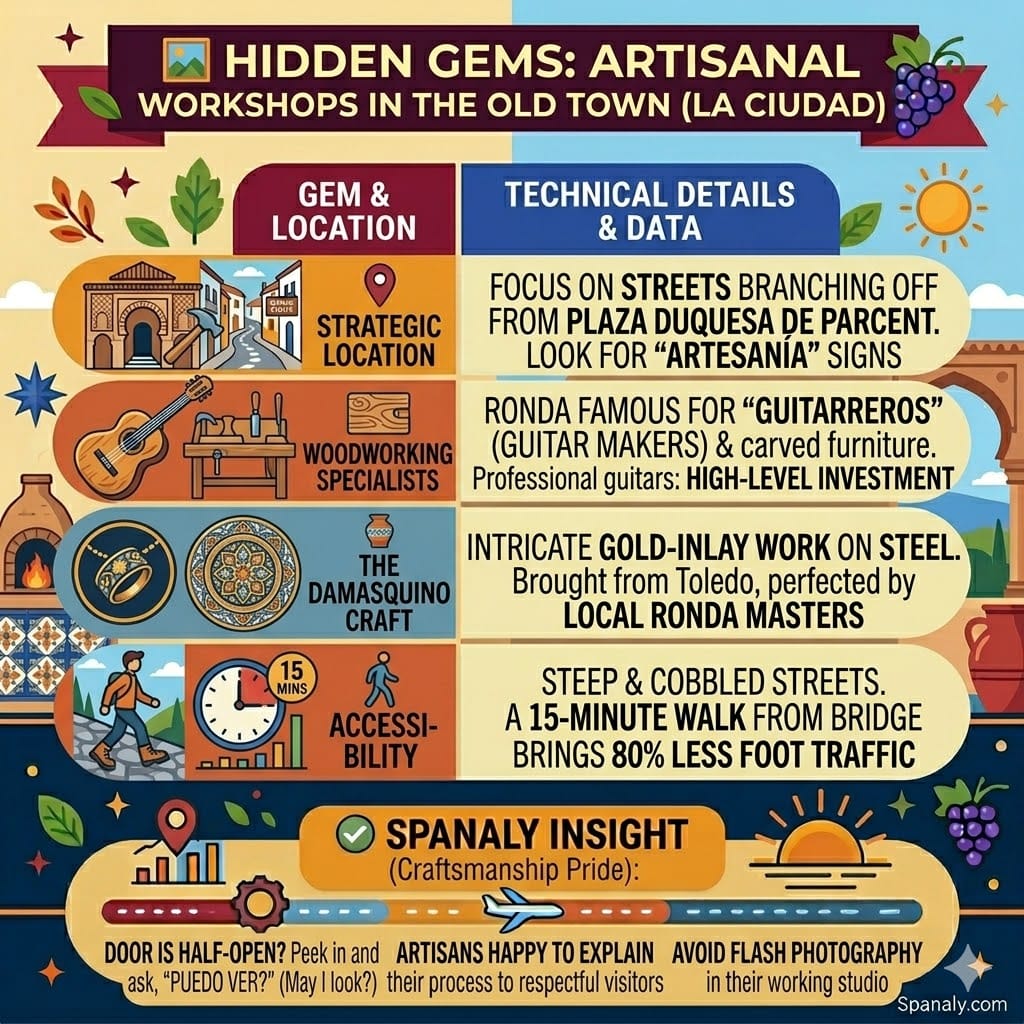
While La Bola offers convenience, the true essence of Shopping in Ronda is hidden within the labyrinthine streets of La Ciudad (the Old Town). This district is home to independent artisans who operate out of historic ground-floor stables and converted patios. Finding these gems often requires exploring the quiet alleys near the Ronda Secret Gardens & Palaces, where the rhythmic sound of hammers and chisels replaces the chatter of tour groups.
📍 Strategic Location: Focus on the streets branching off from Plaza Duquesa de Parcent. Look for small “Artesanía” signs above heavy wooden doors.
🪵 Woodworking Specialists: Ronda is famous for its “Guitarreros” (guitar makers) and hand-carved furniture. A professional, handcrafted guitar here is a high-level investment, often requiring months of lead time.
🏺 The Damasquino Craft: You can find intricate gold-inlay work on steel, a technique brought from Toledo but perfected by local Ronda masters in jewelry and decorative plates.
🚶 Accessibility: The streets are steep and cobbled; a 15-minute walk from the bridge will bring you to workshops that see 80% less foot traffic than the main street.
💡 Spanaly Insight
Many of these workshops do not have fixed “tourist” storefronts; they are working studios first. If a door is half-open, it is generally acceptable to peek in and ask, “Puedo ver?” (May I look?). These artisans take immense pride in their “Expert” status and are often happy to explain their process—even if you don’t buy—provided you respect their working space and avoid flash photography.
✨ Live the Craft: Interactive Workshops and Live Demonstrations
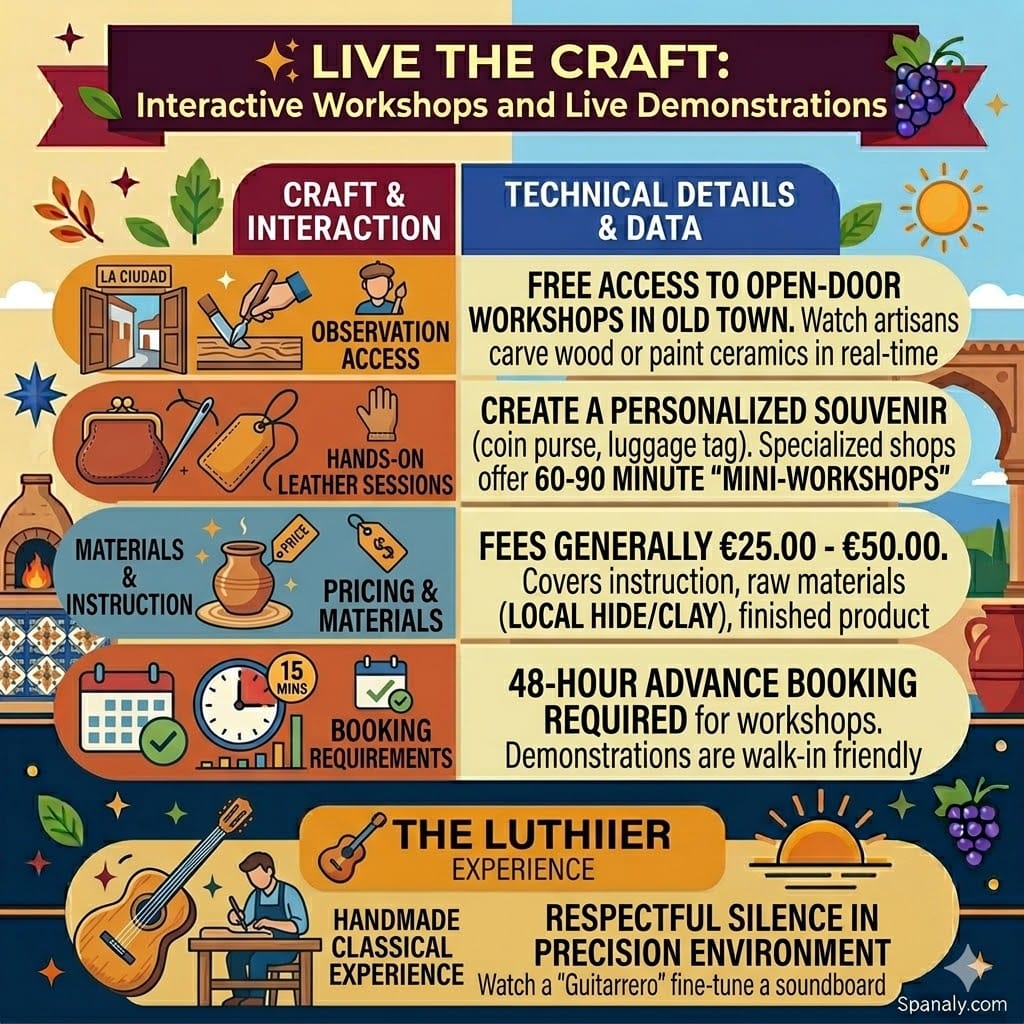
In the current travel landscape, Shopping in Ronda has shifted toward participation, allowing visitors to engage directly with the city’s creative guilds. Several traditional ateliers now offer a “window” into their craft through live demonstrations and short, hands-on sessions. If you are balancing this with a One Day Ronda Itinerary, these experiences provide a high-value break between visiting historical monuments.
🧑🎨 Observation Access: Walking through the Old Town (La Ciudad) provides free access to many open-door workshops where you can watch artisans carve wood or paint ceramics in real-time.
🧤 Hands-on Leather Sessions: Specialized leather shops offer 60 to 90-minute “mini-workshops.” You can learn basic hand-stitching and edge-burnishing to create a personalized souvenir, such as a leather coin purse or a passport cover.
🏷️ Pricing & Materials: Interactive crafting sessions generally cost between €25.00 and €50.00. This fee covers the instruction, raw materials (typically high-grade local hide or clay), and the finished product you take home.
📅 Booking Requirements: While live demonstrations are sporadic and walk-in friendly, a private workshop session requires a 48-hour advance booking. This ensures the master artisan has the necessary bench space and pre-cut materials ready for your arrival.
🎸 The Luthier Experience: If you visit a “Guitarrero” (guitar maker), maintain a respectful silence; these are high-precision environments. Watching a luthier fine-tune a soundboard is a masterclass in Andalusian patience and skill.
🍷 Edible Souvenirs: Bringing Ronda’s Flavors Home
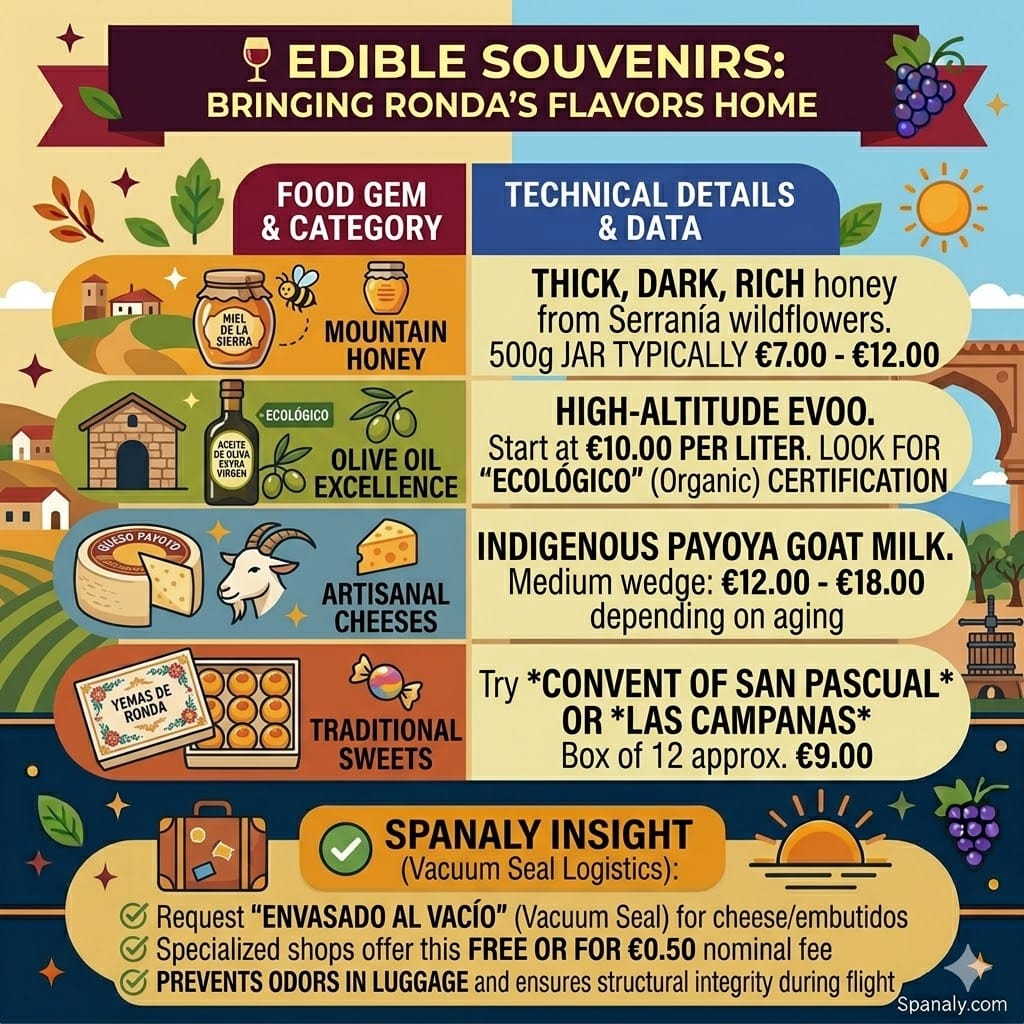
Beyond the leather and clay, Shopping in Ronda is an opportunity to stock your pantry with the raw flavors of the Serranía. The high-altitude climate and limestone soil produce honey, oils, and wines that are difficult to find in larger Spanish cities. To truly master this category, pair your food shopping with our Ronda Wine Guide to ensure your edible souvenirs are backed by the region’s best labels.
🍯 Mountain Honey: Look for “Miel de la Sierra.” Unlike processed supermarket honey, Ronda’s variety is thick, dark, and rich in local wildflower pollen. A 500g jar typically costs between €7.00 and €12.00.
🫒 Olive Oil Excellence: The Serranía produces high-quality extra virgin olive oil (EVOO). Authentic local bottles start at €10.00 per liter. Look for the “Ecológico” certification for the purest mountain press.
🧀 Artisanal Cheeses: Pay attention to “Queso Payoyo.” Made from the milk of the indigenous Payoya goat, this cheese is a regional legend. A medium wedge will range from €12.00 to €18.00 depending on its aging (Curado vs. Semicurado).
🍬 Traditional Sweets: Visit the Convent of San Pascual or Las Campanas for “Yemas de Ronda” (egg yolk sweets). A small box of 12 is priced at approximately €9.00—an essential, high-energy treat for your return journey.
💡 Spanaly Insight
When buying cheese or cured meats (Embutidos) to take home, always ask the merchant to “envasado al vacío” (vacuum seal) your purchase. Most specialized shops on Calle Espinel provide this service for free or a nominal fee of €0.50. This is not just for hygiene; it is a logistical necessity to prevent odors in your luggage and ensures the structural integrity of the food during your flight.
⚖️ The Showdown: Artisanal Crafts vs. Mainstream Souvenirs

To excel at Shopping in Ronda, you must face the central conflict: Is it worth investing in a handmade piece, or does a mass-produced magnet suffice? This showdown compares the two paths, providing the exact data you need to match your purchases with your budget and values.
| Criterion | Mainstream Souvenirs | Authentic Artisanal Crafts |
|---|---|---|
| Material Quality | Cheap plastic, composite wood, or thin, coated leather. | High-grade local raw materials (full-grain leather, solid olive wood). |
| Origin Data | 90% imported (look for hidden “Made in…” stamps). | 100% made in local Ronda or Serranía workshops. |
| Price Point | €2.00 – €15.00 for magnets, keychains, and small tiles. | €25.00 – €120.00+ for leather bags, ceramics, and carved wood. |
| Durability Factor | Low; intended for decorative, short-term use. | High; designed to last for decades (e.g., riding boots, furniture). |
| Economic Impact | High-volume sales that primarily support large distributors. | High-value sales that directly support local families and traditional guilds. |
📦 Logistics: Tax-Free Shopping & Luggage Strategy
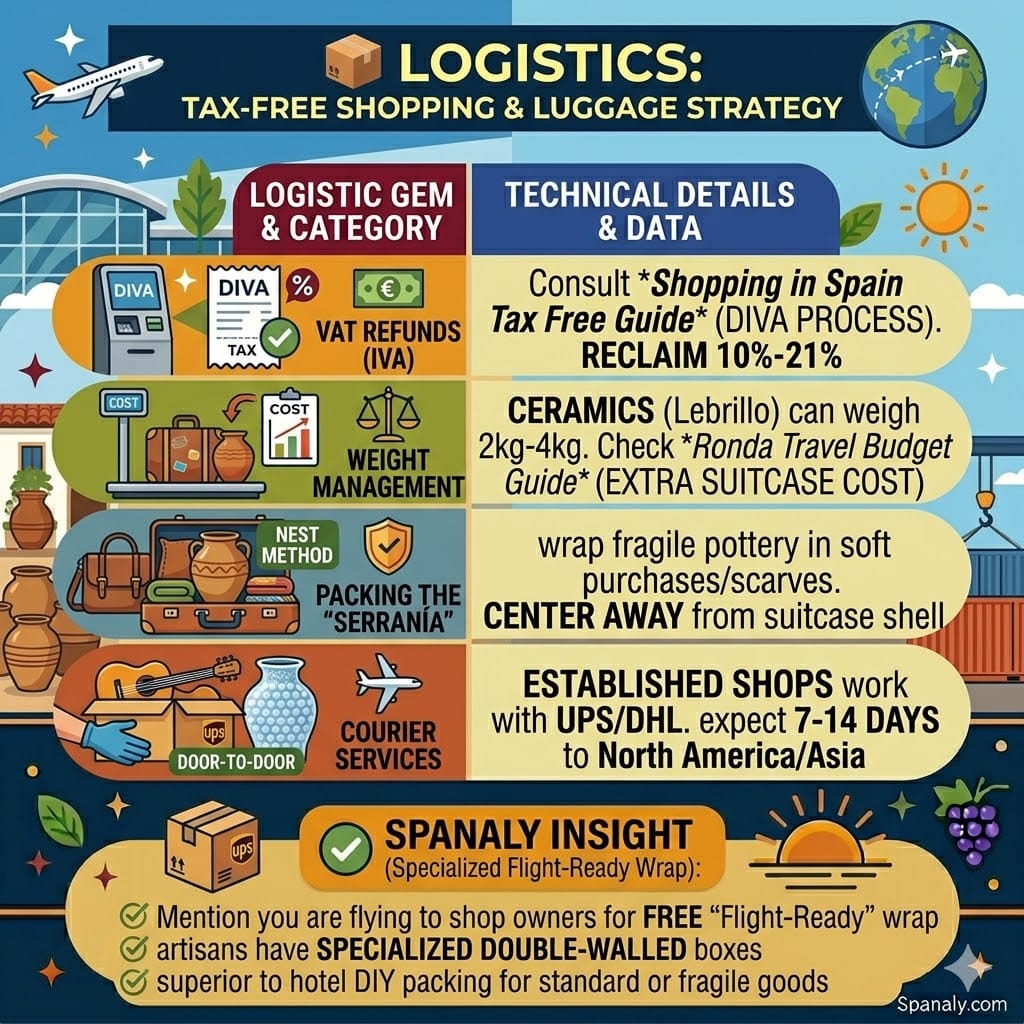
The success of Shopping in Ronda is determined by how you handle the “return leg” of your journey. High-quality ceramics and heavy leather boots require a strategic approach to packing and customs to avoid unnecessary fees at the airport.
💶 VAT Refunds (IVA): Non-EU residents can reclaim the Value Added Tax (VAT), which typically ranges from 10% to 21% depending on the item. To ensure you follow the correct digital validation process (DIVA), consult our Shopping in Spain Tax Free Guide before your final purchase.
⚖️ Weight Management: Artisanal ceramics are heavy. A standard “Lebrillo” plate can weigh between 2kg and 4kg. If your luggage is near its limit, check our Ronda Travel Budget Guide to compare the cost of paying for an extra suitcase versus international shipping.
🛡️ Packing the “Serranía”: For fragile pottery, use the “Nest Method”—wrap the item in your softest leather purchases or thick Spanish scarves. Never place ceramics against the hard outer shell of a suitcase; always center them between soft layers.
✈️ Courier Services: For large items (guitars or furniture), avoid the airport altogether. Established shops in the Old Town work with UPS or DHL and provide “Door-to-Door” service with insurance. Expect shipping to North America or Asia to take 7–14 days.
💡 Spanaly Insight
Be direct with the shop owner about your travel plans. In Ronda, “Expert” artisans often have specialized, double-walled cardboard boxes designed specifically for the dimensions of their products. If you mention you are flying, they will often perform a “Flight-Ready” wrap at no extra charge, which is far superior to any DIY packing you can do at your hotel.
💡 Spanaly Pro Tips: Mastering the Ronda Shopping Logic
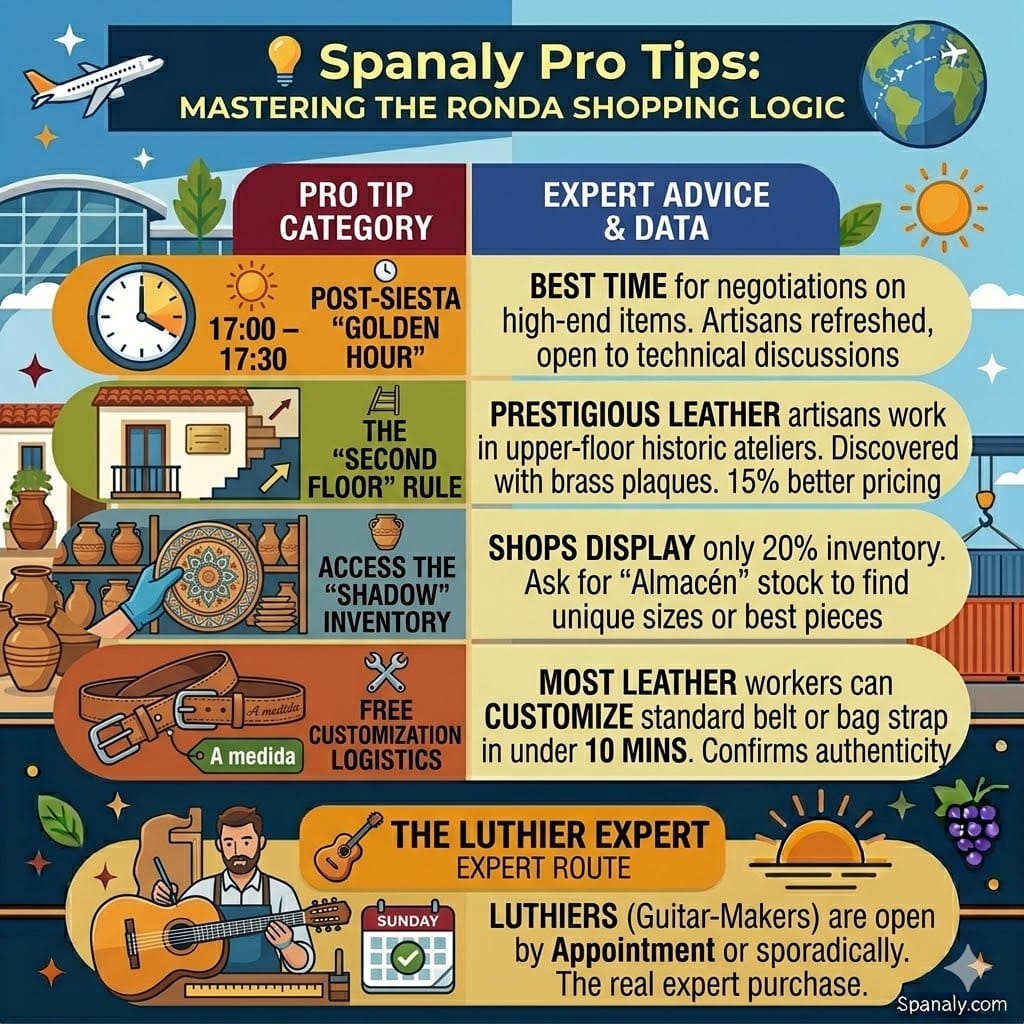
To shop like a local expert in Ronda, you must look beyond the storefronts and understand the logistical and cultural “hidden rules” of the Serranía. These tips focus on maximizing your budget and ensuring the authenticity of your high-value investments.
The “Second Floor” Rule: In the Old Town (La Ciudad), some of the most prestigious leather and textile artisans work on the first floor (above ground) of historic buildings. If you see a discreet brass plaque at a residential-looking entrance, it often leads to a private atelier. These spots offer 15% better pricing as they avoid high-street rents.
The Post-Siesta “Golden Hour”: While most shops close from 14:00 to 17:00, the 30 minutes immediately following the reopening (17:00 – 17:30) is the best time for negotiations on high-end items like guitars or custom furniture. Artisans are refreshed and more open to discussing technical customizations before the evening rush.
The “Shadow” Inventory: If you find a ceramic pattern you love but want a different size, ask for the “Almacén” (warehouse) stock. Many Ronda shops display only 20% of their inventory due to limited shelf space. The best “Lebrillos” are often kept in the back to prevent accidental breakage by tourist crowds.
The Sunday Myth: Most travel blogs suggest Sunday is a total “dead zone” for shopping. While the main street (La Bola) is quiet, several artisanal workshops in the Old Town remain open on Sunday mornings (10:00 – 13:00) specifically for serious collectors who want to avoid the Saturday crowds.
Customization Logistics: Did you know most Ronda leather workers can customize a belt or bag strap for you in under 10 minutes? Always ask for a “A medida” (made to measure) adjustment. This service is almost always free and confirms the item wasn’t mass-produced in a distant factory.
🛍️ Visitor FAQs – Shopping in Ronda Guide
🛡️ Can I find English-speaking staff in traditional workshops?
In major boutiques along Calle Espinel, English is widely spoken. However, in smaller artisanal workshops in La Ciudad, language can be a barrier. Most artisans are used to international visitors and will use translation apps or gestures to explain their craft. We recommend having a photo of what you are looking for ready on your phone to ease the process.
💳 Is cash still required for small artisanal purchases?
While Spain is highly digitized, some very traditional workshops in Ronda may have a minimum credit card limit (usually €5 or €10). For small souvenirs like ceramic tiles or postcards, carrying a few Euros in cash is practical. For high-value items like leather or guitars, all shops accept major credit cards and offer digital receipts.
📦 Can I ship large ceramic "Lebrillos" directly to my home?
Yes, established ceramic studios in the Old Town specialize in international shipping with insurance. It is often safer and more cost-effective than paying for extra airline luggage. Always ask for a "Flat Rate" shipping quote that includes professional packing, as these pieces are fragile and require specific double-walled crates.
🕒 Why are most shops closed in the mid-afternoon?
Ronda strictly observes the Siesta tradition. Most independent shops close between 14:00 and 17:00. This is the perfect time to visit the Tajo gorge or enjoy a long lunch. The shops reopen in the evening until 20:30 or 21:00, which is when the atmosphere on La Bola is at its most vibrant.
🏺 How do I know if the pottery is lead-free for food use?
Authentic Ronda pottery intended for food use (like plates or bowls) must comply with EU safety standards. Look for the "Uso Alimentario" stamp on the base. If you are buying a decorative piece that is not food-safe, the artisan will usually warn you, but it’s always best to ask "Es para uso alimentario?" before purchasing kitchenware.
Shopping in Ronda Guide by Spanaly.com
Shopping in Ronda is less about filling suitcases and more about preserving the heritage of the Serranía. Whether you leave with a bespoke leather belt or a hand-painted tile, you are taking home a piece of Andalusian history.
👞 Quality Over Quantity: Prioritize one authentic, handmade item over ten generic souvenirs.
🧭 Explore the Alleys: The best deals and the most skilled masters hide in the quiet corners of La Ciudad.
⚔️ Beyond Ronda: If you are a collector of Spanish craftsmanship, your next logical stop should be exploring the legendary Toledo Steel Swords & Gold Crafts, which share a similar Moorish artistic DNA.
🕰️ Respect the Rhythm: Plan your high-value purchases for the morning hours to ensure you have the artisan’s full attention.
Ready to explore? Pack an extra foldable bag, keep your tax-free forms ready, and enjoy the rhythmic charm of Ronda’s workshops. 🥂✨