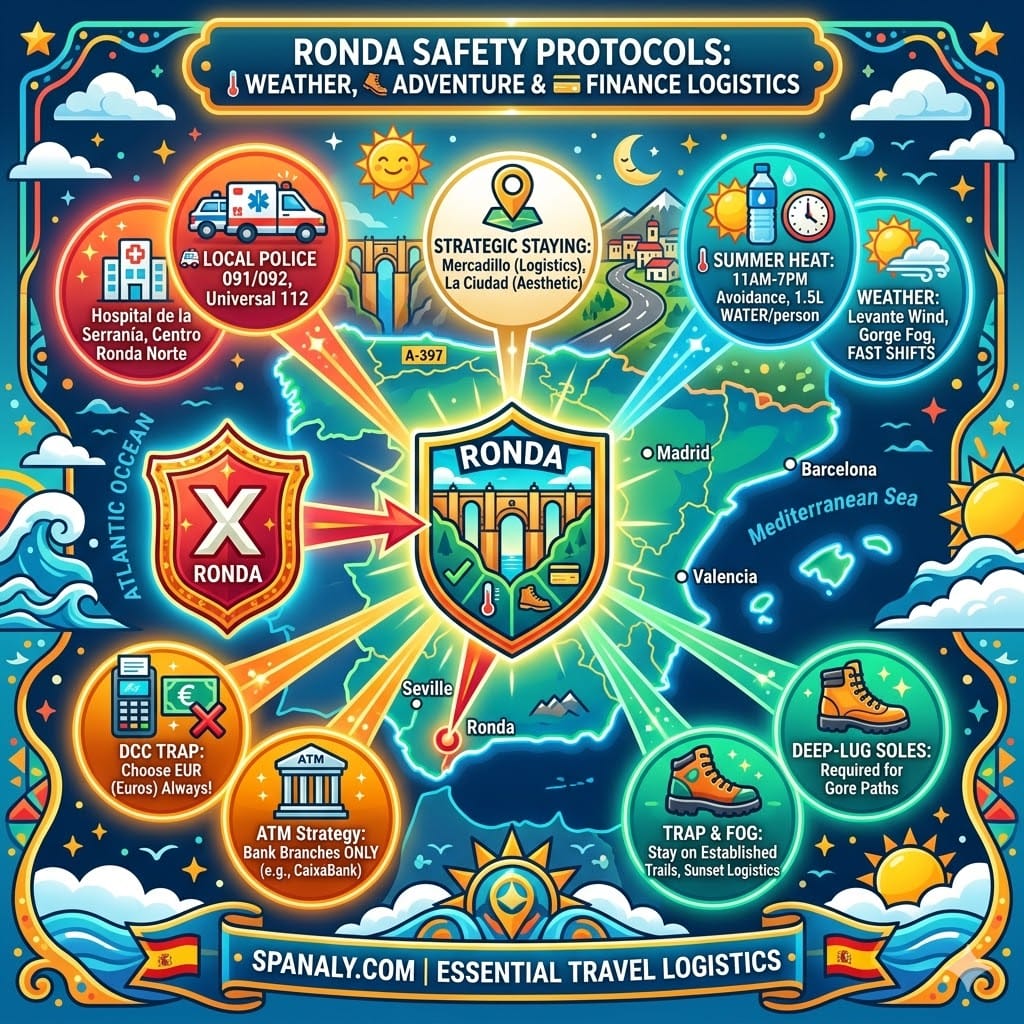
Table of Contents
Toggle⚡ Is Ronda Safe for Tourists?
Yes, Ronda is exceptionally safe and consistently ranks as one of Spain’s most secure mountain destinations. However, the true “hazards” here are logistical and geographical rather than criminal.
🛡️ Crime Rate: Street crime is rare, but mid-day crowds near the bridge attract opportunistic pickpockets.
🧗 Physical Risk: The primary danger is the 120-meter drop of the Tajo Gorge; safety barriers are essential.
⚠️ Strategic Scams: Most “traps” involve €15 parking tips or overpriced frozen food at cliffside terraces.
✅ Expert Verdict: You can walk freely at midnight, provided you stay within the well-lit historic quarters.
While this guide focuses on security, you should first master the city’s layout using our Ultimate Ronda Travel Guide. Understanding the geography is your first line of defense against both physical risks and common tourist traps.
⚡ At a Glance: Ronda Safety Snapshot
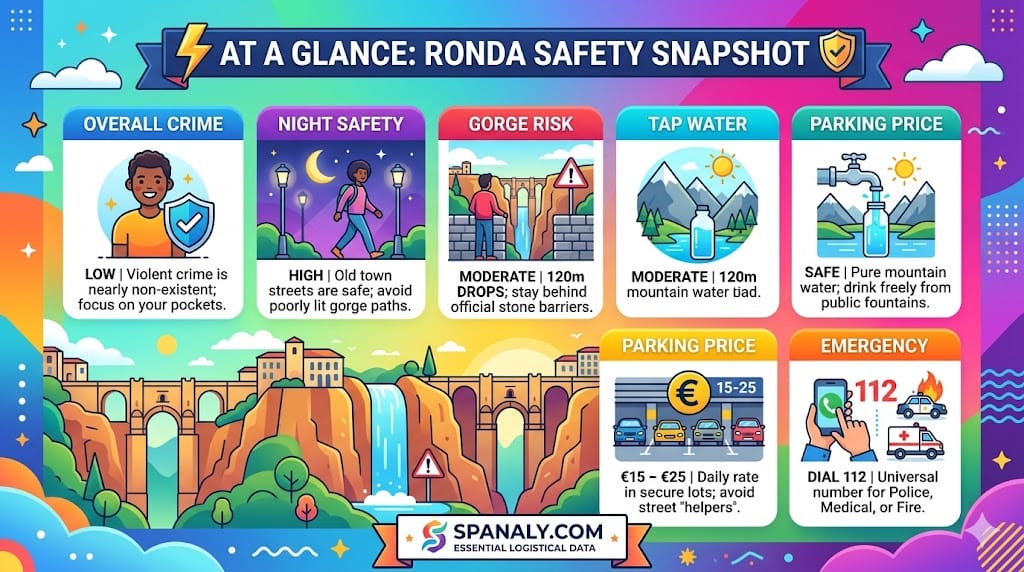
If you are short on time, here is the essential logistical data for a secure visit. These figures represent the current practical reality on the ground.
| Feature | Safety Status | Professional Advice |
|---|---|---|
| Overall Crime | Low | Violent crime is nearly non-existent; focus on your pockets. |
| Night Safety | High | Old town streets are safe; avoid poorly lit gorge paths. |
| Gorge Risk | Moderate | 120m drops; stay behind official stone barriers. |
| Tap Water | Safe | Pure mountain water; drink freely from public fountains. |
| Parking Price | €15 – €25 | Daily rate in secure underground lots; avoid street “helpers.” |
| Emergency | Dial 112 | Universal number for Police, Medical, or Fire services. |
Spanaly Insight: Do not mistake Ronda’s relaxed mountain vibe for a complete lack of risk. While humans are friendly, the geography is unforgiving. Always prioritize your physical footing over getting the perfect camera angle near the cliff edges.
🛡️ The Reality Check: Overall Safety & Night Security
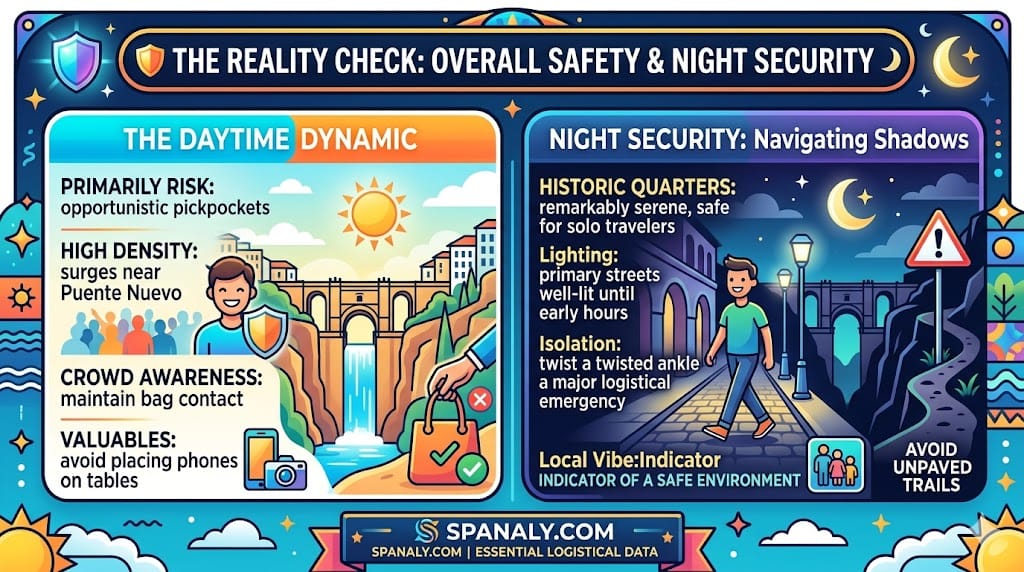
Ronda operates with the heart of a large village, which significantly dictates its security landscape. While violent incidents are almost non-existent, your safety strategy must adapt to the city’s unique geography.
The Daytime Dynamic
During daylight hours, the primary risk is the high density of day-trippers. This surge creates an environment for opportunistic pickpockets, particularly around the Puente Nuevo.
Crowd Awareness: Maintain physical contact with your bags in congested plazas.
Valuables: Avoid placing high-end cameras or phones on tables in high-traffic cafes.
Night Security: Navigating the Shadows
Ronda becomes remarkably serene once the tour buses depart. The historic center remains safe for midnight strolls, provided you respect the terrain.
Historic Quarters: Most primary streets in La Ciudad are well-lit and perfectly safe for solo travelers.
Geographical Hazards: Avoid descending the unpaved gorge trails after sunset. A minor slip in the dark becomes a serious rescue operation.
Logistical Safety: If you are arriving late from another Andalusian hub, consult our Travel Safety in Spain guide for broader context on navigating Spanish transit hubs at night.
Spanaly Insight: True security in Ronda is found in the San Francisco neighborhood. This residential area sits away from the tourist friction points, offering a quiet environment and authentic local safety.
🚨 The "Big Three" Scams: Parking, Guides & Tours
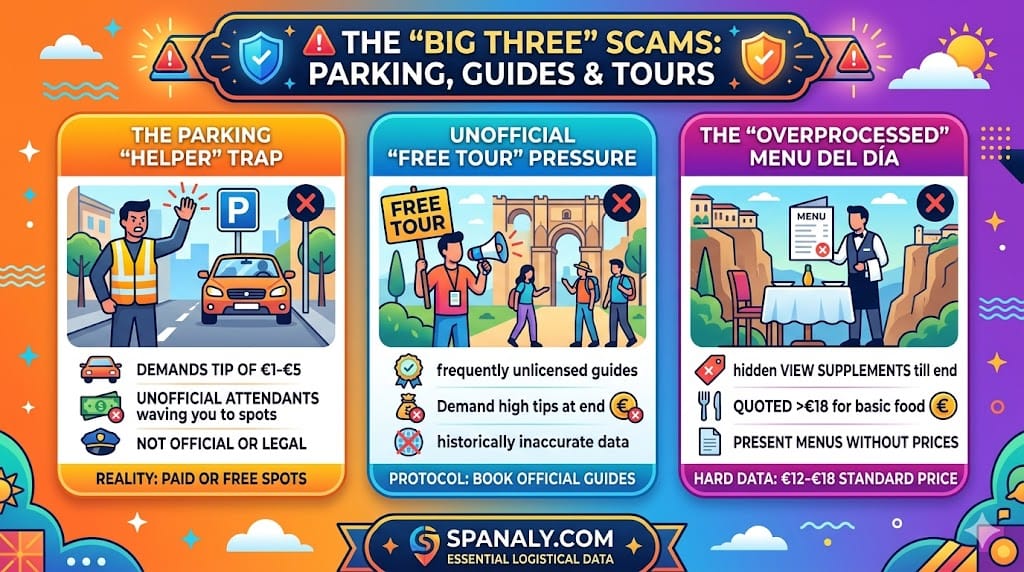
The most persistent “scams” in Ronda are not criminal acts, but rather aggressive logistical opportunism. Knowing how to identify these early will save you significant frustration and unnecessary costs.
The Parking “Helper” Trap
When approaching the center, you may encounter unofficial attendants (often in high-visibility vests) waving you into public street spots. They will demand a “tip” of €1 to €5.
The Reality: These spots are either free or require a municipal meter ticket. Paying these individuals does not guarantee security or a legal spot.
The Expert Move: Ignore the street helpers and head directly to secure underground lots. Check our dedicated Parking in Ronda Guide for the exact locations of the high-value, safe garages.
The Unofficial “Free Tour” Pressure
Near the Plaza de Toros, self-proclaimed “official guides” often approach travelers offering spontaneous tours.
The Warning: These individuals are frequently unlicensed. They may provide historically inaccurate data and demand high tips at the end.
The Protocol: Only book guides through the official tourism office or reputable digital platforms. A licensed guide must visibly display their Andalusian Government identification.
The “Overpriced” Menu del Día Scam
Some establishments near the bridge cliffside present menus without prices or charge “view supplements” that are hidden until the final bill arrives.
Hard Data: A standard Menu del Día in Ronda should cost between €12 and €18. If you are quoted more without a clear premium ingredient, you are likely in a tourist trap.
💰 Gastronomic Traps: How to Spot Overpriced Restaurants
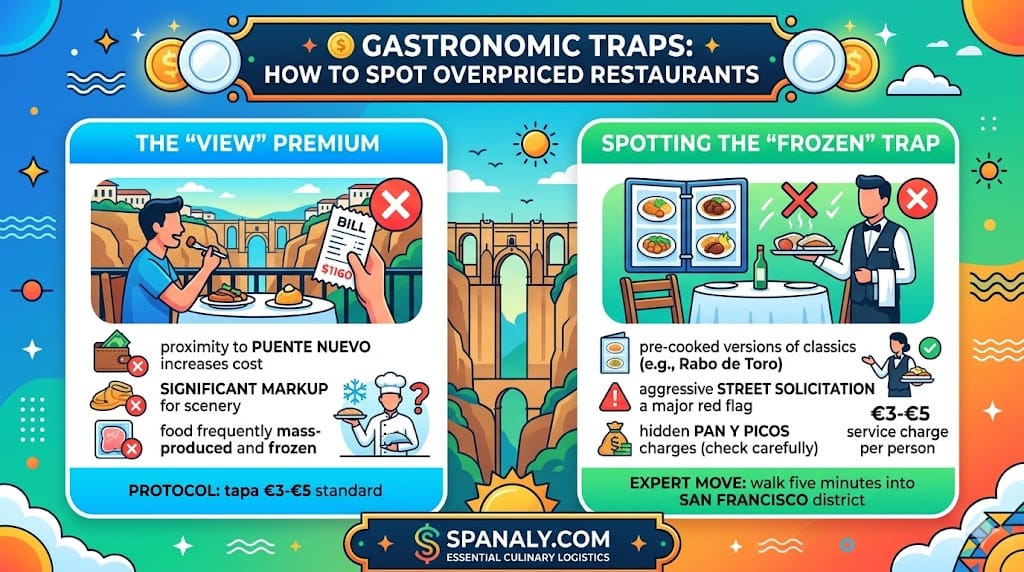
In Ronda, the price you pay for a meal often correlates more with the proximity to the Puente Nuevo than the actual quality of the ingredients. Identifying a “tourist trap” restaurant requires a tactical eye for specific red flags.
The “View” Premium
Many establishments with terraces overlooking the Tajo Gorge charge a significant markup for the scenery. While the view is world-class, the food is frequently mass-produced and frozen to handle high tourist turnover.
The Red Flag: If a waiter is standing outside with a laminated menu in multiple languages, keep walking.
The Reality Check: Authentic local gems rarely need aggressive street solicitation.
Pricing Protocol: A standard tapa should cost between €3 and €5. If a basic tapa is listed at €8+, you are paying for the real estate, not the flavor.
Spotting the “Frozen” Trap
High-turnover restaurants near the bullring often serve pre-cooked versions of classic dishes like Rabo de Toro (Oxtail stew).
The Indicator: If the menu features generic photos of the food rather than descriptions, it is likely a factory-made meal.
The Expert Move: Walk five minutes away from the main bridge into the San Francisco district or the side streets of the new town. To find the real culinary heart of the city, consult our Best Restaurants in Ronda guide for vetted, high-value locations.
Spanaly Insight: Always check the “Pan y Picos” (bread and breadsticks) charge on the menu. In authentic spots, it’s usually around €1 to €1.50. Tourist traps might hide a €3 to €5 service charge per person here, which can significantly inflate a “cheap” lunch bill.
🚶 Street Safety: Pickpockets & Crowded Areas
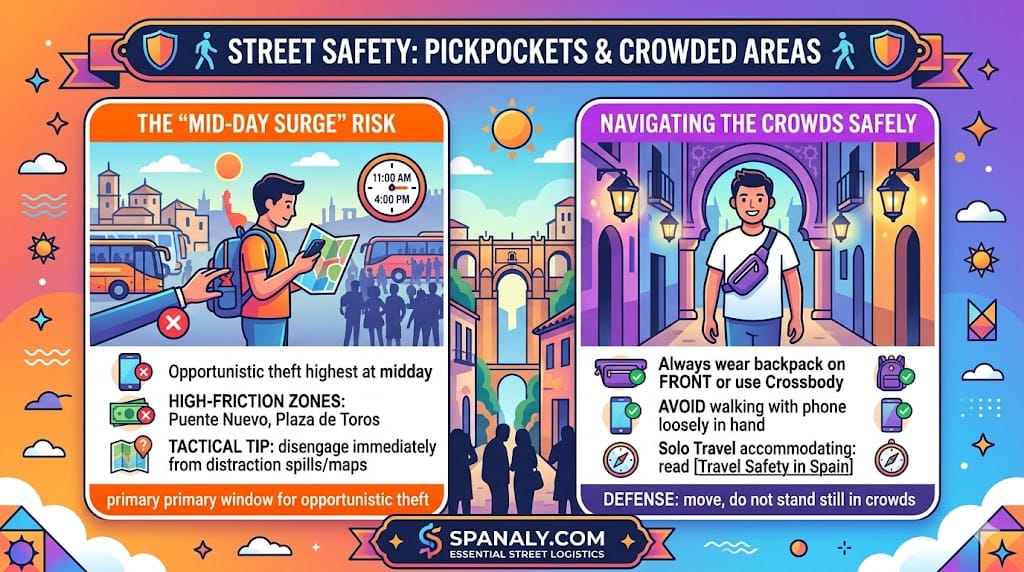
Ronda is not a high-crime city, yet its popularity makes it a target for professional pickpockets during peak hours. These individuals rely on your distraction while you admire the views or navigate the narrow Moorish alleys.
The “Mid-Day Surge” Risk
Between 11:00 AM and 4:00 PM, Ronda receives a massive influx of tour buses from the coast. This is the primary window for opportunistic theft.
High-Friction Zones: The sidewalk on the Puente Nuevo and the entrance to the Plaza de Toros are the most vulnerable spots.
Tactical Tip: If someone “accidentally” spills a drink on you or asks for directions with a large paper map, disengage immediately. These are classic distraction techniques.
Navigating the Crowds Safely
Walking through the narrow streets of the old town requires more than just direction; it requires awareness of your physical space.
Bag Positioning: Always wear your backpack on your front or use a crossbody bag with a secure zip.
Phone Usage: Avoid walking with your phone held loosely in your hand while staring at GPS. This makes you a “soft target” for quick snatch-and-run incidents.
Solo Travel Safety: If you are traveling alone, you will find Ronda very accommodating. For more general advice on navigating Spain securely, read our Travel Safety in Spain guide.
🌉 Landscape Hazards: Puente Nuevo & Cliff Edge Safety
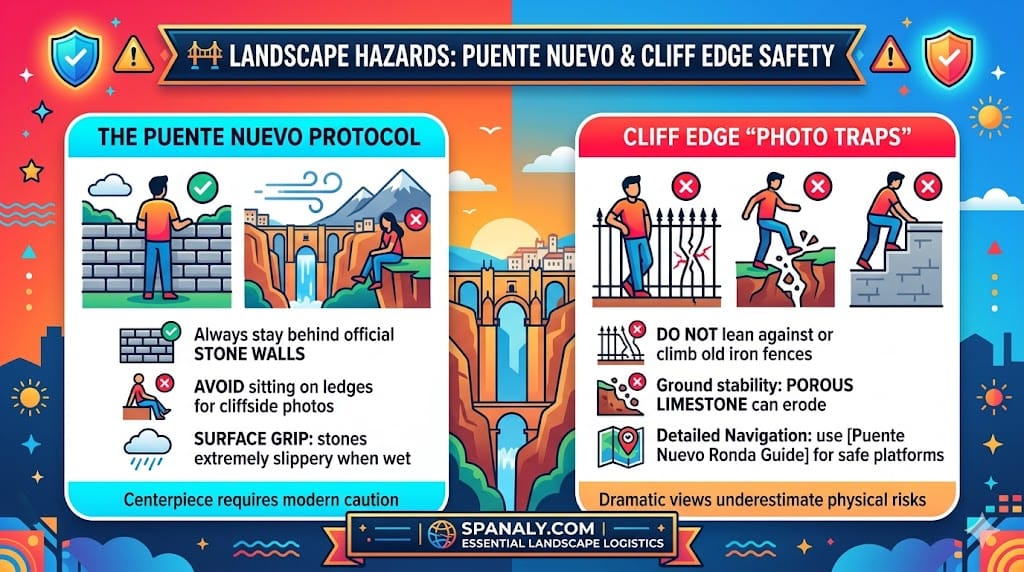
The most significant threat to your safety in Ronda is not a person, but the terrain itself. The city is built on a 120-meter limestone precipice, and the dramatic views often lead travelers to underestimate the physical risks.
The Puente Nuevo Protocol
The bridge is the city’s centerpiece, but its historical engineering requires modern caution.
Stone Barriers: Always stay behind the official stone walls. Avoid sitting on the ledges for “cliffside” photos; a sudden gust of mountain wind can be destabilizing.
Surface Grip: The cobblestones on the bridge and surrounding viewpoints become extremely slippery when wet or covered in fine dust.
The Cliff Edge “Photo Traps”
Many “secret” viewpoints in the Cuenca Gardens or near the Almocábar Gate lack modern safety railings.
Fencing Integrity: Do not lean against or climb over old iron fences. Many are decorative and not structurally reinforced to hold human weight.
Ground Stability: The edges of the Tajo Gorge consist of porous limestone. Rain can cause localized erosion, making the ground near the edge unstable.
Detailed Navigation: To explore these heights safely, use our Puente Nuevo Ronda Guide to find the safest reinforced viewing platforms.
Spanaly Insight: If you are traveling with children, keep them within arm’s reach at all times near the gorge. The gap between some historical stone pillars is wide enough for a small child to pass through. Safety here is a matter of constant physical vigilance.
📸 The Influencer Trap: Photo Spots & Content Safety
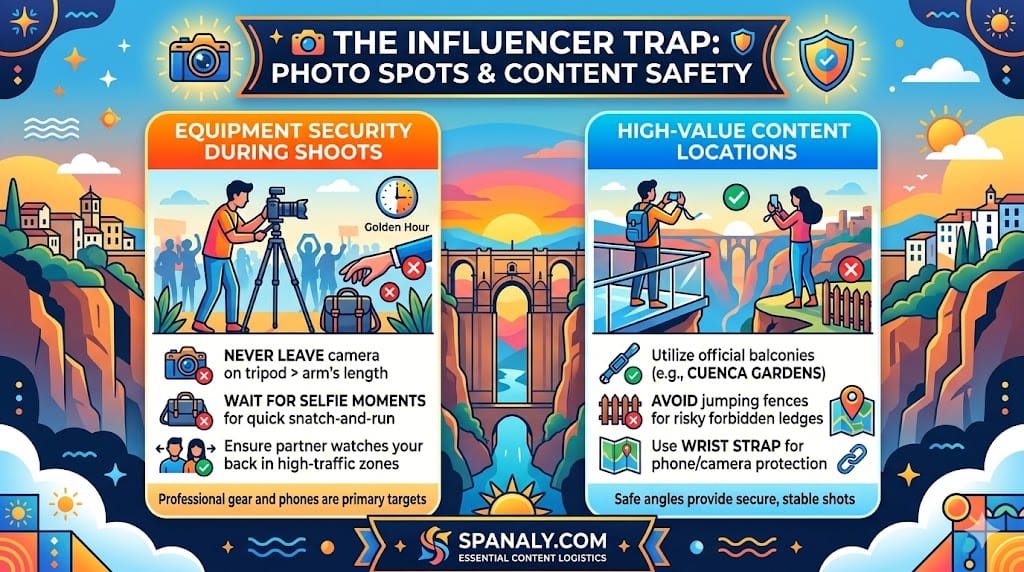
In the pursuit of the perfect digital capture, many travelers compromise their physical security and property. Content creation in Ronda requires a tactical balance between aesthetic results and situational awareness.
Equipment Security During Shoots
Professional gear and high-end smartphones are primary targets for opportunistic theft during the “setup” phase of a photo.
Tripod Protocol: Never leave a camera on a tripod more than an arm’s length away. Professional thieves in tourist hubs often wait for the “selfie” moment when the owner is several meters from their gear.
The “Blind Spot”: When looking through a viewfinder or screen, you lose peripheral vision. Always ensure a partner is watching your back in high-traffic zones like the Plaza de María Auxiliadora.
High-Value Content Locations
Finding the best angles doesn’t have to be risky. Many of the most iconic shots are accessible via safe, managed paths.
Safe Angles: Utilize the official balconies in the Cuenca Gardens for secure, stable shots of the bridge.
The “Secret” Path Risk: Avoid jumping fences to access “forbidden” ledges for a viral photo. The limestone edges are brittle and offer zero structural warning before crumbling.
Logistical Planning: For a full list of secure, high-impact locations, check our Things to Do in Ronda guide, which prioritizes accessible beauty over dangerous stunts.
🚗 Road Tripper’s Protocol: Driving & Parking Logistics
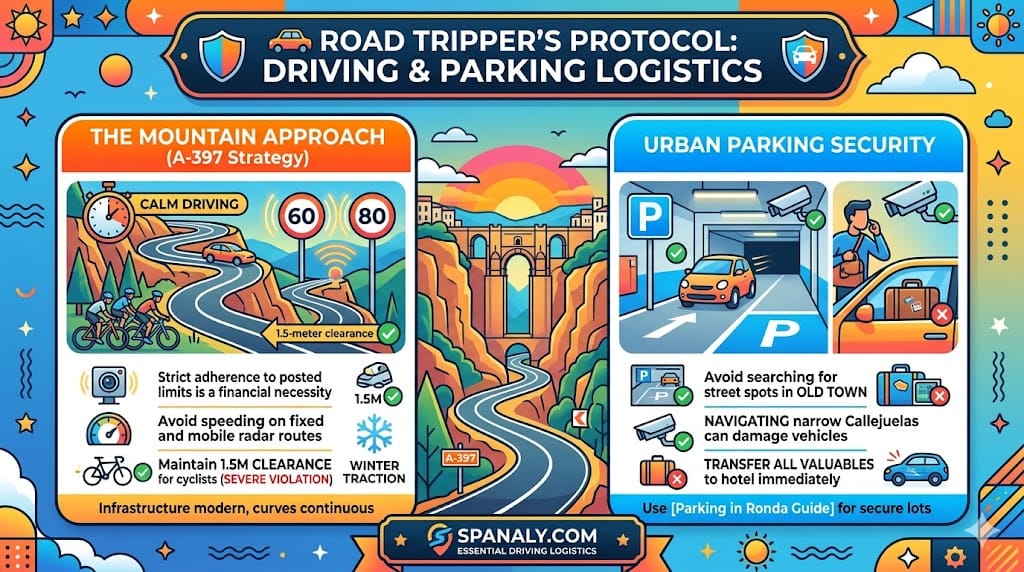
Reaching Ronda by car involves navigating some of Andalusia’s most dramatic mountain passes. While the infrastructure is modern, the “safety logistics” of driving and parking require specific local knowledge to avoid accidents and fines.
The Mountain Approach (A-397 Strategy)
If you are arriving from the Costa del Sol via the A-397, you will face over 40 kilometers of continuous curves and significant elevation changes.
Speed Enforcement: Fixed and mobile radar units are highly active on the descent into Ronda. Strict adherence to posted limits is a financial necessity.
Cyclist Awareness: This route is a premier training ground for professional cyclists. Always maintain a 1.5-meter clearance when overtaking; failing to do so is a severe traffic violation.
Winter Traction: During the colder months, black ice can form in shaded gorge sections. If the temperature drops below 4°C, reduce your speed significantly before entering turns.
Urban Parking Security
Ronda’s historic center was not designed for modern SUVs. Navigating the narrow “Callejuelas” often leads to scratched rental cars and high stress.
The Safe Haven: Avoid searching for street parking in the old town. Instead, head directly to secure underground facilities.
Tactical Recommendation: Use our comprehensive Parking in Ronda Guide to locate the easiest garages to enter, preventing technical damage to your vehicle and ensuring 24/7 video surveillance.
Spanaly Insight: Never leave any luggage visible in the car, even in paid garages. While the theft rate is low, a visible suitcase in a “foreign” rental car acts as a beacon for opportunistic break-ins. Transfer all valuables to your hotel before exploring the city on foot.
🌡️ Environmental Safety: Weather, Heat & Seasonal Risks
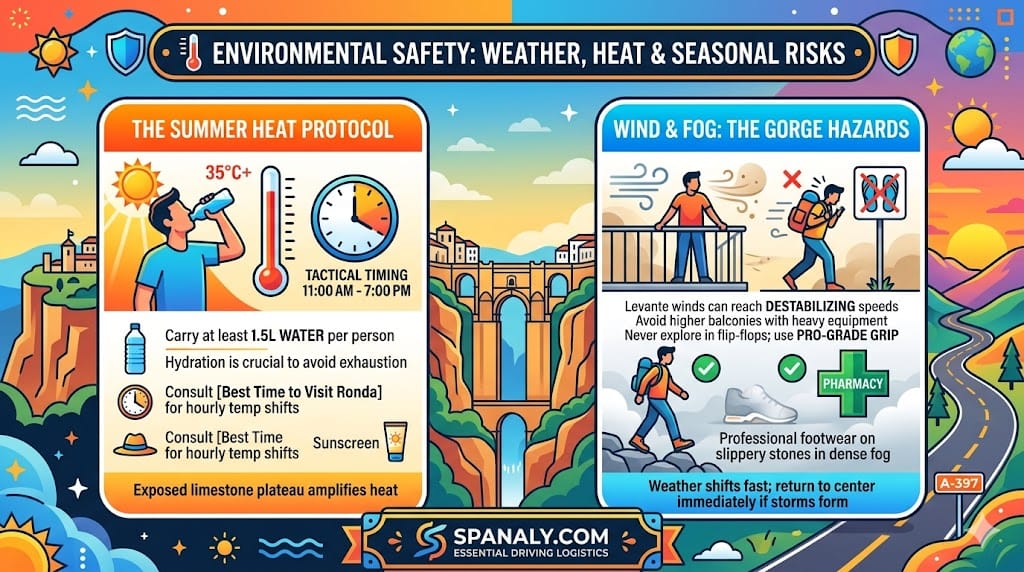
Ronda’s location in the Serranía de Ronda creates a microclimate that differs sharply from the Andalusian coast. Ignoring these environmental factors can lead to physical exhaustion or dangerous conditions during your cliffside exploration.
The Summer Heat Protocol
Between June and September, temperatures on the exposed limestone plateau frequently exceed 35°C. The lack of shade on the gorge paths increases the risk of heatstroke.
Hydration Logistics: Carry at least 1.5 liters of water per person when descending into the valley.
Tactical Timing: Limit your physical activity to before 11:00 AM or after 7:00 PM. Consult our Best Time to Visit Ronda guide to understand the specific hourly temperature shifts.
Sun Exposure: High elevation increases UV intensity; high-factor protection is a mandatory safety requirement here.
Wind & Fog: The Gorge Hazards
The Tajo Gorge acts as a natural wind tunnel. Sudden gusts can reach speeds that make standing near unshielded ledges hazardous.
Wind Stability: During “Levante” wind events, avoid the higher balconies in the Cuenca Gardens. The pressure can be destabilizing if you are carrying large camera equipment.
Winter Fog: Dense mountain fog often blankets the city in late autumn and winter. This reduces visibility on the Puente Nuevo to less than 10 meters, making the slippery cobblestones a major trip hazard.
Footwear Strategy: Never explore the historic quarters in flip-flops or smooth-soled shoes. The combination of steep inclines and polished stone requires footwear with professional-grade grip.
Spanaly Insight: In Ronda, the weather can shift within minutes. If you see dark clouds forming over the Sierra de Grazalema to the west, return to the town center immediately. Mountain storms are fast, violent, and make the gorge trails extremely dangerous due to rapid water runoff and mudslides.
💳 Financial Security: Payments & Card Safety
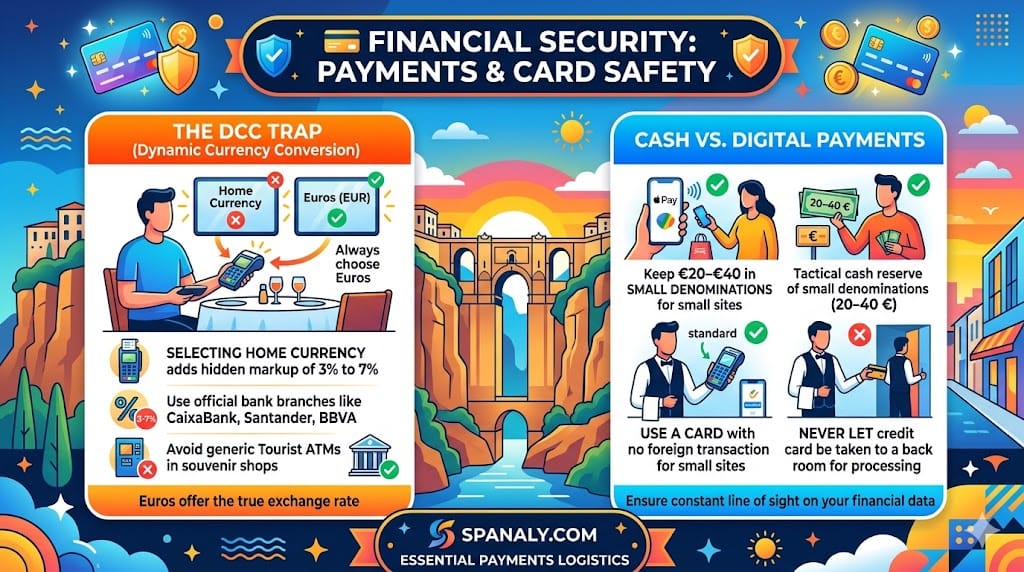
Ronda is fully integrated into Spain’s modern digital payment ecosystem. However, for a traveler, financial safety isn’t just about preventing theft; it is about avoiding “technical traps” that inflate your expenses through hidden conversion fees.
The DCC Trap (Dynamic Currency Conversion)
When paying by card in Ronda’s boutiques or restaurants, the terminal may ask if you want to pay in your “home currency” or Euros (EUR).
The Protocol: Always choose Euros. Selecting your home currency allows the local bank to set the exchange rate, often adding a hidden markup of 3% to 7%.
ATM Strategy: Avoid generic “Tourist ATMs” found in souvenir shops. Use official bank branches like CaixaBank, Santander, or BBVA located in the new town (Mercadillo) for lower fees and better physical security.
Cash vs. Digital Payments
While 95% of establishments accept contactless payments (Apple Pay/Google Pay), total reliance on digital tools is a logistical risk in the old quarters.
Tactical Cash Reserve: Keep €20–€40 in small denominations. Some historical sites or small artisanal workshops in the San Francisco district may have intermittent connectivity issues.
Card Protection: Use a card with no foreign transaction fees. To optimize your travel budget before arrival, review our Money in Spain Guide for vetted banking and exchange strategies.
🥾 Adventure Safety: Hiking the Tajo Gorge Trails
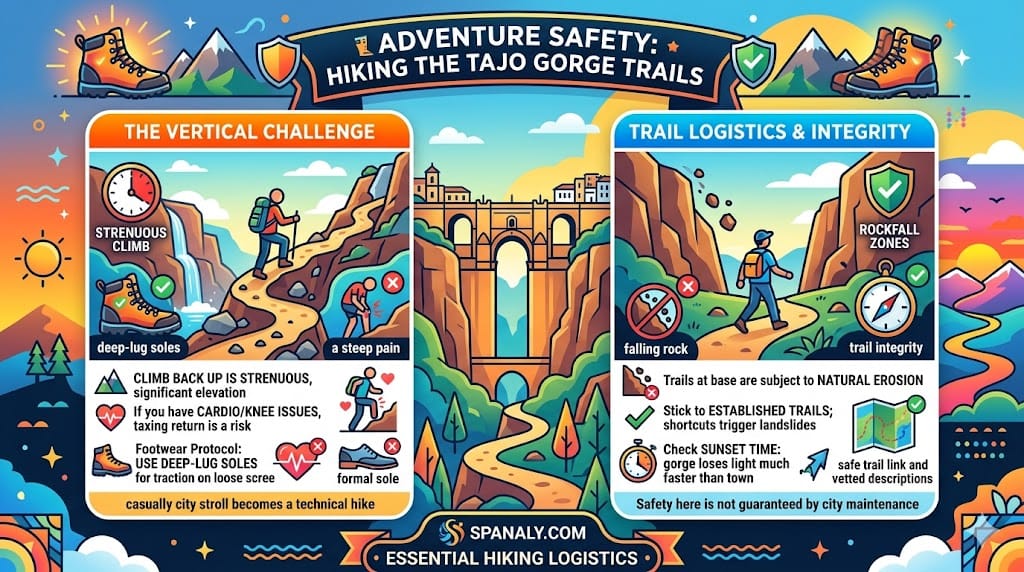
Descending into the Tajo Gorge offers the most dramatic perspective of the Puente Nuevo, but it transforms a casual city stroll into a technical hike. Adventure safety in Ronda requires respecting the vertical scale and the variable stability of the limestone paths.
The Vertical Challenge
The descent from the Plaza de María Auxiliadora involves significant elevation changes on a path that is partially unpaved and exposed.
Physical Requirement: The climb back up is strenuous. If you have cardiovascular issues or knee injuries, the physical tax of the return journey is a significant safety risk.
Footwear Protocol: Hiking the gorge in sandals or formal shoes is the primary cause of minor injuries in Ronda. You need footwear with deep-lug soles to maintain traction on the loose scree and polished rocks.
Trail Logistics & Integrity
The trails at the base of the cliffs are subject to natural erosion. Safety here is not guaranteed by city maintenance.
Rockfall Zones: When walking directly beneath the cliffs, be aware of the potential for small rockfalls, especially after rain or during high winds.
Path Awareness: Stick to the established trails. Taking shortcuts on the steep slopes can trigger localized landslides.
Navigation Support: To ensure you are following the most stable and scenic routes, consult our Best Things to Do in Ronda guide, which includes vetted trail descriptions for various fitness levels.
Spanaly Insight: Always check the sunset time before starting your descent. The gorge loses light much faster than the upper town. Being caught on the steep, unlit paths after dusk is a major logistical hazard, as the uneven stones become difficult to navigate safely even with a phone flashlight.
🚑 Emergency Services: Local Contacts & Healthcare
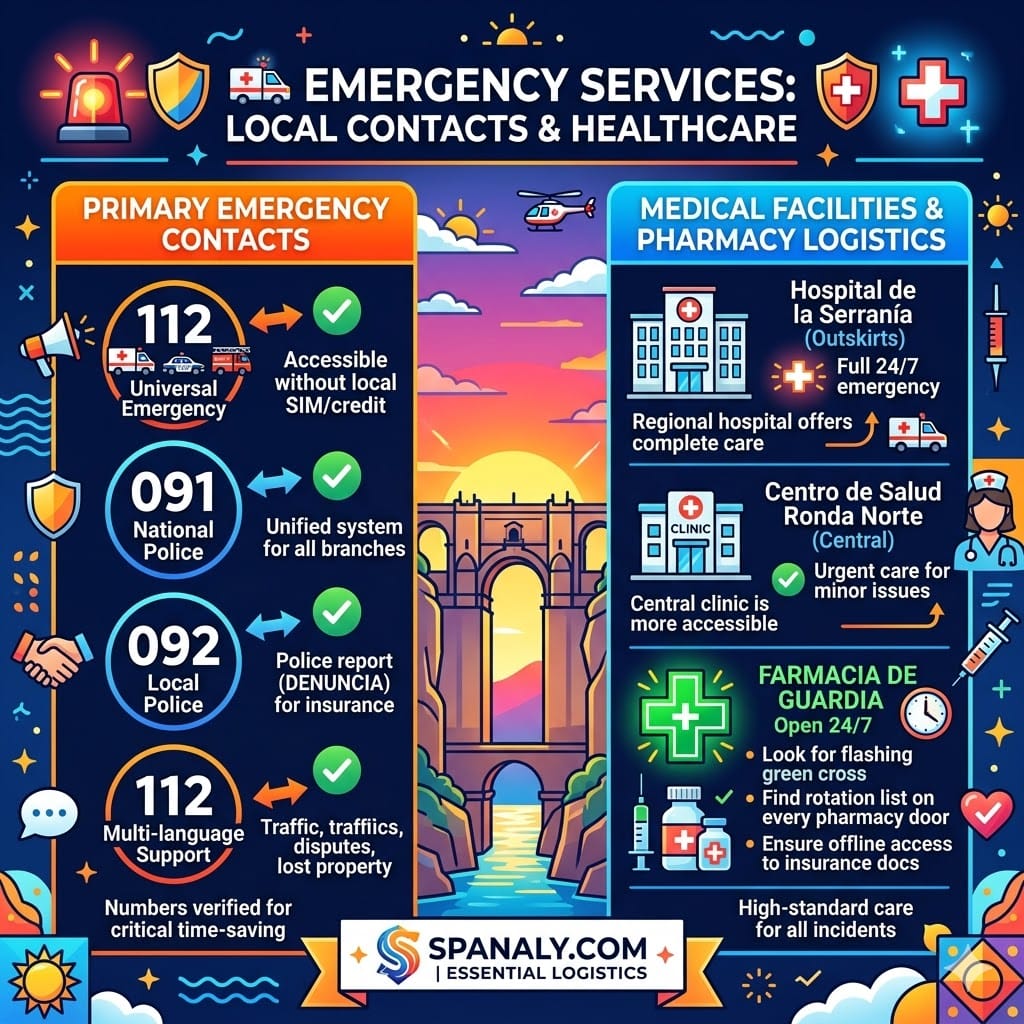
Navigating a medical or security emergency in a foreign city requires immediate access to verified logistical data. Ronda is well-equipped with modern infrastructure, but knowing the specific locations and contact protocols is a mandatory safety requirement for 2026.
Primary Emergency Contacts
Spain utilizes a unified emergency system that is accessible even from phones without a local SIM card or active credit.
Universal Emergency: 112 (Multi-language support for Police, Fire, and Ambulance).
National Police: 091 (Specifically for reporting serious crimes, theft, or filing a Denuncia).
Local Police: 092 (For traffic incidents, parking disputes, or local disturbances).
Medical Facilities & Pharmacy Logistics
Ronda’s healthcare serves the entire mountain region, offering high-standard care for both minor and major incidents.
Regional Hospital: The Hospital de la Serranía (located on the outskirts via Carretera de El Burgo) provides comprehensive 24/7 emergency services and specialized care.
Urgent Care Center: For non-life-threatening issues, the Centro de Salud Ronda Norte is centrally located and more accessible for immediate consultations.
The Pharmacy Protocol: Look for the flashing green cross. Every night, a specific Farmacia de Guardia remains open 24/7; the daily rotation list is physically posted on the door of every pharmacy in the city.
Coverage Verification: Ensure your insurance documentation is accessible offline. Consult our Travel Insurance Spain Guide to verify if your provider is recognized by the Andalusian health system (SAS).
Spanaly Insight: If you need to report a lost passport or stolen property for insurance purposes, the Comisaría de Policía Nacional is your primary destination. Most officers in Ronda use digital translation tools to assist, but having your personal identification details and the exact “time of incident” written down will expedite the official report significantly.
⭐ Spanaly Final Verdict: The Essential Safety Checklist
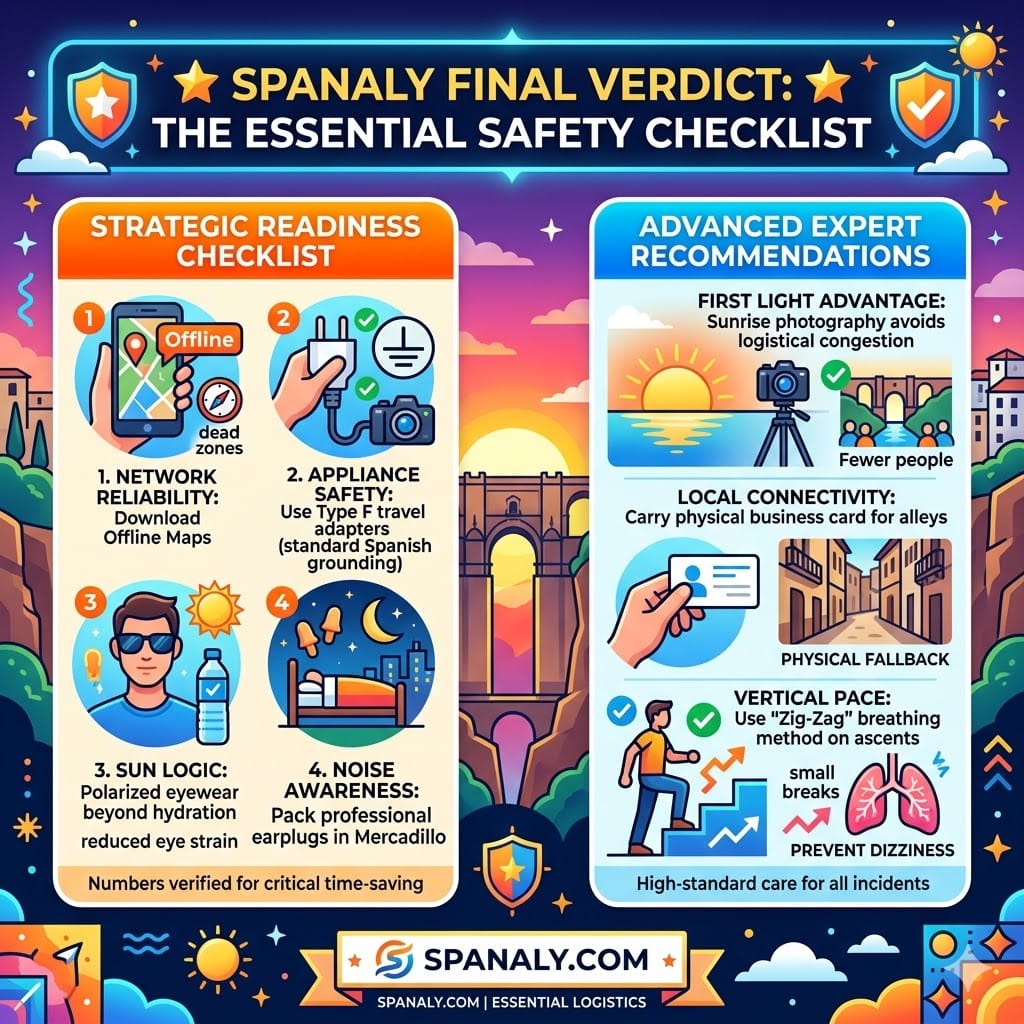
Safety in Ronda is a proactive process that combines physical readiness with technical awareness. To ensure a seamless experience in this cliffside city, verify your preparation against this professional protocol, designed for long-term reliability and peak logistical efficiency.
The Strategic Readiness Checklist
Network Reliability: Download Offline Maps for the Serranía region. The deep limestone gorge often creates “dead zones” where GPS signals drop, making traditional navigation essential for the lower trails.
Appliance Safety: Verify your travel adapters are Type F (standard Spanish grounding). In older historic buildings, using non-grounded adapters can pose a risk to high-end photography gear.
Sun Logic: Beyond hydration, prioritize polarized eyewear. The glare from the white-washed buildings (Pueblos Blancos) and the reflective limestone can cause significant eye strain and reduced visibility on steep stairs.
Noise Awareness: If staying in the Mercadillo district, pack professional-grade earplugs. While safe, the late-night street cleaning and social vibrancy can disrupt the rest needed for early-morning gorge hikes.
Advanced Expert Recommendations
To truly master Ronda, you must look beyond the standard tourist path. Safety and comfort are often found in the details that most travelers overlook.
The “First Light” Advantage: Complete your most technical photography and bridge crossings at sunrise. This avoids the logistical congestion of tour groups, which significantly reduces the risk of accidental bumps or equipment damage.
Local Connectivity: Carry a physical business card of your accommodation. In the labyrinthine alleys of La Ciudad, having a physical address to show a local or a taxi driver is a vital fallback if your phone battery fails.
Vertical Pace: When ascending from the valley, use the “Zig-Zag” breathing method. Take frequent short breaks rather than one long stop; this prevents muscle fatigue and dizziness on the final, steepest sections of the path.
🛡️ Visitor FAQs – Ronda Safety & Logistics Guide
🚻 Are there safe public restrooms available near the Puente Nuevo?
Yes, but they are limited. The most reliable and safe public toilets are located in the Blas Infante Gardens and near the Plaza de Toros. While generally clean, we recommend carrying a small pack of tissues as supplies can run low during peak tourist hours. Most cafes will allow use of their facilities if you make a small purchase like a "café solo."
🐒 Is it safe to feed or approach local wildlife in the Tajo Gorge?
Absolutely not. You may encounter Iberian Ibex (mountain goats) or birds of prey on the lower trails. For your safety and theirs, maintain a distance of at least 10 meters. Feeding them is prohibited and can result in fines, as it disrupts their natural diet and may cause them to become aggressive toward humans in search of food.
🎒 Can I store my luggage safely while exploring Ronda for the day?
Yes. If arriving by train or bus, there are secure lockers located at the main bus station (Estación de Autobuses). Additionally, several local businesses near the town center offer "Luggage Storage" services verified by travel apps. Never leave bags in a car, even if hidden, as rental car plates are easily identified by opportunistic thieves.
🧥 What is the safety protocol for the "Bridges of Ronda" in winter?
Winter in Ronda can bring sudden frost and high winds. The stone surface of the Puente Nuevo becomes extremely slippery when frozen. We recommend crossing only via the central pedestrian paths and avoiding leaning over the edge if gusts exceed 40km/h. Always check the local "MeteoRonda" report before planning a sunrise visit during colder months.
🔌 Is the electricity stable for charging medical devices or pro-gear?
While Ronda has a modern grid, the older buildings in La Ciudad can experience surges during heavy storms. If you are charging expensive photography gear or medical devices (like CPAP machines), we strongly advise using a surge protector or a high-quality travel adapter with built-in fuse protection to prevent technical damage.
Ronda Logistics Guide by Spanaly.com
Exploring Ronda is a deeply rewarding experience when you balance your sense of wonder with practical preparation. Mastering the city’s unique geography is the final key to a seamless visit.
Tactical Awareness: Always prioritize situational safety over the “perfect” unshielded photo.
Logistical Ease: Stick to official parking and verified trails to avoid unnecessary stress.
Physical Safety: Respect the Andalusian sun and the technical nature of the gorge paths.
Financial Wisdom: Choose Euros for all transactions to protect your travel budget.
If you are still weighing your options for your Andalusian itinerary, discover the full breakdown of what makes this cliffside city so unique in our guide: Is Ronda Worth Visiting? to see if it aligns with your 2026 travel goals.