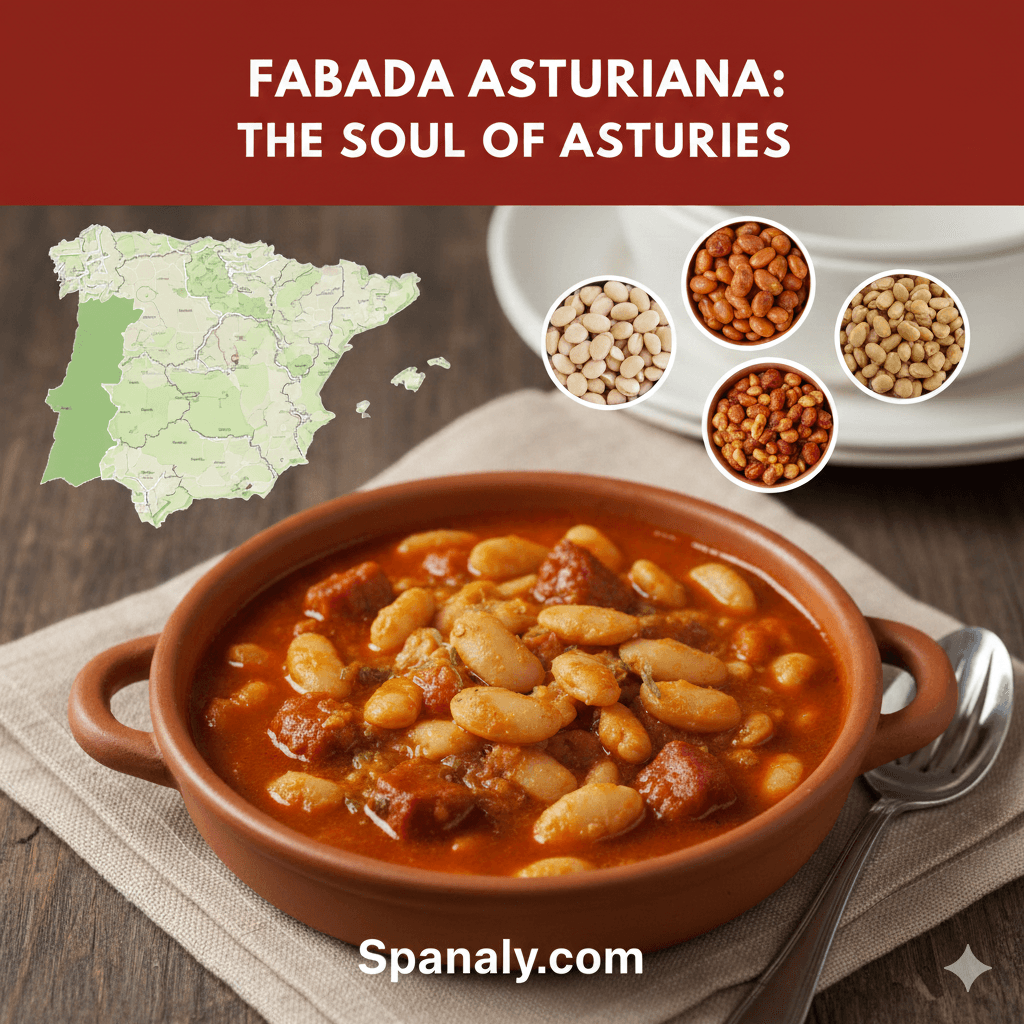
🍲 In the misty green mountains of northern Spain, one dish rises above all others as a true symbol of warmth, pride, and tradition — Fabada Asturiana. This creamy bean stew, born from the fertile valleys of Asturias, represents more than just nourishment; it embodies a lifestyle where food means family and shared heritage.
Every bowl tells a story of ancient farms and wood-fired kitchens. Whether you are exploring the culinary scene in our Ultimate Madrid Travel Guide or dining in a remote mountain tavern, this dish captures the essence of Spanish Cuisine: generous, authentic, and endlessly comforting.
Table of Contents
Toggle📜 Origins and Heritage: A Peasant’s Pride
The story of Fabada begins centuries ago in the lush countryside of Asturias. Local farmers cultivated the prized Fabes de la Granja beans, pairing them with home-cured meats to create nourishing meals during harsh winters. What started as a humble farmhouse recipe has evolved into a powerful symbol of Asturian identity.
Today, this stew stands as a delicious expression of rural heritage. It is a dish of pride served at Spanish Festivals and national competitions, proving that some of the world’s best flavors come from the simplest beginnings.
🛒 Ingredients & The Traditional Ritual
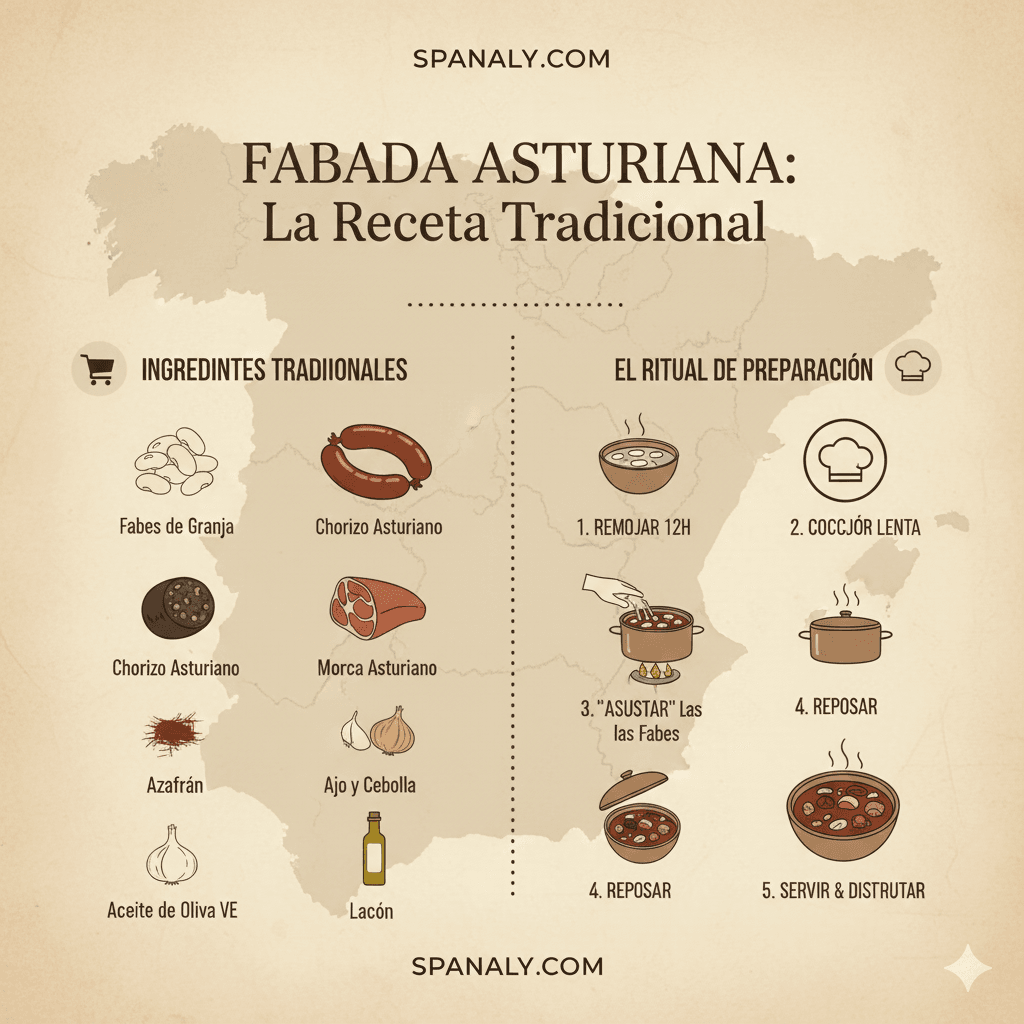
Authentic Fabada Asturiana relies on three things: simplicity, quality, and time. It is not a dish to be rushed; it is a slow symphony built on premium local ingredients.
Traditional Components:
🫘 Fabes de la Granja: Large, buttery Asturian white beans.
🥓 Compango: A trio of smoky Chorizo Asturiano, flavorful Morcilla (blood sausage), and Lacón (cured pork shoulder).
✨ Saffron: For that subtle golden hue and earthy aroma.
🧄 The Base: Garlic, onion, and fresh Asturian water.
👨🍳 A Step-by-Step Ritual
Making Fabada is an act of patience. Follow these essential steps to achieve that signature velvety broth:
Step 1: The Soak – Place the beans in cold water for at least 12 hours. This ensures a buttery texture and even cooking.
Step 2: The Cold Start – Combine the soaked beans, meats (Compango), onion, and garlic in a pot. Cover with fresh cold water.
Step 3: The Slow Simmer – Bring to a boil, then reduce heat to a minimum. Let it simmer gently for 3 to 4 hours without stirring.
Step 4: The Secret “Shock” – Add a splash of cold water occasionally during the boil to keep the bean skins intact.
Step 5: The Final Rest – Remove from heat and let it sit for at least an hour. This allows the flavors to settle into a rich, unified soul.
🏛️ Cultural Significance: More Than Just a Meal
For Asturians, Fabada is much more than a meal — it’s a celebration of community and identity. It’s served during winter feasts, shared among family and friends, and prepared for festivals that bring entire villages together.
Every February, La Semana de la Fabada (Fabada Week) honors this culinary treasure, inviting locals and chefs to compete and celebrate its enduring legacy. In Asturias, to share a bowl of Fabada is to share a piece of the region’s heart.
✨ Where to Try the Best Fabada in Spain
If you are planning a trip to the north, as mentioned in our Ultimate Barcelona Travel Guide food recommendations, these spots are legendary:
📍 Casa Gerardo (Prendes): Michelin-starred excellence with deep traditional roots.
📍 El Molín de Mingo (Peruyes): Offers rustic charm and countryside authenticity.
📍 La Máquina (Lugo/Llanes): Famed for its rich, classic version of the dish.
👨🍳 Expert Cooking Tips for Your Home Kitchen
Bringing the taste of the mountains into your home is easy if you follow the traditional rhythm:
Patience is Key: Simmer slowly for at least 3–4 hours to build depth.
Handle with Care: Avoid over-stirring to keep the beans whole and creamy.
The Resting Rule: Let it rest overnight; like many stews, it tastes even better the next day.
The Perfect Pairing: Always pair with authentic Asturian Cider (Sidra) to cut through the richness.
🌱 Vegetarian Note: You can replace the meats with smoked paprika (Pimentón), high-quality olive oil, and roasted peppers to preserve the smoky essence without animal products.
🍲 Visitor FAQs – Authentic Fabada Asturiana
🫘 What makes "Fabes de la Granja" special?
Fabes de la Granja are the gold standard for Fabada. They have a high fat-absorption capacity, a very thin skin, and a buttery interior that stays intact during simmering, giving the stew its unique creamy texture.
🥓 What exactly is "Compango"?
Compango is the trio of smoked meats: Chorizo, Morcilla (blood sausage), and Lacón (cured pork). The Asturian versions are smoked over oak wood, which is essential for providing the dish's deep, rustic soul.
🥄 How do I achieve the perfect broth consistency?
Never stir the pot with a spoon; instead, shake it gently by the handles. Use the "scaring" technique by adding cold water during the boil to prevent the beans from breaking while creating a velvety liquid.
⏳ Why eat Fabada the day after cooking?
Fabada is a "dish of rest." Sitting for 24 hours allows smoky flavors to penetrate the beans deeply, while the broth thickens further, creating a far superior and more intense flavor profile than a fresh batch.
🍏 What is the best traditional drink to pair it with?
The absolute best pairing is Natural Asturian Cider (Sidra). Its crisp acidity and bubbles are essential for cutting through the richness and fat of the beans and pork, refreshing your palate after every bite.
Created by Spanaly.com
🏁 A Story in Every Spoonful
This simple delicacy is far more than a stew — it’s a living emblem of Asturias itself. Each bowl carries centuries of history and the generosity of a land where food is an act of love. Whether you savor it in a rustic tavern or recreate it at home, Fabada remains an unforgettable experience that nourishes both the body and the spirit.
To taste Fabada Asturiana is to embrace the heart of Spain — a land where every spoonful tells a story worth remembering.