🌲 Your Guide to Northern Spain
Northern Spain is a world apart from the sunny south. Finding the best time to visit Northern Spain depends on your taste for mist, mountains, and local cider. Whether you want surf-ready waves or quiet hiking trails, timing is everything on the Atlantic coast.
☀️ Peak Season (June – August): Best for beach days and escaping the intense southern heat.
🍂 The Sweet Spot (May, June, September): Reliable weather with significantly fewer crowds and lower prices.
☔ The “Sirimiri” Factor: Be ready for light Atlantic mist that keeps the landscapes emerald green.
Choosing your window is the first step toward an authentic adventure. If you are still mapping out your route, check our Ultimate Northern Spain Travel Guide to see the best stops. Forget the typical sun-seeking mission; the North is about embracing the rhythm of the Atlantic.
🗓️ Quick Facts: Weather & Crowds at a Glance
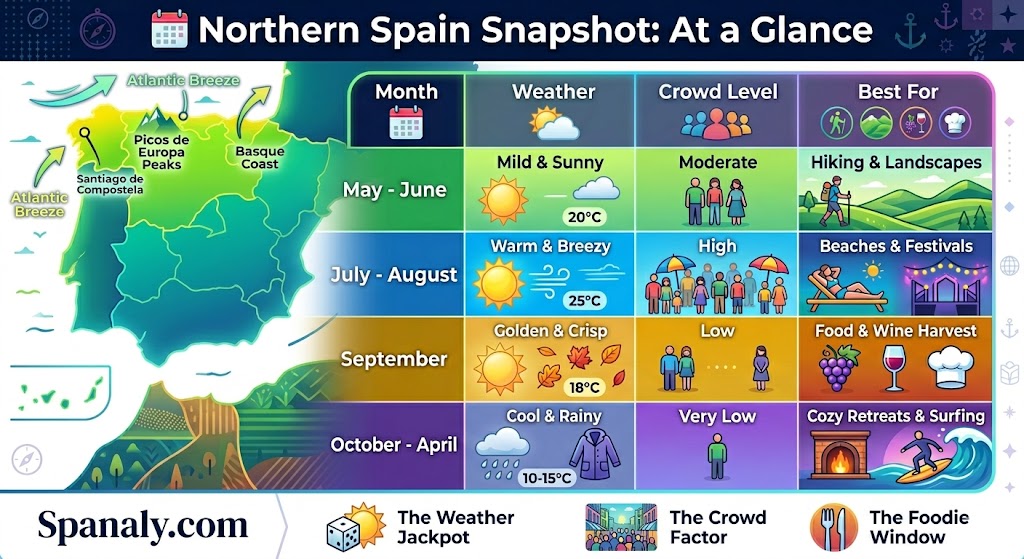
The North operates on a different rhythm compared to the rest of the country. While the south sizzles, the Atlantic coast breathes. Understanding the best time to visit Northern Spain means balancing your love for festivals with your tolerance for a little drizzle.
| Month | Weather | Crowd Level | Best For |
|---|---|---|---|
| May – June | Mild & Sunny | Moderate | Hiking & Landscapes |
| July – August | Warm & Breezy | High | Beaches & Festivals |
| September | Golden & Crisp | Low | Food & Wine Harvest |
| Oct – April | Cool & Rainy | Very Low | Cozy Retreats & Surfing |
⚡ Quick Takeaways:
The Weather Jackpot: June and September offer the most reliable blue skies.
The Crowd Factor: August is the busiest month as locals head north to escape the heat.
The Foodie Window: Late autumn is legendary for cider tasting and Michelin-star dining.
If you are planning to travel across the country, check our guide on the Best Time to Visit Spain to compare different regions.
The North is famously lush for a reason rain is part of the charm. However, if you time it right, you’ll experience the most dramatic coastline in Europe under perfect light.
⚖️ North vs. South Spain: Which One Should You Choose?
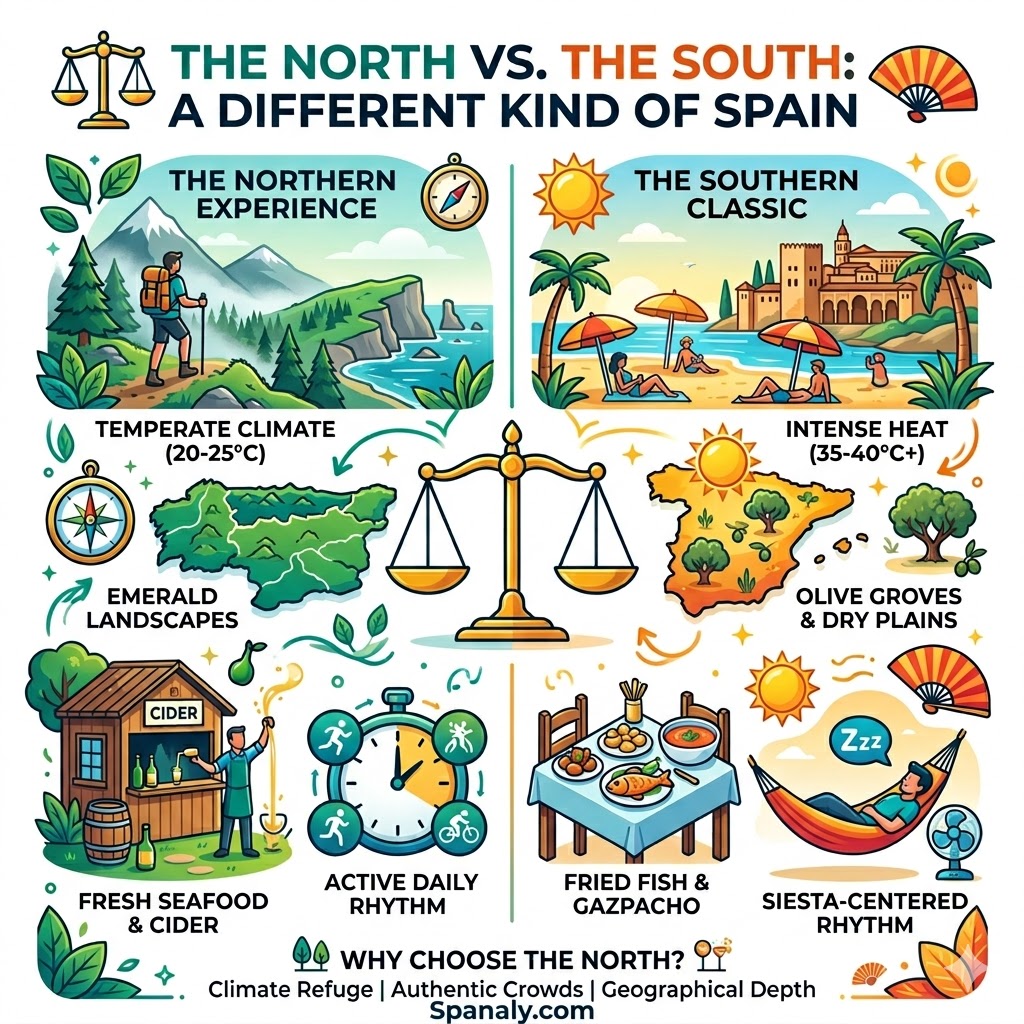
While Southern Spain is famous for Moorish palaces and intense heat, Northern Spain offers a rugged, Atlantic escape. Choosing the North is a strategic move for travelers seeking “Green Spain” (España Verde) a lush region that feels more like Ireland than the dry southern plains.
| Feature | The Northern Experience | The Southern Classic |
|---|---|---|
| Summer Climate | Refreshing (20-25°C) | Scorching (35-40°C+) |
| Landscapes | Emerald forests & cliffs | Olive groves & dry plains |
| Daily Rhythm | Active & outdoor-focused | Centered around the Siesta |
| Gastronomy | Fresh seafood & Cider | Fried fish & Gazpacho |
🍃 Why the North is Your Best Bet:
The Climate Refuge: You can hike at noon without the punishing Andalusian sun.
Authentic Vibes: Even in August, the North feels like a local secret rather than a tourist circuit.
Geographical Depth: Move from Michelin-star dining in San Sebastian to the wild Picos mountains in under two hours.
☀️ Summer in Northern Spain: Best Time for Beaches
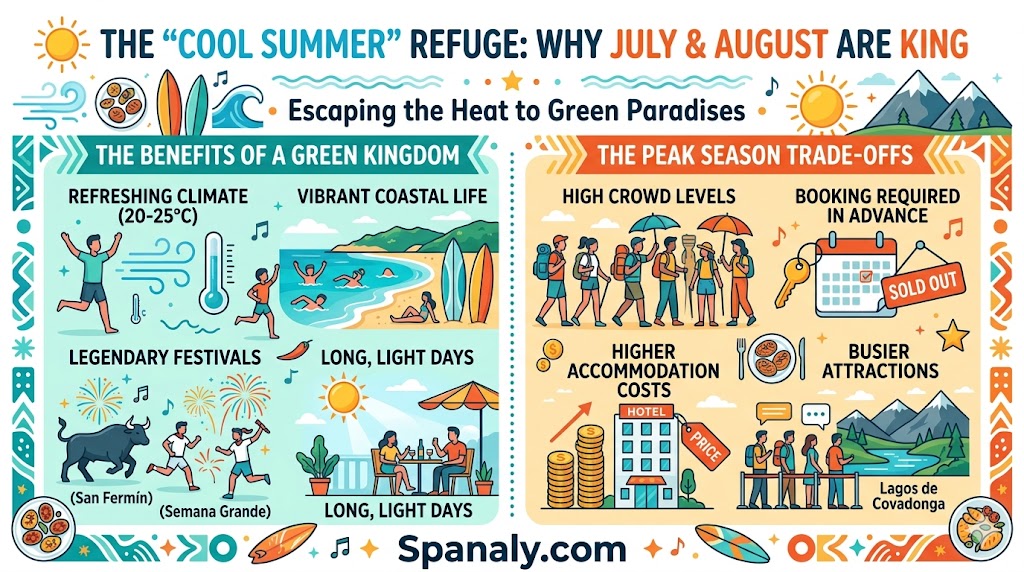
When the rest of Spain feels like an oven, the North becomes a refreshing refuge. While cities like Seville or Madrid hit 40°C, the Atlantic coast stays at a breezy 25°C. This temperature gap makes July and August the most popular months for travelers seeking comfort.
🌊 Coastal Bliss and Vibrant Festivals
The Festive Peak: Catch the legendary San Fermín in Pamplona or the Semana Grande in Bilbao.
Warm Waters: This is the only time the Atlantic is truly comfortable for long swims.
City Beaches: Visit Playa de la Concha in San Sebastián for its iconic shell-shaped bay and lively atmosphere.
⚓ The Summer Trade-off
Book Early: Secure your accommodation at least three months in advance to avoid high prices.
Peak Crowds: Famous spots like Lagos de Covadonga will be significantly busier than usual.
Higher Budget: Expect a noticeable spike in hotel and rental costs during these peak weeks.
Summer is your best window for guaranteed short-sleeve weather and a vibrant social scene. Just be prepared to share this green paradise with many locals escaping the inland heat.
🍂 The Best Months for Fewer Crowds & Lower Prices
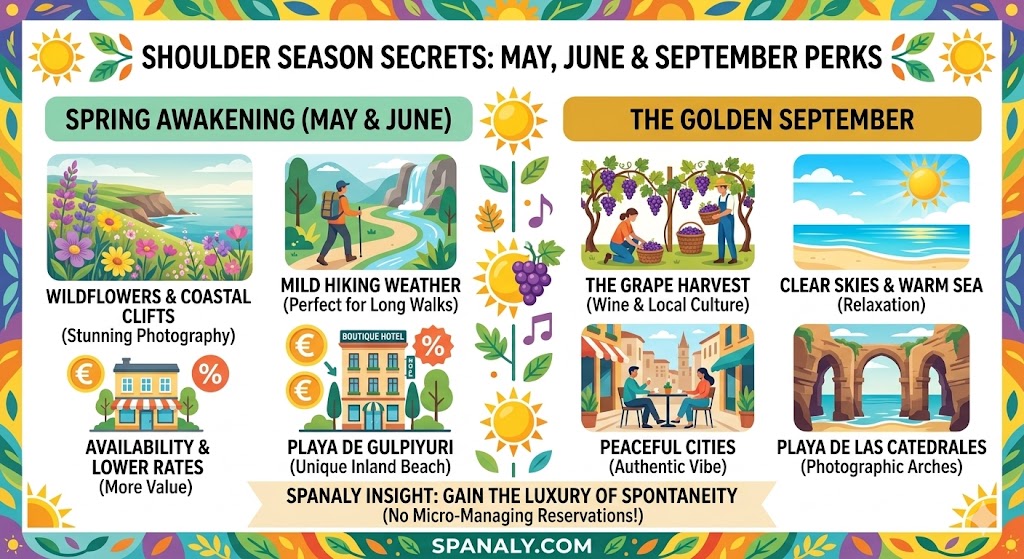
Finding the absolute best time to visit Northern Spain leads many to the “Shoulder Seasons.” May, June, and September offer a sweet spot where the Atlantic light is beautiful, but the heavy summer crowds have vanished. Choosing these months grants you the luxury of spontaneity, as you won’t need to micro-manage every booking weeks in advance.
🌸 The Spring Awakening (May & June)
Emerald Landscapes: This is when the North truly earns its “Green Spain” title with lush, vibrant valleys.
Cool Hiking: It is the perfect window for coastal treks before the mid-summer humidity kicks in.
Better Value: Accommodation prices are significantly lower, allowing for a much more flexible travel budget.
🍷 The Golden September
Warmest Waters: The sea has finally warmed up after the summer sun, making it ideal for swimming.
Harvest Season: Vineyards are buzzing with energy, offering a dream experience for fans of traditional Spanish food.
Authentic Rhythm: Urban centers like Bilbao return to their local pace, free from the long August queues.
🎒 When to Go: Tips for Couples, Families, and Hikers
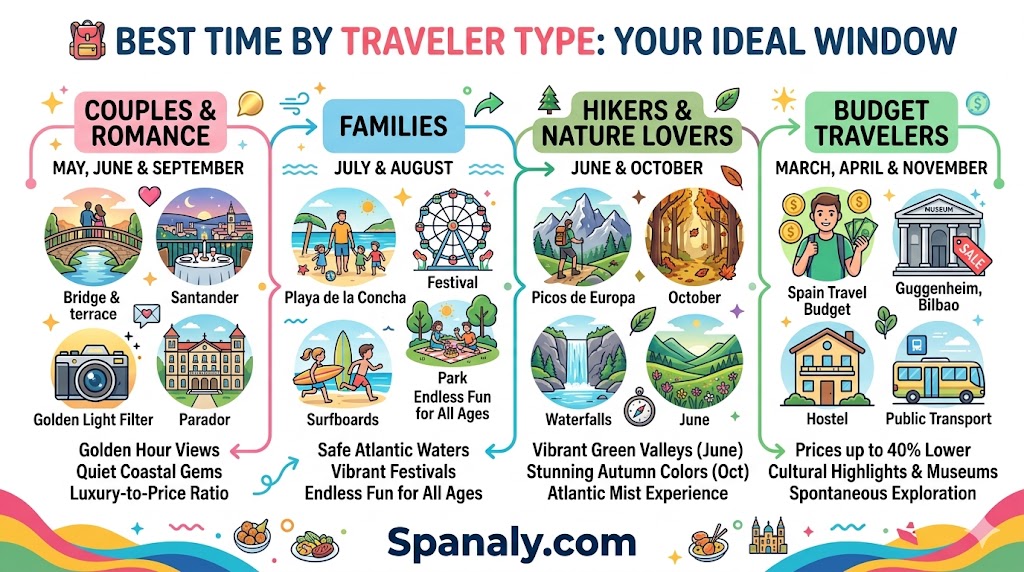
Choosing the right month depends on your personal travel style. Northern Spain transforms throughout the year, offering unique advantages for different types of visitors.
👩❤️👨 Couples & Romance (May, June & September)
Intimate Escape: Avoid the summer peak for a quieter atmosphere and better photography light.
Expert Route: Try the Santander and Picos de Europa route for a mix of luxury and wild nature without the noise.
👨👩👧👦 Families (July & August)
Stable Weather: Summer is the safest bet for warm water and endless outdoor activities for children.
Top Choice: Spend a week in the Basque Country to explore the best things to do in San Sebastian, including its safe urban beaches.
🥾 Hikers & Nature Lovers (June & October)
Trekking Windows: June offers vibrant green landscapes, while October brings deep autumn colors to the valleys.
Essential Gear: Always pack waterproof gear, as the Atlantic mist is a permanent part of the mountain experience.
💰 Budget Travelers (March, April & November)
Unbeatable Savings: The off-season offers high-end accommodations at a fraction of the cost.
Smart Planning: This is the easiest way to enjoy a luxury stay while strictly managing your Spain travel budget.
🗺️ Where to Go? Regional Highlights & Best Times
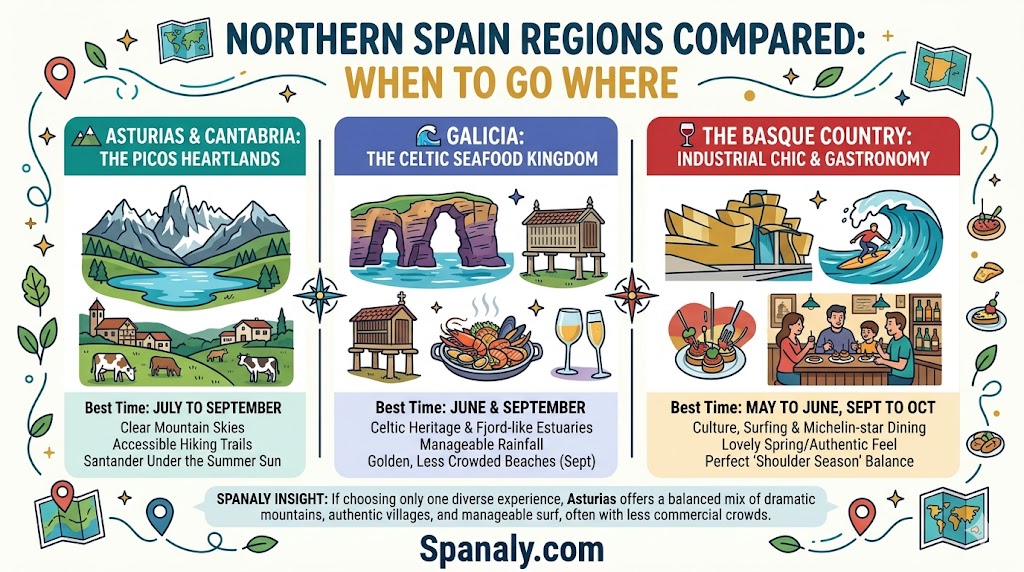
While the entire North shares the “Green Spain” title, each region has a distinct personality and microclimate. Choosing where to go often dictates the best month for your visit.
⛰️ Asturias & Cantabria: The Picos Heartlands
Landscape: Defined by the dramatic Picos de Europa mountains and wild, rugged coastlines.
Best Time: July to September offers the best chance for clear mountain skies and accessible hiking trails.
Pro Tip: This area offers the most balanced mix of dramatic peaks and authentic, non-commercial villages.
🌊 Galicia: The Celtic Seafood Kingdom
Landscape: The wettest and greenest region, famous for fjord-like estuaries (Rías) and incredible seafood.
Best Time: June and September provide a balance of manageable rainfall and pleasant temperatures.
Peaceful Spot: September is ideal for visiting Playa de las Catedrales after the summer crowds disperse.
🍷 The Basque Country: Gastronomy & Culture
Landscape: A powerhouse of surfing, Michelin-starred dining, and industrial-chic culture.
Best Time: May, June, September, and October offer an authentic local feel.
Avoid the Rush: While July and August are vibrant, they are often too busy for a relaxed experience.
🍽️ Best Time for Foodies: Cider & Seafood Seasons
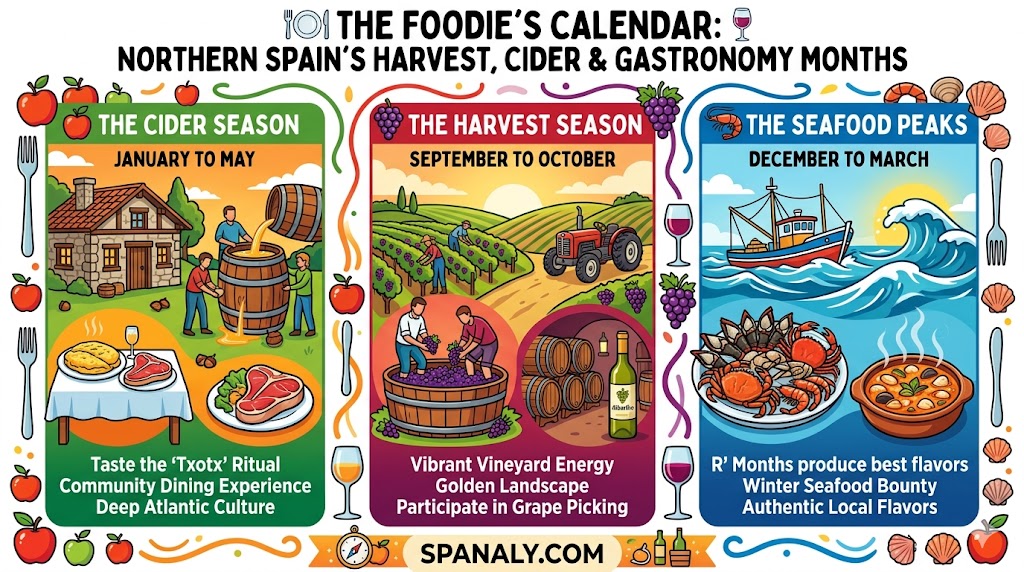
Northern Spain is a global culinary powerhouse where the cuisine is deeply tied to the land and Atlantic seasons. Certain months unlock unique gastronomic experiences that are essential to understanding the local culture. Timing your visit to these “foodie seasons” offers an unparalleled taste of Green Spain.
🍎 The Cider Season (January to May)
Asturias and the Basque Country have an ancient, almost mystical cider (sidra) culture that dictates the social rhythm of winter and early spring.
The Ritual: Starting in January, traditional cider houses open for the Txotx season, where visitors taste the new vintage directly from massive barrels. For an authentic social and dining experience, many foodies time their visits to these traditional taverns.
Spanaly Insight: A rainy afternoon spent in a cozy Asturian taberna, a glass of sidra, and a steaming bowl of Fabada is an unforgettable way to save money while traveling in Spain, as it offers the highest cultural authenticity for the price.
🦐 The Seafood & Tapas Peaks
While seafood is available year-round, many locals claim that marisco is at its absolute best during the cooler months of late spring and early autumn.
The Tapas Culture: Beyond seafood stews, Northern Spain has a refined small-plate culture that is very distinct from the rest of the country. This is especially true when exploring the barrio de santa cruz in seville, where tapas are traditional and classic, compared to the contemporary pintxos you will find in the North.
Best Time: Aim for September or October for a golden balance: the air is crisp, the sea is still relatively warm, and the coastal villages return to their local rhythm, making the tapas bars more accessible.
🥾 Camino de Santiago: The Perfect Trekking Window
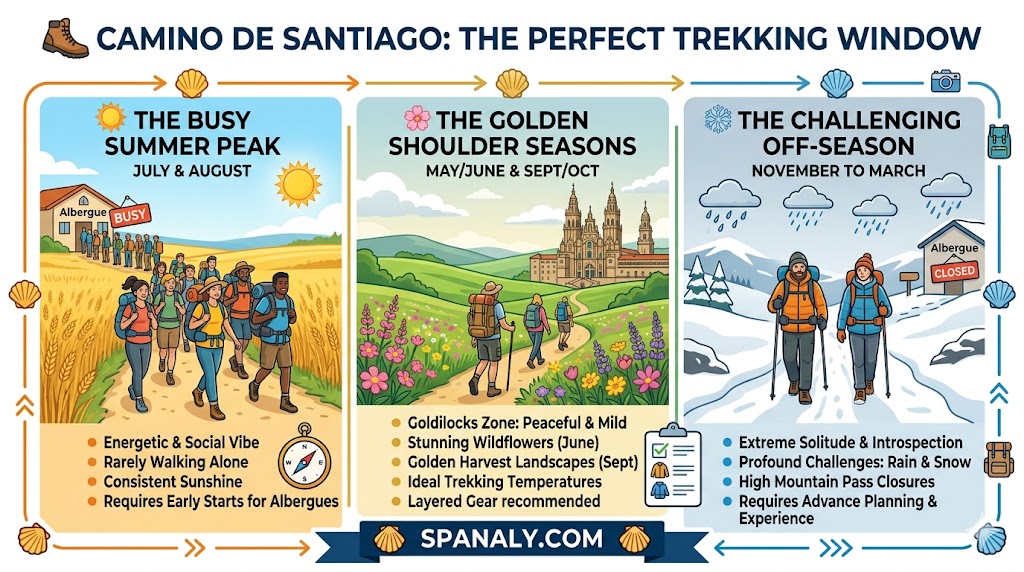
Walking the Camino de Santiago is a life-changing experience for thousands of pilgrims every year. While the route is technically open year-round, timing is everything, as weather and crowd levels can dramatically alter your journey along the historic trails to the Cathedral of Santiago de Compostela.
☀️ The Busy Summer Peak (July & August)
Summer brings the highest numbers of walkers. The primary motivation is usually school holidays or fixed vacation times.
The Vibe: Energetic, social, and crowded. You will rarely walk alone, and finding space in albergues requires early starts.
Why now? July and August offer the most consistent sun, especially in Galicia, but walking through Castilla y León in peak heat can be physically brutal.
🌸 The Golden Shoulder Seasons (May/June & September/October)
For many seasoned pilgrims, this is the “Goldilocks” zone.
The Vibe: Peaceful, scenic, and mild. The spring wildflowers in June are stunning, while September brings golden harvest landscapes.
Why now? Temperatures are ideal for all-day trekking. To ensure your journey is comfortable, make sure you know what to pack for Spain including layered gear, as the mountain sections are unpredictable.
❄️ The Challenging Off-Season (November to March)
Walking the Camino in winter is only for experienced, well-equipped hikers seeking profound solitude.
The Vibe: Introspective, challenging, and dramatic. You will encounter snow on high passes (like O Cebreiro) and frequent Atlantic rainfall.
Why now? Extreme solitude. However, be aware that many albergues and services close in winter, requiring much more advance planning.
🌊 Surfing in Northern Spain: Best Waves by Season
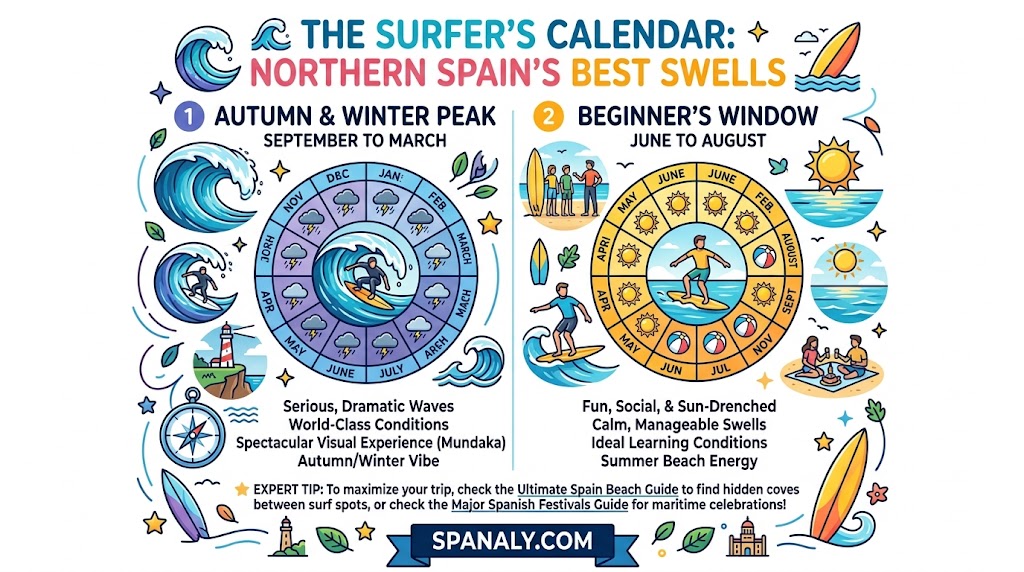
Northern Spain is the undisputed surfing capital of the country, boasting some of the most consistent and high-quality waves in Europe. Whether you are a pro looking for the legendary “left” of Mundaka or a beginner taking your first lesson, the Atlantic provides a different rhythm every season.
🏄 The Autumn & Winter Peak (September to March)
This is when the ocean truly wakes up. Powerful low-pressure systems in the Atlantic send consistent, heavy swells towards the coast.
The Vibe: Serious, dramatic, and world-class. This is when the most famous surf spots become a playground for experts.
Why now? The water is still relatively warm in September and October, but the waves grow significantly in size. It is the best time to witness professional surfing in its rawest form.
Spanaly Insight: Even if you don’t surf, visiting coastal towns like Mundaka during a massive winter swell is a spectacular visual experience.
🏖️ The Beginner’s Window (June to August)
During the summer, the swells are much smaller and more manageable, making it the perfect time for those new to the board.
The Vibe: Fun, social, and sun-drenched. The beaches are packed with surf schools and vibrant energy.
Why now? The long daylight hours and calmer waters make for ideal learning conditions. You can spend the morning in the water and the afternoon exploring the Ultimate Spain Beach Guide to find the most hidden coves.
🗺️ Finding Your Spot
From the wild cliffs of Asturias to the urban beaches of the Basque Country, every province has its signature wave.
Expert Tip: To make the most of your coastal road trip, check out the Major Spanish Festivals Guide to see if your surf trip aligns with a local maritime celebration, which adds a fantastic cultural layer to your journey.
❄️ Winter Guide: Snow, Culture, and Cozy Getaways
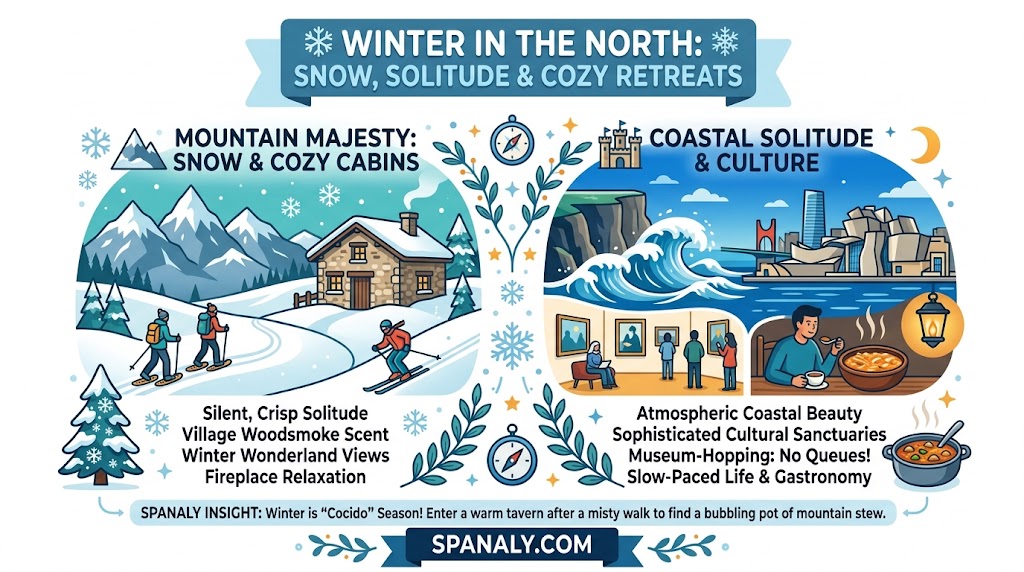
While most travelers flock to the Mediterranean in winter, Northern Spain offers a different kind of magic for those seeking “hygge” vibes, dramatic landscapes, and authentic solitude. The winter months transform the green valleys into misty, moody retreats that feel miles away from the modern world.
🏔️ Mountain Majesty: Snow & Skiing
The Picos de Europa and the Pyrenees become a winter wonderland. It is the time for cozying up by a fireplace in a stone cottage or hitting the slopes.
The Vibe: Silent, crisp, and incredibly cozy. The mountain villages smell of woodsmoke and traditional stews.
Why now? You can enjoy world-class skiing or snowshoeing without the massive crowds found in other European resorts. It’s also the season when high-speed travel is most appreciated; checking the Spain high-speed train guide will show you how easily you can reach the snowy north from the major hubs.
🏰 Coastal Solitude & Culture
The Atlantic coast in winter is a place of raw beauty. Massive waves crash against the cliffs, and the urban centers turn their focus inward toward culture and gastronomy.
The Vibe: Atmospheric and introspective. Cities like Bilbao and Oviedo become sophisticated cultural sanctuaries.
Why now? It is the absolute best time for museum-hopping. You can wander through world-class galleries without any queues. For those planning a longer winter escape, knowing the Spain visa and entry requirements is essential for a stress-free transition into the slow-paced northern life.
Spanaly Insight: Winter is “Cocido” season. There is nothing quite like walking through a mist-covered village in Cantabria and entering a warm tavern to find a bubbling pot of mountain stew. It is a sensory experience that defines the northern winter better than any photograph could.
🎉 Local Festivals: Best Cultural Events to Join

Northern Spain’s identity is forged in its ancient festivals. While the weather is a huge factor, many travelers plan their entire journey around a single, explosive cultural event. These celebrations are deeply local, vibrant, and offer the most authentic glimpse into the Atlantic soul.
🏹 The Big Summer Traditions (July & August)
Summer is the undisputed king of festivals in the North. The streets transform into stages for history and folklore.
San Fermín (Pamplona): In July, this world-famous event brings a mix of adrenaline and tradition. It is a bucket-list experience that requires booking months in advance.
Semana Grande (Bilbao & San Sebastián): In August, these cities celebrate their “Big Week” with concerts, massive fireworks, and rural sports competitions. To make the most of these urban festivals, having a solid Spain trip checklist is vital for managing bookings and logistics.
🎭 Unique Regional Traditions
Beyond the famous summer bashes, the North holds specialized events that celebrate its unique history and maritime heritage.
The Cider Festivals: Throughout spring, various towns in Asturias celebrate the “First Pour” with communal street parties.
Viking & Celtic Fairs: Galicia celebrates its northern roots with festivals like the Catoira Viking Festival in August, where dramatic re-enactments take place on the river.
Planning Tip: If you are a fan of historical spectacles, don’t miss the chance to learn about Toledo steel swords and gold crafts, as many festivals across the country feature these legendary artisanal pieces in their traditional parades.
Spanaly Insight: If you prefer a more local, less “touristy” vibe, look for the Fiestas de Barrio in smaller coastal villages. These smaller celebrations often feature the best local food, traditional dancing, and a much more intimate atmosphere than the massive city festivals.
🎒 What to Pack: The Art of Layering for All Seasons
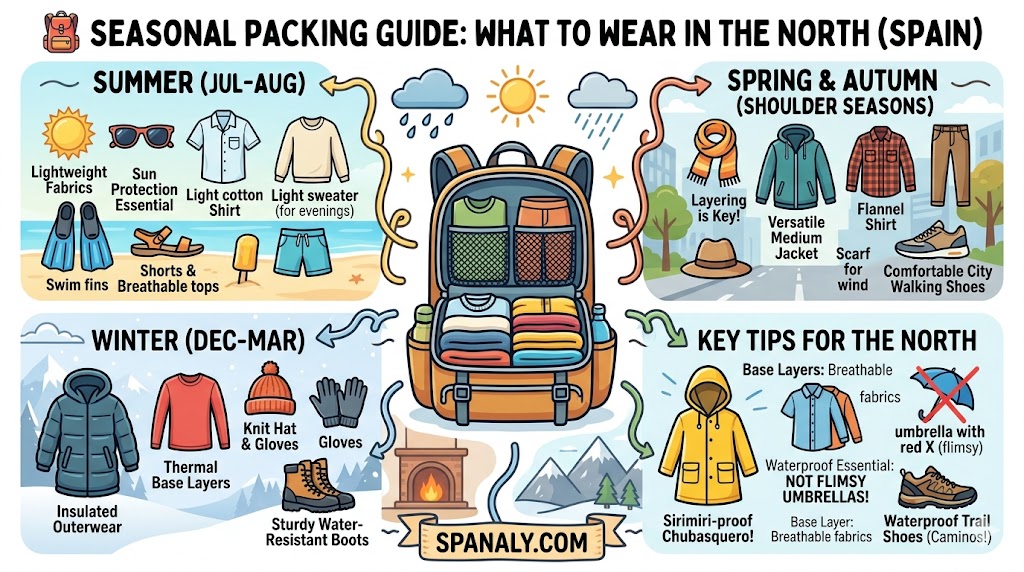
Packing for Northern Spain is an art form. Unlike the predictable heat of the south, the Atlantic coast demands a strategy based on layers and versatility. Whether you are coastal hopping or mountain trekking, your gear can make or break your comfort in this beautiful, misty region.
🧥 The “Layering” Philosophy
The golden rule for the North is to dress like an onion. Temperatures can shift significantly between a sun-drenched beach and a shaded mountain valley in a matter of minutes.
Base Layers: Stick to breathable fabrics. Even in summer, a light cotton or linen shirt is essential for the humid Atlantic air.
The Waterproof Essential: Never, under any circumstances, travel here without a high-quality, lightweight raincoat or windbreaker. The “Sirimiri” (fine mist) can appear at any time.
Footwear: If you plan on exploring beyond the city pavements, waterproof trail shoes are a must. For those specifically planning a pilgrimage, reviewing a Santiago de Compostela itinerary will help you understand the varied terrain you’ll face.
🧣 Seasonal Specifics
Summer (July – August): Pack swimwear and sun protection, but always include a light sweater for the famously cool Atlantic evenings.
Shoulder Seasons (Spring & Autumn): This is the time for a versatile scarf and a medium-weight jacket. It’s also the perfect season for a city-break; checking a Bilbao and San Sebastian 3-day itinerary can give you a better idea of the “smart-casual” style preferred in these culinary capitals.
Winter (December – March): You will need a proper insulated coat, thermal layers if heading to the Picos, and sturdy, water-resistant boots.
🗺️ One Day in Northern Spain: A Perfect Itinerary
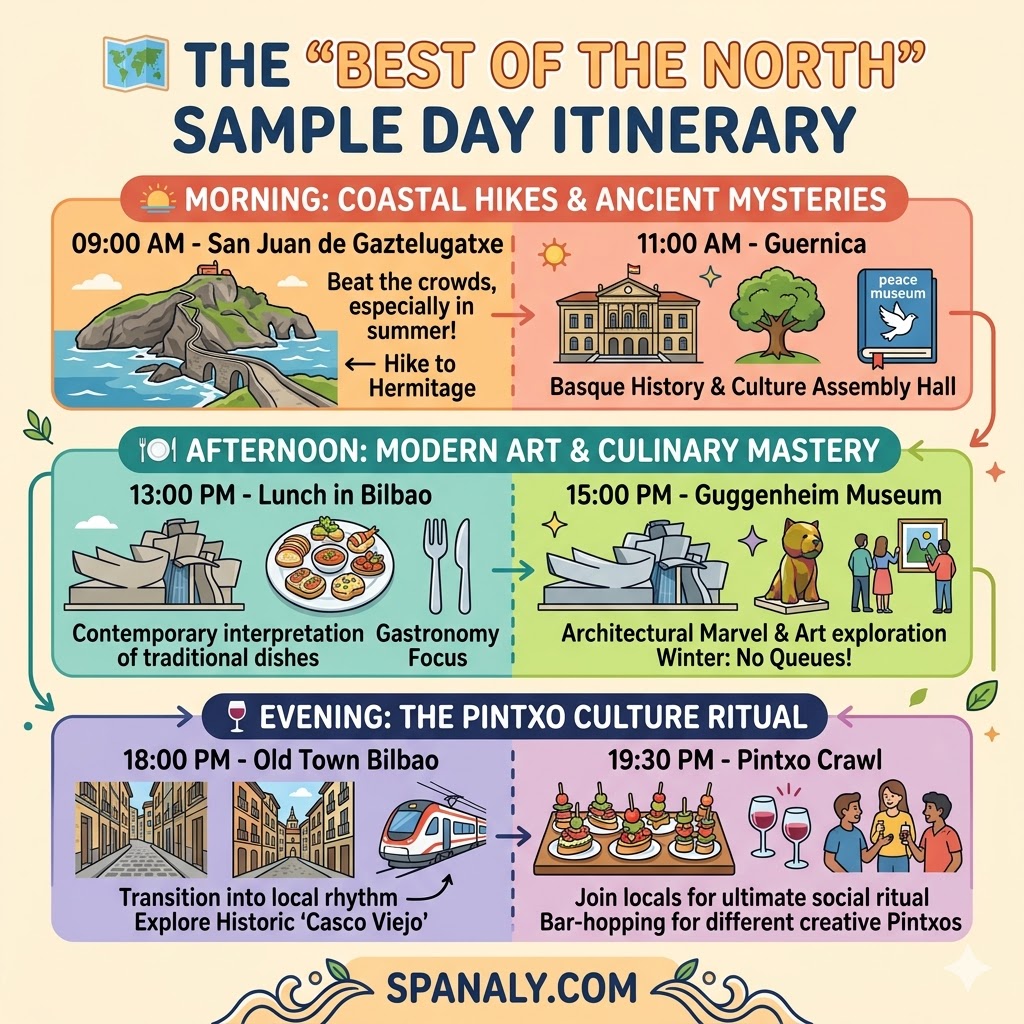
To help you visualize how to weave these seasonal insights into your journey, we have designed a perfect day in the Basque Country. This itinerary strikes a balance between coastal beauty, world-class gastronomy, and cultural icons, making it an excellent blueprint for best photography spots in Spain.
🌅 Morning: Coastal Hikes & Ancient Mysteries
Start your day with the raw beauty of the Atlantic coast.
09:00 AM – San Juan de Gaztelugatxe: Hike down to this stunning hermitage perched on a tidal island. It is essential to visit early to beat the crowds, especially in summer.
11:00 AM – Guernica: After the hike, dive into Basque history. Explore the Peace Museum and the historic Assembly Hall to understand the roots of the culture.
🍽️ Afternoon: Modern Art & Culinary Mastery
13:00 PM – Lunch in Bilbao: Return to the city for a contemporary interpretation of traditional dishes.
15:00 PM – Guggenheim Museum: Spend your afternoon exploring this architectural marvel. Winter is the best season for this visit, as you can take your time without any queues. For those extending their stay in the capital, knowing how to travel from Madrid to Bilbao makes for a seamless multi-city experience.
🍷 Evening: The Pintxo Culture Ritual
18:00 PM – Old Town Bilbao: Transition into the local rhythm.
19:30 PM – Pintxo Crawl: Join the locals for the ultimate culinary social ritual. Wander from bar to bar in the “Casco Viejo,” enjoying a “Txikito” (small glass of wine) and a creative pintxo at each stop.
💎 Local Secrets: Inside Tips from Real Travelers
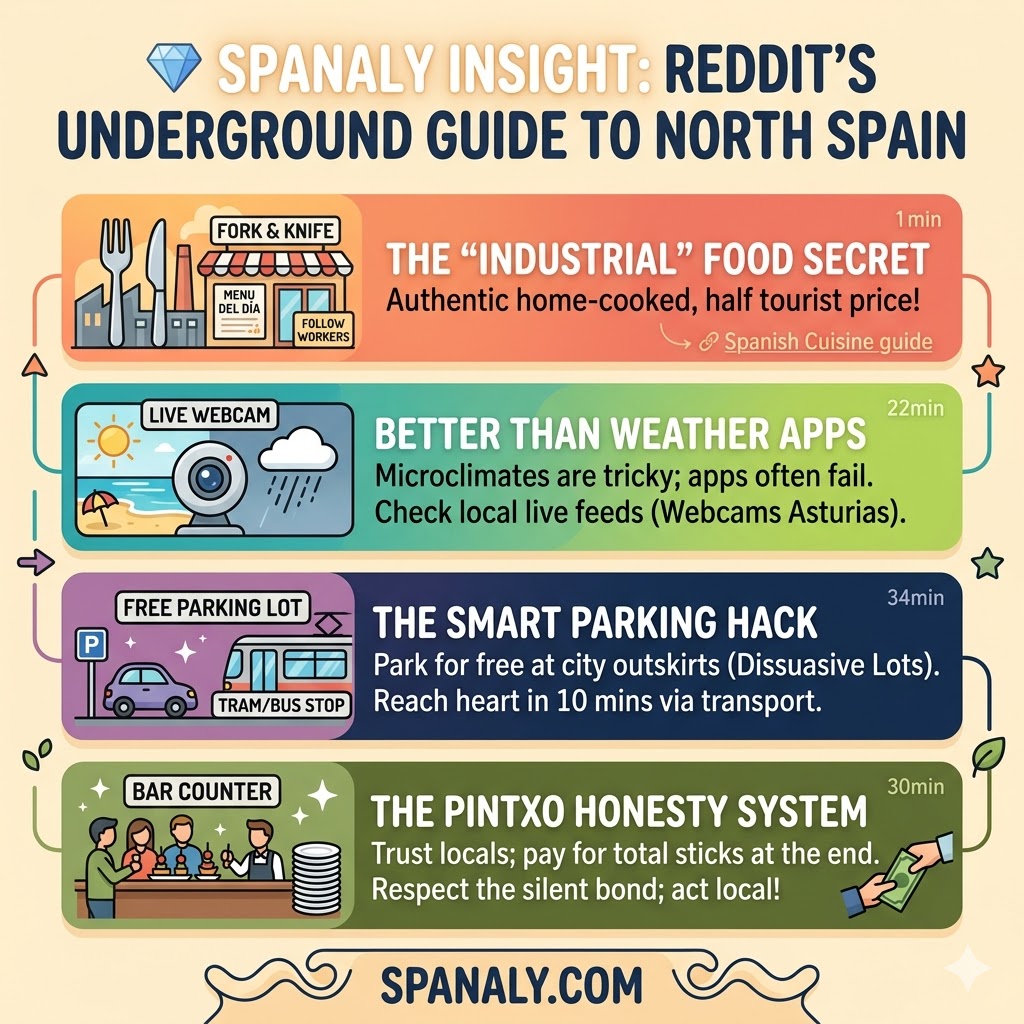
Go beyond the tourist brochures. We gathered these elite “insider” secrets from professional travel communities and local subreddits.
🤫 The “Industrial” Food Secret
Follow the Workers: Seek “Menu del Día” spots in industrial zones outside city centers.
Massive Value: Enjoy authentic, home-cooked three-course meals at half the tourist price.
Pro Tip: Explore the Spanish Cuisine guide to master these traditional flavors.
🌦️ Better Than Weather Apps
Trust Live Feeds: Standard apps often fail due to the North’s microclimates.
Check Local Webcams: Use “Webcams de Asturias” to see real-time conditions before driving.
Save Your Day: It might rain in the city while the coast remains perfectly sunny.
🚗 The Smart Parking Hack
Avoid City Centers: Parking in San Sebastián or Santander is expensive and stressful.
Use Dissuasive Lots: Park for free at the end of tram or bus lines.
Seamless Transit: Reach the historic heart in ten minutes via cheap public transport.
🍞 The Pintxo Honesty System
Respect the Trust: Many traditional bars use an unspoken “honesty system” for payments.
Don’t Ask Early: Keep your plates or sticks until you finish your final drink.
Act Like a Local: Tell the bartender what you consumed only when you are ready to leave.
🛡️ Visitor FAQs – Northern Spain Travel Guide
🚗 Is it difficult to drive in the rain?
Driving is safe and straightforward here. High-quality, slip-resistant asphalt covers all main highways. Watch for mountain fog. Modern rentals handle these Atlantic conditions perfectly.
🧥 Do I need a heavy coat in summer?
Skip the heavy parka. Pack a lightweight, waterproof windbreaker instead. Northern evenings stay crisp and cool. Layering remains your best strategy for comfort.
🕒 When do restaurants typically close?
Kitchens strictly serve lunch between 13:30 and 15:30. Dinner starts around 20:30. Most shops observe the traditional afternoon siesta. Plan your meals early.
📱 Is mobile signal good in mountains?
Expect excellent 5G coverage in most villages. Signal drops only in deep limestone gorges. Almost every guesthouse offers fast Wi-Fi. Download offline maps for hiking.
🌊 Is swimming safe during off-months?
Swimming is refreshing but the Atlantic remains cold. Always obey the beach flag system. Green means safe. Respect strong currents and stay near supervised areas.
Northern Spain Expert Guide by Spanaly.com
Northern Spain is more than just a cooler alternative to the south; it is a region that rewards those who embrace its mist and mountains. Whether you are diving into the Atlantic in August or sharing a cider by the fire in January, every season here feels authentic.
Embrace the Mist: Don’t let a bit of rain stop you; it’s the reason the hills stay emerald.
Eat Like a Local: Skip the tourist menus and look for where the workers go for lunch.
Stay Flexible: Use layers to handle the changing Atlantic weather throughout the day.
Respect the Clock: Keep local dining hours in mind to avoid finding closed kitchens.
Ready to start your adventure? Make sure to plan your trip to Spain using our expert tools to handle the logistics.
See you on the green coast—just don’t forget your raincoat!