
Table of Contents
Toggle📍 Discovering the Basque Dragonstone
San Juan de Gaztelugatxe is raw, windy, and physically demanding. It is a narrow stone path carved into the Atlantic cliffs. Whether you seek “Dragonstone” or a medieval pilgrimage, the 241 steps will test your legs.
The Stone Path: Walk a medieval bridge connecting the mainland to a historic hilltop hermitage.
Atlantic Power: Experience the Bay of Biscay waves crashing against jagged, prehistoric rock formations.
Physical Reality: This is a steep hike, not a casual stroll; bring water and sturdy footwear.
Entry Rules: Access is strictly regulated since 2024; you must secure a digital ticket before arriving.
If you are planning a larger road trip through the region, don’t miss our Ultimate Northern Spain Travel Guide for expert logistics and hidden stops.
📊 Quick Snapshot: Essential San Juan de Gaztelugatxe Facts
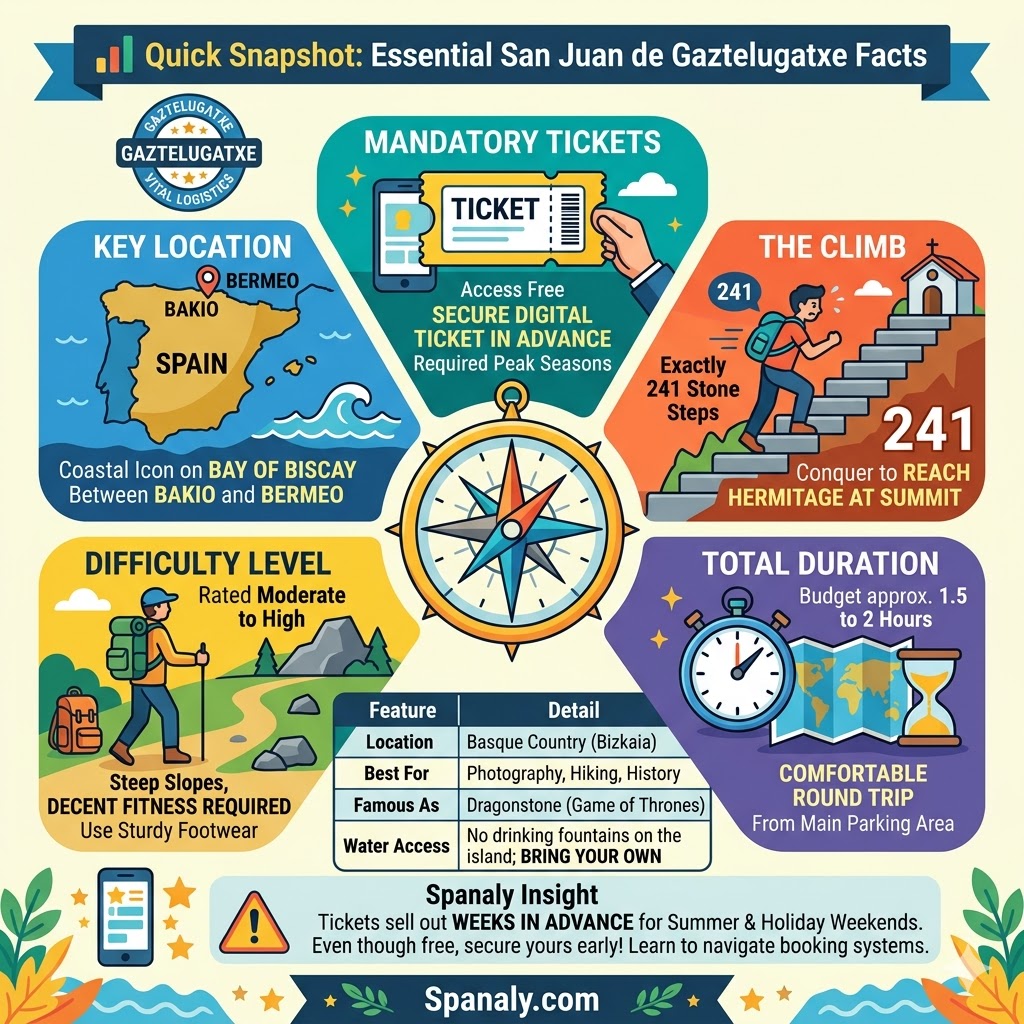
Before you start your hike, here are the vital logistics you need to know for a smooth visit.
Mandatory Tickets: Access to the path is free, but you must secure a digital ticket in advance during peak seasons.
The Climb: Prepare to conquer exactly 241 stone steps to reach the hermitage at the summit.
Total Duration: Budget approximately 1.5 to 2 hours for a comfortable round trip from the main parking area.
Difficulty Level: The hike is rated as moderate due to steep slopes, requiring sturdy footwear and decent physical fitness.
Key Location: This coastal icon sits on the Bay of Biscay, conveniently located between the towns of Bakio and Bermeo.
| Feature | Detail |
|---|---|
| Location | Basque Country (Bizkaia) |
| Best For | Photography, Hiking, History |
| Famous As | Dragonstone (Game of Thrones) |
| Water Access | No drinking fountains on the island; bring your own |
Spanaly Insight: Many visitors underestimate the “Ticket Effect.” Even though tickets are free, they sell out weeks in advance for summer and holiday weekends. If you haven’t secured yours yet, check our Spain attraction tickets guide to learn how to navigate official booking systems and avoid common entry scams.
⚔️ San Juan de Gaztelugatxe vs. Zumaia Flysch: Which one to choose?
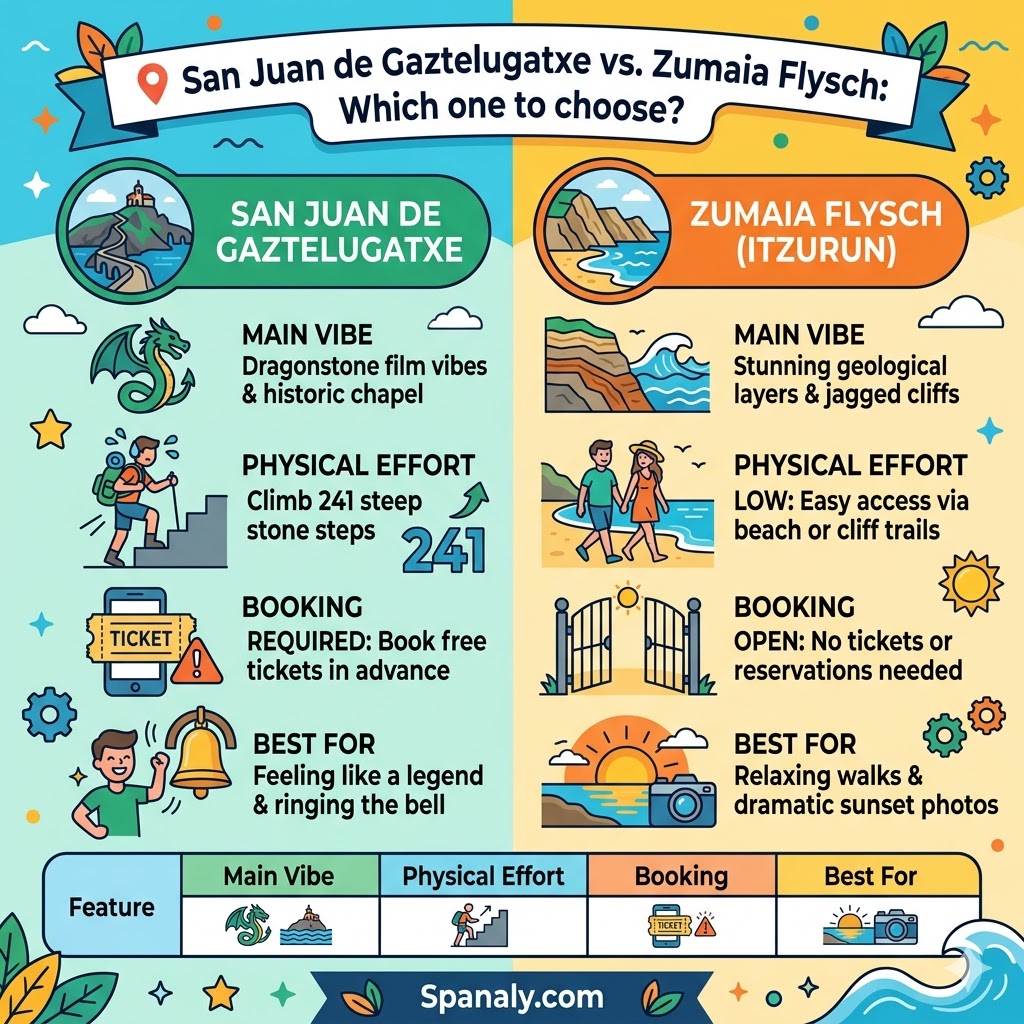
While both locations offer the dramatic beauty of the Basque Coast, they provide very different experiences for travelers. Understanding these differences helps you manage your expectations and physical energy.
| Feature | San Juan de Gaztelugatxe | Zumaia Flysch (Itzurun Beach) |
|---|---|---|
| Primary Appeal | Historical hermitage and “Dragonstone” film vibes. | 60 million years of geological layers and jagged cliffs. |
| Physical Effort | High: 241 steep stone steps and narrow paths. | Low to Moderate: Easy beach access and cliffside trails. |
| Accessibility | Limited: Strictly requires mandatory pre-booked tickets. | Open: Public beach access with no booking required. |
| Vibe | Spiritual, legendary, and challenging. | Scientific, cinematic, and relaxing. |
Spanaly Insight: If you are short on time and want the most “Game of Thrones” impact, Gaztelugatxe is the winner for its iconic bridge. However, if you prefer a relaxing sunset walk without climbing hundreds of stairs, the Flysch in Zumaia is the superior choice. For the ultimate coastal experience, try to include both in your Northern Spain road trip.
📍 Why Visit San Juan de Gaztelugatxe?
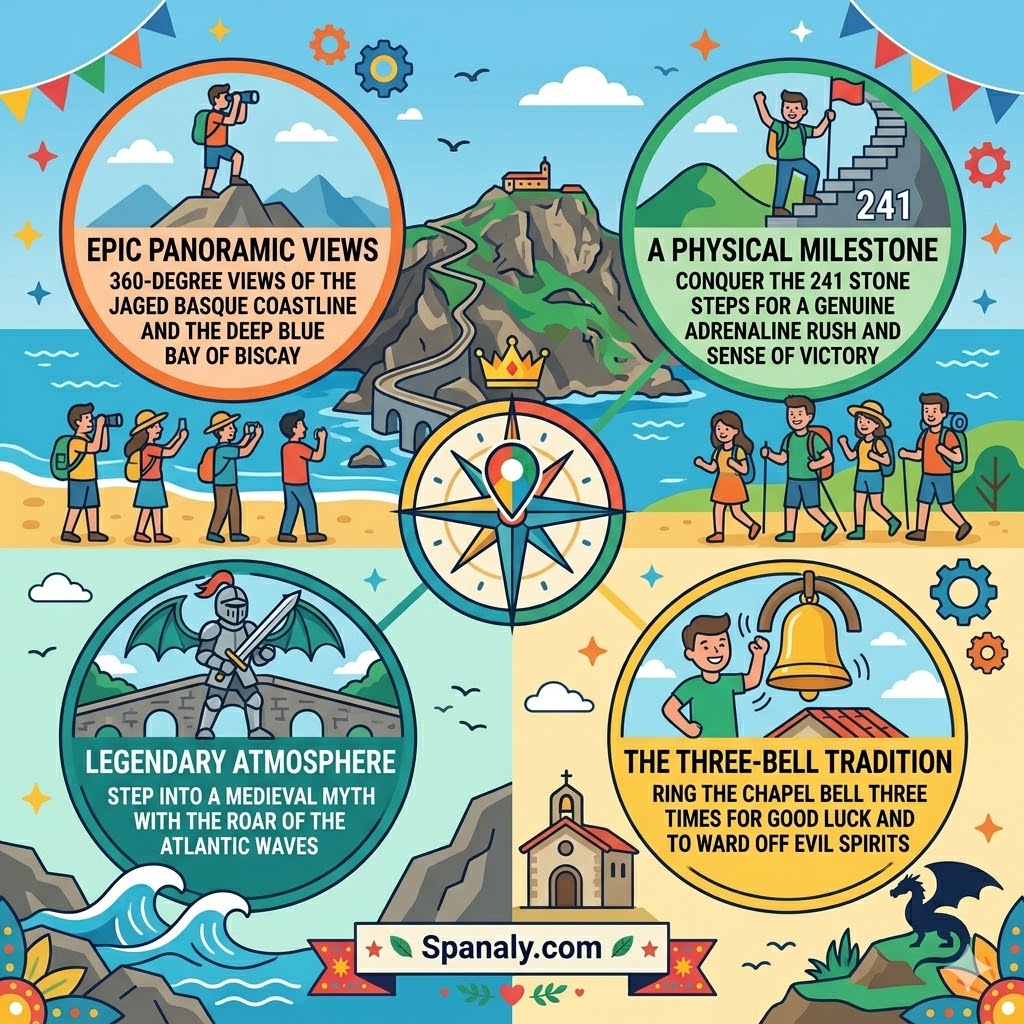
Most visitors arrive for the “Dragonstone” photos but stay for the raw coastal atmosphere. This site offers a genuine physical challenge. Consequently, reaching the summit provides a unique perspective of the wild Basque shoreline.
Coastal Panoramas: View the jagged coastline and the Bay of Biscay from the hilltop chapel.
A Local Milestone: Conquering the 241 steps is a satisfying ritual for hikers and pilgrims alike.
The Stone Bridge: Walk a narrow medieval path where the Atlantic winds create a timeless environment.
Three-Bell Tradition: Ring the chapel bell three times at the summit to follow local Basque luck traditions.
If you are wondering how this rugged experience fits into a broader trip, discover Why Visit Spain to see how the country balances deep-rooted traditions with landscapes.
🏰 Top Landmarks: The Icons of San Juan de Gaztelugatxe
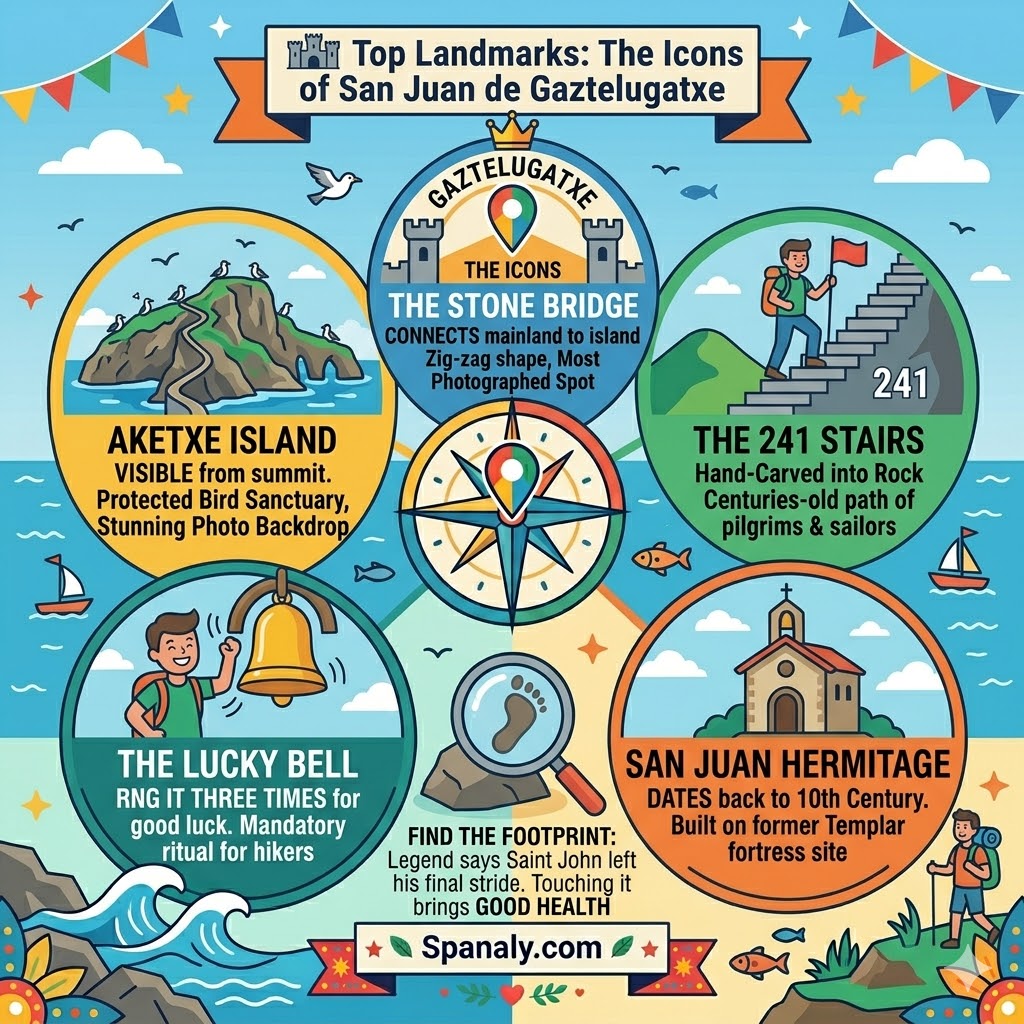
Beyond the climb, several specific points along the path carry deep historical and cinematic significance. Make sure to slow down and appreciate these landmarks rather than just rushing to the top.
The Stone Bridge: This narrow, winding bridge is the most photographed spot, famous for its zig-zag shape that connects the mainland to the island.
The 241 Stairs: Each step is hand-carved into the rock, representing a centuries-old path used by pilgrims and sailors.
San Juan Hermitage: The small chapel at the summit dates back to the 10th century and sits on the site of a former Templar fortress.
The Lucky Bell: Located on the front of the chapel, ringing it three times is a mandatory ritual for every successful hiker.
Aketxe Island: Visible from the summit, this neighboring “forbidden” island is a protected bird sanctuary and a stunning backdrop for photos.
Spanaly Insight: Look closely at the ground as you start the climb. Legend says Saint John the Baptist reached the island in just three giant strides. You can find what is believed to be his “final footprint” carved into the last step near the top. Touching it is said to bring good health, so don’t miss this small, elite detail that most tourists walk right over.
🎨 Hidden Gems & Local Secrets: Beyond the Stairs
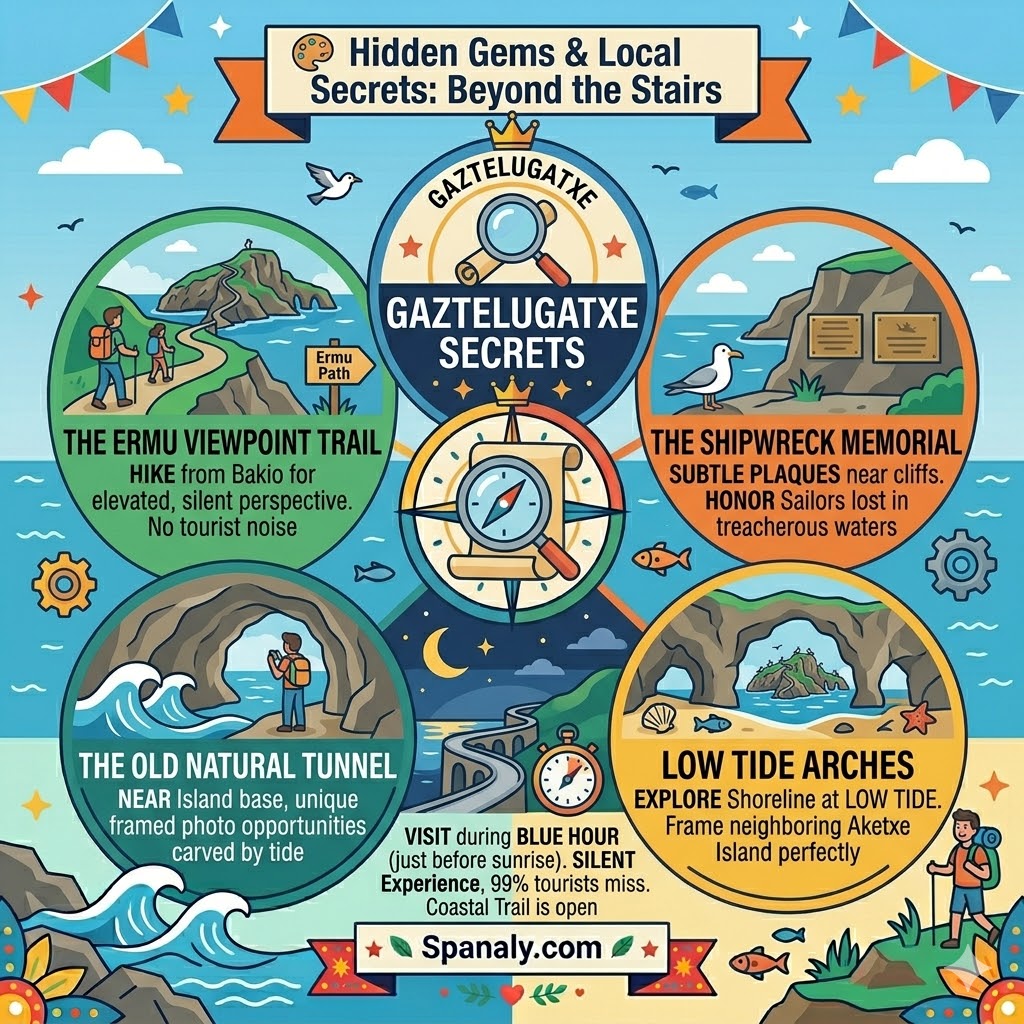
Most visitors follow the main path in a straight line, but the area surrounding San Juan de Gaztelugatxe holds secrets that only locals and seasoned hikers know. Finding these spots will give you a much deeper connection to the rugged Basque coast.
The Ermu Viewpoint Trail: Instead of the crowded main entrance, hike the “Ermu” path from Bakio for a silent, elevated perspective.
The Old Natural Tunnel: Near the base of the island, a small rock tunnel carved by the tide offers unique, framed photo opportunities.
The Shipwreck Memorial: Look for subtle plaques near the cliffs that honor sailors lost in these treacherous Atlantic waters.
Low Tide Arches: At low tide, explore the shoreline rocks to find natural arches that frame the neighboring Aketxe Island perfectly.
Spanaly Insight: If you want a truly elite experience, visit during the blue hour just before sunrise. While most people arrive late, seeing the first light hit the stone bridge in total silence is a spiritual experience. This rugged hike is just one of many incredible things to do in Bilbao and its surroundings for those who love nature and local legends.
🍽️ Gastronomy: Savoring the Basque Coast
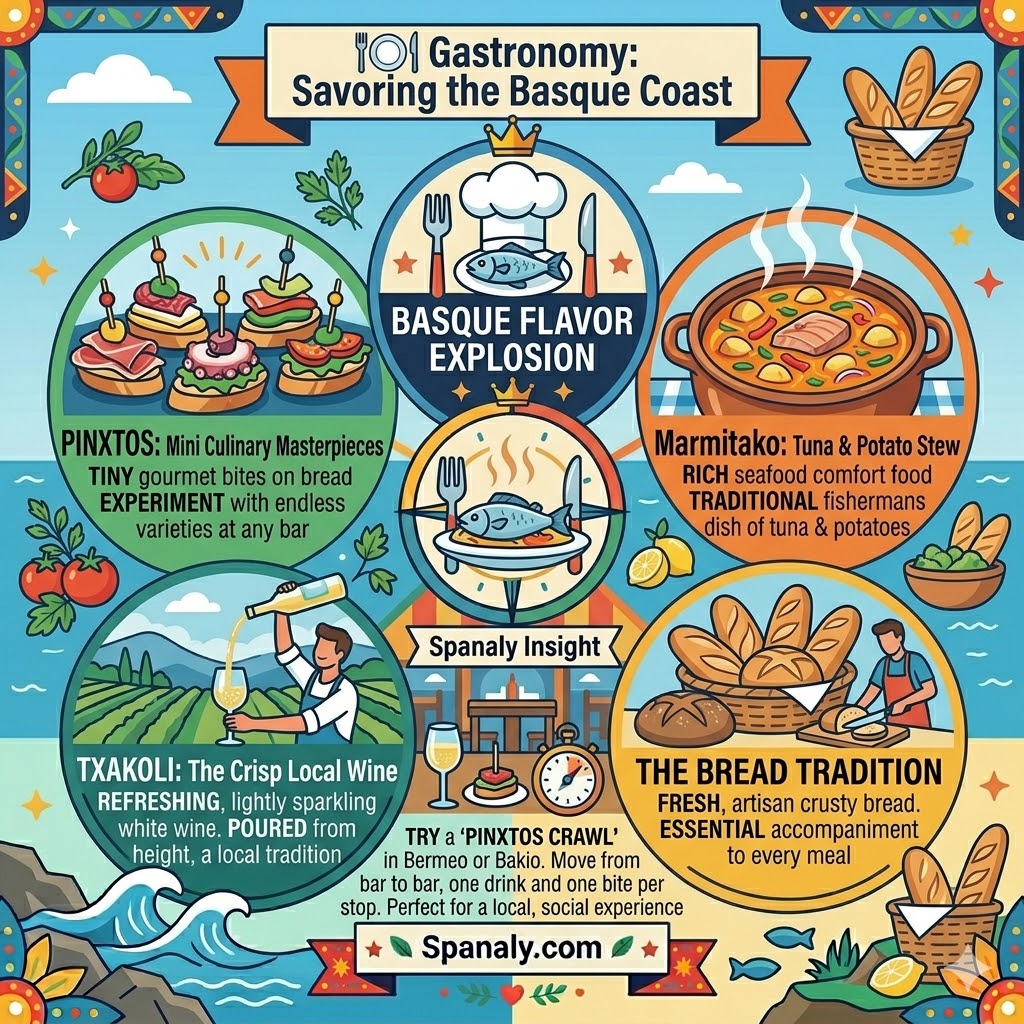
After conquering the stairs, rewarding yourself with local flavors is a mandatory part of the experience. The area around San Juan de Gaztelugatxe is famous for its fresh seafood and traditional “Pintxos” that reflect the soul of the Bay of Biscay.
Fresh Grilled Turbot: In nearby Bermeo, try the locally caught fish grilled over open charcoal for an authentic coastal taste.
Pintxos Culture: Visit the local taverns to sample small, gourmet bites ranging from salted cod to spider crab.
Txakoli Wine: Pair your meal with a glass of this slightly sparkling, dry white wine produced in the surrounding vineyards.
Idiazabal Cheese: Don’t miss this smoky, aged sheep’s milk cheese, a staple of every Basque dining table.
Spanaly Insight: For a truly local experience, avoid the restaurants right at the entrance. Drive 5 minutes to the town of Bakio. Look for a “Sidrería” where you can enjoy a traditional Basque cider house menu. It is the perfect way to recharge while diving deeper into the famous Spanish cuisine and its regional secrets.
📸 Best Photo Spots: Capturing the Dragonstone Magic

To capture the stone bridge without the crowds, you need to be strategic with your timing. These specific angles offer the best perspective of the peninsula’s rugged geography.
The Zigzag Curve: Capture the famous bridge angle from the first main descent.
The Ascent: Frame the steep steps from a low angle to show the rugged stone texture.
Coastal Arches: Look for natural rock frames at the base of the peninsula during low tide.
Aketxe Backdrop: Use the neighboring bird sanctuary island as a deep-blue background from the summit.
Spanaly Insight: Avoid stopping at the first crowded viewpoint. Instead, walk past the hermitage toward the northern tip of the island. This backside view shows the church perched over the Atlantic with fewer people in sight. For more locations, check our guide to the best photography spots in Spain.
🧳 Essential Logistics: Planning Your Visit

Getting to San Juan de Gaztelugatxe requires more than just showing up. Because of its extreme popularity, you must handle the following logistics carefully to avoid being turned away at the entrance.
The Booking System: You must secure a free digital ticket in advance via the official Bizkaia website. During peak seasons and weekends, these tickets sell out weeks ahead. Entry is strictly regulated to protect the site from overcrowding.
Transport from Bilbao: If you are driving, the journey takes about 45 minutes via the BI-631 highway. For public transport, take the Bizkaibus A3518 from Bilbao to Bakio, then transfer to the local shuttle (Taxibus) that runs to the entrance.
Best Time to Visit: Aim for a visit during low tide if you want to see the rugged shoreline and natural arches clearly. Weather-wise, late spring or early autumn offers the best balance of manageable temperatures and clear skies for hiking.
Spanaly Insight: Don’t forget that the Basque weather is notoriously unpredictable. Even if Bilbao is sunny, the coastal winds at the peninsula can be fierce and chilly. Make sure to check our specific advice on what to pack for Spain to ensure you have the right layers and sturdy footwear for this Atlantic climate.
⚠️ Crucial Reality Check: Before You Step Out

San Juan de Gaztelugatxe is as demanding as it is beautiful. To ensure you don’t travel all the way only to be turned back, you must understand the “Honest Truth” about the site’s physical and safety regulations.
Strict Access Hours: The path has specific opening hours that are strictly enforced, which often differ from the chapel’s opening times. Always check the latest schedule on your ticket.
The Weather Factor: Because it is located on the wild Bay of Biscay, the bridge is immediately closed if winds exceed safety limits. Sudden Atlantic storms can trigger “emergency closures” for all visitors.
Physical Reality: This site is not accessible for wheelchairs or strollers. The steps are uneven, steep, and can be slippery when misty.
Family Tip: If traveling with small children, leave the stroller in the car and use a high-quality baby carrier instead.
Spanaly Insight: If the bridge is closed, don’t worry. Head to Bermeo for a local boat tour. These tours offer stunning views from the sea. Planning for such unexpected changes is easier when you check the Northern Spain travel cost to manage your daily adventure budget.
🗺️ Suggested Itineraries: Maximum Efficiency & Coastal Beauty
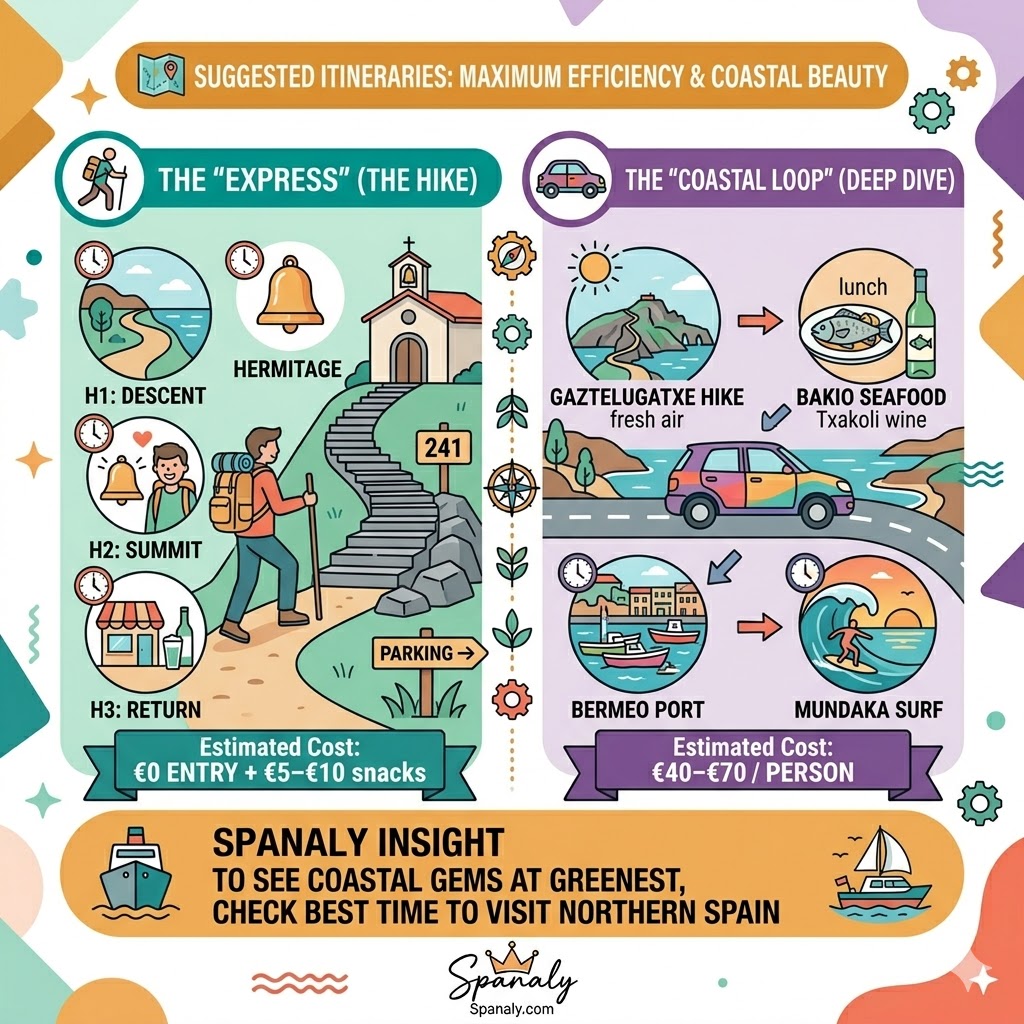
This plan focuses solely on the physical challenge and the iconic Dragonstone views.
Hour 1: Arrive at the Urizarreta entrance and begin the steep descent toward the bridge.
Hour 2: Conquer the 241 stairs, reach the summit, and ring the lucky bell three times.
Hour 3: Hike back up to the parking area and enjoy a refreshment at Eneperi restaurant.
Estimated Cost: €0 for entry (pre-booked) plus €5–€10 for personal snacks and drinks.
🚗 The “Coastal Loop” (Deep Dive) – Full Day
Experience the cultural and culinary heart of the region beyond the famous stone stairs.
Morning (09:00 – 12:00): Start with the Gaztelugatxe hike while the coastal air is still fresh.
Lunch (12:30 – 14:30): Head to Bakio for fresh seafood and a glass of local Txakoli wine.
Afternoon (15:00 – 17:30): Visit the fishing port of Bermeo and explore its colorful historic Old Town.
Evening (18:00 – 20:00): End your day in Mundaka for legendary surf breaks and stunning sunset views.
Estimated Cost: €40–€70 per person. This covers lunch, parking, fuel, and local pintxos.
💡 Spanaly Pro Tips: The Reddit-Level Insider Guide

These practical insights come from regular hikers who navigate the 241 steps in all Atlantic conditions. Avoid common mistakes by following these field-tested strategies.
The Silent Bell: Time your bell ringing between large groups to experience the natural sound of the Atlantic waves.
Pacing Strategy: Maintain a slow, rhythmic pace during the descent to save your knees for the steep climb back.
Hydration Planning: Bring your own water as there are no fountains on the island; freeze a bottle beforehand to keep it cold.
Traction Hack: Wear trail shoes with aggressive “lugs” to grip the limestone, which becomes slippery during the “Sirimiri” mist.
Digital Plan B: Screenshot your QR code before leaving Bakio, as cellular signal is unreliable at the trail entrance.
Spanaly Insight: If tickets are sold out, check the official website at exactly Midnight (Basque time). Last-minute cancellations often reappear in the system, offering a second chance for dedicated travelers.
🛡️ Visitor FAQs – San Juan de Gaztelugatxe Guide
🛡️ Are dogs allowed to join the hike to the hermitage?
Yes, dogs are permitted but they must remain on a leash at all times. The stone path is rugged and can be hard on their paws, so ensure they are comfortable with steep climbs. Note that pets are generally not allowed inside the small chapel at the summit.
🎫 Can I visit the site without a pre-booked ticket?
During peak seasons and holidays, access is strictly restricted to ticket holders. While entry is free, the daily capacity is capped to protect the environment. If you arrive without a ticket during restricted hours, security staff will unfortunately have to turn you away at the trail entrance.
💧 Are there public restrooms or water fountains on the island?
No, there are no facilities once you pass the main checkpoint. You should use the restrooms located near the parking area or at the Eneperi restaurant before starting your descent. Always carry enough water, as there are no hydration stations along the 241 steps.
🚑 Is the hike suitable for elderly visitors or those with knee issues?
The trail is physically demanding with steep inclines and uneven stone steps. If you have chronic knee problems or limited mobility, we recommend viewing the site from the Urizarreta viewpoint instead of attempting the full climb. The descent can be just as taxing on the joints as the ascent.
🏰 Is it possible to fly a drone to capture aerial shots?
Drone flight is strictly prohibited at San Juan de Gaztelugatxe. The area is a protected biotope and a bird sanctuary, particularly for the neighboring Aketxe Island. Unauthorized drone use can result in heavy fines from the local authorities who monitor the site regularly.
Gaztelugatxe Guide by Spanaly.com
San Juan de Gaztelugatxe is more than a famous “Dragonstone” location — it is a powerful encounter with the wild Basque coast.
The steep climb up the 241 stone steps is demanding, but the reward is worth every effort: dramatic Atlantic views, the ancient stone bridge, and the small hermitage perched on the rock. Ringing the chapel bell three times at the top has become a beloved local tradition for good luck.
If you enjoy this mix of history, nature, and physical challenge, you’ll love exploring the inland side of the Basque Country as well. For a complete contrast — with medieval streets, green parks, and a calmer pace — check our guide to Things to Do in Vitoria-Gasteiz.
Final Spanaly Tip: Don’t rush the hike. Take breaks, enjoy the sea air, and let the sound of the waves stay with you. Gaztelugatxe is best remembered not just for the photos, but for the feeling of standing between the sky and the Atlantic.
Safe travels, and enjoy the wild beauty of the Basque Coast.