🚗 From Northern Spain to Extremadura
Planning a road trip from Northern Spain to Extremadura connects two of the country’s most diverse landscapes. You will transition from lush, green coastlines to the historic, sun-drenched plains of the interior.
The Ultimate Route: This journey offers a perfect blend of dramatic mountain scenery and profound historical discovery.
Expert Planning: Whether you crave alpine air or Roman ruins, our curated path ensures you see the best of both worlds.
Total Immersion: Beyond the sights, you will experience the distinct culinary traditions and cultural shifts that define Spanish identity.
Need to focus on the destination before you start driving? Review our Extremadura Travel Guide to master the essentials of this fascinating region.
This guide provides everything you need for a seamless adventure. Let’s start the engine.
🌍 Northern Spain to Extremadura: Quick Travel Snapshot
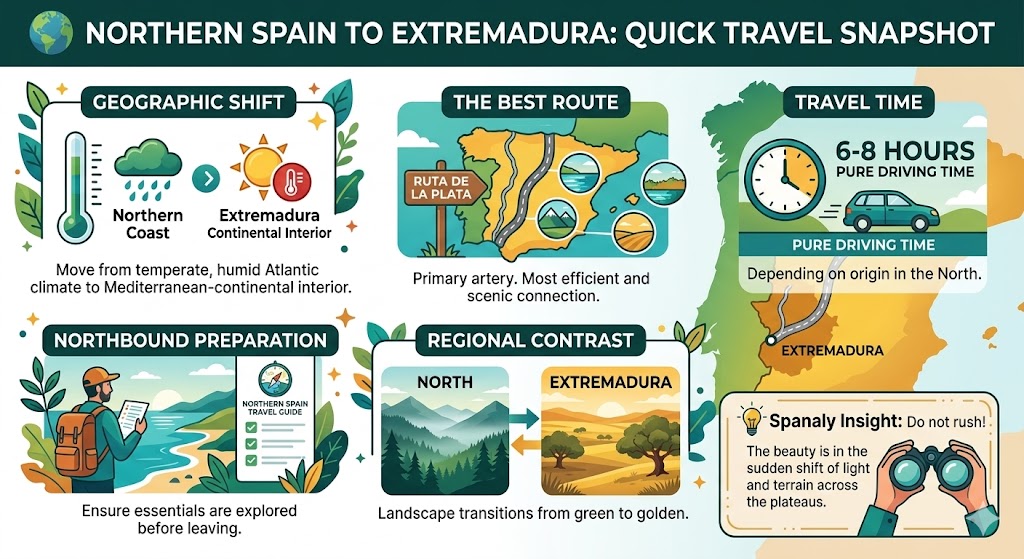
Crossing Spain from north to south requires strategy. This snapshot provides the essential data you need for a smooth transition between regions.
Geographic Shift: You are moving from the temperate, humid Atlantic coast to the Mediterranean-continental interior of Extremadura.
The Best Route: The Ruta de la Plata (Silver Route) serves as your primary artery. It offers the most efficient connection between both landscapes.
Popular Starting Points: Depending on your base, these popular routes provide a clear roadmap for your adventure:
| Route | Distance | Driving Time |
|---|---|---|
| Bilbao → Mérida | 640 km | 7h |
| Oviedo → Cáceres | 470 km | 5h30 |
| Santiago → Guadalupe | 560 km | 6h |
Travel Time: Plan for 5 to 8 hours of pure driving time, depending on your specific starting point in the north.
Estimated Travel Costs:
Fuel: Budget €60–€90 depending on your vehicle efficiency and distance.
Tolls: Most of this route is toll-free, but set aside €10–€20 for specific urban bypasses.
Rental Car: Expect €40–€70 daily, plus a one-way drop-off fee if not returning to your origin.
Northbound Preparation: Ensure you have explored the essentials of your origin. Our Northern Spain Travel Guide covers everything you need to wrap up your coastal adventure perfectly.
Regional Contrast: Expect the landscape to transition from misty mountains to golden plains and ancient oak dehesas.
💡 Spanaly Insight: Do not rush this drive. The beauty lies in the sudden shift of light as you cross the central plateaus.
🗺️ Why Travel from Northern Spain to Extremadura?
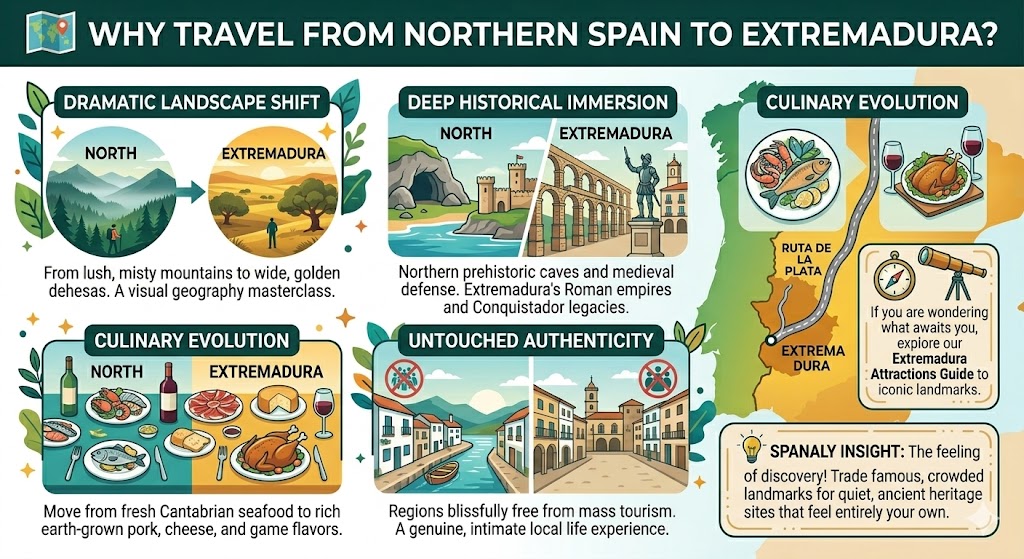
Connecting Northern Spain to Extremadura offers a rare transformation of scenery that few road trips provide. This route reveals how dramatically Spain changes between its Atlantic north and inland southwest.
Dramatic Landscape Shift: Experience the transition from the lush, misty mountains of the north to the wide, golden dehesas of Extremadura. It is a visual masterclass in Spanish geography.
Deep Historical Immersion: While the north boasts prehistoric caves and medieval coastal defense, Extremadura opens the door to Roman empires and Conquistador legacies.
Culinary Evolution: You move from the fresh, seafood-heavy palate of the Cantabrian coast to the rich, earth-grown flavors of Extremaduran pork, cheese, and game.
Untouched Authenticity: Both regions remain blissfully free from the mass tourism found in coastal hubs. You get a genuine, intimate experience of local life.
If you are wondering what awaits you at the end of this journey, explore our Extremadura Attractions Guide to see the iconic landmarks that make this route highly rewarding for travelers seeking authentic Spain.
💡 Spanaly Insight: The most rewarding part of this journey is the feeling of discovery. You are trading famous, crowded landmarks for quiet, ancient heritage sites that feel entirely your own.
🚗 Best Transportation Options for Your Journey
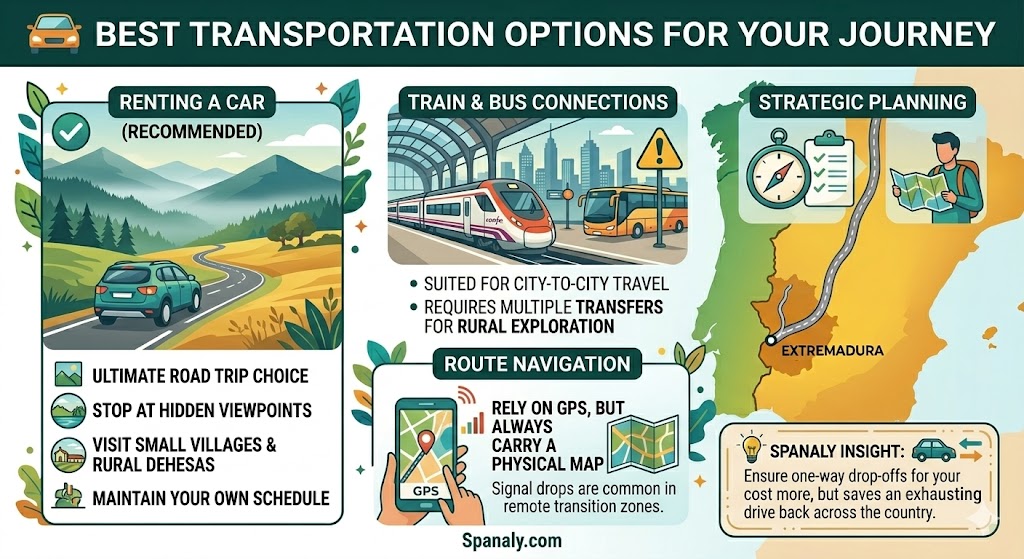
Reaching Extremadura from the north demands a vehicle. While public transport exists, it lacks the flexibility required to explore the rural dehesas and historic mountain towns you will encounter on this route.
Renting a Car (Recommended): This is the ultimate choice for your road trip. It allows you to stop at hidden viewpoints, visit small villages, and maintain your own schedule across long distances.
Train & Bus Connections: While the Renfe network covers major hubs, it often requires multiple transfers. It is better suited for city-to-city travel rather than deep regional exploration.
Strategic Planning: Understanding the logistics before you start is crucial to avoid transit stress. For a detailed breakdown of local transit, car rental tips, and regional connections, check our How to Get to Extremadura guide.
Route Navigation: Rely on GPS, but always carry a physical road map. Remote areas in the transition zones often experience signal drops that can disrupt your digital navigation.
💡 Spanaly Insight: If you rent a car in the north, ensure your rental agreement allows for “one-way” drop-offs. It may cost more, but it saves you the exhausting task of driving all the way back across the country at the end of your trip.
📍 Essential Stops: Traveling from Green Spain to Extremadura
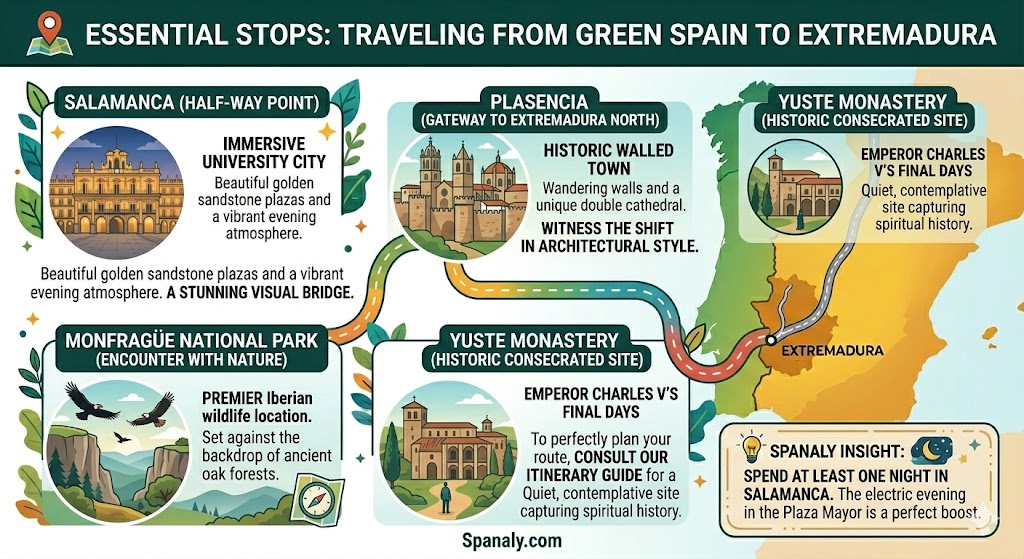
Transform your long drive into an unforgettable tour by breaking the journey at these strategic locations. Each stop highlights the fascinating cultural evolution from the Atlantic coast to the Iberian interior.
Salamanca: This is the perfect halfway point. Before hitting the Extremaduran border, immerse yourself in one of Europe’s most beautiful university cities. Its golden sandstone plazas provide a stunning visual bridge between the two regions.
Plasencia: As your first major entry point into Extremadura, this town serves as the gateway to the north. Wander through its historic walls and double cathedral to witness the immediate shift in architectural style.
Monfragüe National Park: Stop here for a true encounter with nature. It is the premier location to witness Iberian wildlife, including black vultures and imperial eagles, set against the backdrop of ancient oak forests.
Yuste Monastery: This historic site offers a profound look at the final days of Emperor Charles V. It is a quiet, contemplative stop that perfectly captures the spiritual history of the region.
To ensure your route is perfectly planned, consult our Extremadura Itinerary Guide for a complete road trip strategy that connects these must-see stops into one seamless experience.
💡 Spanaly Insight: Spend at least one night in Salamanca. The evening atmosphere in the Plaza Mayor is electric and offers the perfect energy boost before tackling the final stretch toward the Extremaduran plains.
📅 Best Time to Visit Northern Spain and Extremadura
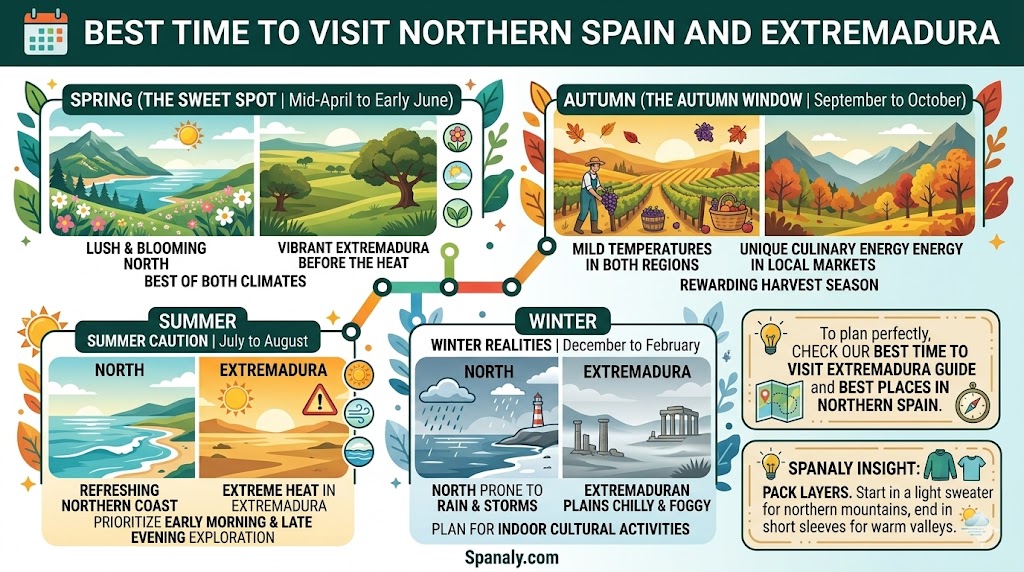
Timing is everything when crossing these two diverse climates. To enjoy the best of both, you must balance the cool, misty weather of the north with the intense sun of the Spanish interior.
The Sweet Spot (Spring): Aim for mid-April to early June. The north is lush and blooming, while Extremadura is still vibrant and green before the summer heat settles in.
The Autumn Window (September to October): This is equally rewarding. Temperatures remain mild in both regions, and the harvest season brings a unique culinary energy to the local markets.
Summer Caution: Northern Spain stays refreshing, but Extremadura reaches extreme temperatures. If you must travel in July or August, prioritize early morning and late evening exploration to avoid the heat.
Winter Realities: The north is prone to rain and coastal storms, while the Extremaduran plains can get surprisingly chilly and foggy. Plan for indoor cultural activities during these months.
For a detailed analysis of seasonal weather patterns and local festival dates, check our Best Time to Visit Extremadura guide. If you are still finalizing your northern route, browse our Best Places to Visit in Northern Spain to ensure your itinerary is perfectly balanced.
💡 Spanaly Insight: Pack layers. You will likely start your day in a light sweater for the misty northern mountains and end it in a short-sleeved shirt as you reach the warm Extremaduran valleys.
🏛️ Must-See Attractions in Northern Spain and Extremadura

Crossing these two regions offers a unique chance to compare the wild, coastal heritage of the north with the imperial, Roman-influenced history of Extremadura.
Northern Marvels: Start by exploring the rugged peaks of the Picos de Europa and the architectural brilliance of the Guggenheim Museum in Bilbao. Do not miss the prehistoric caves of Altamira or the iconic Cathedral of Santiago de Compostela.
Extremaduran Treasures: Once you cross into Extremadura, the landscape shifts to history. The Roman Theater in Mérida and the walled city of Cáceres are mandatory. The royal Monastery of Guadalupe stands as a testament to the region’s deep spiritual influence.
| Rank | Northern Spain Attraction | Extremadura Attraction |
| 1 | Picos de Europa National Park | Roman Theater of Mérida |
| 2 | Guggenheim Museum Bilbao | Old Town of Cáceres |
| 3 | Santiago de Compostela Cathedral | Monastery of Guadalupe |
| 4 | Altamira Cave | Plasencia Cathedral |
| 5 | San Sebastián Old Town | Trujillo Castle |
💡 Spanaly Insight: If you have time for only one “deep dive,” visit the Roman Theater of Mérida. The sheer scale and preservation level provide a visceral connection to the past that is rarely matched anywhere else in Europe.
🏨 Where to Stay: A Guide to Regional Accommodations

Finding the right base is essential for a balanced trip. You will find that both regions offer lodging as diverse as their landscapes, ranging from mountain retreats to historic palaces.
Northern Lodging: Look for Casas Rurales in the northern mountains. These traditional stone houses provide a cozy, authentic experience amidst the lush forests and coastal cliffs.
Extremaduran Stays: Embrace history by booking into a Parador. These are state-run hotels housed in former castles, convents, or palaces. They offer a unique, noble atmosphere that defines the region’s heritage.
Strategic Stays: For this specific cross-country route, choose accommodations with secure parking. Many historic centers have narrow, restricted streets, so staying on the perimeter often provides more convenience for your rental car.
Curated Choices: We have hand-picked the best boutique hotels and historic inns across the plains. For a complete list of recommended spots, visit our Where to Stay in Extremadura guide.
💡 Spanaly Insight: If you stay in a Parador in Extremadura, request a room with a view of the surrounding countryside. Waking up to the golden, vast dehesa landscape is an experience you won’t get anywhere else in Spain.
🍷 Cultural Differences: Gastronomy and Lifestyle

The journey from north to south is not just geographic; it is a culinary and cultural evolution. You will notice how the terrain directly dictates what is served on your plate and how the locals spend their afternoons.
Northern Flavors: Expect a diet rooted in the Atlantic. Fresh fish, hearty stews like Fabada Asturiana, and crisp white wines like Txakoli dominate the table. Life here moves with the rhythm of the tides and the cool coastal breeze.
Extremaduran Rhythms: As you enter the interior, the menu shifts toward the land. You will find world-class Ibérico pork, rich sheep cheeses like Torta de la Serena, and bold red wines. Life here is slower, defined by the warmth of the sun and long, social evenings.
Lifestyle Shift: In the north, social life often revolves around lively bar-hopping (txikiteo). In Extremadura, the pace is more contemplative, centered around the Plaza Mayor, where conversations last for hours over coffee or local wine.
💡 Spanaly Insight: Do not compare the two regions; embrace the contrast. Treat your palate to the coastal freshness in the north and the deep, cured flavors of the interior as you move south.
🗺️ Suggested Itinerary for a Cross-Country Road Trip
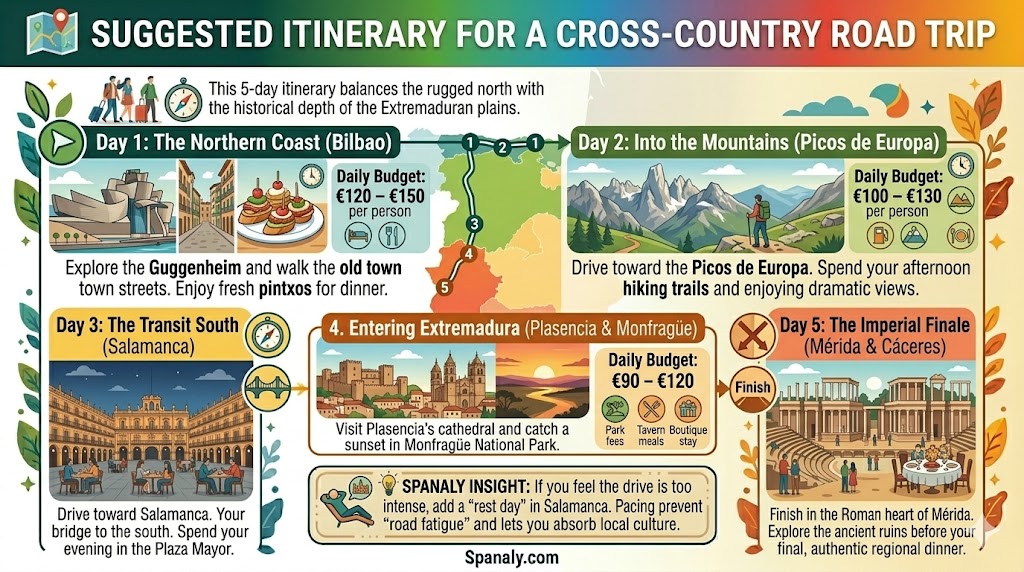
This 5-day itinerary balances the rugged north with the historical depth of the Extremaduran plains.
Day 1: The Northern Coast (Bilbao) Start in Bilbao. Explore the Guggenheim and walk the old town streets. Enjoy fresh pintxos for dinner.
Daily Budget: €120 – €150 per person (includes lodging, dining, and site entries).
Day 2: Into the Mountains (Picos de Europa) Drive toward the Picos de Europa. Spend your afternoon hiking trails and enjoying the dramatic mountain views.
Daily Budget: €100 – €130 per person (includes fuel, mountain lodging, and local meals).
Day 3: The Transit South (Salamanca) Drive toward Salamanca. This is your bridge to the south. Spend your evening in the Plaza Mayor.
Daily Budget: €110 – €140 per person (includes travel, historic center hotel, and dining).
Day 4: Entering Extremadura (Plasencia & Monfragüe) Cross into Extremadura. Visit Plasencia’s cathedral and catch a sunset in Monfragüe National Park.
Daily Budget: €90 – €120 per person (includes park fees, local tavern meals, and boutique stay).
Day 5: The Imperial Finale (Mérida & Cáceres) Finish in the Roman heart of Mérida. Explore the ancient ruins before your final, authentic regional dinner.
Daily Budget: €110 – €150 per person (includes site entries, dining, and comfort accommodation).
💡 Spanaly Insight: If you feel the drive is too intense, add a “rest day” in Salamanca. Pacing your trip prevents “road fatigue” and lets you truly absorb the local culture of each stop.
⚠️ Common Mistakes to Avoid
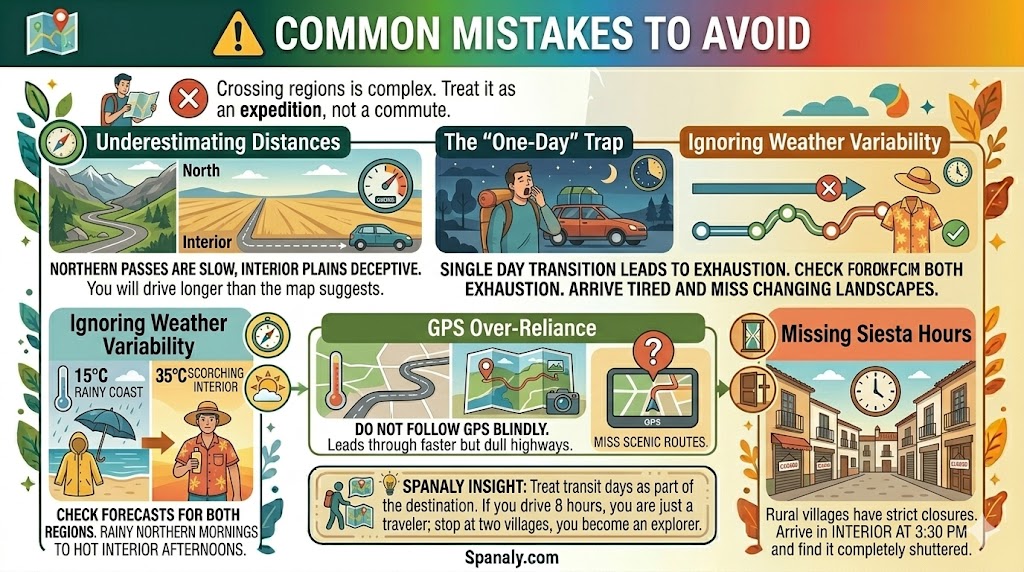
Crossing from Northern Spain to Extremadura is a complex journey. Many travelers struggle because they treat it like a simple commute rather than a cross-regional expedition.
Underestimating Distances: Do not assume the road looks the same throughout. Northern mountain passes are slow, while the interior plains are deceptive. You will drive much longer than the map suggests.
The “One-Day” Trap: Trying to complete this transition in a single day is a major error. You will arrive exhausted and miss the profound beauty of the changing landscapes between regions.
Ignoring Weather Variability: Never leave the north without checking the forecast for Extremadura. You can easily travel from a rainy, 15°C coastal morning to a scorching, 35°C afternoon in the interior.
GPS Over-Reliance: Do not follow GPS blindly. It often leads you through faster but visually dull highways, missing the scenic routes that define the spirit of both regions.
Missing Siesta Hours: Shops and smaller taverns in the interior still observe strict afternoon closures. If you arrive in a rural Extremaduran village at 3:30 PM, you will likely find it completely shuttered.
💡 Spanaly Insight: Treat the transit days as part of the destination. If you drive 8 hours straight, you are just a traveler; if you stop at two villages in between, you become an explorer.
✨ Spanaly Pro Tips: The Secret Road
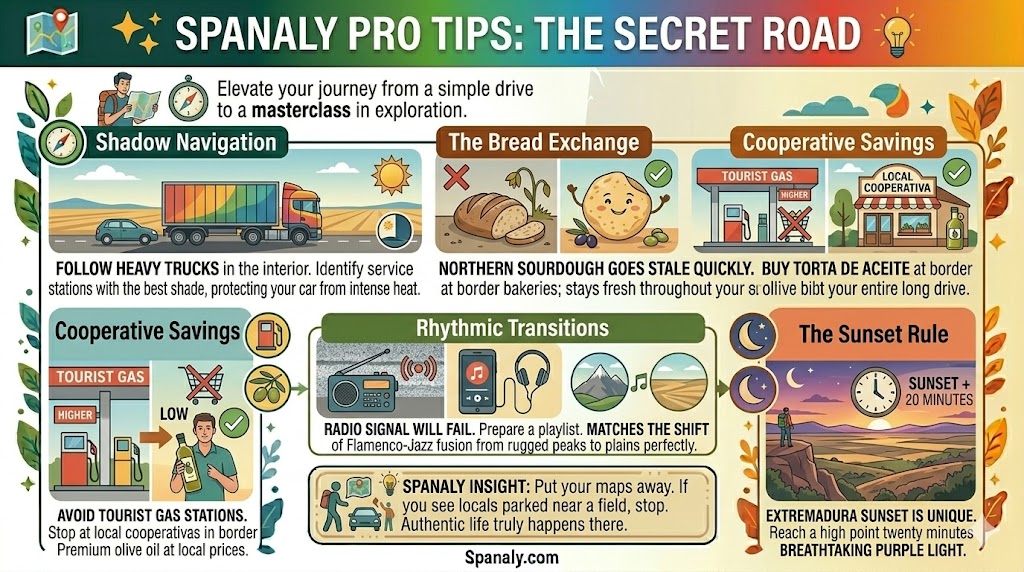
These tips come from seasoned road travelers. Use them to elevate your journey from a simple drive to a masterclass in exploration.
Mid-Day Parking: Park your rental car in the shade of large buildings or trees during lunch. Interior heat can damage dashboard electronics quickly.
Border Bakeries: Northern breads are soft, while Extremaduran torta de aceite is durable. Buy these traditional flatbreads at border towns for a reliable snack.
Direct Oil Sourcing: Skip expensive highway rest stops. Visit local agricultural cooperativas in border villages for premium, authentic olive oil at producer prices.
Signal Planning: Cellular coverage drops in mountain passes and deep valleys. Download offline maps and music before leaving major northern cities behind.
The Golden Hour: Extremaduran landscapes glow brightest after sunset. Find a high lookout point twenty minutes after the sun dips for perfect photos.
💡 Spanaly Insight: True travel mastery is knowing when to deviate. If you see a cluster of local cars parked near an orchard, stop. That is where real local life happens.
Crossing from Northern Spain to Extremadura is more than a simple drive. It is a transformative journey across the heart of a country defined by contrast, history, and raw beauty.
Embrace the Shift: Allow yourself the time to witness the landscape evolve from northern green peaks to the golden, historic plains of the south.
Go Deeper: While this route covers the essentials, the true soul of Extremadura waits in its smaller towns. For a perfect example, check our Zafra Travel Guide to explore a masterpiece of whitewashed architecture and local tradition.
Start Planning: Do not wait for the perfect moment. The roads are open, the history is waiting, and the authentic Spanish experience is closer than you think.
Your ultimate Spanish road trip begins the moment you decide to go. Pack your bags, keep your curiosity sharp, and prepare for a journey that will stay with you forever.