🍷 Extremadura Wine
Spain’s most exciting wine secret lies in the heart of Extremadura. The Ribera del Guadiana DO offers a stunning landscape of sun-drenched vineyards, indigenous grape varieties, and historic estates waiting to be explored.
🌟 Why Explore Ribera del Guadiana?
Hidden Quality: This region produces world-class wines that remain off the radar for most international travelers.
Authentic Experience: Tour family-run bodegas where tradition meets modern innovation in every glass.
Complete Immersion: Pair your wine journey with the region’s rich culture by using our Extremadura Travel Guide to plan your entire trip.
Whether you are a seasoned sommelier or a curious traveler, this guide provides everything you need. Discover the best wineries, tasting strategies, and the unique terroir that makes Extremaduran wine a true standout.
🍷 Quick Travel Snapshot: Planning Your Wine Route
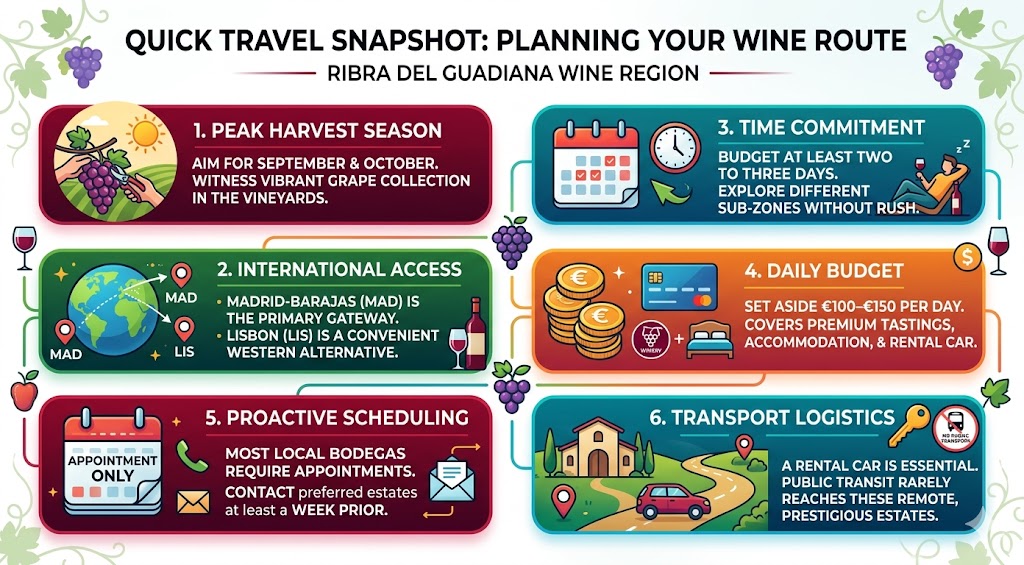
Planning a wine tour through Ribera del Guadiana doesn’t need to be complicated. Specifically, the region rewards those who prepare key logistical details beforehand. Keeping these practical metrics in mind will ensure your experience remains smooth, professional, and commercially efficient.
| Feature | Recommendation |
| Best Time to Visit | September–October (Harvest) or Spring (May) |
| Average Tasting Fee | €15 – €35 per person (waived with bottle purchase) |
| Daily Budget | €120 – €180 (includes tours, car, and lodging) |
| Travel Hubs | Madrid (MAD) or Lisbon (LIS) |
Booking Recommendations: Most prestigious bodegas operate by appointment only. Use estate websites or direct email at least one week ahead to secure your slot.
Best Winery Tours: Prioritize Bodegas Habla for architectural marvels or Martínez Paiva for authentic family-run estate experiences.
Wine Hotel Suggestions: For a luxury stay, look into boutique manor houses in Trujillo or converted estates near Almendralejo. These provide direct proximity to the best tasting rooms.
Transport Logistics: A rental car is mandatory. Public transit rarely reaches remote, prestigious estates; therefore, having your own vehicle is essential.
National Context: To see how this DO compares to other major hubs, explore our Spanish Wine Regions guide for professional comparisons.
Spanaly Insight: Don’t just book the tour; ask for a “Vineyard-to-Glass” session. Many estates now offer specialized morning tours that include a walk through the vines, followed by a professional guided tasting.
⚖️ Extremadura vs. Ronda: A Comparative Snapshot
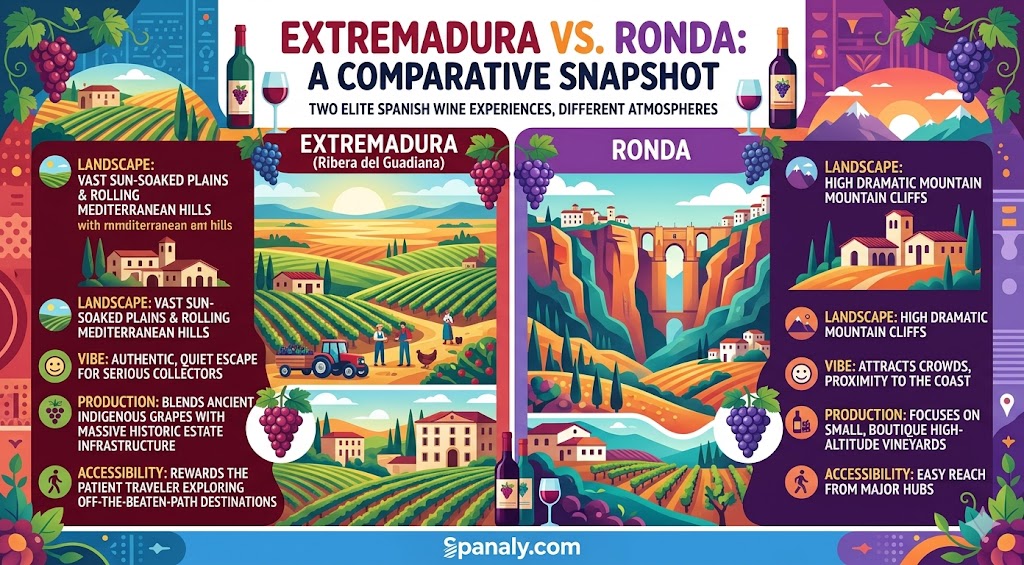
Choosing between Ribera del Guadiana and Ronda depends on your travel style. Both offer elite experiences, yet they provide entirely different atmospheres for wine enthusiasts.
Landscape: Ronda sits high in dramatic mountain cliffs. Conversely, Ribera del Guadiana spreads across vast, sun-soaked plains and rolling Mediterranean hills.
Vibe: Ronda attracts crowds due to its proximity to the coast. However, Ribera del Guadiana remains an authentic, quiet escape for serious collectors.
Production: Ronda focuses on small, boutique high-altitude vineyards. In contrast, Extremadura blends ancient indigenous grapes with massive, historic estate infrastructure.
Accessibility: You can reach Ronda easily from major hubs. Meanwhile, Extremadura rewards the patient traveler who enjoys exploring off-the-beaten-path destinations.
If you want a detailed look at the Andalusian side of your journey, read our Ronda Wine Guide. Moreover, comparing these two regions reveals the incredible diversity found within the Spanish wine landscape. Ultimately, both destinations promise exceptional quality for any serious enthusiast.
🗺️ Understanding the Ribera del Guadiana DO
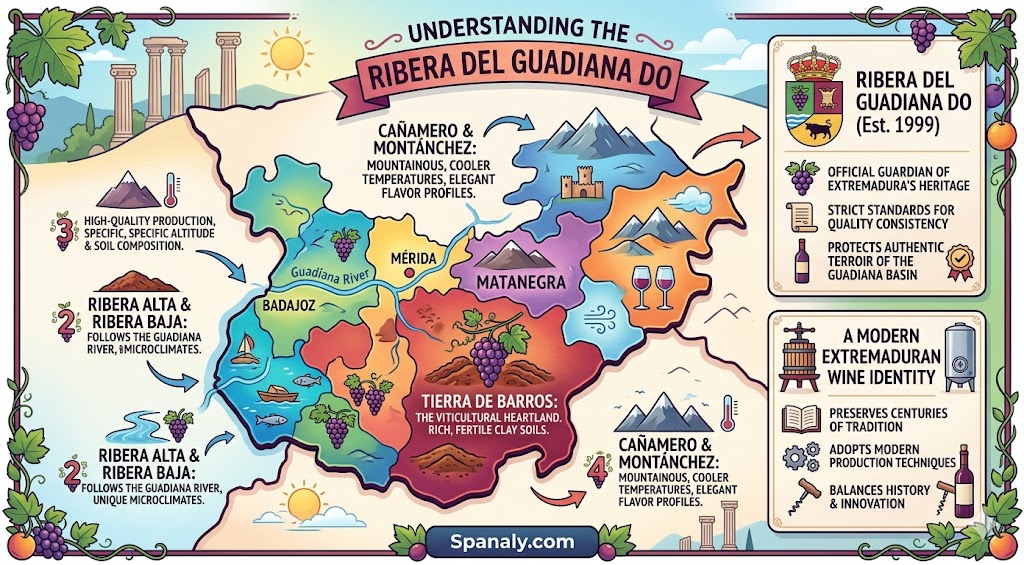
To truly appreciate the wines here, you must first understand the Denominación de Origen (DO). Established in 1999, this region encompasses a vast area within the province of Badajoz. Moreover, it serves as the official guardian of Extremadura’s viticultural heritage.
The DO organizes the territory into six distinct sub-zones:
Tierra de Barros: This is the viticultural heartland, known for rich, fertile clay soils.
Ribera Alta & Ribera Baja: These areas follow the Guadiana River, benefiting from unique microclimates.
Matanegra: Renowned for high-quality production thanks to its specific altitude and soil composition.
Cañamero & Montánchez: These mountainous sub-zones offer cooler temperatures, creating elegant, distinct flavor profiles.
The DO enforces strict standards to ensure quality consistency. Consequently, whether you choose a bold red or a crisp white, you are experiencing a product protected by rigorous local regulations. Furthermore, this classification ensures that each bottle reflects the authentic terroir of the Guadiana basin.
This structure allows winemakers to preserve centuries of tradition while adopting modern production techniques. It is this balance that defines the modern Extremaduran wine identity.
🌍 The Terroir: Climate and Soil Secrets
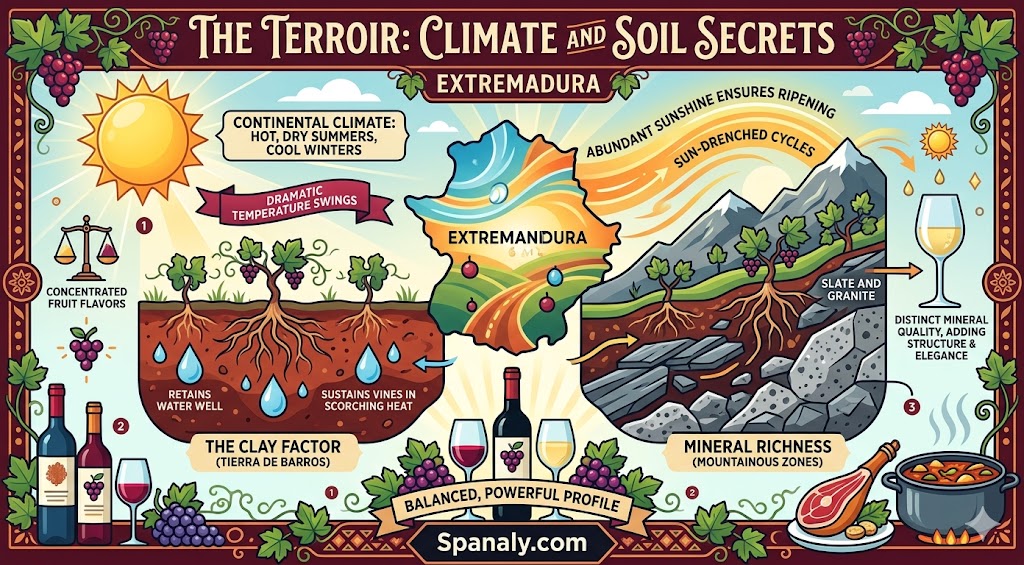
Understanding the wine requires looking at the land. Extremadura’s unique environment shapes every bottle. Consequently, the combination of extreme climate and soil variety creates a distinct signature you won’t find elsewhere.
Continental Climate: The region experiences hot, dry summers and cool winters. This dramatic temperature swing forces vines to work harder, resulting in concentrated, intense fruit flavors.
The Clay Factor: In Tierra de Barros, the soil is heavy and rich in clay. Therefore, it retains water exceptionally well, sustaining the vines through the scorching Iberian heat.
Mineral Richness: In the mountainous sub-zones, the terrain shifts to slate and granite. As a result, these soils impart a distinct mineral quality, adding structure and elegance to the white wines.
Sun-Drenched Cycles: Abundant sunshine ensures consistent ripening. This allows winemakers to achieve perfect sugar levels, leading to the full-bodied reds that define the region.
The interaction between these elements defines the terroir. While other regions rely on humidity, Extremadura relies on sun and mineral-dense earth. Ultimately, this terroir creates a balanced, powerful profile that pairs perfectly with the region’s robust culinary traditions.
🍇 Top Grape Varieties: Indigenous and International
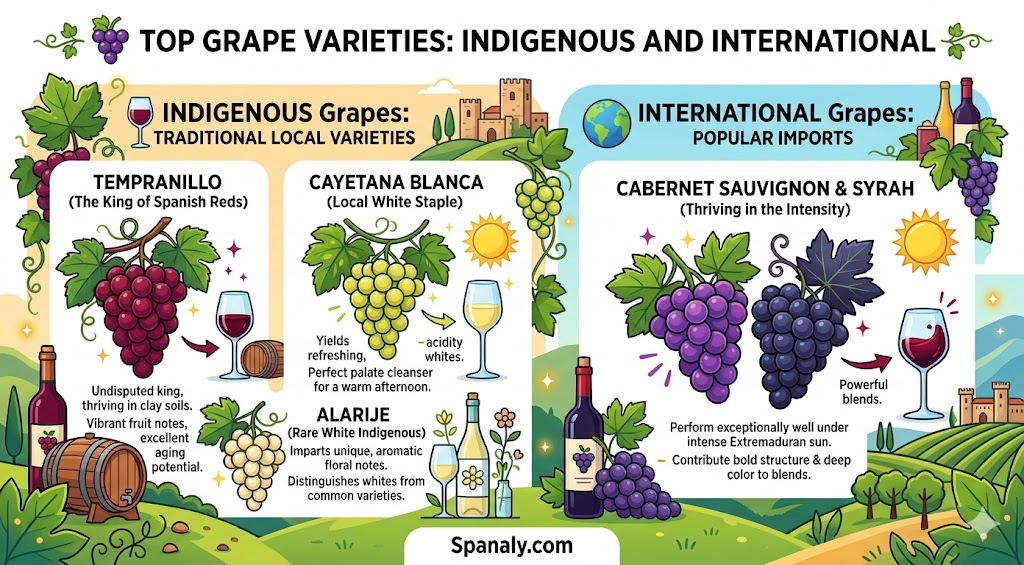
The character of Ribera del Guadiana stems from its diverse grape palette. Winemakers here masterfully blend traditional local varieties with international grapes, creating complex, memorable profiles.
| Variety | Profile | Body | Acidity | Best Pairing |
| Tempranillo | Vibrant fruit, oak-aged | Full | Medium | Roasted Lamb |
| Cayetana Blanca | Refreshing, crisp | Light | High | Torta del Casar |
| Cabernet/Syrah | Bold structure, dark | Full | Medium | Venison Stew |
| Alarije | Floral, aromatic | Medium | High | Fresh Seafood |
Tempranillo: As the king of Spanish reds, it thrives in clay soils, offering excellent aging potential and deep fruit notes.
Cayetana Blanca: A proud local staple, this grape yields refreshing whites that act as the perfect palate cleanser.
Cabernet Sauvignon & Syrah: These international varieties perform well under the intense sun, adding deep color and structure to regional blends.
Alarije: This rare indigenous white imparts unique aromatic floral notes, distinguishing local wines from common commercial varieties.
Tasting these wines provides a culinary journey. If you wish to pair these bottles with the right seasonal ingredients, review our Extremadura Food Guide. Knowing which grapes to seek will significantly enhance your experience. By exploring both historic local vines and successful international imports, you capture the region’s innovative spirit.
🍷 Must-Visit Wineries in Extremadura
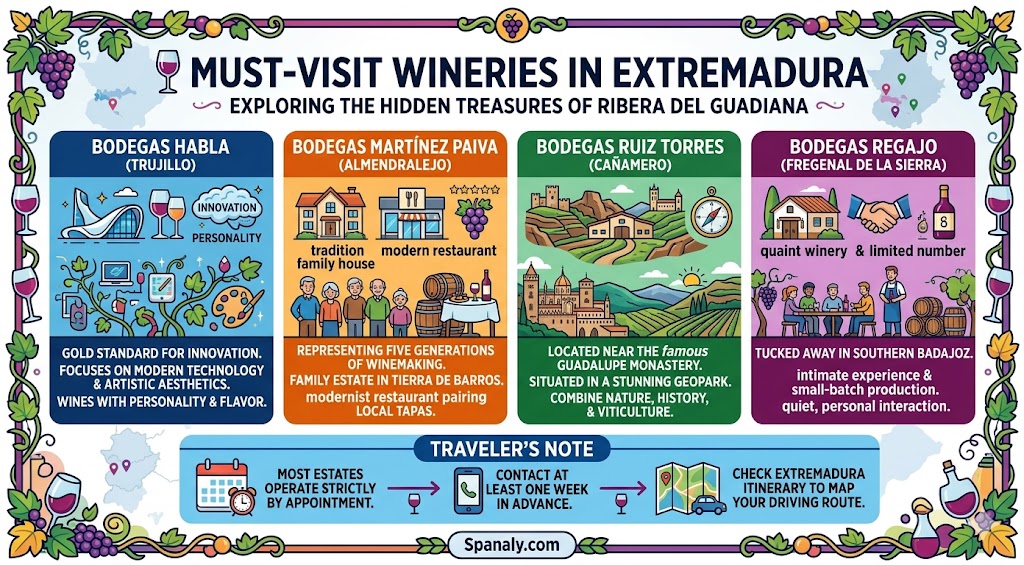
Extremadura’s wine scene is a hidden treasure, far removed from the mass tourism of better-known regions. To truly understand the soul of Ribera del Guadiana, you must step inside its bodegas.
Bodegas Habla (Trujillo): This is the gold standard for innovation in the region. They focus on modern technology and artistic aesthetics, creating wines that are as much about personality as they are about flavor.
Bodegas Martínez Paiva (Almendralejo): Representing five generations of winemaking, this family estate offers an authentic look at the Tierra de Barros sub-zone. Don’t miss their modernist restaurant, which perfectly pairs local tapas with their signature vintages.
Bodegas Ruiz Torres (Cañamero): Located near the famous Guadalupe Monastery, this winery sits within a stunning Geopark. It is an ideal spot if you want to combine nature, history, and high-altitude viticulture.
Bodegas Regajo (Fregenal de la Sierra): Tucked away in the southern province of Badajoz, this estate provides a more intimate experience. It is the perfect choice for those who prefer small-batch production and a quieter, more personal interaction with the winemakers.
Traveler’s Note: Before you set off, remember that most estates operate strictly by appointment. For a seamless trip across these locations, check our Extremadura Itinerary to map out your driving route efficiently. Furthermore, ensure you contact the wineries at least one week in advance to secure your tasting slot.
📍 Wine Tourism: Where to Base Your Tasting Journey
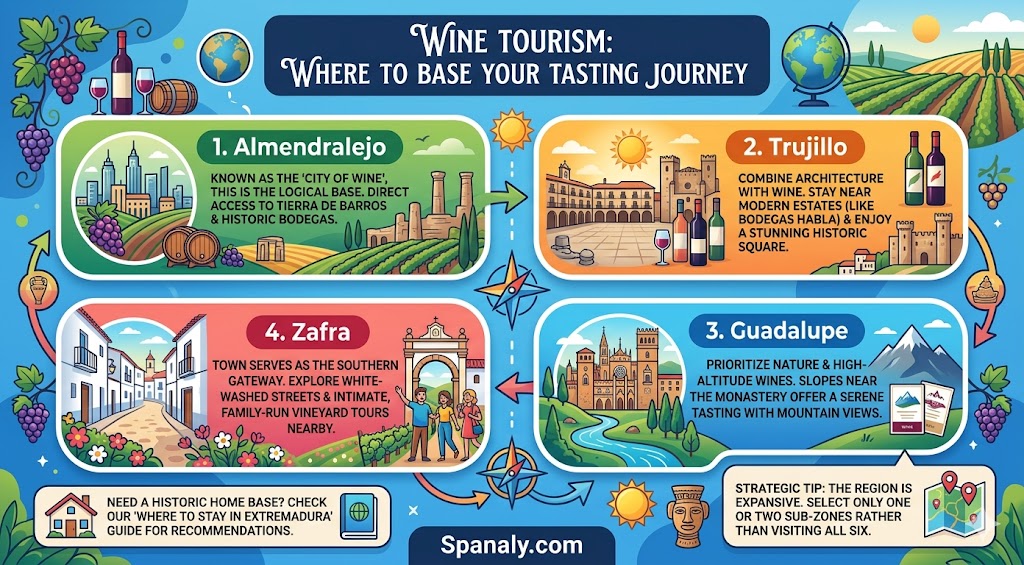
Extremadura’s wine landscape is vast. Therefore, choosing a strategic base is critical to maximizing your time among the local vines.
Almendralejo: Known as the “City of Wine,” this is the logical base. It provides direct access to Tierra de Barros and features many historic bodegas.
Trujillo: Combine architecture with wine. You stay near modern estates like Bodegas Habla while enjoying one of Spain’s most stunning historic squares.
Guadalupe: Prioritize nature and high-altitude wines. The slopes near the Royal Monastery offer a serene tasting environment with incredible mountain views.
Zafra: This town serves as the southern gateway. It is ideal for exploring white-washed streets and intimate, family-run vineyard tours nearby.
Strategic Tip: The region is expansive. Select only one or two sub-zones rather than visiting all six. Need a historic home base? Check our Where to Stay in Extremadura guide for tailored recommendations.
🥘 Pairing Extremaduran Wines with Local Cuisine
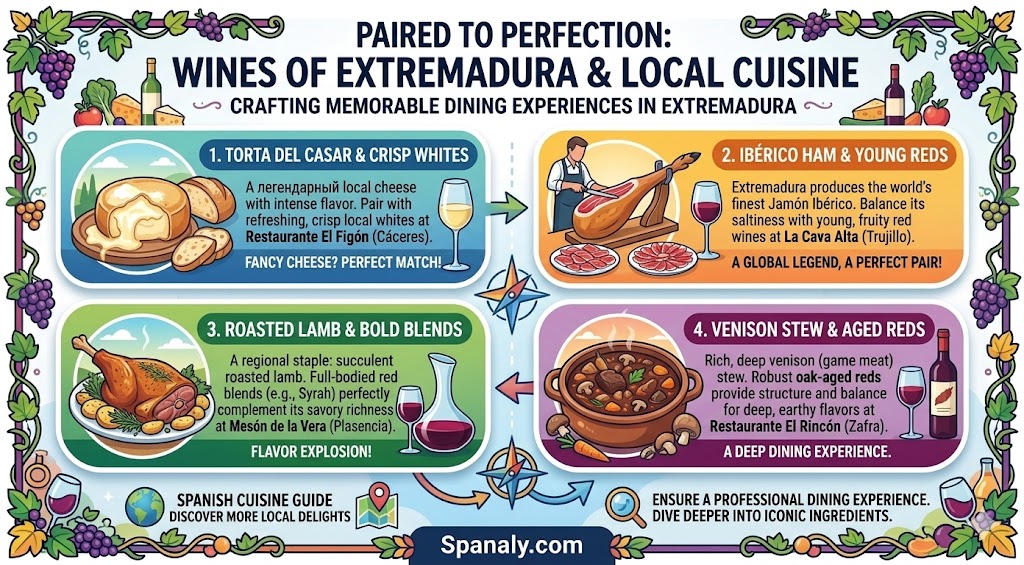
Correct pairings elevate any meal. Extremadura’s bold flavors require specific local matches to achieve the best results.
Torta del Casar & White Wines: This creamy cheese is a legend. Pair it with crisp Cayetana Blanca at Restaurante El Figón in Cáceres.
Ibérico Ham & Young Reds: Extremadura produces the world’s best Jamón Ibérico. Match its saltiness with young Tempranillo at La Cava Alta in Trujillo.
Roasted Lamb & Bold Blends: The region is famous for Cordero de Extremadura. A full-bodied Syrah blend complements this savory dish at Mesón de la Vera in Plasencia.
Venison Stew & Aged Reds: For game, choose an oak-aged red. Its structure balances deep, earthy flavors perfectly at Restaurante El Rincón in Zafra.
These pairings ensure a professional dining experience. Furthermore, exploring our Spanish Cuisine Guide provides deeper insight into these iconic local ingredients and where to find them.
🍷 Wine Tasting Etiquette & Buying Tips
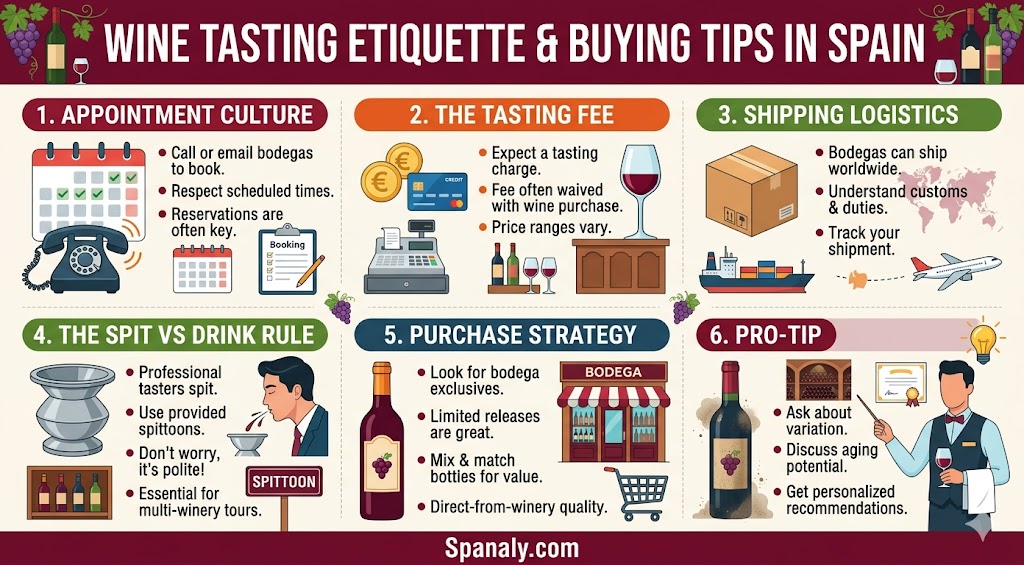
Navigating bodegas in Spain requires specific local etiquette. Following these simple social rules will ensure you are welcomed as a valued guest rather than just another tourist.
Appointment Culture: Never show up unannounced. Most bodegas are working farms; therefore, contact them at least one week in advance to schedule your visit.
The Tasting Fee: Understand that premium tastings often carry a fee. However, many wineries will waive this if you purchase a minimum number of bottles.
Shipping Logistics: Do not worry about carrying heavy glass. Most reputable estates partner with professional logistics firms that ship worldwide directly from the cellar.
The “Spit” vs. “Drink” Rule: It is perfectly acceptable to use the spittoon during tasting sessions. If you have a driver, pace yourself carefully.
Purchase Strategy: If you enjoy a specific vintage, buy it on-site. Frequently, these small-batch releases are not available in retail stores outside of the region.
Pro-Tip: Always ask the host for their “recommendation of the season.” They will often open a special, unlisted bottle specifically for guests who show genuine interest in their craft.
🚫 Common Mistakes to Avoid
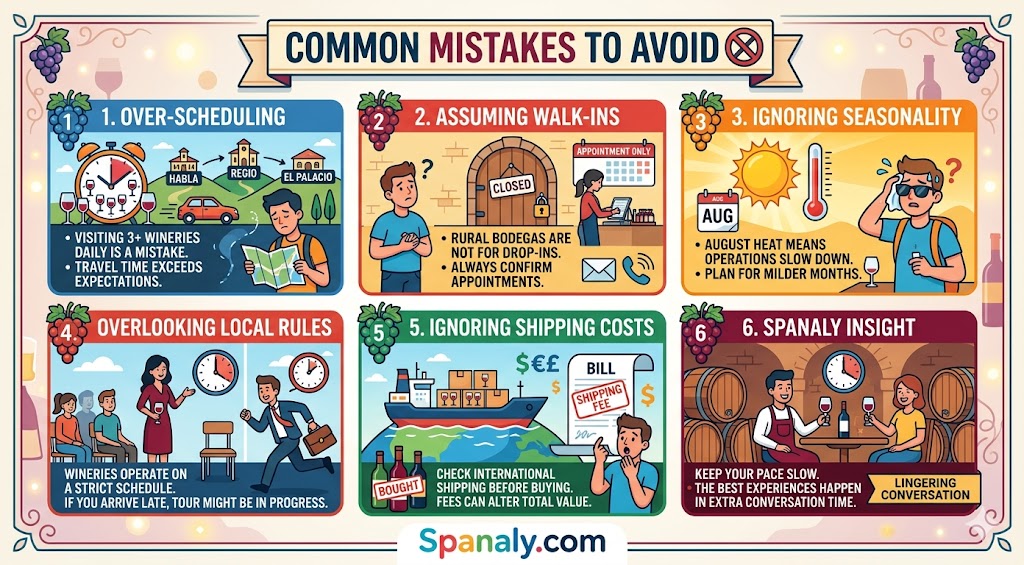
Even seasoned wine lovers can stumble when exploring a new region. Avoid these typical pitfalls to ensure your trip remains effortless and enjoyable.
Over-Scheduling: Trying to visit three or more wineries in a single day is a mistake. Specifically, travel time between remote estates often exceeds expectations.
Assuming Walk-ins: Unlike urban bars, rural bodegas are not set up for drop-ins. Always confirm your appointment times via email or phone beforehand.
Ignoring Seasonality: Arriving during the heat of August means many operations slow down. Instead, plan your visit during milder months for the best experience.
Overlooking Local Rules: Remember that most wineries operate on a strict schedule. If you arrive late, the host may have already started a group session.
Ignoring Shipping Costs: Always check the cost of international shipping before buying cases. Sometimes, shipping fees can significantly alter the total value of your purchase.
Spanaly Insight: Keep your pace slow. In Extremadura, the best experiences happen when you allow extra time for a lingering conversation with the winemaker after the official tour concludes.
🛠️ Practical Insider Tips for Ribera del Guadiana
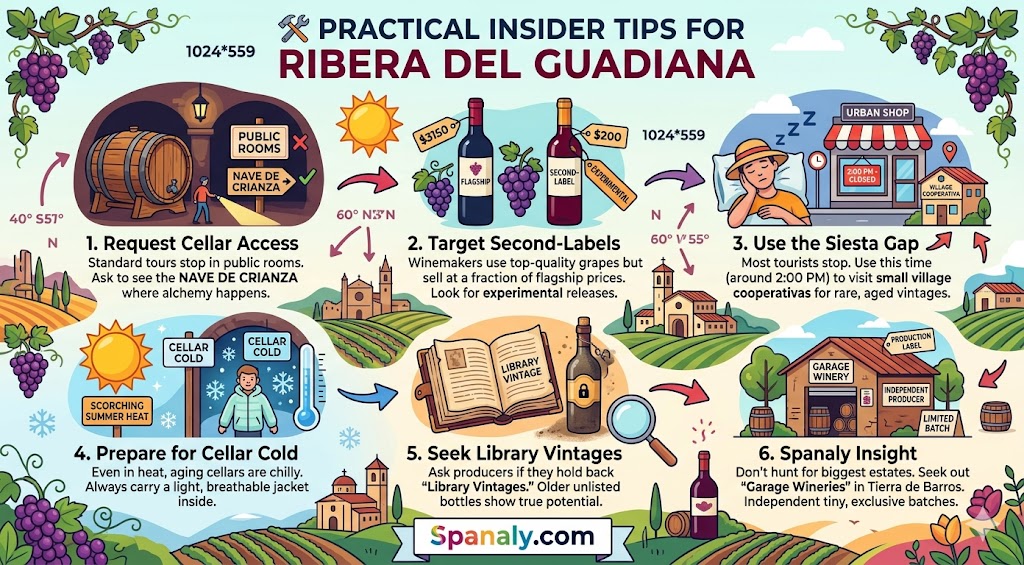
Apply these niche strategies to transform your visit from a standard tour into a truly professional wine exploration.
Request Cellar Access: Standard tours remain in public rooms. Ask to see the Nave de Crianza where the actual alchemy happens.
Target Second-Labels: Look for experimental releases. Winemakers use top-quality grapes but sell these bottles at a fraction of flagship prices.
Use the Siesta Gap: Most tourists stop at 2:00 PM. Use this time to visit small village cooperativas for rare, aged vintages.
Prepare for Cellar Cold: Even during scorching summer heat, deep aging cellars remain chilly. Always carry a light, breathable jacket inside.
Seek Library Vintages: Ask producers if they hold back “Library Vintages.” These unlisted, older bottles often reveal the estate’s true potential.
Spanaly Insight: Don’t hunt for the biggest estates. Instead, seek out “Garage Wineries” in Tierra de Barros. These independent producers bottle tiny, exclusive batches.
Exploring Ribera del Guadiana is about more than just wine; it is about uncovering a hidden, authentic side of Spain. From the deep, mineral-rich soils of Tierra de Barros to the quiet, family-run bodegas, this region offers a rare intimacy that larger wine zones simply cannot match.
🚀 Take the Next Step
Plan Intentionally: Remember to book appointments early and prioritize quality over quantity.
Embrace the Culture: Extremaduran wine shines brightest when paired with the local culinary traditions and historic atmosphere.
Extend the Experience: Wine is only one facet of this province. To truly capture the spirit of the region, align your visit with our Spanish Festivals calendar for a deeper, more immersive cultural trip.
Ultimately, your journey through these sun-drenched vineyards will leave you with more than just a few bottles in your luggage. It will leave you with a profound appreciation for a landscape that balances ancient tradition with modern, passionate innovation. Cheers to your next adventure in the heart of Spain!