📍 Teruel
Teruel stands as a unique architectural treasure in the heart of Aragon. Known for its UNESCO-listed Mudejar towers and romantic history, the city offers a distinct escape from the crowded coastlines. If you seek an unscripted journey into Spain’s cultural core, this historic destination rewards the curious explorer.
Mudejar Masterpiece: Teruel guards a legacy where intricate brickwork and tile patterns define the city’s skyline.
The Lovers’ Legend: Beyond its monuments, the city serves as the setting for Spain’s most famous tale of devotion, the Lovers of Teruel.
Strategic Regional Base: It functions as the ideal launchpad for exploring the rugged mountains of Aragon. To understand how Teruel compares to other Spanish hubs, explore our Cities in Spain collection.
Specifically, Teruel rewards travelers who prefer quiet, historic streets over mass-market tourist trails. Consequently, you step into an environment where the traditional rhythm of life remains intact. Moreover, the city’s blend of ancient towers and local culinary traditions offers a rewarding experience that transcends standard tours.
📍 Teruel at a Glance
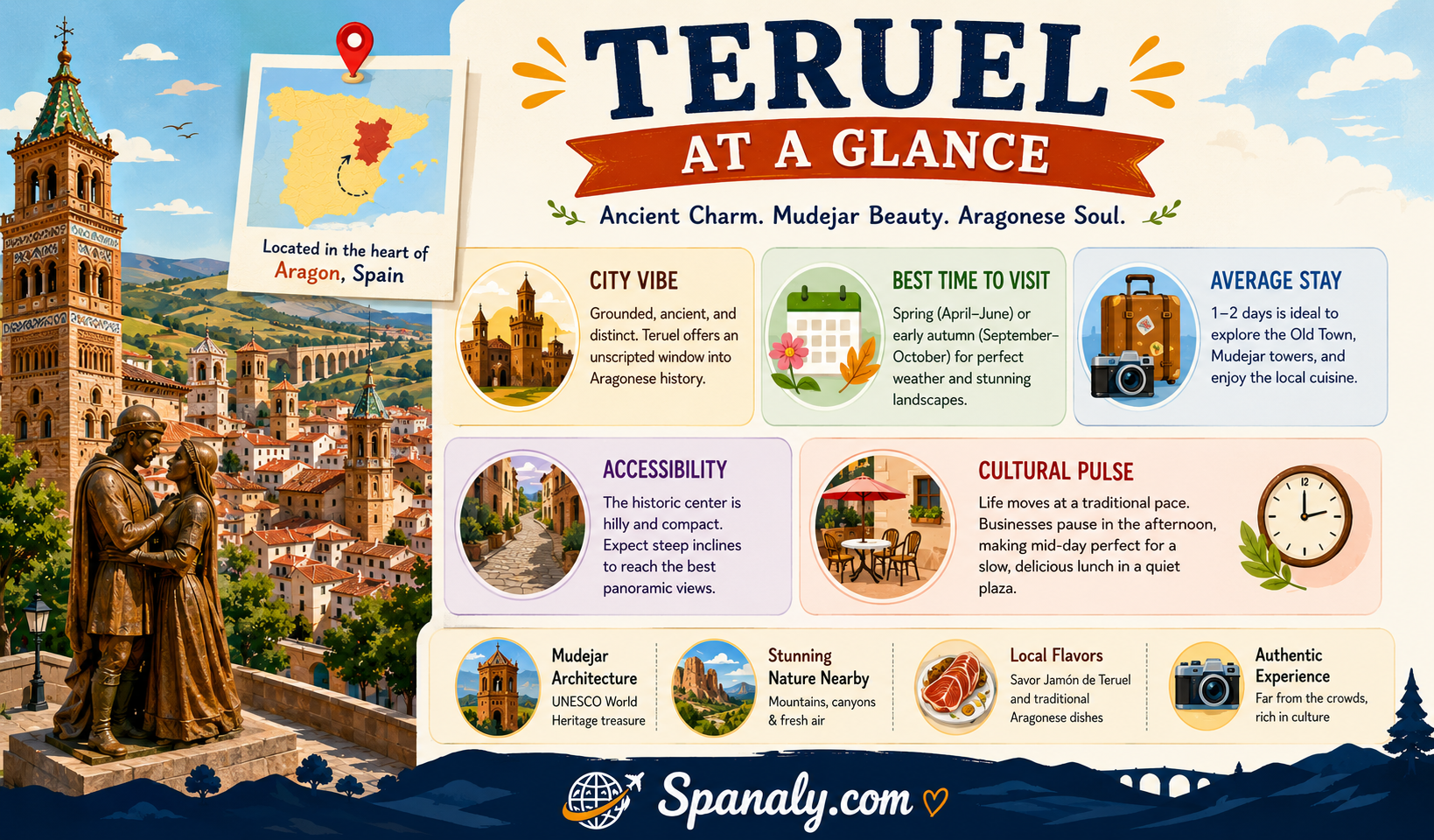
Teruel serves as a silent, historic anchor in the rugged interior of Aragon. Before you navigate its winding streets, consult our Essential Spain Travel Tips guide to master local customs and logistical nuances unique to the region.
City Vibe: Grounded, ancient, and distinct. Teruel avoids the commercial gloss of major hubs, offering an unscripted window into Aragonese history.
Best Time to Visit: Spring (April–June) or early autumn (September–October). You get perfect weather for exploring the historic core and the high-altitude landscape.
Average Stay: 1–2 days. This provides enough time to wander the Old Town, visit the Mudejar towers, and enjoy the local culinary scene.
Accessibility: The historic center is hilly and compact. You will navigate steep inclines to reach the most rewarding panoramic views of the valley.
Cultural Pulse: Life here follows a traditional pace. Businesses often pause in the afternoon, making mid-day ideal for a slow, unhurried lunch in a quiet plaza.
📍 Teruel vs. Other Aragon Cities
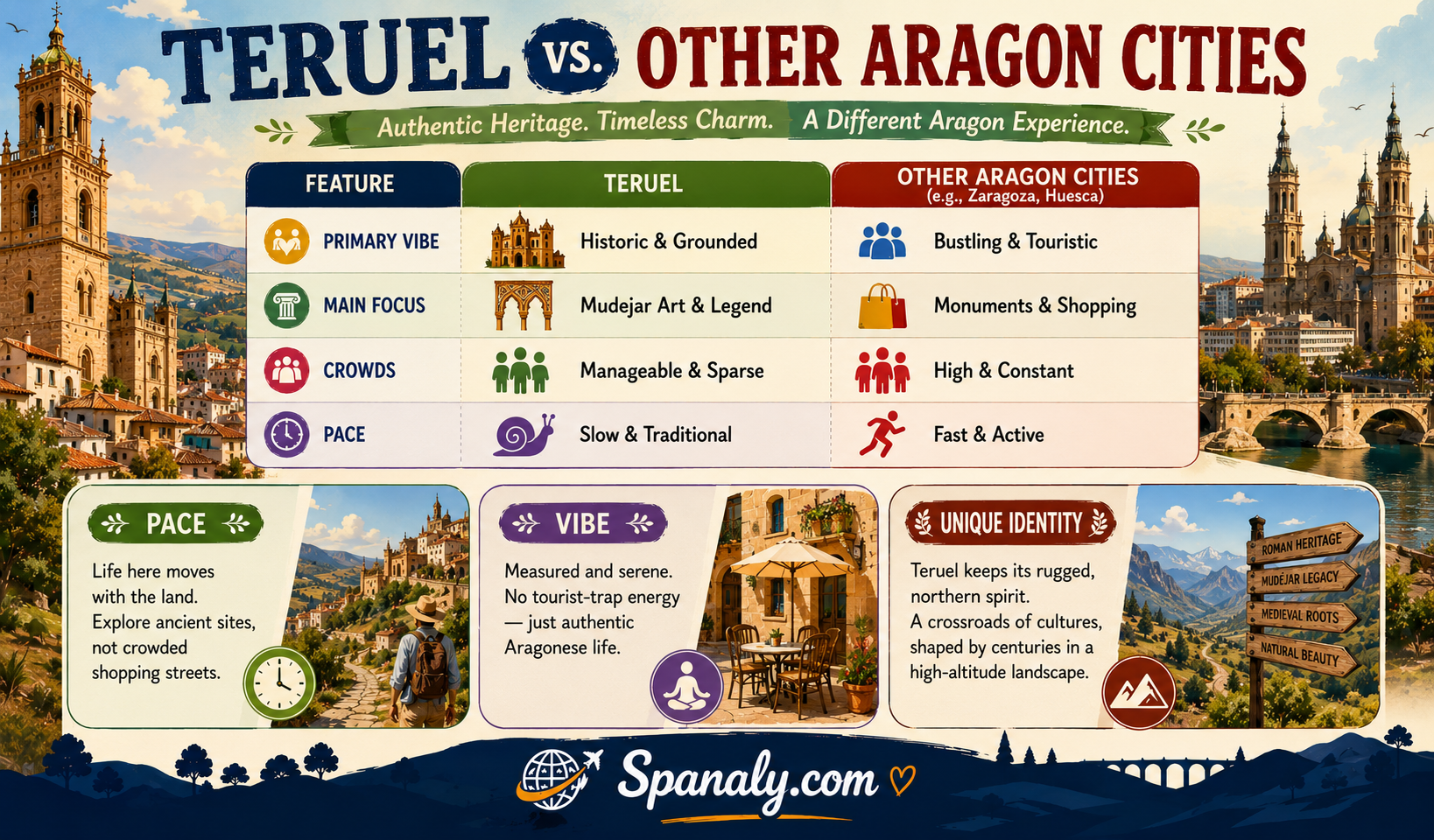
Teruel offers a refreshing alternative to the high-traffic urban centers of Aragon. While cities like Zaragoza focus on rapid, mass-market tourism, Teruel preserves a quieter, more deliberate atmosphere. In fact, our Why Visit Spain guide provides further perspective on choosing destinations that truly fit your travel style.
| Feature | Teruel | Other Aragon Cities |
| Primary Vibe | Historic & Grounded | Bustling & Touristic |
| Main Focus | Mudejar Art & Legend | Monuments & Shopping |
| Crowds | Manageable & Sparse | High & Constant |
| Pace | Slow & Traditional | Fast & Active |
Pace: Life here moves with the land. You spend your days exploring ancient sites rather than navigating large, crowded shopping districts.
Vibe: Measured and serene. The city lacks the commercial “tourist-trap” energy often found in high-traffic regional capitals.
Unique Identity: Teruel retains a rugged, northern spirit. It functions as a crossroads of cultures, shaped by centuries of human settlement in a high-altitude landscape.
🏰 Top 5 Landmarks in Teruel (The Icons)
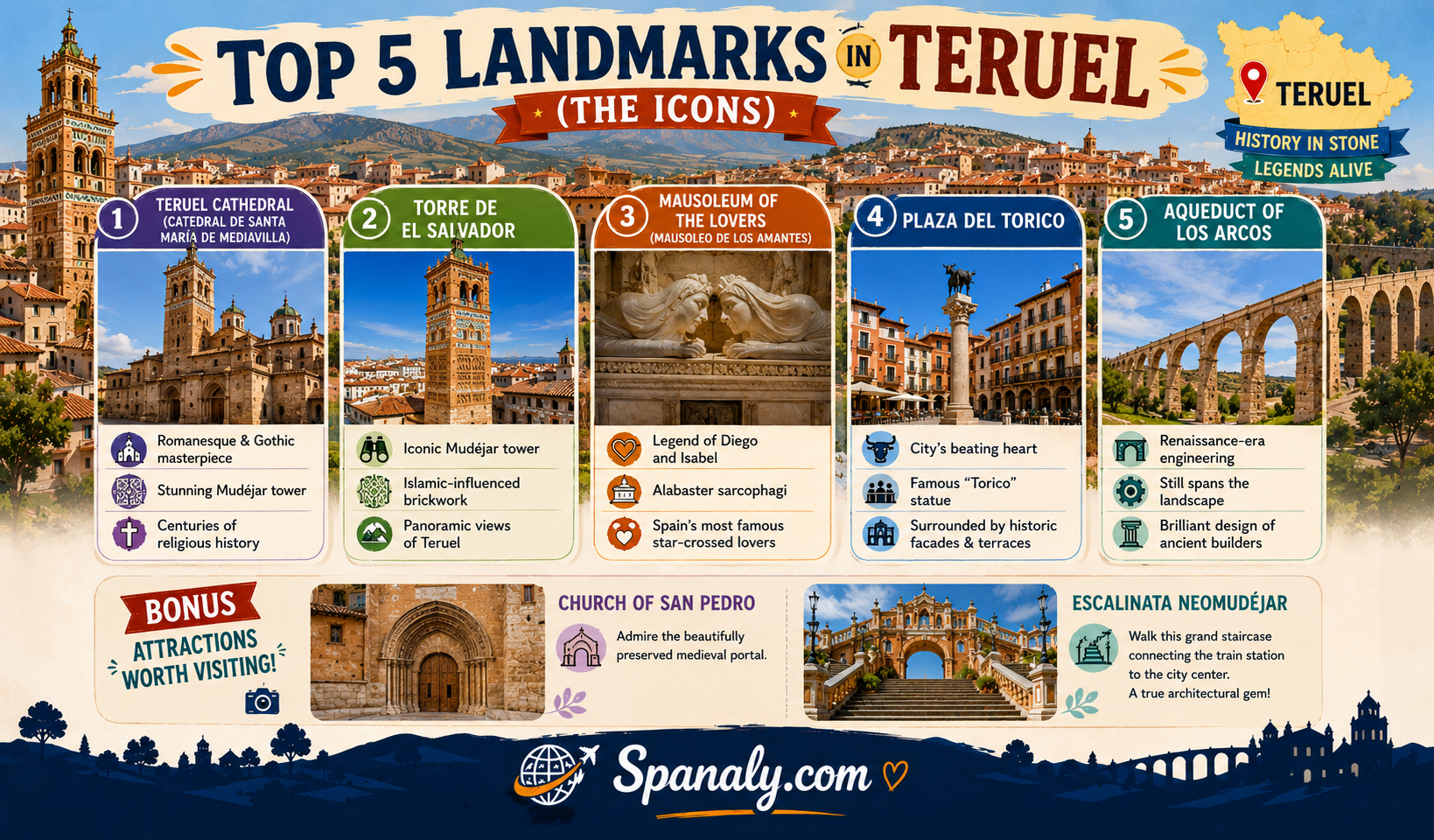
Teruel preserves history in stone. Every corner reveals tales of a rich past where different cultures coexisted for centuries. Keep our Spain Attraction Tickets Guide handy to streamline entry and skip unnecessary lines at these major sites.
Teruel Cathedral (Catedral de Santa María de Mediavilla): Visit this masterpiece first. Its Romanesque and Gothic architecture, topped by a stunning Mudejar tower, reveals the city’s complex religious history.
Torre de El Salvador: Climb this iconic Mudejar tower for expansive views. It stands as a pinnacle of Islamic-influenced brickwork and geometric tile patterns.
Mausoleum of the Lovers (Mausoleo de los Amantes): Honor the local legend of Diego and Isabel. This site houses the alabaster sarcophagi of Spain’s most famous star-crossed lovers.
Plaza del Torico: This square serves as the city’s vital junction. It features the famous “Torico” statue atop a central column, anchored by bustling terraces and historic facades that capture the town’s social energy.
Aqueduct of Los Arcos: Marvel at this Renaissance-era feat of engineering. It still spans the city’s landscape, demonstrating the brilliant design of ancient builders.
Bonus attractions worth visiting: Specifically, explore the Church of San Pedro to witness its preserved medieval portal. Furthermore, walk the Escalinata neomudéjar, a grand staircase connecting the train station to the city center, showcasing beautiful architectural details.
🎨 Hidden Gems & Local Secrets in Teruel
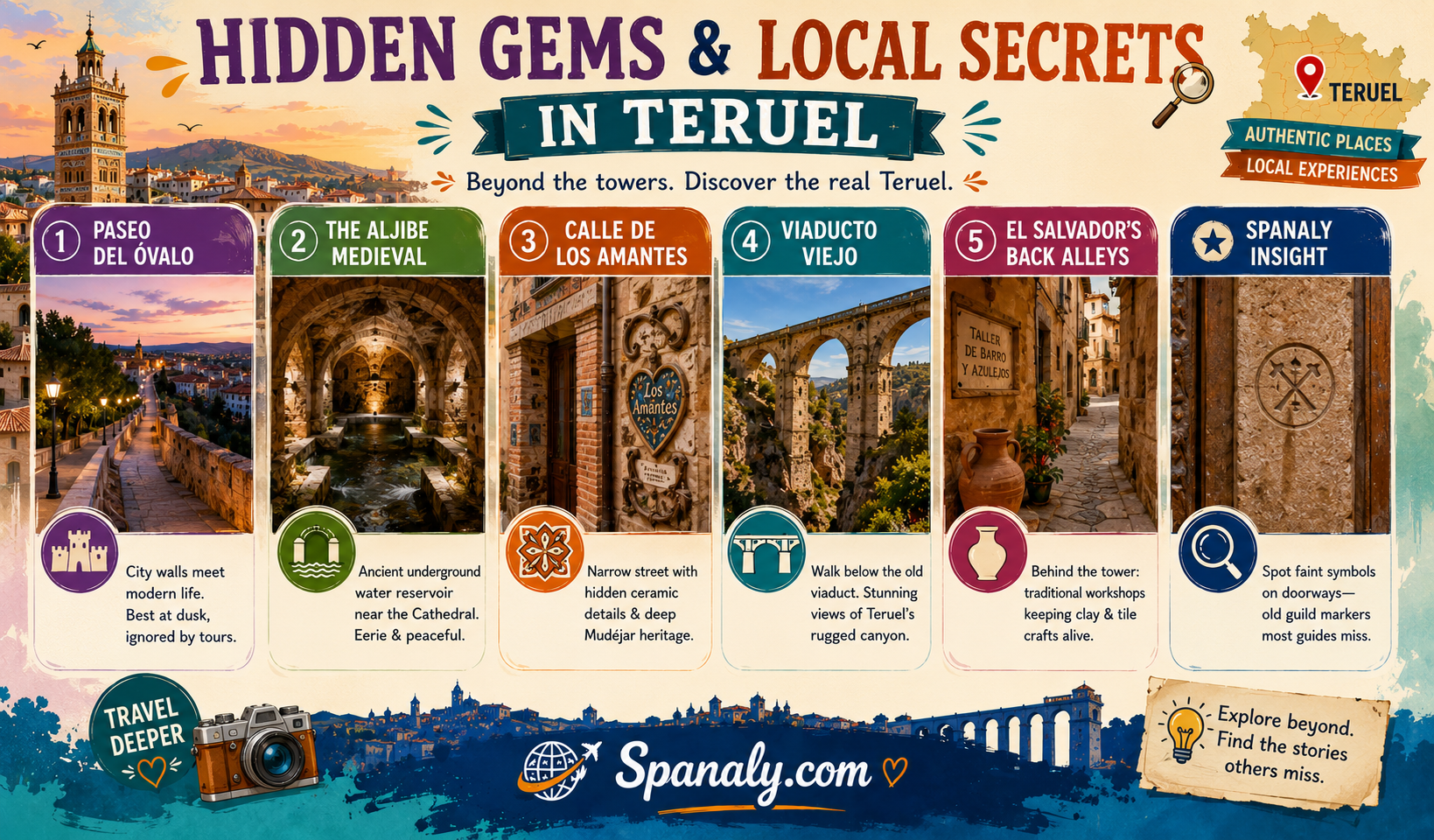
Most travelers see the towers and move on. Teruel hides layers that reveal themselves only away from the main square. If you enjoy uncovering urban mysteries, our Toledo Steel, Swords, and Gold Crafts guide offers a similar approach to finding the distinct creative core of a Spanish city.
Paseo del Óvalo: Visit at dusk. See the city walls merge with the modern promenade. Tour groups largely ignore this view.
The Aljibe Medieval: Locate this underground water reservoir near the Cathedral. It remains a hauntingly quiet, ignored space near the center.
Calle de los Amantes: Walk this narrow artery. Find tiny, overlooked ceramic details on house facades hinting at deep Mudejar connections.
Viaducto Viejo: Walk under the old viaduct. See the sheer scale of Teruel’s construction against the deep, rugged canyon floor.
El Salvador’s Back Alleys: Wander streets behind the tower. Discover traditional workshops where artisans use clay and tile unchanged for centuries.
Spanaly Insight: Look for faint, etched symbols on doorways. These are remnants of old guild markers. Most guides skip this tactile connection to the medieval workforce.
🏨 Where to Stay in Teruel

Finding the right stay allows you to experience the city’s quiet rhythm at night. Use our Accommodation in Spain guide to help identify properties that match your specific travel style and comfort needs.
Historic Boutique Stays (Old Town): Select a restored noble house. Hotel Palacio La Marquesa offers stone courtyards and antique wooden features alongside essential modern comforts.
Modern Urban Comfort: Look for hotels near the Plaza del Torico. Hotel Suite Reina Cristina provides better access to cafes frequented by local residents.
Atmospheric Retreats: Choose an establishment near the historic walls. Hotel Civera offers calm surroundings and proximity to the riverside walking paths.
Traditional Guesthouses: Seek out family-run spots in the center. They provide a lived-in, warm atmosphere that connects you directly to daily life.
Spanaly Insight: Teruel is a popular weekend destination for residents from Valencia and Zaragoza. If your travel dates fall on a weekend, secure your room at least three weeks in advance to avoid the “full occupancy” notices that occasionally hit the historic core.
🍽️ Teruel Gastronomy & Dining Guide

Teruel’s food is the pride of Aragon, rooted in high-altitude mountain traditions and the distinct flavors of the Teruel province. To master the art of local dining without looking like a visitor, read our How to Order Food Like a Local in Spain guide before heading to your first tavern.
Must-Try Dish (Jamón de Teruel): You must taste the local cured ham. It holds the first Denomination of Origin in Spain. Its texture is delicate, salty, and legendary.
The Food Market: Visit the local shops near Plaza del Torico. This remains the premier location to source artisanal mountain cheeses and cured meats.
The Tapas Tradition: Taverns here prioritize quality over complex presentation. Look for spots with traditional wooden interiors where locals stand at the bar.
Spanaly Recommendations for Traditional Bites:
| Spot | Signature Bite | Why Go? |
| La Miga | Degustation Menu | They elevate humble mountain ingredients into a refined culinary experience. |
| Asador La Vaquilla | Roasted Lamb | A classic spot that celebrates the rustic, hearty traditions of the Aragon region. |
| Bar Gregory | Local Tapas | Perfect for a quick, no-frills lunch surrounded by local residents instead of crowds. |
| Restaurante Yain | Regional Wines | This kitchen focuses on pairing local produce with the finest Teruel grapes. |
Spanaly Insight: Never ask for bread at the start of a meal in a traditional tavern; it arrives automatically. Ordering it separately immediately flags you as someone unfamiliar with the standard local service rhythm.
🧳 Essential Logistics for Teruel

Navigating Teruel requires an understanding of its hilly terrain and traditional rhythm. Indeed, consult our Getting Around Spain guide to master regional transit options and ensure smooth connectivity throughout your journey.
Transport: The city connects via rail and bus from Zaragoza or Valencia. Once inside, rely on your feet; the narrow, steep streets suit walking rather than driving.
Safety & Neighborhoods: Teruel remains exceptionally safe for travelers. Focus your time in the Casco Antiguo; this area keeps you minutes away from all major landmarks and taverns.
Best Time to Visit: Aim for spring or early autumn. These months offer mild temperatures, making the walk to the Mudejar towers and the surrounding viewpoints much more manageable.
Siesta Hours: Respect the local flow. Most shops close between 14:00 and 17:00. Plan your monument visits for the morning and your long, relaxed lunches for the afternoon pause.
Connectivity: While public plazas offer Wi-Fi, it is best to rely on a local data plan if you plan to navigate the labyrinthine alleys or hike the canyon edges.
Spanaly Insight: If you arrive by train at the Teruel station, remember it sits slightly downhill from the historic core. Always verify the local bus schedule or pre-book a taxi, as the walk into the center with luggage can be taxing on the city’s hilly, cobblestone terrain.
📸 Best Photo Spots in Teruel

Teruel’s dramatic mix of Mudejar heritage, deep canyons, and historic facades offers endless visual texture. Our Best Photography Spots in Spain guide provides professional tips to help you capture the striking contrast between the city’s rugged Aragonese landscape and its intricate, UNESCO-listed brickwork.
Paseo del Óvalo: Visit at dusk. This oval promenade offers panoramic views of the city walls merging with the horizon, perfect for wide architectural shots.
Torre de El Salvador: Capture the geometric Mudejar tiles from the small square below. Early morning provides soft, even light on the ancient brick patterns.
Viaducto Viejo: Walk the canyon edge near the old viaduct. The sheer scale of the city rising above the deep gorge creates a cinematic, vertical perspective.
Plaza del Torico: Frame the iconic statue against the backdrop of traditional, colorful balconies. It captures the social heart of the city perfectly.
Escalinata neomudéjar: This grand staircase serves as a brilliant foreground element. The symmetry and detail here are unmatched for structured, composition-heavy photography.
Spanaly Insight: For the most atmospheric shot of Teruel, find the trail near the Viaducto Nuevo at sunset. When the last light hits the city’s towers, the entire skyline glows with a deep, ochre warmth that distinguishes Teruel from any other mountain city in Aragon.
🚗 Best Day Trips From Teruel

Teruel acts as a strategic hub for exploring the diverse landscapes of Southern Aragon. Having a rental car provides the freedom to reach isolated historical sites and quiet natural parks. Additionally, refer to our Spain Travel Itineraries Plans guide to coordinate your base in Teruel with your wider regional route.
Albarracín: Drive 45 minutes to this cliffside village. Often voted the most beautiful town in Spain, its pink-hued medieval walls are unmissable.
Dinópolis: Visit this world-renowned paleontological park. It is a fantastic, interactive experience located just on the city’s outskirts, perfect for all ages.
Sierra de Albarracín: Venture into these rugged mountains. You will find incredible hiking trails, dense pine forests, and cool, refreshing river pools.
Rubielos de Mora: Travel to this “Pueblo más Bonito” known for its perfectly preserved medieval architecture and quiet, noble stone plazas.
Castle of Peracense: Explore this fortress perched on a unique red sandstone crag. It offers an evocative, dramatic view of the surrounding Aragonese countryside.
Spanaly Insight: If you plan to visit Albarracín, aim for a weekday morning. The narrow streets are compact, and arriving early allows you to explore the fortifications before the midday crowds arrive from the larger hubs.
🗺️ Teruel Suggested Itineraries: The "Express" (24-Hour Plan)
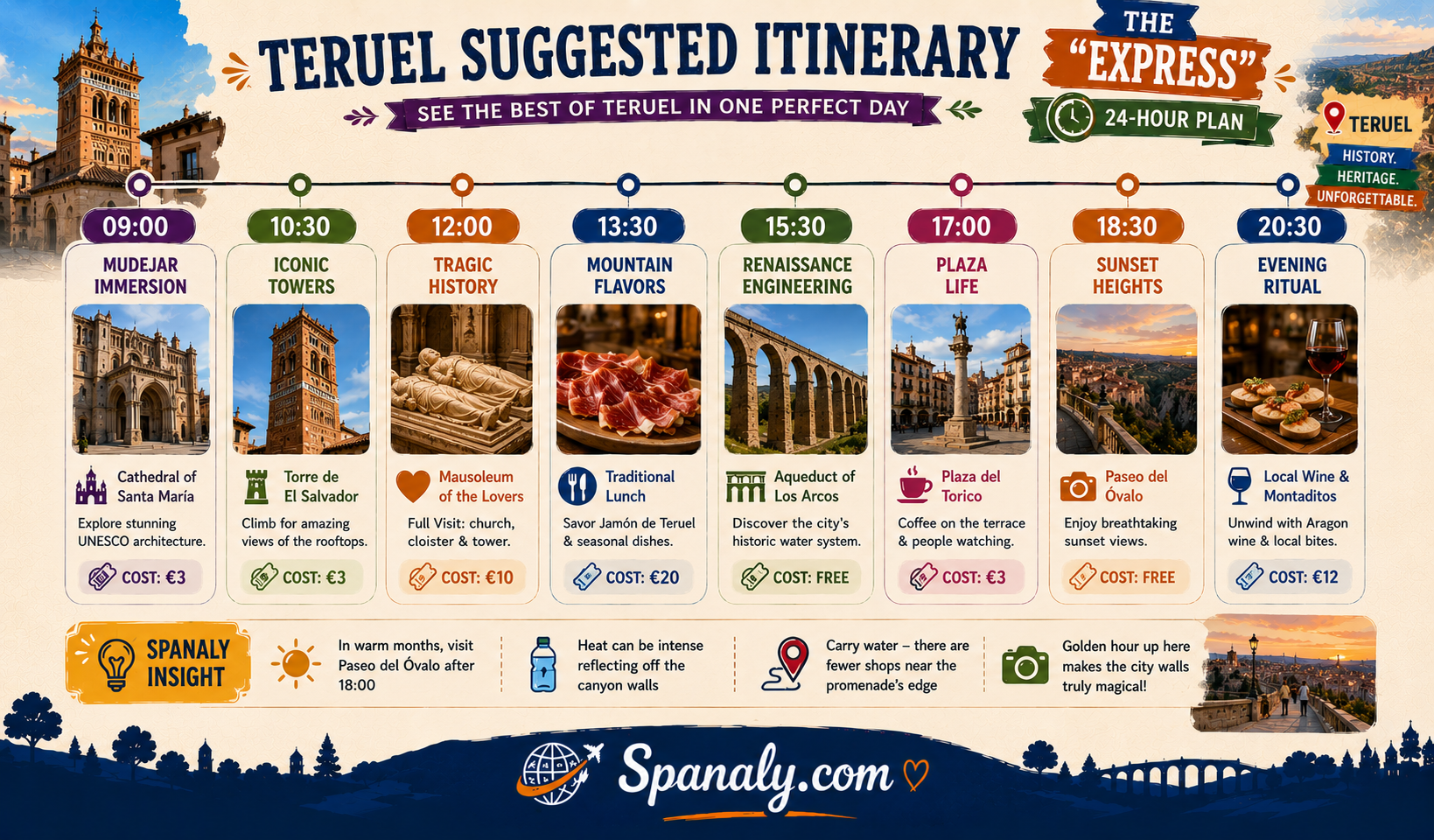
Maximize your day in Teruel with this precise, hour-by-hour schedule. To manage your broader regional expenses, check our Spain Travel Itineraries Plans guide for planning your complete trip across Aragon.
09:00 – Mudejar Immersion: Start at the Cathedral of Santa María. Explore the intricate Romanesque and Gothic details of this UNESCO site. Cost: €3.
10:30 – Iconic Towers: Walk to the Torre de El Salvador. Climb the interior staircase for a clear view of the city’s terracotta rooftops. Cost: €3.
12:00 – Tragic History: Visit the Mausoleum of the Lovers. Take the “Full Visit” to see the church, cloister, and tower of San Pedro. Cost: €10.
13:30 – Mountain Flavors: Enjoy a traditional lunch at a local tavern. Focus on Jamón de Teruel and seasonal vegetable plates. Cost: €20.
15:30 – Renaissance Engineering: Walk to the Aqueduct of Los Arcos. It offers a perfect vantage point for understanding the city’s historical water infrastructure. Cost: Free.
17:00 – Plaza Life: Relax at Plaza del Torico. Sit at a terrace with a coffee and watch the city’s slow, deliberate daily rhythm. Cost: €3.
18:30 – Sunset Heights: Ascend to the Paseo del Óvalo. As the sun dips, the city walls glow against the canyon’s deep shadows. Cost: Free.
20:30 – Evening Ritual: Join local residents for a glass of Aragon wine and small montaditos at a neighborhood bar near the square. Cost: €12.
Spanaly Insight: If you visit during the warmer months, ensure your walk to the Paseo del Óvalo happens after 18:00. The heat reflecting off the canyon walls can be intense; always carry water, as there are fewer shops once you reach the promenade’s edge.
🚫 Common Mistakes to Avoid in Teruel

Many travelers treat Teruel as a fleeting stopover, missing the measured rhythm that defines this high-altitude city. Avoid these errors to experience the true heartbeat of Aragon.
Rushing the Mudejar Towers: Many visitors spend ten minutes at the base. Climb the towers; the intricate brickwork and geometric patterns are only fully visible from the interior staircase levels.
Ignoring the Siesta Rhythm: Do not attempt to visit museums or shop between 14:00 and 17:00. Use this time to follow the local flow—embrace a long, slow lunch instead of searching for open doors.
Underestimating the Terrain: Teruel is surprisingly vertical. Wearing fashion-focused footwear instead of sturdy walking shoes will ruin your ability to reach the scenic canyon viewpoints and the steep medieval alleys.
Skipping Local Cured Meats: Many tourists stick to generic tapas. You must seek out Jamón de Teruel. It is the city’s defining culinary pride and far superior to the mass-produced options found elsewhere.
Driving Into the Center: The old town consists of narrow, medieval corridors. Park your car at the city limits and explore the core on foot to avoid traffic fines and navigating gridlocked streets.
Missing the Evening Pulse: Do not retreat to your hotel at sunset. The city truly comes alive in the plazas only after 20:30, once the mountain air cools and social life shifts outdoors.
Spanaly Insight: Many visitors buy their ham at generic souvenir shops. The real quality is found at smaller charcuterías near Plaza del Torico; always ask for “corte a cuchillo” (hand-carved) to taste the jamón exactly as the locals intend it.
💡 Spanaly Pro Tips

These insider insights capture Teruel’s heartbeat, gathered from local artisans and those who know the city’s unwritten rules.
Cathedral “Golden Hour”: Enter Santa María at 16:30 on sunny days. Light hits the Mudejar ceiling, making wooden carvings shift and breathe.
Hidden “Lovers” View: Walk to Torre de San Pedro at dusk. You get an eye-level view of medieval roofs framing the tragic legend.
Artisan Connection: Skip souvenir shops. Look for small, unsigned doors in Calle de los Amantes. Local ceramicists still use ancient, traditional techniques.
Canyon Soundscape: Visit Viaducto Viejo at 07:00. The river echo against the stone arches provides a sensory experience most guides ignore.
Torico After-Dark: Locals stand at back bars in Plaza del Torico tabernas. Order “Vino de la Casa” there for a better barrel.
Spanaly Insight: Look for small, metal ground plaques near city walls. They mark medieval boundaries. Walk this “invisible line” to feel Teruel’s footprint.
Teruel stands as a testament to history carved in brick, stone, and emotion. It is a city that demands you slow your pulse to match its ancient, high-altitude rhythm.
Beyond the Towers: Let the geometry of the Mudejar masterpieces guide your gaze, revealing a past where cultures intertwined seamlessly.
Echoes of Legend: Visit the Mausoleum of the Lovers; their story anchors the city’s identity in a profound, human tradition.
Rugged Beauty: Feel the scale of the Aragonese canyons beneath your feet—a landscape that shaped the city’s defensive, stoic character.
Authentic Origins: Wander the steep streets and high-altitude plazas to discover why this mountain sanctuary remains an unscripted, genuine experience.
Continue the Journey: If you appreciate cities where history feels preserved in stone, explore our Tudela Travel Guide to further uncover the hidden treasures of the region.
Ultimately, Teruel rewards those who linger. It is not just a point on a map, but a tactile connection to the soul of Aragon. Pack your sturdiest shoes, embrace the silence of the canyons, and let the city’s quiet strength define your travel memories.